


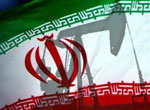
 Reuters: Iran could use oil as a political tool in the event of any future conflict over its nuclear programme, Iran’s energy minister told Al Jazeera television.
DUBAI Nov 20 (Reuters) – Iran could use oil as a political tool in the event of any future conflict over its nuclear programme, Iran’s energy minister told Al Jazeera television.
Tension over Iran’s nuclear programme has increased since the International Atomic Energy Agency (IAEA) reported on Nov. 8 that Tehran appears to have worked on designing a bomb and may still be pursuing research to that end.
Iran has warned it will respond to any attack by hitting Israel and U.S. interests in the Gulf and analysts say Tehran could hit Western interests by closing the Strait of Hormuz, through which much of the world’s oil passes.
“We don’t consider crude oil as a political tool, however if necessary, we’ll use it as a tool any way we need to,” Rostam Qasemi said in response to a question in an interview translated into English by the Qatar-based news channel.
“Right now, we believe everything’s OK and that there is no need to use crude oil as a tool. However, I have to reiterate that in case we are urged to and in case we think it’s necessary, yes, we will use this,” he said in the interview posted on the television’s website on Saturday.
But Qasemi, a former commander of the elite Revolutionary Guards, said the Iranian economy was reliant on crude exports – which also depend on free passage through the Strait of Hormuz – and that he did not foresee any problems exporting it’s oil.
The Strait of Hormuz is the most important oil transit channel in the world, with some 15.5 million barrels or about a third of all sea-borne shipped oil passing through in 2009, according to the U.S. Energy Information Administration (EIA), and U.S. warships patrol the area to ensure the safe passage.
Most of the crude exported from Saudi Arabia, Iran, the United Arab Emirates (UAE), Kuwait and Iraq — together with nearly all the liquefied natural gas (LNG) from lead exporter Qatar — must slip through a four-mile (6.4 kilometre) wide shipping channel between Oman and Iran.
Around three-quarters of the crude emerging the Gulf is sent to Asia — mainly Japan, India, South Korea and China. (Reporting by Daniel Fineren; Editing by Mark Heinrich)


