


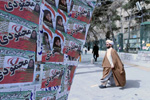
 BBC: Polls have closed in Iran’s parliamentary elections, after being extended by five hours due to high turnout, state media report. BBC
Polls have closed in Iran’s parliamentary elections, after being extended by five hours due to high turnout, state media report.
It is the first poll since mass protests were sparked by President Mahmoud Ahmadinejad’s disputed election victory in 2009.
The vote is widely viewed as a contest between his supporters and those of Supreme Leader Ayatollah Ali Khamenei.
The opposition Green Movement did not take part in Friday’s elections.
Its leaders have been under house arrest since February 2011.
As all of the candidates had to be pre-approved by Iran’s Guardian Council, the contest is effectively between different conservative factions.
The BBC’s Tehran correspondent, James Reynolds, says that Iranian authorities have made much of the claimed high turnout.
But some Iranians have posted photos and videos online which claim to show a lack of activity at a number of polling stations, he says.
‘Bad-wishers’
Early on Friday, Iranian TV broadcast images of Ayatollah Khamenei casting his vote in the capital, Tehran. He said it was a “duty and a right” for Iranians to elect members of the 290-seat parliament, the Majlis.
“Because of the controversies over Iran and increased verbal threats the more people come to the polling stations the better for the country,” he said.
“The vote always carries a message for our friends and our enemies.”
Moving from one polling station to another in central Tehran, you can see marked differences in voters’ behaviour. In some places there were long queues of people wanting to cast their ballots during the morning, while in others there were not.
Mohammad, a supervisor at one polling station who has overseen the last five elections, said: “The people rush to mark their ballots in the last hours, as a rule of thumb.” However, he said turnout at his polling station had so far been good.
A university professor standing in the queue with his wife to vote said the elections in Iran’s cities were very much different from those in the rest of the country, where he said they were more like “family competitions”. “The demands of the people in townships and rural areas are more tangible than the demands of the people in big cities,” he said.
Iranians urged to heed ‘call of duty’
A spokesperson for the Guardian Council, which vets and approves parliamentary candidates, told Iran’s state-run Arabic-language TV channel, al-Alam, that turnout in the first three hours had exceeded that achieved in previous elections.
State TV broadcast pictures from several polling stations in Tehran and the provinces, showing long queues. A commentary said the queues were a “disappointment to the bad-wishers”.
Later, al-Alam reported that voting had been extended for two hours because of “high turnout”, and that polling stations would close at 20:00 (16:30 GMT).
Voting was later extended again until 22:00, and polls finally closed at 23:00.
Official results are expected on Sunday or Monday.
More than 48 million people were eligible to take part in the election.
But correspondents say even some of Mr Ahmadinejad’s supporters quietly called for voters to stay away.
The president has fallen out with Ayatollah Khamenei in recent months, and some of his supporters complain that their candidates have been barred from standing by the Guardian Council, which is controlled by the supreme leader.
Last April, Mr Ahmadinejad sacked his intelligence minister, reportedly after the minister had dismissed an official with close ties to the president’s chief-of-staff and close confidante, Esfandiar Rahim-Mashaei.
But Ayatollah Khamenei overruled him and ordered the minister’s reinstatement. The decision is said to have so enraged Mr Ahmadinejad that he stayed away from government meetings for 11 days
The respective strength of the different conservative camps after this poll will define the balance of power for what may be a much more important vote – the 2013 presidential election, says BBC Iran correspondent James Reynolds.
However, the results of the elections are unlikely to change Iran’s stance on its controversial nuclear programme, he adds.
Voters in Tehran who spoke to the BBC said they were angered both by the new sanctions imposed by the US and EU on Iran’s oil and banking industries – over its continued refusal to halt its uranium enrichment programme – and also by what they see as their government’s mismanagement of the economy.
President Mahmoud Ahmadinejad cast his ballot at a polling station in Tehran
Former President Akbar Hashemi-Rafsanjani, a rival of Mr Ahmadinejad, said that a “good parliament” would emerge if the ballots were properly counted.
“God willing, the outcome of the elections will be what the people want,” he told reporters when casting his vote in Tehran.
No independent observers are monitoring the voting or checking the turnout figures or results.
In a separate development, BBC Persian TV’s broadcasts were jammed by the Iranian authorities for more than an hour on Friday afternoon.


