


Iran Focus
London, 14 Aug – Revelations of Iran’s nuclear sites by the main opposition group, the People’s Mojahedin Organisation of Iran (PMOI), alerted the world to Tehran’s clandestine nuclear weapons programme and has prevented the regime thus far from obtaining a nuclear weapon, writes Alireza Jafarzadeh, the deputy director of the Washington office of the National Council of Resistance of Iran (NCRI).
Jafarzadeh is credited with exposing Iranian nuclear sites in Natanz and Arak in 2002, triggering International Atomic Energy Agency (IAEA) inspections. He is the author of “The Iran Threat” (Palgrave MacMillan: 2008).
Writing in FoxNews.com on Friday, Jafarzadeh said:
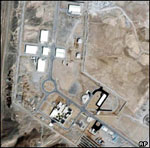
Thirteen years ago on August 14th I walked into the Willard Intercontinental Hotel in Washington, D.C. to reveal the existence of Natanz and Arak nuclear sites in Iran for the first time. Little I knew that the revelation would trigger an international response that has continued to this day.
If it weren’t for the diligent and continuing efforts of the main Iran opposition movement, the Mujahedin-e Khalq (MEK), to unmask Tehran’s clandestine nuclear weapons program, the mullahs would have had the bomb by now.
In his memoirs, Iranian regime’s president, Hassan Rouhani acknowledged the role of the Iranian opposition, saying, “The story behind the discovery of the Natanz site is that the Monafeqin [MEK] contributed to its discovery. They had different sources of information…. They found out about some of the comings and goings in the Natanz area… They had even gotten very close, photographed the site and collected information.”
A flurry of additional revelations came afterwards, catching the regime entirely off guard and leaving it scrambling to obstruct and circumvent further international scrutiny.
In February 2003, the MEK exposed the Kala Electric Company as a front for uranium enrichment. It also unmasked laser enrichment activities at Lashkar-Abad and Lavizan-Shian sites where it later became evident that Iran had carried out nuclear weaponization work.
After reluctant cooperation initially, Tehran’s approach was to cheat, deny access, remove evidence, and stonewall inquiries by the International Atomic Energy Agency (IAEA).
Tehran has continually denied access to Parchin military base, a site used for a range of activities, including the testing of explosives associated with nuclear detonations.
The MEK originally revealed the heavily-fortified Fordow enrichment site under construction in 2005, but it was not until 2009 that Tehran finally provided access. Nearly a dozen other nuclear sites, as well as scientists, experts, and key documents have remained off limits to the IAEA.
Against this backdrop, there is little reason to believe that the Joint Comprehensive Plan of Action (JCPOA) will lead to a substantive positive outcome.
The agreement allows Tehran at least 24 days advance notice of inspections, giving it the opportunity to tamper with evidence, decontaminate locations, raze buildings, remove equipment, and evade meaningful scrutiny in ways it has done many times before.
Now, satellite images recently obtained by US intelligence agencies show that Iran has been cleaning up the Parchin site despite IAEA demands for access. Tehran’s ludicrous post-JCPOA explanation about Parchin cleanup provides a glimpse into its modus operandi in the future.
Thirteen years after Natanz, I fear that the JCPOA has only served to enable more of the same. The assumption that the cunning mullahs have had a sudden change of heart is wrong.
Far from a change of heart, Iran’s Supreme Leader feared the translation of sanctions into political unrest, similar to the 2009 uprisings. Iran had only one objective regarding the negotiations: get sanctions relief while preserving the entire nuclear infrastructure.
A proper policy on Iran recognizes Tehran’s history and true intentions. This means that Washington needs to keep up the pressure until the regime opens up its nuclear and military sites.
Granted, the JCPOA may keep nuclear weapons out of the mullahs’ hands in the short term. But over the long term, the ultimate solution to the nuclear crisis is tied to the death of the theocratic regime. Anything short of this is fantasy.
The Iranian people understand this. After the deal was announced, streets of Tehran were filled with chants of freedom. The Iranian people don’t trust this regime. Nor should the U.S.


