


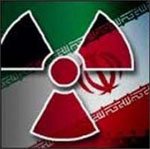
 Daily Beast: President Obama wants an agreement with Iran to prevent a Middle Eastern nuclear arms race, but it’s pushing Saudi Arabia toward its own nuke program.
The Daily Beast
By Eli Lake and Josh Rogin
President Obama wants an agreement with Iran to prevent a Middle Eastern nuclear arms race, but it’s pushing Saudi Arabia toward its own nuke program.
Last month, America’s top Iran negotiator Wendy Sherman had some bad news for ambassadors from America’s Arab allies. In a meeting with envoys from Saudi Arabia, the United Arab Emirates, and other Gulf states, Sherman said that any bargain with Iran would likely leave Tehran, the Gulf states long-time enemy, with the capacity to enrich uranium, according to U.S. officials briefed on the encounter.
Sherman regularly briefs these allies after diplomatic talks with Iran, but in recent weeks those conversations have been different. While most of America’s Middle East allies—with the exception of Israel—have publicly supported the current Iran negotiations, behind the scenes, envoys from the region have expressed grave concerns that Iran could be left with a break out capacity to make the fuel for a nuclear weapon at a time of their choosing.
And now, one of the countries in the region without a full-blown nuclear programs—Saudi Arabia—may be changing its mind. Riyadh has a long-standing interest in nuclear power. But Western and Israeli intelligence services are starting to see signs that this interest is growing more serious, and extends into nuclear enrichment. Until recently, the pursuit of nuclear enrichment—or the fuel cycle—was considered by arms control experts as a tell-tale sign of a clandestine weapons program. Nuclear fuel is sold to all members of the Nuclear Non-Proliferation Treaty, but it’s far more costly to build the infrastructure and produce it indigenously. Saudi Arabia appears to be getting more serious about going down that path.
If Saudi Arabia pursue nuclear enrichment even if there is an Iran deal, then the victory to curb atomic weapons that Obama has tried to achieve will be at least partially undone by his own diplomacy.
“They view the developments in Iran very negatively. They have money, they can buy talent, they can buy training,” said David Albright, the president of the Institute for Science and International Security and a former weapons inspector. “The Saudis are thinking through how do you create a deterrent through capability.”
Albright said in this particular case, an indigenous Saudi program is in the very early stages. In 2012, the Saudi government announced plans to build 16 commercial reactors by 2030 and signed a technology agreement with China. But Albright said he has heard concerns expressed by a European intelligence agency that Saudi Arabia in recent years has quietly been developing the engineering and scientific knowledge base to one day master the nuclear fuel cycle, or produce the fuel indigenously for the reactors it’s trying to build. He said Saudi Arabia was hiring the scientists and engineers needed to build the cascades of centrifuges needed to produce nuclear fuel. “We don’t worry about the Saudis learning to operate a reactor,” he said. “I worry that they will learn the skills needed to master the fuel cycle.”
Late last year, the BBC reported that Saudi Arabia invested heavily in the Pakistani nuclear weapons program and could easily acquire nuclear technology or even weaponry if the Iranians cross a threshold. Albright, however, said he did not think Saudi Arabia would likely try to acquire a weapon from Pakistan.
A senior administration official told The Daily Beast that the U.S. was working to avoid enrichment proliferation in the Arab world and arguing to Gulf leaders that the Iranian nuclear deal is a net benefit for their own security.
“The logical response by any of Iran’s neighbors to an agreement that severely restricted Iran’s program to the point that we have confidence they would never pursue nuclear weapons, the logical response is not to build up a protomilitary capability in enrichment, it’s rather to go in the opposite direction,” said the official.
This prospect of the Saudis beginning an enrichment program was broached earlier this month at the Munich Security Conference. Sen. Lindsey Graham asked Saudi Prince Turki al Faisal, the kingdom’s powerful former intelligence chief, if any final agreement that allowed Iran to maintain an enrichment capability would cause Saudi Arabia and other Arab states to invoke their own right to enrich uranium.
“I think we should insist on having equal rights for everybody, this is part of the (Non-Proliferation Treaty) arrangement,” the prince said.
Saudi Arabia is not alone in this regard. Last month, Turkey and Japan began re-negotiating a pact whereby Japan would provide Turkey with nuclear technology, but the deal could be modified later to give the Turks its own enrichment capability if Japan agreed.
The State Department has been working towards the longstanding U.S.-stated goal of a nuclear free Middle East. There have been three meetings of Arab countries and Israel in an attempt to set up a conference in Helsinki how to pursue a Middle East without WMD. But there’s no agreement on an agenda and no expectation the conference will commence any time soon.
Whether or not the rest of the Middle East begins to acquire nuclear weapons after Iran depends a great deal for now on the Iran negotiations. Marie Harf, the deputy spokeswoman for the State Department, acknowledged that the United States is prepared to consider allowing Iran to keep a limited enrichment program.
“We are prepared to consider a strictly limited enrichment program in the end state, but only if the Iranians address all of our concerns about their capacity to get a nuclear weapon and accept rigorous limits and transparent monitoring of the on level, scope, capacity, and stockpiles,” said Harf. “If we can reach an understanding with Iran on strict constraints, then we can contemplate an arrangement that includes a very modest amount of enrichment that eliminates Iran’s capacity to obtain a nuclear weapon in any reasonable way. If we can’t, then there will be no agreement, and we will increase even further the pressure on Iran.”


