


 Wall Street Journal:The Administration was right in January when it said that six months was more than enough time to test Iran’s sincerity. The main point of the extension seems to be to give the U.S. and Europe more time to dress up the concessions that Iran is demanding to continue its program while claiming it isn’t.
The U.S. gets four more months to dress up concessions to Iran.
The Wall Street Journal
Negotiating with Tehran is often compared to haggling in a Mideast bazaar, and after Friday’s decision to extend talks over the country’s nuclear program we’re reminded why. In exchange for essentially no concessions, the mullahs were given $2.8 billion in hard cash to keep talking for another four months.
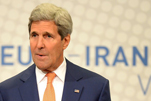
As for Secretary of State John Kerry and his fellow Western negotiators, they seem to think they’ve made a down payment on the rarest carpet in Persia. You know the one: made of the finest silk, 150 years old, belonged to the Shah’s brother, took a blind woman from Tabriz and her six daughters 12 years to weave, a discount just for you.
Such was the attitude of the senior Administration officials who briefed reporters Friday on the extension of talks. “We saw openings and progress and creative proposals that began to see a potential assurance that elements of the Iranian program could be assured as peaceful to our satisfaction,” said one official. The goal for the extension is “to create the space” for a comprehensive deal.
The Administration says the sanctions relief it is offering Tehran remains minimal, and that there are complex formulas to keep Iran’s production of nuclear fuel below thresholds where the mullahs could stage a “breakout” toward a bomb. Much of this relates to technical questions about uranium enrichment, oxidization, centrifuge types and other nuclear arcana that obscure the central issue: Will a final deal put a bomb out of Iran’s reach, or will it give Iran the option to build one whenever it chooses?
One tell-tale sign from the briefing came in response to a question about Iran’s development of ballistic missiles capable of carrying a nuclear warhead. “How we will resolve that issue, how appropriate it will be, I think remains to be seen,” said one U.S. official, while acknowledging that the subject “is something we will have to address in some way.”
Yet in May, Iran’s Supreme Leader Ali Khamenei gave a speech calling for increased ballistic-missile production and dismissing as “stupid and idiotic” Western demands that they be curbed. Ballistic missiles are relatively ineffective as conventional weapons but essential to deliver a nuclear payload.
Then there are Iran’s centrifuges, which can enrich uranium to civilian or bomb-grade levels. The West has repeatedly insisted that a nuclear deal would require Iran to slash its centrifuge numbers—some 19,000, more than half of which are currently operating—to a much lower number, perhaps 4,000 at most. Tehran has also developed a new generation of highly efficient centrifuges that can enrich uranium in ever-smaller “cascades” out of sight of U.N. inspectors.
Yet Iran has repeatedly made clear that it will not part with any of its centrifuges. “Not under any circumstances,” Iranian President Hasan Rouhani told CNN’s Fareed Zakaria in January, while Ayatollah Khamenei insisted this month that Iran needs to increase its capacity to 190,000. Even assuming a compromise in which Iran agrees to stick to its current numbers, that still gives it the ability to produce between two and three bombs’ worth of uranium a year.
Western negotiators may think international inspectors would prevent this, but that assumes Iran departs from at least 20 years of practice and doesn’t cheat on any deal it signs. The Administration has praised Iran for sticking punctiliously to the terms of the interim nuclear deal agreed last November. Yet a confidential U.N. report from earlier this year says Iran continues to breach U.N. sanctions by illicitly procuring parts it needs for ballistic missiles. So Iran is not cheating except when it is cheating.
Meantime, Iran is enjoying a modest economic recovery largely thanks to sanctions relief. A study by Roubini Global Economics and the Foundation for Defense of Democracies (FDD) notes that Iran received $11 billion in direct sanctions relief in the first six months of the year, plus indirect benefits in market confidence and transaction costs. FDD also notes that “despite statements from President Obama and administration officials that existing sanctions would be ‘vigorously’ enforced, there has been a notable decrease in the number of designations” for sanctions violations in the last year.
Iran’s bargaining position has in many respects become tougher since the interim nuclear deal was agreed to last November, perhaps because it senses the U.S. is desperate for a deal. The four-month extension is also telling: It kicks whatever deal emerges past the November elections but potentially in time for the lame-duck Democratic Senate to give its blessing.
The Administration was right in January when it said that six months was more than enough time to test Iran’s sincerity. The main point of the extension seems to be to give the U.S. and Europe more time to dress up the concessions that Iran is demanding to continue its program while claiming it isn’t.


