


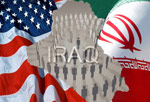
 New York Times: It was Iran that armed its Iraqi Shiite allies with the specially shaped bombs that killed and wounded many American soldiers. Iran wanted us out. It was Iran that pressured Maliki into not signing an agreement with the U.S. to give our troops legal cover to stay in Iraq. Iran wanted to be the regional hegemon.
The New York Times
By Thomas L. Friedman
THE disintegration of Iraq and Syria is upending an order that has defined the Middle East for a century. It is a huge event, and we as a country need to think very carefully about how to respond. Having just returned from Iraq two weeks ago, my own thinking is guided by five principles, and the first is that, in Iraq today, my enemy’s enemy is my enemy. Other than the Kurds, we have no friends in this fight. Neither Sunni nor Shiite leaders spearheading the war in Iraq today share our values.
The Sunni jihadists, Baathists and tribal militiamen who have led the takeover of Mosul from the Iraqi government are not supporters of a democratic, pluralistic Iraq, the only Iraq we have any interest in abetting. And Iraq’s Shiite prime minister, Nuri Kamal al-Maliki, has proved himself not to be a friend of a democratic, pluralistic Iraq either. From Day 1, he has used his office to install Shiites in key security posts, drive out Sunni politicians and generals and direct money to Shiite communities. In a word, Maliki has been a total jerk. Besides being prime minister, he made himself acting minister of defense, minister of the interior and national security adviser, and his cronies also control the Central Bank and the Finance Ministry.
Maliki had a choice — to rule in a sectarian way or in an inclusive way — and he chose sectarianism. We owe him nothing.
The second principle for me derives from the most important question we need to answer from the Arab Spring. Why is it that the two states doing the best are those that America has had the least to do with: Tunisia and the semiautonomous Kurdistan region of Iraq?
Answer: Believe it or not, it’s not all about what we do and the choices we make. Arabs and Kurds have agency, too. And the reason that both Tunisia and Kurdistan have built islands of decency, still frail to be sure, is because the major contending political forces in each place eventually opted for the principle of “no victor, no vanquished.”
The two major rival parties in Kurdistan not only buried the hatchet between them but paved the way for democratic elections that recently brought a fast-rising opposition party, that ran on an anti-corruption platform, into government for the first time. And Tunisia, after much internal struggle and bloodshed, found a way to balance the aspirations of secularists and Islamists and agree on the most progressive Constitution in the history of the Arab world.
Hence my rule: The Middle East only puts a smile on your face when it starts with them — when they take ownership of reconciliation. Please spare me another dose of: It is all about whom we train and arm. Sunnis and Shiites don’t need guns from us. They need the truth. It is the early 21st century, and too many of them are still fighting over who is the rightful heir to the Prophet Muhammad from the 7th century. It has to stop — for them, and for their kids, to have any future.
Principle No. 3: Maybe Iran, and its wily Revolutionary Guards Quds Force commander, Gen. Qassem Suleimani, aren’t so smart after all. It was Iran that armed its Iraqi Shiite allies with the specially shaped bombs that killed and wounded many American soldiers. Iran wanted us out. It was Iran that pressured Maliki into not signing an agreement with the U.S. to give our troops legal cover to stay in Iraq. Iran wanted to be the regional hegemon. Well, Suleimani: “This Bud’s for you.” Now your forces are overextended in Syria, Lebanon and Iraq, and ours are back home. Have a nice day.
We still want to forge a nuclear deal that prevents Iran from developing a bomb, so we have to be careful about how much we aid Iran’s Sunni foes. But with Iran still under sanctions and its forces and Hezbollah’s now fighting in Syria, Lebanon and Iraq, well, let’s just say: advantage America.
Fourth: Leadership matters. While in Iraq, I visited Kirkuk, a city that has long been hotly contested between Kurds, Arabs and Turkmen. When I was there five years ago, it was a hellish war zone. This time I found new paved roads, parks and a flourishing economy and a Kurdish governor, Najimaldin Omar Karim, who was just re-elected in April in a fair election and won more seats thanks to votes from the minority Arabs and Turkmen.
“We focused on [improving] roads, terrible traffic, hospitals, dirty schools,” and increasing electricity from four hours a day to nearly 24 hours, said Dr. Karim, a neurosurgeon who had worked in America for 33 years before returning to Iraq in 2009. “People were tired of politics and maximalism. We [earned] the confidence and good feelings of Arabs and Turkmen toward a Kurdish governor. They feel like we don’t discriminate. This election was the first time Turkmen and Arabs voted for a Kurd.”
In the recent chaos, the Kurds have now taken full military control of Kirkuk, but I can tell you this: Had Maliki governed Iraq like Karim governed Kirkuk, we would not have this mess today. With the right leadership, people there can live together.
Finally, while none of the main actors in Iraq, other than Kurds, are fighting for our values, is anyone there even fighting for our interests: a minimally stable Iraq that doesn’t threaten us? And whom we can realistically help? The answers still aren’t clear to me, and, until they are, I’d be very wary about intervening.


