Home Blog Page 256

Iranian Weapons Seizure Highlights the Seriousness of the Iranian Regime’s Terror Threats

0

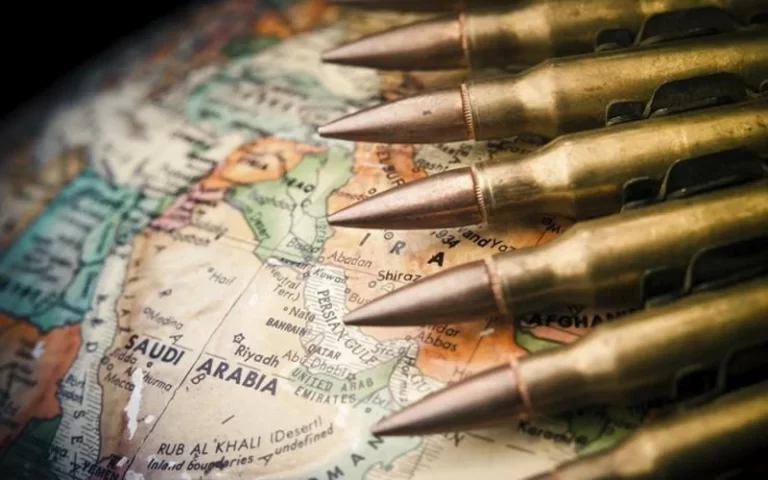
The United States Department of Justice revealed on Tuesday that in later 2019 and early 2020, two large caches of Iranian weapons had been seized in the Arabian Sea as they were being shipped to Yemen. Among the largest forfeiture of Iranian weapons to date were 171 surface-to-air missiles and eight anti-tank missiles.

In the complaint that led to the forfeiture of that oil, the US Justice Department noted that its sale would have benefited the Islamic Revolutionary Guard Corps, an entity designated as a foreign terrorist organization.

Around the same time, over a million barrels of Iranian petroleum, due to be delivered to Venezuela, was also seized. The confiscated oil was later re-sold, and the profits were reportedly added to a fund to compensate victims of terrorism around the world.

From the US Marine barracks bombing in 1983 in Lebanon, to the bombing of Khobar Towers in Saudi Arabia in 1996, the list of victims from acts of terrorism is extensive. In 2020, a U.S. federal judge in New York ruled that the Iranian regime was liable for damages in relation to the 9/11 terrorist attack in 2001 as they harbored Al Qaeda operatives prior to the attack, providing them with ‘critical training and support’.

In 2018, the list of victims almost grew longer due to the failed terrorist plot of the Iranian Resistance rally near Paris which would have claimed the lives of lawmakers and dignitaries from across the world, along with many activists and Iranian expatriates.

Under the command of high-ranking Iranian diplomat Assadollah Assadi, three Iranian operatives were planning to attend the rally with a device laden with 500 grams of the highly-explosive TATP, which had been transported across Europe from Tehran by Assadi himself. Belgian authorities managed to intercept the operatives before they could cross the French border and seize the device, destroying it in a controlled detonation, which unfortunately wounded an officer despite him being outside of the detonation zone.

That fact is a testament to the destructive power of the explosives, which experts say would have killed hundreds or perhaps thousands of the approximately 100,000 people in attendance at the Free Iran rally.

During the trial of the four men involved in the bomb plot, testimonies regarding the potential damage that the bomb could have caused if the plot had been followed through ensured that the men all received lengthy prison sentences. In recent weeks, the three operatives launched an appeal to reduce their sentences while Assadi is still standing by his defense of diplomatic immunity.

The news of the weapons smuggling further adds to the seriousness of potential future terrorist threats from Iran and highlights the need to enforce strong measures to confront these threats.

The orders for an attack on the gathering had come from high in the Iranian regime’s leadership. This was affirmed by Belgian prosecutors, in statements that seemed to hint at the need for accountability extending beyond the trial at hand.

Through extensive research and intelligence sharing, the NCRI has identified that the regime’s Supreme Leader Ali Khamenei and former president Hassan Rouhani both have prominent roles in the regime’s Supreme National Security Council which oversees all of Iran’s foreign activities, and terrorist operations.

With a network of operatives laying low across Europe ready to strike when called upon, if Western policymakers are not more forthcoming with implementing stringent measures to keep the Iranian regime in check, the regime will likely be emboldened to carry out future attacks without the fear of consequences.
Iran’s Government Smuggles Country’s Soil

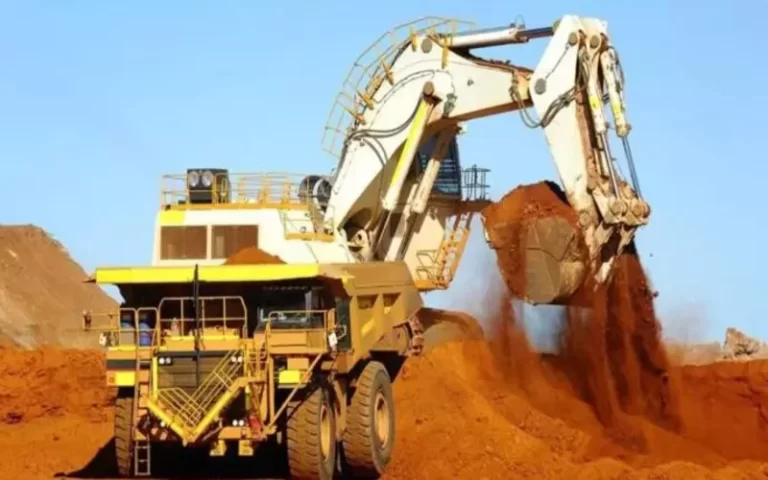
“Despite the Iranian government’s claims to the contrary, the soil of the country is being smuggled.” This is the sentence of Somayeh Rahimi, Chairman of the Parliamentary Environment Faction, who spoke clearly about this crime, something that has been denied by the regime’s officials over the past years.

Annual sedimentation of six million hectares of soil has reduced the useful life of dam reservoirs and unauthorized land-use change. This shows that not only has the regime misused this soil, but we are witnessing the continuation of the smuggling of the country’s soil to the countries of the Persian Gulf.

Why, because the soil market is one of the most profitable markets in the world, and the regime’s officials and its Revolutionary Guards are using this source for expenses and profits.

This act is creating an environmental crisis for the country. The reason why the Persian Gulf countries are buying Iran’s soil is because their soil is sandy and calcareous and is not suitable for agriculture and green environment, so they are buying Iran’s soil which is very high-grade at low prices.

The amazing part is that according to the regime’s law Article 21 the transportation and sale of the country’s soil are illegal, but this act is continuing.

Three years ago, Ali Moridi, the then director-general of the Environmental Protection Agency’s soil and water bureau said in response to the country’s soil smuggling: “Smuggling has been going on for 18 years. The destination of the smuggled soils is the Persian Gulf countries, especially the UAE and Qatar, which are used in the UAE to build artificial islands and in Qatar to dry the sea.”

The country’s soil is being smuggled, while experts say it will take 500 to 600 years to produce one centimeter of soil. The soil of any country – in addition to its spiritual value and sanctity among the people – is one of the most valuable resources in any country. Iran is known as the flagship of fertility in the Middle East, but the soil in this country has been neglected in recent years, such as air and water.

Due to the confession of the regime’s officials, this question is raised, that what is the role of the regime’s Ministry of Jihad Agriculture and the Environmental Protection and Customs Organization in preventing this act, and who is behind this act?

Hamidreza Pirvan, head of the Water and Soil Protection Engineering Group of the Regime Agricultural Research Organization, noted: “The news of soil smuggling is always denied by the competent institutions. The Organization for Forests and Rangelands is in charge of the protection of natural resource soils, and to date, it has not provided a report in this regard.

“The phenomenon of soil smuggling has been observed many times in the southern coasts of the country. My objective observations confirm this. In the 90s, while working in South Pars, I saw with my own eyes a conveyor belt moving from land to sea. When I inquired about the cargo of this conveyor, they told me that stone was supposed to be exported in this cargo, but instead of stone, they loaded the soil on the ships.

“Raw selling is very common in Iran, with many miners selling the raw material after extraction instead of turning it into a final commodity in processing plants. There is also a lot of potential for soil smuggling in the crude-selling process. Buyers of sand mines are given an area of ​​a few square kilometers. They smuggle some of the area’s soil when mining.”

No Progress Made at Latest Round of Iran Nuclear Talks in Vienna

0

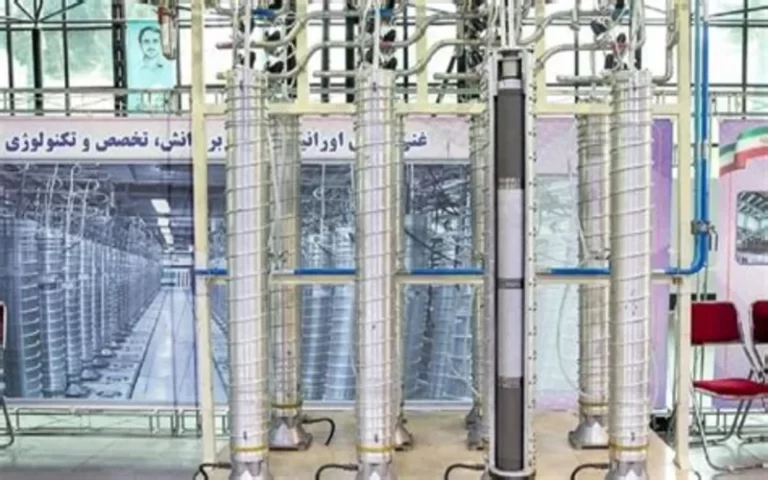
Last week saw the seventh round of talks to discuss restoring the 2015 Iran nuclear deal take place in Vienna with barely any progress coming to light over the five-day event. Instead, the negotiations seemed to take a step back with the Iranian regime’s spokesman, Ali Bagheri Kani stating that the regime wished to revisit the terms agreed upon during the previous round of discussions.

The delay in negotiations following the last round occurred because Ebrahim Raisi was appointed the regime’s latest president. It was expected that Raisi’s rise to power would signal the start of more aggressive policies and practices, and while he settled into his new role, his administration deflected the issue until recently.

The patience of Western negotiating partners noticeably wore thin during that time, and after meeting in Washington, representatives from Britain, France, and Germany expressed consensus on the need to adopt an alternative approach if the Iranian regime continued its delays.

As stated by the NCRI’s Foreign Affairs Committee Chairman, Mohammad Mohaddessin, the regime stalling tactics are simply to allow them to buy time to continue the deceive the international community while they secretly advance their nuclear weapons program.

Following the conclusion of last week’s discussions, the U.S. Secretary of State Antony Blinken stated that “Iran right now does not seem to be serious about doing what’s necessary to return to compliance.”

Even before the Raisi administration took over, Tehran had repeatedly declared that it expected the European Union to exert pressure on the US leading to the wholesale suspension of economic sanctions. Since the regime’s presidential transition, it has become entirely clear that this demand is not limited to nuclear-related sanctions but also includes those addressing terrorist acts and human rights abuses.

The regime has indicated that they will only commit to a return to compliance with the nuclear deal, also known as the Joint Comprehensive Plan of Action (JCPOA) if the U.S. agrees to relieve them from the sanctions placed upon them. As this demand was never going to be fulfilled, instead of walking away from the recent talks with no clear progress, the Western signatories should have taken the opportunity to abandon the existing agreement and instead adopt a new strategy.

It is expected that the eighth round of talks is set to be scheduled, but what will come from those talks is further unanswered questions. It appears that the JCPOA is completely not fit for purpose, but the Western powers are unwilling to let it go. Ahead of the recent round of talks, it was claimed that Iran would need to face consequences for their stalling tactics, but nothing has been done yet. The only foreseeable option is to restore sanctions and increase foreign pressure on the regime

Secretary Blinken’s public frustration with Tehran’s actions last week may signal the administration’s potential willingness to follow through on its promise of enhanced pressure and consequences for the regime. But for the time being, the JCPOA signatories appear poised to continue treading the same path by scheduling yet another round of ‘negotiations’ in which Tehran has flatly refused to negotiate.

IRGC’s Drug Mafia, More Fatal Than the Coronavirus

0

The Iranian government’s propaganda apparatus is presenting a picture of Iran whereby all the cities and provinces are getting out of a critical coronavirus situation and the numbers of infected people and victims are decreasing.

State media is trying to normalize the two-digit number of over 80 victims per day. About the new variant of the coronavirus, they are saying contradictory things and claiming that the people are responsible for any new peak in the country.

Masoud Younesian, a member of the Scientific Committee of the Government Headquarters for Combating the Coronavirus, said on December 5, on the state TV Channel 5 regarding the new variant of the Coronavirus:

“We have not had any reports from inside the country so far. But having not any report, cannot be considered the virus did not enter the country.”

However, the lifespan of this claim was just one day. As reported by the state-run daily Hamdali, on December 6, Mohamadreza Mahboobfar, a health expert in the regime, stated that “It cannot be said with certainty that no new virus has been observed in Iran” and reminded that “regarding the delta virus and the fifth peak of the disease, the disease was widespread in the country, but the technology and laboratory equipment available in the country could not detect the virus, and therefore, no report on the disease was published and the Ministry of Health and the National Anti-Coronavirus Taskforce they denied the fifth peak.”

Mahboobfar revealed the regime’s secrecy about the spread of the virus in the country and said:

“The arrival of Omicron in the country is certain. Worrying reports are circulating about students suffering from the coronavirus. Statistics released by the Ministry of Health and the National Coronavirus Taskforce and the Mask app, which is affiliated with these two government agencies, cannot be trusted.

“In Isfahan alone, in the last two weeks, unfortunately, three journalists and media activists have lost their lives due to coronavirus and despite receiving two doses of vaccine, or in the last 25 days, out of a total of 515 visits to schools in Qom province, 7 classes due to the positive test of 48 students has been closed.”

Even before the new variant enters the country the regime’s officials are shrugging off the burden of responsibility of any disaster in the country – something that is concerning experts about the possibility of the spread of the new virus in the country.

On the same TV program, Younesian said: “Countries that do not do enough genetic sequencing tests are naturally aware that the virus has entered those countries and they have not reported. Given that it has been reported in eastern Iran, in western Iran, and southern Iran on the Asian continent, reason, and logic dictate that we assume that it has either entered our country or will enter soon.”

Now this question is raised, why is the government not reacting to the arrival of the new virus? The response to this question can be read in the state-run daily Hamdeli:

“Even though citizens of eight African countries were banned from entering the country, there were reports that the ban was broken in the port (formerly Shapur) of Khuzestan. It was reported yesterday that even though citizens of India, Pakistan, and South Africa were not allowed to enter, the port police issued visas to these citizens and allowed them to leave the ship and enter the city.

“The issue, which despite recent warnings of a ban on people from these countries, seems to be a deliberate incident in which we can even see the traces of the drug mafia.”

A mafia that is in the hands of the regime’s Revolutionary Guards, which does not care about the people’s lives and safety, like before when at the start of the pandemic the supreme leader Ali Khamenei used this virus as a weapon against the people and their protests, by not canceling the Mahan Air flights to China which were serving the IRGG’s goals. Now this time the drug mafia is following this goal.

Water Shortages Reach Crisis Levels in Iran As Groundwater Resources Are Also Running Low

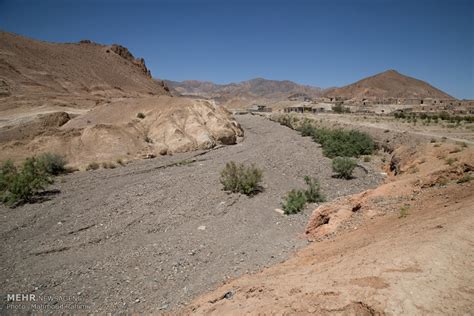
With Iran facing major water shortages through its rivers, the availability of its groundwater resources is vastly becoming a problem. Found underground in between rock and soil layers, groundwater is mostly accessible through wells or natural springs.

Depending on the climate of the region, the local geology, the land use, and the water quality, these will all affect the availability of groundwater resources. The issue of land subsidence in the region is also adding to the lack of water, leaving the water shortage issues reaching crisis levels.

Dr. Khalil Khani said, “Environmentalists and land experts are emphasizing the need to review the operation of wells, groundwater withdrawal, and water resources management. Some 29 provinces of 31 are currently at risk of subsidence. If this trend doesn’t stop, there will regrettably be great irreversible environmental degradation.”

The only immediate way out of this environmental crisis is to ban the excess extraction of groundwater, perform a critical review of the Revolutionary Guards (IRGC) dam construction program, and implement a plan to carefully maintain what reserves are available.

Flash floods have devastated Iran during the Iranian regime’s four decades in power, but the regime has no plan or made any attempts to collect the water to add to their reserves. Since they took power following the 1979 revolution in Iran, the mismanagement of natural resources has been rife and now the country is facing the consequences of their lack of forward planning.

Dr. Khalil Khani said, “Groundwater exploitation has dramatically been increased over the past decades leading to aquifer depletion. Now, this condition has caused the creation of massive cracks in more than 405 Iranian plains, such as in Fars, southwestern Iran, the central provinces of Isfahan and Markazi, and the capital Tehran, to name a few.”

The Iranian government is desperate to lay the blame elsewhere for the water crisis, claiming that the reason for the shortages is due to persistent droughts. In reality, the cause is their plundering of water resources, the IRGC’s dam construction project, and their man-made environmental crises, such as deforestation and desertification.

The levels of some of Iran’s aquifers have dropped by 100 centimeters over the past few decades. The digging of illegal wells and the use of improper irrigation methods are greatly adding to the depletion of groundwater resources. Of the 609 plains in Iran, it is estimated that over 300 of them are sinking rapidly as a result.

Dr. Khalil Khani said, “Water shortages have created many conflicts, but these conflicts are not between locals in various provinces.”

The biggest conflict is that between the regime and the Iranian people, who have been forced to stand back and watch their country suffer at the hands of the corrupt, violent government. An indication of the extent of this conflict was seen in the recent farmer protests in Khuzestan and Isfahan. The farmers protested for their rights to access much-needed water to maintain their land, and while the regime is to blame for the problems which led to the protests, they retaliated in the only way they know-how, to violently crackdown on rallies rather than find solutions.

Dr. Khalil Khani said, “Iran’s environmental crisis is not only limited to inside the country’s borders. It will spill over and contribute to the global environmental crisis. And of course, this will not be resolved as long as the clerics are in power.”

Iran’s Government Has Failed Today and Is Losing Tomorrow

After months of a break and expectation for the sixth round of Iran’s nuclear negotiation with world powers, finally last week the next round of the negotiation was resumed without any result as expected because the regime is facing a deadlock and cannot retreat from its nuclear ambitions.

What it cannot ignore and leave behind is the situation in the country especially the increasing inflation and the people’s demands which is reflected in their protests and will accelerate after this news.

The best index for this claim is the increasing currency rate.

“Today in the free market, the price of the dollar reached 30 thousand and one hundred tomans. (Tasnim, December 4, 2021)

This is just another wave that is hitting the high prices in the country. And shocks like this will take the last piece of bread from the people’s tables. The Executive Secretary of the Workers’ House said about this:

“The most important problems for workers are high prices and rampant inflation. With this level of wages, even the lowest living expenses are not provided. Today, workers are not even able to meet the basic needs of themselves and their families, while by law the minimum wage must be able to meet the basic needs of a working-class family. I hope the officials do not fall asleep.” (ILNA, December 4, 2021)

The situation is disastrous and so obvious that not only millions of jobless youths, garbage collecting children, and thousands of other human disasters are an index for economic misery, but all strata have become an index for economic misery.

Four months ago, the regime’s supreme leader Ali Khamenei decided to appoint Ebrahim Raisi as the regime’s new president. Immediately after this decision many of the regime’s economic experts showed their frustration and fear about this decision and expressed themselves publicly that someone like him will do with the country’s economy while having not the minimum expertise in running an administration.

Now after 100 days of the Raisi administration, nothing has been changed except more destruction to the country’s economy which is damaging a population of 80 million.

“In these 100 days, despite the promises, a special change that did not take place in the lives of the people, but the situation of high prices that the Rouhani government had prevented in the last days from being recorded in history, is worsened.” (State-run daily Rooz-e No, November 11, 2021)

The state-run daily Setareh-e Sobh wrote: “What can be seen from the first 100 days of the 13th government is that inflation has increased compared to before this government came to power, commodity prices are rising, housing and rent prices are still rising, promises given about improving living conditions and the economy has not been implemented yet and no plan has been presented to solve them.

“More importantly, the president promised to build one million homes a year, but in the first 100 days the Ministry of Roads and Urban Development did not announce a strategy to achieve such a big goal.”

Meanwhile, the state-run daily Farhikhtegan wrote: “It should be noted that the late formation of the government itself is the result of another event, which may be considered as the lack of a comprehensive idea of ​​governance.

“Promises such as solving the stock market problem and lowering the exchange rate by some presidential candidates who are now presidents are also examples of such naive point of view that problem-solving can be defined in the absence of an idea of ​​economic governance.” (State-run daily Farhikhtegan, December 3, 2021)

Now after years of corruption, looting, auctioning the country’s natural resources, and destruction of the economy the regime is trying to solve the problems with irresponsible economic plans which is facing protests even by its media:

“The behavior of all governments at the time, without exception, unaware of the consequences of these ill-considered behaviors in the budgeting process, was contrary to the actual economic power of the country and its executive capacities, and created destruction, corruption and aggravated the class differences. (State-run daily Jahan-e Sanat, December 4, 2021)

Iran’s Government Must Blame Itself for the State of Economy

0

Following the five-day talks in Vienna last week that turned out to be fruitless in agreeing on the future of the 2015 Iran nuclear deal, also known as the Joint Comprehensive Plan of Action (JCPOA), a dramatic drop in the value of rial occurred within a matter of hours.

From every U.S. dollar being exchanged at 300,000 rials, it suddenly reached 310,000 rials a few hours later. The argument that the talks were to blame was fair, considering that many people had hoped that a breakthrough in the deal would rekindle trade with Iran and open the country to the international market.

The reality is that Iran is suffering from a much deeper economic crisis, one that goes beyond the nuclear program and the ongoing talks with world powers.

For the past four decades, the Iranian economy has constantly been on the decline. Following the 1979 revolution, when the Iranian regime came to power, the price of a dollar was equal to 140 rials. By the early 1990s, this figure had reached 1,420 rials. A decade later, the exchange rate was sitting at 7,920 rials.

The 2010s is when the pace of the rial’s value escalated. From 19,000 rials to every dollar in 2011, this figure almost doubled within five years, before hitting a record 150,000 rials in 2018. As Ebrahim Raisi was sworn in as the regime’s president in August of this year, the figure sat at 230,000, before reaching its latest figure this month.

The real reason behind Iran’s fast-declining economy is the annihilation of production in the past four decades. Hundreds of factories and thousands of workshops have been shut down due to the regime’s destructive economic policies.

Today, Iran has been swarmed with imports and smuggled goods and runs on a corrupt network of economic enterprises that are run by regime officials, or by the Revolutionary Guards (IRGC). Regime experts have even referred to the situation as a ‘parasitic economy’.

While these imports are costing the regime vast amounts of money, another drain on the country’s finances is their funding of their nuclear programs and their terrorist proxy groups across the Middle East.

This is why there’s not enough money left in the government’s coffers to pay government employees, teachers, workers, doctors, healthcare staff, and millions of other Iranians who are trying to make ends meet.

In an attempt to temporarily address the country’s budget deficits, the regime resorted to printing absurd amounts of banknotes, at the expense of the Iranian people. An article in the Etemad newspaper last month stated that around 48 million rials’ worth of banknotes is printed every day in Iran. This led to a rise in inflation and skyrocketing prices of basic goods. As a result, a large part of society in Iran is living below the poverty line.

The real culprit behind the nosediving economy and currency is the regime itself, which has only looted the country’s resources and brought nothing but corruption, death, and destruction to the people of Iran and the region. And we can only expect the trend to continue in the coming months.

New Blow to Iran’s Government, Iraq Seeks To Remove It From Its Energy Market

0

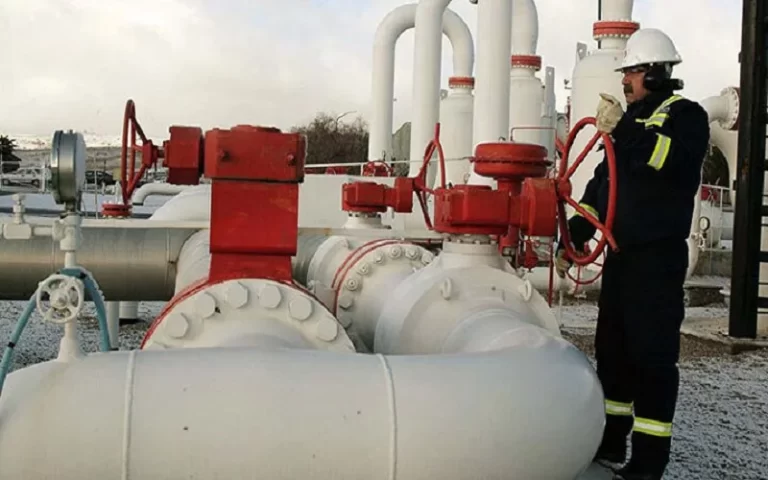
Iraq is facing many problems due to the continuation of international sanctions against the Iranian government and is seeking to replace gas and electricity imported from Iran.

Energy expert Mehdi Karamipour has said that Iraq, like other countries, prefers not to get involved in Iran’s political problems, and it seeks to buy and import fuel from other vendors as much as possible.

Speaking to the state-run website Tejarat News, he said that Iraq needs the regime’s gas as the fuel for its power plants, and the regime is exporting gas to Iraq. Iraq needs the regime’s gas to be able to build new power plants. Therefore, if the regime is not able to export gas to Iraq, the regime’s share of the Iraqi electricity market will decrease.

Asked what would happen if Iran does not sell gas to Iraq, he said: If we do not sell gas to Iraq, Iraq will supply its gas from other countries, and this game is a double loss for the regime.

The former secretary of the Iran-Iraq Joint Chamber of Commerce continued: ‘Of course, Iran’s removal from the Iraqi gas market is obvious, because, for political reasons, Iraq prefers to supply its fuel and goods from countries that do not have political problems.’

Due to international sanctions, the Tehran government sells its fuel and goods to its buyers at cheap and discounted prices to keep them as its customers.

About 80 percent of Tehran’s electricity exports go to Iraq, and the rest to Pakistan and Afghanistan.

Yahya al-Ishaq, head of the Iran-Iraq Chamber, had previously said that Iraq’s debts to the regime are between $5 billion and $7 billion. This means that Tehran has sold the gas and electricity needed by Iraq to the country at a lower price, and now it has not been able to return a large part of these dollars to the country due to banking problems caused by international sanctions.

Economists believe that Iraq, because of its strategic ties with European countries and the United States, prefers not to buy from Iran and that this discount cannot be a substitute for trade with Iraq, as Iraq seeks to engage with countries around the world.

Recall that the US government last Saturday gave Iraq an exemption for another 120 days to buy electricity from Iran. This means that Iraq can continue to buy gas and electricity from Tehran for another four months and not be subject to US sanctions.

Under US sanctions, Iraq deposits money for gas purchased from Iran in the Commercial Bank of Iraq, and Tehran can use it to buy humanitarian goods. Although Iraq has said it can pay its debts in dinars, but Tehran wants it in US dollars, which is virtually impossible given international sanctions.

Ahmad Musa, the spokesman for the Iraqi Ministry of Electricity, told Al-Youm Al-Baghdad newspaper on Sunday, November 28, that according to the agreement, Iran should have delivered 50 million cubic meters of gas per day to Iraq, but now this figure has been reduced to 8 million cubic meters.

Iraq supplies one-third of its energy needs through the purchase of electricity and gas from Iran and it is now deciding to stop this, and in addition, it is now in a position where, according to figures released by the regime’s Chamber of Commerce, China, Iran’s largest oil customer, has reduced its purchases from Iran by 99 percent.

Daily Protests in Iran Are Developing Into a ‘Dangerous Situation’ for the Iranian Regime

Due to the Iranian regime’s mismanagement of the economy, their rampant corruption, and their brutal oppression of society, protests are a daily occurrence across Iran and the depth of the socio-economic problems in the country have left society on the verge of explosion.

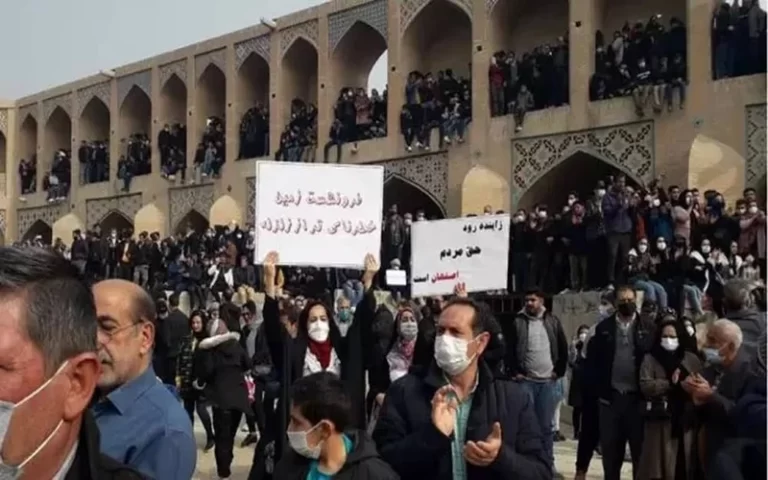
During the recent protests in Isfahan, people who had initially started the protests by demanding their social rights began chanting political slogans. Iran’s state media have sensed society’s restiveness and have acknowledged this fact in recent days.

The state-run Jahan-e Sanat daily wrote on December 2 that the deterioration of the socio-economic situation in Iranian society is due to mismanagement by regime officials ‘from the ninth to the twelfth government’.

As a result, even the middle class in Iran has become poor. Many protests have taken place across Iran since 2009, with people from across all social classes being involved in different protests year after year.

Jahan-e Sanat wrote, “We had the middle class [protests] in 2009 after [sham] elections, then the frustrated poor people who protested in November 2019 after the increase of fuel prices. Recently we had the protest rallies and strike of farmers in Isfahan, a traditional section of society that had not protested before.”

They warned that if the Iranian people’s demands are failed to be addressed by the regime, ‘the situation will become more sensitive’.

Jahan-e Sanat said, “We now see that the protesters include teachers, workers, the lower classes, and other walks of life. This means that people are aware [of the regime’s misdeeds]. This is dangerous if their demands are not fulfilled.”

They referred to the current social situation in Iran as ‘dangerous’ and acknowledged that the regime will most likely resort to further oppressing the Iranian people as the problems have reached a level where it is practically impossible to address the demands of the people.

Jahan-e Sanat said, “No ruler allows protests to advance more than a certain limit. The system is not unaware of the extent of dissatisfaction. But this is not the way to solve the problem. Protests have accelerated since 2009.”

The state-run Ebtekar daily wrote that the levels of inflation in Iran are continuing to increase, leaving society under unbearable socio-economic pressure, and making more and more families fall below the poverty line.

While many commentators blame international sanctions as the reason for the Iranian people’s financial problems, state media acknowledged that people are suffering since the regime has been wasting national wealth on its malign activities.

The regime has wasted over $2 trillion of Iran’s national wealth on its nuclear program so far while the country’s population is struggling to survive and provide for their families. All the while, the state-run Arman daily has stated that ‘there is no economic justification’ for the regime’s nuclear program whatsoever.

The Iranian regime can no longer oppress these protests or deceive people. Once the regime oppresses a protest or an uprising, another unrest begins. As described by Iran’s state media, this situation is “dangerous” for the regime and a real threat to its grip on power.

Huge but Hidden Corruption

0

The chairman of Iran’s Privatization Organization Hossein Ghorbanzadeh previously said that about 525,000 properties have been registered in the SADA system and emphasized that naturally, this number must be much higher about the properties owned by the regime’s officials and their institutions, but they are not registering them and are hiding them from the public.

According to state-run news agency Tasnim, in an interview, he said that despite that these properties should create money they are wasting. The reason for that is improper management, and its result is the waste of these properties. And said that unfortunately, this has become a rule which is one of the factors of corruption and something that is destroying the country’s economy.

He added that in the SADA system 525,000 properties have been registered, from this number 314,000 belong to the executive systems of the government and the rest to other systems. This is while in Turkey about 3 million properties have been registered. And according to the extent and population of Iran, naturally, the number of properties that are owned by the executive systems of the government must be much higher and the regime’s officials have hidden most of them.

He said that the head of all branches of the government and the so-called private-governmental companies and their institutions own many properties and buildings. Even many non-military properties have been usurped by the Revolutionary Guards (IRGC) and other military institutions. Even fields belonging to the medical science universities are captured by them.

According to the latest regime’s statistics two times the liquidity of the country, inventories have been identified, this is something that Mohammad Reza Pur Ebrahimi, chairman of the regime’s Parliamentary Economic Commission, has confessed, which is showing the amount of the wealth in the hands of the regime’s officials.

The estimated value of the properties in the hands of the government is $634 billion. While these properties could be used for urban development, the government has blocked all these fields.

With this $634 billion the regime can administrate the country for nearly 12 years but the budget to run the country is only $58 billion.

If we want to see the amount of this disaster created by corruption like this, it is enough to have a look at the statistics of the government’s budget statistics. According to the state-run daily Rouydad24, what the government has published about the country’s budget is contrary to the speeches of the Head of Program and Budget Organization.

The government is predicting that they will be able to sell about 1.2 million oil barrels. While there is no official statistic about the regime’s oil sale, but estimations are suggesting that the regime was only able to sell about 600,000 barrels.

The amazing part is that the regime said that for the next year’s budget they are not counting on the lifting of the sanctions but has doubled the oil sale predictions. Even if we predict that the government can sell 1.2 million barrels next year, it will have problems entering the gained money into the country’s economy.

Another strange thing is that the government is predicting the exchange rate to be 23,000 tomans for each dollar. While all the predictions for the coming months are speaking about an exchange rate of 40,000 tomans and even more.

The only solution to decrease the exchange rate in a short time urgently is the increase of the export income so that the regime will be able to inject more dollars into the market. But the reality is that the regime is bartering oil, therefore something like this is just an illusion. Now add to this the number of the 44 percent of inflation, then the extent of the disaster will become visible.

The question is how a corrupt government which has captured most of the public’s properties and frozen them so that none of the people can use them, and with such a minimum allocation of budget for the country’s administration and such an oil export and inflation rate, is even able to speak about an economic boom and ‘Resistive Economy.’

This reveals the regime’s lies and deadlock.