Home Blog Page 259

Iran: People Getting Poorer, the 100-Day Achievement of Raisi

Ebrahim Raisi and his government promised the Iranian people that their living conditions will be changed at a very close time after he took office as President. But now after a while not only have the conditions did not improve but become worse and the number of people living under the poverty line has been added.

This is something that is not based on speculations but the officials’ statistics of the regime. According to the regime’s statistics center, in early November, the increase in food and beverage prices in the country during the 12 months leading to October this year compared to the same period last year (annual inflation) was 61.4 percent, which is a new record in food inflation.

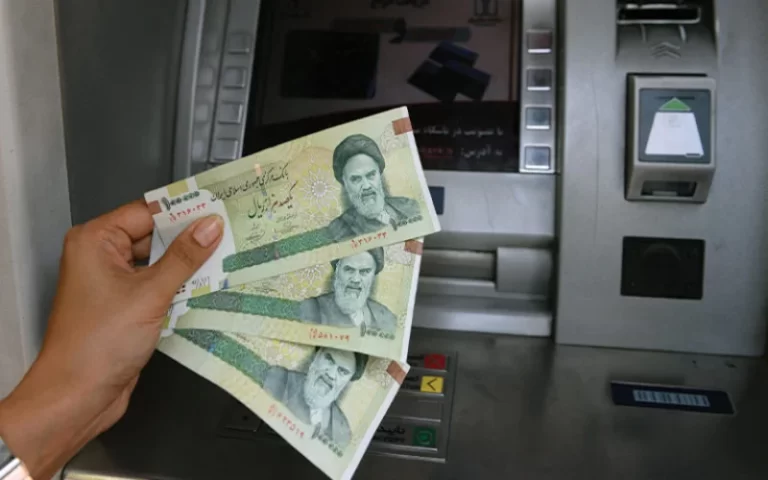
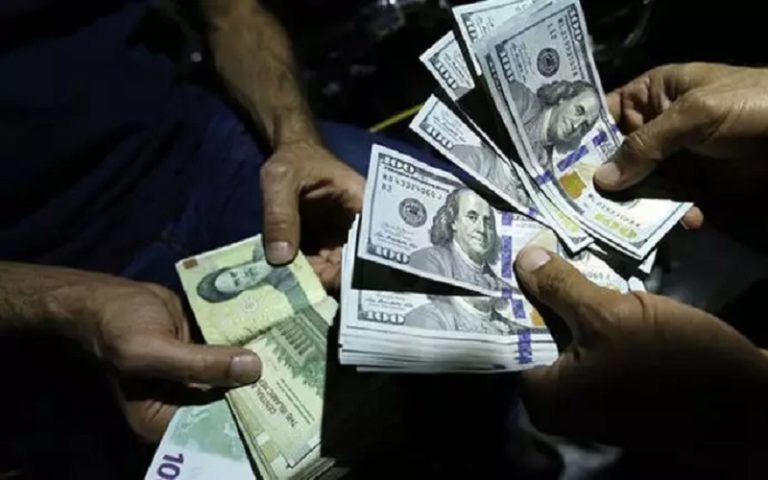
This inflation and this figure are something like ‘super inflation’ and have crossed the limits of normal inflation. The dollar has exceeded 28,000 tomans means an alarm for the regime and if not heard it will have social consequences.

“Reports from the Statistics Center of Iran state that the inflation rate in October 2021 was 45.4%. These numbers show horrible inflation on paper. But the most frightening part of this phenomenon is felt in the daily lives of millions of people, especially in metropolitan areas.

“The very high cost of food, astronomical rents, travel costs, large figures for health care, etc., have put the middle class on the throe of a two-way decision.” (State-run daily Mostaghel, November 15, 2021)

Examination of the price chart of selected items in comparison with the trend of changes with the desired limits shows the warning and critical price situation.

In October 2021, the average price of about 79% of selected items including first-class Iranian rice, first-class foreign rice, machine chicken, pasteurized milk, pasteurized yogurt, pasteurized Iranian cheese, machine eggs, pasteurized butter, liquid oil, banana, apple, orange, cucumber, potatoes, pinto beans, lentils, sugar, and foreign tea are over the critical price range.

The economic situation is so dire that the government is forced to admit the existence of ‘beyond critical’ conditions in official and government statistics.

“One of the promises of Raisi’s government was to address the economic problems of the vulnerable immediately, but the daily increase in prices during the 100 days of this government does not show any clear prospects for improving the situation of the poor.

“Now that the 4,200 toman currency (each dollar) is to be eliminated, new high prices are rising, and even if direct subsidies increase, it will still be the poor who create the first line of vulnerability.” (State-run daily Etemad, November 14, 2021)

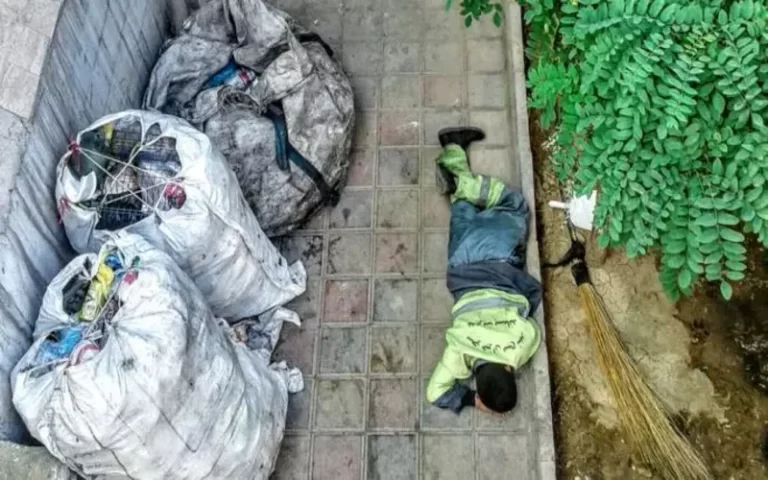
In the current situation, the conditions of the poor and economically vulnerable strata are so critical that the quality of food is no longer important to them, and they are just trying to get a piece of bread and not to die of hunger.

This situation indicates that many strata have crossed the poverty line and the absolute poverty line and reached the survival line who are trying daily not to starve to death.

The root of this situation is clear even for many of the government’s figures and experts. Institutional and structural corruption in such a way that every economic project and of any quantity and quality in this regime becomes a place and a source for rent-seeking and looting by the government elements.

According to Mohsen Zanganeh, an MP, ‘up to $55 billion worth of 4,200 Tomans has been distributed in the country,’ but the result has not been a reduction in prices, and in connection with it, ‘many cases of rent-seeking and economic corruption have been created.’

He said:”4200 Tomans have been used for the supply of seven items of goods up to 8 billion dollars” and “since the beginning of 2021 until now, the previous government, as well as the thirteenth government, spent the total amount of 8 billion dollars to supply seven items of goods with 4200 Tomans.” (State-run website Eghtesad Online, November 6, 2021)

If this money was spent on buying the basic items needed by the people and distributed in the market at the price of 4200 Tomans, the situation of prices would be different. But the government’s corruption did not allow such a thing to happen.

Finally, state-run daily Donya-e-Eghtesad warned the regime and wrote: “It should be borne in mind that there are no miracles in the economy and the structural problems that the Iranian economy has been suffering from for more than five decades and in recent years due to international tensions and hardships, its symptoms and effects on the nation’s livelihood have become worse, will not improve significantly with any immediate action.” (State-run daily Donya-e-Eghtesad, November 14, 2021)
Iran: Hidden Subsidies a Deception To Plunder the People?

0

Statistics indicate that Iran’s government headed by Ebrahim Raisi has decided once again to loot the people’s pockets by eliminating the hidden subsidies, to compensate for the government’s budget deficit.

It has been a little over a decade since the announcement of what has been called ‘targeted subsidies’ in Iran. It was in the winter of 2008 that Mahmoud Ahmadinejad’s government introduced the law on targeted subsidies to the then parliament.

Finally, after many disputes among Iranian officials, the law of the ‘targeted subsidies’ was approved in December 2010.

At that time, it was announced that energy carriers, water, and bread would be offered at a new rate, the price of free gasoline increased to 700 Tomans and the price of CNG gas to 300 Tomans per cubic meter.

The price of diesel was announced at 350 tomans per liter. According to the law passed at the time, 16 items of goods and services were subject to the abolition of subsidies and were supplied at international prices.

At that time, it was decided that half of the revenue from targeted subsidies, which amounted to 1 trillion tomans ($816 million), would be allocated to citizens in cash to combat inflation.

In the first year of subsidy payment, i.e., in 2010, it was decided to pay 45,500 tomans ($36) per month to about 68 million people in the country.

After two years from that date and in the budget of 2012, it was decided that due to the increase in the price of the dollar to 1226 Tomans, the surplus income from the difference between the dollar rate in the foreign exchange reserve fund with the National Development Fund or the government treasury account should be saved separately. And part of it in the amount of 2 trillion tomans ($1.6 billion) to be allocated to compensate the budget deficit in that year.

In the meantime, however, Ahmadinejad’s government refused to allocate a share to the manufacturing sector, making the targeted subsidies ineffective.

The targeting of subsidies, especially in the energy carriers’ sector, was done under the pretext of reducing the consumption of energy carriers in the country, but after a short time after the removal of subsidies from the energy carriers’ sector, the consumption of these carriers returned to the previous level.

In 2012, Ahmadinejad’s government was forced to raise the price of foreign exchange in the open market to cover the lack of funds to pay subsidies, and this was the beginning of a process that has continued to this day.

Ahmad Tavakoli former MP announced at the time that the government had deliberately increased the price of the currency so that they could pay the difference in cash to the people. This, however, was an inflationary move and had an impact in the months and years that followed.

Ahmadinejad’s government handed over the job to Hassan Rouhani’s government. Before taking the helm of the government, Rouhani promised the lower deciles of the society rich incomes.

But a year after these words of Rouhani, the second phase of targeted subsidies began in April 2014.

As many as 91.2 percent of Iranians applied for cash subsidies in April 2014, but it turned out that between 10 and 15 percent withdrew their applications for subsidies.

It turned out that 22 million families, out of a population of over 70 million at the time, had applied for cash subsidies.

Quota gasoline at this time increased from 400 tomans to 700 tomans and free gasoline from 700 tomans to 1000 tomans.

Also, the quota diesel price increased from 150 tomans per liter to 250 tomans and free diesel from 350 tomans to 500 tomans.

In the second term of Rouhani’s government and in November 2019, the price of quota gasoline increased from 1000 Tomans to 1500 Tomans and free gasoline to 3000 Tomans.

However, the Rouhani government’s promise to pay a living subsidy in addition to the previous 45,500 Tomans subsidy was never fulfilled, and so far, the amount of the subsidy has remained at the same figure as in 2010.

Now, less than three months after the inauguration of Ebrahim Raisi, he and his affiliates are seeking to pave the way for what is called the elimination of hidden subsidies.

They spoke of the need to eliminate hidden subsidies and ‘hold a referendum to eliminate cash subsidies’ and offer ‘quasi-subsidies’ instead of cash subsidies.

For example, Hadi Ghavami, the Deputy Minister of Economy of the Raisi government, cleared the path for this and announced the number of hidden subsidies as 140 trillion Tomans ($5 billion), and added that one day of hidden subsidies per person is equivalent to one month of cash subsidies and the total is 1.35 billion tomans per month.

In another artificial calculation, the number of hidden subsidies is estimated at 170 trillion tomans ($6.1 billion).

These figures, however, are practically impossible to calculate based on the number of hidden subsidies as opposed to cash subsidies because they are a function of different criteria and different base prices.

However, what is now counted as a hidden subsidy in Raisi’s government is the difference between the border price (Customs) of goods and the domestic price of those goods.

With such preparations, and without considering the per capita income of Iranian households and indexing the price of energy carriers with the FOB rate of the Persian Gulf, Raisi’s government, like its predecessors, seeks to eliminate hidden subsidies under the pretext of targeted subsidies.

At present, there is a daily increase of 300 trillion tomans ($11 billion) of liquidity in the Iranian economy, which the regime’s economists see as the result of incorrect implementation of targeted subsidies and non-elimination of hidden subsidies.

Iran Government’s Mistakes Are Accelerating Its Demise

Iran’s government is facing huge crises. Most state-run media outlets, officials, and government affiliates are warning each other about the situation. The country is facing collapse, and the only thing that makes the regime able to control the situation is its aggressive repression and executions, which are increasing in numbers since the start of Ebrahim Raisi’s government.

The following is the conclusion from the remarks about the regime’s critical situation in its outlets.

If Raisi’s government cannot focus and solve the crises points like the JCPOA (Iran’s nuclear deal with world powers), budget, inflation, etc., it must expect catastrophic storms. Ten days after the start of Raisi’s government, Kabul collapsed and created a huge challenge for the country on its eastern border.

Except for the security challenge the daily emigration of hundreds of Afghan refugees, some numbers are speaking about 5000 people daily, which will have political, economic, and security consequences.

The presence of Israel behind the northwest border of the country is a big national security issue and should not be underestimated. And in the middle, the tension is increasing daily. Iraq is facing protests and riots after the election and the present result is not in Iran’s (regime’s) favor and on the other side Saudi Arabia is holding its hostile position and the negotiations are continuing without any feelable outcome.

In the JCPOA the negotiating parties, are accusing Iran of buying time and Iran’s winning card, which means Trump’s exit from the JCPOA and the following actions by Rouhani’s government are becoming a loss for the country.

Regarding domestic policy, the situation is not pleasant. Because the domestic policy is under the effect of the economy and the increasing pressure of inflation has caused people to move their demands to the second stage.

The government, however, has not provided a solution other than the presence of officials at gas stations, pharmacies, and fruit and vegetable markets, and there is no specific policy in this area.

There is no improvement in the country’s situation. Decreased middle-class purchasing power and its fall below the lowest stratum, have irreparable consequences. Despite the many warnings of the (regime’s) experts, the situation is getting worse day by day and as this trend continues, the country is getting closer to social and economic crises.

And the false policy which was usually executed in the of confronting the sanctions had the opposite result and made the situation of the economy worse.

Based on the unemployment, class gap, high prices, the 30 million people living under the poverty line, and finally the 60 million people who require living support without which they are unable to survive even one day, no one can say that there is happiness in the country. With 5 million unemployed youth and a poverty line of $390, this will not create any happiness definitely.

The state-run daily Etemad on November 14 warned the regime about the consequences of poverty which has flooded the entire country wrote:

“If the plight of the poor and marginalized, which their number is increasing would be considered and become the priority in decision makings, even through peaceful positions in foreign relations, the psychological atmosphere around the exchange rate could be calmed and the dollar could not accelerate.”

Iranian Terrorists Attempt To Appeal Their Convictions at a Belgian Court

0

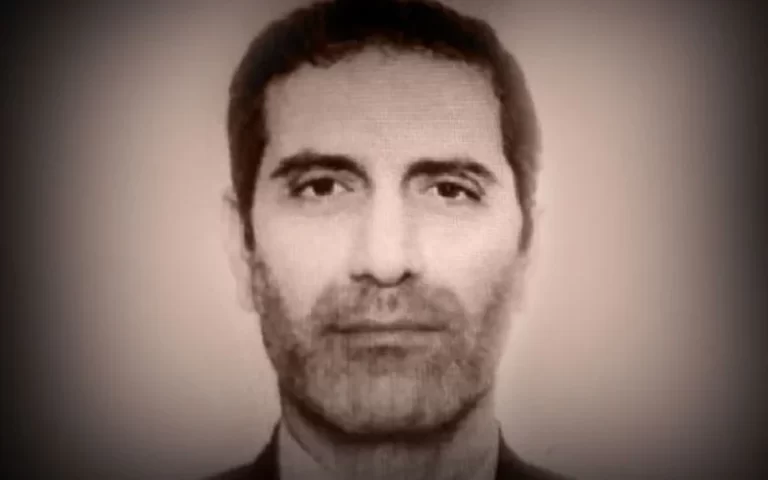
A Belgian court is currently considering an appeal for three individuals who were convicted earlier this year for their roles during a failed terrorist bomb plot on behalf of the Iranian regime. The three men who have Iranian and Belgian dual citizenship were sentenced to between 15 and 18 years in prison, while the mastermind behind the plot, Iranian regime diplomat Assadollah Assadi was sentenced to 20 years behind bars.

During the convictions of the men in February, the National Council of Resistance of Iran (NCRI) asked the European Union to act and extend the accountability of the terror plot in 2018 beyond just the four individuals. The target of the plot was a political rally in France that had been organized by the NCRI.

Attendance at that rally was estimated at around 100,000, including dozens of European and American political dignitaries. The primary target of Assadi’s plot was NCRI’s President-elect Maryam Rajavi.

According to experts, if the bomb had been detonated at the rally, hundreds of people in attendance would have been killed immediately, with the death toll possibly increasing due to a stampede from mass panic.

The bombs were fortunately discovered in a vehicle belonging to two of the imprisoned men, Amir Saadouni and Nasimeh Naami, and were detonated by a Belgian bomb squad, which slightly wounded one police officer despite the area being cordoned off to a safe distance.

The explosives were exported out of Iran on a flight to Austria, contained in Assadi’s diplomat pouch to avoid security screenings. Once in Austria, the explosives were then transported to the French border by car. Saadouni and Nasimeh were arrested at the French border, while Assadi was apprehended in Germany while traveling back to the Iranian embassy in Austria where he was stationed.

It is now understood that while technically employed as the third counselor at that embassy, Assadi was operating as the European bureau chief for the Iranian Ministry of Intelligence and Security.

At the time of Assadi’s arrest, documents were found in his vehicle which contained handwritten notes about associated meetings, as well as receipts for payments he had given to various agents working across his vast terrorist network. His network is said to extend from Austria into neighboring countries in Europe, including Hungary, Switzerland, the Czech Republic, as well as Belgium, the Netherlands, and Sweden.

Sweden is where authorities arrested a former Iranian prison official in 2019 and put him on trial for war crimes and his involvement in the 1988 massacre which saw the executions of over 30,000 political prisoners. Hamid Noury’s trial is still ongoing and was recently transferred temporarily from Stockholm to Durres, Albania to hear testimonies from members of the People’s Mojahedin Organization of Iran (PMOI/MEK).

He is the first person to face legal consequences for that crime against humanity, and activists associated with the MEK have urged the international community to regard his arrest as a test case for universal jurisdiction, a principle that allows serious violations of international law to be prosecuted in any venue.

Despite Assadi’s long prison sentence, it is unlikely that his terror network has fallen apart in his absence. The international community needs to help to dismantle it and make it a priority to fully confront the Iranian terror threats with new diplomatic pressures and economic sanctions.

One thing is clear: the highest officials in the Iranian regime cannot evade accountability for their wrongdoing, least of all when their actions still pose a global threat to this day.

Iran IRGC’s Cyber Army and Its Consecutive Defeats

0

Hossein Salami, the head of the Iranian regime’s Revolutionary Guards (IRGC), previously said that the cyber army of the IRGC and the paramilitary Basij can confront the cyber warfare of the ‘Global Arrogance’ (the USA and the Western countries).

This comment is a little bit strange after the latest cyber-attack against the country’s fuel system, which caused interruptions for about one week.

The weekly ‘Sobh Sadegh’, a publication affiliated with the Revolutionary Guards, has recently published an article entitled ‘Cyber ​​Confrontation’ on the cyber wars of the Iranian government.

The IRGC initially blamed Israel for attacking the Iranian government’s nuclear facilities, including the Natanz site, the Karaj nuclear facility, the IRGC’s Jahad Self-Sufficiency Research Center, and an attack on the intelligent fuel system.

While the regime has suffered heavy losses in ​​cyber warfare in recent years and months, the Revolutionary Guards claimed that they have the fourth most powerful cyber army in the world.

However, despite such a claim by the Revolutionary Guards, the force has not been able to prevent serious cyber-attacks on sensitive military and security centers of the regime, and many regime-affiliated experts are warning the regime that they will be able to confront new attacks in near future.

Following the reactions to the remarks of ‘Sobh Sadegh’ weekly, this paper, in a refusal to eliminate the weakness of the IRGC following successive defeats in the field of cyber warfare, called the attacks on sensitive military, nuclear, and missile centers ‘Israel’s claim’ and stepped back from its previous statements.

Iran’s army forces including the National Army and the IRGC, according to the Stockholm International Peace Research Institute (SIPRI) have allocated about $16 billion of the country’s resources to themselves. This figure is believed to be much higher while most of the allocations are not public especially in the fields of overboard activities and the regime’s cyber warfare.

Most of it seems to be used in the service of internal repression and censorship of the internet and the press.

The first steps to impose censorship and repression in cyberspace have been executed with the establishment of the ‘Center for the Study of Organized Crime of the Revolutionary Guards’ which dates to 2007.

After that, the Revolutionary Guards, in the form of its ‘Basij Force’ in 2008, launched 10,000 blogs in 10,000 ‘Basij bases’ in the country to promote the policy of censorship and repression.

This was not the last action of the IRGC in the field of censorship and cyberwar against the people. The IRGC formed the ‘Basij Cyber ​​Council’ in 2009, ‘Supreme Council of Cyberspace’ in 2011, ‘National Cyberspace Center’, ‘Owj Organization’, ‘IRGC Cyber ​​Defense Command’ and its promotion to ‘IRGC Cyber ​​Security Command’, ‘Gerdab site’, ‘Khyber Cyber ​​Base’, ‘Mersad and Nasr’ companies, ‘Cyberspace Cultural Operations Battalions’, ‘Saraj Cyberspace Organization’, ‘Cyber ​​Base and New Threats’ to pursue its censorship policy inside Iran.

The goal of the regime’s cyber warfare is confronting protests and spreading fear among the people to prevent the formation of any activity against the regime, Iran watchers say. As an example, we can evoke the regime’s activities on social media after the bloody November 2019 protests, in which the regime’s cyber agents paved the path for the execution of the protesters, by trending the ‘#Execute’ hashtag on the Persian-language Twitter and demanded the implementation of the death penalty against the peaceful protesters, arguing that death-row demonstrators had committed murder, invasion of privacy, armed robbery, and bombing attacks.

The regime’s cyber army is not developed enough to confront strong nations, and its main goal is to be a supplement and aid for domestic repression.

Five Day Tribunal in London To Investigate Iran’s November 2019 Atrocities Has Ended

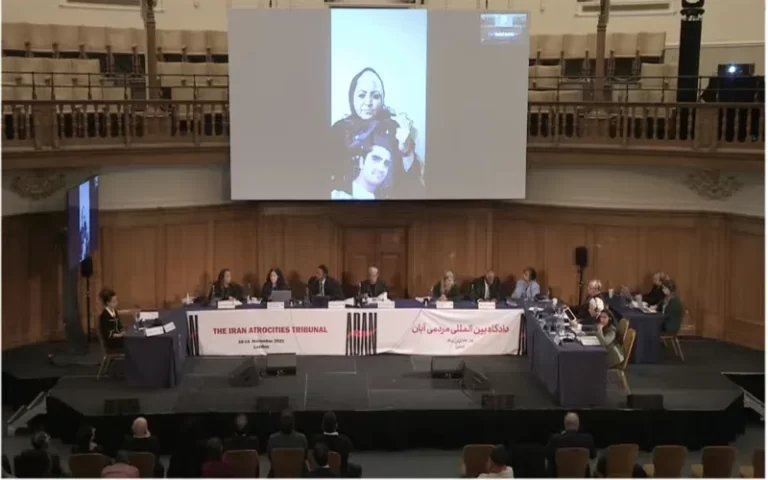
An international people’s tribunal held in London finished its fifth and final day of proceedings on Sunday, November 14. The Iran Atrocities Aban Tribunal was organized by human rights groups in London, Paris, and Oslo to investigate the atrocities committed by the Iranian regime in November 2019 when they launched a brutal crackdown on nationwide protests, killing 1,500 protesters.

During the tribunal, a number of witnesses came forward to give their testimonies of the events that took place during one of Iran’s despicable human rights abuses. Protesters, arrestees, and relatives of the victims were in attendance for all five days of proceedings and revealed shocking details of the atrocities that were afflicted onto the Iranian people by the regime’s security forces.

The protests in November 2019 began in response to the sudden rise in petrol prices, before escalating to a nationwide uprising across Iran, with protesters voicing their opinions of the regime and calling for their overthrow. International law experts have since stated that the mass slaughter of protesters during that period is a crime against humanity.

A former employee of the Islamic Revolutionary Guard Corps (IRGC) Khatam-ol Anbiya Garrison, identified only as Witness 367, gave their testimony on the last day of the tribunal, detailing the IRGC’s role in the crackdown on dissent.

Due to a shortage of forces, the IRGC deployed its employees to participate in the suppression of people. The forces of the IRGC garrison damaged and destroyed people’s shops and vehicles but pretended that the damage was caused by the people.

Witness 18, a woman who wished to remain anonymous, explained that her son was one of the victims brutally gunned down during the protests, but according to his death certificate, the manner of death had been recorded as ‘being hit by an accelerated object’. Following his death, authorities refused to hand over his body to his family, until a week later when they were summoned to the cemetery and told to bury him there.

Witness 119 recalled seeing government agents opening fire on people in a small town, wounding several people, and killing a 16-year-old girl. They noted how following the shooting, the streets around the town were covered with blood, which municipal workers later washed clean.

A woman, identified as witness 2016, spoke about the distressing sight of seeing security forces shooting a pregnant woman at a rally. She explained how the son of her friend tried desperately to help the woman but was also shot at. He was then arrested and deprived of medical treatment. Wounded victims who did make it to medical clinics were also arrested.

Witness 245, who wanted to remain anonymous, said the ambulances carried the wounded to the police station instead of a hospital.

Another heart-breaking story told during the tribunal was that of a group of teenage males who fashioned a shield out of a 12-meter object and threw stones from behind it. Security forces retaliated, opening fire and raining bullets on them, severely injuring a couple of them.

Trial of Former Iranian Prison Official Involved in 1988 Massacre Temporarily Expedited to Albania

The ongoing trial of the former Iranian prison official Hamid Noury has been temporarily expedited to the District Court of Durres in Albania were members of the People’s Mojahedin Organization of Iran (PMOI/MEK) residing at Ashraf 3 in the country will give their eyewitness testimonies.

Noury is being prosecuted by Swedish authorities for his role in the 1998 massacre in Iran, as well as his torturing of inmates at Gohardasht prison in Karaj, following his arrest on a trip to Stockholm three years ago.

During the summer of 1988, over 30,000 political prisoners were brutally executed, most of whom were MEK members and supporters. Then-Supreme Leader Ruhollah Khomeini issued a fatwa which stated that supporters of the MEK were enemies of God and they deserved to be executed. The 1988 massacre is considered a war crime and a crime against humanity, with legal experts recognizing the event as an act of genocide that needs to be addressed in international tribunals.

The first 34 sessions of the trial were held in the District Court of Stockholm, and sessions are set to return there after next week once all testimonies from witnesses in Albania have been given. Noury and his lawyers remained in Sweden and joined the trial sessions through a video conference.

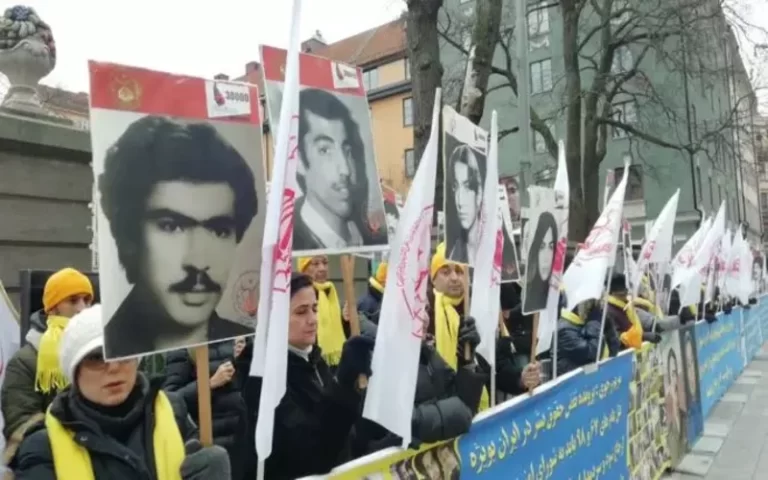
While the trial proceeded, several witnesses of the 1988 massacre and families of the victims gathered in front of the court in Durres and spoke to the press about the Iranian regime’s crimes against MEK members and dissidents.

Another gathering was held at Ashraf 3, the home of exiled MEK members, in memory of the victims of the 1988 massacre. During the event, many former political prisoners spoke out about their experiences and the atrocities they witnessed in Iran’s prisons.

During the 36th session of Noury’s trial, Majid Saheb Jam, a former political prisoner who spent seventeen years in Iran’s prisons testified on the atrocities that took place in Iran’s brutal prisons.

During the 1988 massacre, Saheb Jam was in Gohardasht prison, and he directly witnessed the role played by Noury and other regime officials in the 1988 massacre.

After being transferred from Evin prison to Gohardasht, he was immediately subjected to torture by prison guards, who beat him and other prisoners with sticks and cables.

On August 6, Saheb Jam was blindfolded and transferred with fellow inmates to another building, referred to as the courthouse.

He said, “I lost some of my best friends that day, people who were with me that morning and had been sent to the Death Commission. The only difference was that when they were asked the same question, they presented themselves as supporters of MEK. I didn’t say that. And I watched them walk past me and go to the death hall.”

During Friday’s session, Asghar Mehdizadeh, a former political, testified on the atrocities that took place in Iran’s brutal prisons. Mehdizadeh was arrested in 1982 for supporting the MEK and spent 13 years in various prisons, including Evin and Gohardasht. He is one of the direct witnesses of the 1988 massacre.

Mehdizadeh stated how Noury would torment prisoners, saying that he would make the younger inmates crawl around the courtyard in the cold during winter.

Between August 4 and 8 in 1988, Mehdizadeh was regularly taken to the ‘death corridor’, where prisoners would be waiting to be taken to the ‘Death Hall’, a large warehouse where inmates were executed by hanging. Those waiting in the corridor were forced to watch their fellow prisoners die until it was their turn for the noose.

Mehdizadeh recalled that when his blindfold was removed by guards, he saw 12 MEK supporters standing on chairs on a stage with the nooses around their necks chanting, “Long live Rajavi, Death to Khomeini!”

Prison officials were ordered to begin removing the chairs, but after the fourth person, the rest of the prisoners on the stage chose to jump off the chairs by themselves, as a show of defiance towards the regime.

During Monday’s session, Akbar Samadi, a former political, testified on the atrocities that took place in Iran’s brutal prisons. Samadi was arrested in 1981, while he was only 14 years old, and spent 10 years in prison for supporting the MEK. In April 1986, he was transferred to Gohardasht prison.

Samadi was questioned during his testimony, by his lawyer, about what the spirit of the prisoners was when they learned that fellow inmates were being executed.

He said, “While they were all ready for death, they had very high spirits,” adding that some prisoners accepted their fate and cheerfully talked and laughed in their final hours.

Second Anniversary of Major Iran Uprising: The Time Is Now for World Powers To Speak Up

November 2021 marks the second anniversary of the major protests in Iran which turned into a nationwide uprising led by residents of almost 200 cities and towns across the country, calling for regime change with slogans such as, “Death to the Dictator.”

As the intensity of the protests threatened to topple the Iranian regime, officials ordered security forces to crackdown on the demonstrations and open fire on the crowds. 1,500 protesters were brutally gunned down, and a further 12,000 activists who were arrested spent several months detained and subjected to torture.

The head of the judiciary at the time, and thus the ultimate overseer of all that torture, was Ebrahim Raisi, a clerical judge who had served the regime by justifying a wide range of human rights abuses since shortly after the 1979 revolution.

During the summer of 1988, Raisi was selected as one of four officials to sit on the ‘death commission’ in Tehran. These four judges were tasked with implementing a fatwa issued by then-Supreme Leader Ruhollah Khomeini which called for the executions of political prisoners who were deemed disloyal to the regime.

In early 2019, Raisi was appointed as the regime’s judiciary chief. This appointment was part of a bigger pattern that saw participants and perpetrators of the 1988 massacre being rewarded with top regime positions instead of being held accountable for their actions.

The MEK accounted for 90 percent of the victims of the 1988 massacre, the overall death toll of which has been estimated at over 30,000.

Following Raisi’s selection as the regime’s new president this year, Amnesty International’s Director-General Agnes Callamard spoke about how Raisi has managed to be elevated to such a high position within the regime instead of being prosecuted for his crimes against humanity. She noted that it was a “chilling reminder that impunity reigns supreme in Iran.”

The second anniversary of the November 2019 uprising once again reminds us of the regime’s impunity, as well as highlights the brutality that the regime has inflicted on the Iranian people. The NCRI’s President-elect, Maryam Rajavi predicted that Raisi’s rise to the presidency would present the international community with a “litmus test of whether it [the Raisi administration] will engage and deal with this genocidal regime or stand with the Iranian people.”

When Raisi’s inauguration took place in August, the major world powers failed to bring up Raisi’s human rights abuses in their discussions of his presidential administration, and the European Union even sent a delegation on their behalf to attend the inauguration event.

That was an insult to those who have personally suffered at Raisi’s hands, either during the 1988 massacre or during the crackdown on the 2019 uprising. But so far, neither the EU nor its member states or allies have changed course.

The time is now for world powers to step up and act more firmly towards the regime. The brutal crackdown of the uprising in 2019 has not dissuaded Iranians from taking to the streets to protest for their rights and call for the regime. As a result, the regime remains concerned about protests escalating to another major uprising.

If Western policymakers and other stakeholders don’t reverse their silence on Raisi’s promotion to the presidency, they will certainly reinforce the regime’s sense of impunity and thus embolden the next sequence of human rights abuses against a population that has recently made extraordinary progress in its fight for freedom and democracy.

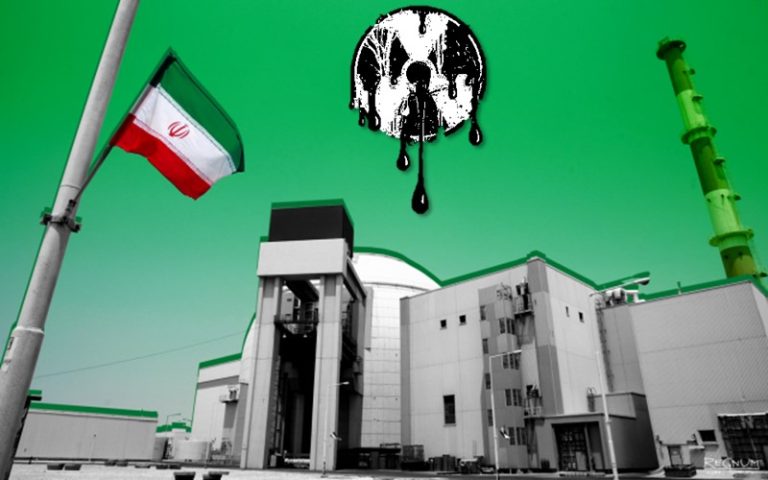
Iran’s Regime Committed Huge Mistakes in Its Nuclear Case

At the beginning of the work of Iran’s new government, the regime’s official thought for a while about the restart of the nuclear negotiations with world powers, finally despite their previous claims that the new government will not continue the negotiation in such a situation they accepted to restart them, and they announced a new date for the start of the seventh round of the nuclear negotiations.

The first announced that the US government should free the regime’s blocked $10 billion in assets, as a sign of good faith. But this did not happen, and the US government has not accepted it as of yet.

The regime’s president Ebrahim Raisi frustrated asked that if only the US government lift the sanctions, they will accept new negotiations. But now it has become crystal clear for Tehran that there is no other way than the seventh round of the negotiations.

In addition to the US government’s reaction, some European governments such a France and Germany have said that the negotiations must continue from that point where they have been stopped and new point for the negotiation is not accepted something that increases the regime’s frustration while counting of the Europeans to take its back while confronting with the US.

Now the negotiations will start on November 29. And this time the regime must satisfy the other parties of the negotiations or else as the Stater-run daily Arman-e-Meli on November 20, 2021, wrote:

“We must take care of the security circles around the country. Recently, the Zionist regime has been trying to form a regional and international coalition against our country (regime). These threats should not be ignored. It should not be taken lightly, but it can be very serious. A front is forming in the region with four main members: Turkey, Saudi Arabia, Israel, and Egypt.

“The Prime Minister of the Zionist regime has announced that the anti-Iranian alliance in the region will take a stronger shape. This front can be dangerous and a threat to us. Negotiations must begin peacefully.

“No country, neither China nor Russia, will be able to save our economy. We must try to lift the sanctions. The way out of the internal pressures and the heavy (bad) economic situation is to get rid of the issue of sanctions and it will be solved with the JCPOA.”

However, even in the best-case scenario, Iran’s regime will still remain an isolated government because the reason why the regime has stopped the negotiations is not because of its nuclear case but of the new demands like the regime’s human rights, missile, and regional cases. This is something that the regime is not able to obey as the path it has taken over the last 43 years has shown.

Therefore, “in Washington they are speaking about the implementation of Plan B against Iran. But for Iran, Plan B is like Plan A.” (Diplomacy Irani, November 9, 2021)

The question is why is the regime’s government is feeling something like this?

Because “17 Republican congressmen wrote a letter to Biden asking him to stop negotiations with Iran! Among the signatories of this letter, the names of several anti-Iranian representatives can be seen, including Bryan Steil. Some foreign policy experts believe this letter is a sign that any possible agreement with the West in the future will be written on the flowing sand and after the end of the Biden government, the next president can easily abandon the new agreement, like the 2015 agreement, with a simple signature.” (State-run daily Mashregh, November 12, 2021)

The Iranian government knows very that the new JCPOA negotiations have a specified direction that does not favor the regime and the regime will lose its nuclear lever without any benefits even economic as many of its so-called reformist elements were advertising. This is something that happened in the 2015 negotiations.

The regime made a huge mistake by investing in tactical steps which were not in its favor, which indicates its stagnation and disappointment.

  1. Wrong investment on the result of the US election.
  2. The regime did not understand or was late in understanding that the US government is not interested in the regime’s gain of success and economic benefits. For that, the regime now is auctioning the country’s wealth to compensate for this loss.
  3. Playing with the liftable and unliftable sanctions was the next mistake because most of the sanctions are due to the regime’s other cases like terrorism, human rights violations, and missile projects.

Now the regime is in such a situation that “any agreement is better than no agreement.”

Iranian Diplomat Charged With Assassination of a Publisher in Norway

0

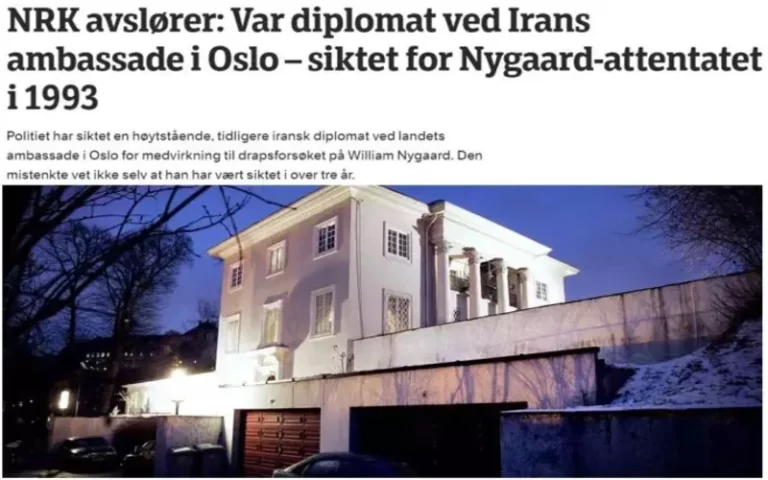
A former senior Iranian diplomat based in Oslo, Norway, and a Lebanese national is at the center of accusations of being involved in the assassination of Norwegian publisher, William Nygaard. According to the Norwegian Broadcasting Corporation (NRK), the Norwegian National Criminal Investigation Service (Kripos) has been investigating the case since 2009.

Nygaard, who was the former head of the publishing company Aschehoug and the former chairman of the NRK, was responsible for publishing the Norwegian edition of Salman Rushdie’s controversial novel, The Satanic Verses.

Based on a fatwa by Ruhollah Khomeini, the Iranian regime’s founder and first Supreme Leader, against Salman Rushdie, Nygaard was targeted in 1993 by several fanatics for publishing Rushdie’s novel.

Tehran’s first Secretary at the Iranian regime’s Embassy in Oslo, unidentified by the NRK, and Lebanese national, Khaled Moussawi, who lived in Oslo during the 1990s, are the main suspects in Nygaard’s assassination. Tehran’s diplomat reportedly visited Norway just after Rushdie’s book was published but left the country four days before the assassination.

This wasn’t the first time that the Iranian regime’s embassy in Oslo has been involved with terrorism and espionage. Three years ago, Mohammad Davoudzadeh Lului was arrested by Swedish authorities for his affiliation with the regime’s Ministry of Intelligence and Security (MOIS).

Davoudzadeh was involved in a terrorist plot against Iranian Arab citizens in Denmark. Davoudzadeh had obtained refugee status and later Norwegian citizenship and was in regular communication with the regime’s embassy in Oslo and then-ambassador Mohammad Hassan Habibolahzadeh.

In September 2021, it was reported in Swedish newspapers that former Swedish security police chief, Peyman Kia had been arrested and charged with spying on Iran’s behalf between 2011 and 2015. Having obtained Swedish citizenship, he worked as a director for the Swedish Security Police (SPO), and as an analyst for the Swedish military whilst spying on behalf of the regime and relaying information back to them.

Another spy case came to light in August when an Iranian couple was also arrested in Sweden after obtaining refugee status in the country using false Afghan identification documents.

Recent arrests of the Iranian spies suggest that Tehran has a vast network of terrorism and espionage in Europe. During the trial of Assadollah Assadi, an Iranian diplomat, in Belgium, it was revealed that he oversaw Iran’s network of terrorism in Europe.

Assadi, along with three accomplices, who had gained Belgian citizenship, were attempting to bomb the Iranian opposition’s rally in France in 2018. Assadi was arrested in Germany as he tried to get back to Austria where he served as the third secretary in the regime’s embassy in Vienna. German authorities discovered a notebook in Assadi’s car detailing the bomb plot, travel plans, and money he had paid to various operatives.

The regime has used its diplomatic privileges to spread terrorism in Europe. The regime’s agents have been able to settle down in the European countries, acquire citizenship. They are Tehran’s sleeper cells.

Despite Europe being in danger of the regime’s terrorist activities, EU leaders continue to converse with regime officials with policies of appeasement. While the arrest, trial, and convictions of Assadi and his co-conspirators are a step in the right direction, these actions are not enough to fully dismantle the regime’s terrorism network in Europe. Yet, European leaders have been reluctant to punish the regime for its terrorist activities.

Closing the regime’s embassies, expelling its so-called diplomats, identifying, and expelling the regime’s agents in Europe who operate while holding dual nationalities or refugee status are as necessary as they are delayed. This would not only end the regime’s threats against Iranian dissidents abroad, but it would also certainly add to the European citizen’s security.