Home Blog Page 271

Land Subsidence Destroys Iran’s Society

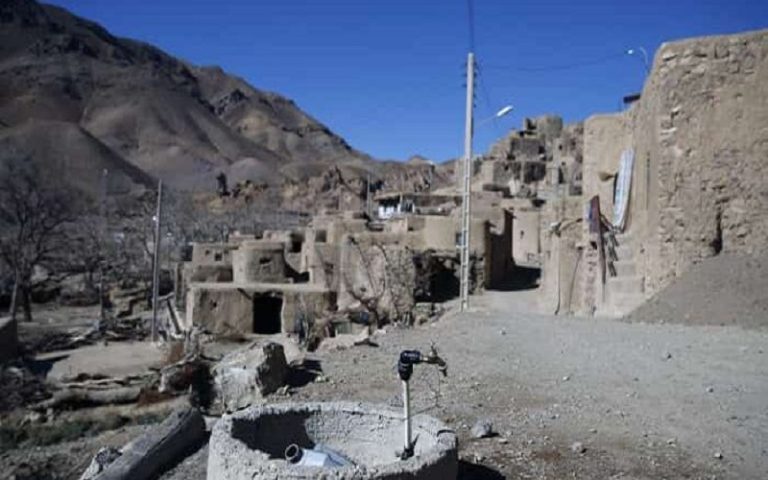
The Iranian plateau is sinking. According to Mostafa Fadaeifard, head of the specialized committee for flood assessment of the National Committee of Great Dams of Iran, 18 provinces are at high risk of land subsidence; subsidence that can engulf people’s vital infrastructure and homes and lands.

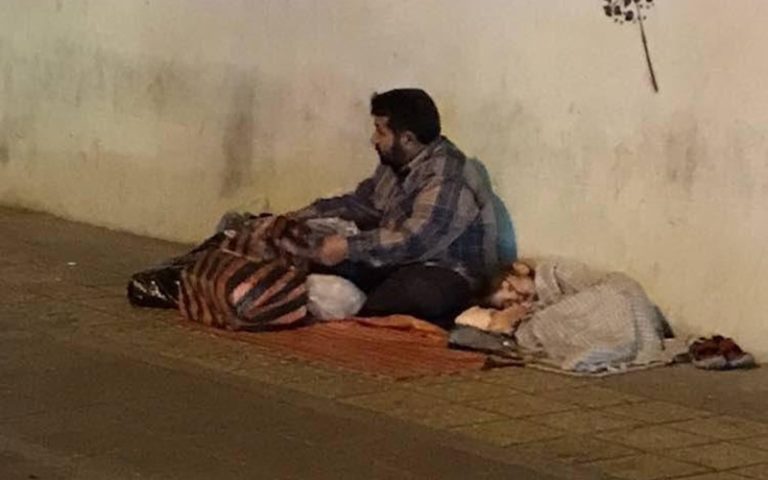
Water stress for large cities like Tehran means water rationing and consumption warnings, but for rural people, it means financial bankruptcy and migration, a process that has been going on for years. These people whose profession is agriculture are now forced to migrate to the outskirts of big cities and have become suburban people and day laborers. This shift, however, does not end here and has wider implications than we will discuss here.

According to statistics, 200 cities in the country are suffering from water stress this year. Perhaps it is not bad to give a definition of water tension that Iran is ranked fourth in the world; A country that has consumed more than 80% of its renewable resources. According to the ‘Falkenmark indicator’ or ‘water stress index’, when a region or country has less than a thousand cubic meters of water resources per person per year, the country suffers from water stress.

“This method defines water scarcity in terms of the total water resources that are available to the population of a region; measuring scarcity as the amount of renewable freshwater that is available for each person each year. If the amount of renewable water in a country is below 1,700 m per person per year, that country is said to be experiencing water stress; below 1,000 m it is said to be experiencing water scarcity; and below 500 m, absolute water scarcity.” (Global Water Forum, May 7, 2012)

What will this scarcity do with the country? Farmers in the east and west of Isfahan who live now for many years as farmers what will they do with their lives? The Kermanis who have no water anymore to plant pistachios what will they do? Cultivation pattern must change; True, irrigation should be change to drip irrigation, right, but in the absence of these scientific changes, people have found no way to escape their village for years.

Until now, migration from rural to urban areas has been mainly due to the repulsion of rural life; The repulsion that has occurred due to not finding a job and, in fact, a mismatch between the amount of land for the labor force; restrictive factors that have caused villagers to move from their hometowns to other cities.

Now, with water shortages, these migrations will increase. In this regard, we are witnessing migration to the north of the country. It is good if this migration is attracted by the destination and the person will find a job and is absorbed in the destination, but since such migrations are due to the repulsion of the origin, it must be said that it is a kind of migration is falling from the pit into the well.

This population is marginalized in the destination city and then suffers from a variety of social ills that challenge both themselves and the community of origin.

Iran’s cities even now cannot provide adequate urban jobs and facilities for its indigenous peoples, and if there is no culture and planning for these migrations in the cities of origin, then conflicts of interest can create new challenges for the cities, which we are seeing now.

Its manifestation can be seen in educational planning, a city must be able to calculate how many schools and teachers it needs for this population growth. But as we are witnessing due to an uncontrolled migration none of the cities are able to provide the migrated children with school and many of them are ending on the streets and being abused as workers.

Therefore, if these migrations are large and uncontrolled, changes must be made to the planning of the university, housing, roads, and urban infrastructure, as these are rapidly affected by migration and urban planning will be disrupted. Many young people in Iran who are scared because of water scarcity buys lands in the north of the country and decide to live there. Therefore, the population of the villages has shrunk by 50 percent in the last 40 years. Another effect of water scarcity in rural areas is reduced labor force and gender differences due to wider migration of men than women.

Lack of comprehensive and codified planning is one of the factors that has increased the damage to villages and cities. Especially in the long-term drought that has gripped the country for years, many agricultural products have been destroyed due to lack of water. Among the provinces where the effects of drought can be seen are Sistan and Baluchestan and Kerman, where many crops have been destroyed and where we are witnessing a flood of migration to cities, which has led to an increase in marginalization in large cities and provincial capitals.

Iran a Country in Ruins

It is evident from many facts that Iran after four decades of the mullahs’ rule has become a political, social, economic, environmental, and cultural ruin.

This situation becomes clearer when the regime’s officials are forced to confess and speak about this situation. And make it clear that such expressions are not just the opinions and propaganda of ordinary people and the Iranian opposition MEK/PMOI which the regime claims to be exaggerations and lies.

The former editor of the state-run daily Kayhan, Mehdi Nasiri, in a note which was published by the state-run daily Etemad on July 3, 2021, about such a situation under the title “Mr. [Ebrahim] Raisi, you took a ruin but not from [Hassan] Rouhani” wrote:

“Mr. Raisi’s office has also invited me to convey my views to the new president through a phone call, but for some reason, I prefer to share my content with Mr. Raisi on this public channel.

“Yes, I believe that the new president took ruins, but the cause of this ruin is not only Mr. Rouhani’s government but also all previous governments, statesmen, and officials, including Mr. Raisi and this humble servant who was the director of Kayhan from 1988 to 1994 and from 1994 to 1999 I was the manager of the personal magazine Sobh.

“Iran today is full of crises and super-crises, topped by a fragmented economy, growing poverty, social ills, managerial corruption, and moral weakness, and widespread popular distrust and despair of the future.

“Forty-two years later, the assessments show that the revolution and the Islamic Republic did not succeed in fulfilling the promises made to the people in 1979 to develop their religion and world (lives).

“The 2021 elections and the decline in popular participation are a sign of the frustration of Iranian society with the situation in which they live and breathe, even if some people still insist on presenting an epic interpretation of it.”

Then about the factors leading to this situation he added:

“What factors have led to this situation?

“If Mr. Raisi denies this destruction, I do not speak with him, but if he agrees, I will list the most important factors of destruction based on my understanding, maybe it will be some advice to the new president:

  1. Charismatic and sacred management and leadership of the system instead of management being temporary and periodic and accountable for criticism and evaluation.
  2. Lack of plans and programs for efficient and rational governance since the beginning of the revolution and the lack of need for the system to gain experience and use the knowledge and experience of domestic and foreign thinkers.
    In other words, disregard for national and global collective wisdom and expert opinions at most management levels.
  3. The desire for singularity and escape from political diversity from the early years culminated in the recent elections.
  4. Anti-world foreign policy and enmity and little attention to diplomacy, whose role in the misery of Iran’s today may have the first place.
    Although this policy is constantly documented in religion and ideology, in the opinion of the author (he self), it does not have the slightest relation with the rational political theology of Shiism.

We have failed to understand that not only the United States and the West but also Russia and China do not agree with adventurous Iran as the spoilsport and a regional troublemaker and will stop it whenever necessary.

  1. A one-dimensional conception of power and its limitation to military power and the neglect of economic, cultural, national, and diplomatic power, and the failure to learn from the failed Soviet experience of conquering half the world with the Marxist revolution with equal military power with the United States and NATO, but it collapsed due to economic, political, and cultural backwardness.
  2. Cultural and propaganda policies that polarize and interact with the people on the axis of religiosity and revolution are sometimes demonstrative instead of focusing on the Iranian people. This policy has been one of the most serious factors in the apostasy of the society and the non-voting of the majority of principlists.”

Finally, he warned the regime’s new president and wrote: “If Mr. Raisi, who, thank God, is in coordination with the higher institutions and the other two branches, can succeed in correcting and solving the above problems, he has done a great job and Iran owes him, but if he does not have such an analysis of the situation in Iran in 2021 and or if he is not able to make reforms, he will undoubtedly add to the destruction of the homeland.” (State-run daily Etemad, July 3, 2021)

Analyzing ‘Deprivation’ From the View of Iran’s Officials

Iran, one of the richest countries in the world, is thanks to the mullahs’ rule one of the most deprived countries too. Mohammad Omid, the Deputy of Rural and Deprived Areas of Iran, in his latest statement claimed that due to their efforts (the 11-12th government) they have decreased the deprived areas of the country from 75 percent in 2009 to 25 percent in 2021, which is a decrease of 50 percent.

“In 2009, about 75 percent of the land of Iran was a deprived area, but according to the latest confirmed statistics, now about 25 percent of the territory of Iran is a deprived area and we are witnessing a 50 percent reduction in this deprivation in the country.” (Entekhab, July 3, 2021)

He counted the indicators of this ‘success’ and said:

“Some 25 percent of the country’s rural roads have not been paved yet and about 10 percent of the country’s rural areas still do not have gas. About 15 percent of comprehensive rural health centers also need to be renovated.” (Entekhab, July 3, 2021)

The question is how such a person in such a position can even dare to speak about such a ‘success’ in decreasing the percentage of deprivation when most evidence is contrary to this.

We will help him and count just a few of the crises for him which in any other country are the subclasses of deprivation.

“We are more involved in literacy than the student population,” Deputy Director of Literacy of the General Directorate of Education of Yazd Province, stating that in the census conducted in 2016, according to statistics, we had eight million illiterates, said: ‘This does not indicate a good situation in this area, and we are more involved in literacy than the student population.’” (ISNA, July 4, 2021)

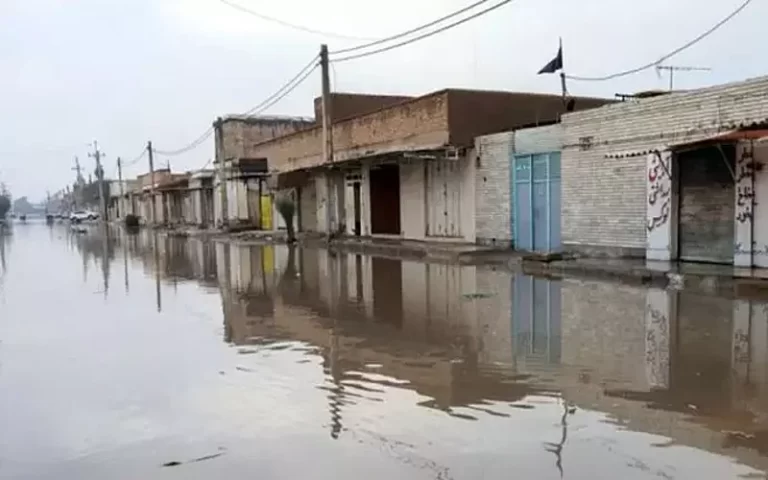
State-run news agency IRNA reported: “Qassem Soleimani Dashtaki stated in a meeting to review the deprived areas of the province, which was held at the Khuzestan governor’s office and attended by the Vice President for Rural and Deprived Areas: ‘Khuzestan province in economic development due to large oil, gas, petrochemical, steel, agriculture and industry and… it has an influential role, but the citizens living in the province always face various problems and deprivations.

“The governor of Khuzestan pointed to some indicators of deprivation in the province and said: ‘Some cities in the province are facing 100 percent deprivation, the reduction of which requires serious and practical planning at the national and provincial levels.’

“Soleimani Dashtaki Rah said that Drinking Water and infrastructure facilities are among the essential needs in improving the living conditions of residents of deprived areas of the province and added: ‘For example, studies show that 730 villages in Khuzestan lack safe drinking water.’” (IRNA, July 3, 2021)

Pay attention this official is speaking about “Drinking Water” and said that 730 villages in Khuzestan which are without any doubt one of the richest provinces in the country lacks ‘Safe Drinking Water’ and not the lack of ‘paved ways’ and ‘gas’ which the so-called Deputy of Rural and Deprived Areas of Iran, Mohammad Omid counts as the indicators for the elimination of deprivation.

Iran, Khuzestan water crisis, source state-run news agency Tasnim, July 4, 2021

“The per capita consumption of red meat in the world is 12 kg per person per year, which due to successive jumps in the price of these products in the country, has decreased by 50 percent and reached 6 to 7 kg per year. Of course, this number may also decrease, given the  60 million population that is subject to subsistence subsidies.

“On the other hand, official statistical centers have also reported on the replacement of meat products with eggs and soy.

“If we add to the statistics on the consumption of meat and the substitution of other products instead of protein, the absolute poverty of 35 percent of the country’s population, we can understand the bitter truth of the livelihood of low-income families.” (State-run website Fekrshahr, July 4, 2021)

So, as a conclusion someone should say to this ‘Deputy of Rural and Deprived Areas of Iran’, no sir, the deprivation belongs to the country’s cities, and about the country’s rural areas and villages we should say they have crossed this border and are struggling to survive, having no drinking water which is the most primitive right of any human.

There are much more facts, like the disaster of the mass migration of the rural people to the suburbs of the cities which has created the critical crisis of marginalization for the country.

Iran Internet Bill Means Military Control of Cyberspace

The violations of freedom of expression and other human rights will only increase under new Iranian president Ebrahim Raisi, who is otherwise known as the “henchman” of the 1988 massacre of 30,000 political prisoners.

Why is this specifically? Well, a bill is due to be considered by the Iranian parliament that will restrict freedom of expression, even though its title indicates the opposite. (It’s called the plan to “protect the rights of users in cyberspace and organize social media”.) Essentially, a committee made up of the Intelligence Ministry, Revolutionary Guards, and the State Security Force will monitor social media, basically allowing the armed forces to take over Internet management and showing new internet repression.

MP Hamideh Zarabadi admitted: “The content of this plan shows that it does not match the name chosen for it … We see the same thing in real space. They want to extend it to cyberspace and turn cyberspace into a security space that is also controlled by the armed forces.”

And the state-run website Kargar Online on July 3 wrote: “One million jobs depend on Instagram and virtual networks. But the parliament ignored this statistic, turned its back on the internet and the head of the parliament’s cultural commission says that they are standing by the plan to restrict the internet!

“It seems that the plan to organize cyberspace has not been removed from the agenda of the parliament, and the members of parliament are trying to approve this plan secretly and away from the eyes of the media and critics and to inform the government about its law.

“Morteza Aghatehrani, the head of the parliament’s cultural commission, announced yesterday: More than 130,000 posts have been posted from abroad about the plan to organize the media and cyberspace, and they have opposed it. But we stand by this plan, we have done our job.

“He said that we have prepared the law, we will take it to the parliament and we will do it. Because, according to Aghatehrani, the plan to organize cyberspace media has been in demand for many years, and this year we were able to achieve it.”

If people or groups post things online that the government does not approve of, they can be subjected to Ta’zir punishments, including:

  • imprisonment (91 days to six months)
  • fines (ten to twenty million Rials
  • floggings (11-30 lashes)
  • social rights deprivation (up to six months)

Of course, the regime has a long history of repressing its people online, as can be seen in the aggressive censorship seen of social media platforms around Iranian elections and during uprisings, such as the November 2019 protests that were violently repressed. The officials blocked many websites and messaging services to stop Iranians from discussing the protests amongst themselves and the rest of the world because the content was considered “anti-government propaganda”.

Reporters Without Borders (RSF) condemned this just days after the internet blackout began, which made it hard for Iranians to contact any outside body or media outlet to let them know about the crackdown.

The RSF wrote: “The Iranian regime must adhere to its obligations to respect international standards and put a stop to all digital discrimination.”

Iran Human Rights Monitor urged that all Iranian citizens have their freedom of expression respected and advised that the new internet plan indicates that the Revolutionary Guards wants to dominate cyberspace and all communication.

They wrote: “We condemn this plan and believe that the Iranian people should be able to have the right to freedom of expression.”

Power Outages Add to Iranian People’s Suffering

In recent weeks, large parts of Iran have witnessed widespread electricity blackouts. The blackouts have peaked again, and now, as the weather warms up, there is talk of wider and longer blackouts in Iranian cities.

Power outages in the cities of the world’s largest energy superpower

Iran has the second-largest natural gas reserves in the world and the amount of domestic gas production and consumption is very high. On the other hand, with an installed power plant capacity of nearly 85,000 MW, Iran is one of the 15 largest generators of electricity in the world. Accordingly, Iran generates even more electricity from more populous countries (such as Indonesia and Egypt) and more developed countries (such as Mexico).

But why does Iran, as an ‘energy superpower’ that ranks next to countries such as Russia, Saudi Arabia, Venezuela, Canada, and the United States, cut off electricity in both summer and winter?

There is a lot to be said about this. First, Iran has the highest rate of ‘energy intensity in the world. Simply put, Iran consumes more energy than any other country in the world but produces the lowest gross domestic product (GDP) per unit of energy consumed.

But that is not all. First, Iran’s electricity grid is severely worn out, and a lack of investment over the years has resulted in the loss of much of the energy in the transmission lines. In addition, evidence shows that despite warnings, cryptocurrency mining continues and puts severe pressure on Iran’s electricity grid. Currently, the consumption of unauthorized cryptocurrency mining is about 2,000 megawatts.

Another example of wasted energy is the so-called residential towers ‘Maskan-e-Mehr’ that even in hot provinces, despite a large amount of land, towers up to ten floors have been built in which energy insulation, which is the subject of Article 19 of the National Building Code, has not been observed. Coolers, firstly, impose reactive power on the network and increase losses, and secondly, they have greatly increased the home load of the network, so that the peak load of the network has been transferred from nighttime to daytime.

But to know how much energy is wasted in Iran, we must refer to some shocking global statistics. According to the International Energy Agency, in 2019, Iran allocated about 18.8% of its gross domestic product (GDP) to subsidize fossil fuel consumption, and in this regard, in holds first place in the world.

Thus, according to the report of the International Energy Agency, Iran alone has paid about 47% of the total subsidy allocated to the consumption of fossil fuels in the world in 2019.

Some 18.8% of Iran’s GDP in 2019 (before the coronavirus epidemic) was equivalent to about $86 billion. Considering 25,000 Tomans for each dollar, this amount will be equivalent to more than 2 thousand trillion Tomans.

A note by an Iranian published on Twitter shows the times of power outage with the comment: “From free water and electricity we reached 4 times a day power outage at 40 degrees.”

And there are reasons for such a situation too. One of them is because of wrong administration. In the years of Ahmadinejad’s government and even after that, unfortunately, the use of managers without relevant expertise in this industry has grown increasingly, who are weak and lacking in decisions. For example, the CEO of Tehran Distribution Company was transferred from a security position to the CEO of this company, and a few days ago he was forced to resign. And the CEO of the parent company specialized in thermal power generation is a theolog graduate of Imam Sadegh University with a focus on Islamic economics.

Another reason is the country’s backwardness is the lack of investment in renewable energy by the parliament and the government, which has deprived the country of clean and cheap energy.

Can’t be this situation be managed?

Aside from these fundamental problems, is it possible to manage the current situation, at least until the end of the summer of 2021?

Just a few days ago, Gholam-Ali Rakhshani Mehr, Secretary of the Board of Directors of the peak of the electricity industry, said about the widespread blackouts in the country:

“About 24,000 MW of electricity produced in the country is allocated to cooling devices, and the peak of electricity consumption occurs between 12 and 18 o’clock. If we assume that this peak load occurs for three months, we have a peak consumption of about 450 hours per year, and to meet this consumption need, 7,000 to 8,000 MW power plant must be built.”

The largest conventional power plants in Iran have a capacity of about 2,000 megawatts, and thus, if we consider the words of this official, Iran will need to build four new power plants to get rid of the summer blackouts in the summer of 2021.

Just a few days ago, Hamid Reza Salehi, the head of the Energy Commission of the Iran Chamber, in an interview with the state-run news website ‘Fararo’, while pointing to the increasing possibility of blackouts in the country, said:

“Due to the lack of investment in the construction of power plants in recent years, power plants are under a lot of pressure, and unfortunately due to the approach was taken by the government, no new investment has been made in the construction of power plants, while according to official statistics, 8% of the country’s electricity consumption is increased annually.”

He continued: “The nominal capacity of electricity production in the country is 85,000 MW per day, while according to the Sixth Development Plan, 5,000 MW per year was to be added to the country’s production capacity. On the other hand, due to the existing problems, the current electricity generation capacity in the country is 60,000 MW per day.

“At present, the government buys between 50 and 60 tomans per kilowatt of electricity from power plants. On the other hand, the person who built the power plant must pay its foreign currency loan installments to the National Development Fund on time.

“Consider a power plant that generates 3 billion kilowatt-hours of electricity per year, and if we consider the purchase price of each kilowatt of electricity by the government between 50 and 60 tomans, the total revenue of the power plant will be 150 billion tomans per year. Meanwhile, the foreign currency loan of the power plant amounts to 52 million Euros, which is equivalent to 1500 billion Tomans, and must be returned to the National Development Fund.

“In practice, with such income and expenditure, the electricity industry cannot survive, and the output of this issue is the situation that we see in blackouts.”

Iran’s Inflation Rate Now 71%

The rise in inflation and its astronomical records over the years has always been criticized by the public and, of course, by a wide range of Iran’s economists; While in most countries of the world, inflation is no longer an unsolvable problem and most countries have succeeded in single-digit inflation, but in Iran not only has not been a suitable solution to control inflation, but also officials with different economic and wrong perspectives are counting each other responsible for the problems.

The question is, why Iran’s government cannot control the growth of liquidity in the country? The fact is that the main problem in economics is the coordination of policies, that is, monetary, fiscal, currency, and trade policies must be coordinated.

But with the widespread corruption in the government, this has become impossible.

The Iranian state media is acknowledging, ahead of Ebrahim Raisi taking the office of president, that the inflation rate in the country is now 71%, which will have “severe” consequences for the mullahs.

The Jahan-e Sanat daily wrote on July 3: “A study of changes in the consumer price index over the years and the recording of inflation rates above 30% tells us that households in the country lose an average of 20% of their purchasing power every year. The latest estimates from the Statistics Center show that the average inflation rate at the end of June reached 43%.”

Meanwhile, the Etemad daily published the next day that the average shopping basket has climbed 50% in price because of inflation, having looked at the Statistics Center report of 53 common food items, with 41 of those items having inflation rates of over 46.9%.

However, the Jahan-e Sanat daily reports that the figure is much higher because the Statistics Center (and other government institutions) don’t take real market developments into account. They cited expert Ehsan Soltani as saying that the June inflation rate was 71% when you take into account market realities.

The paper explained that rather than sort the economic crisis, the officials would rather downplay the situation because the mullahs do not have a solution. While Raisi promises economic reform, Jahan-e Sanat advises that those repressions will “show themselves somewhere else”.

The Resalat daily wrote: “Raisi needs sustainable resources to answer people’s needs and fulfill his plans. These resources have either been embezzled or wasted before entering the treasury. The question is, then, how can all those promises be fulfilled without resources amid sanctions?”

The Iranian government often claims that sanctions are the major problem, but actually, that’s not true. Forbes notes that the number of millionaires has risen dramatically (up 21.6%), in the past year, despite sanctions and the pandemic. For context, the global average increase was 6.3%. Most millionaires are officials and their relatives.

The Ebtekar daily wrote: “The crucial question is how in a year when a large part of Iranian society is living in poverty, misery, and has a serious conflict with inflation, tens of thousands of people succeeded in attracting such huge capital?”

While the Setar-e Sobh wrote that when the Iranian people face economic challenges, the number of embezzlers increases due to a corruption cycle, which shows us that the suffering is caused by the mullahs and not sanctions.

The Iranian Resistance wrote: “The regime has no solution for Iran’s economic crises since it has created them and continues to amplify them. But the economic and social crises have turned the society into a powder keg, which frightens the mullahs’ regime.”

Iran’s New Judiciary Chief Is Human Rights Abuser

Former Iranian intelligence and security minister Gholam Hossein Mohseni Ejei was named the new judiciary head by Supreme Leader Ali Khamenei on Thursday, following Ebrahim Raisi’s promotion to the president last month.

Ejei, who was also once prosecutor-general, has been blacklisted by the US and the European Union due to human rights abuses, including the persecution of protesters, and is now taking over a judiciary with the world record for the number of executions.

In 2017, Ejei, who has been involved in the regime since the very beginning, told a journalist that he was okay with the execution of “corrupters, terrorists and those who disrupt the security of the people”, although it should be noted that these categories are often used to describe dissidents and minorities. This is a blatant acknowledgment that brutal punishments, like hanging, crucifying, and lashing, are commonplace under the mullahs and he doesn’t much care.

The previous year, Ejei defended the state-sponsored massacre of demonstrators in 2009, following the protests over a rigged election.

He said: “No one should try to defend the criminals of the 2009 sedition, the seditionists were criminals, they are criminals and those who were punished deserved it. Those who are still on the run, if the establishment finds them, they will be punished.”

In 2010, the US Treasury blacklisted Ejei and several other officials “responsible for or complicit in serious human rights abuses” and “who share responsibility for the sustained and severe violation of human rights in Iran since June 2009 disputed presidential election”.

The statement read: “As the Minister of Intelligence at the time of the June 2009 election, Mohseni Ejei has confirmed that he authorized confrontations with protesters and their arrests during his tenure as Minister of Intelligence. As a result, protesters were detained without formal charges brought against them, and during this detention, detainees were subjected to beatings, solitary confinement, and a denial of due process rights at the hands of intelligence officers under the direction of Mohseni Ejei.”

In 2011, the International Women’s Communication Organization awarded Ejei the International Bludgeon award for his contribution to the abuse of women. One specific example of this is the rape and murder of Iranian-Canadian journalist Zahra Kazemi in 2003, where Ejei and Raisi’s committee acquitted the main defendant Tehran prosecutor Saeed Mortazavi. Another example can be seen in his 2011 threat to women and girls who break hijab rules when he said that the judiciary supported the state security forces’ attacks on the women.

Iran: A ‘Real’ JCPOA Is Dead

Indirect dialogs between Iran’s government and the US in six rounds of nuclear negotiations have finally resulted in a draft document – a document with a text and three appendices, including the lifting of the sanctions, nuclear actions, and executive plans.

Unofficial reports from the talks also show that during these six rounds of talks, the United States agreed to cancel or suspend sanctions in six sectors (energy, petrochemicals, banking, motor industry, shipping, and insurance), as well as 748 names and positions. Of the total sanctions imposed during the Trump era, 517 remain. Which are mostly defined in the areas of terrorism, missiles, human rights, cyber activities, and elections, and of course the Biden administration is by no means willing to abolish them.

The most important remaining sanction in this area is the extension of the arms embargo on Iran based on Executive Order 13949 on September 21, 2020.

However, there are no encouraging signs from Vienna as the Iranian government is expecting it and some of its media are reflecting, and it looks like a challenging atmosphere in Iran-West relations will emerge in the next week or two.

The fact is that the Biden administration has a completely different strategy than the Obama administration that the regime has expected and dreamed to be realized since the start of the Biden administration. The big difference between the two governments goes back to the two keywords.

At the heart of President Barack Obama’s foreign policy was the keyword ‘sequence’; In other words, this administration was committed to resolving its problems with Iran ‘step by step’, but this strategy was delayed due to internal opposition in Washington, regional conflicts, and chronic pessimism in Tehran’s malign activities in many fields.

So, the JCPOA was dead even before the Trump administration decided to withdraw it in May 2018. For that reason and mainly Iran’s secrecy and malign activities which did not decrease even in the JCPOA the Biden administration decided to focus its work on this keyword: ‘simultaneous’.

‘Critically, from the start, such an approach must take into account both regional and nuclear issues and be clear its values and will include both in its diplomatic efforts in a simultaneous, rather than sequential approach.’ (Center for a New American Security, August 4, 2020)

In other words, the JCPOA’s experience showed that problems with Iran cannot be solved step by step or consecutively; That is, solving a problem does not have the ability to spread collaborations to other areas.

The strategy was set out in a roughly 10,000-word report that Ilan Goldenberg and his colleagues delivered to Biden and Jake Sullivan in August 2020 and was later accepted by the Biden administration.

Why? Because the Biden administration has accepted to lose one of its main levers to persuade Iran for an understanding with the world powers, especially the US. At the same time, the team is aware that any of the US’s problems with Iran are very complex and require a relatively long time to resolve, even most of them like the human rights, Iran’s interference in the middle east, support of terrorism and its missile project is unsolvable.

And that exactly has started the domino of Gordian knots.

From the reports that have been published so far, it can be concluded that the United States, after showing its determination to lift or suspend more than a thousand sanctions which were mostly reflected by the Iran regime’s media from the fourth round of talks, suddenly entered a new agenda in the Vienna talks, and the topic was ‘future collaborations’.

From the US point of view, these collaborations include three clauses:

  • Development of economic relations with Iran
  • More steps to build trust and prolong relationships
  • Regional security (Middle East)

But Robert Malley’s team, to put diplomatic and political pressure on Iran to accept these issues, said that the lifting of two prestige sanctions from the view of the Iranian regime is subjected to the inclusion of these clauses into the final Vienna document.

But what are these two prestige sanctions that the Iranian regime seeks to be lifted?

  • First, the removal of the IRGC name from the terrorist list of the US states government
  • Second, the lifting of the regime supreme leader Ali Khamenei’s sanctions

Noteworthy is that accepting the collaborations mentioned above with the US officially will force the Iranian regime to step back from its hostility with the US and the Western World which has started with the Iran-US hostage crisis in 1979, which is the base of the regime’s policy in the last 42 years. And the regime understands stepping back from this policy will lead to its end, finally, the effects would be accepting issues like human rights laws and principles accepted globally.

But the Iranian regime as expected did not accept which is very clear from its actions in the past weeks especially in the field of its nuclear progression and the attacks of its proxy forces in the Middle East.

So, Washington has stepped up its pressure in the political and field spheres so that the regime accepts this text negotiated.

These pressures included:

  • US Secretary of State Antony Blinken: “There will come a point, yes, where it will be very hard to return back to the standards set by the [deal],” Blinken told reporters. “We haven’t reached that point – I can’t put a date on it – but it’s something that we’re conscious of.” Blinken warned that if Iran “continues to spin ever more sophisticated centrifuges” and steps up uranium enrichment, it will bring nearer the “breakout” time at which it will be dangerously close to the ability to develop a nuclear bomb.” (The Guardian, June 26, 2021)
  • Statement by the three European countries following the meeting of the Board of Governors on 9 June.
  • IAEA’s report dated 31 May.
  • Finally, the remarks of the Secretary-General of the IAEA have intensified in the last two weeks.
  • The United States has also stepped up its field pressures in recent days, including Biden’s order to attack the Iran regime’s proxy forces on the Iraqi Syrian border.

And Iran’s regime tried to play its own cards contrary to these actions which included:

  • Neither renewal nor termination of the interim agreement with the IAEA.
  • Restricting the Agency inspectors’ access to the uranium enrichment site in Natanz.
  • Emphasizing Washington’s assurances that it will not withdraw from the JCPOA.

But the time is against the Iranian regime and is deepen the regime’s deadlock, why? Because this regime has accumulated 3.241kg of enriched uranium which puts the regime in a critical situation, which is not negotiable, and as the US president Joe Biden many times emphasized that they will not let Iran’s regime become a nuclear power and producing nuclear bombs.

And as the process of this event shows the US government will be not satisfied just with such tactical actions and finally will face Iran’s regime with harder and strategical actions, which included:

  • Joint US-European sanctions against Iran and several Chinese refineries that have bought oil from Iran (China has bought 950,000 barrels of oil a day from Iran since March).
  • Maximum action to activate the Snapback mechanism and return all resolutions before 2231 by Europe and put Iran back under Chapter 7 of the UN Charter.
  • And in the field, sabotage and even destruction of Iran’s nuclear facilities as we saw in the past 10 months.

For these reasons, the likelihood of an agreement is becoming weaker than ever, even impossible after Ebrahim Raisi an ultra-hardliner was selected by Khamenei as the next president and aligned with this the appointment of Mohseni-Eje’i another ultra-hardliner as the Judiciary Chief which blows all the hopes of the ‘Western World’ to see a ‘soft and moderate’ government which in Iran which is tolerable with just a few human rights errors.

Here someone can claim that time would run against the US government and other world powers too, only if we exclude the extremely critical situation in Iran and the fury of the people which showed itself in the boycott of the presidential election. For this reason, we can say that playing with and stretching time is ultimately detrimental to the regime, having no strategic cards, its tactical cards will solve nothing, and even make the situation worse. And as many of its officials and state media are trying to show the increase of uranium enrichment as a strategic win card, this will become just its trap.

Iran’s Government and Trafficking of Women

The human trafficking of Iranian women and girls has become one of the country’s main social crises. One of the destinations of these women and girls is Turkey. Recently the country’s Head of the State Penitentiary Organization spoke about the different kinds of products and commodities that have been smuggled inside and outside the country.

The shocking part of his speeches was the retrogradation of these events to the traffic of women and girls to the neighboring countries. According to the country’s news agencies, Alireza Jamshidi’s statement in this regard, although not a new word, but in terms of attention to this great problem and more importantly, it was for the first time a document and proof of what the ruling regime has been rejected constantly in recent years and denied the involvement of the rule in this disaster.

In this regard, the state-run news agency website Yekta Press pointed in an article published on June 29 to this disaster, although parts of this report are very shameful, to show the depth of this disaster we have translated it.

“The story of trafficking of women and girls in Iran is one of the biggest personal and social crises of us Iranians, especially in recent years.

“On the other hand, when it comes to trafficking girls to other countries, the regret and conscience of every Iranian must be hurt. But on the other hand, this wounded Iranian conscience and zeal has not done anything and cannot do anything while acting in social and political affairs.

“Meanwhile, Iranian girls, young and vulnerable women are trafficked to other countries. Their photos and videos are published on social networks and documentaries, and finally, because some Iranians are undoubtedly involved in this program, the mirage of earning high and instant income, as well as creating suitable living conditions for trafficked people in those countries, in a short period of time, not only it does not create any contradictions or even problems in the way of this sinister smuggling, but we also see the diversity and expansion of this process every day.”

This outlet revealed a glimpse of the regime’s ideology against the women and wrote: “Another problematic point here is that the trafficking of women and girls is classified in the criteria of measurement and statistics, along with the statistics and the problem of smuggling of goods and commodities. While this may have legal and functionalist justification, human dignity is degraded to the value and price of commodity.”

About the government’s will in dealing with this disaster, this agency wrote: “No action or activity is taken and will not be taken seriously in dealing with or modifying and controlling this trade. Therefore, it is natural to see the spread of this smuggling and illegal trade every day.

“Unemployment and lack of sufficient income for people, the spread of addiction in the country and most importantly the unfortunate statistics of divorce, are one of the most important factors in the trafficking of girls and the export of women to other countries.

“It is natural that by not reducing the number of problems caused corruption, we will not be able to see a decrease in this horrible number of young girls and women who are sold organized and group prostitution in neighboring countries.”

The report about the gained money by the regime’s elements and people close to them wrote: “The other biggest problem is that although this money is illegally acquired as the result of the prostitution of these women, it is used as the currency imported in the country in the housing, beauty and even luxury shopping sectors. Understanding such issues, as well as using coherent and enacted laws to distinguish between currencies imported into the country through legitimate means, and these in a subject requires an efficient and effective economy, which our current economy only mimics its name.”

The article added, “the situation of trafficking in women and girls is much more critical than what is being said” and added:

“The situation of girl trafficking to the Persian Gulf countries has created a very toxic competitive arena. But in Turkey, especially in the region of Analia and Antalya, the situation of trafficked Iranians is much worse. Most of them are engaged in organized activities without a license and under the supervision of health and medical care.

“Although this situation has undoubtedly created full-fledged sexual slavery for Iranian girls and women, the income of this work and even the amount of money in this sinister trade has led many of them to such unhealthy sexual situations.

“In Georgia, too, due to the boom in the country’s cities in recent years, and in order to attract tourists and set up gambling and prostitution centers, there has been a shameful competition between female traffickers and the heads of the country’s internal gangs.

“One of the therapists in Tehran, who did not want to be named in the report, said: ‘He is currently facing prostitutes seeking psychological treatment when they return to the country. High-risk sexual situations and the frequent repetition of this process make them patients who are in a very uncomfortable and dangerous situation.’ According to this psychotherapist, many of them have even lost control of their normal and social behaviors and can now act as a sex bomb in Tehran.

Finally expressing the result of this crisis, it wrote: “Hence, the biggest moral crisis in the country has not only been formed but is also progressing and increasing.” (Yekta Press, 29 June 2021)

Interestingly, right one day after the publication of this report, the state-run website Salam-e-no on June 30 in a short report about the trial of a human trafficker named Alex wrote: “This criminal group, led by a person nicknamed ‘Alex’, trafficked and sold Iranian girls abroad for sexual exploitation for 3 years due to their extensive connections in different countries.

“But in order to secure his elements in Iran, Alex found some influential supporters among the authorities. One of the supporters, nicknamed ‘Doki’, was an influential government official who on several occasions released Alex gang girls from police custody.” (Salameno, June 30, 2021)

The U.S. Department of State in its report of human trafficking, ‘2021 Trafficking in Persons Report’ included the Iranian government under the section of government’s involved in trafficking and wrote:

“The 2020 Trafficking in Persons Report marked the first time the U.S. Department of State applied this new provision, finding 12 governments had a “policy or pattern” of trafficking, including:  Afghanistan, Belarus, Burma, China, Cuba, Eritrea, Iran, North Korea, Russia, South Sudan, Syria, and Turkmenistan.

“The 2021 Trafficking in Persons Report includes the following 11 governments with a documented “policy or pattern” of human trafficking, trafficking in government-funded programs, forced labor in government-affiliated medical services or other sectors, sexual slavery in government camps, or the employment or recruitment of child soldiers:

  • Afghanistan
  • Burma
  • China
  • Cuba
  • Eritrea
  • Korea, North
  • Iran
  • Russia
  • South Sudan
  • Syria
  • Turkmenistan”

Iran’s Government Gambles Over People’s Lives

The propaganda machine of the Iranian government is advertising constantly its homemade vaccine and claims that these vaccines are even more effective than their competitors in other countries.

And in this show, the supreme leader Ali Khamenei took the first role and used one of these vaccines in an appearance on state TV.

But the amazing part of this story is that the government-controlled institutions who claimed to have produced the vaccine did not dare and accept to give their product for approval to international institutions and get verification.

Observers believe that Khamenei’s focus on producing the so-called domestic coronavirus vaccine is first to cover up the election scandal and second to plunder the pockets of the people while presenting the vaccine at higher prices than foreign vaccines.

Their exaggeration reached such a level that the even regime’s IRGC ridiculous claimed that “it is time for us to give the United States the coronavirus vaccine, and if Americans are short of vaccines, we’re ready to help.” (State-run daily Arman, June 28, 2021)

On this exaggeration, Minoo Mohraz, head of the Iranian Centre for HIV/AIDS, said: “The United States itself has enough vaccines and has even given 500 million doses of the vaccine to Covax to help other countries.” (State-run website Emtedad, June 29, 2021)

The fact is that the hype and propaganda about making vaccines are so ridiculous that even the state-run media has challenged it.

The state-run newspaper Arman questioned the production of vaccines and wrote in this regard:

“Technology in the form of social, cultural, economic and even political network data has exposed the real size and coordinates of countries to the public, and in the current situation, societies correctly recognize their size in the international system and are not influenced by propaganda.

“Because they believe in what they perceive with their skin and bones like a real meter and scale! Today’s Iranian society is no exception to this global rule. Accordingly, decision-makers and have a duty to speak and act in accordance with the realities of society.

“Fortunately, these days, advertising works in the field of discovering and producing all kinds of Iranian vaccines; But when the nation sees that the previous promises of some officials for public vaccination have not been fulfilled, they are worried about the promises of these days of the officials as well as the propagandas for the production of various Iranian vaccines!” (State-run daily Arman, June 29, 2021)

The state-run Jahan-e-Sanat newspaper also mocked these claims that several vaccines had been made and wrote:

“Iran has unveiled seven vaccines so far: Cuvbarkat, Pasteur, Razi, Fakhra, Sinagen, Iranian Sputnik, and now Nora. But vaccination process almost zero!”

“As the officials of the Ministry of Health claimed, Iran will soon become one of the poles of the coronavirus vaccine in the world. Three days ago, it was announced that approximately 5.5 percent of the country’s population had been vaccinated, while the vaccination process in neighboring countries, where no one had claimed or attempted to produce the vaccine, had reached the vaccination of the children.” (Jahan-e-Sanat, June 30, 2021)

Earlier, health ministry officials announced that a homemade vaccine would be launched in mid-spring and people would be vaccinated, but public vaccination in the spring failed.

And the small number of people who are being vaccinated is irregular and chaotic, Resalat newspaper wrote in this regard:

“Officials in Iran still do not have a specific plan for vaccination, and there is severe congestion and disorder at many vaccination sites. (State-run daily Resalat, June 30, 2021)

And state-run daily Mardom Salari on July 1, 2021, wrote:

“Iran is the only country that has not had a specific program to produce or import vaccines, contrary to promises, from the beginning of the coronavirus epidemic until today.

“During this period, it has been repeatedly mentioned about the manufacture, self-sufficiency, and export of coronavirus vaccine, while the rate of vaccinated in Iran is less than 5% and the elderly also get infected with the coronavirus in the vaccine injection queues.

“To date, the scientific report of the results of even one of the vaccines made in the country has not been published and has not received international approval.”

Comparing Iran with other countries, this outlet admitted that the haste for the announcement of the production of home-made vaccine is because of millions of dollars worth of profit and wrote:

“What is the reason for all this enthusiasm for making vaccines in the country, which has led companies belonging to various organizations and institutions to make vaccines in any way possible, while in none of the developed countries in the world that have produced vaccines has seen such a multiplicity in their production?

“Why do Germany, Japan, South Korea, Sweden, Switzerland, Italy, France, Turkey, and other countries that are ahead of us in terms of pharmaceutical and medical products do not claim to be trying to build and successfully produce seven vaccines for the Covid 19 virus? Nowadays, do we claim?

“One of the issues that are being raised as a reason for Iranian companies to be eager to make vaccines is government financial support.”

About the government’s negligence, this daily added: “As Iranian seniors line up to receive the coronavirus vaccine and are infected in such queues with the coronavirus, Europeans are flocking to stadiums today to watch the EU2020 matches.” (State-run daily Mardom Salari, July 1, 2021)