Home Blog Page 289

World Powers Should Have a Bit More Courage When Tackling Iran’s Nuclear Projects

After the new United States President Joe Biden took office in January, it was expected the US would return to the JCPOA (2015 Iran nuclear deal) as soon as possible, rapidly, and easy.

But the historical experiences of the big playgrounds and international cases in which many actors are involved have shown that after the crossing and solving the many contradictions, it is possible to determine the game’s result. In this regard, nothing will be determined spontaneously in this process. And the actual actions on the political and strategic landscape will have the last word.

The JCPOA which is now the main challenge for Iran’s rulers. With nuclear weapons as its main issue and regime’s efforts to achieve it, and of course the effort of the international community to prevent this regime to achieve it are the main subjects that are discussed these days around Iran.

But the problem is not ending here about Iran, on the peak of the Iran’s behaviors there are many other subjects that are the raising the concerns of the international community.

Iran’s ballistic missile program, its shameless international terrorism and its support, interfering in the internal affairs of the Middle Easten countries, its human rights violation case, are among the most important cases that are the concern of the international community.

It could be clearly said that none of these cases which are the concern of the international community are solved till, mainly because of the long year appeasement with this regime, and now after 40 years of the rule of this regime these issues are raising more concern and scaring everyone.

The nuclear bomb case, which is officially denied by its leaders, but in practice, they are continuing it hiddenly. The ballistic missile program is continuing under the alibi of ” Defensive strength enhancement program”, supporting Bashar Assad in Syria, Hezbollah in Lebanon, the Yemeni Houthis, Iraqi militias, Bahraini terror groups, the Afghan Taliban, etc., are still the important subjects which are followed by the Iranian government and are the officially announced strategies and is insisting on the continuations of them.

The negation of the existence and independence of other countries with slogans such as “conquest of Qods through Karbala” and nimbuses such as the “conquest of Mecca” and raising the regime’s flag on the US White House and converting it to a “Hosseinia” (a religious place), wiping out other countries from the map, should also be added this dangerous pyramid of the regime’s views and behaviors.

But it seems and something is changing even slowly and very warily in the relations of the world powers with this regime, and hopefully this will be continuing.

On 24 March, EU High Representative for Foreign Affairs and Security Policy/Vice President of the European Commission, Josep Borrell, and the Secretary of State of the United States of America, Antony J. Blinken met in Brussels and discussed their relations with the Iranian government.

“They shared concerns about Iran’s continued departure from its nuclear commitments under the JCPOA and underlined their full support for the work of the IAEA to independently monitor Iran’s nuclear commitments.  Secretary Blinken reaffirmed the U.S. readiness to reengage in meaningful diplomacy to achieve a mutual return to full implementation of the JCPOA by the United States and Iran.” (eeas.europa.eu)

Secretary Blinken emphasized: “We have been very clear that the path to diplomacy is open. So as we’ve said, the ball is really in their court to see if they want to take the path to diplomacy and returning to compliance with the agreement. Should that happen, we would then seek to build a longer and stronger agreement, but also to engage on some of the other issues where Iran’s actions and conduct are particularly problematic – destabilisation of countries in the region, ballistic missile programme…”

And about his coordination with the E3 about Iran’s case he said: “We are all very much on the same page when it comes to Iran, when it comes to our common interest in seeing if Iran wants to engage in diplomacy to come back fully into compliance with its obligations. We are prepared to engage on that. To date, Iran has not been, but let’s see what happens in the weeks ahead.”

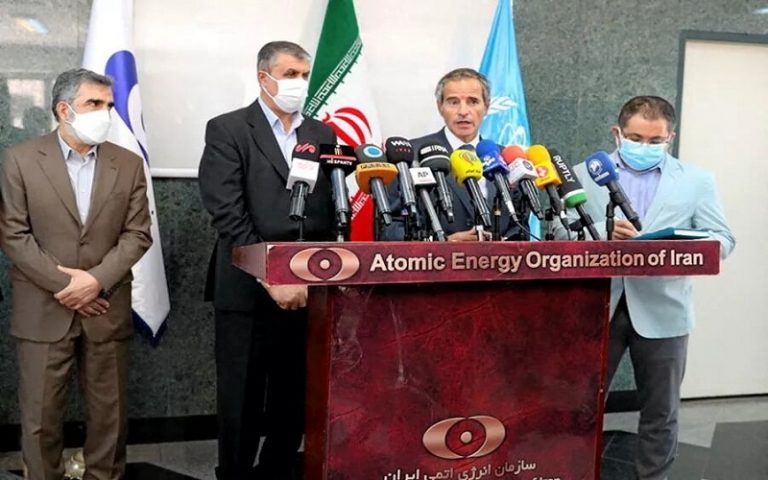
Director-General of the International Atomic Energy Agency (IAEA) Rafael Grossi said that reviving the nuclear agreement between Iran and world powers is “impossible” and called for striking a new deal.

In an interview with Spain’s El Pais newspaper, Grossi said he believes the old agreement has died after Tehran began producing what could be considered the minimum amount of materials needed to produce a nuclear weapon, although it still needs more materials to build a bomb.

And in a interview with Newsweek, he showed his concern about Iran’s hidden projects and said: ‘”detailed and technical discussions” are needed to ascertain the location of Iran’s undeclared uranium and that this issue is “totally connected” to the future of the deal.

‘He said there were a number of points that were “still unclear” relating to traces of uranium that were found but had not been declared in the past by Tehran.

And finally, he added: ‘”We need to know what was going on there, we need to know exactly what kind of activities were taking place there, and we need to know if there was material, where is this material now?”’ (newsweek, March 23)

Iran on the Cusp of Fundamental Changes

“History tells us that when evolution becomes impossible, revolution becomes probable,” mentioned Ilan Berman, the senior vice president of the American Foreign Policy Council in Washington D.C., in a recent article in the Washington Times.

According to a survey of Iranian attitudes by GAMAAN, the Group for Analyzing and Measuring Attitudes in Iran, and his personal research, he concluded that most “Iranians are looking beyond ayatollahs and the Islamic Republic.”

For more than four decades, Iranian officials deceived society with the play of ‘the reformists versus the hardliners.’ However, the people experienced both factions during the past 42 years and grasped that they are cuts from the same cloth.

In recent years, Iranians frequently chanted the slogan of “Reformists, principalists, the game is over” as a sign of their distrust in the entire ruling system. On the other hand, the government’s violent response to any objection and grievance shows the existing gap between the state and society.

Nonetheless, political dilemmas are not the only puzzle in Iran’s today. The rift is more profound and deepening every day. The government’s costly and irresponsible policies like regional ambitions and supporting radical proxies, ballistic missile projects, and nuclear bomb-making programs are the flipside of political problems. In fact, the theocratic rule in Iran has brought enormous social phenomena to the people, rather than easing people’s hardship.

These days, the people of Iran are suffering from unprecedented poverty, rampant inflation, skyrocketing prices of essential goods and services, and the coronavirus’s mental, economic, and health complications. All these facts mentioned above are derived from a corrupt and flawed political system. Furthermore, youths and women particularly endure suppression, and the government has banned them from their inherent rights.

Notably, economic dilemmas, oppressive measures, and other disastrous elements have constantly increased during the ayatollahs’ era, regardless of whether a ‘reformist’ president had been in office or a ‘principalist’ one. In other words, the current circumstance in Iran is the outcome of both reformists’ and principalists’ performance.

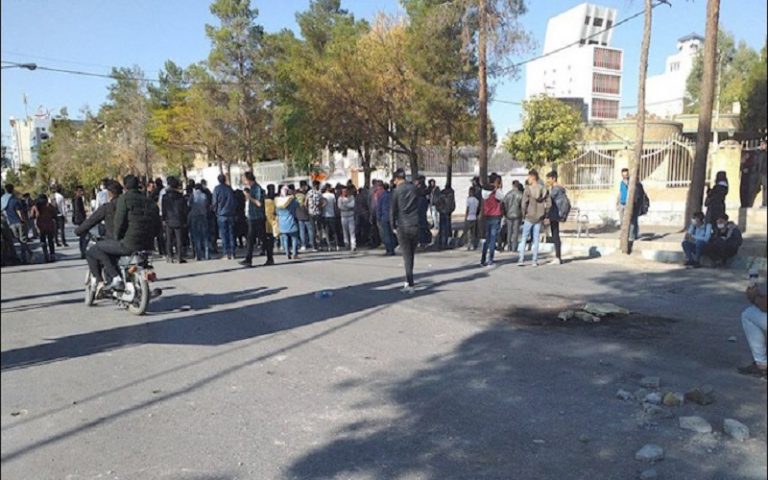
For instance, in November 2019, President Hassan Rouhani’s administration announced gas price hikes. The issue immediately ignited nationwide protests in around 200 cities across the country. A day later, Rouhani ironically claimed that he was informed about new prices through the TV like many people, attempting to save himself from public ire.

Many loyalists to the Supreme Leader Ali Khamenei, including members of the Islamic Revolutionary Guard Corps (IRGC), expected Khamenei to cancel the new high prices, said IRGC commander Salar Abnush.

Instead, Khamenei openly declared his support for the gas price hikes and revealed that the heads of the three branches – President Rouhani, Judiciary Chief Ebrahim Raisi, and then-Parliament (Majlis) Speaker Ali Larijani – had agreed with the rationing fuel and raising the prices.

Meanwhile, Khamenei ordered the IRGC and the State Security Forces (SSF) to ‘do whatever it takes’ to quell the protests, leading to the death of 1,500 demonstrators and bystanders and the arrest of more than 12,000 people.

Afterward, all prominent leaders of the reformist faction expressed their support for Khamenei’s order, blaming citizens for protesting. However, not only did the bloody crackdown on defenseless people not end protests but citizens continued scattered protests since then, putting the ruling system in a fragile condition.

In such a status quo, the Supreme Leader has purged his reformist rivals and planned to appoint his purposive figure as the President in the June election. “Our nation should not consider the election as a symbol of polarization and should put aside these false divisions between the ‘lefts’ and the ‘rights’… The important issue is the Islamic State in the country,” said Khamenei on March 21.

He sees contraction as the sole instrument to preserve his reign against social protests. However, the clearing of ‘reformists’ rivals signals that society would no longer be duped by hollow promises and is indicative of the people’s genuine willingness for fundamental changes.

A Prediction for Iranian People’s Situation This Year

Due to the Iranian government’s plundering and its institutionalized corruption, the livelihood of the people is getting worse year by year. And its result is the fall of most of Iran’s population under the poverty line, or as has been announced by its official media, the ‘food poverty line’.

The state-run daily Mostaghel on March 14, 2021 wrote: “The living conditions of different segments of society have fallen sharply. According to the report of the Statistics Center of Iran and information obtained from the per capita consumption of basic goods in the country, it shows the weakening and shrinking people’s livelihood. The main reason is high inflation in such goods.

“Commodities such as meat, poultry, fish, oil, rice, dairy products, etc., which are gradually being removed from the livelihoods of the middle and poor sections of society. Economic indicators cover most different areas of society such as lifestyle, employment, livelihood.

“Basic components such as poverty line, human development, hunger index, purchasing power, ease of doing business, per capita food consumption, unemployment rate, inflation rate, net and gross production, income inequality coefficient, quality of life index, etc., which are the factors that affect economic growth, are things that there are currently no measures for improvement, and there is no hope.”

The state-run daily Kayhan on March 17 wrote: “We are witnessing the fact that the country has faced a severe inflationary recession and employment is also the output of investment and economic growth, especially in the last two years, 2019 and 2020, the economy has shrunk by 12 percent.”

In July 2020, the International Monetary Fund said that the economic growth of Iran under the rule of the mullahs is negative 6 percent.

Referring to this subject the state-run daily Jahan-e-Sanat on February 18, 2021 pictured something worse and wrote: “The experience of three consecutive years of recession from 2018 to 2021 is also noteworthy. According to official statistics, Iran’s economic growth at the end of 2018 and 2019 was -9.4 and -7 percent, respectively.”

“This situation continued this year as well, as official statistics show a negative growth of 9.1 percent in the first six months of this year (2020).”

Liquidity growth of course is one of the clear indexes of an economical stalemate, which is growing year by year and its result for the country’s economy is more inflation.

The state-run daily Eghtesad News on March 7, 2021 wrote: “Estimates show that in the first 11 months of this year, an average of 2.48 trillion tomans has been added to the country’s liquidity.”

Previously on November 29, 2020, the state-run news agency Tasnim wrote: “Some economic estimations indicate that in 2018, one trillion tomans of liquidity was created daily, which in 2019 reached 1.6 trillion tomans per day and in 2020 is reached 2.6 trillion tomans.

“At the end of this year (2020-2021), it is predicted that the volume of liquidity will reach 3.4 trillion Tomans and at the end of [2021-2022], we will have more than 4.5 trillion Tomans of liquidity. In other words, with the continuation of the current situation in the economy, next year we will have a daily liquidity of 3.1 trillion tomans.”

Regarding the increase in prices and its pressure on the lives of the people, Hossein Kamali, a former member of parliament, said: “The goods that were produced or produced in the country were provided to the people at several times the price. In some goods, we had several times the price increase, and this increase in prices put pressure on the people and caused dissatisfaction among the people.” (ILNA, March 22, 2021)

The pressure of the burden of poverty, rising inflation, and the rising cost of goods on people is such that their main issue is no longer welfare, but to provide at least food to fill their empty tables.

“From a series of past and present events, one can make an approximate prediction of the events and conditions of the people in 1400 (2021-2022), although some of these events and predictions do not require any mental strength. For example, prices will continue to rise, and the coronavirus will continue. Inflation and high prices eliminated the middle class from society and only two rich and poor classes will remain in society.” (Arman daily, March 18, 2021)

Iran: Supreme Leader Expresses His Concerns Over Cyberspace

During his first remarks in the new Persian year, Iran’s Supreme Leader Ali Khamenei expressed his concerns over the cyberspace. This is while other nations are constantly removing all types of censorship and secrecy. However, in Iran, ‘the men of faith’ still resort to untransparent means to cover up systematic corruption and gross violations of human rights.

Today, thanks to technology and the free flow of information, Iranian leaders can no longer hide their evil essence behind baseless claims and pious gestures. In this context, the theocratic government’s public base has been shrinking every day, which has severely terrified high-ranking officials.

“Unfortunately, [the people] do not obey necessary observations in our country despite my emphasis,” declared Khamenei, expressing his frustration in a video message on the occasion of Nowruz broadcasted by state television on March 21. “The cyberspace should be managed. This means should not be given to the enemy.”

For a long while like almost all dictators, Khamenei has intimidated society under the guise of combatting ‘foes’ to impose more restrictions and suppression. He and his representatives frequently speak about enemies and have applied an unprecedented inquisition in the country.

In the past four decades, they have justified beheading, flogging, amputating limbs, exiling, torturing, demonizing, and assassinating political dissidents at all the costs under the excuse of religious beliefs. However, they only won more anti-establishment protests and a volcano of public ire against the entire ruling system.

Why Does Khamenei Leak His Worry?

In such circumstances, Khamenei is concerned about society’s apathy in the Presidential election scheduled on June 18. Therefore, he intends to hold this election in a bleak atmosphere under censorship to appoint his desirable candidate. “U.S. and Israeli intelligence apparatuses want to disperse the people, claiming, ‘The election has been engineered.’ They accuse election organizers or the Guardian Council of manipulating the election,” he added.

This is while Khamenei had previously purged his rivals and their paths for resuming negotiations with the new U.S. administration. “There is a contradiction in terms when Khamenei seeks to hold a vibrant election, but at the same time, seeks to install his own subservient candidate,” said Maryam Rajavi, the President-elect of the Iranian opposition coalition National Council of Resistance of Iran (NCRI).

In the leadup to the Presidential election, Iranian officials unveil their nervousness over the revelation of corruption and embezzlement cases. “Many social media activists—affiliated with principalists—attack us while when they were in charge, they ate and took advantages. Now, they tell us, ‘Do not eat and take advantages,” said Masoud Pezeshkian, a ‘reformist’ MP from the northwestern province of East Azarbaijan on March 20.

“In cyberspace, it is Haram [forbidden] to vilify others or revealing their true or false files,” said Yousef Tabatabaeinejad, Khamenei’s representative in the central province of Isfahan in his mid-March lecture. Furthermore, Khamenei’s representative in the southeastern province of Kerman Ahmad Sheikh-Bahaei expressed his fear about the free flow of information. “The cyberspace has turned into the enemy’s mental bombardment against our forces,” he said on March 12.

However, the former Minister of Intelligence and Security (MOIS) and deputy chief of the judiciary Gholamhossein Mohseni-Eje’i alludedto the dictatorship’s main nightmare, saying, “They are openly training people on how to protest in the cyberspace.”

“If this incident(i.e. protests) takes place, it would be very dangerous. Our soft-warfare officers should not allow this incident to take place,” Khamenei had said on March 11.

Iran’s Political Prisoners Protest Exile and Persecution

Eighteen political prisoners in Iran’s Gohardasht Prison in Karaj condemned in an open letter the exile of political prisoners from their hometowns.

These prisoners in their letter explained that this act by the Iranian government’s officials was due to their fear and fury over the prisoners’ resistance and confronting the regime’s pressure to break the prisoner’s dignity.

They emphasized that these measures could not force prisoners to back down in pursuing their rights. These prisoners emphasized in their letter: “The security institutions and judges affiliated with these institutions have clearly found that the prison has not only failed to prevent political prisoners from struggling for their rights, but instead it has turned into the site and the place for continuing their struggles and resistance.”

Among the signature of the supporters of this letter, the names of prisoners such as Jafar Azadzadeh, Saeed Masouri, Soheil Arabia, Arash Sadeghi, Hassan Sadeghi and Mohammad Ali Mansouri, and etc. can be seen, many of whom have been in detention for a long time.

Full letter of the political prisoners

The letter by the 18 political prisoners in Gohardasht (Rajaishahr) prison is as follows:

“Letter of Political Prisoners of Karaj Rajaishahr Prison on the intensification of the intimidation of political prisoners:

Over the past months, despite the allegations of the highest judicial authorities of the Islamic Republic surrounding the rights of political prisoners, something that is actually and every day is occurring, is not the improving of the conditions of the prisoners, but also the intensification of repression and antagonism, while increasing the price of the prison, people who lost their patience and political actors at the political level in the community to be intimidated and felt subdued because of their repressive policies.

Transferring to solitary confinement, insulting and humiliation, beating, forming new cases, and issuing new sentences and exile to prisons away from the habitat and, etc. are among the methods of exercising pressure on prisoners and harassing their families, which has become more severe and wider in recent months.

The security institutions and judges affiliated with these institutions have clearly found that prison has not only failed to prevent political prisoners from struggling for their rights, but instead it has turned into the site and the place for continuing their struggles and resistance. And from behind its tall walls, every time the voice of their rights will be heard clearly, and the ignominy of the totalitarian rule can be seen.

They thought that with the aggravation of systematic abuse of prisoners and their families, and violating more their rights, they can force them to be silent and become passive. It is based on this, that they have decided with more harassment to exile the political prisoners to prisons far away from the place of their residence to prisons with crimes such as drugs, murder, and robbery etc.

Obviously, such actions will not lead us as political prisoners to retreat from the defense of our human rights, and it is showing the fear and horror of the rulers over our cries of justice, and it is the result of their political, economic, and social deadlocks.

Certainly, just as the use of repressive policies by the government has led to nothing, this time, these policies will lead to nothing too, and in advance, this policy is destined to fail.

Matlab Ahmadian, Mohammad Banazadeh Amir Khizi, Afshin Baymani, Jafar Azimzadeh, Arsham Rezaii, Arash Sadeghi, Hassan Sadeghi, Soheil Arabia, Abolqasem Fuladvand, Nasrollah Lenshi, Behnam Mousivand, Reza Mohamad Hosseini, Saeed Masouri, Ali Mousanejad, Farhad Maysami, Mohammad Ali Mansouri, Mehdi Meskinnavaz, and Arash Nasri.”

Unbridled Prices Break Iranians’ Back

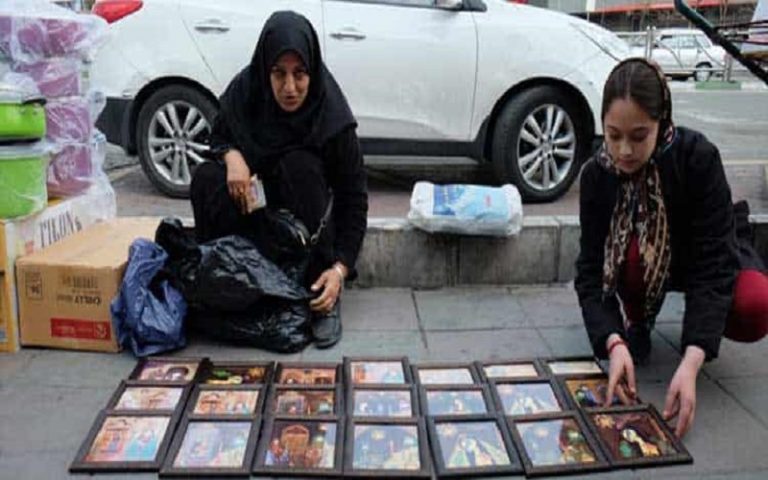
These days, the Iranian people’s main concern is how to feed their families, and this puzzle is getting more complicated in the days that led up to Nowruz, the new year in the Persian calendar. In such circumstances, the government rubs insult on people’s wounds with its mismanagement and economic failures rather than easing financial pressure.

“This is Iran’s situation. An uprising by the army of the hungry in Iran started from Sistan and Baluchestan. I wish the criminal [Supreme Leader Ali] Khamenei, the Islamic Revolutionary Guard Corps (IRGC), the State Security Force (SSF), and all of their folk go to the hell soon,” said a citizen as he filmed a woman who was searching a garbage bin for food.

Pointing to the woman, he said, “All of the people of Iran are living in the same condition. Many people are looking in garbage bins for some usable stuff. God damn these officials. They will destroy us one by one if we do not unite. We must overthrow the Islamic Republic. We are all Baluchi protesters. All of Iran’s provinces are Sistan and Baluchestan. Death to Khamenei.”

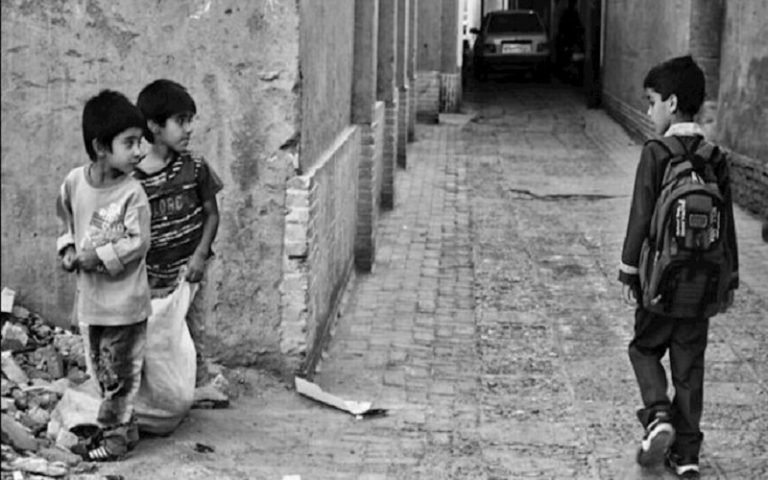
This is a small part of Iran’s society. There are thousands of children who had forgotten their childhood in the tarmac of metros and streets. They have no memory except hardship and poverty.

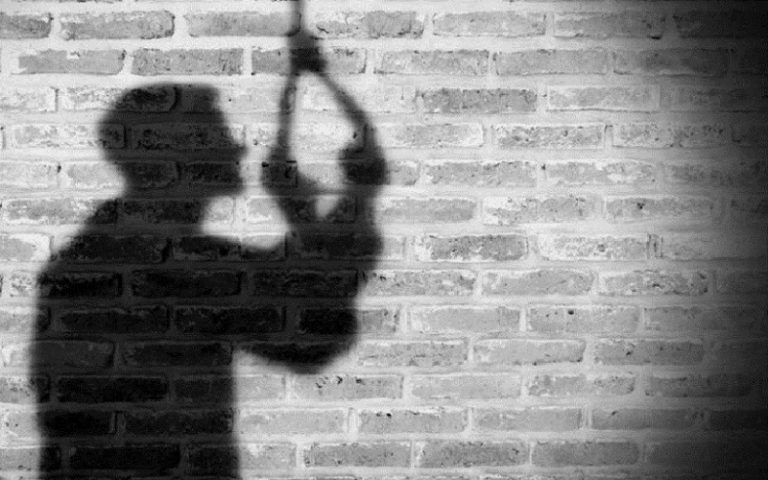
Their families’ dire economic conditions have turned them into little breadwinners. Furthermore, the population of labor children is growing in Iran each month. On the other hand, they are exposed to exploitation by a government-backed mafia, and in many cases, they do not even receive their meager salaries. In this regard, many children are convinced that kissing their short lives goodbye is better than enduring more dilemmas.

Meanwhile, many Iranians, particularly working and low-income families, wrestle with poor nutrition. Already, the semiofficial ISNA news agency revealed that almost all working families face financial difficulties. “More than 90 percent of workers do not have job security and live below the poverty line,” ISNA quoted the deputy chief of Labor Association in West Azarbaijan province as saying on February 7.

According to official statistics, the poverty line has reached 100 to 130 million rials [$400-520] per month for a family of four. The government monthly pays 450,000 rials [$1.80] as subsidies to around 60 million citizens. In other words, each family of four receives $7.20, which covers a little more than a half of its expenses for just one day.

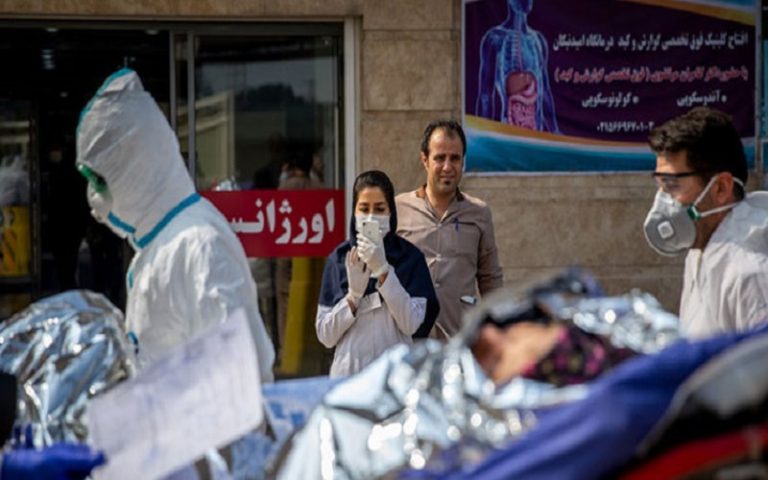
In such circumstances, Iranian citizens have to fight the coronavirus crisis and endure additional costs of health and hygienic measures. However, Covid-19 damages are not limited to losing health and lives.

Financial disadvantages are the flip side of this health disaster, which has created dire conditions for millions of Iranian families. At least 600,000 workers have lost their careers and have been added to the great army of unemployed people.

All these facts prove the establishment’s imprudence in managing the country’s catastrophes. Ongoing protests in various cities show the public distrust in the theocracy and their desire for a better future.

New Details About Iranian-Swedish Academic Raise Fresh Concerns About Detainees

A group of United Nations human rights experts issued a fresh appeal to the Islamic Republic of Iran on Thursday, in response to the latest information about the condition of political prisoner and Iranian-Swedish dual national Ahmadreza Djalali. The medical researcher from Stockholm’s Karolinska Institute has been detained in the Islamic Republic since 2016 when he visited his native country for an academic conference. In 2017 he was sentenced to death on spurious charges of espionage, and last November he was moved into solitary confinement in preparation for his execution, though authorities later transferred him again and said the implementation of his sentence had been delayed indefinitely.

This inconsistency and ill-treatment lends additional credence to the widespread assumption that Djalali is being held hostage as a potential bargaining chip in dealings with Western adversaries. His November transfer coincided very closely with the start of four Iranian operatives’ trial in Belgium, another country to which Djalali has ties through past employment. Iranian authorities had previously shown substantial commitment to preventing the prosecution or imprisonment of the principal defendant, an Iranian diplomat named Assadollah Assadi, and they may have believed it would be possible to secure his release by threatening Djalali.

That effort seemingly backfired, with Djalali’s release from solitary confinement coming after Belgian authorities teased the possibility of severing relations with their Iranian counterparts as punishment for the killing of a high-profile Western national. Although this counter-pressure may have caused the Iranian judiciary to back down from the immediate threat, it did not prevent them from keeping Djalali in harsh conditions and subjecting him to a more protracted threat, with a greater claim to plausible deniability in the event of his death.

Since having his execution delayed, Djalali has still been kept largely isolated, without access to phone calls or visits from family members, attorneys, or other supporters. As is common with political prisoners and others whom authorities with to subject to additional pressure, Djalali has also been denied access to medical care, even as preexisting health conditions worsened. The statement from UN experts noted that this situation has led to dramatic and life threatening weight loss for the 49-year old.

The statement also revealed that Djalali’s condition has been exacerbated not only through neglect but also through deliberate, sustained pressure from prison authorities. Among other things, he has been subjected to bright lights and noise at all hours, with the goal of depriving him of sleep. “We are shocked and distressed by the cruel mistreatment of Mr. Djalali,” said the UN experts in a statement that also highlighted the long history of similar mistreatment and its apparent role in securing the prisoner’s conviction.

No clear explanation was given for Djalali’s arrest, but after some time in detention he was accused of having collaborated with the government of Israel by gathering information that aided in the assassination of Iranian nuclear scientists. Those allegations have never been publicly substantiated, and persons familiar with the case indicate that his prosecution relied almost exclusively on a forced confession that was extracted via torture.

Such accounts are commonplace in instances of political imprisonment in Iran, and some have become grounds for large-scale international campaigns on the detainee’s behalf. However, these rarely lead to a favorable outcome, as was made clear last September with the execution of 27-year-old wrestling champion Navid Afkari. After participating in protests in 2018, Afkari was arrested alongside his brothers, all of whom were put under pressure to confess or implicate one another in the killing of a security guard near the site of the protests. Surveillance video later revealed that it was likely impossible for Afkari to have committed the crime, and this fact was repeated in countless statements from Western authorities and non-government organizations like Amnesty International.

Nonetheless, the judiciary went forward with the execution as planned, in a gesture that many interpreted as a warning to other participants in protests inspired by a nationwide anti-government uprising at the beginning of 2018. Critical reactions to the case included references to a number of prior instances of authorities targeting professional athletes and other high-profile individuals, as part of an effort to intimidate the general population.

Cases like Djalali’s serve a similar purpose with respect to favorable interaction with institutions, citizens, or representatives of Tehran’s Western adversaries. By his own account, Iranian authorities pressured the professional academic to prove his higher loyalty to the Islamic Republic by agreeing to act as a spy upon returning to his home in Sweden. Only when he refused did those authorities begin to put forth the argument that Djalali was actually loyal to “hostile states” and must therefore be willing to commit espionage against the regime but not on its behalf.

Such paper-thin justifications for national security charges are commonplace in the Islamic Republic, if only because they provide the regime with bargaining chips that have proven to pay off in various ways. Even as Djalali was being threatened with execution, Iranian authorities were finalizing the release of an Australian-British academic, Kylie-Moore Gilbert, in return for the release of three Iranians convicted of attempting a terrorist attack in Thailand. Earlier this month, Moore-Gilbert spoke publicly about her case and revealed that Tehran had tried to recruit her as a spy as well.

The Iranian judiciary’s extremely lax standards of prosecution make it remarkably easy for authorities to replace such bargaining chips and prospective intelligence assets whenever a prisoner swap is completed. Just this week, it was reported that a French tourist by the name of Benjamin Briere had been charged with “espionage” and “propaganda against the state” roughly 10 months after he was arrested for photographing the region he was visiting. The charge of propaganda stems solely from a social media post in which he asked why the hijab is mandatory for women in Iran but not in surrounding countries.

Briere’s arrest came about two months after the release of Roland Marchal, another Frenchman who was arrested on the basis of his relationship with an Iranian-French dual national and fellow academic, Fariba Adelkhah. Marchal, too, was the object of a prisoner swap, but Adelkhah remains in Iran, less than two years into a five year sentence. She is one of at least 13 persons with ties to Western nations who are currently detained in the Islamic Republic, but given the often secretive nature of proceedings in Iranian courts, the real number could be much higher.

Mohammad Reza Hadadi, a Forgotten Juvenile Offender in Iran’s Notorious Prisons

Mohammad Reza Hadadi is now a young man who has been serving time in an Iranian prison for more than 18 years. He was 15 when he was arrested. Now he is 33.

Ever since he was a teenager, Hadadi has spent every night fearing execution. He has forgotten the taste of life and has no vision about it anymore. Worse, he does not even remember making a living. Because of the inhuman laws of the Iranian judiciary, he has been placed among the dangerous prisoners ward.

The authorities have claimed that he killed another person in his childhood. But at the start of his case 18 years ago, he wrote that he was innocent. Now after 18 years he is saying the same thing in his letter again.

“They had fooled me to accept the crime of murder.” The regime’s judiciary has summoned him for execution many times during these long and hard years but every time they have delayed it.

Now he says that he cannot tolerate this situation anymore. He cannot tolerate being imprisoned anymore. He cannot live anymore with the nightmare of being executed. He is asking that his case be reviewed again. Below is his letter:

“Calling the Lord of Hope

Hello,

The head of the judiciary, for once, after 18 years of imprisonment from my adolescence and young ages in Adelabad Prison, please give me an answer.

I am Mohammad Reza Haddadi, son of Nasrollah, born on March 17, 1988 and I was under my mother’s supervision. Then on August 19, 2003 at the age of 15, I was planning to go to Shiraz, I become a passenger of someone who had two other passengers in his car before me. He took another two passengers in between the way.

Then the driver dropped one of them in a place named Mozafar Abad. In between the way, one of the passengers asked the driver to stop the car to go to a toilet, then the driver stopped at Tangeh Abolhayat. The person who asked for toilet then attacked the driver from the back and killed him with the help of the two other persons who were family members of my father. In the middle of the night, I was very scared, and when I was just 15, I witnessed such a crime.

“Then one of the passengers, Mehdi Sassani son of Mohamad Ali, 22, resident of Khesht and Kenartakhteh, threatened me with murder. But Mohammad Taghi Hadadi son of Gholamreza, 19, and Karim Hadadi son of Keramat, 18, who were the family members of my father’s family prevented Mehdi Sasani from killing me.”

Then at the time of being arrested, I was tortured physically and mentally at the police station. At the court of the Kazeroun county, I was fooled by Mohamad Taghi Hadadi and Mehdi Sasani and a policeman, captain Sadrollah Hekamdpoor, and I accepted the crime of Mohamad Taghi Hadadi who had killed the driver with a car propeller belt.

In the prison of Kazeroun county I found out that they have deceived me with false temptations and have assigned their own crime to me.

In this event I am completely innocent. Now after 18 years I am imprisoned in Shiraz’s Adel Abad prison, because of a crime I did not commit. I am asking you as the head of the Judiciary to enter in my case and help me out.

Dear head of the Judiciary, I’m not a killer. Please listen to me and stop the execution of an innocent person. Now I have been for more than 18 years behind the bars of the prison and denied my entire adolescent lifetime, and I hope to prove that I am innocent.

I have no other support than the God almighty. Please help me. I swear by God that I am innocent and cannot tolerate the prison anymore.

Mohamad Reza Hadadi, born on March 17, 1988

This case is just one of the examples of the injustices in Iran and especially by its judiciary which is tied with extreme human rights violations. Every year, many innocent people are executed because the regime needs this lever to suppress the people and spread fear. On many occasions, the regime has been warned and condemned by the international community for executing minors or juvenile offenders.

Iranian Officials Are Concerned Over Mideast Developments

In an online conference on March 18, Iran’s Defense Minister Amir Hatami admitted to the growing opposition to the Islamic Republic regime in the Middle East. He implicitly expressed his concerns over anti-regime developments in the region and across the globe.

“Regional developments like the change of the Iraqi government, the ‘assassination’ of Qassem Soleimani (former chief of the Islamic Revolutionary Guard Corps – IRGC Quds Force) and IRGC Brigade Mohsen Fakhrizadeh (the father of Iran’s nuclear bomb-making projects), as well as recent protests in Lebanon and Iraq, and recent incidents in Syria, are taking place to overcome the Islamic Republic of Iran,” claimed Hatami, attributing these events to ‘foreign interferences.’

Furthermore, he leaked the regime’s concerns over the establishment of the Arab coalition for defending the legal administration of Yemen, Karabakh conflicts between Armenia and Azerbaijan, and the Afghanistan’s objection to the Iranian government’s meddling in their interior affairs.

“The enemy’s conspiracies will continue in strategic aspects. Particularly, in the case of Iran’s regional hegemony and missile capacities, [foreigners] will powerfully continue their path to obtain all their goals,” Hatami added.

Notably, during the past year, several Iranian officials blamed the people of Iraq and Lebanon for ongoing protests against Iran-backed militias’ influence.

On the other hand, Iraqi protesters continued their upheaval in different provinces, especially in Al-Muthanna, Diwaniya, Nasiriyah, Najaf, and Babel. They insisted on the imperative of fundamental changes and called for prosecuting the perpetrators of a bloody crackdown on protesters. They also demanded the dismissal of Provincial Governors and Iran-aligned officials in these provinces. “This is a revolution against murderers and [sectarian] parties,” Rafidain TV aired protesters’ slogans on March 19.

Furthermore, thousands of Syrians marched in Idlib—a base of the Syrian opposition—on March 15, in tandem with the tenth anniversary of the start of protests in 2011. Protesters repeated the 2011 slogans, including, “Freedom, freedom, Syria wants freedom,” “Get out Bashar,” and “The people want regime change.”

Numerous demonstrators had photos of victims and forcibly-disappeared people. During the past decade, the Syrian government and its allies have killed hundreds of thousands of civilians. They have also displaced more than 12 million people inside the country and abroad, according to the United Nations.

“We have come to renew our commitment for the overthrow of Bashar al-Assad like 2011,” a protester told AFP, adding, “We will continue even if it takes 50 years.”

Meanwhile, the UK government simultaneously blacklisted six Syrian officials, including Foreign Minister Feisal Meqdad, for involvement in violence against citizens. Also, U.S. Senator Marco Rubio blamed Bashar al-Assad and his allies for horrific crimes against the Syrian people.


Iran’s Wheel of the Economy Is Rotating, but in Which Direction?

Iran’s president Hassan Rouhani on March 2, 2021 claimed that, “When we said that the centrifuges would spin and the wheel of the economy would spin too, we kept our promise and we made nuclear energy uncostly.”

Despite his ridiculous claim, according to Iran’s state media, 80 percent of the people are below the poverty line and are forced to live on very low incomes.

Four years ago, during Iran’s so-called presidential election in 2017, the regime’s current parliament speaker Mohammad Bagher Ghalibaf acknowledged the existence of a 96 percent disadvantaged majority against a prosperous four percent minority.

The state-run daily Farhikhtegan, citing a Central Bank report, on March 14, 2021 wrote: “Economic growth in 2014 was about 2.5 percent, while this component for 2019 was -7 percent. According to the statistics, in the eleventh and twelfth governments, the country’s economy has experienced negative growth four times, bringing the total economic growth to about zero in the last eight years.”

It is suspected that the statistics of the relevant government institutions, including the Central Bank, have been downsized and their reports do not reflect all the realities of the economic crisis, but the same statistics and reports also indicate the catastrophe that the theocracy has caused to the economy and people’s livelihood.

The state-run daily Mostaghel on March 15 wrote: “Given the government’s tight control over the Central Bank and the Statistics Center of Iran and the slow and expedient publication of the statistics in the society, which is unreliable to many economists, according to these statistics, the average economic growth of zero percent is quite evident, point to point inflation is more than 50 percent, successive changes in the prices of currency and gold, etc. The growth of more than a few hundred percent and the catastrophic housing and countless other cases do not promise to turn the economic wheel.”

An Mostaghel daily article writer further wrote to Rouhani: “Economic indicators cover most different areas of society, including lifestyle, employment, and livelihood, which contradicts with the order of his Excellency’s command to turn the wheel of the economy.”

Meanwhile, the stagnant economy of the government relies on the government taking over the pockets of the people through taxes, borrowing from the Central Bank, printing banknotes, and robbing the National Development Fund, which has caused inflation and price rise. This has thrown the people into the vortex of poverty and misery.

Arman daily on this subject on March 15 wrote: “In a situation where we are facing a high deficit, there is a double pressure on the resources of banks and the Central Bank, the result of which is the withdrawal of Rials from the National Development Fund. Since the reserves in the fund are very limited, we know that any withdrawal from the National Development Fund will lead to money printing. Next year, part of inflation is due to the budget bill that is being approved today.”

Yes, the cycle of the economy is spinning, but with high inflation and practically in this cycle, the deprived and impoverished people are those who are being crushed under this spin.

A report by the regime’s Statistics Center said: “According to the report of the Statistics Center on Inflation of Foodstuffs in February, there is a 100 percent change in 17 foodstuffs compared to February of last year. Although the March inflation report will be published in April, but the comparison of the announced prices of Eid (Persian New Year) fruit in March 2021 and its comparison with March 2020 shows an increase of 11 to 68 percent in prices.”

Regarding the claim of Rouhani, Nezame al-din Mousavi, a member of parliament and former director of Fars, said: “He has made a big mistake about the verb to spin, or he has seen the direction of the rotation of the wheel wrong, or what he has seen was not a wheel at all.” (ICANA, March 6)

Finally, the state-run daily Farhikhtegan made a clear conclusion about Iran’s economic situation and wrote: “Investment falls into a rate of -6, eight years with zero economic growth, record inflation in the last 60 years, 700 percent rise in the dollar rate, 10-year record of class division, pulverization of the system’s social capital with the collapse of the stock market, people’s empty tables, 50 percent construction decline and 650 percent price growth.”