Home Blog Page 299

Iranians Consume Less Red Meat Than Anywhere Else

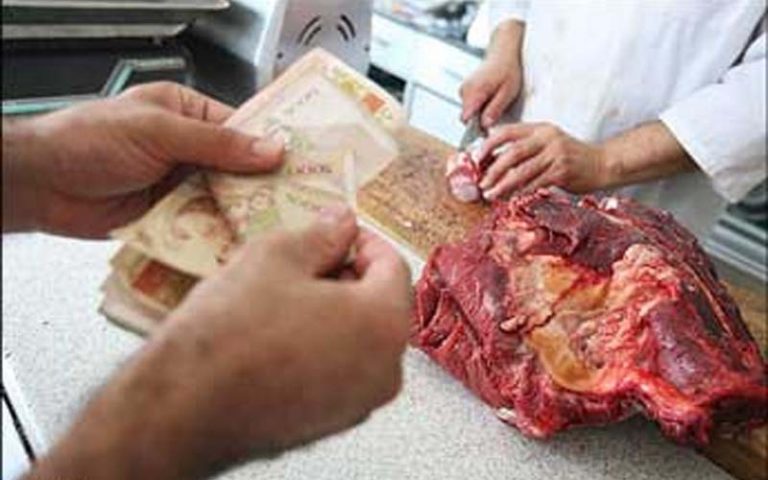
In tandem with the rise in red meat prices in Iran in recent years, Iranian families have been forced to consume less of it. According to a report provided by Tehran’s Chamber of Commerce, Industry, Mine, and Agriculture, per capita annual red meat consumption in Iran was between 10 to 12 kilograms in 2013. This number reached 8 kilograms in 2020, according to the chamber’s latest report.

This issue would be more painful when we compare this amount with other countries. According to the United Nations Food and Agriculture Organization (FAO), red meat consumption per capita in Ghana and Tanzania is 9 and 10 kilograms, respectively. This number reaches 14.5 kilograms in the war-torn country of Yemen. Also, the Singaporeans, Germans, and French annually consumed around 26, 45.7, and 57.7 kilograms of red meat in 2019.

The Tragedy Is not Limited to Red Meat Consumption

This decline in meat consumption is not limited to red meat alone, but Iranian families consume fish 10 kilograms less than the global average. Instead, the people resorted to consuming white meat. In November 2020, Eghtesad Online website reported that “during the past two years, chicken consumption per capita has grown from 20 to 30 kilograms.”

Other statistics prove the decrease in red meat consumption and the growth in chicken meat consumption. For instance, in June 2019, the chief of livestock and poultry stats bureau in Iran’s Statistic Center acknowledged that “chicken consumption per capita had increased from 17.6 kilograms in 2011 to more than 21 kilograms in 2017.”

Furthermore, the price of both red meat and chicken meat has doubled in recent years. However, there is still a flagrant distinction between prices. For example, the chicken price has reached from 115,000 to 230,000 rials [$0.46-0.92] per kilo, while the red meat price increased from 1 to 2 million rials [$4-8] per kilo.

During recent years, Iranian citizens have experienced unprecedented financial problems. Many people like workers, employees, and even nurses and teachers have yet to receive their salaries for months while no day goes by without news about officials’ corruption and embezzlement cases. In such circumstances, many citizens, particularly low-income families, have resorted to consuming chicken meat rather than red meat.

While this is not the whole story, but it is a stark view of Iran’s society. Today, many people cannot provide essential foodstuff for their families, and they spend hours in crowded and long queues for items such as edible oil, bread, rice amidst the coronavirus outbreak.

Read More:

State-Backed Mafia Removes Red Meat From Iranians’ Food Basket

Economic Dilemmas Shrink Iranians’ Food Basket

Economic dilemmas have driven low-income citizens to consume low-price meat and foodstuff; however, several million people whose breadwinners lost their careers during the past year suffer from unimaginable hardship. According to official stats, at least 600,000 workers and employees lost their job in the past year.

Recently, officials announced more than 90 percent of working families are below the poverty line. However, Iranian workers suffer from systematic discrimination, meaning the minimum monthly wage approved by the Parliament (Majlis) is 26.55 million rials [$106.20] while the poverty line has reached 100-130 million rials [$400-520].

In fact, it is forecasted that the current growing rate of prices, especially in foodstuff prices, has led the majority of Iran’s society to poor nutrition. Given the $400 poverty line and workers’ $106 monthly wage, Iranians have no solution except shrinking their food baskets, which may spark social protests in the upcoming months due to expanding public distrust and hatred against the government.

Iran Attempts To Block Internet To Stop Protests

The Iranian officials have  increased their efforts to censor internet content and block social media in order to stop people from learning about protests or organise future ones, as the situation in Iran becomes more explosive.

State Security Forces’ Special Forces unit commander Hassan Karami said on Monday that the regime’s enemies are using the internet to “infiltrate” Iranian culture, while Tehran prosecutor, Ali Alghasi Mehr, had previously expressed fear over how protesters were using social media channels to organise more effectively.

On March 25, Golestan province’s IRGC commander Ali Malek Shahkoohi  said: “The [regime’s] sworn opponents and enemies tried to divide and create insecurity in the province through social networks and cyberspace and their internal agents by abusing the Gonbad incident.”

This came shortly after a major protest rally in Gonbad Kavus, where local residents clashed with police after the judiciary’s refusal to charge a security agent accused of raping two girls, aged seven and eight.

Supreme Leader Ali Khamenei used his New Year address on March 21 to call for increased controls on social media, also saying that “the enemy” is using the internet to “discourage the people”. Khamenei’s speech led Revolutionary Guards (IRGC) commander Hossein Salami to say that the IRGC will take control of the internet.

However, the Iranian Minister of Information and Communications Technology Mohammad-Javad Azari Jahromi warned that blocking sites isn’t feasible thanks to “advanced encryption and satellite tools”. Azari Jahromi, a long-time intelligence officer who helped establish a technical infrastructure to identify dissidents from online posts, instituted a major internet blackout during the November 2019 protests. His acknowledgement that the government cannot control the internet is telling.

The Iranian opposition wrote: “There are two reasons for the regime’s deadlock in controlling online activities. First is the huge explosive potential of Iran’s society. The population, especially the youth, are fed up with the tyranny and corruption of the regime. They use every possibility to organize protests and.. have always found ways to circumvent censorship and have their voices heard. Second is technological advances that are making it harder and eventually impossible to block access to the internet and social media. Satellite internet technology is becoming more prevalent and… more resilient against mass signal filtering techniques that the regime uses to block access to satellite channels.”

Europe Should Not Ease up on the Iran Deal

Iran has taken advantage of Western powers every time they pursued appeasement and used terrorism and blackmail to get out of every single international and regional crisis they faced.

Some examples of this include:

  • Bombing the US Marine barracks in Beirut
  • Blowing up the Jewish Community Centre in Buenos Aires
  • Taking hundreds of hostages from around the world
  • Launching hundreds of missiles into neighbouring countries
  • Hijacking several ships and tankers
  • Assassinating tens of thousands of political dissidents at home and abroad
  • Threatening European diplomats with the deaths of their soldiers in Iraq unless the Iranian nuclear program was allowed to continue

This was part of what the Iranian nuclear deal, formally known as the Joint Comprehensive Plan of Action (JCPOA), was supposed to deal with, but instead what we got is a watered-down agreement that only delayed Iran’s ability to legally pursue nuclear weapons for a few years.

Of course, mullahs’ apologists ignore Iran’s malign actions and dismiss the bi-partisan consensus that they need an agreement to address all these issues. They claim that the government can right itself if offered sanctions relief, but ignore that the same system had two years of that from 2016 to 2018 and they failed to change course or even actually abide by the JCPOA as evidenced by officials’ comments and International Atomic Energy Agency (IAEA) findings.

And that’s just the nuclear issue. During that time, the Iranian government continued its destabilising activities in Iraq, Syria, Lebanon, and Yemen, as well as trying to bomb a 2018 Free Iran gathering in Paris attended by 100,000 people using a senior Iranian diplomat.

The National Council of Resistance of Iran (NCRI) wrote: “There’s hardly any doubt that six UN Security Council resolutions brought the regime to its knees, forcing it to come to the negotiating table reluctantly. But the opportunity to put an end to the regime’s nuclear ambition was lost because of the feeble and misguided approach by the 5+1. The West must not fall for the mullahs’ posturing and blackmail now, particularly since the regime is reeling under the weight of the crippling sanctions and an increasingly furious and enraged population that, like a powder keg is ready to explode.”

They advised that the mullahs are at their weakest point now and that the West should stay the course, continue economic sanctions and pursue diplomatic isolation, to obtain a real change in Iran.

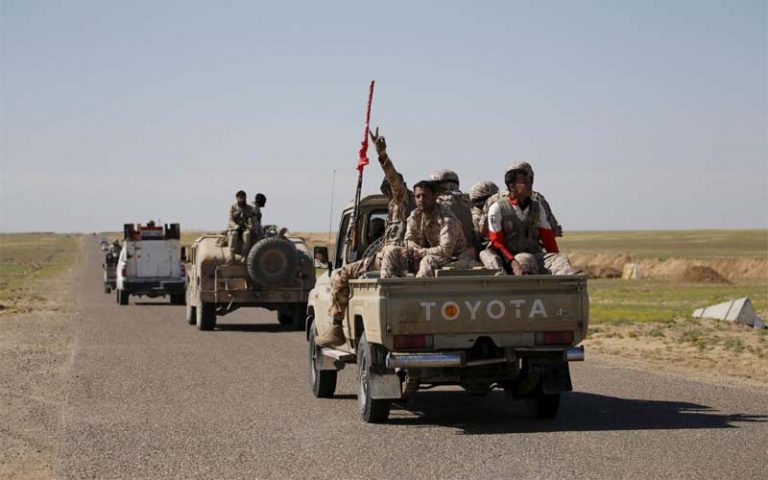
Iran-Backed Cartel Controls Iraqi Borders

Since the U.S. invasion to Iraq in March 2003, Iranian authorities seized the opportunity to add this country to their territory. In this respect, they silently conquered all critical elements of power through their proxies and militias.

Today, experts say Iran-backed militias, parties, and officials are the main barrier in front of the Iraqi people to make a progressive and prosperous country. Not only did these obedient elements apply Tehran’s political and economic sovereignty in Iraq but also put the fate of the country and next generations in murky conditions.

“Along Iraq’s borders, a corrupt customs-evasion cartel is diverting billions of dollars away from state coffers to line the pockets of armed groups, political parties and crooked officials,” France24 reported on March 29.

The French website obtained its detailed report through a six-month investigation moderated by AFP staff. In their investigations, AFP staff interviewed customs workers, government officials, port workers and importers, and ordinary people, shedding light on the real aspect of Iran’s influence in Iraq. Due to threats to their lives, many interviewees urged to remain anonymous.

“Worse than a jungle. In a jungle, at least animals eat and get full. These guys are never satisfied,” said an Iraqi customs worker to AFP.

Iraq suffers from enormous economic dilemmas arose from slow bureaucracy, fractious politics, and a limited non-oil industry. However, the country is subjected to an unannounced occupation by its eastern neighbor Iran via its proxies, which have derived unbridled corruption from the ayatollahs.

Also, customs provide one of the few sources of state revenues, and to keep disparate groups and tribes happy, many of them close to Iran, entry points are divvied up among them and federal duties largely supplanted by bribes.

“There’s a kind of collusion between officials, political parties, gangs and corrupt businessmen,” Iraq’s Finance Minister Ali Allawi told AFP.

Back in October 2019, in an exclusive report, the Iranian opposition coalition National Council of Resistance of Iran (NCRI) revealed the role of Setad Bazsazi Atabat Aliyat [Holy Shrines’ Reconstruction Headquarters] as a front organization of the Islamic Revolutionary Guard Corps-Quds Force (IRGC-QF) for ensuring Tehran’s malign meddling in Iraq and Syria.

“The Iranian regime uses humanitarian or charity organizations and institutions, in addition to its official organizations such as embassies and consulates, as a cover for the terrorist Quds Force to intervene in neighboring countries. The mullahs have systematically used these organizations to secretly occupy Iraq in particular,” NCRI wrote.

In March 2020, the United States Treasury Department designated several entities and individuals linked to the headquarters due to their involvement in terrorism.

“Among other malign activities, these entities and individuals perpetrated or supported: smuggling through the Iraqi port of Umm Qasr; money laundering through Iraqi front companies; selling Iranian oil to the Syrian regime; smuggling weapons to Iraq and Yemen; promoting propaganda efforts in Iraq on behalf of the IRGC-QF and its terrorist militias; intimidating Iraqi politicians; and using funds and public donations made to an ostensibly religious institution to supplement IRGC-QF budgets,” the U.S. Treasury Department’s statement read.

These ‘construction activities’ are the flipside of the Iranian government’s apparent influence in Iraq and other countries. In fact, the ayatollahs have extended their web across these states, particularly Iraq, and won control of almost all sensitive sectors.

During their protests that have lasted more than a year, Iraqi protesters constantly call for an end to the activities of paramilitary gangs affiliated with Iran and expelling all Iranian agents from their country. For instance, Iraqi protesters have called on the government to disarm Iran-backed militias, which would be a pivotal event and herald a new era in this region.

Iran Official Admits to Widespread Corruption

A former Iranian official admitted on Saturday to systematic economic corruption by the mullahs.

Azar Mansouri, a member of former president Mohammad Khatami’s Advisory Board, said: “Giving names to years and disregarding the true requirements has only given these nomenclatures publicity purposes and sometimes yielded reverse results. And the year 1400 is no exception to this rule.”

This came just days after Supreme Leader Ali Khamenei declared in his New Year speech that this would be the year for supporting domestic production and removing barriers, claiming that last year saw a “production leap”, even though the Iranian people saw no benefit. This speech also centred on his refusal to limit nuclear activities or improve relations with the global community, which are vital to ensuring the lifting of sanctions.

Mansouri said: “It is impossible to talk about production leap while the sanctions have maintained their impact. No country can achieve a prosperous economy with these sanctions. We should look at the sanction relief project as a national goal, not a factional one, and we must use all our diplomatic capacity to achieve it.”

Of course, some officials blame the country’s economic issues on sanctions, but more are saying that government corruption caused the problem.

On March 6, Expediency Council head Mohsen Rezaii said: “The economic mismanagement of the country must end. Since 2013 [the beginning of Hassan Rouhani’s presidency] until now, the people’s purchase power has decreased considerably. An important part of the problems is not due to sanctions but are due to management issues. Negligence has resulted in the devaluation of the country’s currency against foreign currencies. And you can see the conditions of the stock market. Economic managers claim that the people’s lives are spinning just as the centrifuges are. Hearing such things in these conditions is very disturbing.”

But Mansouri also admitted to the systematic and institutional corruption that led the mullahs’ to privatise the economy and created the biggest obstacle to production. She called on the authorities to end its monopoly of allowing its affiliates to buy state companies at low prices.

Then, she spoke about Iran’s refusal to pass anti-money laundering (AML) and counter-terrorism financing (CTF) bills to bring them in line with the Financial Action Task Force (FATF) standards.

Mansouri said, “By delaying the FATF bills, we have created a barrier to financial and banking transactions. This has even caused us to lose the markets of other countries in the region.”

She called for reforms to reduce corruption and improve the economy for all Iranians.

Iran-China Deal Unpopular With People and Officials

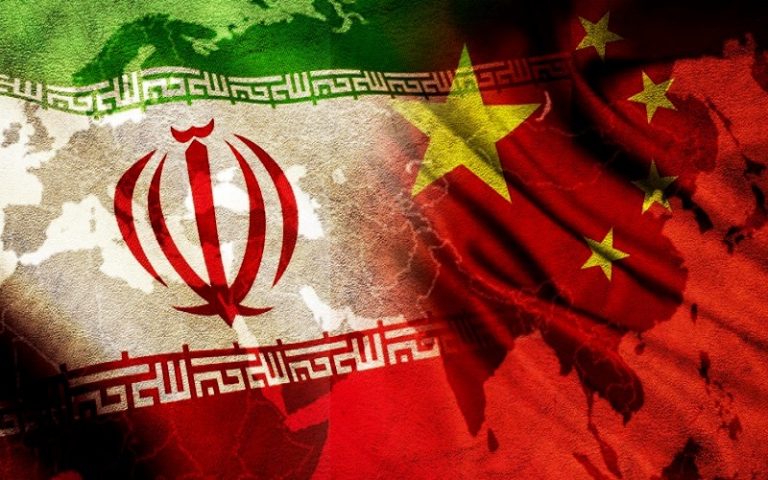
Iran and China signed a 25-year economic deal on Saturday, which liquidated much of Iran’s wealth and resources, as well as the “forfeiture of the Caspian Sea”, to China in exchange for a $400 billion investment into various sectors.

Little is known about the deal, which has been in talks since 2015, but even the small amount made public is so damaging that Iranian officials are comparing it to the Turkmenchay Treaty when the Qajar monarchy gave up much of their northern territory to Russia.

MP Hassan Norouzi said: “During the negotiations, the government agreed to forfeit Kish Island [an economic centre in the Persian Gulf] to China for 25 years.”

Even the little that China is paying for the resources will be mitigated by a reported two-year delay in payments, as well as the ability to pay in the Yuan, rather than the dollar. Iran is not getting a good deal, but the government is. The deal will help keep the mullahs in power after even the appeasement policies of Western powers were not enough to protect the Iranian economy, which is why they negotiated it.

Maryam Rajavi, the president-elect of the National Council of Resistance of Iran (NCRI), said: “The mullahs only think of preserving their own religious fascist dictatorship, which [regime founder Ruhollah] Khomeini said is the most important issue. He said they could even forsake the precepts of Islam to preserve the regime. Therefore, the mullahs could not care less about protecting the Iranian people’s assets and resources.”

Iran has no domestic production infrastructure, while any money earned from the export of natural resources, like oil and gas, is spent on ballistic missiles, nuclear projects, terrorist groups, and domestic repression. It’s a system designed to help the rich grow richer and keep the poor impoverished.

The Iranian opposition, People’s Mojahedin Organizaton of Iran, in this regard wrote: “The Iran-China deal will weaken an economy that is already on the verge of total collapse. Iran’s people are already dealing with skyrocketing prices, rampant inflation, and an unbridled coronavirus outbreak. The situation has left the people in utter outrage of the mullahs’ regime. Under such circumstances, instead of dealing with the country’s economic woes, the regime has decided to wholesale Iran’s resources to a foreign power.”

One thing is clear. This is an unpopular deal has angered people, and led to protests across the country.

Iranian Officials Endanger People’s Lives

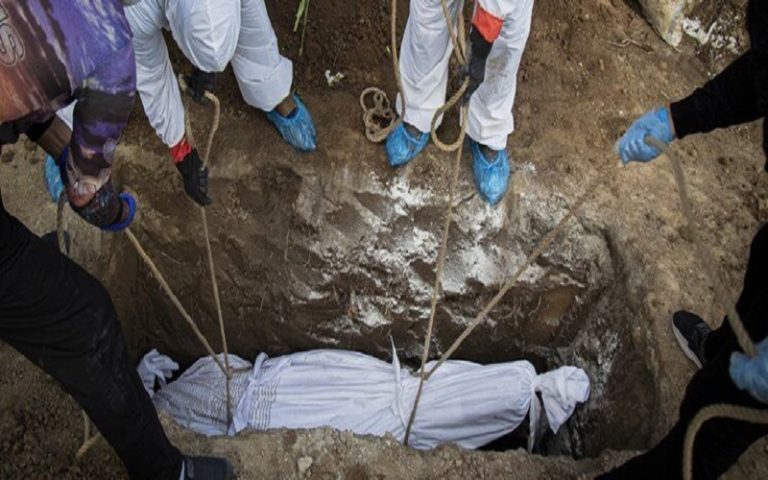
These days, governments across the globe are doing their best to accelerate the vaccination pace against the deadly coronavirus. They could take significant steps to eradicate this ominous disease by decreasing the death rate. However, Iranian officials completely drive the country in the opposite direction.

Officials in Iran do not show any hurry in vaccinating the population. Instead, high-ranking authorities, including the Supreme Leader Ali Khamenei and President Hassan Rouhani, had deprived society of reliable Covid-19 vaccines.

“The import of American and British Covid-19 vaccines is forbidden,” said Khamenei on January 8. “I have said this [point] to officials, and now, I am saying it publicly.”

On the other hand, the officials justify their imprudence in procuring coronavirus vaccines by questioning their efficiency. “The side-effects of the vaccines are not truly clear for us, and which vaccine is more effective and until when they are effective,” said Rouhani on February 27. “Some people across the globe are even afraid of injecting the vaccine!”

Furthermore, in the best-case scenario, mass vaccination in Iran would start six or seven months from now. “Mass production of this vaccine needs certain infrastructure, and the Covid-19 vaccine in Iran will begin mass production in July or August of 2021,” the semiofficial ISNA news agency quoted Yahya Ebrahimi, a member of the Parliament (Majlis) Health Commission, as saying on December 29, 2020.

Iranian Officials Test Cuban Vaccines on Impoverished People

“Cuba said late on Friday it had signed an accord with Iran to transfer the technology for its most advanced coronavirus vaccine candidate and carry out last-stage clinical trials of the shot in the Islamic Republic,” Reuters reported on January 9.

Also, the former Health Ministry Spokesperson Kianush Jahanpour, who is currently the head of the Food and Drug Organization, acknowledged that 50,000 volunteers would be recruited to carry out the Phase III clinical trials. “Technology transfer and joint production were preconditions for allowing human testing in the country,” Jahanpour said.

Officials immediately denied the news about the last-stage clinical trials of Cuban Covid-19 vaccines. However, their secrecy and contradictory claims and bragging prompted observers to scrutinize the issue.

On March 24, the state-run TV reported that the government vaccinated 1,000 sweepers of Shiraz Municipality in Fars province. A day later, the TV acknowledged the vaccination of sweepers in Mashhad in the northeastern Iranian province of Razavi Khorasan. “Today, the second phase of vaccination of this group was started,” the TV reported on March 25.

However, the state-run media did not specify when these impoverished people received their first shot of vaccine and why the government had not announced the first phase. Meanwhile, the Iranian government refuses to pay municipal workers’ salaries and even insurance rights. Therefore, it is too odd that the government had vaccinated low-income workers for free.

The news about injecting experimental vaccines into sweepers prompted Iranian citizens’ anger. Particularly, the netizens severely slammed the government for putting impoverished people at risk. Following the eruption of public ire against the government’s bleak decisions, Jahanpour attended the state-run TV on March 26, denying the injection of Cuban vaccines into sweepers. “The trial of the Iranian-Cuban coronavirus vaccine has yet to start,” he added.

Jahanpour’s claims were contrary to remarks raised by Ali Reza Biglari, the head of the Pasteur institution. As the Cuban Vaccine custodian in Iran, Biglari had provided a report around two months ago. “In primary days, we could perform around 2,000 to 3,000 [experimental] tests per day. However, our capacity was immediately grown, and today, we perform around 50,000 tests every day. We can reach a higher number if the country needs it,” Biglari said in an interview with ISNA on February 3.

Iranian officials exploit the health crisis as a means to ensure their survival in power, dissidents say, reckoning that “Iran is not in another world, and it is impossible that the world achieves significant successions and decreases the death rate while the coronavirus victims in Iran are on the rise.” Notably, Khamenei had described the coronavirus as a ‘blessing’ on March 4, 2020. Today’s developments prove why he described it as such.

NSA Reveal Chatter About Planned Iran Terror Attack in DC

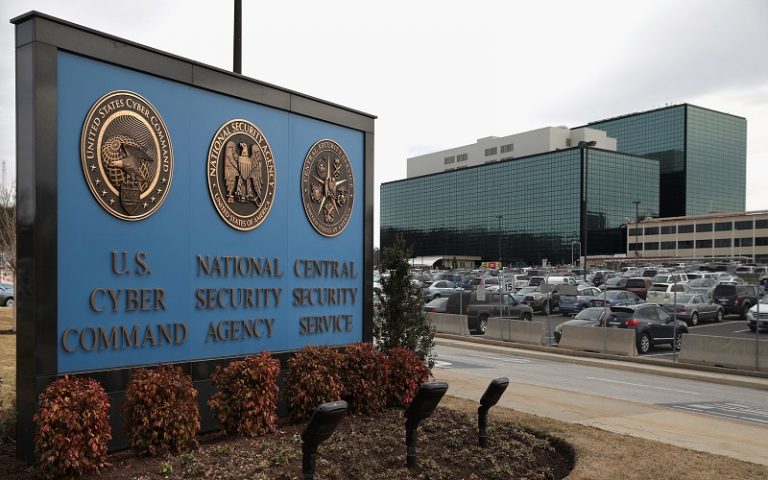
The US National Security Agency intercepted communications between Iranian Quds Force operatives in January about a concrete Iranian terrorist plot on American soil – an attack on Fort McNair in Washington DC – in an effort to kill Army Vice Chief of Staff General Joseph M. Martin.

This attack would have been Iran’s revenge for the January 2020 killing of Quds Force head Qassem Soleimani, the second most powerful figure in Iran. It shows that the Quds Force and the regime have not altered their objectives or tactics since the 2013 assassination attempt of Saudi Arabia’s ambassador to the US Adel al-Jubeir, which would have killed hundreds of civilians if the US hadn’t thwarted it.

The Iranian Resistance wrote: “While these two incidents are unique in terms of the amount of attention they received from American media, it would be foolish to assume that no other plots were unravelled or abandoned in the intervening period.”

After all, Iran did plot to bomb a 2018 opposition rally in France, with the intention of killing opposition leader Maryam Rajavi, and this would have killed hundreds or even thousands had European authorities not foiled it. This plot was even orchestrated by Iranian diplomat Assadollah Assadi and the three underlings he hired – all of whom are now serving time in Belgium after being found guilty earlier this year. The prosecutors said Assadi worked under the direction of high-ranking officials, including Foreign Minister Javad Zarif.

The Iranian Resistance wrote: “The European Union, the United Kingdom, and even the United States seem hesitant to acknowledge that these plots all stem from the Iranian regime’s topmost leadership and its theocratic system. Fortunately, that hesitancy is not shared among all lawmakers and politicians in the countries that are most capable of enforcing that accountability. Various US [members of Congress], members of the European Parliament, and current and former European government officials have signed their names to statements in recent months, which urged much more assertive policies aimed at confronting Iran’s status as the world’s leading state sponsor of terrorism.”

The statements call for increased “economic and diplomatic isolation” of Iran unless it dismantles its terrorist infrastructure and ends its plots against the West. Even the US, which doesn’t have trade ties with Iran or an Iranian embassy, must do more to hold Iranian government to account for terrorism, including increased sanctions, before the NSA gets there a little too late.

Iran Media on Economic Crisis

The Iranian state-run media is acknowledging how mismanagement by the mullahs has resulted in an economic crisis that has caused great hardship for the people in terms of rising prices and inflation

The Young Journalist Club (YJC) wrote Sunday: “There have been over a month since we face poultry scarcity around the country, and there are difficulties in distributing it. Each kilogram of poultry should be sold at 20,400 tomans. Unfortunately, a limited number of poultry is distributed among people standing in long lines to purchase [poultry at a government-set price].”

This story was also picked up by the Tasnim news agency, which explained that one kilo of poultry now goes for 40,000 tomans in most shops and stated that officials would know that if only they went to the market themselves. Tasnim further stated that, despite promises to distribute 2,000 tons of chicken per day, only 90 tons have arrived in Tehran.

The new Iranian year began on Sunday, with 80% of the country in poverty and Supreme Leader Ali Khamenei saying that this year would bring the “elimination of obstacles”.

The state-run Tejarat daily wrote Thursday: “As we enter [the Persian year 1400], not only is there no point of hope, but the expected inflation torments us. In all these years, people have always struggled with difficulties, and the [system] has only praised them for resisting. Officials now face this question, that when would people have their share of peace and comfort? How long do people have to walk through hundreds of shops to buy oil? Really, how long do people have to stand in long queues for hours so that maybe it will be their turn to get poultry, not at a reasonable price, but at a price several times higher than the price they bought a month ago? How long is the people’s share of [the so-called] resistance supposed to be skyrocketing prices and empty tables? How long should salaries be below the poverty line?”

So why is Iran in an economic crisis? Well, the Iranian Resistance dismisses the idea that sanctions are the sole cause, highlighting that Iran’s policy of banknote printing has increased point-to-point inflation, citing Iran’s Central Bank chief Abdolnasser Hemmati as saying that the previous two years’ budgets were dependent on this and MP Alireza Salimi as saying that this devalues the currency and reduces people’s purchasing power.

Salimi said of the Iranian government: “Once they blame the previous government, once people, once Donald Trump, and now they say they would reveal the problems later. Each time they are looking for someone to blame.”

Iran’s Government Fears Stagnation in the Election

Currently, various factors about Iran’s political situation are showing that the regime’s supreme leader Ali Khamenei has decided to contract his government and replace the so-called reformist faction and its president Hassan Rouhani with his desired President from his own faction. But this is not without consequences for him and his regime, as some of the elements of this regime have warned.

Seyed Mohammad Sadr, a member of regime’s Expediency Council, warned about this political surgery and said: “If such a thing happens, it is a dangerous issue for the country and even a security risk, because if the presidential election is like the previous parliamentary elections, the legitimacy of the system will be questioned, and this will pave the way for foreign greed to create a series of conspiracies against the Islamic Republic.” (Etemad Online, March 27, 2021)

In relation to these statements, two points can be considered and pondered:

  1. From the perspective of the Iranian people, the Velayat-e-Faqih (supreme religious rule) system has lacked any legitimacy for many years.
  2. The concern of such people is never the interests of the Iranian people and their freedom and livelihood. Their only concern is the fate of a rule that calls itself the ‘Islamic Republic’. A system that is neither republican nor Islamic, a medieval tyranny rooted in the depths of the worst dark history.

In Iran, free elections are nothing but a bitte joke and have never been held and the people have never had the right to free choice. Were free elections to be held under the auspices of the United Nations, no one would vote for this regime, except those in power, their associates and the IRGC (Iran’s Revolutionary Guard).

It was after June 20, 1981 that the regime completely lost its political and social legitimacy, not now that the interests of the so-called reformist faction have been jeopardized. So-called ‘reformists’ are playing the role of an opposition in regime to collect the people’s vote and make populistic remarks. From the point of view of the Iranian people, they are another version of this system and its elements.

Below is just one paragraph expressed by such people who are playing the role of the regime’s opposition and who try to collect votes for the so-called reformist faction.

“There are some religious authorities, whether Shiites or Sunnis, who believe that the people have no right or role. The head of government is also determined from above, and the people’s votes are considered merely as an ornament, and in fact the people do not have the right to want to form a government, which naturally turns the system into a terrible dictatorial government.

“Religious dictatorship is a terrible dictatorship in which, for example, one acts violently and violently eliminate its opponents, while at the same time imagining that by doing so, he also goes to heaven because he has executed God’s command in a way.” (Etemad Online, March 27, 2021)

Has the government in Iran taken another course of action in the past four decades? That terrible religious dictatorship, probably not on Mars but on the plateau of Iran, is happening now in Iran and its perpetrators are people like this figure who is still a member of the Expediency Council.