Home Blog Page 772

Iran’s Policy of Murder and Genocide in Baluchistan

0

By Hamid Yazdan Panah

Last month a shocking story gained little traction in the mainstream press, despite its horrific implications and brutal reality. A report from Iran emerged which detailed how every male from a village in the province of Sistan Baluchistan had been executed.  The Baluch, an ethnic minority in Iran, continue to face systematic repression and discrimination, yet they remain largely ignored in both the East and the West. The Baluch in Iran remain victims of institutional discrimination, state violence, and intense poverty.
France: EU could impose sanctions over Iran missile tests

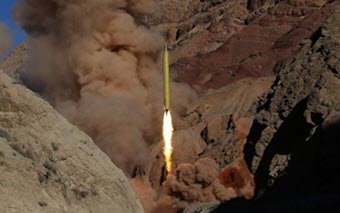
The European Union could impose sanctions on Iran over its recent ballistic missile tests, French Foreign Minister Jean-Marc Ayrault said on Sunday.

The United States, France and other countries have already said that, if the missiles are confirmed as nuclear-capable, the tests, conducted last week by Iran’s Revolutionary Guard Corps (IRGC), would violate United Nations Security Council resolution 2231, Reuters reported.

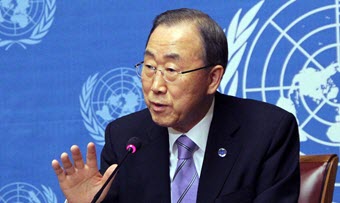
UN chief urges ‘moderation’ after Iran test fires missile

New York, 11 Mar – United Nations Secretary-General Ban Ki-moon on Thursday urged Iran to act with caution and moderation after Tehran carried out missile tests over two days this week.

In the “current political atmosphere” in the Middle East and following the lifting of sanctions against Iran, the secretary-general called on the government of Iran to “act with moderation, caution and the good sense not to increase tensions through any hasty actions”, said UN spokesman Stephane Dujarric.

Iran, human rights investigator clash at UN

Iran Focus

London, 11 Mar – Iran is maneuvering with its allies at the U.N. Human Rights Council to block Western attempts to renew the mandate of a special investigator into Tehran’s human rights record – a man who has drawn contemptuous criticism from the regime for highlighting abuses, CNSNews.com reported on Friday.

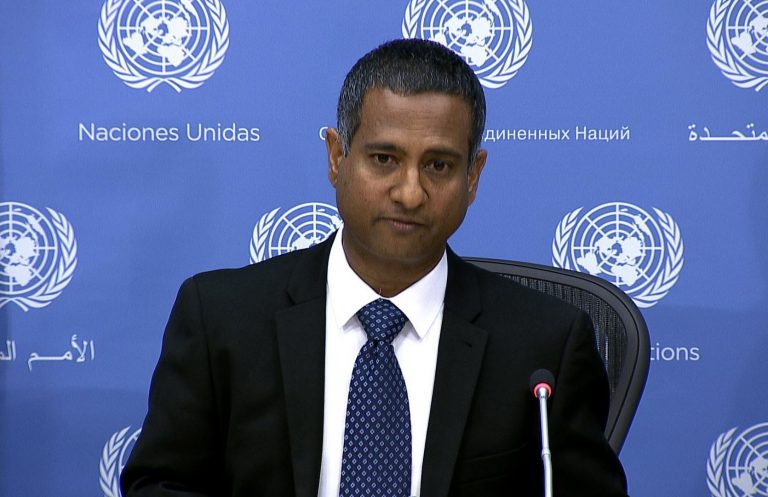
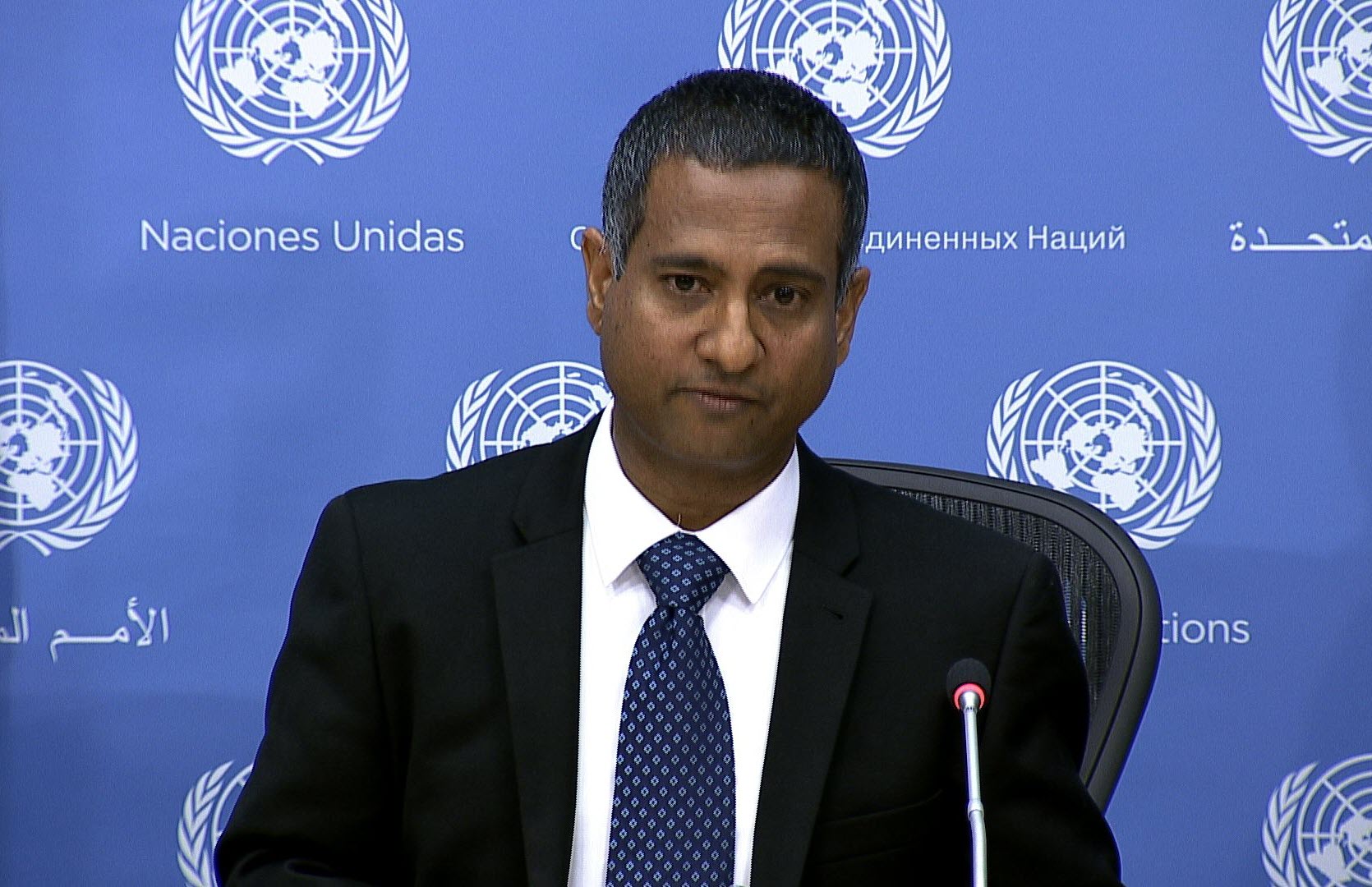
For the past five years Ahmed Shaheed, a former foreign minister of the Maldives, has been an independent “special rapporteur” on the human rights situation in Iran, and over that period Tehran has denied multiple requests for him to visit the country.

Fractured post elections, Iran regime intensifies campaign against its organized opposition

By Ali Safavi

Following a weakening of its overall status after the sham elections in February, the Iranian regime has intensified a vociferous misinformation campaign against the main opposition Mujahedin-e Khalq (MEK/PMOI). The aim of spreading a barrage of lies and false stories, according to the opposition, is to set the stage for attacks against Camp Liberty, home to thousands of dissidents advocating for a democratic, secular, and non-nuclear Iran.

Iran’s Women Lead Struggle for Freedom

0

By Hamid Yazdan Panah

March 8th is International Women’s Day, an occasion to reflect on the situation of women throughout the world. There are many stories worthy of attention in this context, however I would like to take time to focus on one in particular; namely the courageous struggle being waged by women in Iran. Despite consistent media coverage on Iran little attention has been paid to Iranian women and their struggle for freedom. For more than a century Iranian women have been on the front lines of dynamic change in Iranian politics and society. Despite this reality, both the Iranian regime and the Western media have marginalized Iranian women and ignored this major force for real change.

Human Rights Group Commends Albania for hosting Camp Liberty Iranians

The Italian Helsinki Committee for human rights supports Albania’s attitude towards Iranian dissidents, condemns Tehran’s demonization campaign.

Statement by Italian Helsinki Committee for Human Rights:

The issue of Iranian dissidents living at Camp Liberty, Iraq is a pressing humanitarian issue that deserves our immediate attention. They have been subject to several deadly attacks by terrorists affiliated with the Iranian regime and Iraqi security forces during the tenure of Prime Minister Nouri al-Maliki, resulting to 140 being killed and more 1300 injured. The last attack on these defenseless refugees took place on October 29, 2015, resulting in the deaths of 24 of them. In this light, the efforts of the government of Albania to host the Iranian dissidents are commendable.

Maryam Rajavi speaks at EP conference ‘Post-JCPOA policy on Iran.

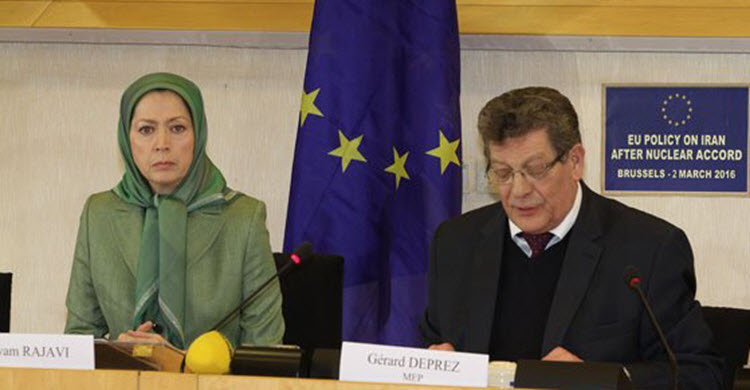
On Wednesday, March 2, 2016, the Iranian Resistance’s President-elect Maryam Rajavi attended a meeting at the European Parliament entitled, “Post-JCPOA policy on Iran”. The meeting was attended by a large number of members of the European Parliament and was presided over by the MEP Gerard Deprez, chairman of the Friends of a Free Iran inter-parliamentary group in the European Parliament.

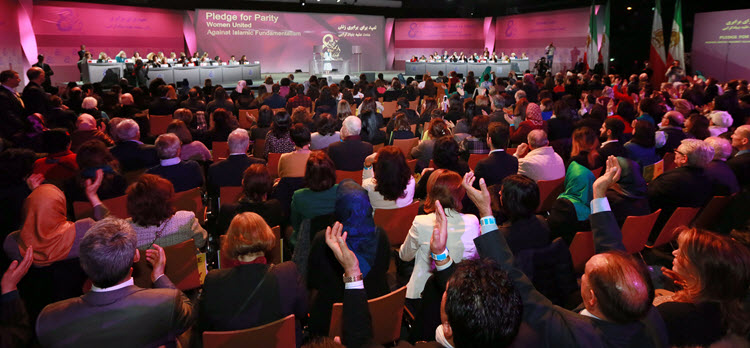
Pledge for Parity: Women United Against Islamic Fundamentalism

Just before International Women’s Day 2016, many prominent political and human rights figures attended a conference in Paris along with Mrs. Maryam Rajavi on Saturday, 27th February 2016. The topic was “Pledge for Parity: Women United against Islamic Fundamentalism”.

The event was a gathering of support for the fight towards parity. Many of the speakers concurred that the voice of women was essential in overcoming Islamic fundamentalism. Ranjana Kumari, Director of the Centre for Social Research in India and a leading figure in Indian politics said that women should be “encouraged to be at the forefront”.

The Iranian regime’s Political and Cultural Bankruptcy

0

Nahid Hematabadi, a renowned Iranian opera singer, has written a tragic account of the death of art and music in Iran after fundamentalist clerics hijacked a people’s revolution in 1979.

She looks back at her childhood where she in the early 1950s I began learning the violin. After studying music and singing for Tehran Music Academy, she performed as a soloist for Iran’s State Opera in numerous events. Yet, now she is leaving in exile in Europe and laments what has happened to her homeland under the mullahs of Tehran. She writes that all the artists who refused to succumb to fundamentalists’ restrictions faced all types of crackdowns, deprivations, and purges. Many were thrown into such poverty that they were only able to make a living as street vendors. Others were thrown behind bars. Various writers and poets who refused to back down from their beliefs were murdered.