

Retirees Gathering and Protests in Several Cities in Iran
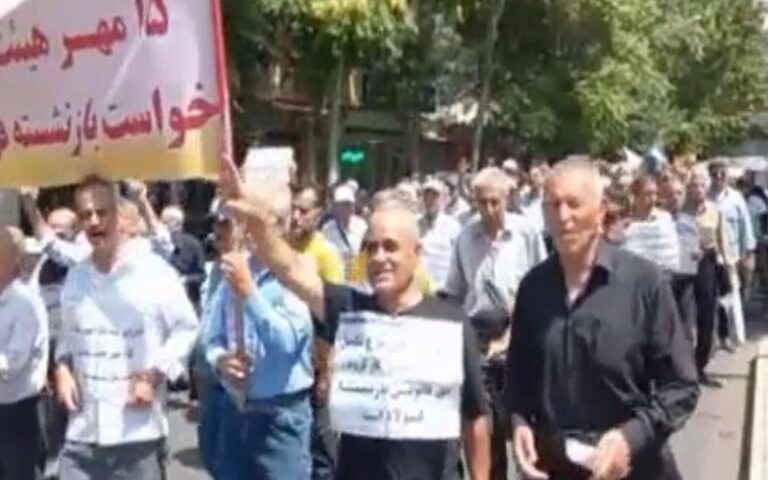
The economic protests in Iran continued on Sunday, July 14, with gatherings of retired steel industry workers in Tehran and Isfahan and retired national and social security workers in several cities.
According to reports, published on social media on Sunday, protests by retirees took place in at least the cities of Tehran, Isfahan, Kermanshah, and Shush.
In addition to protesting the lack of attention to their professional demands by the authorities, retired protesters in Tehran also objected to the violation of women’s rights and the pressures to impose mandatory hijab by the regime. They chanted: “Let go of the headscarf, think of us,”
The protesting retirees also chanted: “Men and women are equal, united and brave,” and “Oppression and cruelty to women are doubled here.”
In Kermanshah, protesting retirees objected to the arrest and issuance of the death penalty for Sharifeh Mohammadi, a civil activist, chanting: “Sharifeh Mohammadi must be freed.”
At this gathering, attended by retirees from organizations such as the telecommunications company, the Social Security Organization, and national retirees, other slogans included: “Unity, unity, against poverty and corruption,” “Gathering and protesting is our absolute right,” “Imprisoned teacher must be freed,” and “Imprisoned worker must be freed.”
Retired steel industry workers in Isfahan also gathered and marched in front of the Steel Retirement Fund.
In addition, retired protesters in Shush held a protest gathering, chanting: “Promises are enough, our table is empty.”
The spread of professional protests by various groups, including retirees, workers from different industries, teachers, those who have lost their savings, and nurses and healthcare workers, indicates the increasing economic problems in Iran and the disregard of the Iranian regime’s officials.
Experts say the living conditions and economic situation will worsen beyond what they are now.
Additionally, a regime’s economist Hossein Raghfar recently stated that changing the head of government in the Iranian regime is ineffective, saying that there are two governments in the ruling system in Iran: one has “weapons and force” and its actions affect people’s livelihoods, while the other “has no power at all.”
Water Crisis in Iran: 200 Villages in Golestan Province Facing “Water Stress”
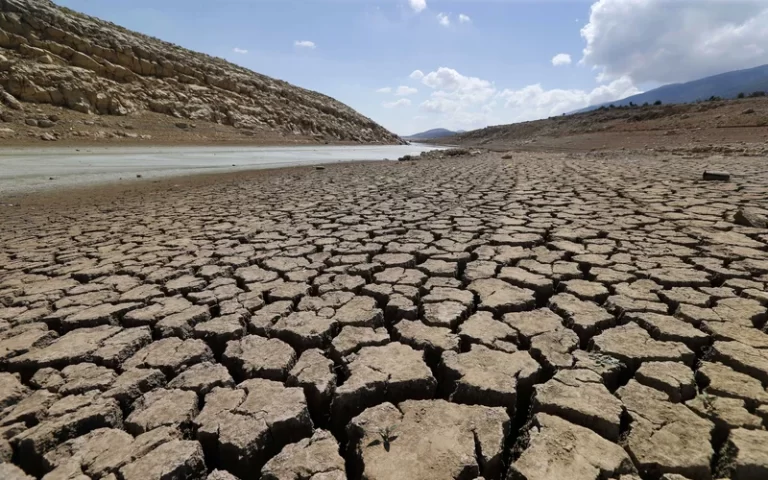
Due to the ongoing water shortage crisis in Iran, water has been cut off or become unusable in several cities, and 200 villages in Golestan Province are experiencing water stress.
Reports indicate that drinking water in the cities of Damavand, Khash, Genaveh, Harris, and Mahshahr has either been cut off or is experiencing a decline in quantity and quality.
Based on images published on social media, residents in Hersin County, Kermanshah Province, are also deprived of access to potable water.
Additionally, due to the emergence of water stress in 200 villages in Golestan Province, the drinking water shortage in some rural areas of this province has reached a critical point, and water is being supplied by tankers.
The state news agency ILNA mentioned that Golestan Province is among the provinces with water stress, adding that 46% of the population in this province lives in rural areas. Ninety percent of the water in Golestan Province is used in agriculture.
In recent days, some residents of the village of “Esfidan” in the city of Bojnurd, North Khorasan Province, protested the cut-off of drinking water.
The World Resources Institute, in a report in March 2024, identified Iran as one of the 25 countries facing the most severe water scarcity and water stress, describing it as a consequence of “decades of poor water management and unsustainable water use for agriculture.”
The continuation of drought and the water crisis in Iran comes as heavy rainfall in some parts of the country has so far caused flooding, resulting in widespread damage and the deaths of dozens of citizens.
Summer, Heat, and Power Outages in Iran; Government Asks People to “Save” Without Explanation
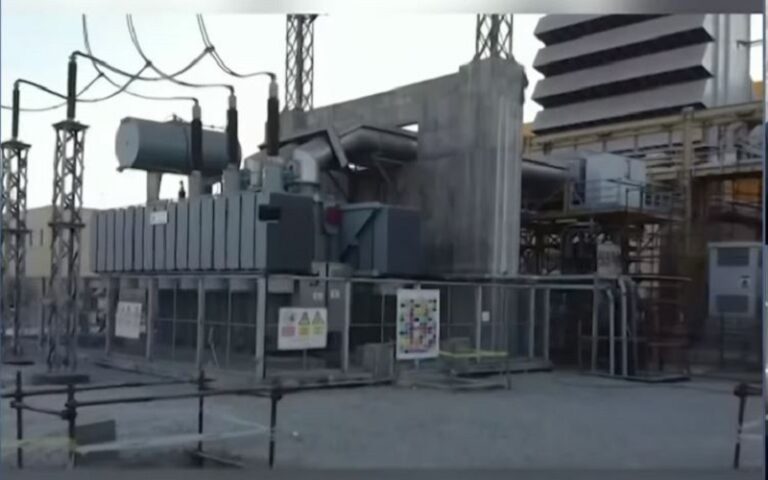
While the Iranian regime has spent a significant portion of the country’s capital over the past 20 years on its nuclear programs under the pretext of “power generation” and the “completion of the Bushehr power plant,” people are facing the recurring problem of widespread power outages as summer temperatures rise in Iran.
The Bushehr nuclear power plant, which has cost billions of dollars to build and has led to numerous sanctions-related issues for the country, has a capacity of only 1,000 megawatts of electricity, whereas the country’s electricity consumption in recent days has been around 77,000 megawatts.
Despite the Iranian regime’s propaganda over the past years and the vast amounts of money spent, the Bushehr nuclear power plant is only able to supply one percent of the country’s electricity needs. This amount of electricity could have been supplied at much lower costs through clean energy sources.
Meanwhile, on Friday, July 12, Mostafa Rajabi Mashhadi, the CEO of Tavanir, the national electricity provider, denied any “planned blackouts,” saying: “We have no plans to publish blackout schedules, and with the cooperation of the people, we will get through this summer without blackouts.”
However, domestic media have reported widespread power outages in 13 provinces on Thursday and more than five-hour outages in some areas of Tehran on Friday.
Experts cite the lack of planning and the government’s actions outside economic frameworks in developmental issues as the main reasons for the energy sector’s imbalance, and they believe that with this style of governance, there is no hope for improvement.
Earlier, the “Donya-e-Eqtesad” newspaper wrote about the reasons behind the current situation: “The discrepancy between income and expenses has led to investors showing little interest in the electricity industry and preferring to invest in other industries. Additionally, the government, which pays heavy subsidies to residential and agricultural consumers, is unable to construct power plants or even pay the claims of power plant owners, contractors, and equipment manufacturers in the electricity industry.”
Iran: 85 Political Prisoners on Hunger Strike in Protest of Sharifeh Mohammadi’s Death Sentence

In continuation of the protests against the death sentence issued for labor activist Sharifeh Mohammadi, 85 political prisoners in Evin Prison went on a hunger strike on Thursday, July 11. A number of imprisoned labor activists also described the sentence as “unjust, shocking, insane, and unacceptable” in a statement.
Eighty-five political prisoners held in Evin Prison began their hunger strike at 11 PM on Wednesday, July 10, protesting the “unjust sentence” of Sharifeh Mohammadi and in solidarity with the campaign supporting her.
Thirty of these political prisoners are in the women’s ward, 30 in ward eight, and 25 in ward four of Evin Prison.
These prisoners announced that they would continue their hunger strike until 11 PM on Thursday, July 11.
They had previously called on other prisoners and the general public to join them in this protest movement.
Sharifeh Mohammadi, a labor activist held in Lakan Prison in Rasht, was sentenced to death on charges of “rebellion” by Branch 1 of the Revolutionary Court of this city on July 4.
The judge cited Mohammadi’s opposition to executions under the Iranian regime and a Ministry of Intelligence report about her membership in the “Coordination Committee to Help Form Labor Organizations” as grounds for this accusation.
The issuance of the death sentence for Mohammadi has sparked widespread reactions from labor, civil, and political activists, as well as a number of independent labor unions.
On Tuesday, July 9, social media users expressed their protest against Mohammadi’s sentence using the hashtag #FreeSharifeh, calling for the unconditional release of this labor activist.
Previously, on July 4, sixteen female political prisoners in Evin Prison joined the campaign to defend Sharifeh Mohammadi by publishing a letter and demanding the annulment of her sentence.
They emphasized that Mohammadi, after seven months of temporary detention, enduring torture and interrogation in various detention centers, was sentenced to death “in a threadbare scenario with baseless charges,” and declared that they stand with her and other prisoners whose lives are in danger.
Mohammadi was arrested on December 5, 2023, on charges of “propaganda against the regime” and later faced the charge of rebellion.
More than a month after her arrest, on January 13, 2024, Mohammadi was beaten by Ministry of Intelligence interrogators to extract a forced confession against herself.
Since coming to power, the Iranian regime has consistently arrested, tortured, and imprisoned civil, labor, and political activists critical of the government.
Since the start of nationwide protests against the Iranian regime in September 2022, the repression of civil, labor, and political activists, as well as other protesters by the government, has intensified and continues to this day.
New Zealand Imposes New Sanctions Against Iran’s Regime
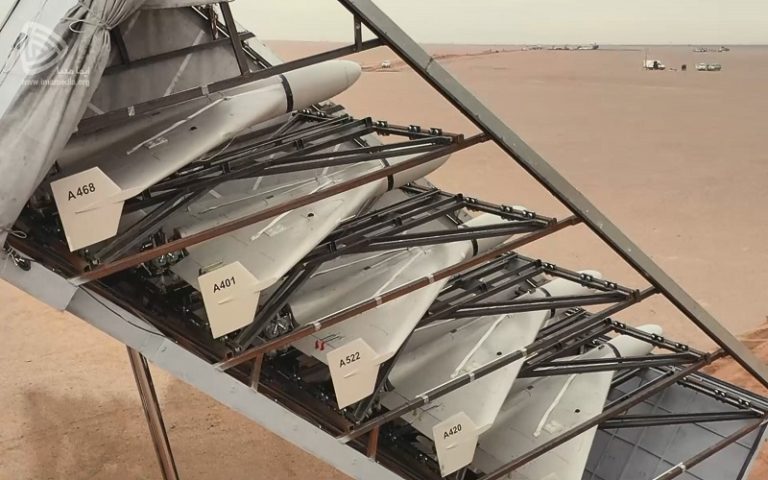
On Thursday, July 11, New Zealand’s Foreign Minister Winston Peters announced in a statement the imposition of sanctions on individuals and entities associated with the Iranian regime involved in the production and supply of drones for Russia’s use in the Ukraine war.
The statement named three individuals and four entities affiliated with the Iranian regime.
According to New Zealand’s Ministry of Foreign Affairs, Abbas Abdi Asjerd and Seyed Mohsen Vahabzadeh Moghadam, senior officials of several Iranian entities, including Bonyan Danesh Shargh, which is involved in the construction and supply of drones to Russia, have been included in the sanctions list.
The New Zealand Ministry of Foreign Affairs also identified Ehsan Rahat as a senior scientist and former CEO of Chakad Sanat Asmari, a cover company for the Islamic Revolutionary Guard Corps (IRGC) and included him in its sanctions list.
In addition to these three individuals, Alvand Motor Company, Bonyan Danesh Shargh, Pishro Sanat Aseman Sharif, and Saad Sazeh Faraz Sharif (also known as Darya Fanavar Borhan Sharif) have all been sanctioned for their involvement in the construction and distribution of drones.
Ehsan Imani Nejad, CEO of Saad Sazeh Faraz Sharif, had already been sanctioned by the New Zealand government on May 17, 2024.
Iran’s Regime on Verge of Obtaining Nuclear Weapons
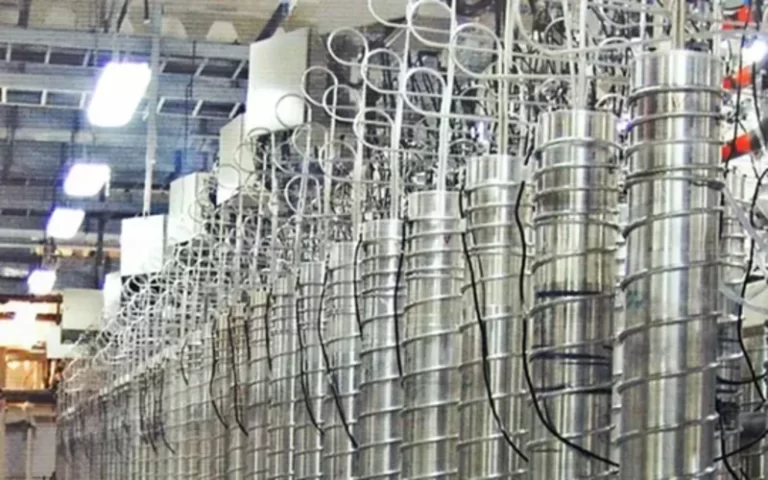
A coalition of well-known think tanks and activist groups in the United States, including the Vandenberg Coalition and the Foundation for Defense of Democracies, have warned that the Iranian regime’s nuclear program has reached a critical stage, and the Iranian government could produce enough enriched uranium to build several nuclear weapons within a few days.
This comes as global attention is focused on the war between Israel and Hamas, a group supported by the Iranian regime in the Gaza Strip, and also on the U.S. presidential elections this year, 2024. Meanwhile, Tehran has continuously increased its nuclear activities and uranium enrichment.
These groups have published a report, urging the next U.S. president to rapidly develop “credible military options” to prevent the Iranian regime from acquiring nuclear weapons and to adopt a “coherent and comprehensive strategy” to counter the threats posed by Iran’s nuclear program and its destabilizing activities.
In their joint report, they further emphasize that the time for diversion and ignoring these threats is over and that the policies of Joe Biden’s administration towards the Iranian regime have been ineffective.
This report, supported by nine think tanks and activist groups in the field of foreign policy, highlights growing concern among a broad segment of the U.S. foreign policy community about the Biden administration’s reluctance to confront Iran’s regime.
The suggestions of these groups for the next U.S. president include the following:
- Gathering other Western countries to sanction Tehran’s nuclear activities and reimposing a set of economic measures that were initially lifted by the United Nations as part of the 2015 nuclear deal.
- Preparing the United States Department of Defense, the Pentagon, to swiftly implement military options if deterrence fails.
- Countering Tehran’s foreign influence campaign by disclosing classified information and prosecuting Iranian regime officials involved in efforts to kill Iranian dissidents and American officials.
- Paying more attention to the Iranian regime’s proxy terrorist groups and holding Iran accountable for their actions.
- Increasing public support for opposition forces against the Iranian regime within Iran.
Iran’s Regime Can’t Provide Electricity to 13 Provinces
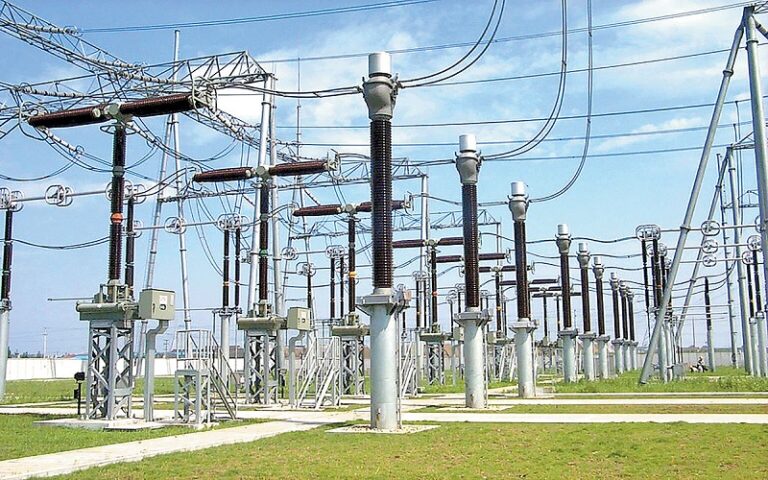
According to the state-run ISNA news agency, 13 provinces in Iran will be closed on ursday, July 11, due to what it called an “imbalance between electricity production and consumption as well as rising temperatures and record-breaking consumption.”
As reported by ISNA, the provinces of Semnan, Zanjan, Khuzestan, Qom, Bushehr, Markazi, Isfahan, Yazd, Sistan and Baluchestan, Chaharmahal and Bakhtiari, Kerman, South Khorasan, and Lorestan will be closed on Thursday due to the electricity shortage.
This state news agency wrote that the demand for electricity consumption in Iran reached over 77 gigawatts, and with the predicted increase in temperature, the consumption trend is likely to continue rising.
According to this report, to prevent widespread blackouts and scheduled power cuts in the 13 provinces, Thursday has been declared a holiday so that “by reducing electricity consumption in offices, the network can be managed and blackouts avoided.”
Tavanir Company (Iran Power Generation, Transmission, and Distribution Management Company) sent a nationwide warning SMS to subscribers on Monday, July 8, and a consumption warning for Tehran was also issued on Wednesday.
In this regard, according to the regime’s Young Journalists Club (YJC), the electricity of 65 high-consumption administrative subscribers in Tehran was cut off due to their refusal to reduce electricity consumption.
In recent days, there have been many protests on social media regarding power outages in various cities in Iran.
In this context, according to Telegram channels, the residents of “Kuye Mashali” in Ahvaz, southwest Iran, do not have electricity for 12 hours a day, while the city is “struggling with unbearable heat above 50 degrees Celsius.”
According to this report, the frequent and unannounced power outages have disrupted the daily lives of Ahvaz residents.
The power outages are occurring despite Homayoun Haeri, the regime’s Deputy Minister of Energy for Electricity and Energy Affairs, telling ISNA on May 4 that “with the measures and planning in place and the cooperation of electricity industry subscribers, we will not have blackouts this year.”
However, in mid-June, the Deputy Minister of Industry, Mining, and Trade announced in a letter to the Minister that the electricity restrictions for industries this summer will be intensified, and consequently, the activities of industries such as steel and cement will be severely disrupted, ultimately leading to reduced production and increased prices.
The state-run ILNA news agency also published a letter from Reza Mohtashamipour, the Deputy Minister of Industry, Mining, and Trade, addressed to the minister, stating: “The nominal power capacity of the country has reached 90,000 megawatt-hours, and while we have not yet approached the hot months of the year, the peak electricity consumption has reached 70,000 megawatts.”
Meanwhile, the regime’s Khabar Online website reported that power outages in some central areas of Tehran have reached four hours.
Khabar Online emphasized that in previous years, with the start of the hot season, the maximum power outage duration was two hours, and this is the first time that residents have experienced nearly four-hour power cuts.
According to media reports, power outages have become a major problem for industries, causing protests from industrial owners.
Reports indicate that yesterday, the electricity of the SAIPA car manufacturing plant was also cut off for at least five hours, causing serious problems in the production process, leaving workers idle and uncertain for hours.
According to published news, consecutive power outages in Tehran’s industrial hub, Jaddeh Makhsous (special road), which houses many long-established and old factories, have caused major problems for industries.
The state-run ILNA news agency, quoting the Vice President of the Industry Commission of the Iran Chamber of Commerce, wrote that one-day-a-week power outages in industrial towns across the country are extending to a second day.
The regime’s Donya-e-Eqtesad newspaper reported on Wednesday that power outages cause serious damage to industries, and each time the industries are turned on and off, it takes about 24 hours, with each 24-hour power outage causing increased damages.
Donya-e-Eqtesad pointed out the private sector’s request to the government to move the one-day-a-week power outage to Friday and wrote that Ministry of Energy officials have informed industrial owners that “solving this issue is not within the Ministry of Energy’s authority, and security agencies control this sector.”
Experts consider the lack of planning and behavior outside economic frameworks in development issues as the main factor in the energy sector’s imbalance and believe that with this method of governance, there is no hope for improving conditions.
Iran’s Regime is Exploiting Gaza Protests in US

The US Director of National Intelligence reported on Iran’s cyber activities and the misuse of protests against Israel in the Gaza war by Iranian agents.
Avril Haines, on Tuesday, July 9, said in a statement: ” We have observed actors tied to Iran’s government posing as activists online, seeking to encourage protests, and even providing financial support to protesters [against the Gaza war].”
The US director of national intelligence further referred to her testimony in the US Congress in May 2024, stating that Iran is increasingly attempting aggressive infiltration and creating divisions and undermining trust in our democratic institutions.
In this statement, she emphasized Tehran’s actions in previous US elections, specifying that Iranian cyber forces continue their cyber activities and infiltration using social media platforms and threats, and it is likely that they continue promoting their influence through their intelligence services and online influencers based in Iran.
The US director of national intelligence highlighted Tehran’s efforts in recent weeks, stressing that the country is seeking to “exploit” the ongoing protests over the Gaza war using a “playbook” that others have used for years.
“I want to be clear that I know Americans who participate in protests are, in good faith, expressing their views on the conflict in Gaza — this intelligence does not indicate otherwise. Moreover, the freedom to express diverse views, when done peacefully, is essential to our democracy, but it is also important to warn of foreign actors who seek to exploit our debate for their own purposes.” Haines said.
Student protests in the US, which began after Israel’s attack on the Gaza Strip and the worsening conditions of civilians in the area, have been intense for weeks.
On Thursday, May 30, Iranian regime supreme leader Ali Khamenei, in a letter to American students opposing the Israeli war in the Gaza Strip, described them as part of the “Resistance Front.”
The Iranian regime refers to its affiliated militia groups in Syria, Iraq, Lebanon, and Yemen as the “Axis of Resistance,” which attacks US and Israeli targets and positions in the region.
The US director of national intelligence stated that Americans targeted by Iranian regime campaigns might not be aware that they are interacting with or supporting a foreign government.
Previously, the US director of national intelligence warned the Senate that innovations in artificial intelligence allow foreign actors to produce seemingly more credible political messages more efficiently, on a larger scale, and with content tailored to different languages and cultures.
On Thursday, May 30, the artificial intelligence company OpenAI also announced in a report that it had removed five online influence campaigns that were using artificial intelligence to “deceive” public opinion.
According to the company’s new report, bad actors based in Russia, China, Iran, and Israel were attempting to use artificial intelligence to deceive the public.
According to this report, these actors used OpenAI’s tools, including ChatGPT, to create social media comments in various languages, generate names and IDs for fake accounts, create cartoons and other images, and debug code.
Porters in Iran Risk Death to Earn Meager Amounts
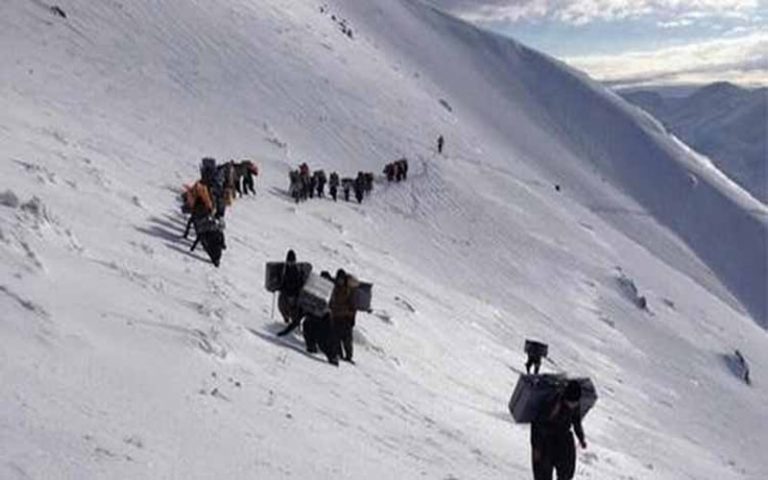
Reports indicate an increase in deadly attacks by Iranian regime security forces on Kurdish porters. These porters carry goods from Iraq for a very small amount of money.
In 2023, Iranian regime security forces shot at 507 Kurds carrying goods from Iraq, killing 44 of them.
Since the beginning of 2024, 111 Kurds have been shot at the border for the same reason.
When the border guards see the porters, they shoot at them. Many people are either killed or suffer serious injuries, including spinal cord injuries.
Porters are of various ages, from 13-year-old boys to 75-year-old men. Some of them are highly educated but are forced to take up this job to make a living.
Porters usually receive their wages based on the weight and type of goods they carry.
Items such as tea, electronics, textiles, beauty products, and cigarettes cross the border to be sold immediately.
Porters travel at least 10 kilometers through the mountains carrying at least 10 kilograms of goods. For carrying heavy loads in snow and cold weather, with the risk of being killed, injured, or imprisoned, they receive only $10.
Shooting at porters has been happening for two decades, and poverty is the main factor driving porters to this job.
According to official statistics, since the Iran-Iraq war in the 1980s, about 20 million landmines were planted in Iranian Kurdistan.
The planting of these mines has made the land unsuitable for agriculture and created deadly conditions for working on the land.
In addition to the difficulty of agricultural work in these areas, there are no investments or development projects in the region.
Human Rights Watch has published a report on the increase in shootings by Iranian security forces at porters.
For this report, 13 Kurdish porters were interviewed who survived the shootings or witnessed them between October 2021 and April 2024.
Witnesses told Human Rights Watch that the border guards and the Islamic Revolutionary Guard Corps carried out these attacks on the porters.
The Iranian regime treats the Baluch fuel carriers on the eastern border similarly to how it treats the porters on the western borders.
Targeting ethnic minorities such as Kurds and Baluchs is a means of controlling them.
Protests by pensioners in several cities in Iran
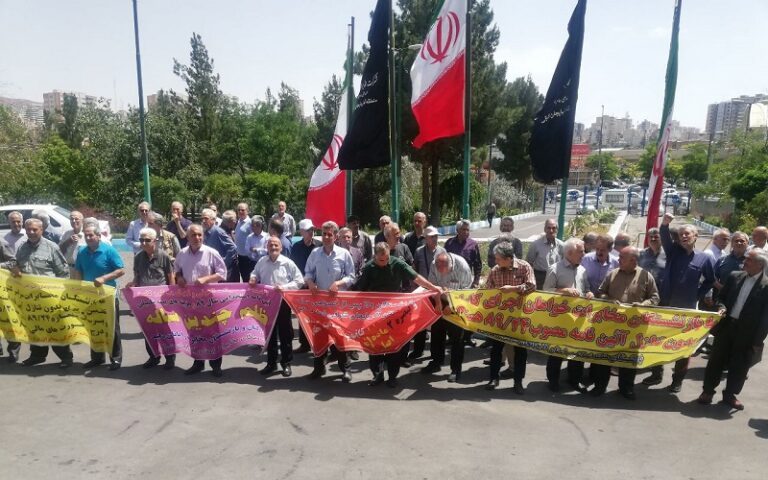
Economic protests by pensioners from Social Security, government, telecommunications, and steel sectors took place in several cities across the country on Sunday, July 7. The protests emphasized the “double oppression” of women by the government in Iran and called for the release of Sharifeh Mohammadi, a labor activist sentenced to death.
According to reports from labor sources, pensioners from various organizations gathered on Sunday to protest against their living conditions, unmet labor demands, the arrest and pressure on labor activists, and the additional oppression of women in several cities, including Tehran, Isfahan, Kermanshah, Shush, and Ahvaz.
In Tehran, protesting pensioners chanted: “Double oppression on women.”
Protesting pensioners in Tehran also chanted against the arrest and death sentence of labor activist Sharifeh Mohammadi: “Sharifeh Mohammadi must be freed.”
At the same time, protesting pensioners in Shush, Khuzestan province, chanted: “Let go of the headscarf, think about us” in protest against their living conditions and government pressure on women.
In this gathering, the protesting pensioners also emphasized: “We condemn the death sentence of Sharifeh Mohammadi.”
At the pensioners’ protest in Kermanshah, protesters demanded welfare services, including free healthcare, and wage determination based on inflation rates.
In Isfahan, retired steel industry workers highlighted financial corruption and large-scale embezzlement, chanting to the regime officials: “Reduce your thefts, solve our problems.”
Additionally, Khuzestan steel industry retirees gathered in front of the Steel Industries Pension Fund in Ahvaz.
The expansion of labor protests by various groups, including pensioners, workers from different industries, teachers, victims of financial fraud, and healthcare workers, indicates the increasing economic problems in Iran and the disregard of regime officials.
The continuation of economic protests on Sunday occurred just two days after the regime held elections to appoint a successor to Ebrahim Raisi. Most people consider the change of the head of state in the current government structure irrelevant to solving economic and livelihood issues.
Economist Hossein Raghfar recently stated regarding the campaign slogans of the Islamic Republic’s favored candidates that there are two governments in Iran’s ruling system; one has “weapons and power” and impacts people’s livelihoods, while the other has no “power” at all.
