


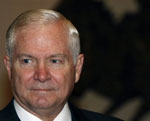
 AFP: US Defence Secretary Robert Gates is meeting on Thursday with Emirati leaders on Iran’s nuclear programme and Al-Qaeda threat in Yemen, as WikiLeaks exposed Gulf Arab fears of the Islamic republic.
By Dan de Luce
ABU DHABI (AFP) — US Defence Secretary Robert Gates is meeting on Thursday with Emirati leaders on Iran’s nuclear programme and Al-Qaeda threat in Yemen, as WikiLeaks exposed Gulf Arab fears of the Islamic republic.
Gates was to meet the deputy commander of the United Arab Emirates armed forces, Abu Dhabi Crown Prince Sheikh Mohammad bin Zayed al-Nahayan.
Their talks will touch on military cooperation and “challenges that we are working together to try to solve,” press secretary Geoff Morrell told reporters travelling with the Pentagon chief.
They will also discuss “a range of bilateral and regional security issues,” Morrell said.
“They’ll likely to discuss the situation in Iraq, as well as Yemen, and certainly Iran.”
Gates’ visit to the UAE capital comes hot on the heels of the leaking of US diplomatic cables by WikiLeaks, detailing dismay among Gulf Arab states about Iran’s controversial nuclear programme and its growing missile arsenal.
Some Gulf leaders even pressed Washington to take military action against Iranian nuclear facilities, according to the US cables.
Most famously, Saudi King Abdullah was quoted as telling the United States in April 2008 to “cut off the head of the snake.”
In a US embassy cable dated July 23, 2009, the Abu Dhabi crown prince warned US officials that “the Iranian response to a pre-emptive (Israeli) strike… would be attacks on US allies in the region, foremost among them the UAE.”
“He agreed with Israeli intelligence assessments regarding how close Tehran is to achieving its nuclear ambitions,” according to the same leaked report.
Sheikh Mohammad was also quoted in the cables as saying in a July 2009 meeting with US Treasury Secretary Timothy Geithner that “a near term conventional war with Iran” was “clearly preferable to the long term consequences of a nuclear armed Iran.”
US officials say Iran’s assertive stance has pushed Gulf states closer to Washington and prompted them to bolster missile defences and invest in military hardware.
In a leaked report, dated February 24, 2009, UAE military chief of staff Hamid Thani al-Rumaithy urged the United States to deploy “five US Patriot batteries in the UAE as an interim measure until the UAE’s own batteries are operational” in 2012.
Terror threats from Yemen were on Gates’ agenda amid increasing concern in Washington over Al-Qaeda’s foothold in the impoverished Arabia peninsula country.
Gates, who arrived in Abu Dhabi from two nights in Afghanistan, also planned to give Sheikh Mohammad an update on the war effort, Morrell said.
The UAE has deployed more than 1,000 troops to the NATO-led mission.
It was the US defence chief’s fourth meeting with the crown prince since taking over at the Pentagon, and his second session since March.
In an embassy cable dated August 31, 2009, the US government described Sheikh Mohammad as “the key decision maker on national security issues.”
The talks were also expected to cover the possible sale to the UAE of US missile defence systems to counter the Iranian arsenal.
The UAE spends billions of dollars a year on US weapons, ranking as one of the top buyers of American arms.
A US defense official, who asked not to be named, told reporters there are currently two Patriot batteries deployed in the UAE to protect US military personnel stationed in the country.
He said discussions were continuing on the proposed sale to the UAE of the Theater High Altitude Air Defense (THAAD) system.
The system, designed to intercept incoming ballistic missiles at high altitude, was estimated in 2008 to cost around 6.95 billion dollars.
Before his trip to Afghanistan, Gates spent the night on an aircraft carrier in the Arabian Sea and held talks on Sunday with the sultan of Oman, discussing Iran and the security threat out of Yemen.
In Kabul on Wednesday, Gates declared that the US war strategy was working, a year after President Barack Obama ordered in 30,000 additional troops to help turn the tide against the Taliban.


