Home Blog Page 228

Urban Slums and a Construction Recession in Iran’s Cities

Iranian regime outlets have reported a decrease in housing construction in the capital of Iran to “the lowest level in the past 23 years.” A housing expert has also warned about the growth of “shantytown” around Tehran.

In an interview with the state-run Entekhab website published on May 13, Ahmadreza Sarhadi, a housing expert, warned about the phenomenon of “shared houses” and “rooftop sleeping” in Tehran, explaining how people’s incomes cannot provide for their basic necessities, including mortgages.

“Some people cannot even afford to rent a house in the southern neighborhoods of Tehran. Renting a 50-square-meter house in Naziabad [district in southern Tehran] has now reached 1 billion rials ($2,000) [in advance payment] and 100 million rials ($200) [in rent] per month,” said Sarhadi.

It is worth noting that the minimum monthly salary of wage earners in Iran is approximately 80 million rials or $155.

Sarhadi added that if inflation is not controlled in Iran, “the situation will get worse” and “slum neighborhoods will surround the city [of Tehran].”

“Government plans in the housing sector have all failed. The only plan that has been somewhat successful is the ‘Mehr housing plan’, which has provided some people with homes. Other plans have had no output at all,” he further explained.

In an interview with the semiofficial ILNA news agency, Ali Akbar Eywazi, a member of the board of directors of the Retirees’ Association of Tehran Workers, said, “In no part of Tehran is the monthly rent less than 70 or 80 million rials ($140 to $160), provided that at least 2 billion rials ($2,000) are paid as advanced payment.”

The high cost of housing in Iran in recent years has led to an increase in slum dwellers and even people literally sleeping in graveyards, “rooftop sleeping,” and “shared houses.”

Recession in Iran’s Housing Construction

Since Ebrahim Raisi assumed office as president in August 2021, government officials have promised to build four million housing units in Iran within four years. However, over time the Raisi government has backed down from this pledge and now plans to enter some of the already-built houses into the housing market by imposing heavy taxes on vacant houses.

This slowdown in housing construction in Iran comes as the state-run “90 Eghtesadi” website reported on May 14 that housing construction in Tehran has reached “the lowest level in the past 23 years,” according to statistics from the Iranian Statistics Center. According to the report, the number of housing units listed in Tehran’s building permit in the first nine months of 2022  decreased by 8.9 percent compared to the same period last year, reaching 30,038 units.

The statistics also show that the total number of housing units listed in the Tehran building permit in the year 2021 was 44,549, which is the lowest construction rate since 1998.

“The total 12-month construction (from 21 March 2022 to 21 March 2023) will be less than the 23-year period from 1998 to 2021,” the report concluded.

It is worth noting that these statistics are related to last year because the statistical centers in Iran either publish the statistics late or refuse to make them available to the public.

“In Iran’s metropolises, the slum population increases by about four percent each year. However, this figure is less than one percent in other countries across the world. Tehran has a four to five percent increase in slum population every year, which is a disaster. This means that the city will double in size after 20 years,” said Baitullah Satarian, a member of the faculty of Tehran University and an expert in housing economics. Ali Farnam, an expert at the Research Center of the regime’s Majlis (parliament), said, “At the beginning of 2018, the average housing price per square meter was 60 million rials. Today, however, the average price per square meter of a residential unit in Tehran is 600 million rials. The price of housing has increased ten fold in five years.”

In a report, the Rokna news website rejected the government officials’ statistics about housing. “The majority of those who are considered as ‘homeowners’ in the government lists and statistics, ‘not only do not have a house, but with the increase in inflation, will move from the city to the suburbs and slums, and finally to living in a ‘shanty house,’’’ the report reads.

Despite the fact that a significant number of people are becoming homeless or living in extremely poor conditions, the ruling regime in Iran has failed to provide any viable solutions.


The Bankruptcy Of Iran’s Retirement Fund Is Turning Into A Threat For The Regime

Retirement funds have become a secluded courtyard for the children of Iran’s government officials, known among Iranians as “Aghazadeh”, who, along with the regime’s corrupt apparatus, have directed the regime into dangerous waters.

The retirement fund crisis in Iran has been an ongoing issue that many experts consider to be the regime’s biggest economic challenge in the near future. Recently, this crisis has once again made headlines in Iranian state media, and Sajjad Padam, the Director-General of Social Security Insurance at the Ministry of Welfare, has become the regime’s fallout guy of this chaotic situation. In a strange statement, he announced the sale of Kish and Qeshm islands and even Khuzestan province to address the retirement fund crisis. Although Padam claimed his statements were taken out of context, it still rendered his dismissal.

This is not the first time that Iran’s retirement fund crisis has been brought up. The history of this crisis, or perhaps its media coverage, dates back to the Hassan Rouhani administration and Ali Rabiei serving as the regime’s Minister of Cooperatives, Labor, and Social Welfare.

In 2018, Ahmad Meidari, then Deputy Minister of Social Welfare, said the government’s debt to these funds stood at 1,700 trillion rials (approximately $16.19 billion at that time). “If we don’t think of a solution for the retirement funds, we will face a critical situation in the near future,” Meidari said.

Although it seems that this crisis has been an economic challenge, it remains quite sensitive and closely knit to security matters. The news and remarks by officials and experts about this economic dilemma show the depth of this catastrophe before Tehran’s rulers.

Rabiei had warned about this issue on numerous occasions. In 2016, he raised the issue of corruption in these funds and questioned their profitability.

The retirement fund crisis in Iran has been an ongoing issue that has not been addressed adequately. The challenge has significant economic and security implications.

In an open-doors session of the regime’s Majlis (parliament) in January, the current Minister of Labor, Sowlat Mortazavi, acknowledged the existence of a serious crisis in Iran’s social security system. He warned that if the regime continues with its current policies, by the year 2026 there will be a deficit of resources in both the Social Security Fund and the National Pensions Fund.

Masoud Nili, an economist close to the regime in Iran, recently pointed out that the lack of administrative and political independence of these funds is a major problem. When the government faces a budget deficit, it turns to the pension funds for support, creating a debt that threatens the funds’ stability.

Retirement funds on the verge of bankruptcy

According to the latest statistics, the Social Security Organization, which covers around 15.5 million workers paying insurance, pays pensions to about 4.3 million retirees each year. The National Pension Fund, as the second largest pension fund in Iran, covers about 880,000 insured workers and pays pensions to 1.63 million retirees. The imbalance between the number of pensioners and contributors, along with corruption and mismanagement, has put the pension funds at serious risk of bankruptcy.

Moreover, corruption is rife within these funds in Iran. The funds have become increasingly dependent on government resources and the general budget. These pension funds were supposed to be financially independent and have their own policies, but they have turned into some of the government’s largest financial dependents. The hasty and improper privatization of some companies, transferring them to pension funds in exchange for government debt, and appointing unqualified managers with ties to certain elites have created serious problems for the funds. The former CEO of the country’s Steel Pension Fund revealed that due to mismanagement, the fund had accumulated 800 legal cases worth 100 trillion rials (approximately $192 million), with the involvement of some well-known figures, former minister’s children, and elites.

The problem of corruption in the pension funds is not limited to Iran’s appointment of certain individuals, but also includes exorbitant salaries and bonuses. In an interview, Sowlat Mortazavi said that some individuals in the pension funds receive monthly gifts of 500 to 1000 million rials ($1,000 to $2,000), in addition to their monthly salaries of 200 million rials ($400).

The roots of Iran’s pension fund crisis cannot be solved by simply changing officials. This challenge poses a serious threat to the regime’s security. The corrupt structure of these funds and weak management apparatus, along with increasing debt, cannot be easily resolved. The pension funds have become a safe haven for some elites and have reached a critical point that requires urgent attention.

On the other hand, we see that pensioners across Iran are protesting on a daily basis for their rights.

Protests are continuing in Iran as the country’s economy continues to experience further crises as a result of the mullahs’ destructive policies. More retirees are taking to the streets as they are finding it extremely difficult to make ends meet, especially as the national currency, the rial, has plunged in value against the U.S. dollar.

Regime officials refrain from addressing the pensioners’ demands. The protesters complain that their meager pensions are not nearly enough to cover their most basic expenses and are often delayed for several months.

Pensions and salaries have not been adjusted to this fundamental shift in the Iranian society’s economic dynamics. Under the current rates, most pensioners are living under the regime’s own poverty line.

Behind The Scenes Of Iran’s Prisoner-Swap Deal With Belgium

“Is Olivier Vandecasteele [a Belgian citizen kidnapped by the Iranian regime] a victim of a deal that might have failed? While Olivier Vandecasteele remains in detention in Iran, new information about this case has been leaked out”, according to a May 9 report by the Belgium DH newspaper.

According to a piece by La Libre published on May 8, “Obtained documents reveal behind the scenes of the Assadollah Assadi case; Olivier Vandecasteele was used as a bargaining chip. [This document] confirms the main role played by the Iranian Ministry of Intelligence and explains how Belgium and Iran were negotiating about their prisoner transfer agreement before the capture of Olivier Vandecasteele in Tehran.” Assadollah Assadi, a Vienna-based Iranian diplomat, was arrested for attempting to carry out a terrorist attack using a powerful bomb that he transferred in a diplomatic package from Tehran to Vienna and intended to use it to target a large rally of Iranians in Paris on 30 June 2018. He was sentenced to 20 years in prison after his arrest and trial in a Belgian court.

Olivier Vandecasteele

Assadi did not attend any of the court sessions, counting on “behind the scenes” deals between Tehran and Brussels. Of course, the newly released documents show that his hope was not baseless. Immediately after the verdict, the Iranian regime accelerated its overt and covert efforts. On 24 February 2022, Iranian regime agents abducted Vandecasteele in Iran in order to swap for Assadi.

On 19 September 2022, Mrs. Maryam Rajavi, President-elect of the Iranian opposition coalition National Council of Resistance of Iran (NCRI), said in a message to an Iranian Resistance rally in Belgium: “It has been almost three months since you stopped the return of [Tehran’s] diplomat-terrorist bomber to his bosses. You have blocked the path for the mullahs who wanted to establish their terrorism command headquarters in the heart of Europe with this law.”  This is in reference to a legislation passed by the Belgian Parliament to pave the path for a prisoner exchange with the Iranian regime that would involve Assadi’s return to Tehran.

Nearly eight months after the initial Belgian court hearing, and coinciding with the publication of confidential documents from the regime’s Foreign Ministry, the Belgian Het Laatste Nieuws newspaper reported on May 8: “Belgium and Iran first reached an agreement on the exchange of prisoners, and then a few months later, Olivier Vandecasteele was arrested as a bargaining chip”.

Detailing the documents, the Het Laatste Nieuws piece continues: “These documents show that the first draft of the agreement between Iran and Belgium was written in Tehran on April 26, 2021.  The first signatures of the representatives of both ministries were on May 31, 2021, … The important and noteworthy point is that the Belgian aid worker Olivier Vandecasteele was still a free man at that time. He was arrested in Iran on February 24, 2022, and was sentenced to 40 years in prison and 74 lashes in a mock trial.”

The NCRI issued a statement on January 10, 2023, referring to Tehran’s well-known method of state terrorism. “The threat of flogging and 40 years of imprisonment is a dirty and inhuman judicial blackmail by the mullahs,” the NCRI statement reads in part.

Meanwhile, Rouydad 24, a government-linked website in Iran, published a piece on April 28 confirming the leaked documents and reports related to Assadollah Assadi. “This report states that the issue of Assadollah Assadi falls within the duties and responsibilities of the Ministry of Intelligence, and all related movements and activities have been managed and directed by the Ministry of Intelligence after his arrest…”.

All evidence shows that Tehran was preparing to return its diplomat-terrorist to Iran within 48 hours. However, the NCRI-led campaign, in withstanding Tehran’s repression and terrorism for four decades, was able to prevent the implementation of this appeasement-riddled deal. In this regard, Belgian MP Quen Metso said in a rally held in front of the Belgian Parliament on July 19, 2022: “By raising your voice, you changed the scene because you are a nation.”


Tehran Stock Exchange Experiencing Its Biggest Decline In 56 Years

In the first two hours of trading on May 8th, the overall index of the Tehran Stock Exchange dropped 122,000 units to reach 2,317,000 units, experiencing its biggest decline in the 56-year history of the stock market.

Meanwhile, market experts cannot find a fundamental reason or explanation for this heavy fall, as 92 percent of the stock indexes showed a nosedive.

According to Iranian law, if the overall index of the stock market drops by more than five percent, trades on that day may be considered null and void. With the index dropping more than five percent on Monday and approximately 3.7 percent on Sunday, there are whispers of trade in the Tehran Stock Exchange being cancelled.

According to reports from the stock market, in only 20 minutes of the first trading on Monday, the total stock market index dropped 80,000 units and fell below the 2,400,000 mark.

Due to “emotional sentiment” overtaking the market, “shareholders are only thinking of an escape route” and that on Tuesday alone, “306.55 trillion rials” (approximately $67.68 million) exited the stock market, according to a report by the Tejarat News website, an economy-focused outlet.

Siamak Ghasemi, an economist, has called the administration of regime President Ebrahim Raisi the “most extreme” cabinet. In a tweet he referred to “the fastest drop in the rial/U.S. dollar exchange rate, the highest growth in liquidity, the highest historical inflation rate, and the largest historical fall of the stock market in a day”. “Iran’s economy is out of balance both in boom and in bust, and this imbalance has no economic solution, and everything is dependent on political decisions,” Ghasemi added.

Some analysts have said that incorrect management methods in the past and “market manipulation” have led to Iran experiencing “one of the worst performances in history” in its stock market.

According to Iran’s semi-official Borna news agency, the decline in the stock prices of heavy-weight shares in the second half of the trading day on Monday, due to the release of companies’ six-month financial statements, had a negative impact on the overall index.

The report also adds that various experts believe that the value of some companies’ shares on the stock exchange does not match their assets.

The relative decline in foreign exchange rates against the Iranian rial in the country’s free markets over the past week may also be another factor contributing to the decline in the overall index of the stock market.

Since last fall, the stock market index, already experiencing a downward trend, began to grow again. The total index rose from 1.27 million units in November to 2.5 million units this past Saturday.

Raisi’s administration and officials from the stock market have yet to explain what has happened in the past five months that led to the overall index of the stock market doubling.

Biggest decline in the stock market

The Tehran stock market had previously witnessed an unprecedented fall that began in early August 2020. The overall index  was around 508,000 units on March 24, 2020, and passed the two-million-unit threshold on August 9, setting a historic record. However, it later entered a downward trend, and on March 18, 2021, the overall index of the market reached the level of 1.307 million units. The biggest nosedive in the stock market up to that time occurred on Monday, October 19, with a drop of 51,000 units, becoming known as Black Monday. In that year, the head of Securities and Exchange Organization changed three times.

According to some experts, what caused the stock market crash in 2020-2021 was the regime’s policy makers intervening in the trading mechanisms and turning it into an informal market. A similar chronology has been witnessed during the recent stock market decline.

“The problem with the Iranian market is systematic. When the overall economy is in crisis, the capital market will not be immune to it,” said Hamid Mir-Moeini, an economic expert, in remarks with Iran’s state media.

Iran’s Foreign Ministry Docs Show Plot To Release Convicted Diplomat-Terrorist

Iranian dissidents seized control of 210 websites, software applications, servers, data banks, and other aspects of the regime’s Ministry of Foreign Affairs (MFA) on Sunday, May 7.

The front pages of these websites and software apps, associated with the Iranian regime’s Foreign Ministry and their embassies worldwide, were defaced and replaced with images of the Iranian Resistance leadership and slogans calling for the regime’s overthrow.

Reports suggest that the MFA’s servers and main data banks in Tehran were destroyed, with tens of thousands of documents confiscated by the Ghiam ta Sarnegouni (“Uprising Until Regime Overthrow”) group. The dissidents were also able to take control of the MFA’s main software applications and internal coordination programs, including apps managing news and reports, visas, appointments and referrals, personnel, salaries, and other branches.

In an audio file leaked in 2020, former Iranian regime foreign minister Mohammad Javad Zarif revealed that the MFA has been involved in security affairs since its inception, with orders and instructions focused on political-security matters.

The regime’s embassies are known for providing diplomatic cover for the regime’s diplomat terrorists, such as Assadollah Assadi, who was involved in a plot to bomb a massive rally of the Iranian opposition coalition NCRI back in 2018.

This group has also disclosed documents regarding the Ministry of Foreign Affairs’ actions to bring back Assadi to Iran. Assadi was tried in a Belgium court and sentenced to 20 years in prison for his leading role in the foiled bombing plot. Documents from the MFA show that Iranian authorities have attempted to negotiate a prisoner exchange agreement with Belgium, held dozens of meetings with officials from European countries, and taken media actions, among other measures.

This group has also released documents from meetings between the regime’s Ministry of Intelligence and Security (MOIS) and the Ministry of Foreign Affairs regarding the Assadi case.

The Ministry of Foreign Affairs document states that the case of Assadollah Assadi fell within the duties of the Ministry of Intelligence, and that “all relevant movements and activities” were managed and directed by the MOIS after his arrest.

The Ministry of Foreign Affairs also reported that the committee formed in this regard sent several reports to the Office of the Supreme Leader Ali Khamenei and the regime’s Supreme National Security Council.

In this document, the Ministry of Foreign Affairs has presented a report on its actions to conclude an agreement on the transfer of convicts between Iran and Belgium and has announced dozens of meetings with German and Belgian officials in this case.

Part of the 50 terabytes of documents obtained by Ghiam ta Sarnegouni includes meetings and measures by the Ministry of Foreign Affairs regarding the case of Asadollah Assadi.

In the documents, the authorities stress that Assadi’s case “has been a very high priority in the followup agenda of the Ministry of Foreign Affairs and regional offices from the beginning.”

They also make it clear that Assadi’s case “is within the scope of the duties and responsibilities of the Ministry of Intelligence of the Islamic Republic of Iran.” The MOIS has been involved in all the stages of the process. “The Ministry of Foreign Affairs, along with the Ministry of Intelligence, has used all its capacities to consult and help manage the issue of Mr. Assadi,” one document says.

The documents also show that the regime is involved in hiring lawyers in Germany and Belgium to follow the case in both countries. Their follow-up items also include “Being on the agenda to pursue the conclusion of the agreement on the transfer of prisoners between the Islamic Republic of Iran and the Kingdom of Belgium.”

According to the DeMorgen news website, the cabinet of Justice Minister Vincent Van Quickenborne has confirmed that discussions with Iran were already underway before the regime arrested Olivier Vandecasteele, a Belgian humanitarian aid worker. The regime later used Vandecasteele as a bargaining chip to swap him with Assadi. The formal agreement with Iran was finalized on March 11, 2022.

On February 24, 2022, Vandecasteele was apprehended in Iran and subsequently subjected to a mock trial, resulting in a harsh sentence of 40 years in prison, 74 lashes, and a $1 million fine. The revealed documents indicated that the agreement had been specifically designed for Assadi, implicating Vandecasteele as a hostage the regime needed.

60 Percent Housing Inflation In Capital Of Iran

The regime ruling Iran has recently approved the high priority “Tax on Repeat Housing Transactions” bill. The legislation has been submitted to the Majlis (parliament) to be administered into the country’s laws.

If passed, this bill will allow the government to impose a 60 percent tax on property sale if the owner sells the property within one year of purchasing it.

The goal of implementing this plan is to prevent “profit-seeking activities” in the housing market and to prevent the upward trend of housing prices. However, real estate experts say that this plan, like other restrictive measures approved by the government to prevent rising housing prices, will not yield any results. The reason is that the housing industry acts as a capital commodity in the Iranian economy, and its price follows the inflation rate in Iran, exchange rate fluctuations, and building materials. The price of housing also rises simultaneously with the growth of these markets.

Previously, the government of Hassan Rouhani approved a tax plan on vacant homes. After the plan was approved into law, however, it ultimately became entangled in complicated implementation processes.

Slow growth of housing prices

The latest statistics from January 2023 indicate that the average price per square meter of housing in Tehran is around 550 million rials per square meter (approximately $1,018), which indicates a 54 percent inflation rate. However, housing prices saw yet another hike coinciding with the increase in the dollar exchange rate.

Although there is no official and accurate data available to determine the exact rise in housing prices in the Iranian capital over the past year, websites that advertise property prices across the country can be consulted to realize the changes in the housing market.

Unofficial reports suggest that the average price of housing in Tehran reached around 700 million rials (approximately $1,296) per square meter by April 2023.

According to unofficial reports, the rise in housing prices from January to April in some areas of Tehran was 35 percent. This increase shows the inflation of the housing sector in Tehran for 2022 equaling  60 percent compared to these three months in 2023.

The wave of rising housing prices has also reached other cities in Iran and has brought the housing inflation rate to around 50 percent nationwide.

This is Iran’s fourth wave of housing price hikes in the past ten years. According to official reports, housing prices have increased 1,200-fold over the past 30 years.

When Ebrahim Raisi assumed office as president in 2021, the average price per square meter of residential units in the capital was around 310 million rials (approximately $574). In January 2023, the latest statistics reported by the regime’s Statistical Center show the calculated price per square meter of housing in Tehran at around 550 million rials (approximately $1,018), an increase of about 70 percent over 18 months.


Hollow promises

At the beginning of his tenure, Raisi promised to build four million residential units in his four-year tenure. A few months later, when Rostam Qasemi took over the Ministry of Roads and Urban Development, he hinted that the pledge to build four million homes was impossible.

Now, more than a year later and after the first prepayments have been collected from the registrants, there is no official completion time for the construction projects and no longer any talk of building a million homes annually.

Even Mehrdad Bazrpash, who replaced Rostam Qasemi as the Minister of Roads and Urban Development, began his post by referring to the government’s inability to provide 28,000 trillion rials (approximately $52 billion) for the construction of four million homes.

To implement this plan, the government placed heavy pressure on banks, which are already burdened with the obligations of other government orders, to provide low-interest loans. On the other hand, due to the rise in inflation, the fully completed price per square meter does not match what was promised.

Housing Inflation In Iran
wave of housing price hikes

Since the start of this initiative, Iran’s inflation rate has put pressure on the National Housing Plan, as the prices of building materials have also increased with inflation and the government’s calculations for affordable housing have been stuck in a deadlock.

Mojtaba Yousefi, a member of the Majlis Civil Commission, said that on average 51 percent of the country’s population are tenants.

On April 9, referring to the rising housing prices and rents, Yousefi told the semi-official ILNA news agency that the economy, especially the branch related to the minimum expenditure basket, cannot be controlled through directives and orders.

According to the data of the Statistics Center, in 2011 housing costs consisted of 34 percent of an average household budget, rising to 39 percent in 2017. This figure reached 47 percent in 2020.

According to social media ads, housing prices in northern Tehran have reached over 10 billion rials (approximately $18,520) per square meter in some areas.

In this regard, a February 24 report published by the semi-official Khabar Online website indicates that a full-mortgage 200-square-meter house in the Elahieh neighborhood of Tehran stands at 40 billion rials (approximately $74,000). Additionally, a social media post shows an advertisement for a 470 square meter house in Tehran’s Zaferanieh neighborhood with a price tag of 6.5 trillion rials, meaning over 10.3 billion rials (approximately $24,000) per square meter.

On May 9, the regime’s Sobhe-No newspaper wrote that in the Niavaran area rent costs are at $20,000 deposit and $3,000 monthly rates.

An Iranian economic reporter posted on Twitter: “For the first time in history, buyers are more than ten times the sellers [of land]. With these economic circumstances, everyone is looking to convert their rials into any other commodity. With none of the policies being implemented, including monitoring rental rates and taxing vacant homes, speculators are at ease.”

The sharp increase in housing prices in Tehran has led to an increase in rental and mortgage prices as well.


Iran’s Regime Plans To Sell Kish And Qeshm Islands To “Provide For Retirees’ Pensions”

Sajjad Paddam, Director General of Social Insurance at Iran’s Ministry of Cooperatives, Labor, and Social Welfare, raised  the possibility of selling Kish and Qeshm islands to provide for the pensions of the country’s retirees. Whether these remarks were made intentionally or unintentionally is anyone’s guess. However, this does shed light on another aspect of the plans currently under review by regime Supreme Leader Ali Khamenei.

“We sacrificed 300,000 martyrs (during the 1980s Iran-Iraq war) so that we wouldn’t lose an inch of our land.  However, we may reach a point where we have to sell Kish, Qeshm, and even Khuzestan province to pay for the retirees’ pensions,” Paddam said.

Throughout Iran’s history, the people have been victim to numerous betrayals and wrong policies by the country’s rulers. However, everyone thought that those days were long gone, and we would not be witness to such developments in this era. The current regime ruling Iran, however, has crossed many lines in the past four decades, proving that it knows no boundaries in plundering the Iranian people and embezzlement.

The statement made by Paddam about the possibility of selling Kish and Qeshm islands to provide for retiree pensions has sparked controversy and criticism in Iran. Many Iranians see this as a clear sign of the government’s inability to manage the country’s finances and meet its obligations to its citizens.

Moreover, the sale of Kish and Qeshm islands is a sensitive issue in Iran. Kish Island is a popular tourist destination and a free trade zone, while Qeshm Island is a strategic location in the Persian Gulf and home to a large number of Iranian military bases.

Furthermore, the statement has been seen as a reflection of the broader economic crisis in Iran, which has been exacerbated by years of mismanagement and corruption. Iran’s economy has been struggling with high inflation, unemployment, and a currency crisis.

KIsh Island
Kish Island in southern Iran

Iran’s history of incompetent governments

When Iran’s new generation studies their history, they feel regret and sorrow for the auctioning off of the country’s lands that they love.

It has always been incompetent and selfish governments that have either sold a portion of the country for a small price or handed over parts of Iran to foreigners to maintain their power and position. Every Iranian is familiar with such shameful treaties that saw Iran losing large swathes of its lands: Golestan, Turkmenchay, 1919, Paris, Saadabad, the separation of the Mount Ararat…. However, it is so bitter and unpleasant for them that they rarely talk about it.

The Pahlavi dynasty mocked the Qajar dynasty for giving Azerbaijan and Armenia to Russia. Beneath the fake cries of nationalism, however, Shah Reza Pahlavi gave away Mount Ararat to Turkey, Kurdish villages and part of Arvand Rud to Iraq, and surrendered Firuzkuh in northern Khorasan to the then Soviet Union.

Despite praising his unified army for years, Reza Shah’s military could not withstand an attack by British forces during World War for even an hour. Russian and British forces occupied all of Iran without any resistance, reached the center of Tehran, and forced Reza Shah—who had pledged his alliance to Hitler—into exile.

His son, Mohammad Reza Pahlavi, also engaged in selling parts of Iran and bestowed various concessions to other countries to strengthen his hold on power. To cover up this disgrace, he boasted: “I took three islands in exchange!” Now, under the shadow of the mullahs’ rule, this bitter tale is not just relegated to the past.

Selling the homeland again

The legal status of the Caspian Sea and Tehran’s embarrassing retreat  from the right to classify the Caspian Sea was so questionable that even the representative of the Russian Foreign Ministry was surprised about it.

What was Khamenei’s goal with this blatant selling of the country? To obtain Russia’s support in international politics, especially to guarantee support and veto power for the regime’s nuclear program in the United Nations Security Council. However, the “selling” of the Caspian Sea was not the end of this shameful policy.

The signing a 25-year agreement with China and discussions related to the Persian Gulf showed that the regime is selling the country to obtain “Eastern and Western” support. Regime officials have never been transparent when it comes to this agreement. And it is not clear how far they have gone and how much of Iran’s water and lands they have sold to foreign countries to gain political support.

The posting of  foreign flags raised in various parts of Iran, occasionally seen on social media, are immediately denied by state media. However, these may actually be signs of the very concessions that the mullahs’ regime is busy providing.

What is the main problem?

The nature of the mullahs’ regime has its roots in medieval thinking, which is why it will never be able to adapt to the modern era. This is a general rule that applies to all economic, political, and social fields. Therefore, all of its patterns of relations with the outside world are derived from the same reactionary and backward thinking.

As a result, on the one hand, the regime has to show its stability by resorting to forceful repression and execution. On the other hand, Tehran takes the fastest and most direct methods possible. This means methods such as selling off national assets and wealth.

In foreign policy, every shameful act is taken to balance the shaky rule and maintain the mullahs’ control, even if only for a short period.

For such a government, talking about “the future,” “the wealth of future generations,” and “patriotism” is meaningless.

Just as regime founder Ruhollah Khomeini pursued a long and devastating war with Iraq; just as the regime stood firm to continue the war even after Iraqi forces withdrew behind international borders; just as the Revolutionary Guards sold Iran’s water, lands, forests, and mines; and just as Chinese fishing boats are now busy bottom trawling the Persian Gulf and taking away nearly all living creatures;  the plundering of people’s money in various financial systems, funds, and banks in the country has become so pervasive that regime officials shed light on the possible sale of Iranian islands.

The question here is whether these islands have already been sold, like other national assets and their public digestion has already begun.


Why Iran Is One of The Most Dangerous Places to Work

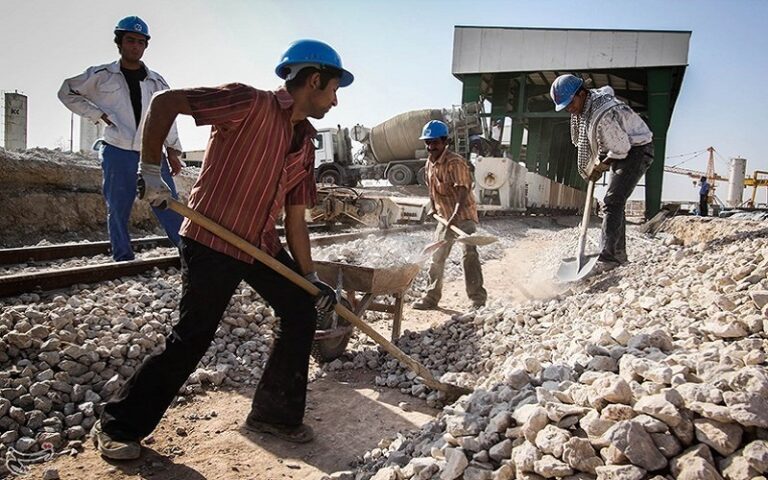
Every day, families of the disadvantaged workers across Iran are taken aback by shocking news about incidents that involves their loved ones losing their lives, getting injured or being disabled. A few recent examples:

April 27, 2023: A construction worker from Mahabad named Mohammad-Amin Ashna died in an accident due to the lack of safety measures at a site in Bandar Abbas.

April 18, 2023: While climbing from a metal scaffolding of a building, a 22-year-old construction worker in Karaj fell from down due to lack of safety equipment and passed away.

April 18, 2023: A worker died in the city of Saddeh, Isfahan province.

Also on April 18: A worker in Ilam, western Iran, died after falling from height while working. The CEO of Ilam Municipality’s fire department and safety services told the official IRNA news agency: “The owner of this building did not provide any protection for the floors of this complex and the elevator shaft did not have any protection either.”

March 28, 2023: three workers employed at a box production factory located in the industrial town of Babol, northern Iran, lost their lives in a gas explosion.

These incidents profoundly affect the families of the victims, as it deprives them not only of the love and care, but also of the breadwinners of the households. Sometimes such incidents lead to entire families falling apart and the avalanche of social tragedy continues down like in a domino effect at the cost of the fate of so many.

For years, the regime in Iran has failed to provide accurate statistics on occupational accidents. In 2016, Masoud Ghali Pasha, Head of forensic medicine in Tehran, stated that in the first six months of that year, 2,170 people lost their lives due to work-related accidents, and 154,000 people were injured while working at their job.

Ali Hossein Ra’yaitifard, the deputy Ministry of Labor, claimed that 800 workers die every year due to work-related accidents in the country. He also stated that 13,000 workers have suffered from limb amputations and severe injuries.

However, data on work-related accidents, provided by the director of the clinical examination office of the Forensic Medicine Organization show that “the number of people who referred to the forensic medicine in 2021 due to accidents caused by work was close to 28,000 cases.

Other statistics suggest the deaths of 1,500 workers per year due to accidents at work, although the number of deaths due to occupational diseases is eight times that number.

According to the head of Motahari Hospital in Tehran, across Iran, about 300,000 people suffer from burns every year and about 100,000 of them are workers. This happens while almost all people who happen to expose themselves to dangerous work, especially workers, have severe financial problems and cannot afford the initial treatment costs, let alone the costly medical care of a special hospital for burn accidents.

The actual stats are far from the officially announced date, but still, under the rule of the mullahs, Iran holds the world record in terms of labor accidents.

Most labor accidents occur in the construction sector where many workers are uninsured. Nonetheless, labor accidents for uninsured workers are not recorded at all and workshops with less than 10 workers are not covered by the labor law and therefore accidents in these workshops are not included in official reports.

Globally, lack of training, lack of supervision, poor safety measures and health equipment are considered important factors of work accidents. But in Iran, another important factor is involved in creating labor accidents, and that is the low level of wages.

Workers have to work more hours nonstop, sometimes several shifts, to earn enough money to compensate for the soaring prices of basic food items coupled with the never-ending upward trend of inflation. Therefore, instead of eight hours a day, the worker has to work between 15 and 18 hours which leads to fatigue and lack of concentration increases the individual’s vulnerability to human error that can turn deadly for the victim and the affected environment.

Also, unemployment and job insecurity has forced many workers to engage in any dangerous activity and people risk their lives by working with equipment or in places without appropriate safety measures.

More than 90% of the contracts of temporary workers don’t include clauses to protect the worker. This causes constant concern and stress among workers who, in fear of being fired, must submit to hard and unsafe work in workshops and factories without safety standards.

In addition to human losses, according to the International Labor Organization, in Iran, work accidents cost over $8.5 billion every year. But for the regime, neither the lives of workers nor the economic costs imposed are of any importance.

According to an ILO report, investing in prevention, safety and occupational health in economic enterprises will preserve the life and health of workers, as it does increase the return of investment by the rising job safety and work ethic.

Iran’s regime seizes second oil tanker in a week in Persian Gulf waters

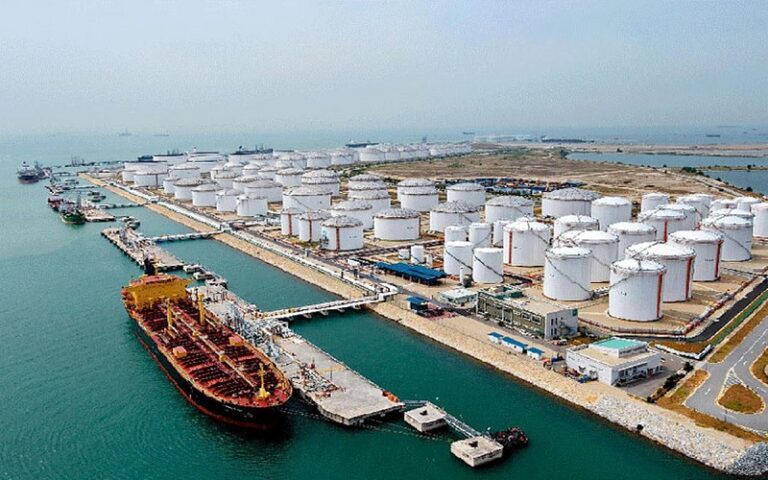
Iran’s Islamic Revolutionary Guards Corps (IRGC) seized control of a Panama-flagged oil tanker in the Strait of Hormuz that was transferring cargo from Dubai to Fujairah port in the UAE.

According to the US Navy’s 5th Fleet, which is based in the Middle East, identified the vessel as the “Niovi,” and  released footage showing a dozen IRGC vessels surrounding the tanker.

Those ships “forced the oil tanker to reverse course and head toward Iranian territorial waters off the coast of Bandar Abbas, Iran,” the Navy said.

“Iran’s actions are contrary to international law and disruptive to regional security and stability,” the 5th Fleet said in a statement. “Iran’s continued harassment of vessels and interference with navigational rights in regional waters are unwarranted, irresponsible and a present threat to maritime security and the global economy.”

No statement has been issued by officials from the Iranian regime regarding this matter.

At least one-third of the world’s shipped oil pass through the Persian Gulf, making this route vital to global trade.

Ambrey, a maritime security firm, said the latest seizure came after Greek officials warned that Greek vessels were at increasing risk from Iran after the US detained the oil tanker carrying Iranian oil under Greek management last month. Six days ago, Iran’s navy seized a Marshall Islands-flagged oil tanker in the Gulf of Oman. This waterway is a border between the Arabian Peninsula and Iran.

The Tanker Tracker said that the seized tanker, named “Advantage Sweet”, was transported to Bandar Abbas, a major portal city in southern Iran.

Iran has responded to previous oil seizures with all tools at its disposal. Video footage released by the US Fifth Fleet shows at least 11 small boats approaching the “Niovi” tanker on Thursday.

The semi-official Tasnim News Agency, associated to Iran’s IRGC Quds Force, reported the seizure of a “violating” vessel but did not specify the reason for the seizure.

The US Navy has accused Iran of harassing or attacking 15 commercial ships with international flags in the past two years, calling their actions a “violation of international law and a threat to regional security and stability.”

Last week, Western countries intensified sanctions against IRGC. In response, the Iranian regime announced reciprocal measures, including financial sanctions and a ban on the entry of individuals and entities from the European Union and the United Kingdom.

In July 2019, the IRGC seized the British-flagged tanker “Stena Impero” in the same waterway on charges of hitting a fishing boat, only to release the tanker  two months later. In 2021, Iran released a South Korean oil tanker that had been held for months over a dispute involving billions of dollars. Last May, Iran also seized two Greek oil tankers.

The Iranian regime’s aggressive behavior is happening as Tehran has been sending signals of aiming for détente with its neighbors. The regime is also at odds with the international community over its nuclear program, with negotiations stuck in a deadlock for two years.

How Iran’s Regime Plans To Deal With Labor Protests

With a quick look at the mere 27-percent increase in the salaries of Iran’s workers in the new Persian calendar year (starting on March 21) and the country’s 50-percent inflation rate, we realize that Iranian workers will become even poorer during the year ahead.

The cabinet of Iranian regime President Ebrahim Raisi has supposedly taken measures to prevent anticipated inflation. But the trend of rising prices of basic goods and services since March 21st shows that anticipated inflation is only one of the factors contributing to the increase in the actual inflation rate.

Since last week, the currency exchange rate in Iran’s free market has begun to increase once again, and the U.S. dollar is gradually crossing 550,000 rials mark. This increase is another signal to the economy that prices are rising regardless of government decisions, and as a result, the 27 percent increase in workers’ salaries in the early months of the new Persian year has lost its usefulness.

In Iran, the standard annual salary for a worker is decided in February. This is determined by the so-called “Salary Committee,” composed of representatives of workers, their employers, and the government. This committee determined a 57 percent wage increase for the year 2022-2023. However, the inflation rate has increased at an even faster pace, rendering the wage increase meaningless.

Labor representatives in Iran say that this year’s decision by the Salary Committee does not even cover even half of last year’s inflation rate and this year’s inflation rate. This means that household incomes across Iran will be impacted by inflation. As long as household incomes do not increase by the same rate as the increase in the prices of basic goods and services, the purchasing power of households or their real income, which is adjusted for inflation, decreases.

According to the definition of the International Labor Organization, real income is a measure to maintain the standard of living and well-being. In inflationary conditions, since price increases are not uniform, the price of some goods and services, such as daily exchangeable goods, may change, but salaries, which are fixed according to contracts, remain the same. Therefore, when the purchasing power of those with fixed incomes decreases, real income erosion occurs, which is actually the biggest cost of inflation.

In an inflationary environment, unevenly rising prices inevitably reduce the purchasing power of some consumers, and this erosion of real income is the single biggest cost of inflation. Inflation can also distort purchasing power over time for recipients and payers of fixed interest rates.

iran inflation 2022-2023
Inflation Rate in Iran increased to 53.40 percent in February from 51.30 percent in January of 2023. Source: Statistical Center of Iran

Iran’s workers become poorer

In the four currency crises that Iran’s economy witnessed in the years 2000, 2012, 2020, and 2022, the basket of goods and services consumed by working-class households was more affected than any other group. Official statistics, published sporadically by the regime’s Statistical Center and the Central Bank, show that housing expenses (rent), food and transportation expenses, which make up more than 70 percent of the urban household consumption basket in Iran, have imposed the greatest pressure on workers.

Furthermore, studying the Misery Index, which is a combination of unemployment and inflation rates, is another indication of workers’ depreciating living conditions. These circumstances have placed the most inflationary pressure particularly on seasonal workers.

The latest official report from the Statistical Center regarding Iran’s unemployment rate in the winter of 2022-2023 placed unemployment rate at 9.7 percent and the inflation rate in January and February 2023 at 47.7 percent. The combination of these two figures reaches more than 57 percent, indicating the worsening circumstances of Iran’s working-class community. However, these statistics are highly doubtful, and the Iranian regime certainly does not publish the real statistics to show the true situation.

It is not just inflation that has caused concern for the future of Iran’s workers. Temporary contracts and delayed paychecks have doubled the pressure on workers while employers attribute paycheck delays to government debts.

Iran’s economic structure has made the government the largest employer. In addition to the government, khosulati, or “semi-state” companies are the second largest employers in Iran.

(Khosulati is a combination of two words: khosusi (private) and dolati (government-owned). These are companies that, although apparently private, are somehow affiliated with government-backed organizations. That is, people who have accurate information about the body and depth of government programs and can predict the economic future are at the head of these companies. Most of these companies are managed by IRGC officials and their affiliates. Khosulati companies have effectively become sources of embezzlement and rent for the government.)

Khosulati companies have gradually become larger in the past two decades due to the government’s inability to pay its debts. The growth of this sector of the economy, which is largely the biggest beneficiaries in the Iranian economy, has posed significant challenges to workers’ lives and their future because they operate apart from the government in dealing with seasonal and contract workers.

As a result, labor protests over living conditions, wages, and contracts mostly go unresolved, and workers are constantly at risk of being fired. Since these companies are somewhat dependent on the government, they also benefit from government support and intervention in their decisions, and they are not held accountable by anyone.

Workers dismissed for protesting

Almost two decades following the transfer of companies that were sold to non-governmental entities, funds, and sales to compensate for the government’s budget deficit, workers remain under the most pressure from these changes. Workers who were at the forefront of management changes were sometimes laid off or simply not paid. Even their protests go unresolved because during these transfers, the buyer is mainly a non-governmental or military entity, or a retirement fund.

Recent labor protests have at times been accompanied by political demands. However, the employers’ first reaction to these types of protests has been to collaborate with security institutions, in addition to firing the workers. This happened during the protests of Haft Tappeh Sugarcane Company workers in the city of Shush, located in Khuzestan Province, southwest of Iran.

Following the protests that took shape after September 2022 and the killing of 22-year-old Mahsa Amini in police custody, workers across Iran joined the protesters. These protests immediately adopted a political tone.

Reports of dismissals, detentions, and the imprisonment of workers in recent months indicate the sensitivity of security institutions to labor protests. This is a matter that regime supreme leader Ali Khamenei directly addressed in his speech this year on Labor Day.

This year, the latest plot of the government and khosulati companies aimed at silencing labor protests is to expel protesting workers and replace them with others willing to work under such conditions. Given the promises of Solat Mortazavi, the Minister of Cooperatives, Labor, and Social Welfare, to create half-a-million jobs in the new Persian calendar year, it seems that protests can be equivalent to firing and replacing new workers so that the Labor Ministry’s statistics can be updated.