Home Blog Page 294

Toiling for Bread in Sistan and Baluchistan

A look at the ethnic, linguistic, and national anomalies in Iran always shows the central government as the cause of these problems.

While this was ever present in the governments of Iran, but when it comes to the rule of the Islamic Republic, the imposition of religion and ideological and political totalitarianism is added to the previous wounds.

For these reasons, the aspect of repression and deprivation is far crueler. This repression has not only a political and military aspect, but also imposes instructions including religion, belief in and obligation to Velayat-e-Faqih (the regime’s supreme leader Ali Khamenei), and adherence to the language and textbook compiled according to the standards of the Islamic government.

It is for the above reasons that the ethnic, linguistic, and national crisis has intensified after the domination of the mullahs over Iran. This totalitarianism of the ruling class has led to brutal killings and several massacres by the central forces and the clerical government against areas such as Iranian Kurdistan and Sistan and Baluchistan provinces.

The Velayat-e-Faqih regime has imposed an economic and livelihood embargo on the Iranian people in general, and on ethnic minorities such as the Kurds and Baluchis, due to the allocation of Iran’s economy to a clerical oligarchy with political power.

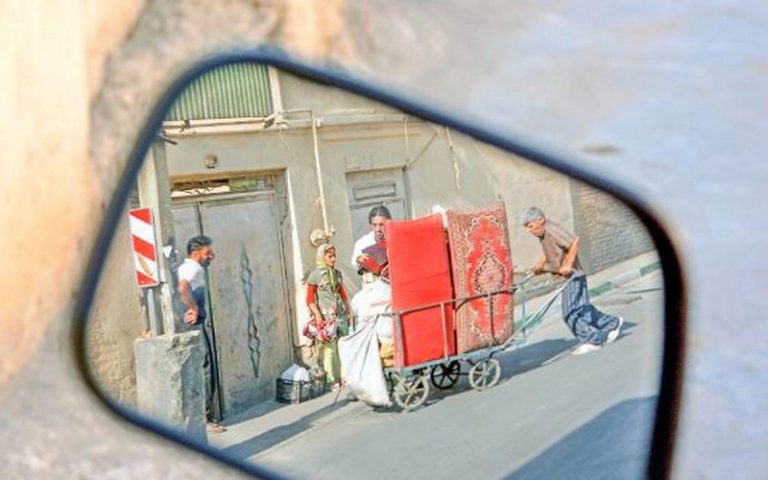
Hence, a phenomenon such as fuel and cargo porters are prevalent in these provinces. They are forced to live in such a condition just to earn money to buy a piece of bread for their families, forced to pass through the dangerous paths or ambushes by the Revolutionary Guards (IRGC) who enjoy killing them, according to locals.

Due to religious differences, the clerical regime has imposed double cultural sanctions and deprivation on these border tribes in terms of culture and environment compared to the whole of Iran.

Read More:

Iran’s New Year (Eid-E-Nowruz) and the Empty Baskets of Its Workers

After the massacre of Saravani’s fuel porters by the Revolutionary Guards on February 22, the reflection of local, provincial, and social hatred for this crime has caused the state media to refer to the racist, religious, ideological and security views of the government towards the citizens of Sistan and Baluchistan province.

The state-run daily Mostaghel in its February 24 issue, in a note entitled ‘Judgment Day’, admitted that in the last 42 years, under the shadow of such views by the government, no attention has been paid to resolving the problems and bottlenecks in such areas:

“Due to the Sunni religious context, special security attention is paid to the border provinces of Iran. Border provinces, like the suburbs of large cities, suffer from poverty and injuries stem from poverty. The specific injuries of these provinces have not been considered worthy of attention by the capital’s officials for many years.

“The first reason for these problems is the elimination of these provinces from the perspective of the country’s industry and trade managers. If you work for sustainable development only in Sistan and Baluchistan province, you will quickly notice the terrible gap between this province and the rest of the country.”

While the regime provides super-standard water, bread, and housing for Hezbollah in Lebanon; while it spends billions in Syria trying to keep a war criminal (Bashar Assad) afloat, and while it hands over the keys of Iran’s economy to the Revolutionary Guards, ‘children in Sistan and Baluchistan are deprived of education,’ they are frustrated with access to online classrooms, and their illiteracy rate is skyrocketing:

“During these years, the issue of education of children in Sistan and Baluchistan has been neglected. According to statistics published in ISNA in August last year, the illiteracy rate in Sarbaz county is close to 37 percent. The same report states that there are no accurate statistics on the access of women in this province to schools. Statistics show that the situation of Sistani children’s access to technology for accessing online classrooms has been very disappointing.” (State-run daily Mostaghel, February 24)

The effects of such hardships that the government has imposed on the society and the people and families in these provinces, on the one hand have provoked the inevitable struggle of the people and youth for the right to survive, and on the other hand have uncovered an organized crime:

“Sistan and Baluchistan province is culturally completely abandoned, and this vicious cycle is repeated until it reaches an irreversible point. It seems that Sistan does not matter [to the authorities].” (State-run daily Mostaghel, February 24)

Determining the Subsistence Basket at 6.895 Million Tomans, a Step To Destroy Iran’s Workers

0

A tripartite committee, the representative of the government, employers and workers, has determined the livelihood basket to be 6.895 million Tomans in Iran. This committee can be described as another step towards the extermination of Iranian workers. Reaching the final days of the year, consultations to determine the livelihood basket, followed by the determination of the minimum wage, usually increase.

The experience of the past years has shown that these actions have no acceptable result for Iranian workers, and this year, as in previous years, what was not clear was the livelihood of the workers who are among the most deprived sections of society.

On February 22, the Wage Committee for 2021 was convened in the presence of what is called within the Iranian government, government representatives, employers and workers. At the end of this meeting, the subsistence basket figure of 6.895 million Tomans was approved as an indicator of the second paragraph of Article 41 of the Labor Law of the Government of Iran.

The representative of the workers stepped back from his previous statement

Surprisingly, Faramarz Towfiqi, who was present at this meeting as a representative of the Iranian workers, agreed and confirmed this figure. Before this, he had repeatedly talked of the subsistence basket figure equaling 10 million Tomans.

Read More:

Iran’s New Year (Eid-E-Nowruz) and the Empty Baskets of Its Workers

The bitterness of this confirmation and agreement by the workers’ representative is that this number is referred to the “Supreme Labor Council” of the government as the basis for wage negotiations. Where, with last years’ experience, the minimum wage is less than half the agreed subsistence level. Between the parties to the wage committee, it figured out the fate of Iranian workers as we see it today in terms of the rampant inflation.

For 2020, the official livelihood basket was priced at 4.940 million tomans. But the salary with all its accessories was approved only 2.611 million tomans.

“This basket should be called a minimal or very minimal basket. The aim of the workers in agreeing on this number was to reach a consensus and agreement with the social partners,” Tawfiqi said after registering the deal with all its dire consequences.

Livelihood basket figure

While he holds the title of Chairman of the “Wage Committee of the Supreme Council of Islamic Labor Councils”, on February 11, he announced the livelihood basket as equal to 8.985 million Tomans and added: “With every meter and criterion they calculate, the result will be more than eight million Tomans”, but on February 22, he accepted the 6.895 million tomans.

Before that and on December 11, 2020, Tawfiqi had announced the subsistence basket figure of 9.800 million Tomans.

The result of these statements, and finally agreeing is a step back by such people who call themselves the representative of the workers. This can also be considered as part of the policy of pressure from the hardline government in Iran.


On February 20, Kazem Farjollahi, a labor activist, had also announced: “Monthly income is within the poverty line for a family of three based on various estimates between 8 to 10.5 million tomans. And there is a gap of 6 to 7 million Tomans between the salary and the livelihood basket.”

Government pressure on workers

Beyond the figure set for the livelihood basket, in recent months, the Rouhani government has also sought to record bargaining wages, eliminate wage levels, and ignore all the benefits of veteran workers.

Recently, the legal deputy of Rouhani had written a letter requesting the subject mentioned above. However, this was seen as a lever to push the livelihood basket issue of the workers to the margin. But determining this small amount of income showed that 2021, like previous years, will be a year of misery for the workers.

In the meantime, the employers’ community, under another pretext, in line with the Rouhani government and to reduce the minimum wage for 2021, claimed that, many households no longer have the size of a 3.3-person household to pursue the lowest possible minimum wage.

Take a look at the statistics

A look at the experience and statistics of previous years may also show us some facts. In 2018, the subsistence basket figure was set at 2.645 million Tomans and the minimum wage was finally approved at 1.114 million Tomans.

In 2019, the subsistence basket was 3.759 million Tomans. But the minimum salary was 1.527 million Tomans and in 2020, the subsistence basket was 4.940 million Tomans. But the minimum salary was set at 1.911 million tomans.

In other words, in the last three years, the ratio of the minimum wage to the announced livelihood basket shows that in 2018 the minimum wage to the subsistence basket was 42.2 percent, in 2019 equal to 40.4 percent and in 2020 it was equal to 38.7 percent. It has decreased by 1.5 to 2 percent annually.

With this calculation, with the announced figure of 6.895 million Tomans, as the livelihood basket of 2021 and the calculation of a decrease of 1.8 percent of this ratio it can be expected that the minimum salary for 2021 should be approved in the amount of 2.544 million Tomans. That is a quarter of the poverty line, and that in itself is a great disaster for the workers.

The experience of the huge difference between the set figure of the subsistence basket and the minimum wage of workers in the past years shows that despite all the peaceful efforts of labor activists and guilds, Iranian workers are being pushed below the poverty line day by day rather than on a monthly basis.

Iran’s New Year (Eid-E-Nowruz) and the Empty Baskets of Its Workers

Eid Nowruz, the Persian New Year, is on its way in Iran. But Iran’s rule has made Eid a mourning for the people, especially the workers and the poor.

This is at a time when the coronavirus is spreading like wildfire in Iran, and government agents are depriving workers of their wages, forcing workers to come to work at the risk of becoming infected with the coronavirus.

In these circumstances, workers are left looking for their wages. Despite the poverty line of 10 million Tomans, their wages do not provide their basic needs. But government officials also refuse to pay these meager salaries.

In this regard, February 18, a group of workers of Shahriar Municipality held a protest rally in front of the city council to protest the non-payment of their salaries for two months.

In a video interview, three of the protesting workers described their problems as follows:

Worker: ‘We came here and gathered for the salary increase. They did not pay us for two months.’

Reporter: ‘How much is your salary?’

Worker: ‘My salary is 2.45 million and 150,000 is the end of service bonus. You, Mr. mayor, can you live with 2.6 million? And make a living?’

Reporter: Do you have a problem with the mayor or with the contract and service company?

Worker: ‘Mr. Contractor says the mayor should give it to me then I can give it to you.’

Another Worker: ‘I’m like him too. My salary is low. And now I have not received my salary for two months.’

Read More:

Is Poverty in Iran the Result of Sanctions or Plundering?

The conditions of all workers are complicated, their life cycles do not change, a group of workers in Mahshahr went on strike for the third day on February 15, to protest the dismissal of their colleagues from the South Tehran Company.

February 15, a group of HEPCO workers held a protest rally in protest of their problems and demands along the Arak railway.

The state-run daily Kar-o-Karegar wrote in acknowledging the dire living conditions of the workers: ‘The cost of living basket for a working family with a population of 3.3 people is 10 million tomans, while the minimum wage received by workers, eventually reaches 3 million tomans. However, due to high inflation, purchasing power has fallen sharply and the workers’ table has become empty.’ (Kar-o-Karegar, February 9)

And on February 15, the same daily, quoting a government official, the head of the Supreme Chamber of Trade Unions, wrote:

‘Workers’ wages and benefits will be determined unilaterally and to the benefit of the employer in collective agreements. Under the current circumstances, workers will see their minimum wages violated. For example, the job nature of brick factory workers is one of the hard and harmful jobs. This group is not only deprived of the rights because of the hard work, but the news indicates that the situation of this group is not good, and they are deprived of the minimum. Not only is the employer reluctant to negotiate in the true sense of the word, but it simply violates the worker’s rights.’

But why aren’t people’s problems solved? The situation is so difficult and indisputable that the state media has also admitted it.

The state-run daily Mostaghel on February 20 wrote: ‘None of the social classes of the Iranian people have a real representative in the government structure. Workers and other lower classes in Iran who are worse than other sections of society. The workers do not even have a real union. They also do not have a media. Their voices do not reach anywhere.” (Mostaghel, February 20).

The Arman daily on February 15, with the headline ‘Let’s not fill the workers ‘patience bowl’, acknowledged the oppression and exploitation by the government and its institutions. It further acknowledged the workers’ impatience with all this oppression and exploitation and expressed its concern and wrote:

‘This is not the right path that has been chosen (by the government) for the workers and their lives and livelihoods, and it may reach critical points. Once we reach that dangerous situation and cross that critical point, no one can solve the problems that have arisen. It should be noted that all the problems will explode like a volcano and at the same time, we will not see good results on the day when the tolerance of the majority of the society, i.e. the workers, is exhausted and their patience is exhausted.’

It is very clear that the main problem and concern of the author of this article is not that oppression and exploitation of workers, but his main concern is about the clear conditions for the uprising of the people, including the workers.

Of course, such conditions of oppression and exploitation by the government are not limited to the working class, but all the poor sections of society are in such a situation that the media and government experts, while acknowledging it, are worried about their patience and revolt. An uprising that is sometimes called the uprising of the hungry.

Former Iranian MP Questions Assadollah Assadi’s Conviction

On February 23, in an interview with Khabar Fouri website, former Deputy Speaker of the Iranian regime’s Parliament (Majlis) Ali Motahari raised questions about the case of Assadollah Assadi, an Iranian diplomat sentenced to 20 years in prison by a Belgian court for his role in a bombing attempt against a rally of the Iranian opposition in 2018.

“Was Assadollah Assadi’s bomb operation against the [Mojahedin-e Khalq (MEK)] a personal initiative or a mission of the Ministry of Intelligence and Security (MOIS)?” Motahari said.

Assadi was a career diplomat in Tehran’s embassy in Vienna. In 2018, he used his diplomatic cover to transfer and deliver 1lb of TATP explosive material to his agents in Luxemburg.

According to undeniable evidence and Belgian prosecutors’ investigations, Assadi was the mastermind of a bomb attack against the Free Iran 2018 Rally, the annual gathering of the Iranian opposition coalition National Council of Resistance of Iran (NCRI) on June 30, 2018.

At the time, German law enforcement detained the Vienna-based Iranian diplomat after delivering the bomb to his operatives Nasimeh Naami and Amir Sadouni, both of whom were arrested by Belgian authorities. Mehrdad Arefani, a fourth agent, was arrested by French police. German police also seized two booklets containing instructions about detonating the bomb and receipts of his payments to his operatives. The details proved the so-called diplomat’s role as the chief of Tehran’s intelligence station in Europe.

Nonetheless, the conviction of Assadollah Assadi has currently ignited a new round of political rivalries at the cusp of Iran’s 2021 Presidential election. In this context, former Deputy Speaker Motahari slammed so-called reformists’ potential candidate Zarif and the Foreign Ministry’s secrecy.

Read More:

Confident in Its Impunity, Iran Tried to Leverage Multiple Hostages for the Same Terrorist

“Imagine, should the story of Mr. Assadollah Assadi not be followed? Actually, has it happened? Did he want to bomb? Was [the operation] a personal initiative or a task of our MOIS?” said Motahari addressing Assadi’s background as an MOIS agent, which had been disclosed by the Iranian opposition People’s Mojahedin Organization of Iran (PMOI/MEK) in 2018.

“They do not even tell the people whether it was true or not… They should explain. If this story was true, they must be prosecuted. Is this our manners?” he questioned, concealing 42 years of the Iranian regime’s sponsor of terrorism.

“This is not our method, and if someone took such actions, they must be identified and punished. However, they say nothing and only say, ‘A Belgian court has wrongly convicted [Assadi] to 20 years in prison. They don’t utterly explain the issue to the people. Did the court convicted him for nothing?” Motahari challenged the Foreign Ministry and the entire regime’s secrecy.

“They should explain and say that the issue did not actually happen, and if it was true, the perpetrators must be sentenced. These individuals are harming the [Islamic] Revolution’s view, and the government must stop such actions,” he ended.

Motahari’s remarks are definitely the tip of the iceberg, which has opened its way through official or semiofficial media. The fact is that the Iranian diplomat’s unprecedented conviction is an irreparable blow to the Iranian regime’s terrorism, as NCRI President-elect Maryam Rajavi had said.

“This verdict goes beyond the conviction of an individual diplomat of the regime. It is a political defeat for the mullahs, a judicial conviction for the regime, and the neutralization of many of its policies and tactics,” tweeted Mrs. Rajavi on February 4.

Now, it is time for the international community to clarify its priorities, European citizens’ security and safety, or temporary economic interests by the hands of the mullahs who fund, promote, and implement terror attacks on European soil. This is a choice that will have historical implications and will show whether Europe stood on the right side of history.

Iran and the Gordian Knot of the JCPOA

0

The stances of the new US officials against Iran and their emphasis on demands beyond the 2015 Iran nuclear deal, known formally as the Joint Comprehensive Plan of Action (JCPOA), and the nuclear program, have worried the media affiliated with Iran’s President Hassan Rouhani, because of the difficult conditions for the regime and its future.

The difficult situation that Arman daily on February 2, considers ‘accurate assessment’ of it and ‘of what will happen in practice’ is ‘very difficult’.

According to this daily, which is affiliated with the Rouhani faction, American officials, despite taking positions to return to the JCPOA, ‘they still make unreasonable demands in some cases.’

The ‘unreasonable demands’ of the United States have been clear for years, and that the regime must cut short its missile policy and interventionist policies in the region (Middle East).

Read More:

Iran’s Humiliating Retreat From Its Nuclear Deadline

It seems that the three major European countries (Germany, France and the United Kingdom) are also considering these demands to be included in the JCPOA.

Jahan-e-Sanat daily, February 2, described Europe’s position as ‘pendulum and cynical behavior’ which ‘could adversely affect the course of negotiations and the JCPOA’s relations. [French President Emmanuel] Macron’s stance, which has recently sought to take into account the interests of some Arab countries in the region and Washington’s return to the JCPOA, doubles Europe’s problems in the JCPOA’s opening.’

‘Europe has just slipped towards the United States, and this is in line with Biden’s consensus,’ Hamid Reza Asefi, spokesman for the Foreign Ministry in the government of Mohammad Khatami, told Arman.

‘That if Europe joins the United States, both our legal position in recent years will be lost and it could lead to the revival of the global consensus against Iran and even the rejoining of some of our friends and partners in this consensus, so we must be careful in this area as well. US officials intend to return to the IAEA, but their primary goal is that they may be able to take more concessions from Iran and develop the JCPOA more broadly than the nuclear issue, he added.’ (Arman, February 2, 2021)

His reference to ‘friends and partners’ describes ‘Russia and China,’ and the fear of ‘reviving the global consensus’ is the fear of reconciliation between the two countries with the United States and the three great European powers, and even the fear of a similar situation before the JCPOA and the issuance of Resolution 2231.

The broader concessions which is said by this former foreign ministry official is nothing else than in the field of the regime missile program and the regime’s influence in the middle east which is leading to many wars.

In this regard, Aftab-e-Yazd daily wrote: ‘In general, we can say that the news that is heard from the United States and the responses and reactions of Iranian diplomats to this news show that the JCPOA’s knot is one that cannot be opened and is becoming worse with the current developments.’ (Aftab-e-Yazd, February 2, 2021)

This ‘thumb knot’ forced the writer of the state-run Jahan-e-Sanat daily to write, ‘the JCPOA’s ball is in Tehran’s court’ and the state-run daily Setareh-e-Sobh to write ‘Mr. Rouhani, the ball of negotiation and the lifting of sanctions is in your court.’

The state-run daily Mardom Salari also recommends that the system should adopt the ‘softness in tactics’, possibly referring to the ‘softness in tactics’ of the type of the ‘heroic softness’, which was Iran’s supreme leader Khamenei’s recommendation in the JCPOA negotiations, during which they gave great concessions to the other side. In addition to the media affiliated with the Iranian Resistance (NCRI/MEK), the media affiliated with Khamenei also called it a ‘chalice of poison’ for the regime.

The main concern of these media is that the current economic and catastrophic could drive the people to new protests and uprisings.

In this regard, an article writer in the state-run daily Setareh-e-Sobh wrote to Rouhani:

‘You know better of the situation in the country and the people than the writer and others. Unfortunately, since the tightening of sanctions (May 8, 2018) until now, the reduction of oil sales, the non-approval of FATF bills, and… have caused the purchasing power of the people to decrease, the value of the national currency to fall, more inequality, more misery (according to economists more than in 2017), rising unemployment, deteriorating environment and etc. make life difficult for people.’

The objective situation that the state-run daily Shargh previously wrote about is that the ‘loud voice of society’ is rioting in the streets and cyberspace, and ‘dissatisfaction with everything’ immediately becomes a problem for the government.

A loud voice that ‘God forbid, faces (the government) with the danger of uncontrollable growth of public hatred ‘and ‘Our people are affected by every message of dissatisfaction due to pressures, failures, sanctions and exhausting bottlenecks, and cyberspace has become a machine for producing dissatisfaction. (State-run daily Shargh, February 9, 2020)

In an interview with Arman daily, January 23, referring to the dire economic situation and the poor living conditions of the people, a government expert advised the government to de-escalate and retreat in the field of foreign policy and warned Khamenei’s faction who called them as ‘belligerent and violent,’ and said:

‘The fact is that a country is not able to withstand such pressures for a long time. I warn the groups that promote belligerence and violence in the country that the people’s patience is limited, and the people can tolerate belligerent policies to some extent. If these policies continue, we may see reactions from the people, which could be very costly for the country.’

Regardless of these writings and comments, the fact is that the regime is suffering from unresolved pain in both external and internal crises.

The supreme leader knows very well that if he retreats in the face of the United States and the major European powers, which want his government to be shortened in the field of nuclear, missile and regional politics, he will inevitably be forced to retreat domestically and his rule would come under question.

It is not without reason that Khamenei and other leaders of the regime, including Mohsen Rezaei, the secretary of the Expediency Discernment Council, have already acknowledged that ‘if we fall short in the region and our strategic depth, we must fight the people inside the cities.’

Of course, their concern was expressed a lot when the uprisings of December 2017, July 2018 and November 2019 had not yet taken place, while in the current situation, the explosive capacity of society is not comparable to the past.

The situation is such that even assuming Khamenei’s ouster and the lifting of sanctions, the system still cannot get rid of the crises it is grappling with. In this case, of course crises will remain.

In this regard, the Jahan-e-Sanat daily on February 14, 2021 wrote: ‘Even if all sanctions against the regime are lifted and we can export more oil than usual, the problems and challenges will remain; because the source of the problems of Iran’s domestic economy today are internal.’

The Sisakht Earthquake and the ‘Basti Hills’ of Iran’s Officials

0

Wednesday night, February 17, 2021 an earthquake that measured 5.6 on the Richter scale shook the city of ‘Sisakhat in the Kohgiluyeh and Boyer-Ahmad province of Iran. According to the state-run daily Shargh: “In addition to natural faults and the harms that gave people, it makes the gap between the existing structure and the needs of the people more visible.” (Shargh, February 17)

Local officials and the state TV attempted to minimize the damage to the people, while the earthquake caused extensive damages.

The declaration of “limited losses” by the local state TV channel in Kohgiluyeh and Boyer-Ahmad led to anger and dissatisfaction of the people, because there were more damages that government officials announced, and of course the relief operation to the people was very minimal.

Except the state TV and the local authorities, other media announced the destruction of 80 percent of the city’s homes and some villages in Dana.

Read More:

Earthquake Victims Ordered to Leave Temporary Housing by Tomorrow in Iran

Ismail Najar, head of the government’s crisis management, also admitted that many houses of citizens were damaged.

The state-run daily Jahan-e-Sanat with the title ‘the censorship of the destruction’ wrote: “The amount of damage affected the houses is much higher than that in the media. In general, more than 80 percent of the houses have been destroyed. Because of the rain, snow and cold, life in tents is hard for people. But it is unclear how destructive houses are rebuilt. The earthquake hit people, because of the bad memories of the events of the earthquake of Sarpol Zahab, they are demanding the pursuit of homes as soon as possible.”

While the earthquake entered extensive damages, the announcement of “limited losses” by the regime and its governor in the Kohgiluyeh and Boyer-Ahmad province, caused anger and dissatisfaction of the people.

On February 18, in protest over the neglect of the authorities and the lack of relief to the earthquake hit people, the people of Sisakht held a protest, saying that 5,000 tents that officials promised have not been distributed and it is not clear where they have gone.

Ibrahim Raisi, the head of the judiciary, went on a pointless action to Kohgiluyeh and Boyer-Ahmad province to show the government cares about the people and their problems.

He was present among a few people and claimed: “In natural disasters, we must seek refuge in the laws of God Almighty to be safe.” (Mizan News Agency, February 20)

Such claims by officials are to release them from their responsibilities which is a very normal action in Iran and its officials, according to dissidents.

But the people in response to him and the government cried: “Let’s look, we do not have a blanket, no one cares, we have been in the cold for 4 days and no one has come to ask how you are.”

People’s protests are against in the coldness and bad condition is while the regime claims that they have distributed 5,000 tents among the people whose homes are destroyed.

But this claim is false and in conflict with the statements of the people, and it is unclear where these tents are and who received them.

Given that this region is a high-risk earthquake zone, the government has not taken any actions for the rehabilitation of buildings and protecting the lives of the people.

According to a government expert: “The earthquake on February 17 has been the fourth average earthquake with a magnificent magnitude of more than 5 on the Richter scale in Sisakht in the last decade. It is still expected that aftershocks will occur in the next day and weeks in the focal area of ​​this earthquake.” (State-run Shargh daily, February 22)

The mass destruction of the people’s homes is directly related to the plunder of the resources of the Iranian people by this regime, residents say.

A government that wasted the property and wealth of the poor people rather than spending it for the country’s construction and the prosperity of the people. They are more concerned to spend it for their military and security agencies, especially the Revolutionary Guards (IRGC) and the useless nuclear and missile projects.

Meanwhile, in a situation where the people of Sisakht and other earthquake areas live in frail houses, which are destroyed with each earthquake measuring over 5 in magnitude, the heads of the government and their families live in palaces, villas and resistant penthouses. Aristocratic regions that the state media call “Basti Hills”.

The regime constructed for its officials, especially the Revolutionary Guard, three special luxury towns with villas, apartments with shopping centers which are robust and resistant facing natural disasters, naming, ‘Mahaliti, Daghayeghi and ‘Shahrak’, while governmental experts warned about extreme destruction in Tehran, in the state of a relative strong earthquake, due to the non-resilience of the people’s homes.

Iran’s Humiliating Retreat From Its Nuclear Deadline

0

Intensification of the crisis at the head of the rule

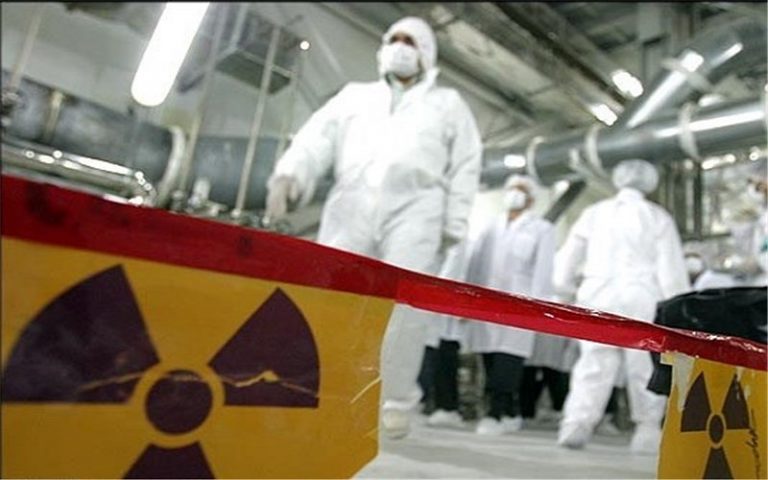
On the eve of the February 23 deadline, when Iranian officials were to withdraw from the Additional Protocol of the nuclear Non-Proliferation Treaty and restrict International Atomic Energy Agency (IAEA) inspectors, Hassan Rouhani’s government naturally reached an interim agreement with the IAEA Director General with Supreme Leader Ali Khamenei approval. According to IAEA chief Rafael Grossi’s press conference, the Iranian government will allow nuclear inspectors to continue inspecting and verifying Iranian government nuclear sites over the next three months. Although apparently the Iranian government is withdrawing from the Additional Protocol. This agreement is essentially a humiliating retreat from the deadline set by the parliament (Majlis) for February 23.

Parliament reacts sharply to the agreement with the nuclear agency

With this news, the Iranian parliament revolted against Rouhani’s government. Parliament extraordinarily removed the budget review from the agenda. In a speech, Mojtaba Zonnour, head of the parliament’s National Security and Foreign Policy Committee, called this act of the government, the ignorance of the parliament’s resolution and demanded that no government official be allowed to enter parliament until the government rescinds the agreement with the IAEA. He subsequently drafted a complaint, which was signed by a majority of 221 MPs. The complaint is addressed to the head of state regarding Rouhani and the government’s refusal to pass a parliamentary resolution.

Read More:

We May Produce Nuclear Weapons if We Are Forced To

The report of the Security Commission of the Majlis states: “Pursuant to Article (234) of the Rules of Procedure of the Islamic Consultative Assembly, Mr. President and all violators and disenfranchised persons shall be immediately introduced to the Judiciary, in accordance with the said law. It should be urgently dealt with in turn and in the usual formalities.”

Mohammad Baqer Qalibaf, the parliament speaker, tweeted in response to Rouhani’s agreement with Grossi: “The implementation of the Additional Protocol will be completely suspended from February 23. Any access beyond the safeguard is strictly prohibited and illegal. Any extra-safeguard cooperation with the Agency in the future, according to Article 7, requires a decision of the Parliament. Article 9 of the law will guarantee its strict implementation.”

“The parliament withdrew from its official agenda yesterday due to the government’s dubious understanding with the agency and the strong possibility of violating the Strategic Action Law,” said Malik Shariani, a member of parliament.

Khamenei’s hasty stance

This is the worst crisis at the head of the government in the last eight years. Because of this, Iran’s supreme leader Ali Khamenei was immediately forced to intervene. Khamenei, who understands the danger of escalating the crisis and the formation of an uprising better than anyone, immediately called for a solution to the dispute.

Khamenei wrote: “I heard today that there is a difference of opinion between the government and the parliament, that is, between what the government has done and the perception that the parliament has. This disagreement must be resolved. These differences should not be left alone or exacerbated and show ambiguity. No, this has a solution, and they must solve it. Ultimately, the government commits itself to enforcing the law. The law is a good law and must be acted upon carefully. The two sides should work together to make this happen.” (State TV, February 22)

Passivity of Rouhani’s government

Thus, Khamenei, fearing the formation of a rift at the head of the government, which he knows will lead to an uprising of the people, came to the fore and tried to calm down the situation.

In response to Khamenei’s remarks, Rouhani’s government immediately threw the ball on the parliament’s court, saying: “The government has always acted in dialogue and interaction, especially with other forces, by welcoming and following the order of the Supreme Leader of the Revolution regarding the consensus of the government and parliament. And will make every effort to organize the country’s economy, people’s livelihood and the dignified and wise lifting of sanctions.”

“At the same time, if the esteemed Islamic Consultative Assembly (Parliament) considers such a clever move to be against its law and intends to deactivate the joint statement, it must take responsibility for the consequences with the people and be responsible for all the costs involved.”

Rouhani certainly knows that this time the situation is more complicated. That is why he must wait for the attacks of the parliament in the upcoming days and weeks which will intensify the fragile situation of the regime.

Iran Judge Threatens Political Prisoner With Death

An Iranian judge has threatened a 29-year-old political prisoner with being sentenced to death.

Majid Khademi was arrested in Behbahan, Khuzestan province, just over a year ago on January 18, 2020 after taking part in the nationwide November 2019 protests over the tripling of fuel prices.

He was charged with:

  • “acting against national security”
  • “complicity in destruction and setting fire to public property”
  • “destroying banks and setting fire to public and government places”
  • “participation in disturbing public order”
  • “participation in making civilian incendiary material”
  • “membership in an opposition group (The People’s Mojahedin Organization of Iran (PMOI/MEK))”
  • “corruption on Earth”
  • “insulting Khamenei
  • “communicating with the PMOI and dissident groups”

For two months, he was subjected to physical and psychological torture, as well as interrogation, by intelligence agents and the Revolutionary Guards (IRGC). He was denied access to a lawyer and even now his lawyer cannot access his case, instead having to rely on the sections authorised by the Intelligence Ministry.

He is still held in unknown conditions in Behbahan Prison, prevented from contacting his family and banned from being released on bail, which was set in December at 3.5 billion Tomans.

In addition, his family have been pressured by the IRGC and the Behbahan Intelligence Service into not speaking to the media.

Khademi was arrested alongside Mehran Qarebaqi, who is also 29 and from the same village as Khademi -Tilekoohi village near Behbahan. They are held on the same charges and their treatment in prison has been nearly identical.

Qarebaqi was already tried at the Revolutionary Court for “insulting the supreme leader” and “propaganda against the state”. He was sentenced to three years in jail for this.

The PMOI reported in May 20202 that the Ministry of Intelligence and Security (MOIS) and the IRGC Intelligence Organization  has been arresting and/or summoning massive numbers of young activists. Those arrested were interrogated under torture.

This is an indication of just how much of a threat the PMOI and young activists pose to the Iranian government  that, in the middle of a pandemic, the authorities preferred to round up and arrest more political prisoners, rather than release them on humanitarian grounds.

Iran Human Rights Monitor urged the United Nations Secretary-General, High Commissioner for Human Rights, the Special rapporteur on human rights in Iran, and other human rights groups to put pressure on Tehran to permit an international delegation to visit Iranian prisons and meet political prisoners.

Iran Media Warns of MEK Threat

0

Infighting has only grown among the Iranian factions as the mullahs face increased international pressure and a people on the brink of uprising, but that is not even the beginning of their problems.

The state-run media continues to acknowledge that the biggest threat to the Iranian government is the opposition group, the People’s Mojahedin Organization of Iran (PMOI/MEK).

The Mostaghel daily wrote Tuesday: “This hardliner faction, which claims to be the heir of the revolution, seemingly does not understand that their actions to have more power at whatever cost and by attacking other factions have created a huge gap in the system. They do not see how the enemy cunningly plots against the [mullahs] in this gap.”

The paper then went on to talk about how the US House of Representatives recently co-sponsored a resolution that condemned Iran for terrorism and human rights abuses, while also supporting the democratic Iran that opposition leader Maryam Rajavi has called for in her ten-point plan. They advised that while Iran expels International Atomic Energy Agency inspectors, the opposition is able to get bipartisan backing from the US that supports the MEK’s and the Iranian people’s desire for regime change.

The infighting reached a new high on February 4, following the terrorism conviction of Iranian diplomat Assadollah Assadi for trying to blow up an opposition rally in France in 2018 and kill Rajavi. The both warring factions, who are not all that different in reality, blame each other for the damage done to their terrorist apparatus.

The paper warned them again that the gaps between them are being exploited by the MEK, although quite how they think the MEK is to blame for the conviction was not clear. Providing evidence in a trial is not exactly bribing the judge.

However, the article does showcase exactly what the conviction means to the government and the West’s appeasement policy, with Mostaghel advising that the hope for the lifting of sanctions has been dashed.

It then warned that the MEK may well incite further anti-regime protests, as they did in 2017 and 2019, but this time much larger; large enough to overthrow the ruling system. In fact, Mostaghel even cited that this has been the aim of the MEK for the 42 years that the mullahs have been in power, with the group exposing the regime’s crimes to limit international and domestic support for the mullahs.

Iran Budget Approved, but Its Not a Good Thing

The Iranian parliament (Majlis) has finally approved the government’s 2021-22 budget bill following a month of arguments between the members of the parliament and the members of President Hassan Rouhani’s cabinet.

On February 16, the parliament’s official news agency, Khan-e Melat, reported that Rouhani’s bill was rejected, so the cabinet “implemented Majlis’s opinions”, which allowed the bill to be passed, and that the parliament was satisfied with the budget reform.

So, what was holding up the passage of the bill? Well, there were two disputed issues:

  • The source of the regime’s income in the budget
  • The US dollar exchange rate specified by the government

Where is the money coming from?

MP Allahverdi Dehghani said that the budget was based on selling 2.3 million barrels of oil, with over half of the regime’s proposed income from that one source, but it does not look likely that international sanctions on Iran’s oil exports will be lifted, so how can the regime be relying on so much of this income?

Read More:

Iran’s 2021-22 Budget Bill, A Perfect View of Government’s Dilemmas and Crises

In a previous session, Budget and Planning Organization chief Mohammad Bagher Nobakht had objected to this concern, citing secret reports, but then admitted that the regime’s oil incomes have crashed dramatically in the past couple of years.

Parliament Speaker Mohammad Bagher Ghalibaf replied: “If you know that our oil exports are at a minimum, why have you planned to sell 2.3 million barrels of oil? How has the government scheduled its expenses based on the revenue that does not exist?”

This discrepancy was not solved, however, as if the MPs just forgot about funding the budget.

How many rials to the dollar?

Back in 2018, the Iranian government artificially set the exchange rate at 42,000 rials per US dollar with the hope of steadying the economy. This didn’t work, which should have been obviously at the start, and now the free market is trading at 260,000 rials per US dollar.

This has led to a black-market trade for regime-affiliates who make huge profits borrowing at the government rate without paying back the necessary money.

The state-run Resalat daily wrote: “Since 2018, the profit generated from the 42,000-rial exchange rate is ten times larger than the entire yearly cash handouts being offered to the needy, and it has been deposited into the pockets of individuals who have access to this currency. The [regime’s affiliates who] had access to the 42,000-rial dollar were able to import their goods at this rate but sold it at free-market rates.”

There has been no resolution to the exchange rate difference or the problems it caused.

How was the budget ever approved?

As it turns out, it was an under-the-table deal, where the rial exchange rate would remain at 42,000 for six months, allowing the regime to profit at the expense of the people.

It seems an odd choice because they know the people can see what they’re doing and hate it, as well as hating the regime for many other legitimate reasons. The people are getting angrier and the budget may push them over the edge.