Home Blog Page 298

No Sanctions Relief for Iran Unless It Is Earned With a Change of Behavior

The Islamic Republic of Iran keeps doubling down on its demands for unearned relief from US sanctions, but so far the Biden administration has responded appropriately by saying that Tehran must be the one to make the first move. It is vitally important that the administration remains firm in that position, lest it end up providing the mullahs with further incentive to threaten the international community and expand upon its various malign behaviors. 

The latest Iranian statements suggest that the conflict over this issue may be drawn out for some time to come. But it can only last as long as the Iranian economy can avoid succumbing to the pressure that was ramped up by Biden’s predecessor. And regardless of how long that may be, the effects of that pressure include a substantial increase in leverage on the US side, which must not be given away without cause. 

Window of JCPOA Closing, But in Which Direction?

On Sunday, Iran’s Supreme Leader Ali Khamenei delivered remarks to military leaders which were carried by state media. After outlining the regime’s expectation of full and immediate relief from US sanctions, Khamenei said that only afterward would Iran return to full compliance with the restrictions on nuclear activity that were put into place by the Joint Comprehensive Plan of Action. “It is the irreversible and final decision and all Iranian officials have consensus over it,” he added. 

President Joe Biden did not immediately respond to those remarks, but in a separate media interview on the same day, he reiterated that the US takes the opposite position: Iran must resume compliance with all the formal terms of the JCPOA, and only then will sanctions relief be phased back in. 

Iran has been violating those terms since early 2019, at in January 2020 the regime announced that it would comply with none of them. This led to the deal’s European signatories – Britain, France, and Germany – triggering a dispute resolution mechanism, but the European Union’s head of foreign policy soon expressed willingness to draw that process out indefinitely. Josep Borrell’s remarks reinforced perceptions of the US as standing alone in its hardline approach to Iran policy, and the longevity of that situation was promptly called into question by the American presidential election. 

In the run-up to Biden’s election, then-President Donald Trump argued that that outcome would be a boon for Iran, given that Biden had expressed an interest in returning to the JCPOA as written. Before pulling out of the nuclear deal in 2018, Trump described it as one of the worst ever negotiated, on account of its arguably weak restrictions on Iran’s nuclear program and its failure to address adjacent issues like the regime’s ballistic missile development and its regional imperialism. 

To justify a strategy that he described as “maximum pressure,” Trump suggested that a faltering Iranian economy would force the Iranian regime to come back to the negotiating table and accept stricter limits on its nuclear activity as well as restrictions on other categories of malign behavior. The administration maintained its commitment to that strategy even after Trump’s electoral debate, putting new sanctions into place even in the few weeks immediately prior to Biden’s January 20 inauguration. 

To date, Biden has not removed any of those sanctions. On some level, this can potentially be regarded as tacit acknowledgement of their value. Trump believed that Iran’s economy was on the verge of collapse prior to the election, and that Tehran was looking to a Biden presidency as a possible source of last-minute reprieve. It is not entirely clear whether the new administration’s shares the previous one’s assessment of how dire the situation is for Iran, but during his first three weeks in office, Biden has made it clear that he is in no rush to provide the expected lifeline. 

This is as it should be, and it’s how things should remain for the foreseeable future, regardless of whether or not Iran’s economy is indeed teetering on the brink of collapse. While there may be some uncertainty on that matter, there is no doubt whatsoever about the provocative steps Iran has taken in its attempt to shift things back toward the status quo as it existed prior to Trump. These include the resumption of uranium enrichment to 20 percent fissile purity, the full resupply of nuclear stockpiles, and the start of work on uranium metal that would be a core component of a nuclear warhead. 

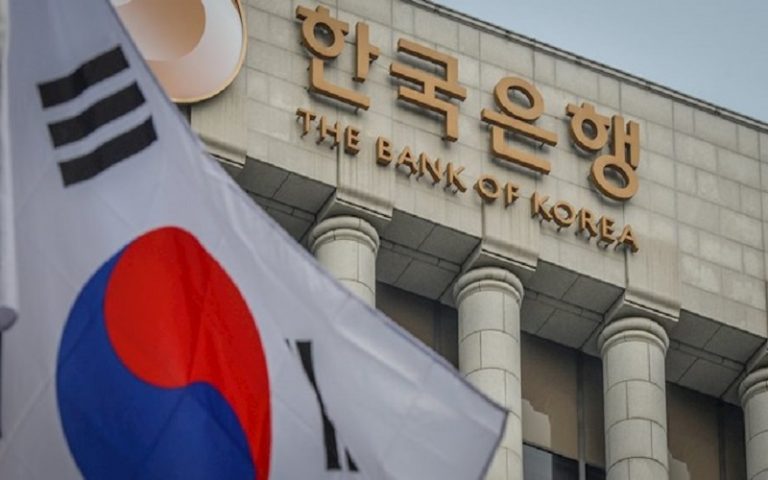
But Iran’s provocations also extend beyond the nuclear sphere and include last month’s seizure of a South Korea-flagged vessel and threats against the lives of various dual nationals and falsely accused spies like the Iranian-Swedish medical researcher Ahmadreza Djalali. Some of these gestures are aimed at extracting concessions from the US specifically, while some are aimed at US allies, often in the interest of encouraging them to act as proxies for Tehran and to ramp up their own pressure in favor of American concessions. 

The Biden administration must stand fast against both these forms of pressure, on the understanding that it is the right thing to do not only for US interests but also for those of other Western nations and for the Iranian people themselves. Giving into Iran’s demands would be foolish under almost any circumstances, and it would be especially foolish at a time when those demands are being issued ineffectually in response to a massive increase in American leverage. 

By acquiring sanctions relief while sacrificing nothing on its end, the Iranian regime would come away from this situation believing that threats of nuclear weapons development and politically motivated execution are both successful strategies, which it can fall back on the next time it comes under international pressure. 

Regardless of what one thinks about the Trump administration’s maximum pressure campaign, there is no giving up on it now unless we want Iran’s provocations to grow worse and more frequent. The time may still come when that campaign can be ended safely, but it will only come after the Iranian regime has changed its behavior following the conclusion that tit-for-tat threats cannot work against the United States of America. 

Iranian Authorities Secretly Bury Executed Political Prisoners in Ahvaz

0

Political prisoners executed in various prisons in Ahvaz, a city in the southwest of Iran, are buried in complete secrecy in a secret cemetery. The purpose of this is for families not to learn where their children are buried or to move their bodies.

The regime refuses to deliver the bodies of the executed political prisoners to their families:

“Most political prisoners are executed in Sheiban Prison without the knowledge of their families,” said a source who asked not to be identified. Judicial and intelligence agents do not deliver the body of an executed prisoner to his family at all. They are buried without the presence of his family and friends. The prisoner’s family must also promise that they will not hold any ceremonies for their loved ones.”

The source added: “The place where the executed prisoners in Ahvaz are buried is a mausoleum that people call the ‘Tomb of the Martyrs.’ But the agents of the murderous government, out of resentment against these political prisoners, have named this unknown shrine the ‘Damned Place’.”

It should be noted that similiar events occurred in most cities of the country in the 1980s. The burial place of Baha’i people or other minorities was called the damned place, and then the executed political prisoners who were mainly from the opposition MEK/PMOI and other leftist organizations were buried there.

Iran’s Human Rights Abuses in 2020

Families are blindfolded and taken to their loved ones’ graves

The report on Ahvaz added: “Executed Iranian Arab political prisoners are not handed over to their families and are secretly buried. Cement is poured on the body and iron plates are placed. Then they bury them under the soil, and in order is given for the families not to be able to exhume the bodies of their children and take them out of the grave. They only put a metal plate with a number on each grave, and there is no trace of the executed person on the grave.”

Continuous torture of the families

A report on Ahvaz states that up to 48 hours after the execution of the executed prisoner, guards are placed around the burial place of the executed prisoner so that the family cannot find the burial place of their loved one. They even take the family blindfolded to the grave so that they do not learn the location of their child’s grave. These actions fit the pattern for what Amnesty International has called am ongoing crime. Keeping the family unaware of the time of execution and the burial of the executed person is a continuous torture of the person’s family.

The report further states that in the area called the damned place, government agents installed CCTV cameras so that none of the citizens and families can or dare to approach the graves.

It is said that this place was in fact the graveyard for people of other religions and minorities. But later they removed a piece from it and dedicated it to the burial place of political prisoners. The collection related to minorities and other religions has a painting of Ferdows Garden. But there are no plaques on the tombs of executed political prisoners. Each tomb has an iron plate that characterizes it.

Rajavi Urges Biden To Take Firm Policy on Iran

The leader of the Iranian opposition is urging US President Joe Biden to hold Iran accountable for human rights violations, stressing that the mullahs are now at the “weakest point” since its inception in 1979. 

Maryam Rajavi, the President of the National Council of Resistance of Iran (NCRI), said: “The Iranian regime is at its weakest point in its history of the last 42 years. It is economically bankrupt. The national currency is in a free fall, and corruption has penetrated every aspect of the regime.” 

The NCRI, which is an umbrella organisation of several democratic groups that seek mullahs’ overthrow in Iran, has a 10-point plan to transform Iran from a religious dictatorship to a secular democracy. 

Iran Media Warns of Protests Over Crises

Iran has seen increased pressure from the international community and its own citizens over the past few years, including economic sanctions and two national uprisings. These uprisings began over economic matters but soon became about regime change, before the authorities cracked down brutally and killed over 1,000 people in the November 2019 protests alone. 

While the protests were stopped because of the coronavirus, which has killed over 210,000 in Iran, the people’s anger is still there and its growing thanks to the authorities’ lacklustre response. Indeed, many believe that the government is intentionally mishandling the pandemic to subdue uprisings. 

Rajavi said: “The Iranian people are extremely embittered and angry. The November 2019 and January 2020 uprisings clearly demonstrated the people’s desire for regime change. Due to the regime’s criminal policies, so far at least 210,000 people have lost their lives to the coronavirus, and there are no global comparables in this regard. This has intensified the people’s dissatisfaction even more.” 

The Biden administration previously suggested that it wished to re-enter the 2015 nuclear agreement, but an official said that this deal would need to be reworked to include other issues of concern. He has also not made any move towards re-joining via an Executive Order, which is how the US first joined and then left the deal. 

So far, Rajavi said, there has been no contact between the NCRI and the Biden administration, but she stressed that when he deals with the Iran situation, he must prioritise the creation of a democracy. 

She said: “Any policy vis-à-vis the clerical regime must take into account the desire of the overwhelming majority of the Iranian people as expressed in the clearest form during the 2019 uprising; and that is to end the religious tyranny and to establish a democratic government. Human rights must be placed at the front and centre of this policy. And, the Iranian regime must be held to account for gross violations of the Iranian people’s fundamental human rights.” 

On a related note, a court a Belgium issued 20 years imprisonment for Iran’s incarcerated diplomat Assadollah Assadi, who had attempted to bomb NCRI’s rally in 2018. Rajavi said this came on the orders of Supreme Leader Ali Khamenei and President Hassan Rouhani. 

She said: “This trial demonstrates that it is high time to end the policy of appeasement and adopt a firm policy in its place. This regime can only understand the language of firmness.” 

Political Prisoners Denied Medical Care in Iran

0

One of the longest detained political prisoners in Iran is suffering from severe and painful burns on his neck and back after being suddenly covered in boiling water whilst taking a shower, but the prison authorities refused to take him to the hospital, which has led to the infection of the blisters. 

Gholam-Hossein Kalbi, 61, who has now spent 21 years in prison, was arrested in January 2000 in Dezful. He was held in solitary confinement for 14 months in Ahvaz’s Ministry of Intelligence building and subject to brutal torture before being sentenced to life in prison in 2002 and moved to Ward 209 of Evin Prison. 

His only crime is support for the Mujahedin-e Khalq (MEK/PMOI) and a refusal to publicly demonise them as part of the government’s propaganda. 

Kalbi, who is currently held in Sheiban Prison in Ahvaz, is also suffering from a variety of health complaints, including severe infections in his gums and both ears, alongside hearing loss in one ear. 

The Secretariat of the National Council of Resistance of Iran (NCRI) urged the United Nations and all human rights defenders to take immediate action to ensure that Kalbi receives medical treatment for his burns and illnesses outside or prison, stating that the denial of necessary medical care indicates the intentional nature of the incident designed to torture him. 

Iran Executes Eight Prisoners in One Week

In a related story, political prisoner Mohammad Ashtiani is being denied medical treatment for low blood oxygen levels that, in addition to his asthma, almost suffocated him on January 26 and 27 following construction in the Central Prison of Karaj that increased dust levels. 

On January 28, he asked for treatment at the prison dispensary, where his oxygen levels were recorded as 80, but he was not taken to hospital or given treatment, which resulted in severe chest pain, heavy coughs, and a sense of suffocation. Without treatment, his life is in grave danger. 

Ashtiani, 57, also suffers from high blood lipid and GI problems. 

The father-of-two, who was a political prisoner in the 1980s, was arrested in March 2019 and interrogated under torture at the Department of Intelligence. He was then moved to the Central Prison of Karaj after being sentenced to three years and a heavy fine for “propaganda against the state”, “insulting [Supreme leader Ali] Khamenei”, and supporting the MEK. He is detained amongst violent criminals in violation of the principle for separating prisoners based on their crimes. 

Iranian Workers’ Salaries Don’t Reach the Poverty Line

“Even a 100-percent increase in workers’ monthly salaries would not let them reach the poverty line,” said Mohammad Reza Tajik, representative of Workers Supreme Assembly in Iran’s Supreme Labor Council on February 3.

“We are in such circumstances that even a 100-percent increase in workers’ salaries is not adequate. Even a 100-percent increase cannot bring workers’ salaries to the poverty line. A 100 percent increase in 26-million-rial [$104] salaries per month is equivalent to 52 million rials [$208], which is still below the poverty line with any kind of measure,” ILNA news agency quoted Tajik as saying.

This is while government-linked economists have acknowledged the poverty line has reached around 100 to 120 million rials [$400 to 480]. In his interview with ILNA, Tajik pointed to rampant inflation and officials’ imprudence and indifference toward people’s living conditions.

“Unfortunately, employers have raised new issues in meetings about designating minimum wages. Employers’ representatives raise strange issues because they have nothing to say and under any circumstance, the product basket is twice the workers’ current paychecks,” Tajik said. “Their only purpose is to divert wage talks and evade estimating the product basket.”

One Meter of Housing, Equivalent to One Year of an Iranian Worker’s Wage

Workers’ Salaries $320 Below Poverty Line

Social disappointment and concerns about the eruption of public anger are seen in Iranian media reports. In its January 31 edition, Hamdeli daily highlighted the dire living situation of the working classes. Regarding workers’ low incomes, poverty, and livelihood crisis that society’s toiler strata struggle with, Hamdeli titled, “Workers’ salaries left 80 million rials [$320] to the poverty line.”

“As estimations show, while the poverty line has reached 100 million rials [$400], the society’s lowest-income class is still just over 20 million rials [$80]. The distance between livelihood and inflation has become more critical, particularly this year,” the daily added.

Hamdeli also mentioned that this is a long-lasting dilemma and officials have yet to resolve these problems despite their promises. “Every year, during these days, the issue of paycheck, inflation, and expenditures of the lowest-income class of society are bolded, and publications and virtual media write about od distance between livelihood and inflation,” the daily added.

“Estimations show a price of 70 to 90 million rials [$280 to 360] for the product basket. However, last years’ experience has proven that these numbers would eventually remain on paper, and what is finally adopted as [workers’] minimum wage is far away from realities on the ground,” Hamdeli wrote.

According to some rumors, MPs and labor activists insist on a 30- to 35-percent increase in workers’ paychecks. However, the government has yet to comment in this context. One ballpark calculation shows that even with a 30-percent increase in salaries, workers’ monthly paychecks will reach 25 million rials [$100], which has a meaningful distance with adequate income for a mid-class lifestyle.

Erosion of the State’s Base

Around 90 percent of working families are in absolute poverty, and their monthly payments are three times below the poverty line. This number displays a deep rift between the state and society and the erosion of the government’s acceptance and trust among citizens.

Nowadays, officials frequently speak about the “erosion of the state’s social capital,” meaning public distrust toward the entire ruling system. This distrust appears in the shape of constant social and economic protests, which have engulfed the whole country today. This may ignite Iran’s powder keg every moment and bring fundamental changes in this country.

60 Million Iranians Below the Poverty Line


Iran’s Power Struggle on Khomeini’s Anniversary

The empty ceremony commemorating the forty-second anniversary of the infamous entry into Iran of Iranian regime founder Ruhollah Khomeini, on his lavish and pharaonic tomb, reflects the miserable condition of a regime that considers one of the worst men in human history as its founder.

Ali Khamenei, while fearing the coronavirus, had visited Khomeini’s grave alone the day before. The day after him, the battle of Iran’s leaders in this ceremony showed a level of terrible power struggles between them that was unprecedented in the history of this system.

In his speech, Hassan Rouhani, Iran’s president, spoke of ‘rationality’, ‘acceptability’ and ‘people’s votes’. These codes were an obvious grimace for the supreme leader Ali Khamenei and his faction, who these days considered to bring a so-called ‘young Hezbollahi’ government to power has narrowed the field of power over Rouhani and his faction in order to further shrink the system in his favor.

Note the words and sentences in his speeches:

“(Khomeini) in that speech [speech in Behesht-e Zahra in 1980] did not speak only of religious legitimacy. He even spoke about the acceptability and opinion of the people, about rationality and acceptability.”

Fight Against Corruption in Iran’s Judiciary or Khamenei’s Successor?

“The way he chose for us, the government he said I would appoint, because the people trusted me, said I will appoint the government. This (Khomeini) speech was an important speech in Shiite ijtihad and political jurisprudence. He did not rely on his sharia rule, but on the opinion and vote of the people, he appointed the government.”

“He pointed out that the votes of yesterday’s generation could not be the basis for today’s generation. At every stage, people must choose the system they want with their votes.”

“We will present a passionate competitive election to the people. If 70 percent and a few of the people came to the polls, that (Khomeini) charter would have continued.” (State-run daily Entekhab, February 1, 2021)

The interpretation of Rouhani’s remarks, which, of course, deceitfully inspires the trust of the people who hate the integrity of the system, can be summarized in several areas:

  • Explaining to Khamenei, he says that the basis of his legitimacy cannot be only the position of Velayat-e-Faqih (Supreme religious rule), the people must accept him.
  • He tells Khamenei that the basis for choosing a government [here the president] is the trust of the people. While he saying to, that the Velayat-e-Faqih has no credibility.
  • He tells Khamenei that the people should elect the next president, not the supreme leader.
  • By speaking about a ‘passionate competitive election’ he means that he wants to involve his faction in the power struggle and seize the presidency; While he is losing this position due to the decision of the supreme leader to contract the regime.

Rouhani’s statement does not mean that he has changed or that he is believed in the people’s vote overnight, observers point out. In a consistent context, it shows his unique fraud and the power struggle in the upcoming elections.

Just as talking about ‘yesterday’s vote cannot be the basis for today’s generation’ is a kind of charlatanism and propaganda for the upcoming election.

Neither Hassan Rouhani nor any of the members of the so-called reformists in this government believe in the people’s choice and the votes of the new generations.

If this claim is serious, they must first dissolve themselves and all the factions and mafia gangs in the system. Because the current generations do not accept the totality of the regime and consider it imposed on the contemporary history of Iran.

Mohammad Bagher Ghalibaf, Iran’s 23rd parliament speaker, held a speech on Khomeini’s grave on the same day, contradicting Rouhani’s expressions. His audience in these speeches was Hassan Rouhani and the government complex, which considered them outside the path of the regime’s founder.

“If we face many challenges in running the country today and there are shortcomings in the lives of the people and the people tolerate them, it is because we have distanced ourselves from the path of (Khomeini).

“(Khomeini) was trying to take the burden off the shoulders of the people and the workers and the wage earners and he was threatening and trying to establish justice.” (State-run daily Mashreq news, February 1, 2021)

So far, it can be said that the power struggle between the factions of the regime has passed over Khamenei, which should have played the role of a balance sheet and the point of unity and balance of the ruling factions – and does not reach unity even at Khomeini’s point.

Each of the factions of the government are now using the bones of the regime’s dead founder in their own favor. These fights represent a higher reality. The reality that this government is futureless, and that social anger and hatred have forced the two heads of the system to use the name of the people for their unpleasant and illicit fate.

Iran’s Government at the Brink of Collapse

0

One day before the rejection of the general budget by Iran’s Parliament (Majlis), an expert of the so-called reformist faction said that the approval of the parliamentary integration commission “put the country on the brink of a dangerous precipice.”

The 2021-22 budget bill provided by President Hassan Rouhani’s government was submitted to the parliament with a 46 percent expansion compared to last year, and this was causing the society’s economy to become more and more critical. Nonetheless, the parliamentary commission approved another 35 percent and heat up the country’s economy more than before.

They increased the size of the general budget from 841 trillion tomans to 1143 trillion tomans. He warned his audience to be aware of the dire, dangerous, and catastrophic consequences of this dramatic change.

Iran: 2021-22 Budget Bill and Economic Crisis

Throwing All the Lower Classes into Misery and Poverty

One government-linked economist touched on the consequences of such budgets which are ruining people’s lives. “In economies facing a crisis of total supply, the extreme financial expansion would mean throwing the entire lower classes into the mire of misery and poverty. We will have a much sharper inflation outlook than we have seen in the last three years,” ILNA news agency wrote on January 31.

What is even sadder is that this year the index of misery (inflation and unemployment) has crossed the unbelievable mark, and with this plan and others that both factions of the government are carrying out, we should expect a wave of millions of hungry people.

According to even fake statistics of this government, “In 2017, the misery rate reached nearly 20 percent (19.8 percent). In 2018, it crossed the 37 percent mark. In 2019, it went above 45.5 percent and in November 2020, it reached the threshold of 70 percent,” wrote Etemad daily on November 3, 2020.

Corruption the Other Side of Production Collapse

This tragedy, of course, was confirmed by international monitoring bodies with other related indicators. Previously, a report by Transparency International stated that the Iranian government ranked 149th out of 180 countries in terms of corruption in 2020.

However, with the policies of inflation and anti-occupation (misery) of President Rouhani, the rank of the Iranian government fell another 18 steps and became one of the most corrupt countries in the world, according to the monitor’s most recent report.

“The production costs index in 2019 has exceeded 65 percent. When the index of producer costs is higher than the consumer index (41.5 percent), it means that they lead the country to the abyss of falling productivity and imposing humiliating dependencies on the outside world,” wrote Taodol daily on November 3, 2020.

Unbridled Poverty, An Inherent Outcome of Iran’s Systematic Corruption

Falling Oil Revenues

During November 3, 2020, Majlis’s session, Mohammad Bagher Nobakht, the Head of the Plan and Budget Organization, stated in private and addressed to Majlis Speaker Mohammad Bagher Ghalibaf, “Government revenues without oil exports are not enough to cover the budget expenditures of 2021.” “In the information that I cannot disclose, it is clear that the income from oil exports has experienced a terrible decline,” Jahan-e Sanat daily quoted Nobakht on the same day.

Forecast of 400 Percent Inflation

In examining the country’s budget in the Majlis, some horrific facts and predictions were made, which show that the government’s hands and pockets are empty, despite their propaganda to present a different image.

“Next year, we will see inflation of more than 400 percent because the currency of 42,000 rials has reached 175,000 rials, which means it has quadrupled,” an MP said.

“The society does not tolerate more than this. In the budget, we will see inflation of more than 40 percent, while we will also have a budget deficit. Lack of stable income, more than 30 percent of oil dependency, the persistence of astronomical salaries, tax pressure,” Tejarat daily quoted the MP as saying on February 3.

Why the Dollar Price in Iran Continues to Rise?

We Have No Choice but to Print Banknotes to Provide Resources

Abdolnasser Hemmati, the governor of the Central Bank of Iran (CBI), who is frustrated with opening a way for foreign currencies to enter and no longer has any idea how to get out of this predicament, said that in the current situation, there is “no way other than printing banknotes” to finance.

“He described the source of the funds as, ‘Monthly payment of livelihood plan to 60 million people’, and at the same time, he said printing banknotes causes ‘increased inflation’ whereby ‘everyone is harmed,’” the official IRNA news agency quoted him as saying on February 3.

In any case, after a two-month dispute between the Rouhani government and the Majlis over the 2021-22 budget bill, it was rejected in general, so that in practice, a result can be drawn from all this controversy, and that is one word: ‘None’

Window of JCPOA Closing, But in Which Direction?

0

“The new [U.S.] administration has spoken out on almost every issue in U.S. foreign policy except the Joint Comprehensive Plan of Action (JCPOA) and the need to return to it, while Democrats and Republicans have been vocal about maintaining Donald Trump’s policy of maximum pressure on the Biden administration,” wrote Javan daily affiliated with the Islamic Revolutionary Guard Corps (IRGC) on January 28, 2021.

These days, it is not too surprising to find such a paragraph in one of the newspapers and media affiliated with Iran’s Supreme Leader Ali Khamanei.

It seems that the staff writers of this faction expected that the ‘Great Satan’ repent of past wrongdoings and lift sanctions overnight. They complain about why the new U.S. administration talked about everything, except its re-entry into the 2015 Iran nuclear deal known by the acronyms JCPOA. It is interesting that the U.S. is not in a hurry in this case.

“Apparently there is no rush on the other side, in the Biden government. In his first phone call with Vladimir Putin, Biden spoke of issues such as Ukraine, Russia’s alleged involvement in the 2020 election, and the extension of the treaties but did not say anything about the JCPOA or did not want it to be disclosed,” Javan wrote.

Haste to Return to the JCPOA

In this situation, Majid Takht-Ravanchi, Tehran’s ambassador to the United Nations, is constantly forced to call for haste. “Hey! ‘The window of the JCPOA is closing’, hurry up!” he threatened the European States and the new U.S. government.

What is this rush for? Did not the Supreme Leader Ali Khamenei say just 20 days earlier that, “We have no urge, no rush for America to return to the JCPOA. Our problem is not whether the United States will return to the JCPOA or not. Our rational demand and our rational demand is the lifting of sanctions,” Khamenei’s official website Khamenei.ir wrote on January 8, 2021.

It is at this point that the sanctions are squeezing the throat of the clerical dictatorship, and even an hour’s continuation is an hour for the life of this government.

Request to Maintain Maximum Pressure

Despite Tehran’s haste to lift sanctions, the other side is in no hurry. Not only is he in no hurry, but according to Javan, “Dennis Ross, Barack Obama’s adviser on the West Asian region, and Juan Zarate, deputy national security adviser to the administration of George W. Bush, in a joint note, called for Washington to maintain maximum pressure against Tehran.”

“They [Dennis Ross and Juan Zarate], referring to Iran’s decision to resume 20 percent uranium enrichment, claimed that this was not done to force the United States to hasten a return to the nuclear deal, but because Iran wanted to lift sanctions. Of course, Iran should not be able to reduce sanctions for free,” the daily added.

Iranian Opposition Reveals New Details About Military Aspects of Tehran’s Nuclear Program

Threat with an Empty Gun

In addition to rushing to return to the JCPOA, Iran’s theocracy thinks that it can intimidate and hold the other side for ransom by using an empty gun by threatening, blackmailing, and striking a deadline.

Speaking at a joint news conference with Russian Foreign Minister Lavrov, Iranian Foreign Minister Mohammad Javad Zarif said that “he was forced to implement the resolution of the regime’s parliament.”

“The parliament has approved a resolution according to which we are obliged to take some measures. One was the 20 percent enrichment that had begun, and the other was the end of the implementation of the nuclear Non-Proliferation Treaty (NPT) Additional Protocol, which must be operational from February 21 to 23, and we are required by law to do so,” Vatan-e-Emrooz quoted Zarif as saying on January 27.

Iranian Officials Have to Opt Between Bad and Worst

Consequences of Withdrawing from the NPT’s Additional Protocol

Former diplomat Fereydoun Majlisi reacted to Zarif’s claim a day later. “Regarding the withdrawal from the Additional Protocol, as well as the 20 percent enrichment, and basically the approval of the parliament, the question is, what effect did the five steps of reducing Iran’s nuclear obligations have on the European positions that are now being discussed?” Majlisi said in an interview with Arman-e Mali daily on January 28.

“After the withdrawal from the Additional Protocol, the sanctions would remain in place, and such actions can only intensify them or cause the return of the previous six [UN] sanctions resolutions, because these sanctions were not lifted, but have been suspended,” he added.

Given this, it is clear that the Islamic Republic’s rush to lift sanctions and resort to an empty gun for ransom will not go anywhere, while these days in the positions of various U.S. and European officials, the international community insists on a stricter agreement on nuclear restraint of the world’s number 1 state-sponsor of terrorism.

Yes, the JCPOA window is closing; but the question is in which direction?

Tehran Is Concerned About a New “JCPOA Plus”

“Food Poverty Line” a Warning Sign of Iran’s Silent Massacre

The “food poverty line”, the warning of a silent massacre, and with the continuation of Iran’s clerical rule, the severity of the economic devastation have reached a point where even the usual words in the economy do not reflect the current situation.

This is why even government economists have become aristocratic. They use new self-made vocabulary to describe the current situation.

Government agents, instead of the “poverty line” whose amount is set at 10 million tomans, name another line called “food poverty line” or “livelihood line” which set be set at 670,000 tomans per person.

The “livelihood line” is the “death line.” If a family cannot earn this amount of income, it will be unable to provide food.

The “food poverty line” is 670,000 tomans

“Many working-class families are below the poverty line or on the border of the ‘food poverty line.’ The food poverty line is 670,000 tomans per person,” said Alireza Asgarian, the relief committee’s deputy for public participation, whose remarks were published in government newspapers on January 26, 2021.

Iran’s Air Pollution Crisis Is not the People’s Fault


Asgarian, speaking at the fourth webinar of the Higher Institute for Social Security Research, referred to the “centralized social security system for individuals” and said that there were currently a population of about 20 million people in need of social security coverage.

Regarding the current economic situation and the devaluation of the national currency and the rising unemployment of workers and the high cost of goods, he points to horrific statistics and he said: “There are currently a population of about 20 million people in need of social security coverage. The monthly observation center samples at 1,800 points and defines the food poverty line. Now the ‘food poverty line’ is 670,000 tomans per person, and if you consider a family of three with the minimum wage, many working families are below the poverty line or on the border of the ‘food poverty line’”.

Statistics of the Statistics Center of Iran and the depth of the disaster

These government confessions show only a small part of the reality of society and the enormous pressure that has been put on the people.

The horrifying reality is that, according to the Statistics Center of Iran, a population of over three million of the country’s working population are unemployed. But the indicator that the statistics center has for having a job is that: “If a person has done an hour-long job during the week, he is considered employed.”

A closer look at the statistical studies of the Statistics Center of Iran reveals the depth of the tragedy. A document published by the Statistics Center of Iran in the fall of 2019, states: “A review of the unemployment rate of the population aged 10 and over shows that 6.10 percent of the active population was unemployed. Based on these results, the unemployment rate was higher among women than men and in urban areas compared to rural areas.”

As can be seen, government agents have also included 10-year-old working children, who should be in the classroom, in the labor force. The reason is that they want to balance their statistics by increasing the number of working children and avoid giving real statistics.

Warning signs of a silent massacre

Various statistics on the number of educated unemployed in Iran have been published in government publications. In the mentioned statistics, the number of unemployed university graduates of the country is mentioned from 2 million to 4 million. This population is the main labor force of the country that should take the helm of the country’s economy after 16 years of education or more. But due to the destruction of the country’s economy in the fields of industry, agriculture and services, such a huge force has remained unemployed.

According to government officials, with a poverty line of 10 million Tomans, about 70 million of the country’s population fall below the poverty line. If we consider the new government criterion based on the “food poverty line” which is 670,000 tomans, even if one million of this population of 70 million who are below the poverty line are below the “food poverty line”, that would be a warning about a nationwide silent massacre. Because this population cannot afford the daily strength to survive.

Iranian Ministry of Foreign Affairs, a Cover for State Terrorism

The Iranian Ministry of Foreign Affairs acts as a cover for state terrorism. The Antwerp court in Belgium announced its verdict on Thursday, February 4, on the charges of a “terrorist group.”

Assadollah Assadi and three accomplices were convicted of planning to attack an Iranian opposition rally involving senior U.S. and European statesmen in the outskirts of Paris in June 2018.

This is the first time a European court has tried an Iranian diplomat on terrorism charges. The trial comes as the direct role of Iranian government diplomats in the assassinations was clear in similar cases, including the assassinations of Dr. Kazem Rajavi, Abdolrahman Ghassemlou, Sadegh Sharafkandi, and others. But because of the European appeasement policy, they were all released.

EU Policy on Tehran Leads to Terrorism

In this way, this is the sign of serious change in the relationship between the EU and the Iranian government.

First, it shows the weakness of Iran’s leaders, who can no longer blackmail and threaten the West with terror acts.

Secondly, it was a big blow to the diplomatic apparatus of this clerical dictatorship. This blow means that diplomatic facilities can no longer provide security for Iran’s terrorists in power. Thus, the hand of the government in terrorist operations is completely closed.

The Role of the Ministry of Foreign Affairs in the Sovereignty of Iran

So, the question here is, what is the role of the regime’s Ministry of Foreign Affairs in the structure of this regime if it cannot lead the state’s terror acts outside the country and provide the regime’s intelligence service a ‘diplomatic cover’ to conducts its acts of terror.

The role of the foreign ministry shows the clear purpose of this ministry. “I was in charge of representing Iran in New York at the time of the US invasion of Iraq. I was talking to American officials on the orders of the country’s top officials,” said Iranian Foreign Minister Mohammad Javad Zarif.

“I had the most coordination with General Soleimani—Qassem Soleimani, the Islamic Revolutionary Guard Corps – Quds Force (IRGC-QF) commander who was killed by a U.S. drone in 2020 in Iraq. Soleimani and I decided to review the latest developments at least once a week and make the necessary arrangements,” he added.

The weekly coordination with Soleimani confirms precisely the fact that the main task of the Ministry of Foreign Affairs in the Islamic Republic is to facilitate the transfer of ammunition, weapons, money laundering, travel documents, and documents for spies and terrorist cells, as well as organized terrorist guidance.

Between 2015 and 2019, “seven diplomats,” including an ambassador, were expelled from Europe for involvement in terrorist plots.

Iran’s FM Zarif Should Be Held to Account for Terrorism

Therefore, it can be said with certainty that without the cooperation of the Ministry of Foreign Affairs, the Ministry of Intelligence and the IRGC-QF would never have been able to carry out terrorist plots outside Iran.

This was not the first overseas terror operation of the regime in European countries. Examining the dark record of the clerical dictatorship presents us with a list of terrorist acts. A review of this record of all crimes shows us that in the past, the government carried out terrorist acts with a free hand and evaded accountability. For example:

  1. In the assassination of Shapur Bakhtiar, Abdolrahman Ghaselmo, Sadegh Sharafkandi, Prof. Kazem Rajavi, Zahra Rajabi and Ali Moradi, Abdolrahman Boroumand, and Mohammad Hossein Naqdi, Iran’s diplomats were never tried. Even in the case of the assassination of Zahra Rajabi and Ali Moradi, the then Turkish government only expelled four regime diplomats.
  2. Tehran even has planned to assassinate Maryam Rajavi, the President-elect of the Iranian opposition coalition (NCRI), in ​​Dortmund, Germany. This terrorist act was exposed before it was carried out. Meanwhile, two diplomats, Ali Osuli and Jalal Abbasi were expelled from Germany for their involvement in the plot.
  3. In another plot against Mrs. Rajavi, a hand-made cannon of Iran’s defense industry called a 320 mm folding missile was to be launched. The weapons and ammunition, which were placed in three boxes with the label of pickles in one of the containers of the ship named Kolahdooz, were discovered during an inspection by customs officials in the Belgian port of Antwerp.

Historical Trial of Iranian Diplomat in Europe

Due to the dirty policy of appeasement and extortion, the regime was not only able to get rid of this terrorist incident but also brazenly made demands from the relevant country. In response to the newspaper article, the Iranian ambassador to Germany Hossein Mousavian sent a letter to the Frankfurter Allgemeine.

“It is said that a weapon was found in the port of Antwerp. The security services of these countries want to disrupt the relations between Germany and Iran in all fields in unison with the Mojahedin Organization, and now they are trying to achieve this by exchanging information,” Mousavian wrote.

We are facing a new situation in the case of the Villepinte bombing. For the first time, a diplomat was taken to court and then to prison.

The trial of this diplomat is not the trial of one person, but the trial of the integrity of the regime and, in a higher-order, the trial of the appeasement policy with a religious dictatorship. Now it’s time for the EU countries to make decisions and change their relationships with the Iranian government in all fields.