Home Blog Page 377

How Does the Iranian Revolutionary Guards (IRGC) Make Money? – part2

0

One of the main tasks of Iran’s Revolutionary Guards (IRGC), in order to issue a policy of killing, assassination, and extortion, is the subject of hostage-taking. The hostage-taking in this regime from the first days has been used for various purposes.

In a book called ‘For History, I say,’ which contains the memoirs of Mohsen Rafighdoost from 1979 to 1989, points to one example of the ransom by the IRGC by hostage-taking. The interviewee (a person named Saeed Alamian) introduced Rafighdoost: Moshen Rafighdoost while he is the founder of the IRGC … is one of the important persons in these days. The book continued:

A person named Mehdi Nejad Tabrizi comes to Mohsen Rafighdoost and announces that he is ready to kill Bakhtiar. Mohsen Rafighdoost also took without losing time Bakhtiar’s revolutionary death warrant: “I went to Ayatollah Mohammadi Gilani and told him we had a group that we wanted to send to execute Bakhtiar. Do you allow? He said yes! I give his sentence; and he wrote: Bakhtiar is Mahdur al-Dam (a person whose blood can be spilled). (Book, for History I say, p. 129)

Then, the interviewer writes: “After the verdict was issued, a group of four people, including a person named Anis al-Naqqash (known as Abu Mazen, who now resides in Iran) … overall three Iranians and two Lebanese went to France to execute the verdict. But since at the same time Abu Sharif [one of the co-founders of the Revolutionary Guards] had commissioned another group, there was an interference in the operation and the operation failed:

“We and Abu Sharif were not aware of each other (that they worked on the same plan). The execution was under the cover of a journalist of a famous Arab magazine… When Abu Mazen and Naejad Tabrizi (the executor) go on with a rifle, the police get involved … Our plan failed, too.” (p.130 same source)

A noisy trial took place for the five-man team, and they confessed in court that they had been commissioned by Rafighdoost to execute this operation… 1990 Lebanese guerrillas who were friends of Abu Mazen attacked the French embassy in a string of operations and also hijacked a French aircraft. After that, a representative from the French president met with Rafighdoost… Rafighdoost declared the only solution is the release of Abu Mazen’s group from prison and insisted that their friends would take further action if they were not released. (p. 130 same sources)

Comrade… goes to France and… within two weeks Abu Mazen and his team were released (p. 130 same sources)

Thus, the story of the assassination, hostage-taking, and hijacking by the Revolutionary Guards, which left several dead and injured, ended after ten years with a deal behind the curtains with the Iranian regime, and the Iranian terrorists were released under the appeasement policy.

In another example, the mullahs’ dictatorship on 13 July 1989, killed Abdul Rahman Ghassemlou, the first secretary of the Kurdistan Democratic Party in Vienna, at the negotiating table with the regime. Mohammad Jafari Sahraroudi, a commander of the Revolutionary Guards, commanded the assassination squad. With the arrests of the Iranians at the scene and despite their clear involvement in the assassination, the terrorists were able to return to Iran without hindrance under pressure from the mullahs’ government on the Austrian government.

Despite conspicuous and undisputed evidence from the Austrian police and judiciary, a warrant was not issued for Sahraroudi and his accomplices.

Threats of hostage-taking and acts of sabotage and explosions in Austria on one hand and the lucrative relations between the mullahs and the Austrian regime, on the other hand, prevented the extradition of terrorists to Austria and the case was suspended.

Regarding the assassination of Dr. Kazem Rajavi, the investigating judge reiterated that 13 persons were involved in the preparation of the terror. Two of the killers were identified as Mohsen Sharif Isfahani, 37, and Ahmed Taheri, 32, who was later identified in France and arrested by police.

Despite their arrest warrants by the Swiss authorities, in December 1991, French Prime Minister Edward Balador sent the two as a gift directly to Tehran instead of delivering them to Switzerland for trial.

Confession of Mohammad Ali Jafari commander of the IRGC’s Baghiatollah base:

About the hostage-taking of the US embassy in 1980 and its effectiveness for the Iranian regime he said:

“If it had not been the hostage-taking our revolution would not have survived for forty years, and in the first decade of the revolution, the revolution would have been ended … Only a few and a limited number of our revolutionary officials, including Khamenei (Iran’s supreme leader) on the top of them, strongly agreed with this revolutionary movement.” (Jafari, IRIB news, 4 November 2018)

These statements clearly acknowledge the fact that the mullahs’ regime has always found its way out of a crisis by hostage-taking and terrorism which are planned at the highest levels of government.
Iran Nurses Pay Delay

0
Iranian nurses

By Pooya Stone

Iranian nurses are experiencing delays in the payments of their salaries of up to six months.

Iranian Prisoner Killed by Guards on Saturday

Iranian prison authorities

By Jubin Katiraie

An Iranian prisoner was killed on Saturday, February 1, after being beaten ruthlessly by special guards brandishing batons. The prisoner, who has been identified as Mohammad Ameri, died in Raja’i Shahr Prison of Karaj.

BREXIT Adds a Blow to Iranian Regime’s Crises

0
Iran and BREXIT

By Pooya Stone

Following a series of struggles and setbacks, the United Kingdom has officially exited the European Union. It is recalled that the country had joined the European Union in 1973.

Iran: Facts on Regime’s Extremism

Iranian government's brutality

By Jubin Katiraie

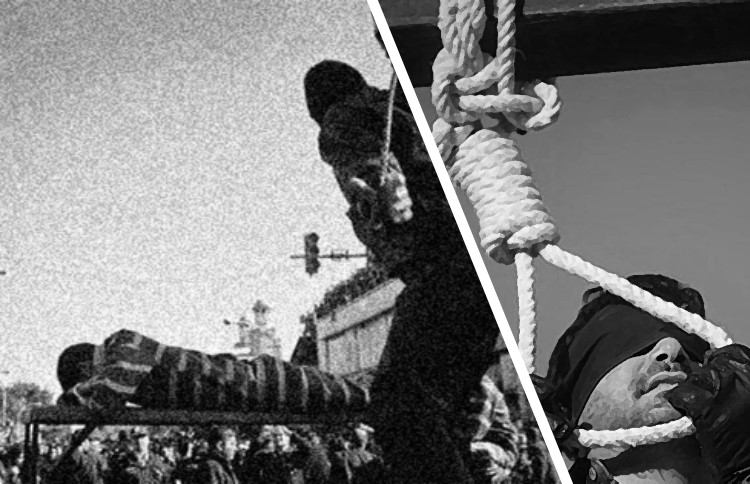
Iran executed 24 people in January

The Iranian authorities executed 24 people in January 2020, according to a mixture of sources, including human rights activists, unidentified sources who spoke to Iran Human rights Monitor, and even the state-run press.

Iranian National Athletes Leave the Country

Iranian athletes leave the country

By Pooya Stone

In recent years, many Iranian athletes under the rule of the Velayat-e Faqih (mullahs’ regime) have left Iran’s national teams and traveled to other countries to continue their activities. This has become an issue for Iranian athletes to confront the regime.

Facts About the Grim Prospects of the Iranian Economy

Iran's Bazar

By Jubin Katiraie

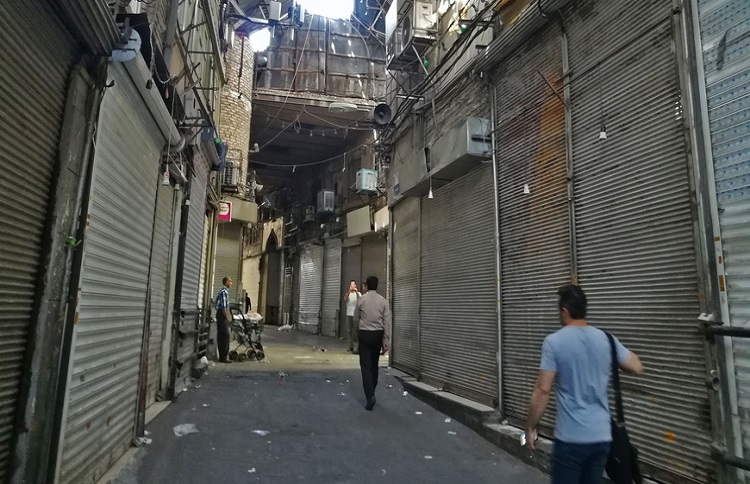
Iraq is considering a halt to its energy imports from Iran. Iraq’s main power plants depend on Iran’s natural gas, and Iraq imports electricity from Iran because Baghdad’s electricity production is insufficient for domestic supply.

How Does the Iranian Revolutionary Guards (IRGC) Make Money? – Part 1

0

“So, look at how the IRGC generates funds. The IRGC detains a spy like Jason Rezaian. The U.S. pleads for him to be released. We say: no, you have to pay for him.

Our government gets paid $1.7 billion to hand over this spy. Thus, by detaining just one spy, the IRGC earns the equivalents of the $1-2 billion it was supposed to receive from the government budget.” (Hassan Abbasi, state-run website Asr Iran, 23 January 2020)

These were the sentences of the former IRGC commander Hassan Abbasi, who was responsible for the development of the Revolutionary Guards Navy and a member of the Central Council of IRGC’s Ammar base. A number of government media, including the Asr Iran website, cited Hassan Abbasi’s remarks on the manner in which the Iranian Revolutionary Guards were held hostage to earning money on 23 January 2020. A terrorist approach by the IRGC to threaten, blackmail and extort Western countries under the policy of appeasement of Western countries to advance the policy of exporting terrorism by the mullah’s regime.

But is this confession confined to Abbasi alone?

“… The other thing is that the Americans have to know that there is no military action against Iran. If the Americans want to have a bad eye on Iran, think of a military attack, be sure that we capture the first thousand Americans at the first week, and at that time to set them free they must pay billions of dollars, and of course, many of our economic problems may still be solved, so we recommend getting the idea out of the way. (Sabzali (Mohsen) Rezaei, former chief of the Revolutionary Guards, Iran’s state television, 13 July 2015)

The famous terrorist, Anis Nakash, one of the Lebanese mercenaries of the mullahs ‘regime and close associates of Mohsen Rezaee and Mohsen Rafiqdoust, who had spent ten years in French prisons for murder and assassination, also revealed a portion of the Revolutionary Guards’ ransom policy with the use of hostage tacking and said:

“… I was in the French prison and they were operating in Beirut. Four French hostages were taken in Lebanon … One day someone from the French Foreign Minister office came to me … I said what do you want!? He said I don’t know right now that our hostages are alive or dead … I said yes, but with some conditions … The first clause is that these one million dollars must go back to Iran. Said OK, and said what next? I said expel Massoud Rajavi from France … “. (Iran State Television, Ofogh Network, Jahan-e-Ara Program, 11 February 2017)

This mercenary in this regime television program points out that as far as terrorism and hostage-taking are concerned, why should we go for negotiation and diplomacy and said:

“… I know how the situation in Lebanon is. These are taken hostage, and you cannot negotiate unless you are taken hostage immediately too. You can’t go into a negotiation with lying and negotiate for God’s sake…” (The same source)

On the issue of British hostage-taking in Iraq and their transfer to Iran, the British newspaper The Guardian wrote:

“An investigation by Guardian Films found that the al-Quds force, a special unit of Iran’s Revolutionary Guard responsible for covert foreign operations, was behind the seizure of the five Britons from the Iraqi finance ministry in May 2007. The captives were taken across the border into Iran on the first day and spent some of their captivity there, while an Iranian-backed Shia group in Iraq, Asaib Ahl al-Haq (the Righteous League), claimed responsibility for the abduction.

“Today Sharq al-Awsat, a London-based Arabic newspaper, quoted an anonymous source it described as a former Righteous League member as confirming the British hostages were taken into Iran soon after being seized.

“Iran was the only place where Peter Moore could be kept because Iran is a safe haven for most of the leaders of the Righteous League,” the source told the newspaper. “Iran is the country that benefited most from the kidnapping as it always likes to keep a card in its hand to apply pressure.”

And on the story of the mullahs’ hostage-taking of three American climbers, this newspaper in an article entitled: “Hostage-taking in Iran: the pawns in a battle against US imperialism” wrote:

Hostage-taking serves a dual purpose for Iran. First, it demonstrates to Tehran’s foreign enemies that it has a means of striking against them as long as there are western nationals in its near vicinity. Secondly, it carries domestic propaganda value, drawing the population’s attention to the external threats the country faces, presenting the state as a defender of the nation against such threats, and smearing internal opposition as the product of foreign subterfuge.”

U.S. Slaps New Sanction on Iran’s Nuclear Program 

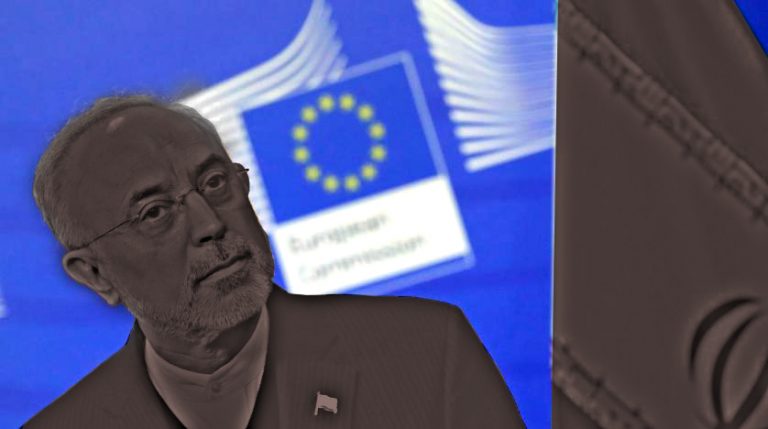
The U.S. sanctions the Iranian Atomic Energy Organization and its chief Ali Akbar Salehi

By Jubin Katiraie

The US imposed sanctions on Irans Atomic Energy Organization and its chief Ali Akbar Salehi. 

Iran’s Judges Demand Bribes for Protesters’ Release 

Iranian judges predicated the freedom of detained protesters on paying bribes

By Jubin Katiraie

It has been revealed that two Revolutionary Court judges in Iran have been extorting protesters arrested during the November uprising, asking for large bribes in exchange for their freedom.