Home Blog Page 447

Iran: Why Mullahs Will Not Change

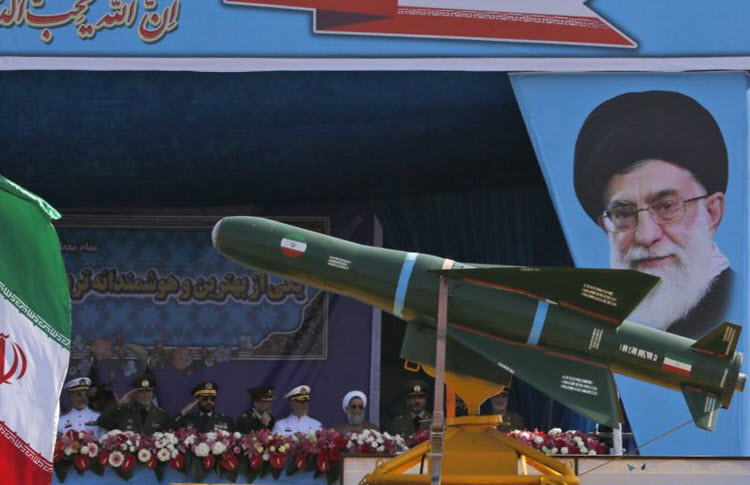
An Iranian military truck carries missiles past a portrait of Iran's Supreme Leader Ayatollah Ali Khamenei
An Iranian military truck carries missiles past a portrait of Iran’s Supreme Leader Ayatollah Ali Khamenei

London, 02 June – Recent developments in relations between U.S. and Iran in the Middle East are indicatives of a turning point in the outlook of the whole region, as pressure mounts on Iran the question is will the Mullahs ruling Iran change their behavior? Iraqi writer Al-Sarraf believes there are six reasons it will not happen:

“Nothing can change. It is in the nature of the mullahs’ regime, if it stays untouched, to wreak havoc in the region.”

1. Iran is a state of militias and gangs. It expands its foreign influence and interests by establishing and sponsoring militias and gangs in neighboring and far-away countries. This is more than clear anywhere Tehran has influence and a role.

2. Iran is a sectarian state. Its dogma is the spearhead of sectarian strife and conflict in Iraq, Syria, Lebanon, and Yemen. It is a dogma that relies on accusing other sects of heresy and criminalizing them. The details of this dogma reveal a brutal nature that is no different from the Islamic State’s brutality and savagery. The Islamic State was the result of a long series of atrocities committed against millions of people in Iraq and Syria for purely sectarian reasons. This is why it duplicated those atrocities.

3. Iran is a corrupt state. Corruption is the nature of the system in Tehran. Militias acting as a state above the state think that they have the right not to be accountable to the law. Billions of dollars are moving outside the official and formal channels. They are part of a system that knows no regulations, a system that depends on connections and relations of a secret nature and on people acting like a mafia. Just as no one knows the budgets allocated to the militias, no one knows what they are doing with the funds because they are above accountability. When one organ of the regime commits a crime, it is impossible to know who did what or who gave the order. That’s how the mafia functions.

4. Iran is terrorizing the region by appearing to be the one that controls terrorism in the region. When the rumble between Washington and Tehran rose, terrorist fingers moved to fire a missile into Baghdad’s Green Zone, sabotage four ships off the Port of Fujairah and burn oil pumping stations in Saudi Arabia. These were messages that terrorism is part of the “jobs” that Tehran does.

5. Iran does not practice terrorism against governments or individuals but against entire social entities, threatening them with destruction. Based on a doctrine that destruction of the society is part of the prospect for the emergence of the “Awaited Mahdi” and that spreading grievances and crimes will hasten this emergence, any place that Tehran’s hands’ touch will become another rotten Iraq.

6. Iran is a state of hatred and grudges, nourished by the worst historical criminal legacy. In 1624, Shah Abbas massacred three-quarters of Baghdad’s population and made its people eat dog cadavers to force them to convert to Shiism. In 1743, Mosul experienced the atrocities of what became known as the “siege by Nader Shah.” In 1775, Basra experienced Karim Khan’s siege, which lasted 13 months, wiping out most of the city’s population.

At the same time, Iran does not mind talking but only on the basis of accepting those doctrines, not just because they are part of its nature but because that’s how it sees itself: arrogant and intractable. The mullahs’ regime has proven that today’s Iran is the extension of a 500-year brutal legacy. It can’t do otherwise.

Washington negotiated with Tehran until they reached the fateful nuclear agreement and, now, US President Donald Trump has given the bottom line: He doesn’t want to change the regime in Iran. What a storm in a teacup!

Source: Arab Weekly
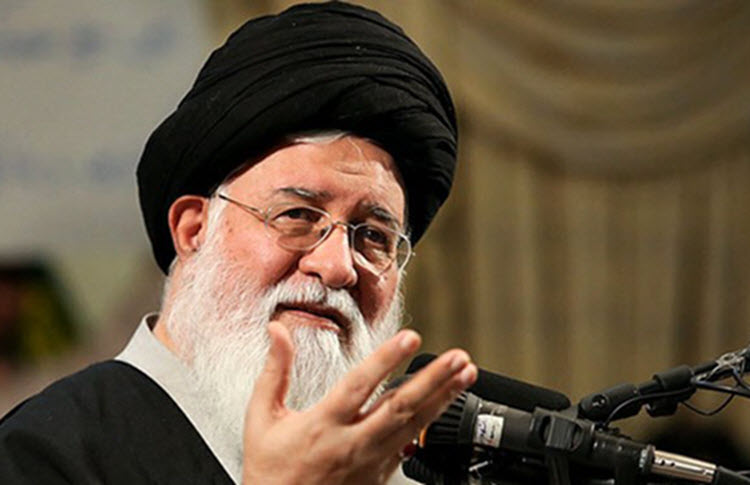
Iranian Mullah Says Broadcaster Should Use Men Instead of Women Hosts

Ahmad Alamolhoda, who is Supreme Leader Ali Khamenei’s representative in the northeastern Khorasan Razavi province in Iran

London, 01 June – In line with tightening the grip of suppression over the people to cope with the widespread discontent in the country against the religious fascism ruling Iran an ultra-conservative mullah in Iran has suggested that the state broadcaster should replace female presenters with male anchormen.

Ahmad Alamolhoda, who is Supreme Leader Ali Khamenei’s representative in the northeastern Khorasan Razavi province, is the most vocal ultra-conservative senior religious figure in Iran, who has banned concerts and theater in the province.

The official government IRNA quotes him saying, “In some state broadcasting programs it is possible to use men instead of women presenters. It is not necessarily a must to appoint a woman to be the host of a program.”

Alamolhoda also said that the hijab is a necessity by Sharia law and “unfortunately, sometimes even among outwardly pious families” it is not being properly observed.

Islamic Republic officials and imams face a problem when the weather becomes hot since women are less inclined to cover their heads and face too much. This leads to public condemnations of even young men who wear tight T-shirts with very short sleeves.

Law enforcement and morality police increase their vigilance in summer and often stop and admonish or even try to arrest people who are not fully observing proper attire laws.

May Crude Exports of Iran Sharply Slide to 400,000 Bpd

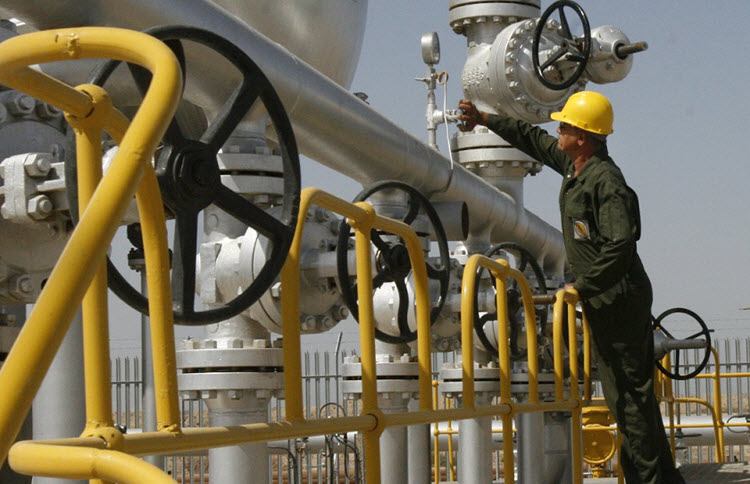
May Crude Exports of Iran Sharply Slide to 400,000 Bpd

London, 31 May – As a result of U.S. sanctions, Iranian crude exports have fallen abruptly in May to around 400,000 barrels per day (BPD), tanker data displayed and two industry sources told Reuters after the United States tautened the screws on Tehran’s main source of income.

The United States reimposed sanctions on Iran in November after pulling out of a 2015 nuclear accord between Tehran and six world powers. Aiming to cut Iran’s sales to zero, Washington this month ended sanctions waivers for importers of Iranian oil. Iran has nonetheless sent abroad about 400,000 BPD so far this month, according to data from Refinitiv Eikon and two industry sources who also track the flows, less than half April’s rate. The bulk of the crude is heading to Asia.

The drop in exports has tightened the market, supported prices, and deeply reduced Iran’s revenue. A dearth of information about the exact rate of shipments is a headache for other OPEC members and allies, which are scheduled to meet to set the oil supply policy in June.

“I am expecting exports of about 400,000 BPD,” one of the sources said, which would be an increase from around 250,000 BPD in the first two weeks of the month. The second source said May exports could reach as much as 500,000 BPD.

There is no definitive information on the export rate. Iran has welcomed this opacity and stopped reporting its production figures to the Organization of the Petroleum Exporting Countries.

Some of Iran’s oil exports are already under the radar, making it harder to assess the actual volume.

The latest figure for May exports shows more consensus on how much oil is still reaching the market than an estimate published on May 16, in which shipments were put at between 250,000 BPD and 500,000 BPD.

The oil industry has for some years used tanker-tracking to work out actual supplies in the absence of timely official information. While easier than in the past due to satellite information, tanker tracking is not an exact science.

Tankers loading Iranian crude sometimes switch off their AIS signal, an automatic tracking system used on ships, only to switch it back on at a later stage of their journey, according to oil industry sources, making it harder to see actual volumes.

Still, there is general agreement that crude shipments have dropped from at least 2.5 million BPD in April 2018, the month before President Donald Trump withdrew the United States from the nuclear deal.

Asharq Al-Awsat

The Mockery of Iran’s Stealth Fighter

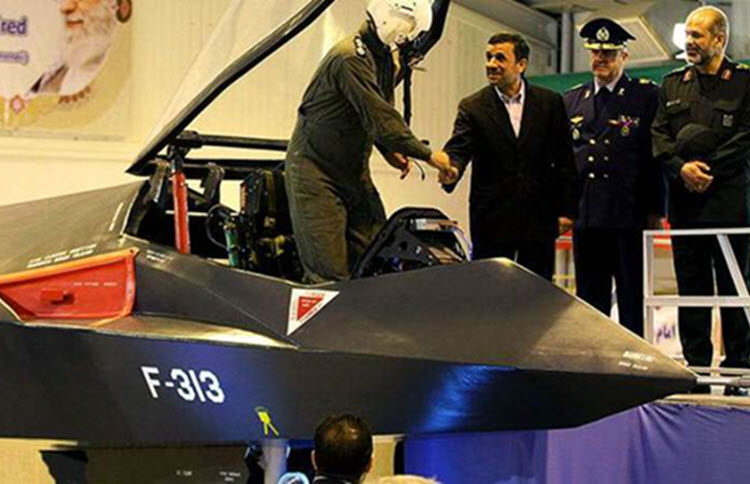
Iranian Qaher F313 Stealth Fighter Jet Prototype Mockup Qaher F-313, or Conqueror-313, is the latest design produced by the Islamic Republic Iranian air force IIAF

By Jubin Katiraie

Several years ago, Iran rolled out its Qaher F-313 ‘stealth fighter’ in front of then President Mahmoud Ahmadinejad. Within hours it was met with near universal derision from defense and aerospace experts around the world.

While almost everyone outside Iran saw the project for the farce that it was, Tehran insisted that the project was real and that it was already flying. Further, the Iranian government insisted that the bizarre-looking aircraft—which was allegedly superior to the Lockheed Martin F-22 Raptor and the F-35 Joint Strike Fighter—would become operational in the very near future. But since then the project has disappeared. So, whatever happened to Iran’s impressive plans for the Qaher F-313 stealth fighter?

U.S. Joint Chiefs Chairman: There Are Real Reasons to Be Suspicious of Iran

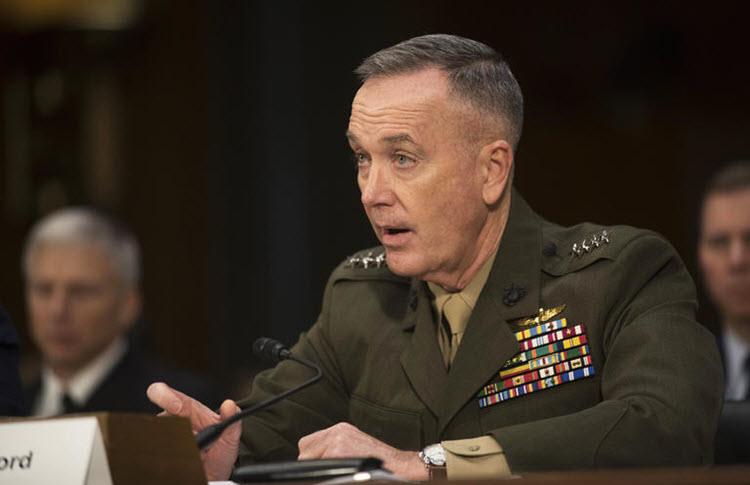
Marine Gen. Joseph Dunford

By Pooya Stone

Though the Defense Department announced Friday that just under a thousand American troops would be heading to the Middle East specifically in response to concerns about Iran, they are only meant as a show of force, the chairman of the Joint Chiefs of Staff said Wednesday.

U.S. Warns Europe Over Swift-Evading Iran

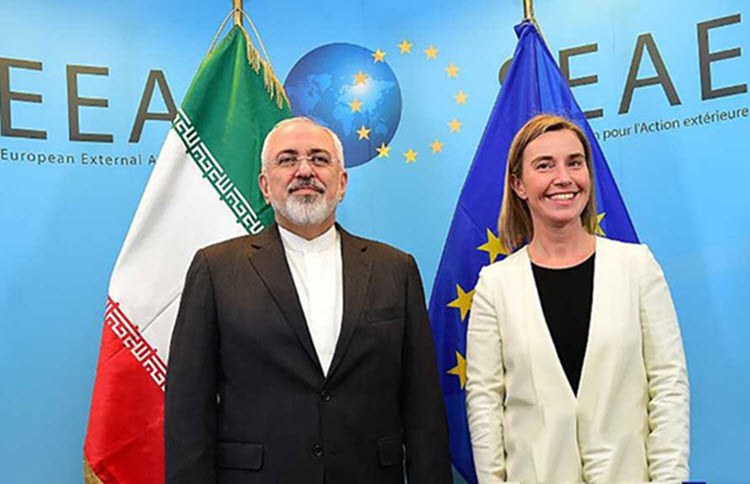
Iranian Foreign Minister Mohammad Javad Zarif and European Union foreign policy chief Federica Mogherini

By Jubin Katiraie

According to Bloomberg, the Treasury Department’s undersecretary for terrorism and financial intelligence, Sigal Mandelker, sent a letter on May 7 warning that Instex, the European SPV to sustain trade with Tehran, and anyone associated with it could be barred from the U.S. financial system if it goes into effect.

Iranian Agents Set up Fake Social Media Accounts to Influence 2018 Midterms

FireEye is the intelligence-led security company

By Pooya Stone

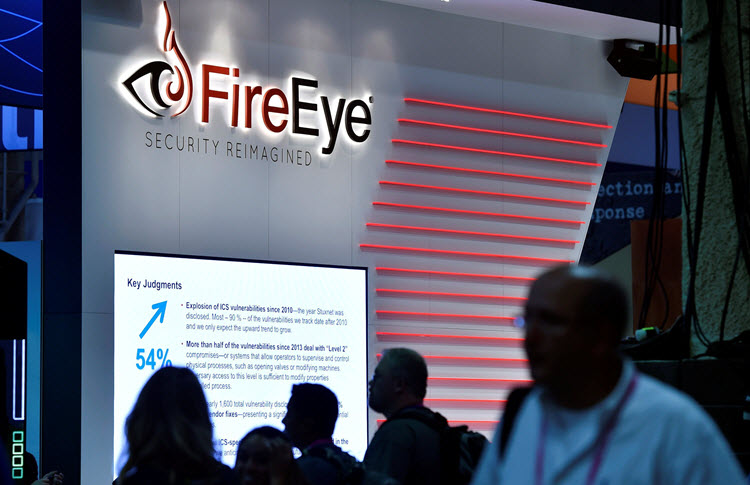
A network of fake social media accounts imitated political candidates and journalists to spread messages in support of Iran and against U.S. President Donald Trump around the 2018 congressional elections, cybersecurity firm FireEye said on Tuesday. Some of those who were impersonated included Republican political candidates who contested House races, the firm said.

Iran Aims to Block Social Media in the Event of War With U.S.

Infographic-Social Media in Iran

By Jubin Katiraie

The head of the Iran’s Passive Defense Organization has said that the country would block its citizens’ access to social media if war were to break out with the U.S.

Brigadier-General Gholamreza Jalali of the Islamic Revolutionary Guard Corps said in a speech on Sunday, may 26th, that the U.S. “uses social media for media and psychological operations to influence Iranians’ minds.”

Lack of Iran Funding Leaves Hezbollah Facing Economic Crisis

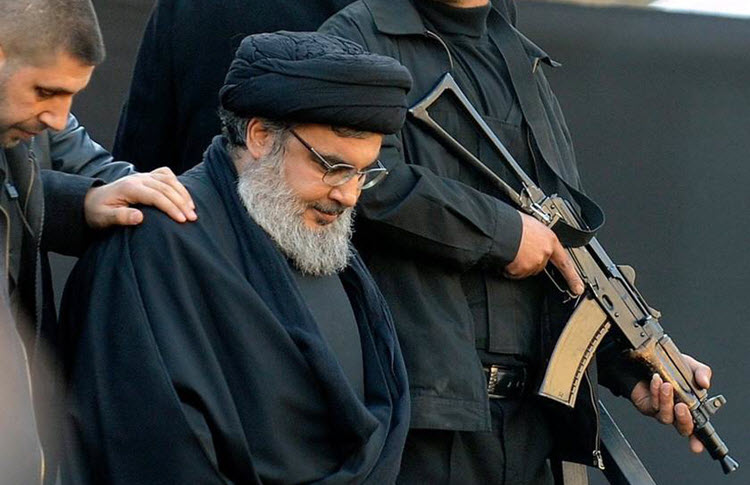
Hezbollah leader Hassan Nasrallah

By Pooya Stone

In early November, the sanctions reimposed by the US targeted Iran’s oil revenue. They aimed to cut Iran’s exports down to zero. Previously, the US had granted temporary import waivers to China, India, Greece, Italy, Taiwan, Japan, Turkey and South Korea to ensure low oil prices and no disruption to the global oil market. The waivers were not renewed when they expired.

Iran and Hezbollah in an Economic Freefall

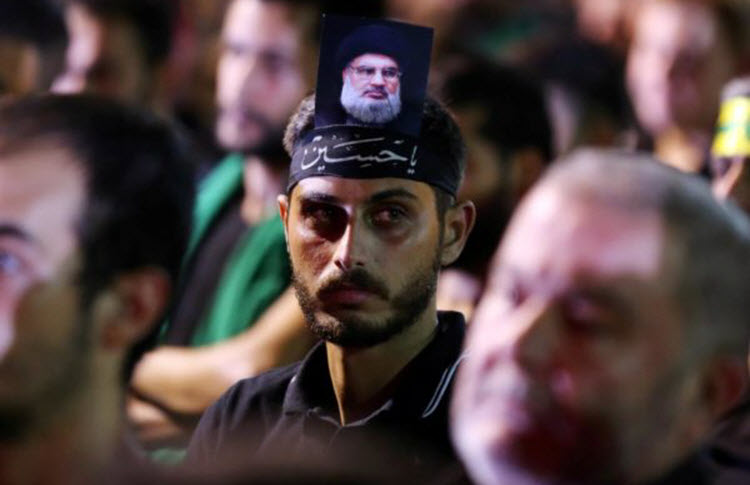
A supporter of Lebanon’s Hezbollah leader Hassan Nasrallah has his picture on his head

London, 26 May – The U.S. administration’s reestablished sanctions on Iran have started strong and are likely to become even stronger in the future. The US Treasury Department’s recent statement that the so-called “significant reduction waivers,” which allowed certain countries to continue buying Iranian oil in reduced quantities, were ended and that no new waivers were upcoming was a major positive development. The US terrorist designation of the Revolution Guards Corps, which in addition to their military activities control important segments of the Iranian economy, was another welcome step. The totality of US sanctions has been effective and has imposed heavy costs on Iran.

To be sure, further ratcheting up of US sanctions can be highly effective and should be undertaken. In this regard, blacklisting not just individual Iranian banks, but the totality of the Iranian banking sector would be the most powerful step. It is also possible for the US to bolster the existing shipping-related sanctions to apply to all vessels that carry cargo to and from Iran. While these steps may well be taken by Washington in the future, it is important for other countries concerned about Iran’s maligned activities to support US sanctions with strong efforts of their own.

With this in mind, key US Middle Eastern allies, with the GCC in the lead, can and should promptly impose Iran- and Hezbollah-related secondary sanctions. This approach would have several major benefits. First, it would be effective in intensifying the pressure on Iran by further squeezing the Iranian economy. From a purely economic perspective, GCC-driven sanctions would be particularly efficacious vis-à-vis those European and Asian companies that do a lot of business in the Gulf and the Middle East. Without a sufficient footprint in the US, such companies do not worry about US secondary sanctions. But if forced to choose between doing business with Iran and participating in the GCC economy, they are highly likely to opt for the latter.

The secondary sanctions process would also present a valuable opportunity to bankrupt Hezbollah, which would be both a symbolic and practical blow to Tehran. This is because Hezbollah is both a model utilized by Iranian foreign policy and a vital power projection tool for Tehran. Turning Hezbollah from an asset into a liability would be invaluable. The key element of Hezbollah’s focused portion of the secondary sanctions would be to have them apply not only to Hezbollah but to all Hezbollah-affiliated entities, such as the Amal Movement.

GCC-led sanctions would also have an important symbolic effect, helping to drive a wedge between the Iranian mercantile class – the Bazar – and the mullahs. In this regard, the fact that the sanctions have thus far been multilateral but now include key Middle Eastern powers would underscore the isolation of Iran.

In addition to imposing secondary sanctions of its own, the GCC should consider participating in the sanctions enforcement efforts. These should be focused on companies and entities that are engaged in sanctions-busting activities. Turkish or Qatari companies that have so far largely escaped punishment for Iranian sanction violations would be particularly promising targets.

Having the GCC lead in this area, both by adopting secondary sanctions of its own and participating in the sanctions enforcement efforts, would be greatly beneficial. It would enhance the efficacy of the currently existing sanctions-related efforts and manifest a united front against Tehran. This overall strategy would help cement the alliance between GCC countries and the US, while also serving as a powerful rebuke to the European countries that have chosen to side with Iran. Overall, it would also demonstrate that GCC countries are practicing a 21st century level of sophisticated diplomatic and economic statecraft.

Source: Al Arabiya