

Iran’s Economy in Deep Crisis During the Month of Ramadan
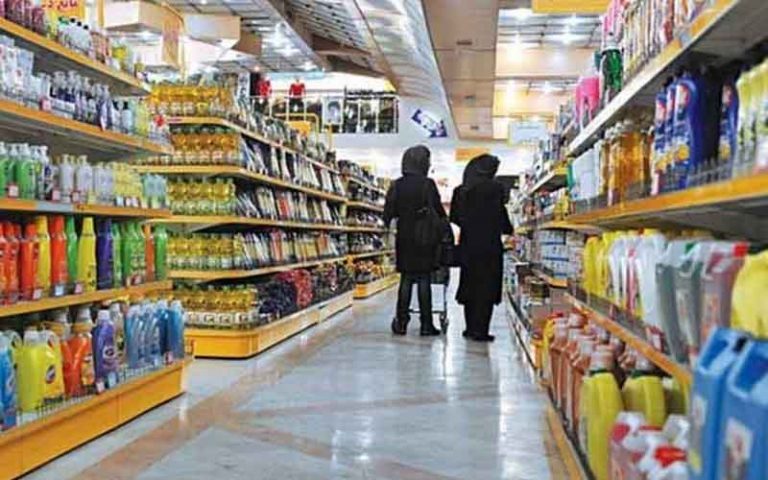
Economic pressures in Iran continue to rise, and with the beginning of the month of Ramadan, the depth of the economic crisis has also become apparent as Iranian media report a minimum daily wage of 2.5 million rials (approximately $4) compared to a household expenditure of 6.5 million rials (approximately $11) for daybreak and iftar meals.
The regime’s rouydad24 website has addressed this issue in a report, stating that the iftar or daybreak for a family of five costs 4 million rials (approximately $6.6).
Based on this estimate, the minimum cost of an iftar meal is also estimated to be between 2 to 2.5 million rials.
According to this report, this expense of 6.5 million rials comes at a time when the average daily income of a simple worker is around 2.5 million rials.
Comparison of the figures provided by rouydad24 indicates that spreading an iftar and complete dinner for a family of five in the past year amounted to more than 2.5 million rials.
Additionally, in 2022, the cost of preparing an iftar meal in the most minimalistic scenario was approximately 1.5 million rials (approximately $2.5).
The website attributes the current trend in Iran’s economy and the resulting conditions for households to the performance of the Ebrahim Raisi’s government, stating: “Now it seems that a century has passed since those days, and the outcome of Ebrahim Raisis’s economic surgery is nothing but economic paralysis.”
It is emphasized based on market activity that for years, wages have lagged behind expenses, and Iranian iftar and daybreak have reduced in size.
Statistics published by the Statistical Center of Iran indicate that in February 2024, the annual inflation rate for food and consumer services in the “red meat and poultry” sector was 93.3%, and in the field of red meat, white meat, and its products, it was 90.7%. This means that in February 2024, Iranians spent at least 90% more on meat purchases than in February 2022.
Furthermore, in February 2024, public transportation services became 57.4% more expensive compared to the same period last year, and consumers paid 62.5% more for hotel and restaurant services compared to the previous year.
Reports indicate that rampant inflation has become one of the biggest economic challenges in Iran. This challenge has severely affected people’s daily lives and made their meals smaller.
Corruption Allegations Surround Tehran’s Friday Prayer Leader Amid Factional Struggles
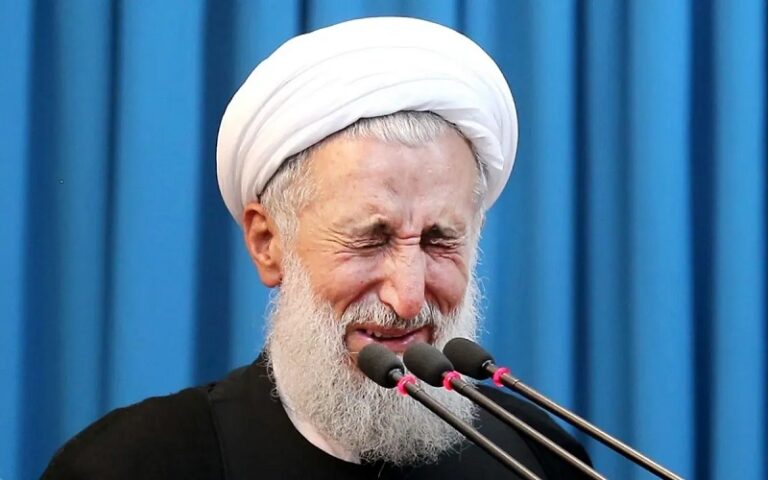
Recent reports from Iran suggest that Kazem Sadighi, Tehran’s Friday Prayer Imam, has allegedly seized a property valued at over 10 trillion rials, amidst a backdrop of rampant corruption and embezzlement in the country. This development underscores the growing prevalence of such financial malfeasance, with headlines detailing multi-billion-dollar scandals becoming a regular occurrence in Iranian newspapers.
According to government media, in 2003, Kazem Sadighi, who then served in the judiciary, established a seminary in Tehran known as the “Khomeini Seminary.” This seminary, located in Ozgol District, among the best places in the country’s capital, gradually expanded under Sadighi’s ownership, now encompassing a property of approximately 23,000 square meters in northern Tehran.
The fate of a triangular garden measuring 4,200 square meters situated in the northeastern corner of this property has sparked controversy. Allegedly, it ended up being owned by a company for personal exploitation, owned by Kazem Sadighi and his children, with an estimated value exceeding 1,000 billion tomans.
Furthermore, a company named Peyrovan Andishehaye Qaem (PAE) [Persian for Followers of Imam Mahdi] was founded in Iran in 2023. The composition of the founders and the board members of this company indicates that Kazem Sedighi and his children are its principal owners:
- Kazem Rajabi Sedighi
- Mohammad Hossein Rajabi Sedighi, his son
- Mohammad Mahdi Rajabi Sedighi, his son
- Rezvaneh Ghavam, Sedighi’s daughter-in-law, is also introduced as an inspector of this company
Housing Accounts for Half of Spending by Tehran Households
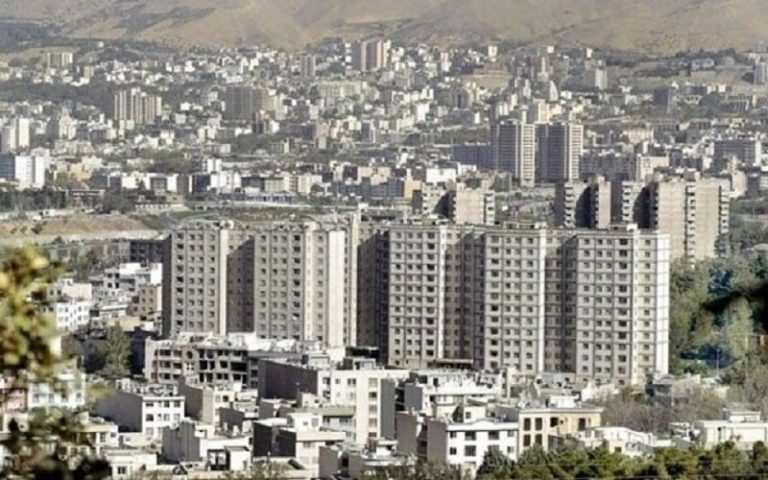
Official statistics on income and expenditures of households in Tehran show that urban households in the capital of Iran allocated half of their expenses to housing last year. Some analysts believe that with the increase in housing costs from last year to today, this share has significantly increased.
Didbaniran website wrote in a report on this issue that this proportion in Tehran constitutes half of the households’ expenses, while in Bushehr province, only 21 percent of expenses are allocated to housing.
Although the information published by the Statistical Center of Iran is always viewed with skepticism by the public and experts, this statistic also indicates that the economic conditions in Iran are nearing crisis levels.
According to the same statistics, the average share of housing expenses in Iran as a whole was 38.1 percent.
According to the latest report from the Iranian government’s Statistical Center, the average housing price in Tehran increased to about 806 million rials (approximately $1,357) in January 2024. A development that Tasnim News Agency reported has rendered mortgage loans in Tehran ineffective because with a mortgage from the “Housing Bank,” one can only purchase about 8.3 square meters of housing in Tehran.
This news agency, close to the Revolutionary Guards (IRGC), emphasized in a report on March 10 that the government’s policies have been “ineffective” and have not led to the public welfare in the housing sector.
The reduction in people’s purchasing power is the most important factor in the inability of applicants to acquire housing. In this regard, during the summer of the current year, the Research Center of the regime’s Majlis (parliament) wrote in a report that until the beginning of the 2010s, first to third deciles were practically deprived of access to suitable housing due to their inability to pay bank installments.
Now, these deciles are “absolutely” unable to afford the necessary housing, and even the fourth and fifth deciles and even part of the sixth decile are “relatively” unable to secure housing.
During the his presidential elections campaign, Ebrahim Raisi promised to build one million housing units per year, but with more than two years of his government’s tenure, he has not yet achieved anything in this regard.
US, UK Ask UN To Prevent Iran from Sending Missiles to Houthis
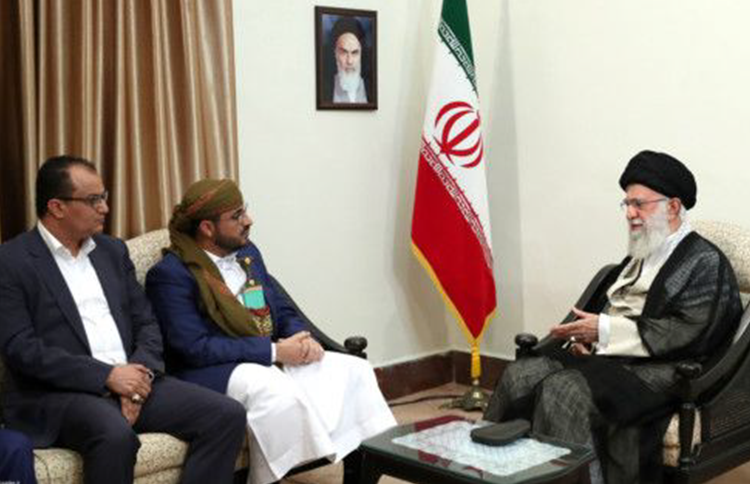
Representatives of the United States and Britain at the United Nations Security Council meeting called for UN maritime inspection to prevent Iranian missiles from reaching the Iran-backed Houthi militias in Yemen.
Simultaneously with the Security Council meeting on Yemen on Thursday, March 14, reports were released about the Houthis carrying out more attacks in the Red Sea and also about attacks by the US and Britain on Houthi positions within Yemeni territory.
The release of these reports sparked a confrontation between representatives of Russia and China with those of the United States and Britain over the authorization of attacks on Houthi militant positions in Yemen.
Robert A. Wood, the United States envoy to the United Nations, demanded further strengthening of the UN verification and inspection mechanism to counter the shipment of Iranian arms to Houthi ports.
At the request of Saudi Arabia in 2016 and to prevent arms trafficking within humanitarian shipments to Yemen, the UN established a verification and inspection mechanism called UNVIM.
In 2013, the UN inspected at least 26 commercial ships bound for ports under Houthi control, including the strategic port of Hodeidah.
James Kariuki, the deputy British ambassador, supported this request by the United States, saying that inspecting ships to halt the entry of illegal weapons into areas controlled by the Houthis while maintaining the flow of goods to Yemen is essential.
He stated that almost 90 percent of all foodstuffs in Yemen are supplied through commercial imports, so preserving the integrity and functioning of these ports is vital.
The British deputy ambassador added that reports of Iranian ships bypassing these inspections are very concerning.
He emphasized that all ships entering the port of Hodeidah must comply with the UNVIM mechanism and undergo inspection.
In this meeting, Dmitry Andreyevich Polyanski, the Russian deputy envoy, also stated, that the only diplomacy the United States officially recognizes is gunboat diplomacy.
The Russian diplomat said that you can interpret the Houthis’ demands however you want, but it’s hard to deny that the current crisis in the Red Sea is largely due to Israel’s brutal actions against hundreds of thousands of innocent Palestinians in the Gaza Strip.
Hans Grundberg, the UN Special Representative for Yemen, also said that the escalation of tensions in the Middle East due to Houthi attacks supported by Iran, which target commercial ships in the Red Sea, has complicated the international organization’s mediation efforts in this war-torn country.
The UN Special Representative for Yemen emphasized that mediation in Yemen has become more complicated due to recent developments in the region.
Medicine Scarce in Iranian Pharmacies, Abundant in Free Market
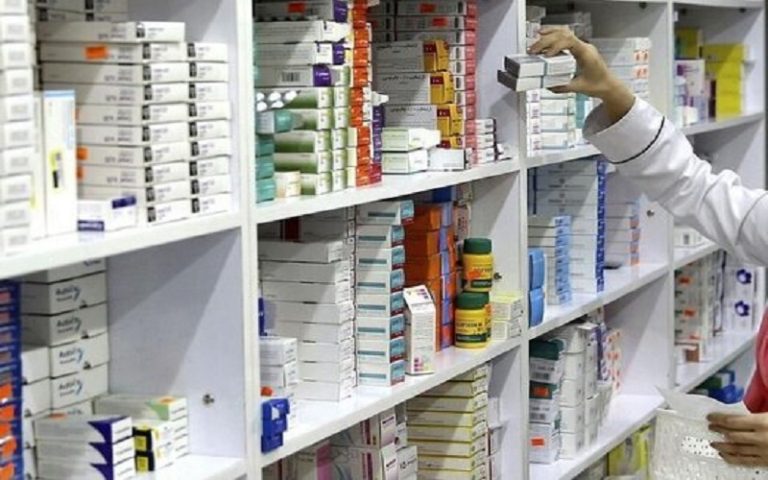
The distribution of medicine in Iran faces numerous challenges. Various governments promised to solve these issues at the beginning of their tenure, but the situation in this regard has not significantly changed. The main problem is the shortage and absence of certain drugs in pharmacies, leading to their sale in the free market.
A citizen commenting on the existing problems in the Iranian medicine distribution system says, “When there is no transparency, such a situation arises: out of 85 million population, we have 100 million insurance booklets! Some have multiple booklets and sell the medicine in the free market.”
On Wednesday, March 13, the regime’s Hame-Mihan newspaper reported on the country’s pharmaceutical market facing “intensified distribution restrictions and shortages,” highlighting the issue of drug leakage in the free market.
The report reads in part, “Pharmacies face shortages of specific drugs, but these same drugs are easily available in the free market.”
Sajad Ismaili, the spokesperson for the Food and Drug Organization, confirmed the existence of drug leakage, but reports in this area are “very limited.” He stated, “We have reports that some patients consume a small amount of their prescribed drugs and sell the rest in the free market.”
According to this official from the Food and Drug Organization, there are widespread examples of cancer patients’ drugs being offered on online platforms and social networks. Some patients purchase these drugs, and after sending them to the Food and Drug Organization, it is revealed that they are not effective and are fraudulent: “We confirm drugs obtained from pharmacies, and we are not responsible for drugs obtained through other channels.”
Simultaneously, according to Hame-Mihan’s report, the most common phrase heard in pharmacies is, “It is currently unavailable!”
With one week left until the start of the Iranian New Year on March 21, access to certain drugs has once again become difficult, a trend that, according to Hame-Mihan’s report, began several months ago. “Consumers of Warfarin are facing a shortage of the drug. Foreign insulins are sporadically found. Eye drops, graft medications, Thiamazole, Ritalin, and others are not exempt from the list of pharmacy shortages. Patients are connecting with numerous acquaintances to buy a few extra packages of the scarce drugs, further exacerbating the shortages.”
On January 21, Vahid Mahalati, the vice president of the Association of Pharmaceutical and Supplement Distribution Companies, stated that there would be an inherent shortage of drugs in the coming year. He said, “We are on the verge of a definite shortage of some drugs in the country, and if authorities do not have fundamental solutions in time, there will be a definite shortage of drugs.”
Mahalati, in a press conference on the pharmaceutical challenges of the country held at the Human Resources Drugs Syndicate, said, “By the end of this year, 62 billion units of drugs have been the country’s drug sales, 98.5% of which are domestically produced.”
He added that if any of these drugs face shortages, it will not be possible to import them.
According to the vice president of the Association of Pharmaceutical Distribution Companies, 860 trillion rials (approximately $1.444 billion) have been allocated for the implementation of the Drug Assistance Plan for the next year, and a maximum of 500 trillion rials (approximately $839.630 million) of it will be provided. “Despite this, there is an inherent shortage in the pharmaceutical sector.”
The Drug Assistance Plan was implemented in July 2022 with the slogan “Reforming Drug Subsidies” by the government of Ebrahim Raisi, but the plan faced serious problems from the beginning.
On January 19, Mohammad Ali Mousavi Bandpei, a member of the Health Commission of the Parliament, said that due to the shortage of drugs in the country, some citizens obtain expired drugs or drugs from the black market.
10% of Iran’s Gas Lost in Production and Transmission
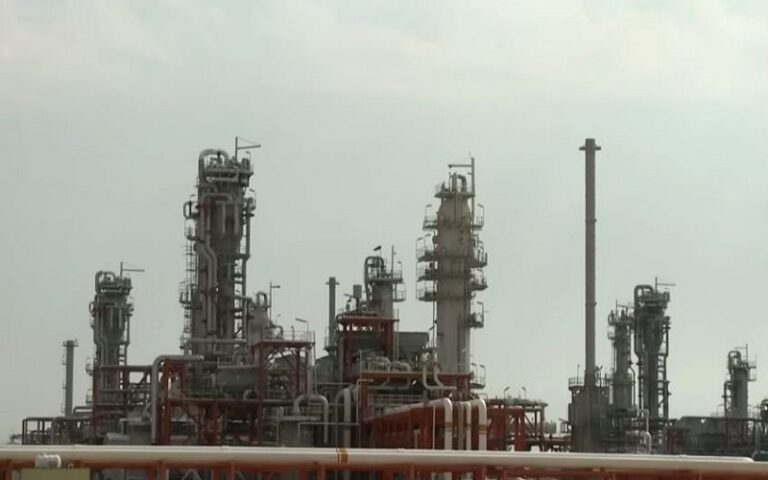
The International Energy Agency, states in its annual report that Iran ranks third globally in methane emmissions.
According to the report published on March 13 on the agency’s website, Iran experienced six million tons (approximately 8.5 billion cubic meters) of methane leaks in the past year.
This figure is roughly equivalent to the daily production of gas from one phase of South Pars. (The South Pars/North Dome field is a natural-gas condensate field located in the Persian Gulf. It is by far the world’s largest natural gas field, with ownership of the field shared between Iran and Qatar)
For comparison, this mentioned amount is approximately equal to Turkey’s total gas consumption over the past calendar year.
Methane, or natural gas, is the same gas used as fuel in homes and various sectors of the country or as feedstock in petrochemicals.
The International Energy Agency’s statistics indicate that Iran’s methane leaks in the past calendar year grew by about 12% compared to 2022.
World Bank statistics also show that Iran annually burns more than 18 billion cubic meters of gas produced from oil fields (associated gas) due to the absence of gas collection facilities in the production stage, leading to wasteful flaring.
Iran ranks second globally in terms of gas flaring after Russia.
Thus, the total gas leakage and flaring in Iran annually reaches 26 billion cubic meters (71 million cubic meters per day), which is equivalent to three phases of South Pars or 10% of Iran’s gas production.
Such a massive loss of gas is more than half of Turkey’s total gas consumption in 2023
This enormous waste of gas comes at a time when Iran has faced severe gas shortages in recent years during the fall and winter, with the country experiencing a daily gas deficit of around 300 million cubic meters on cold winter days this year.
It is worth noting that Iran possesses the world’s second-largest natural gas reserves.
The International Energy Agency states that approximately 120 million tons of methane emissions from fossil fuels occurred globally last calendar year.
This amount is equal to the total gas production of Qatar in the past calendar year and is a significantly alarming figure.
Methane is one of the most dangerous greenhouse gasses, exacerbating global warming and climate change when released directly without being burned and converted into carbon dioxide.
The direct emission of this gas has 28 times the impact on global warming compared to carbon dioxide, and its persistence is also several times that of carbon dioxide.
In terms of greenhouse gas emissions globally, Iran ranks sixth.
Iran’s Oil Production Declines, OPEC Reports

The Organization of the Petroleum Exporting Countries (OPEC) has reported a decrease in Iran’s oil production for the second consecutive month.
According to the latest monthly report published on OPEC’s website, Iran’s daily oil production in February has decreased by 15,000 barrels compared to January and 24,000 barrels compared to December of the previous year.
OPEC statistics indicate that Iran produced an average of 3.148 million barrels of crude oil per day in the past month.
This decline in production aligns with recent reports from the U.S. Congress and some oil tanker tracking companies, all pointing to a reduction in Iran’s oil exports.
Iran’s oil exports have been on a downward trend since the fall of this year, leading to a decrease in oil production over the past two months.
According to U.S. Congress and oil tanker tracking companies, Iran’s average daily oil exports in 2023 were approximately 1.3 million barrels. This figure peaked above 1.5 million barrels in the summer but has been declining since the fall.
Interestingly, despite the Iranian regime including daily oil exports of 1.5 million barrels and setting the price at $85 in the new Iranian budget starting March 21, recent OPEC statistics indicate that the average price of Iranian oil in 2023 was slightly over $80.
In addition to the decline in exports, the U.S. Congress report suggests that Iran is offering significant discounts to Chinese refineries, and international middlemen are profiting from bypassing Iran’s oil sanctions.
Earlier reports from Reuters stated that Iran sold its oil to small and independent Chinese refineries with a $13 discount per barrel in 2023, while large Chinese refineries did not purchase oil from Iran.
This is evident in official customs data, showing that Iran exported $32.59 billion worth of oil and mazut from March 2023 to February 2024.
Considering the daily export of 1.3 million barrels of crude oil at a price above $80 and around 220,000 barrels of mazut, Iran should have generated nearly $41 billion in oil revenue. However, customs data reports a figure below $32.6 billion.
Before U.S. sanctions, Iran used to produce 3.8 million barrels of oil daily, with 2.5 million barrels dedicated to oil and gas exports.
Staggering Price Hikes in Iran
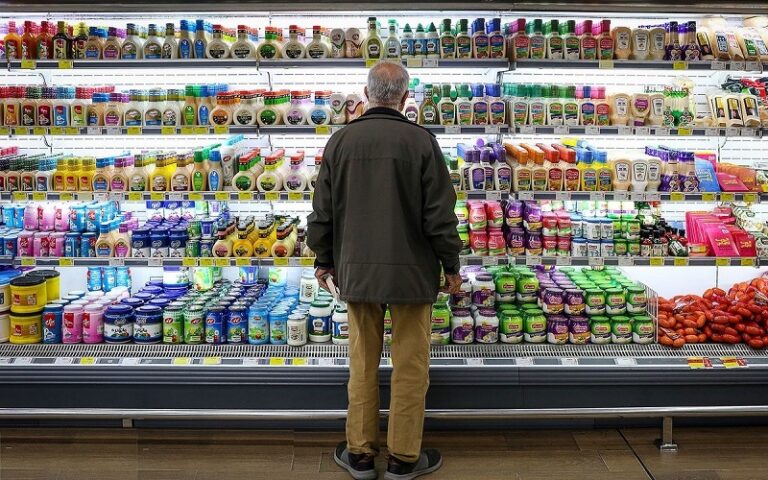
On the eve of the Iranian New Year, Nowruz, the regime’s media report on the relentless increase in the prices of goods, stating that the inflation has led people to prioritize purchasing essential items and food instead of buying new clothes. This has created a discouraging environment for sellers.
The state-run Etemad newspaper reports that “Ramadan has arrived with the prices of consumables for Iftar and Sahur being several times higher than the previous Ramadan.”
Meanwhile, on the eve of the Iranian New Year (March 21), on Wednesday, March 13, Rasoul Shajari, the head of the Tehran Shoemakers Union, announced a 25% decrease in demand and a 30% increase in prices in the shoe market during the New Year’s Eve in Tehran.
The regime’s Ettelaat newspaper also reported on this day from the city of Qazvin that “in previous years, the market for selling pastries would heat up from mid-March, but this year, due to high inflation rates, the demand for pastries is much lower, to the extent that orders for pastries have decreased from 40 kilograms to 5 to 10 kilograms per day.”
According to domestic media, this year, preparing items for the Haft-Seen table (the tradition of putting 7 symbolic objects together whose names start with S) “requires more than 5 million rials (approximately $9),” and with the addition of a dish of herbed rice with fish to the cost of the new year’s table, families will have to spend “16 million rials (approximately $30).”
The minimum wage for workers is about $135.
These reports come as one day earlier, the Tehran City Council announced that in the new year, the entry fare for the Tehran Metro will increase by 16%, the express bus by 21%, and the regular bus by 30% compared to 2023.
Mehr News Agency also reports from Semnan province that statistics released by the monitoring and inspection unit of this province indicate an increase in the prices of some essential items for the people. For example, the price of dates has changed from 1.1 million rials (approximately $2) per kilogram on February 21 to 1.35 million rials (approximately $2.3) on March 5, and white beans have also changed from 850,000 rials (approximately $1.4) per kilogram on February 5 to 10.5 million rials (approximately $1.76) on March 5.
On the other hand, many items in shops and stores differ from what officials claim. According to the IRGC-linked Mehr news agency, for example, the monitoring and inspection unit of Semnan province has announced that veal (mixed) should be sold for 5 million rials rials (approximately $8.4) per kilogram, but in butcher shops, prices are not less than 5.6 million rials (approximately $9.5).
In this situation, on Thursday, March 13, the regime’s Etemad newspaper wrote, by publishing an article titled “Inflation, Unemployment, and Stress are Breaking People’s Nerves Enough; Do Not Further Stomp on People’s Spirit and Psyche,” criticizing the social pressures imposed on the people.
The newspaper mentions that “over the past few months leading up to the elections (held on March 1), drawing lines and threatening unveiled women had diminished.” It criticizes the authorities for not showing clear efforts to avoid exacerbating tensions in this severe inflation situation.
70% of Iranians Either Below Poverty Line or At Risk of Falling Into Poverty
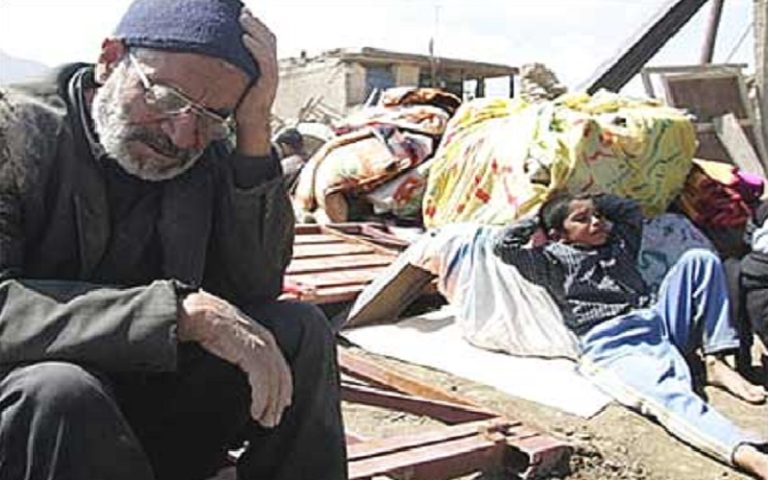
In an interview with the state-run Econegar website Farshad Momeni, an economist and university professor, described the economic situation of the Iranian people as critical.
He pointed out that 30% of the country’s population is below the poverty line, stating that another 40% are on the verge of falling below the poverty line with the current methods of wage determination.
The economist, noting the insistence of employer representatives on considering a 140 million rials (approximately $236) livelihood basket for workers, added: “Since the government, as a major employer, leans towards employers, there is a possibility that this year, like last year, they will have to confront wage determination based on the inflation rate.”
He emphasized, “Today, due to the government’s economic policies, we are facing a very dangerous and alarming tsunami of poor workers in Iran’s political economy. The heads of over 60% of the country’s poor households are actively working, indicating an extraordinary scoring for rent-seekers and usurers, causing a severe crisis in the national production structure.”
“When it comes to the hijab, officials say we don’t care if it’s religious or non-religious; it’s the law. We also say, unless the same law states in determining the minimum wage, the government officials compensate for the lost purchasing power due to the officially announced inflation rate, how can official authorities say not to compensate for the lost purchasing power of the workforce, as they are exposed to the wage and inflation spiral?” Farshad Momeni also stated.
Representatives of workers, employers, and the government all express different opinions before deciding on the minimum wage. However, ultimately, they all overlook the two components of inflation and the livelihood basket in labor law and only consent to the amount of calories needed to survive below the poverty line.
The minimum wage for workers in 2023 was about 80 million rials (approximately $135), while according to official statistics, the normal cost of living for people has been announced to be between 250 to 300 million rials (approximately $421 to $505). Workers’ representatives for 2024 demand the determination of a 190 million rials (approximately $320) livelihood basket, but employer representatives insist on considering a 140 million rials (approximately $236) livelihood basket.
On Tuesday, March 12, a group of retirees nationwide gathered in protest of the living conditions and the authorities’ indifference to their demands in several cities in Iran. Simultaneously, there were reports of worker strikes in Aghajari, protests by nurses in Rafsanjan, and the gathering of municipal employees in SarPol-e Zahab.
The continuation of economic protests in Iran occurs while, according to official statistics from the regime’s Statistics Center, in the three years since the inauguration of the Raisi government in 2021, basic commodity prices have grown between 125% and 290%.
Migration Crisis: 3,000 Nurses Left Iran Last Year
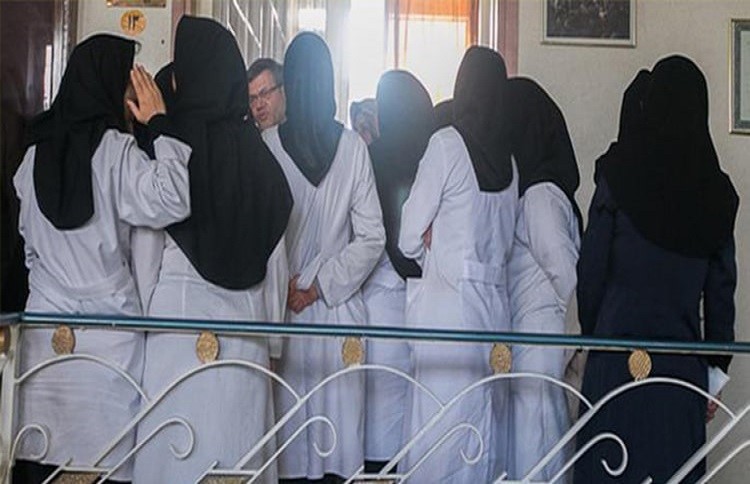
Abolghasem Aboutalebi, a member of the Supreme Nursing Council in Iran, has described the situation of nurses’ migration from the country as a “near crisis” and called for finding solutions.
According to Aboutalebi, while approximately 10,000 nursing personnel are trained in the country annually, nearly 3,000 nurses migrated last year.
Officials from the regime’s Ministry of Health state that the destination of nurse migration includes a wide range of countries, from neighboring nations and the Persian Gulf region to Western and European countries, as well as South Africa.
Aboutalebi also criticized the slow hiring of nurses, stating that to meet the standard of 2.5 nurses per bed, the current number of 240,000 nurses in the country should triple.
On December 11, 2023, the regime’s official IRNA news agency, in a report titled “Nurses Migrating, Officials Watching,” quoted Mohammad Sharifi Moghadam, the Secretary-General of the Nursing House, highlighting the consequences of the nursing shortage, including patients losing their lives.
Sharifi Moghadam also reported dissatisfaction among over 90% of nurses in Iran, attributing it to livelihood problems, income disparities, discrimination within the medical staff, improper implementation of tariff laws, staff shortages, mandatory overtime with “very minimal compensation,” and job burnout.
In explaining the income gap between healthcare staff, Sharifi Moghadam stated that the average salary of a newly hired nurse is 90 million rials (approximately $151), which doesn’t even cover the cost of renting a home, while a specialized government-employed physician earns over 1.4 billion rials (approximately $2,345) per month.
Nurses are among the groups that, in recent months, have expressed their job and livelihood dissatisfaction through mass protests to Iranian regime authorities, demanding attention to their grievances.
These protests have faced punitive measures from Iranian officials, including a six-month suspension from service for protesting employees.
While the wave of migration from Iran is not limited to nurses and encompasses a broad spectrum of students, workers, physicians, and specialized professionals, experts have warned about the consequences of the workforce leaving the country.
Morteza Ezati, a university professor and economic expert, recently discussed with the website “Khabar Online,” considering migration as a cause of exacerbating “serious crises” in Iran’s economy and predicting that its consequences will soon manifest in society and the economy.
