


By Jubin Katiraie
Justice for Iran (JFI), a human rights organization, published the first volume of their series of books, entitled “The Face of Crime,” on the fortieth anniversary of the referendum that established the Islamic Republic. According to JFI, this volume covers the cases of 100 human rights violators in Iran.
Justice for Iran was established in July 2010, and is a non-governmental, not-for-profit human rights organization. Its website declares, “The mission of JFI is to address and eradicate the practice of impunity that empowers officials of the Islamic Republic of Iran to perpetuate widespread human right violations against their citizens, and to hold them accountable for their actions.”
400 more human rights violators will be listed in the next volume, to set the stage for their legal accountability.
Twenty-five of the 100 human rights violators listed in the first volume are revealed as serving under the direct supervision of the Supreme Leader Ali Khamenei. Another fifty serve in judicial capacities, 36 in governmental positions, and one as a member of Majles (Iranian parliament).
In fact, Khamenei, President Hassan Rouhani, the head of the judiciary Ebrahim Raeisi and his predecessor, Ayatollah Sadeq Amoli Larijani, as well as the former Prime Minister, Mir Hossein Mousavi are all named on the list.
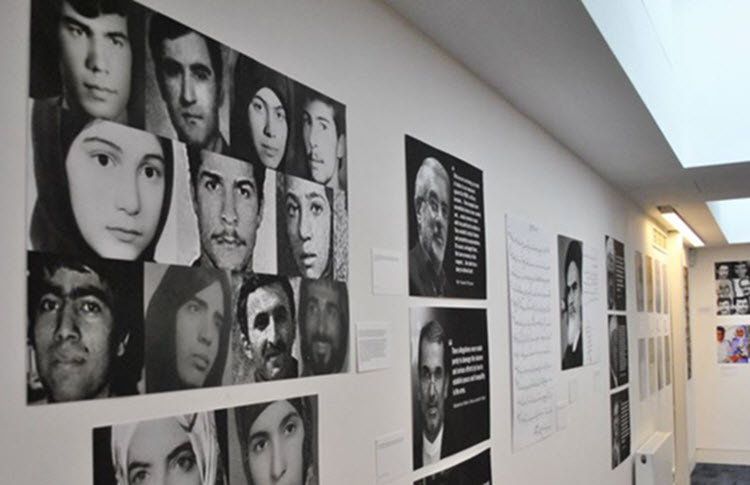
Research for the first volume of the series revealed the long list of human rights violations these 100 people have been involved in, including the mass execution of thousands of prisoners in 1988. Additionally, they have suppressed the protests in the 1980s, 1990s, and in the aftermath of the controversial presidential election of the hardliner incumbent Mahmoud Ahmadinejad in 2009.
Accusations voiced in the book include murder, torture, suppression of dissidents, and political killings in Iran and abroad. Mass executions of the prisoners in late 1980s have been described as the largest in the history of the Islamic Republic.
Amnesty International (AI) has also released a 200-page report including documents and evidence concerning the mass killings in 1988. By concealing the fate and whereabouts of thousands of political dissidents who were executed more than 30 years ago, Iranian authorities continue committing crimes against humanity, according to Amnesty International’s report, “Blood-soaked Secrets”. AI also called on the UN to “set up an independent investigation” into the mass killings that have gone unpunished for three decades. Philip Luther, Research and Advocacy Director for the Middle East and North Africa at Amnesty International said, “These blood-soaked secrets from Iran’s past continue to haunt the country to the present day.
This report unravels the web of denials and distortions that the Iranian authorities have perpetuated over thirty years, both at home and internationally, to hide the truth that they forcibly disappeared and systematically killed thousands of political dissidents within a matter of weeks between late July and early September 1988.”
AI’s report identified the individuals responsible for this crime who continue to hold powerful positions in Iran today. AI added that the mass killings have recently been celebrated in the country and those involved hailed as heroes.
“Instead of continuing their cruel attacks against families, the Iranian authorities should be ensuring their right to truth, justice, and reparation – including returning victims’ bodies and identifying remains by allowing professional exhumations of mass graves and DNA analysis,” said Philip Luther.
Forty-one of the 100 listed in JFI’s first volume have been internationally held accountable for their crimes, and are banned from traveling to Europe and North America. Their bank accounts and assets abroad have been frozen, as well.


