Home Blog Page 224

Iran: A Collapsed Regime and Its Scramble To Motivate Its Demoralized Forces

0

There is no doubt that the Iranian regime is in a state of collapse, the result of forty years of a degenerative process. This regime is no longer able to satisfy the demands of the social groups in Iran. The people have spoken and are eager to bid farewell to the unfit theocracy.

The regime took power in Iran in 1979, promising to support the oppressed and poor population. Four decades later, the regime has transformed into an oligarchy, becoming the first enemy of the poorer members of society. Under the control of the mullahs, the few outweigh the many, with officials having the power, wealth, and privilege above the average citizen. This has created a tyrant regime ruled by someone called the ‘supreme leader’, who has control over the country, and those who are obeying him and his policies in the form of a paramilitary group called the Revolutionary Guards (IRGC).

This system is now witnessing its degeneration which started from the first years of its grabbing power following the 1980 protests. In 2009 where the regime faced a major challenge from the people. In 2019, the regime was faced with protests directly targeted at its supreme leader, Ali Khamenei.

In the latest protests, the people are targeting the entire regime. Fear of the regime is slowly fading away among Iranian citizens, and the regime is no longer able to recreate its past stability. Many of the regime’s elites and supporters are also turning their backs as they realize there is no feature for the regime.

The regime is completely inept at resolving issues, so much so that they were unable to manage the public transportation of the country. On October 3, 2020, Mohsen Hashemi even warned, “The fact is that Tehran’s public transportation system is on the verge of collapse.”

While this is just a straightforward example to represent the regime’s collapse, there are more serious facts that are reflecting this situation.

University professor Farshad Momeni explained the fall of social trust, stating, “In the three years leading to 2020, for the first time, the low-income population in Iran doubled, and more than 75 percent of the Iranian population cannot survive without subsidies.”

All the while, the regime’s officials and media have been trying to hide and deny this collapse. On December 26, 2022, the state-run daily Shargh wrote, “While Iran’s share in the world economy has fallen from 1.1% during the war to 0.25%, a military commander has seen Iran’s economy in the 18th place in the world.”

They added, “The minister of oil repeats every day that ‘we will sell twice as much oil as Rouhani and return all its dollars’, but the dollar is still rising daily, and the government budget deficit has reached 25% (at least 400 thousand billion rials).”

The same day, the state-run daily Etemad warned about the total disaster in the future, writing, “Investment in the country is even less than the amount needed to compensate for depreciation. This means that a full-scale disaster is coming for Iran’s economy and people.”

After the free fall of the rial, and after numerous denials by the regime’s central bank spokesman and other relevant officials, Mostafa Qamari Wafa, the bank’s spokesman, announced on December 29, 2022, that the government delegation of President Ebrahim Raisi had agreed to the resignation of Ali Salehabadi, the head of the National Banks.

Even many of the regime’s IRGC officers are falling short and backing down. Recently in a meeting, IRGC commander Hamid Abazari admit to the growing defection and disloyalty within the IRGC and questioned, “Today we are witnessing that some elites and personalities are stepping back. Do you not see what they are doing to this system? How are they insulting (the supreme leader)? Stand up and take a stance. Why are you keeping silent? Why are not speaking? Do you see those who are retreating and giving up?”

He added, “I’m a brigadier of the IRGC. I cannot imagine what will happen tomorrow. Because I have seen many elites who have stepped back. My own commanders, who were in the war moment by moment, took wounds, caved in, and stood up to the values. Stood up against the supreme leader and against the system.”

This is a clear sign of his fear of the growing disloyalty within the regime. As expected, the regime touted the slain commander of the Quds Force, Qasem Soleimani on the third anniversary of his death, in a bid to motivate its demoralized forces.

This is the reality of the regime after about three months of nationwide protests. No real plan to save itself from destruction, just blindly clinging onto past and former reputations.

Iran’s Prisoners, an Epic of Resistance

0

Antonio Gramsci, a famous Italian philosopher, journalist, and linguist, once said that if you want to know a regime you should examine the condition of its prisons. Indicated by the state of the Iranian regime’s prisons, it is clear to say that this is one of the most brutal and inhuman regimes in human history. 

Abuse, rape, discrimination, mock executions, sleep deprivation, and prolonged periods of solitary confinement are the norm and the daily life of the prisoners in the regime’s dungeons. For the past four decades, no one has heard the cries of the prisoners. Iran’s prisons are synonymous with political repression and torture. 

Until now, countless political prisoners have lost their lives behind these bars. Anyone who is considered a threat to the regime, including juveniles, is forced to face this nightmare. The worst pressure has been on the women detainees. Over the past decades, the horrors have not changed. 

Since the start of the protests that began after the killing of Mahsa Amini by the regime’s morality police, thousands of young men and women, who took to the streets to pave the path for a free republic through a new revolution, have found themselves detained in the regime’s prisons. 

However, contrary to the regime’s expectations, they have resisted the harsh and inhuman conditions of the prisons and continued their resistance and fight against the regime. On October 15, around 10 pm local time, some political prisoners in Evin prison started to protest the regime, harmonizing their voices with the people on the street. At that time, the regime killed dozens of protesters, and the fate of many of them is still unclear. 

According to the witnesses of the Evin prison fire in October, there was evidence that it had been a planned attack on the prisoners. Taking out the fire extinguishers, blocking the corridors, continuously shooting at the prisoners, throwing tear gas into the wards, and attacks by the special guards, are all facts that the regime had planned an event to eliminate the political prisoners and those who had been arrested during the street protests. 

The fire at Lakan prison in Rasht, where a group of protesters was kept captive leading to the injury and death of many of the prisoners, was also considered to be part of the regime’s plan to eliminate protesters. 

Before these attacks took place, in fear of the people’s reaction regime’s prison officials, increased security measures and restrictions on the prisoners were put in place. Officials increased the number of guards on duty, kept the prison’s anti-riot forces on alert, cut off or reduced airing, cut off contact with families, relocated and hid prisoners in special detention centers, and incited and made excuses for repression, to name but some of the measures that the regime had in place to deal with the prison populations. 

All that has been reported is just the condition of the prisoners that are behind bars in registered locations. Many prisoners are routinely detained in secret prisons of the regime’s Revolutionary Guards (IRGC), the Ministry of Intelligence (MOIS), along with other unknown institutions. 

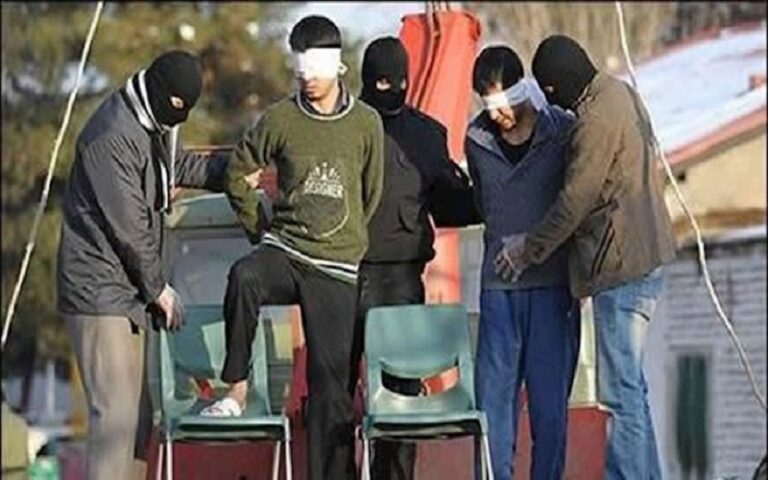
The conditions in these prisons are so dire that non-political prisoners are also resisting the regime. On December 17, the prisoners of Karaj Central prison protested the regime. As prison officials took several death row prisoners out of their cells and led them to the gallows to carry out their sentences, the prisoners shouted, ‘Death to Khamenei’ and ‘Death to the dictator’, as they expressed their anger and hatred for the inhumane actions of the regime, despite knowing the consequences of their actions. 

This was not the only example. During the uprising, there were at least five other protests by non-political prisoners, which were heavily repressed by the regime’s forces. 

Rasht’s Lakan Prison, the 7th and 8th Wards of Evin Prison, along with Fashafouyeh Prison and Ghezel Hesar Prison, were just some of the institutions where prisoners confronted the regime. 

Recently, the prisoners of Qaem Shahr protested the transfer of death row prisoners. They are fully aware that the regime’s decision to execute the prisoners is merely a ploy to intimidate the people and stop the protests, and unfortunately, during the demonstration, one of the prisoners lost their lives, while several others were injured. 

The regime has only one goal, and that is to maintain its power at any cost. On the contrary, the Iranian people have only one goal, freedom at any cost. This notion has found its representatives in the regime’s prisons and the people are paying a heavy price to hold the bastion of freedom. 

Iranian Regime: “Even China Has Betrayed Us”

Due to its contracting nature, the Iranian regime has never had the opportunity for even the slightest economic development and growth in Iran.

Since the start of its reign, besides its foreign policy of the “export of revolution” (warmongering and terrorism), the regime has auctioned the country’s wealth and national resources to survive the international isolation and economic competition. This was the only solution they had to create a political and power balance with the world powers.

In the interim, the regime has been wholly set on eliminating and demonizing its main enemy and rival, the People’s Mojahedin Organization of Iran (PMOI/MEK) and the National Council Resistance of Iran (NRCI), which added to the reasons for the regime to auction the country’s wealth.

It has not only been the West who have been benefiting from the regime’s destructive economic policies. The world of diplomacy was not restricted to them. To neutralize the sanctions and international isolation, which are a result of its behavior over the past four decades, and to gain votes in international meetings, the regime looked eastwards towards the powerful countries in Asia.

From the second tenure of the regime’s previous president Hassan Rouhani and the withdrawal of former US President Donald Trump’s administration from the JCPOA, the regime’s despaired supreme leader Ali Khamenei chose to increase their economic and political relations with East under the name ‘Looking East’, turning to ‘traditional partners such as China, India, and Russia’.

At least three major treaties, like the disastrous and infamous Turkmenchay, were implemented after Khamenei’s decision to start broader cooperation with the East. All of them were recorded by the state media.

The first was the endowment of the Caspian Sea to Russia in the summer of 2018, when the regime’s media announced that Iran’s share of the Caspian Sea had fallen from 50% to 11%. At that time, regime MP Mahmoud Sadeghi called it ‘another Turkmenchay’.

The second one was the transfer of Chabahar port to an Indian company in the winter of 2018. Some of the regime’s officials, such as MP Nader Ghazipur, considered it a shameful contract akin to the Golestan and Turkmanchay treaties.

The third one was the 25-year contract with China in 2020 with the agreement to hand over Kish Island to this government, with some officials once again referencing the Turkmenchay treaty.

These decisions were so disastrous that the regime was forced to find a religious excuse to justify its behavior. Lotfollah Dezhkam, the Friday prayer leader of Shiraz, spoke on July 17, 2020, saying, “The infidels are of two groups, some of them are at war with the Muslims and some of them did not fight the Muslims and did not kill the Muslims and did not drive them out of their homes. God has emphasized that you should not be friends with the infidels who have come to fight you Muslims, but you can have a just relationship with those who have not fought with you.”

These days, the recent protests across Iran have changed the situation against the regime significantly. This has been realized because of the Iranian people’s bravery, sacrifice, and the blood they have shed for freedom. In addition to its internal effects, the protests have forced many countries to take a stance against the regime and reconsider their political and economic relations.

Even China, which the regime considered one of its main international partners, has suddenly changed its path and has turned its back on the regime.

On December 19, the state-run Mardom Salari daily discussed China’s decision, explaining that the country is, “pulling towards risk-free actors and avoiding tense actors,” by deciding to leave the regime behind and prioritize stable Gulf States, such as Saudi Arabia. On the same day, the state-run Arman Meli daily claimed, “China has betrayed Iran.”

On December 9, China and Saudi Arabia issued a joint statement, and China, by clearly distancing itself from the regime and other Arab countries, called for non-interference in the internal affairs of other countries and respect for the principles of good neighborliness. Following this meeting, many economic agreements were also signed by the parties, which was a further heavy blow to the regime.

The state-run Sharq daily expressed its fear and frustration on December 18, writing, “The agreement between China and the Arabs is a historical turning point that transforms the geopolitical situation of the region. In fact, a new coalition has been formed against Iran, which this time, of course, can be more violent and reckless.”

The daily then warned regime officials to have caution in their relations with Russia, adding, “Where is the insurance that the scenario of China and the Arabs will be repeated by Russia?”

The whole world has now come to understand that the regime has finally reached a dead end and now is the time to reconsider their relations with it. The Chinese authorities have realised that Iran is no longer a suitable place for investment under the rule of the mullahs and their regime.

With every day that passes, the isolation of the regime increases, and going forward there will be fewer countries willing to cooperate and sign economic and investment contracts with it.

Iran’s Revolution From September to December, the Journey and Its Achievements

Iranian society is currently facing a social upheaval. There is a fundamental change, or a revolution, ahead with significant signs reflecting this change. Society has decided to deny the country’s past political balance and is adamant about confronting the regime despite all the threats made to them.

After nearly four months since the beginning of the protests, we should analyze the journey that the Iranian people and their revolution has taken and count their achievements.

  1. The first and most significant achievement has been gained by women. Their fight against tyrannical gender apartheid has entered the country’s political field.

In Iran’s history, we have never witnessed such a public presence of women in the battle against the regime, until now.

They are the vanguards of the revolution, are leading the protests, and have expressed significant courage. They have become a nightmare for the regime, leaving the mullahs little space to rebuild their unbearable acts of repression against them.

  1. The demand for freedom, equality, and democracy has successfully passed its test. It has stabilized and its message has been conveyed to the world. Slogans such as, “death to the dictator”, “IRGC, Basij, you’re the ISIS”, “death to the oppressor be it the shah or the (supreme) leader”, “death to the tyranny”, “forty years of crime, death to the (supreme) leader” are reflecting this demand.

The most important part of this fight is the people actively turning against the regime’s supreme leader, who is the main barrier between the people and their freedom. The frequent chants of, “Khamenei, we’ll pull you down”, “this is the year where Khamenei will be overthrown, and “this is the last year, the target is the fall of the leader,” have broken this taboo.

  1. During this period of protests and demonstrations, the people have drawn a political line with the regime so that everyone must determine his/her stance and position in the battle against the regime.
  2. It has become clear that the only real solution for anyone who stands by the desire to overthrow the regime is to use the universal right of self-defence. The regime has closed all the doors to any legal and logical solution for the opposition since June 20, 1981, when they opened fire at a peaceful demonstration of more than half a million people in the capital.
  3. The regime’s propaganda regarding the country’s minorities, such as accusing them of being separatists, has become ineffective. In their slogans, the Iranian Kurdish and Baluch citizens have shown their solidarity and union with the entire nation.
  4. A new generation of political prisoners, and people who are ready to sacrifice themselves for the country’s freedom, have entered the scene. Many of these people have ultimately lost their lives on the streets and in the regime’s dungeons under torture during their fights to stand up for their fellow citizens and help create a better future for the next generations.

This has created extensive social, and international consequences for the regime and has expanded the pressures on it by human rights organizations, the UN, and other democratic countries.

After 4 long months of fighting against the regime, the people of Iran are lacking nothing to determine their blessed destiny. ‘Social upheaval’, in the sense of the transformation of belief and mind towards the inevitable overthrow of the Velayat-e-Faqih system, has passed through the veins, hearts, minds, and beliefs of many people in Iran.

The guarantee of the realization of a revolution is the continuation of an uprising based on the above-attained clauses.

Iran Denies Sentencing Athlete to Death While UN Moves Ahead With Human Rights Probe

0

Iranian officials denied on Wednesday that a death sentence had been issued in the case against Amir Nasr Azadani, a 26-year-old professional soccer player who has reportedly taken part in the protests that have been taking place nationwide for the past three months. Azadani is one of five individuals accused of causing the deaths of three members of Iranian security forces, though the reports of his death sentence stem from the much vaguer charge of “enmity against God”. That same charge was used to justify the first two executions of protesters earlier this month, and since then there has been much international discussion about the prospect of many more hangings to come.

Iranian state media has deliberately fueled concern by publishing the names of a number of defendants who have been either indicted or convicted on capital charges. This makes the regime’s denials regarding Azadani seem all the more unusual. One might expect that even if he had not actually received a capital sentence, the regime would not wish to actively discourage the perception that he had. On the other hand, the events of recent weeks have provided authorities with ample reason to be wary of public backlash, both at home and abroad, against the arrest, abuse, and killing of prominent individuals.

Warnings about Azadani’s prospective execution come in the wake of numerous statements of support for the well-known Iranian actress Taraneh Alidoosti, whose crime appears to be only expressing support for protesters on social media. Alidoosti, 38, specifically highlighted the regime’s first execution of a protester in one post about a week prior to her arrest. “His name was Mohsen Shekari,” she wrote, adding, “Every international organization who is watching this bloodshed and not taking action, is a disgrace to humanity.”

Alidoosti’s case has received breathless attention from various well-known Iranian expatriates and ethnic Iranians throughout the world. On Tuesday, Oscar-winning director Asghar Farhadi, who has worked with Alidoosti on multiple films, took to Instagram to demand her release from prison. Explaining that “she is in prison for her rightful support of her fellow countrymen and her opposition to the unjust sentences being issued,” Farhadi went on to declare, “If showing such support is a crime, then tens of millions of people of this land are criminals.”

Naturally, much of the international reporting on the actress’s arrest emphasizes that she is only one of many celebrities and public personalities to be detained due to supporting the protests. This in turn recalls attention to those, like Azadani, who may be facing even more serious and immediate consequences than Alidoosti, who stands accused of “spreading falsehoods” because claims in her online posts were allegedly not supported by relevant “documents”.

While she and similar arrestees are likely to face serious mistreatment in Iranian detention centers, Azadani’s charge of “enmity against God” makes him a prospective candidate for execution at any moment, regardless of the regime’s public denials.

Those denials reportedly emerged in response to an appeal by Colombian President Gustavo Petro to spare his life. The Iranian embassy in Colombia issued a statement condemning “false news about the death sentence of an Iranian soccer player,” but it is unclear whether any other regime institution or official issued a prior statement in response to identical appeals from the likes of the International Federation of Professional Footballers’ Associations.

This inconsistency may lend support to the perception that Wednesday’s denials were motivated by something other than an earnest desire to correct the record. The embassy’s statement arguably gives the impression that Iran’s human rights situation is not as serious as some of the regime’s adversaries have argued. This narrative, along with the underlying distraction brought on by reports of the sudden denial, may have been especially important to Tehran on Wednesday, when the United Nations Human Rights Council announced three appointments to the head of a fact-finding mission regarding the regime’s crackdown on protests.

The three investigators, all women, have been identified as Bangladesh Supreme Court lawyer Sara Hossain, Pakistani law professor Shaheen Sardar Ali, and rights activist Viviana Krsticevic. The appointments come just under a month after the Council voted to create the fact-finding mission, in response to a proposal put forward by Germany and Iceland, with support from 25 other countries.

Tehran, unsurprisingly, rejected this vote and the subsequent vote to remove the Islamic Republic from the UN’s Commission on the Status of Women, as “illegal” and politically biased. However, the regime has provided no meaningful rebuttal to accounts of mass shootings and mass arrests of protesters, torture and rape in custody, obstruction of medical care, and denial of due process. Instead, it has largely relied on its own so-called human rights monitoring office to issue blanket denials while also vaguely accusing Iran’s adversaries of comparable human rights abuses.

Iran Regime’s Experts Warn of Continuing and Increasing Protests

On September 8, 1978, during an incident known as Black Friday, the Shah of Iran authorized the executions of at least 100 Iranians. A year later when the Shah was overthrown, the founder of the Iranian regime Ruhollah Khomeini expressed his mind about the economy and future of Iran.

These days, no one would dare repeat his absorbing comments about the relationship between man and the economy, due to the insulting nature of his address to the nation.

He claimed, “Those who consider the economy the basis of everything also considers humans as animals. The animal sacrifices everything for its economy. For a donkey, the economy is the basis of everything.”

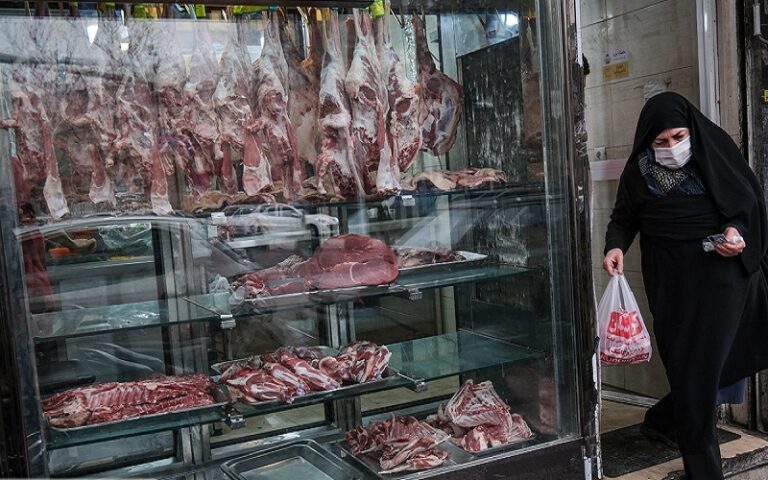
43 years after this brazen speech and looking at the country’s economic situation under siege, it shows us a clear picture of what the regime has done to the country and its people. Just a glance at the price of dollars, gold coins, and the skyrocketing prices of food brings forth the realization that most Iranians are now being forced to live in extreme poverty.

According to the state-run Setareh-e Sobh daily, “The price of gold in the second week of December hit a new record. So, the price of an eight-gram Bahar-e Azadi coin reached 180,400,000 rials ($462.27), a four-gram coin jumped from 80 million rials to 120 million rials ($301.48) and a two-gram coin jumped from 60 million rials to 80 million rials ($200.99). Also, the price of the dollar in the open market has reached 380 thousand rials.”

The regime’s Ministry of Industry, Mine and Trade recently published the latest statistics on price changes, according to which the prices of around 29 goods, including oil and rice, have increased by more than 100 percent.

A further 28 goods have increased in price between 50 and 100 percent, and 30 goods have increased by about 50 percent. The details of the published statistics indicate that liquid oil has had a shocking 377 percent increase in price, while rice has increased by 207 percent compared to last year.

The October report from the regime’s Statistics Center showed that the price of first-class Iranian rice and pasta has increased by 138 percent, and the price of milk and cheese has increased by nearly 90 percent when compared to last year.

We should add these economic issues to the back-breaking rental prices across the country, along with the price of fruit, clothes, and school supplies. Over the past four decades, the regime has achieved nothing and has done nothing for the people other than cause widespread destruction.

As one of the regime’s experts, Hamidreza Jalalipour stated, “The 1979 revolution and the Islamic Republic that emerged from it are facing an ‘achievement crisis’. The governing institutions in the past forty years have not yet been able to achieve the goals of the 1979 revolution.”

Mohammad Ali Vakili, the editorial writer of the Ebtekar daily, warned the regime’s head about the consequences of the critical economic conditions and said, “Governing in this unstable and chaotic society is very difficult. I think the government is dealing with such a society. Perhaps one of the reasons for forming such a protesting society is the achievement crisis.”

He added, “If the economic conditions do not change, there is enough excuse for widespread protests. Therefore, the protesting society should not be brought to the peak of the explosion.”

The regime’s president Ebrahim Raisi once again repeated one of his hollow promises to the Iranian people in one of the country’s most deprived regions (South Khorasan).

While admitting to Ibn that “the public sector has not had a successful experience in the economic sector in the past 43 years”, regarding the promise of building one million housing units he said, “Land is available, and construction materials are being prepared. In this province, in the parts where it is possible to transfer (land), land should be offered to the applicants in the form of villas.”

In response, Pedram Soltani, an economist and the former vice president of the regime’s Chamber of Commerce, mocked Raisi stating, “Land and materials?! See the president’s level of analysis! He does not know that the main problem is the lack of financial resources and financing such a level of construction fits not the government’s finances, nor the capacity of the banking system and the capital market.”

The reason for such a catastrophic situation is simple and does not warrant much analysis. As explained by Hossein Raghfar, one of the regime’s experts, he said, “They have formed a kleptocratic economy that distributes bank credits to friends and comrades. To compensate for the looted resources from the banks, they increased the currency and coin rates.”

He added, “Easily said, 76 tons or according to other sources, 62 tons of the country’s gold were melted and given to the banks so that they could compensate for the thefts by selling the coins at a higher price. For 20 years, we have been facing the disaster of capital flight from the country, and this is increasing massively every year.”

Iran’s Radicalized Protests and the Futility of Death Sentences

The Iranian regime has started the execution of arrested protesters. On December 8 they executed Mohsen Shakari on charges of Morharebeh (waging war against God) then on December 12 they executed Majidreza Rahnavard on the same charge.

On June 22, before the outbreak of this round of protests the regime’s supreme leader Ali Khamenei while aware of sitting on an erupting volcano warned in his speech to the people, that the “God of the 80th is the same God as of 2021.”

He refers to the dark decade in which the regime’s founder Khomeini tortured and executed with free rein any opposing voice to establish an inhuman, theocratic, and medieval regime.

In a mere chimera, he thought that he and his evil regime can repeat the same cruelty as in the past especially something like the massacre of 30,000 political prisoners in 1988.

Former henchman who is now playing the role of managing editor of Kayhan, the mouthpiece of Khamenei expressed his fear and anger about the people and suggested to the judiciary that, “judiciary should deal with rioters without any fear; It is expected that the judicial system will not be influenced by the atmosphere created by the enemies of the revolution and will implement the Islamic ruling without any worries or fears.”

Then some of the regime’s media like the Jahan News warned that “[Mohsen] Shekari is not the first and will be not the last person to be executed because of the recent riots. The law obliges the judiciary to sentence all the perpetrators of these murders to retribution.”

But the execution of Shekari created a huge crisis within the regime, especially in its judiciary system. Khamenei and his henchmen faced many objections from all ranks.

Even some of the clerics criticized the government. Naturally, this was because of their fear of the people’s reactions, and not because of their compassion for the arrested.

They said that condemning the protesters because of moharebeh is a huge and dangerous mistake. The controversy over this subject reflects a deep gap within the regime’s ruling body. They are criticizing a regime that will not survive even one day without repression and execution.

With the execution of Majidreza Rahnavard, the wave of domestic and international opposition intensified. The reflection of these oppositions spilled into the regime even more than the first execution.

While Khamenei expected that the executions will reduce tensions within his regime, he got the opposite result. Now, in addition to questioning moharebeh. They ask the officials why they did not follow the judicial procedure in the case of these two young men. Why such haste in hanging?

The state-run daily Setareh-e Sobh while quoting Nemat Ahmadi, a lawyer wrote: “The question is, how did it take 19 days from the time the court issued Mohsen Shekhari’s sentence and until the sentence was executed?

“The convict had 20 days to appeal. If we leave aside the substantive debates such as the punishment of moharebeh or the application of moharebeh, how can we digest the discussion of judicial procedure in this case?

“I wonder how the head of the judiciary gave the permission to execute the sentence when the judicial procedure has not been done. No one can change or violate the laws of the judiciary.”

Other regime insiders told Khamenei and his bloodthirsty judiciary that you cannot put down ‘protests and social movements‘ by execution because the reasons will be not eradicated in such a way and are still present.

Mohammad Taghi Fazel Meybodi, member of the Association of Researchers and Teachers of Qom Seminary and Professor of Mofid College of Qom said:

“Every protest and every social movement have an origin that must be eliminated. I believe that one of the problems of society that causes these protests are economic problems. Otherwise, a young person is not sick to shout in the street and put himself in danger.”

Some voices in the government and its periphery refer to the criminal laws of the regime and raised the issue that Mohsen Shekari should not be convicted because of moharebeh, while he carried a weapon not to scare the people but the regime.

Beyond that, while attacking Khamenei’s decision, they intend to clarify to him that it was not the right time to implement such a decision.

Khamenei tries to mock and play the role of Khomeini in repressing the people with harsh sentences and execution. But now after the implementation of two death sentences, he has not only reached this goal, but he is facing a more radical society.

With the continuation of the protests, he has been brought to his knees. If the nationwide uprising was settled by the execution of these two young men, they would not face a new round of uprising after the bloody suppression in November 2018.

What Khamenei and his followers are not considering, is the people’s decision to overthrow the regime and realize and new revolution. This revolution has had ups and downs, but its leaps have prevented it from reversal to the situation before September 16.

People are realizing that this regime understands only the language of force so some of the regime’s officials are warning that next time they will face armed people.

Iran Revolution, the Walls Are Speaking

One of the signs of a revolution is when its culture finds its way into the public. This change in culture is now evident and palpable in any corner of the country. People’s behavior is changing. It is defining a new ideal. The people are not mourning those killed by the regime, instead, they are celebrating and cherishing them as the heroes of the nation.

Their voices have been louder to gain any human’s universal natural rights. They have decided to create a revolutionary political and constitutional order, which will deny any form of dictatorship in the future. This is visible in one of the main slogans of the protests, “Death to the oppressor, be it the shah or the [supreme] leader”.

The revolutionaries now occupy any classroom, Bazar, or street. And no one is anymore deceived by the regime’s seditions and scale of war. At least the last three months have shown that the people will not step back, and anyone who is cooperating with the regime is being identified as a betrayer of the revolution.

This has become the longest war against tyranny in Iran’s history, with more than a hundred thousand lives sacrificed. It has mobilized an extraordinary number of Iranians. It had a dramatic effect on the lives of women. Many of them have participated in the revolution, lost their lives, and are now at the forefront of protests.

Ensieh Khazali, the regime’s vice president for women and family affairs, recently admitted that ten percent of those who have been arrested are women.

And to understand how deeply the revolution has changed people’s lives, we should have a look at the walls of the cities. Slogans and murals are speaking. They are reflecting the scale of the war in every part of the country and how in such a short time the people’s lives are transformed.

In fear of these scripts on the walls, the regime has mobilized its power to wipe them as soon as possible to prevent the expansion of the revolution. Those who write the slogans, sometimes beside the main slogan write: “If you wipe it, I’ll write again.”

This sentence is reminiscent of the famous sentence that adorned the walls of the city during the anti-monarchy revolution: “Shame cannot be erased with paint.”

The culture of writing slogans on the walls has spread so much that the state-run daily Fararu on December 5, wrote: “These days, the slogans written on the walls, are not only the result of a deviation or excitement but are reflecting the current state of the country. And the current situation is not good, and no one can claim that the situation is normal.

“These days, the country is going through a relatively difficult situation, because of which all affairs and fields have become politicized. A dangerous bipolarity has cast a shadow on the society, which has engulfed the economy, sports, culture, or more precisely, the daily life of Iranians.

“Nothing is normal these days, Even the walls! The walls of this city are full of unusual murals. Someone has written a slogan on it, and someone has distorted it. Chaos rules on the walls of this city; Like what is going on in society.

“The chaotic walls of this city are more than a simple image. In fact, these walls are the identity of a part of the citizens of this city that, rightly or wrongly, is protesting.”

The 137 system of Tehran Municipality recently reported that the request to erase the wall of writings has increased by six thousand percent. The walls are speaking of the end of the regime and the people are establishing a modern great republic, founded on liberty, equality, natural and civil rights, and the privileges, and obligations, of citizenship under the rule of law.

Basij Special Unit Fatehin and Its Role in Quelling Iran’s Protests

On November 26, the Iran regime’s president Ebrahim Raisi visited the special forces of the regime called ‘Fatehin’. While appreciating them he said to them: “You shined well.” His remark was because of the participation of this infamous unit in the repression of the people in the recent protests.

Who is the special unit of Fatehin?

The Fatehin Special Unit is one of the militia groups supervised by the regime’s Revolutionary Guards (IRGC), whose members have received special military training, beyond the common training of Basij members who have been deployed in Tehran in recent weeks in official military uniforms to confront the protesters.

This special unit is mainly operating in Greater Tehran. But the IRGC has decided to establish it in all other provinces too. It is said that this unit was created in 1999 by the Basijis of West Tehran in the Meqdad district under the title of Airborne Special Operations Unit.

Mahmoud Hashemi, the commander of this unit in an interview with the state-run news agency Tasnim on April 19, 2020, about the reason for the formation of this unit said: “On July 9, 1999, a need was evident in Basij’s security complex, which was that there was no centralized, coherent trained force in Basij.

“It was decided that a group of IRGC officials form this unit under the command of Majid Fathinejad, who was the commander of our base at that time, and the training of the troops began.”

Then about the first mission of this unit in repressing the people, he added: “A year later the forces were organized, in the conflicts that happened on the anniversary of the sedition of 1999, which was a bit more intense than the previous year, this battalion was stationed in the Meqdad district. We interfered under the command of Tehran’s command base, wherever it was necessary.”

According to this person at that time Rahim Safavi, the then commander-in-chief of the IRGC took over the responsibility of this unit due to its good performance as he claimed. He admitted that this Basij unit performed well in the killings and human rights violations in the 2009 protests.

He then added that most of the IRGC officials were amazed therefore, most IRGC academies asked this unit to deliver their experiences. Finally, in 2012 this unit was registered and become official. Mohammad Jafari a former commander-in-chief of the IRCG gave this unit its current name.

But the most important mission of this unit was its participation in the Syrian war, with the responsibility to protect the Shrine of Lady Zaynab in Damascus. They were the first Basij Paramilitary member who entered the Syrian war to support Bashar Assad in the massacre of his own people.

It is also said that until a month ago, the environmental and peripheral protection of the Behesht Zahra Organization was the responsibility of military police, but in a memorandum of understanding, this protection was assigned to the Fatehin Special Unit.

In this way, as the commanders of this criminal unit admitted, basically, their main mission is to counter uprisings and popular protests, and because of their criminal activities, they are supported by the supreme commanders of the Revolutionary Guards.

The Fatehin special unit, along with other armed forces involved in dealing with protesters, is accused of killing unarmed citizens, including children and women.

The World Must Isolate Iran’s Regime on Human Rights Day

Human Rights Day is observed every year on 10 December. The United Nations General Assembly adopted 1948 the Universal Declaration of Human Rights (UDHR). This document is a milestone that proclaims the undeniable rights of every person on earth as a human being.

And today this has become a base idea for millions of Iranians who march, fight, and sacrifice themselves for the liberties they have the right to possess. Over the past three months, they have stood up against the tyrannic mullahs’ regime, which is a strong threat to their lives and freedom for more than four decades.

To this day the regime killed more than 580 peaceful protesting people, including 65 minors, and arrested more than 700. It should be noted that the regime has the highest number of executions per capita in the world.

According to human rights sources, it has carried out at least 553 executions in 2022. Of course, the real number is much higher because the regime has never published any real statistics on its executions.

During the protests, countless protesters were tortured and injured. Many of them have lost their eyes or are suffering from long-lasting injuries because of the regime’s use of birdshot and lethal bullets.

Since December 8, it has started its barbaric killing machine. On December 8, it executed the first arrested protester named Mohsen Shekari, charged with Mohrebeh (waging war against God).

Days before the implementation of this crime the regime’s supreme leader Ali Khamenei, its judiciary, and on December 9 its president Ebrahim Raisi, nicknamed by the people as the ‘butcher of Tehran’ all vowed that they will not show any mercy and will not tolerate any further protests.

Khamenei asked for heavy punishment for “those who have closed off roads.” And Raisi said,” the identification, trial, and punishment of the perpetrators of the [killing] of security forces will be pursued with determination.”

And Ahmad Khatami the Friday prayer leader of Tehran expressed this gratitude to the judiciary for displaying “firmness by “sending the first rioter to the gallows.”

A day after the execution of Shekari, the regime published a list of those with the same charge who are on death row. A table published on December 9 by the state-run daily Etemad shows the regime’s ruthlessness. According to this information, 25 people are facing execution on charges of the so-called “corruption on earth”, and “Moharebeh” (waging war against God) crimes.

The names are Saeed Shirazi, Mohsen Rezazadeh Gharaqlu, Mahan Sadrat Marni, Sahand Noor Mohammadzadeh, Mohamed Qobadlu, Mohammad Broughni, Saman Saidi, Mohsen Shekari (executed), Toomaj Salehi, Majid Rahnavard, Mohammad Mehdi Karami, Seyyed Mohammad Hosseini, Arin Farzamnia, Amin Mehdi Shokrollahi, Reza Aria, Mehdi Mohammadi, Mohammad Amin Akhlaqi, Behrad Ali Kenari, Javad Zargaran, Shayan Charani, Hamid Qare Hasanlu, Farzaneh Qare Hassanlou, Amir Mohammad Jafari, Reza Shaker, Ali Moazzami Gudarzi.

The shocking part is that 15 people on this list are charged with death only because of complicity in the murder of a regime’s Basij agent named Ruhollah Ajamian.

It is time that the world powers and democratic countries support and stand fully with the brave people of Iran, especially the women who are facing the most severe form of oppression and injustice. Negotiating with such a regime is not justified.

They must close the regime’s embassies and expel its diplomats. They must blacklist its Revolutionary Guards (IRGC) as a terrorist organization, which is the main lever of its repression.

They must stop all economic relations to petrify its income resources supporting the repression. They must recognize the people’s right to self-defense. And finally, they must refer the regime’s dossier of human rights violations to the UN Security Council.