Home Blog Page 225

The Real ‘Separatists’ Are Iran’s Rulers

Dictatorships are marked by the absence of a balanced government, political and social instability, significant human rights violations, and massive numbers of deaths. And the theocratic dictatorship in Iran is not an exception.

One of the common characteristics of all of them is the use of the power of propaganda. Facing continuing protests over the past three months the regime has used its propaganda apparatus entirely to introduce the freedom-loving Iranians who are fed up with the regime’s form of rule as ‘rioters’ and ‘thugs’.

It is depicting them as those who are waging war with God (Mohareb) by confronting the regime, its supreme leader who is the representative of God on earth, and the deputy of Imam Zaman, the ‘Leader of the Time’. And its verdict is death.

Another pretext used against the people, especially in Kurdistan and Sistan & Baluchestan, is by accusing them as ‘separatists’.

Considering the nature of this regime, the question is who is the real separatist, and is it a real threat to Iran? The answer is simple. Feeling its existence endangered, suddenly it changed color and become a patriot and raise its concerns about the country’s whole and union.

For example, one of its elements in an interview with Tasnim on September 29 referring to separatism said: “The government and the media should talk about the reality of this danger for the country. In this context, the government is not the main subject, it is Iran. Iran is the most common issue among us Iranians with all the differences in choices.”

He deceptively wants to avert the sights from the regime to an insignificant problem which is separatism under the pretext of ‘national unity.’

While over the past four decades it is proven that itself was most destructive for the country’s unity. Using all the country’s resources for warmongering and destructive goals in the region so that at least one-third of the country’s population is living with a daily income of $3.

Having a look at the logo of its Revolutionary Guards (IRGC), we will see clearly that its last concern is the unity of Iran, while there is no sign of Iran in it. The name of the IRGC is registered in the regime’s constitution without any sign of Iran.

In fact, for the regime’s supreme leader Ali Khamenei, and the IRGC, Iran is considered an occupied land. A land that must surrender its natural resources, and capital to build mass destruction weapons to guarantee the existence of this vile sovereignty.

Another question is, if Iran would be occupied by a foreign country, what kind of disaster would it face that has not happened now?

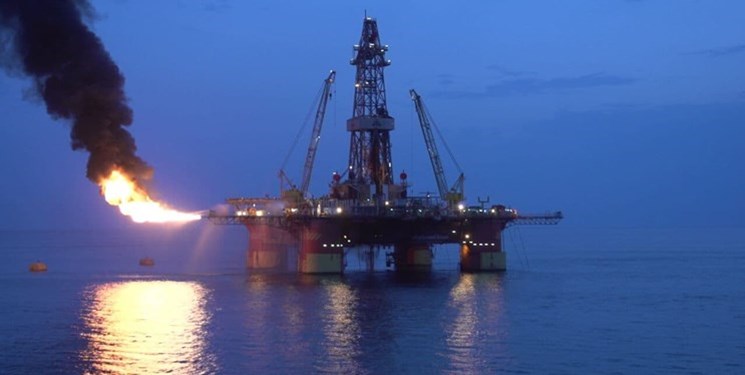
They have auctioned the Caspian Sea, the Persian Gulf, and the port of Chahbahar to other countries. They have signed a 25-year contract with China, which is so disastrous to the country that even some of its officials have compared it to the infamous treaty of Turkmenchay.

Which separatist exported Iran’s gasoline to Venezuela and Lebanon for free? Which foreign country hires Arab and Afghan nationals as mercenaries and sent them to intervene in Syria and spent 20 to 30 billion dollars to keep Bashar al-Assad in power?

Where does the huge cost of its suppression machine come from? Is it other than the capitals of these people?

Contrary to the regime’s claims, these days, the cities of Zahedan, Khash, Chabahar, Saravan, Zahak, Taftan, and Iranshahr have displayed the most beautiful manifestations of patriotism and the union of Iranian ethnicities.

The people of Baluchestan wrote on their placards: “Our condolences to Kurdistan – Baluch, Lor, Arab, Fars, and all of Iran support Kurdistan.”

They chanted: “Kurdistan is not alone, Baluchestan support it.” And “Kurds and Baluchis are brothers, they despise the supreme leader.”

The final word is that there is no enemy living on the outskirts of Iran, there is no enmity between Iranian ethnicities and nationalities. The only enemy is this regime.

The Role of Students and Universities in Iran’s Nationwide Uprising

0

In the national uprising of the people of Iran, which started in mid-September this year, the students played a significant role in the continuation and promotion of the protests. Indeed, tyrannical regimes see universities and students as a challenge to their authority.

In 1953, hundreds of students sounded their protests against then-Shah Mohammad-Reza Pahlavi’s coup against Dr. Mohammad Mosadeq the sole democratic government in Iran’s history.

In response, Shah’s security forces opened fire at protesting students at Tehran University on December 7, killing three students and injuring more. Since then, students annually mark the day as National Student Day.

Due to its nature, the religious dictatorship fears the radicalization of the universities; Therefore, with all kinds of methods, from threatening and arresting to attacking universities it has tried to prevent the students to join the protests and taking the lead.

After the death of Mahsa Amini, killed by the regime’s morality police, protests by students began on September 18, 2022. The first gathering was formed with a mass sit-in by the students of the Faculty of Fine Arts of Tehran University. Finally, on September 29, universities in other cities joined the protests. So far, the number of protesting universities has reached 143 cities.

The methods of these protests were marches, gatherings, sit-ins, refusing to attend classrooms, and chanting slogans against the heads of the regime. Primarily slogans targeted the regime’s supreme leader, which was a significant change in the demands of the students, that is the overthrow of the regime.

Some of the main slogans are ‘death to the dictator’, ‘death to Khamenei’, ‘freedom, freedom, freedom’, and ‘death to the oppressor, be it the shah or the [supreme leader].

In these protests, many students were arrested by the security forces. Many were also banned from entering the university to prevent the expansion of protests. Despite the arrest and ban of students, these protests continued daily without interruption.

The student movement in Iran during the mullahs’ era has always gone through ups and downs. During the years after the attack on the Tehran University campus on July 9, 1999, part of the student movement faded away because of the heavy repressions. Many of the students were arrested and faced forced disappearance, and many of them were forced to leave the country.

At that time, to take control over the universities, the regime filled them with students from its paramilitary force the Basij.

In the scandalous regime’s presidential election of 2009, once again the students along with other strata took to the streets and joined the nationwide protests, which showed the regime’s failure to change the structure of the country’s universities in its own favor.

And in the November 2019 protests, the students were at the forefront of the protests. Now with the formation of nationwide protests, a new flow of student movements is formed.

Closing universities

On September 23, 2022, which is the beginning of the new school year in Iran the regime decided to close the universities.

Simultaneously with the spread of protests, all face-to-face classes at Tehran universities and other large universities were closed and replaced by virtual education. The regime’s excuse for the closure was ‘students’ traffic problems’ and ‘a 2-day holiday in the calendar.’

Closure of the University of Sistan and Baluchistan: After the clashes on September 30 in Zahedan, which became known as Black Friday of Zahedan, all classes of the University of Sistan and Baluchistan were closed until October 7.

Closure of Sharif University: Following the attack on Sharif University of Technology, all classes of this university were closed, and it was announced that they will be held virtually from October 3. With the continuation of protests in this university, on October 25, it was announced again that the classes of new incoming students will continue to be held virtually until further notice.

Closure of Kurdistan universities: By the order of the governor of Kurdistan, all universities in this province were closed on October 26. The regime’s excuse was an ‘influenza outbreak’. This day coincided with the 40th day of Mehsa Amini’s death.

Changing the disciplinary code of students

Simultaneously with the increase of student protests, the ‘Student Disciplinary Code of Conduct’ was changed in November 2022 and was notified to universities from November 22

This code included: Intensification of punishments related to the rules of covering and hijab, removal of the right to see the documents of the case by students, requiring permission for social groups of more than 100 people, making it legal to inform the family about the details of the case, changes in political violations and the intensification of their punishments were among the most important of these changes.

And concurrent with the change of the disciplinary code of students, the regime’s MP formulated a plan on November 22, so that, if approved, protesting students will be banned from traveling abroad for ten years.

Ban students from entering the university

Banning students from entering the university is one of the methods of suppressing the strike and protests, where several protesting students are widely prevented from entering the universities and they are called ‘banned’. This is a ruling that is issued without holding a disciplinary committee and without a legal background.

The Sharif University of Technology banned 80 students. 30 students at Shiraz University Faculty of Law and Political Science were banned from entering the university. 41 students at the University of Science and Technology in Tehran were banned from entering the university. 60 students at Isfahan University. Also, all theater and music students at Tehran University have been banned from entering their university.

Arrested Students

Due to the continuation of the protests and the regime’s arrests, there are still no accurate statistics about the arrested. According to human rights activists so far, from September 17 to December 2, 584 students were arrested.

Killed Students

During the protests many students very killed. There is no accurate number of those who were killed. The People’s Mojahedin Organization of Iran (PMOI/MEK) has published so far, the names of some of these students.

Snapback Sanctions, a Must Response to Iran’s Human Rights Abuse and JCPOA Violations

0

The protests in Iran have been going on for more than two months, even though the regime is cracking down on the people. In mid-September, a young Kurdish woman died after being arrested by the regime’s morality police. Anger at her death drove thousands of people onto the streets. And since then, the protests have not stopped.

It is no longer just about the dress code. The Iranian regime has faced unrest for the third time in fifteen years. But this protest is different. For the first time, the mullahs’ regime in Tehran seems unable to get the protests under control.

The regime’s brutality and inhumanity forced the world to approve a fact-finding mission at a special UN Human Rights Council meeting about the situation in Iran, and this added to the regime’s international isolation.

Therefore, the controversial Joint Comprehensive Plan of Action (JCPOA), known commonly as the Iran nuclear deal, is now facing many more critics, and the world powers have scored it out from their priority lists.

It was obvious that when Biden took office in the White House, the heads of the regime were indescribably excited, thinking that the JCPOA case would be resolved soon, and they would be able to take advantage of its windfall concessions. But to the regime’s misfortune, this did not happen.

Since April 2, 2021, when the first round of nuclear negotiations was held virtually, the regime tried to take advantage and retard them as much as possible, to reach an irreversible position to produce its first nuclear bomb.

This flimsy situation continued for about 17 months until the people’s protests burst the regime’s dreams and changed all the equations against it in the JCPOA negotiations.

As the page turned against it, senior American officials clearly stated in the last days of the first month of the nationwide uprising that they had changed their policy from focusing on the JCPOA to the protests.

If they continued to push for a deal aimed at constraining Iran’s nuclear program, critics would say the US government is failing the protesters and theoretically freeing up billions of dollars in sanctions relief for the regime repressing the people.

Along with the US government, the European troika decided to take the same path. And due to the hostility and stubbornness of the regime, regarding its demands in the JCPOA, the regime’s human rights violations, and its support of Russia’s military aggression against Ukraine, the European troika has shown that they are willing to side with the US rather than the regime. Practically, the JCPOA negotiations have ended.

In the meantime, the vanquished regime tried to take advantage of the Ukraine war and blackmail the EU about “a harsh winter” because of an energy crisis to draw them back to the negotiation table.

Since then, three months have passed, and it became clear that, despite the regime’s expectations, the one who will face a harsh winter is not the EU but the regime itself.

Contrary to the illusions of its officials, Europe not only did not suffer from the energy and gas crisis, but the world price of oil and gas experienced a significant and unprecedented decrease.

Now it is time that the world powers, especially the US government, to initiate the procedure called “snapback” at the UN Security Council to reimpose sanctions on the regime. Not only because of the regime’s violations of the JCPOA agreement but furthermore, because of its human rights violations.

According to the UN Security Council Resolution (UNSCR) 2231, the snapback would trigger the re-imposition of all sanctions and restrictions on Iran described in UNSCRs 1696 (2006), 1737 (2006), 1747 (2007), 1803 (2008), 1835 (2008), and 1929 (2010). As obvious, the clauses of the 2231 resolution are also applicable to the regime’s human rights violations case if there would be a strong readiness to end the appeasement policy.

This includes:

  1. An indefinite embargo on the transfer of conventional arms to and from Iran
  2. An indefinite ban on the international support for Iran’s missile program
  3. An outright prohibition on all testing and development of nuclear-capable missiles
  4. A demand to halt all enrichment-related activities
  5. An indefinite travel and asset ban for sanctioned individuals

It should be noted that one of the consequences of not complying with the fact-finding mission could be the referral of its human rights violations case to the UN Security Council. Something that will increase the regime’s international isolation.

In conclusion, the uprising of the Iranian people as a new parameter to the previous categories has changed the current against the regime. The results are deadly isolation and impasse.

Growing Disintegration Among Iran Regime’s Forces

Iran has been shaken by a wave of nationwide protests since mid-September. The trigger was the death of the 22-year-old Kurdish woman Mahsa Amini in police custody – she had been arrested by the so-called morality police because she is said to have worn her headscarf improperly. The authorities are acting against the demonstrators with increasing severity. The UN human rights commissioner Volker Türk speaks of more than 300 dead and 14,000 arrests.

And last week the UN Human Rights Council approved a fact-finding mission for the regime. This act in addition to the people’s resistance as the main factor, continuing for more than two months, has terrified the regime deep into the bones.

One after the other, heads are trying to reassure the lower ranks of the ruling body that the situation is in their grips and nothing important will change. They are trying to regenerate the regime’s lost prestige, especially of its supreme leader Ali Khamenei, which has become the main target of the people in addition to the Revolutionary Guards and the infamous Basij paramilitary force.

There is no day that the people attack the regime’s bases and burn down its symbols all over the country. This is happening even that most outlying regions, which shows that the regime has lost its legitimacy. Therefore, Khamenei was forced to send the head of the regime’s IRGC, Hossein Salami to Sistan and Baluchestan province.

Not considering the regime’s usual empty rhetoric about foreign enemies, conspiracy theories, and good and evil, he was forced to say that they are ready to sacrifice themselves for the people of this region who have been deprived of all the basic human rights values from the beginning of the mullahs’ era.

He said: “I came here to announce that we are ready to sacrifice ourselves for the people of this land.” Then he was forced to warn and remember the Basij paramilitary forces in that region, that “today, the country is facing a huge world war”, and they should not be scared about the ongoing situation in the country and forget about retreating as he added:

“We are aware of this fact and know that until the enemy does not come out of its nest and until we do not leave the house and until the swords did not meet each other, the enemy will not be defeated, today is the time.” And that they must “make their decision and cannot be neutral.”

The cries of fear can be heard from all parts of the regime. Regime MP Mohamadreza Mobaleghi, and member of the parliamentary Promotion of Virtue and the Prevention of Vice faction, in an interview with the state-run daily Didban on November 28, admitted to the people’s rage about the mullahs and said:

“If I have made a mistake, I should be punished and criticizing a whole currently is wrong. During these two months, we are witnessing events in the country, sights have become more skeptical of the (mullahs) because of the increasing propaganda. Some of the clerics and scholars are leaving their homes in fear without turbans and cloaks.”

In a meeting with the special forces of Tehran, the regime’s president Ebrahim Raisi admitted its fear of the collapse of the forces and said: “Efforts to maintain the system’s security has many benefits. The goal of the enemy is to stop the systems movement and the expansion of the Basij spirit in all different nations.”

Second-in-command of the IRGC, Ali Fadavi said: “For 70 days, inside and outside, they are looking for a new form of enmity. They have started their enmity and we must defend the system. Today is the day of sacrificing ourselves for the system.”

And Friday Prayer leader of Markazi province Ghorbanali Dorri-Najafabadi first begged the people and said: “Dear workers, shopkeepers, and merchants do not be deceived, do not be afraid, and do not cooperate with traitors. You should not allow the enemies of the country to harm it.”

And to prevent more attacks on the Basij he added: “We are all Basijis. We should not think that we are from the contra. We should support them so that they should not feel left alone.”

But more obvious was the speech of Khamenei with some Basij members on November 27. While highlighting Basij’s main duty which is the repression of the people, he tried to encourage them. We can see the disintegration of Khamenei’s forces especially the Basij on his website.

In the picture below the regime tried to introduce four of Iran’s freedom-loving people and heroes as Basijis to encourage them. Sheikh Mohamad Khiabani, Colonel Mohamad Taghi Khan Pesyan, Mirza Kuchik Khan and Rais-Ali Delvari. This shows that besides the regime’s trying to tack its desperate together, it is trying to buy some credibility for itself.

Grim Tidings for Iran’s Regime After Approval of UN Fact-Finding Mission

0

After many discussions and debates, the United Nations Human Rights Council has approved a fact-finding mission to investigate the Iranian regime’s human rights violations that have taken place in the ongoing protests.

The meeting to approve the fact-finding mission was convened at the request of Germany and Iceland to discuss the determination of the human rights situation in Iran.

In a vote on November 24, a resolution against the regime was passed by 25 votes in favor, with six votes against and 16 abstentions.

The UN High Commissioner for Human Rights, Volker Turk said, “We have seen waves of protests over the past years, calling for justice, equality, dignity, and respect for human rights. They have been met with violence and repression. The unnecessary and disproportionate use of force must come to an end.”

He added, “The old methods and the fortress mentality of those who wield power simply don’t work. In fact, they only aggravate the situation. We are now in a full-fledged human rights crisis.”

Javaid Rehman, the Special Rapporteur on Human Rights in Iran, stated, “Structural impunity has fueled widespread patterns of unlawful killings, enforced disappearances, torture, and other serious human rights violations in Iran.”

The mission will collect evidence of the regime’s actions, which can then be used in legal proceedings at the International Court of Justice.

In response to the approval, the regime reacted with anger and desperation. Kazem Gharibabadi, International Deputy and Secretary of Human Rights in the regime’s Judiciary said, “While our rights are being violated through the imposition of unilateral coercive measures and the hosting of groups that have claimed 17,000 of our lives, holding a special session of the Human Rights Council on Iran is a treacherous act.”

Zohreh Alahian, the head of the regime’s Human Rights Committee of the Majlis Commission, stated, “The resolution of the special meeting of the Human Rights Council is interference in the internal affairs of the system. The same countries equipped the MEK.”

Mohamad Marandi, a negotiating team member for the regime’s nuclear case, added, “The United Nations is dominated by Western regimes. The regimes that host the MEK. Regimes that apply maximum pressure sanctions. Iran will not ignore these criminals.”

It should be noted that this is the first time that a fact-finding Committee has been formed for the regime’s human rights violations since 1979. Before this, a special rapporteur for human rights dealt with the Iranian regime’s case.

The special rapporteur mechanism has existed since the establishment of the United Nations Human Rights Commission. Whenever there was an allegation of widespread and systematic violation of human rights in a country, a special rapporteur was appointed for that country.

Naturally, these individuals presented their reports which reached the Human Rights Commission and then were passed up to the Economic-Social Council, but the reports had no executive aspect. With the formation of a fact-finding committee, any report about the regime’s human rights violations will not be assessed without consequences.

An executive decision will not be taken by the Human Rights Council against the regime, but this Council can send the regime’s case of human rights violations to the UN Security Council as a situation that violates international peace and security.

All countries strive to prevent the formation of such a committee or the appointment of a special rapporteur, as it will hurt their international prestige, and negatively affect their international relations.

The regime’s jurisconsults spoke to the media stating that the regime has three options for how to deal with the new situation. First, by forming an independent internal commission and publicizing its findings, secondly, by cooperating with the International Commission and third, by denying any cooperation and recognition.

Our knowledge of the regime makes it clear to us that they would be unable to choose the first and second path, which will ultimately lead to the collapse of the regime’s wall of repression and bring about its demise.

The regime is being practically forced to choose the third way which will put it in a very dangerous situation, in addition to its contested nuclear case. This will only further provide an excuse for foreign military intervention; Referral of the investigation of possible crimes to the International Criminal Court and recourse to the doctrine of ‘Responsibility to Protect’ for military intervention.

The military intervention phase of this requires a UN Security Council resolution, which the regime is counting on following the veto of Russia and China. It should be noted that in the case of Kosovo, world leaders decided to act without any resolution by the Council to prevent any massacre, genocide, or gross human rights violations.

This is the reason why some of the regime’s jurisconsults like Reza Nassri, whose suggestion was quoted by the state-run daily Donya-e Eghtesad on November 25, are forming an internal valid board with the same function as soon as possible.

Iranian People’s Resistance Changed the Appeasement Policy

Soon after the new US government started its obligations in January 2021, hand in hand with the European governments they decided to start a new round of negotiations with the Iranian regime regarding its ambitious nuclear case.

The appeasement policy continued despite all the regime’s sabotages and perfidies in the nuclear agreement, famously known as the Joint Comprehensive Plan of Action (JCPOA).

In recent months, a new round of nationwide protests was inflamed by the death of Mahsa Amini, a young woman who was killed after being arrested by the regime’s so-called ‘morality’ police for not complying with the regime’s fabricated compulsory hijab and dress codes.

Most politicians, especially those who wrote and advertised in favor of the regime, thought that, like in the past, the regime would be able to suppress the protests, if not immediately but in a short time frame. However, despite all the ups and downs and the regime’s tricks, conspiracies, repression, and killings, the people were able to withstand them. In that sense, what we are now witnessing are not scattered protests but a new revolution.

To have a better understanding of the result of the people’s resistance, we should refer to two historical events that have recently taken place that are depicting the results of resistance.

In February 2022, Russia attacked the territory of Ukraine. In the beginning, despite the apparent condemnations, many Western politicians thought that this occupation could be somehow ignored in the framework of global divisions between the powers.

For this reason, the US government offered help to the President of Ukraine, Volodymyr Zelensky, and his family to leave the country and take refuge in another country. Zelensky, who was not willing to give up, rejected this offer and asked the World powers to, instead of suggesting he and his country surrender, give them weapons so that they could confront the occupiers.

This stance of the Ukraine president raised global support and the entire country decided to support him in his fight. From this point, the situation changed in favor of the people of Ukraine. Now after 8 months, Russia is being pushed further back and has been left globally isolated, while Ukraine is moving toward victory.

Another example is the situation of the People’s Mojahedin Organization of Iran (PMOI/MEK) after the occupation of Iraq by the US army in 2003. The MEK, which was present on the frontier of Iran and Iraq for years, witnessed a very complicated military and political situation.

From one side they were bombarded and disarmed by the coalition forces, which implemented a soft dismantlement policy, and from the other side, they got involved with an Iraqi government that was an accomplice of the Iranian regime.

In the meantime, the MEK had only a few solutions, either surrender, contemplate dissolution, or show resistance at any cost. They made their choice and paid a heavy price of about 15 years of resistance, especially when the US government decided to transfer their protection to the Iraqi government. although the US government had promised to protect them until a final solution could be reached.

At present, the Iranian people, with more than 60 days of resistance against the tyrannical regime. have chosen the same path. The path of resistance at any price. They have surprised and raised the admiration of everyone around the world.

The world powers, who were not ready to leave the negotiation table and abandon concessions to the regime, have been forced to reconsider their past because of the pressure of public opinion and the people’s ongoing resistance.

Currently, the situation in Iran has reached a threshold where Europe and other partners are saying that the JCPOA and negotiations with the regime are no longer its priority. Adding to that, every day that passes, the world powers are imposing more sanctions on the mullahs’ regime.

All these outcomes are purely the product of the resistance of the Iranian people and their organized resistance (PMOI/MEK) throughout more than four decades which is now crystallized in the protests and uprisings all over Iran; with more than 500 martyrs, 30 thousand arrests, and thousands of injured civilians. Despite all the calamities, the brave men, women, and youths of Iran are passing the second month of their uprising toward a democratic republic.

Khamenei’s Disgraceful Campaign Against Piranshahr and Javanrud, Who Will Be the Loser?

On the 67th day of Iran’s revolution, the Iranian regime attempted to put a halt to the protests in the country by using massive force against two popular centers for the protests, the cities of Piranshahr and Javanrud.

This pitiful battle against the people happened after the nationwide call for the commemoration of the protests that took place in November 2019. The uprising shook the ground beneath the feet of the mullahs’ regime, and they were unable to cope with the force of the people.

The day before, the regime’s supreme leader Ali Khamenei said in his speech that they have decided to put an end to the protests. The regime dispatched fully armed Revolutionary Guards (IRGC) forces from its Hamzeh base, who were then ordered to use live ammunition and suppress the protests at any cost.

This bold reaction has shown that the regime is stuck in a deadly impasse. Regardless of whether protests are allowed to go on or whether they are crushed by security forces, the protests will only get bigger and more powerful.

The Friday prayer leader of Tehran, Ahmad Khatami showed the regime’s critical situation in a panicked speech. Any wrong decision made will have unexpected and dangerous consequences for the regime, which is already happening slowly. Many of the regime’s media outlets are currently writing about the arming of the people.

Khatami said, “Some are suggesting that we should not speak about the rioters to prevent any provocation which will make them more aggressive.”

He used the term ‘powerless government’ in his speech, which is noteworthy. “A powerless government cannot establish security. The rioters have targeted the authority of this system. The police force, Basij, Revolutionary Guards, and Army are signs of authority, but they kill these beloved ones with complete insolence.”

Khamenei’s armed raid against Piranshahr and Javanrud should be considered one of the regime’s last bullets against the protesting people. It should be deemed that any armored vehicle and chopper will be an easy target for the people to attack in response to the repressive measures.

In an ironic manner, the regime has tried to portray its weakness as ‘appeasement with the rioters’. Ali Favadi, the deputy commander of the IRGC said, “They have been bringing their followers to the fields for more than 60 days. Domestic, we are facing deceived people, so we appeased.”

Mohammad Ali Jafari, the former head of the IRGC, said, “Recent events are very sad. A new field has been provided for the martyrdom of lovers of sacrifice and martyrdom. The government should not treat these people with appeasement anymore.”

He went on to reveal the wide desperation among the regime’s forces, adding, “Creating doubt, uncertainty, planting seeds of despair, bipolarization, creating fear and the feeling of loneliness among the forces of the Revolutionary Front, etc., are the techniques of the enemy.”

While the regime is counting its last breaths, Khamenei currently has no other solution than to choose the same wrong path as the Shah did, before being forced to leave the country.

These indiscretions will further expose the repressive forces, especially the Revolutionary Guards, to the stormy anger of the people, which will further deepen and expand the democratic revolution of the Iranian people. Time is against the regime and the people have promised that ‘fire will be reciprocated with fire’.

Videos circulating on social media show that the Iranian people are increasing their attacks on the regime’s symbols, as well as their repressive and propaganda bases. The regime is watching almost helplessly as its reign is being destroyed at the hands of a furious society.

Iran: Expensive Medicine, Cheap Human Life

A look at the equipment and weapons that the Iranian regime has been using against its people to suppress their protests is revealing the immense expense needed to ensure the stability of its reign.

With the regime’s security forces often using pepper spray against protesters, many people who suffer from Asthma and other respiratory problems are struggling with the lack of proper medicine to help them recover from these attacks. Recently the regime’s media reported that the steroid Fluticasone, used to treat those with Asthma and COPD (Chronic Obstructive Pulmonary Disease), has become rare and when it is available it comes at extremely high prices.

Earlier this year, medicine across Iran became scarce and treatment costs skyrocketed, leaving thousands of people on the brink of bankruptcy for treatment costs.

In May, insulin was in scarce supply putting the lives of diabetics across the country in severe danger. Misleadingly, the Vice President of Food and Drugs of Isfahan University of Medical Sciences promised that he would solve that problem. In a report on May 7, published by the state-run news agency ISNA, he said, “We don’t say that we don’t have any problems or drug shortages, but the situation is improving. People were looking for insulin. There are still items that are not available in sufficient quantities.”

The problem was not only the high cost and scarcity of drugs. The regime’s inhuman policy to cancel the 42,000 rials preferred currency exchange rate increased drug prices. Almost all of the people who are now living in poverty are no longer able to settle their needs.

While quoting the regime’s head of food and drug organization Bahram Darai, on March 21, the state-run news agency ILNA wrote, “Imported drugs, up to 6 times, and domestically produced drugs increased in price by 30 to 100 percent, depending on the amount of raw material supply currency.”

While the situation was unbearable enough for many sick people, news of the export of medicine to Russia was published by the regime’s state media.

On October 16, the state-run website affiliated with the regime’s Trade Promotion Organization wrote, “The head of the trade development organization announced that Iranian medicines were being exported to Russia. The withdrawal of Western companies from Russia due to the sanctions has opened a suitable market for Iranian companies that can be exploited. Now good agreements have been made regarding the export of anti-cancer drugs.”

The regime is hurting the people in any way it can to ensure they stay put. Just last year, the regime’s behavior in preventing the import of COVID-19 vaccines led to the loss of the lives of more than 500,000 people, and today Iran is still one of the few countries around the world that are still struggling with this virus.

The regime’s officials tried to deny this latest news, fearing the people’s reaction in a situation where the country is witnessing daily protests. On November 9, the state-run daily Tejarat news wrote, “Recently, Sajjad Esmaili, the consultant of the Food and Drug Organization, said he will not give export licenses to any company to export Iranian drugs until the domestic needs are met. Meanwhile, on October 16, while the lack of medicine was mentioned many times by the media, the Deputy Minister of the Ministry of Industry, Mine and Trade spoke about planning to export medicine to Russia.”

They added, “With all this, the question is whether exporting to Russia is justified when the country is facing a shortage of medicines.”

According to the Transparency and Justice Watch Organization report, more than 200 pharmaceutical items in Iran are in short supply, of which 80 are in a very high-risk stage. At the same time, one of the regime’s MPs has announced a 700 percent increase in drug prices.

On November 12, the state-run daily Aftab wrote, “The price of medicine is increasing by 700 percent, the situation of people’s access to medicine is disastrous. People who have created this situation are looking for big profits.”

Who Is Abolqasem Salavati Iran Regime’s Killer Judge?

Last week, it was announced that the case of several people who were arrested during the Iranian People’s uprising has been referred to Judge Salvati, known as the Judge of Death. Subsequently, it was announced that he trialed some of these detainees on the charge of ‘moharebeh’ (waging war against God), which may lead to the issuance of a death sentence for them.

Like the regime’s current president Ebrahim Raisi, infamous for his judgments as a prosecutor in the 1988 massacre in which the regime killed more than 30,000 political prisoners, Salavati is one of the regime’s main figures who regularly issue death sentences and, like all the regime’s officials, this man is living a dismal life, full of crime and killings.

There is little to no information about his past other than that he is known as Abolqasem Salavati. Salvati has two children, a daughter, and a son. His daughter lives outside of Iran, and for this reason, he has taken many trips abroad to England and France. Currently, he lives in Tehran on Shariati Street.

He is always accompanied by seven bodyguards and is known to carry two guns himself. Salavati owns several plots of land in Kermanshah and 2 houses for his children in this city.

From what is known about Salavati, he served in the Basij between 1980 and 1988 during the Iran-Iraq war where he was injured. In 1986, he joined the judicial police of Kurdistan province before becoming a prosecutor and judge in the city of Sanandaj in 1991, even though there is no proof of his education, let alone evidence of a law degree.

Salavati first served as a judge in Islamabad West. He then went to Kermanshah and lived for a while in the confiscated house of general Hossein Hamedanian, before being transferred to Hamedan after a promotion for his blatant executions in West Islamabad.

His wife is Parvin Shiri from Kermanshah who has been a patient in a mental hospital for the past 9 years. At the age of 40, she retired from the university she worked at due to mental illness. The cause of Parvin Shiri’s illness has been attributed to the psychological stress of the announcement of the executions by her husband.

Part of the verdicts issued by Salavati:

  • Ruhollah Zam was sentenced to death with 17 charges.
  • In the case of Environmental Activists, the defendants were not allowed to appoint a lawyer.
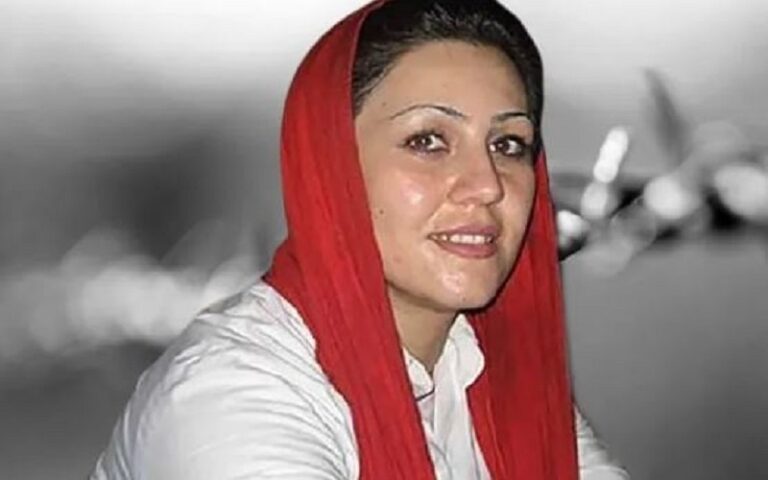
  • Narges Mohammadi was sentenced to ten years in prison in 2014. She was released after about eight years.
  • Mohsen Amir Aslani was sentenced by Salavati and executed on 24 September 2014 in the Rajaei Shahr prison of Karaj on the charge of different interpretations of the Quran.
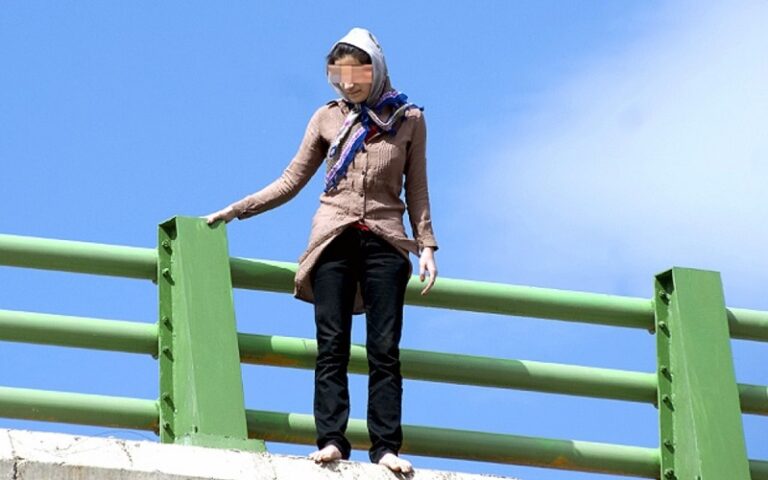
  • Zahra Bahrami, an Iranian-Dutch citizen who was arrested in the Ashura protests of 2008, was a citizen of the Netherlands so the death sentence for the crime of participating in demonstrations would have had political consequences, so Salavati accused her of drug trafficking and sentenced her to be executed on 22 January 2011.
  • Salavati judged and issued a ten-year prison sentence for Omid Kokabi in May 2013 on the charge of cooperating with a hostile country. Kokabi was an elite student of atomic physics in America and ranked 29th in Iran’s national entrance exam. However, it was reported that the main reason for his verdict was that Kokabi had not agreed to cooperate with the regime’s military universities.

The death sentences and imprisonments issued by Salavati in 2008 are as follows:

  • Mohammadreza Alizamani (execution)
  • Arash Rahmanipour (execution)
  • Abdol Reza Ghanbari (execution)
  • Amirreza Arefi, Majid Tavakoli (8 and a half years imprisonment)
  • Rasool Badaghi (6 years imprisonment),
  • Qasim Sholeh Saadi (3 years imprisonment)

Iran Revolution Characteristics

More than two months have passed since the start of the latest round of protests in Iran against the tyrannical Iranian regime. At this point, with the frequency and intensity of the demonstrations, it seems that a revolution is in full swing. The country is witnessing many political and social changes followed by new characteristics that are weakening the regime’s rule.

These new characteristics depict a new Iran which will positively impact the country’s future. On this note, we will have a look at these features.

  1. Protests have become socialized and a daily habit. The waves of enthusiasm against the regime are advancing and the shore of indifference is constantly receding.
  2. Society is drawing lines with any type of dictatorship. The slogans being chanted and portrayed at the rallies are reflecting the people’s willingness for a revolution. The people have found their path in society and ousted the regime’s led slogans and turned to “Death to the oppressor, either the Shah or the Supreme leader”.
  3. The regime’s Revolutionary Guards (IRGC) has lost its self-proclaimed solemnity. The needle of fear has changed its direction to the regime and its forces, who are desperately concerned about the people’s continuing rebellion. They have lost their equilibrium and stability and are witnessing structural and political gaps. The regime’s officials are currently floundering as they are unsure of which tactic to adopt to gain the regime’s lost stability.
  4. The tremendous power of Iran’s women and their will to break the inherent misogyny of the Velayat al-Faqih system has entered the field of leadership. With their sacrifice, women are decisively defying the regime’s mandatory hijab by leading the protests for a regime change.
  5. The regime has been forced to confess what they have done to the people: their violence, inhumanity, and discrimination. They have been forced to speak and write about the people’s demands and rights, which has created a crisis within the regime’s political body.
  6. In a solstitial procedure from the protests in 2009 to the present, the people have realized that there is no other solution other than a revolution to get their points across.
  7. Every memorial of citizens that have been killed by the regime has become a scene of new protests and a nightmare for the mullahs to combat. As a result, the regime has been forced to think twice before opening fire on the people and using illimitable violence.
  8. The incomparable presence of freedom-loving Iranians across the world supporting the people’s revolution has had its influence on the decisions of politicians worldwide.
  9. The expansion of the protests and the legitimacy of the revolution have forced the country’s celebrities to choose a side: the people, or their relationship with the regime’s political body. Celebrities have usually been a bridge between the regime and the people. In the last three decades, celebrities have collected part of the power of the society around them and subsequently wasted that energy in deviant directions.

The reason is clear; When free political activity is not possible in a non-democratic and dictatorial society, celebrities play the role of draining social energies. The revolution has forced them to publicly state where their loyalties lie.

  1. The regime’s think tanks, along with the Supreme leader Ali Khamenei, are desperate on discovering how to analyze the new situation. In their desperation, their only solution has been to constantly shift the blame onto others, making foreign powers responsible for the situation.
  2. Thousands of political prisoners, across all generations, who have sacrificed their lives for freedom and to protect their families have become a popular army confronting the regime. They have helped to destabilize the regime, leaving the only remaining solution for them to be overthrown.
  3. The organized movement has been the backbone of the continuation of the protests, the defiant youth’s cells, and the resistance units of the MEK, in the past five years, have been the symbol of resistance against the regime’s repression apparatus. The regime’s high officials and the IRGC commanders in the past two months have made it clear several times that the main enemy of the regime is the MEK and the Iranian youths have been influenced by them to bring the regime to its end.