Home Blog Page 303

Iranian Authorities Insist on Corporal Punishments

While international law bans corporal punishment, like flogging and amputation, branding them as torture, it’s commonly used in Iran and is just one of the reasons that the United Nations has condemned the Iranian government 67 times.

In 2020, at least 19 floggings sentenced were carried out, while dozens more were issued, mostly against people charged with non-violent or political crimes, like drinking alcohol or criticizing the government.

UN General Assembly Condemns Human Rights Violations in Iran

Let’s look at some of those carried out.

In June, two protesters arrested in the November 2019 nationwide protests– Ali Azizi and Elyar Hosseinzadeh – were lashed 20 times each for “disrupting public order”, while Mohammad Baqer Souri was given 80 lashes for taking part in the protests. In July, protester Foad Enayati, arrested in October 2019, was lashed 72 times, while Ahmadreza Ha’eri was flogged 74 times.

A Glance at Iran’s Human Rights in 2020

There are dozens of more protesters who were sentenced to flogging, including:

  • Ali Nanvaii
  • Saeed Dashtaki
  • Amir Hossein Moradi
  • Saeed Tamjidi
  • Fatemeh Kohanzadeh
  • Mohammad Rajabi
  • Mohammad Eghballi Golhin
  • Siavash Norouzi
  • Seyed Mostafa Hashemizadeh
  • Marie Mohammadi
  • Ayyub Shiri
  • Vahid and Habib Afkari
  • Mohammadreza Heydari
  • Amir Bavi
  • Jabbar Fiyouji
  • Ali and Reza Akbarnejad
  • Salar Fiyouji

Iran’s judiciary has also issued flogging sentences against a whole raft of religious minorities, ethnic minorities, political activists, and people using free speech.

This included, but was not limited to, the following.

Christian converts Mohammadreza (Yuhan) Omidi and Zaman Fadaii for drinking communion wine in mass, each given 80 lashes. Variya Delangiz was given 24 lashes for celebrating following a referendum on an independent Kurdistan, while ten other Kurds were given 250 lashes for protesting the murder of porters.

While labor activist and member of the Syndicate of the Workers of Tehran and Suburbs Bus Company (SWTSBC), Rasoul Taleb Moghaddam was lashed 74 times for taking part in a protest on Labour Day.

Bakery worker Rouhollah Barzin was given 55 lashes for posting an article critical of the Friday Prayer Leader in Cheram to social media, Mehdi Khayyeri was given 35 lashes for insulting a Judiciary official, radio anchor Sajjad Sadeghi received 74 lashes for publishing information about bribes given to the Intelligence Ministry, and athlete Seyed Ali Mir-Miran was given a flogging sentence for criticizing Sport Ministry officials.

Three doctors were given 60 lashes each for insulting President Hassan Rouhani, political activist Qassem Ataii Azimi was given 74 lashes for criticizing the North Khorasan Governor, and a teacher was given 45 lashes for drawing a caricature.

Meanwhile, eight prisoners are currently facing amputation of their fingers. They are Kasra Karami, Shahab Taymouri, Mehdi Shahivand, Arash Ali Akbari, Mehdi Sharafian, Reza Hadi Rostami, and Mehrdad Taymouri.

Iran’s November Protests Are Not Over

Iran’s Poor Economic Outlook

The Iranian economy is shrinking and showing negative growth, according to statistics from the latest World Bank report. They wrote that the Iranian economy has shrunk by 16.5 percent over three years, which means that the already deprived populace only saw their purchasing power shrink.

This was to be expected, but a strange part of the report predicts economic growth of 1.5 percent in 2021, something the state-affiliated experts and the Parliament Research Centre have rejected.

Economic analysts there have advised that there is no sign of the problems facing the country resolving themselves, which will only mean more financial stress to come for the country and ordinary Iranians.

One expert told Donyay-e Eghtesad daily in December that the situation is different in Iran, compared with most other countries, with “corruption” resulting in “unfavorable” conditions.

“We should not pursue economic growth and production boom and inflation at all, which are nothing more than a mirage at the moment, but what is possible, and desirable is ‘economic predictability and stability,’” the Parliament (Majlis) Research Center said about the 2021 budget.

Iran’s Supreme Leader, Main Figure Behind Regime Corruption

Given that the Research Centre has historically published falsely optimistic reports over the economy, this should show how bad things are, with the Donyay-e-Eghtesad saying the report predicts “hyperinflation” should things continue. The Centre’s report advised that even in the case of “significant positive economic growth,” there would still be no like-for-like improvement in living conditions for the poor.

“Studies and evaluations of international institutions and government centers show that the expectation of growth and the dream of overcoming the incurable economic crisis is nothing more than a crude fantasy. It means that, under mullahs’ rule, there is no window of hope for improving the living conditions of the millions of poor people who are suffering from hunger and disease,” the Iranian Resistance wrote.

Therefore, if even the state-affiliated experts and research center do not believe there will be an increase in economic growth or an improvement in people’s livelihood, then what’s next?

Quite simply, the people are expected to rise up against the political establishment, as they have done on multiple occasions when triggered by the economic situation.

The likelihood is that this will soon turn into a political thing, with protesters targeting the ruling system as a whole for the situation and other crises. This may well lead to major changes inside Iran.

During recent months, Iranian authorities frequently warn each other about the army of hunger and unemployed citizens, who see the ayatollahs as the country’s main barrier toward progress, glory, and welfare.

Iranian Officials fail to Address Problems; Protests Imminent

Power Outages in Iran as China Extracts Its Bitcoins

In coordination with a ‘military institution’ in Iran, the Chinese use Iran’s low-price electricity to extract bitcoin while many Iranians suffer from power outages.

While power outages have swept many Iranian urban and rural areas, reports indicate that China is extracting the digital currency Bitcoin at the Rafsanjan Special Economic Zone in Kerman province, southeastern Iran.

According to details obtained from local reports and media outlets, the government grants low-price electricity to the Chinese-held center to extract bitcoin at the time that the power outages have disrupted people’s lives and employment.

Electricity Industry spokesperson Mostafa Rajabi Mashhadi has recently confirmed that the ‘miners of digital currency’ are among the reasons for the increase in power consumption. However, the government has announced that the power plants’ fuel shortage is the main reason for expanded power outages across the country.

Massoud Nouri, a ‘reformist’ journalist, unveiled a deal between the Chinese and a military institution over holding a cryptocurrency mine. He tweeted that in coordination with a ‘military body,’ ‘the Chinese’ have established a cryptocurrency mining center in the Rafsanjan Special Economic Zone. They use the country’s low-price electricity with cheap tariffs.

Selling Off Iran to Preserve the Regime

According to Nouri, they have started the plan’s phase one with around 10,000 devices of very low-efficiency M-3. Currently, these devices are extracting bitcoin in this center.

Iran’s blockchain association reported that the Chinese had established a cryptocurrency mining center in the vicinity of 230/33-kilovolt ferrochrome for Rafsanjan power transmission and station. The association also announced that this center consumes 175 megavolts of power per day.

The extraction of each bitcoin is equivalent to the annual power consumption of 24 houses in Tehran. On January 12, each bitcoin was estimated to be worth above $36,000, which tempted many individuals and entities to get involved in the extraction of this digital currency. In this respect, Iran’s Electricity Industry spokesperson confirmed the increase in the number of bitcoin miners inside the country.

There were numerous reports of an increase in the electricity price and unnotified power outages in recent weeks. In videos circulated on social media, citizens show that the roads’ lights were turned off during the night, which raises the risk of road accidents in Iran’s unsafe commuting ways.

On the other hand, to decrease the country’s budget deficits, the government has recently used mazut for power supply plants instead of gasoline and proper fuels. This issue dangerously intensified air pollution in Tehran and several major cities. Iranian dissidents say mazut and diesel pollution increase the coronavirus death toll to six times the national rate.

The Margins of the 25-Year Iran-China Contract

In response, the Oil Minister Bijan Zangeneh and the Chief of Environment Organization Isa Kalantari have laid the blame on the people, saying, “to stop using mazut [for plants], the people must decrease power consumption.”

In 2019, an advisor to President Hassan Rouhani inaugurated the Rafsanjan Cryptocurrency Mine under a data center’s banner. At the time, Rafsanjan Governor Aliar Eskandari described this facility as the Middle East’s greatest datacenter. However, several media reported that it is a cryptocurrency mining center.

Later, cryptocurrency experts revealed that Tehran had granted the ferrochrome factory’s electricity to the Chinese Top Echo company in return for an insignificant price. Surprisingly, at the inauguration ceremony, the CEO of Rafsanjan Special Economic Zone Majid Kohnavi had spoken about ‘excess electricity.’

“Today, we witness excess electricity, and the electricity is not a preservable good. Therefore, the Energy Ministry sells this electricity to miners based on the export price,” he said, adding that this project is a money-maker source for the Energy Ministry.

Notably, in 2019, Tehran extended its economic deal with the Chinese government for 25 other years, prompting many objections inside the country and abroad. In a nutshell, the government granted uncountable privileges in different fields to the Chinese in return for nothing. Now, it seems that Rafsanjan Cryptocurrency Mine is another part of the ayatollahs’ 25-year deal with Beijing.

Auctioning Iran, for a Dirty Vote at the UN Security Council

Iran’s Hostage Taking Must Be Met with Firmness

Iran seized a South Korean-flagged tanker in the Strait of Hormuz on January 4, something they tried to blame on the tanker polluting Iranian waters. However, many suspected that the government was attempting to use the tanker and its crew as bargaining chips in upcoming negotiations with a South Korean envoy about $7 billion in Iranian assets frozen because of U.S. sanctions.

Iran’s New Piracy and Blackmail

Tehran denied this, but still publicly commented on the money dispute and tried to justify the seizure by suggesting that South Korea was holding Iranian property hostage. Then, a state-run newspaper confirmed Iran’s true motives, but no one was really surprised.

After all, Iran had done basically the same thing last year with the British vessel Stena Impero and has a long history of taking vessels and personnel hostage, dating back to the U.S. embassy siege in 1979, which the Iranian government actually celebrates every year.

Not to mention the dozens of foreign or dual nationals held in Iran’s prisons as leverage, including Iranian-Swedish academic Ahmadreza Djalali, who is under imminent threat of execution and has had hardly any contact with his family since November.

Given all this, are the crew of the South Korean Hankuk Chemi in danger? Well, Iran is unlikely to want an international incident, but then we would have never expected that they’d risk plotting a terrorist attack on European soil and yet an Iranian diplomat was put on trial for that last month.

Proof Iran Is Responsible for 2018 Bomb Plot

Assadollah Assadi is accused by European prosecutors of trying to bomb the Resistance rally in Paris in June 2018, which was attended by 100,000 people. While Europe tends to use an appeasement strategy, they have put Assadi and his accomplices on trial and this firm policy are probably the reason that Djalali is still alive.

The Belgian parliament threatened to end all ties with Iran if Djalali was executed. While Sweden is set to begin the trial of Hamid Nouri, accused of taking a major role in the 1988 massacre of political prisoners.

“This latest move appears to be a sign that growing numbers of European policymakers are not only willing to adopt an assertive posture with the Islamic Republic but also willing to go on the offensive in their fight against the regime’s tactics of intimidating both foreign and domestic voices into silence,” wrote the Iranian Resistance.

“No doubt those policymakers are beginning to recognize that that silence has always proven to be counterproductive in the past, and has only reinforced Tehran’s every impulse toward malign activity,” the NCRI added.

Iran’s Air Pollution Crisis Is not the People’s Fault

Iran’s air pollution crisis is making the coronavirus outbreak much deadlier and is being made worse by the state’s inaction, which the Iranian opposition National Council of Resistance of Iran (NCRI) says is a deliberate move to quash protests and make profits.

Not only that, but the government actually cut off electricity to various provinces, including Qazvin, Golestan, and Qom, at midnight on Sunday without notice, leaving millions without heat as temperatures reached -6 degrees C.

On Monday, officials said that people would have to suffer through long power outages on a regular basis, with the Qazvin Electricity Company announcing a daily power cut from midnight to 4.30 am and claimed that the power cut on Sunday was planned.

Money for Tackling Air Pollution Wasted on Iran’s Global Terrorism

The government blamed both the power cuts and the pollution on the people’s high gas consumption, which has left them without the gas needed to run power plants.

“If the people’s consumption of electric heating devices is reduced by one degree, the needs of the industries for gas that caused them to cut off their gas will be compensated,” said Tehran Governor Anushirvan Mohseni Bandpey.

So, the mullahs say that either the power plants reduce the amount of electricity they produce or they burn Mazat fuel (also known as black oil), which pollutes the air. A choice between freezing to death or being suffocated.

Dissidents say that it is “a blatant lie” that Iran is out of gas because the reserves are currently 33.2 trillion cubic meters, with Iran holding 17.2 percent of worldwide gas supplies. In fact, Iran exports a large amount of gas daily, which could certainly stop if national supplies were low

“The officials’ real goal is to pursue the regime’s policy of plundering the national wealth for funding their illicit activities. To have further benefits, the regime wants to export more gas, which requires the transfer of less gas to domestic power plants,” the NCRI wrote.

Not only does the government seek more money, according to the NCRI, but also to keep people from protesting because they fear that they may die if they spend too much time out in the polluted air. But this is a catch 22 because the Iranians have proved time and again that they are willing to sacrifice their lives for freedom.

“On the one hand, the inhuman clerical regime squanders the Iranian people’s wealth on the unpatriotic nuclear, missile, and terrorism projects. On the other hand, it kills people through the consumption of fuel oil,” NCRI President Maryam Rajavi said.

The mullahs’ only concern is to preserve their regime. For them, the lives, health, and well-being of the people are worthless. As long as this regime is in power, there will be no attempt to buy vaccines, no clean air, and no solutions to contain the damage caused by floods and earthquakes,” she added.

Iran’s Blackmail Campaign Increases with Ship Seizure and Uranium Enrichment

0

Iran has increased its blackmail campaign over the past few weeks, with the intention of forcing the international community to agrees to its terms.

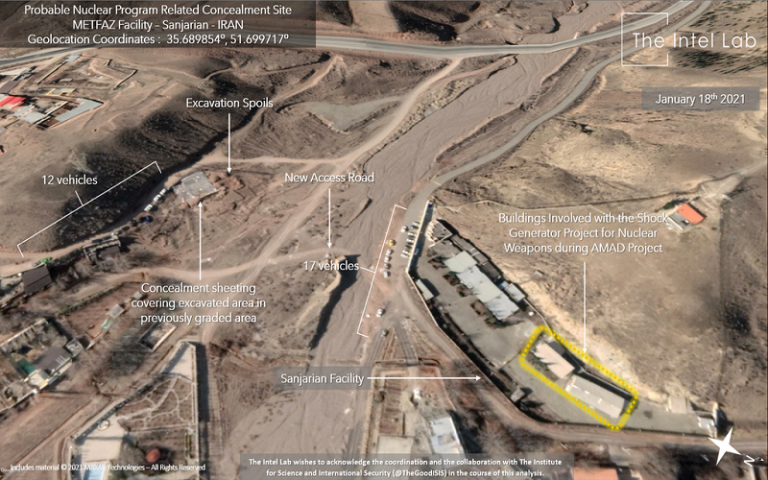
Recently, it announced that it had begun enriching uranium to 20 percent at the Fordow nuclear site before the Islamic Revolutionary Guard Corps (IRGC) actually illegally seizing a South Korean ship in the Persian Gulf on Monday.

The mullahs have tried to blame their actions on the rest of the world for not sticking to the Joint Comprehensive Plan of Action (JCPOA), otherwise known as the 2015 Iran nuclear deal, or even the ship they seized for allegedly polluting the Gulf waters, but Iran’s state-run media has revealed the truth.

Tehran Jeopardizes Global and Regional Peace with Unlawful Enrichment

The Vatan-e Emrooz daily, which is affiliated with the IRGC, wrote on Monday that Tehran’s true goals are to pressure the West into succumbing to the mullahs’ will.

“Enriching uranium at 20 percent was Iran’s winning card in facing western governments. [President Hassan] Rouhani’s government, at the beginning of the nuclear talks in Geneva two years before the JCPOA, generously accepted to halt in exchange for the lifting of sanctions and the recognition of Iran’s right to enrichment, none of which was realized,” the daily wrote.

“Now, in such circumstances, this concession can again force the JCPOA signatories to honor their obligations under the terms of the JCPOA, and thus return the balance in the number of obligations and duties to the nuclear agreement. In other words, experts believe that the beginning of Iran’s 20 percent enrichment could increase the probability of lifting sanctions much more than before,” Vatan-e Emrooz added.

This is not a response to Western non-compliance. Tehran has violated the deal since the very beginning, continuing nuclear tests and pretending to dismantle reactors, which is why the US withdrew from the deal in 2018.

In response, Iran stepped up its violations as a threat to the other signatories about what might happen if they too pulled out and as an attempt to gain concessions. This was ignored by the other signatories—particularly Britain, France, and Germany, which are pursuing a failed appeasement strategy—and Iran felt emboldened by this, which is what leads us to today.

“The seizure of this tanker in Persian Gulf waters sends a serious message to the South Korean government. A message that offers Seoul two options, either to choose to pay its long-standing debt to Tehran or (to compromise for the) security of its use of the Persian Gulf waterways in dealings with its Arab partners,” Vatan-e Emrooz wrote regarding the ship seizure.

Iran’s New Piracy and Blackmail

This is extortion, plain, and simple. The lives of all those aboard may be at risk.

“The international community should take firm action since Tehran’s ongoing belligerent activities have continued despite the Western powers’ persistence on the appeasement policies,” wrote the National Council of Resistance of Iran (NCRI), who has been exposing Tehran’s nuclear activities since 2002.

Rights Activists: Tehran Tortures Prisoners to Quash Protests

Throughout history, autocrats constantly struggle to save their unelected and illegitimate rule. Therefore, they do not want to hear any opposite voice and almost always resort to force and violence to hide their people’s real desire.

The Iranian authorities have issued heavy sentences to protesters and dissidents, as well as torturing those arrested, in an attempt to silence dissent and stop protests in their tracks.

While this has long been used by authoritarian governments, it became official policy in 2020 under Judiciary head Ebrahim Raisi, who served on the Death Committee during the 1988 massacre of political prisoners.

There are numerous reports of gruesome and ghastly torture in Iranian prisons from former detainees and human rights groups like Amnesty International and Iran Huaman Rights Monitor (Iran HRM), including:

  • Beatings
  • Floggings
  • Electric shocks
  • Suspension
  • Mock executions
  • Waterboarding
  • Sexual violence
  • Forced injection of chemicals
  • Denial of medical treatment
  • Denial of access to their family or lawyer
  • Prolonged solitary confinement
  • Forced to confess on TV

Amnesty International: Iran Uses Torture as Punishment

Here, we will look at just some of these cases in more detail based on the Iran HRM report, where you will find further information on the cases noted below and more.

Death Sentences for Protesters

Wrestling champion Navid Afkari, 27, was arrested following protests in Shiraz in August 2018 and sentenced to death. He was executed in Adilabad Prison on September 12, 2020.

Mostafa Salehi was arrested for his role in the December 2017-January 2018 protests and executed on August 5, 2020.

Iranian Authorities Confiscate the Late Mostafa Salehi’s Home and Properties

There are several other cases of death sentences being issued against protesters, based on vague charges and confessions under torture, including at least three in Tehran and five in Isfahan.

Heavy Prison and Flogging Sentences

At least three flogging sentences – those of Mohammad Baqer Souri, Ali Azizi, and Elyar Hosseinzadeh – against protesters have been carried out as of now, but there are many more that have been issued. Far too many to mention here, but this is a brief run-down:

  • Student Siavosh Norouzi Jafarlou, arrested during the January 2020 protests was sentenced to 8 years in prison and 74 lashes
  • Morteza Omid Beiglou, arrested during the November 2019 protests, was sentenced to 14 years in prison and 222 lashes
  • Teenagers Mohammadreza Heydari, Amir Bavi, Jabbar Fiouji, Ali Akbarnejad, and Salar Fiouji, also arrested in November 2019, were sentenced to a total of 468 lashes, as well as fines and prison time.
  • Mother-of-three Fatemeh Davand, arrested in November 2019, was sentenced to 5 years and 5 months in prison and 30 lashes
  • Hossein Hashemi, arrested in November 2019, was sentenced to 6 years in prison, 74 lashes, re-writing of religious books, and washing the dead

Iran Executes 30 in Three Weeks

Nurses Protest Across Iran

While protests are increasingly common across Iran, in spite of the dangers posed by both the coronavirus pandemic and the state security forces, these past few days have seen intense protests from nurses and healthcare workers.

They’ve actually held seven protests in the last four days alone across Ahvaz, Shiraz, Yazd, Yasouj, Bafgh, and Karaj, which we will look at here, all to demand their wages and benefits be paid.

Iranian Nurses, Forgotten Angels

Nurses’ Protests in Khuzestan Province

Many nurses from the medical centers and hospitals in Ahvaz and its surrounding cities held a protest on Tuesday outside the Khuzestan Governorate to protest unfair discrimination and a lack of job security, as well as to demand that they be paid the same as officially hired nurses. They wanted both the Governorate and the Medical Sciences University of Khuzestan to address these issues.

“They have deducted from our salaries and benefits for consecutive months. We have been going through difficult circumstances over the past year because of the Coronavirus outbreak,” the nurses said.

That same day and at the same place, nurses hired by the Ava Salamat company in Ahvaz, protested over the lack of response to their demands, saying that the privately-employed nurses work the same hours and do the same job as those employed in the government healthcare system, but that they are paid two to four million Tomans less.

On Sunday, nurses from some Khuzestan hospitals were fired and not paid their wages.

Iranian People Prepare for Anti-Establishment Protests

Nurses’ Protests in Karaj City

On Tuesday, healthcare workers from the Hospital of Karaj protested outside the Alborz Governorate over the non-payment of wages and benefits for four years.

They chanted: “Enough with hollow promises, our food baskets are empty.”

Nurses’ Protests in Yazd City

On Monday, healthcare workers hired by private companies gathered outside the Yazd Governorate to protest pay discrepancies between them and the public sector.

“We worked along with the official healthcare workers. But at the time of payment of salaries and benefits, we receive less than they do, because we are contract workers and we do not have the right to object,” they said.

Nurses’ Protests in Bafgh City

Also on Monday, nurses from the medical centre in Bafgh protested outside the Governorate with similar complaints and demanded their benefits, noting that they work just as much as the other nurse, but with no rights.

Nurses’ Protests in Yasouj City

Volunteer nurses, who have been fighting the coronavirus for over ten months, protested in front of the Governorate on Sunday over the refusal of the Medical Sciences University of Yasouj to hire them.

Their placards read “sacrifice must not be answered by unemployment” and “we defeated the virus but were fired from our jobs”.

Nurses’ Protests in Shiraz City

Privately-hired medical centre nurses and employees protested outside the Governorate with signs that read, “we helped you in the worst conditions; you abandon us in the worst circumstances. We demand our rights”.

On January 1, nurses and staff of Kowsar Hospital gathered to protest unpaid wages, with placards that read “pay our salaries” and “we protest.”

“The clerical regime exploits nurses and healthcare workers. In return for their sacrifices and hard work in the frontline of the fight against the Coronavirus, it does not pay their salaries and benefits or fires them,” said the National Council of Resistance of Iran (NCRI).

Iran: Khamenei’s Crocodile Tears for Nurses

Iranian Women in Unstable Jobs

Some 60 percent of jobs in Iran are informal, with the figure rising to 70 percent in many provinces, which makes those workers more vulnerable to economic crises, especially those that follow the global pandemic.

As always, the situation is worse for women with the Iranian Parliament (Majlis) Research Centre found that 61 percent of women were working informal jobs in 2018 and that 84 percent of those women were working in places with less than five employees.

Dangerous Instability and Hyperinflation, Iran’s Economy in 2021

While the Organization of Social Security Research found in 2017 that women working at home or in small workshops made up 80 percent of uninsured workers. Many disabled women work in Iran, but they do not get legal support, their rights are ignored, and their salaries are often late or missing.

The trouble is that women are seen as cheap sources of labor by their employers and they are viewed as disposable; the first to go when employers have to reduce costs.

Now, the government claims that the number of people in employment rose by 3 million between 2015 and 2019, but the truth is that the majority of these jobs are insecure and part-time, with no insurance in the event that they get sick. It is a struggle for them to survive, but they often sign contracts for low-paid jobs because they are desperate to put food on the table.

Iranian People’s Shrinking Food Basket, Another Side of the Regime’s Plundering

Let’s look at some of the cases for female heads of household, as outlined by the Women’s Committee of the National Council of Resistance of Iran (NCRI).

Maryam, 47, a mother-of-three from Sari, works two cleaning shifts a day to care for her family, including an ill husband, without any help from welfare organizations, despite repeated appeals.

They built a small wooden shack to live in, but it has no power, the rooms have caught fire, and once the ceiling collapsed on them.

“If one day, for any reason, I do not go to work and stay home, that day, we would have nothing to eat,” she added.

Massoumeh, 50, a mother-of-two from Urmia, suffers from backache and chest pain but has been the breadwinner since her husband died. She has been unable to pay her rent in eight months because of a reduced demand for house cleaners and her landlord has repeatedly harassed her.

“The Coronavirus outbreak has had a direct impact on our life. The demand for housework has become much less than before. It’s been a long time since my children and I have eaten meat. I do not have any savings. If our relatives don’t help, it is impossible to continue like this even for an hour,” she said.

Khamenei Bans Importing COVID Vaccines, Leading Iran to More Deaths

In Iran, not a day goes by without sad news about increasing Covid-19 fatalities. Many people contract the novel coronavirus across the country and loss their lives without any medical care. More sadly, the officials care about neither people’s lives and health nor their dire living conditions.

In such circumstances, the Supreme Leader Ali Khamenei, however, stepped further and banned citizens from accessing reliable foreign vaccines. “Importing American and British vaccines into the country is prohibited,” he said on January 8.

He also praised the government’s efforts for producing domestic Covid-19 vaccines, describing it as a dramatic achievement. This is while many experts, including health officials, openly forecast that domestic vaccines would be mass manufactured in July.

“Mass production of this vaccine needs certain infrastructure and the Covid-19 vaccine in Iran will begin mass production in July or August of 2021,” said Yahya Ebrahimi, member of the Parliament (Majlis) Health Commission, on December 29, 2021.

Khamenei also declared his skepticism about foreign vaccines, which have been approved by the World Health Organization (WHO). This is while the Food and Drug Organization Spokesperson Kianoush Jahanpour implicitly announced that Tehran pursues incredible vaccines.

“The vaccine needs to have approval in the source country and the people there need to be using it,” Jahanpour said on January 1, adding, “The exact date when the vaccine will be imported, and when the vaccination process will begin cannot be announced.”

Iranian officials’ delay is ending at the expense of citizens’ lives. During recent weeks, Tehran was raising different excuses to justify its failure to purchase the vaccine. On December 7, the Central Bank of Iran (CBI) Governor Abdulnasser Hemmati claimed that U.S. sanctions prohibited banking transactions required to procure Covid-19 Vaccines.

A few hours later, a COVAX spokesperson rejected Hemmati’s remarks, announcing, “There is no barrier by the U.S. for purchasing Covid-19 vaccines by Tehran.” Furthermore, an ICU expert Mohammad Reza Hashemian revealed that the government had imported many goods despite the sanctions.

“These days, [the government] purchases many foreign goods, and the vaccine is nothing in comparison. Anyhow, providing the vaccine and launching vaccination for a significant number of people will take time,” Hashemian said on January 6.

Earlier, member of the National Covid-19 Headquarters Mohammad Reza Mahboubfar had challenged officials’ claims about barriers. “People see that in countries like Iraq and Afghanistan, the spread of coronavirus has subsided due to the use of vaccines,” he said on December 12, 2020.

On the other hand, in its December 30, 2020 edition, Hamdeli daily quoted an open letter by 167 pharmacists, who had described the domestic vaccine as a ‘joke.’ However, Khamenei’s refusal to procure reliable foreign vaccines is in the line of a criminal policy.

In March 2020, he described the coronavirus as a ‘blessing.’ In this context, he resorted to this deadly disease to quell any objection and disappoint protesters. In such circumstances, while Khamenei forecasts further protests due to his state’s socioeconomic failures, he has resorted to the coronavirus to ensure his reign.

He hopes the upcoming U.S. administration grant economic reliefs and ease its dilemmas. However, he is seemingly neglected about the people’s slogan, “Our enemy is right here, [officials] are lying that it is the U.S.”

Iran Media Warns of Protests Over Crises