Iran’s Government: “We Are 40 Years Behind the World”

One of the main challenges of Iran’s economy is the practical possibility of growth and promotion of domestic products and the ability to export quality products in global markets. Otherwise, any country that fails to do so will be phased out of the international economic system.

Economic Indicators of Iran According to Reputable International Centers

Last year, when the coronavirus had not overtaken Iranian society and the crime of the mullahs in the field of health had not been revealed, Alef website on 30 December 2019 in a report citing the report of reputable international centers, examined and compared the country’s economic index with leading countries in the Middle East. This report in the field of industry and products ‘Made in Iran’ states: “Statista International Statistics Institute, through field research in 52 countries, ranks ‘Iran made’ products 50th.”

Iran’s Low Position in The World Production Index

The low level of industrial production, which is the basic basis for non-oil exports, has also been accepted by the Ministry of Industry, Mine and Trade, which is itself in charge of production and trade. In a report on the decline of Iran’s position in the global economy, the Center for Business Studies and Research of this Ministry says: “A study of the global position of Iran’s economy in 2019 shows that Iran is not in a good position in some international indicators related to production, especially global competitiveness, business ease index and global innovation index,” Jahan-e-Sanat daily wrote on December 28, 2020. The same report shows the negative growth of the industrial sector, especially since 2018. The decline in investment to compensate for the depreciation of production and the lack of increase in new capacity adds to a decade of decline in this area. Statistics show that in 2019, inflation in the production sector reached more than 36 percent, and the rate of this variable in 2020 was still high.
Iran claims It Will Reduce Inflation While 45 Million Have Inadequate Income

Closure of Industrial Units

Also, the study of the situation of industrial and production units shows that in 2019, some 40 percent of active industrial units (more than 14,000 units) with a capacity of less than 50 percent were operating and more than 70 percent of the reason for the closure was lack of liquidity and about 20 percent lack of market (About 10,000 units). In this regard, it is said that in the period 2016-2019, the average share of production guilds was estimated to be less than 20 percent.

The Decline in Foreign Trade in the Last Decade

No jump in exports and imports due to production constraints and lack of competitiveness in global markets over the past decade has led to the decrease of exports of 75.8 million tons (down to 14 percent) worth $21.6 billion (down to 20 percent), imports 21.8 million tons (down to 1 percent) worth $23.1 billion (down to 18.5 percent), the average price per ton of exported goods at $285 (down to 6.8 percent) and the average price per ton of imported goods at $1057 (down to 17.5 percent),” Jahan-e-Sanat added.

Two Dangerous Scenarios

It is these shocking realities in the field of production and exports that have led the Chamber of Commerce to express concern that the Iranian government is an ‘exceptional’ government that stubbornly goes beyond the FATF standards and has practically brought exports to a standstill. Finally, there are just two ways in front of this government: There are two scenarios in this story that seem to have reached the last days. Iran should abandon normal foreign trade. In this case, the risk of phasing out of tangible and observed global trade must be accepted over time,” wrote Eghtesad News website on December 31, 2020. Iranian economic activists and businessmen have come to the conclusion that Iran is gradually removing itself from the normal world economy due to the non-acceptance of the FATF.
What Is Happening With Iran and FATF?
“Overhead costs and complex ways to bypass end foreign trade capability. Another scenario is for the country’s governing institutions to accept the truth of the world and to organize their foreign trade in such a way that they can sustain the economy,” Eghtesad News added. Which, of course, means backing away from the regime’s nuclear and terrorist policies.

Excluding Iran from the World’s Largest Free Trade Agreement

“Recently, a very important economic agreement was reached between 15 countries of Asia and the Pacific, including ten countries of Southeast Asia (ASEAN) and 5 countries of China, Japan, South Korea, Australia and New Zealand in the form of the world’s largest free trade agreement called the Comprehensive Regional Economic Partnership. Which, unfortunately, was not given much attention in Iran,” wrote Eghtesad-e-Mardom daily on December 28, 2020. “The cost of exchanging the economy, especially the production sector, has increased significantly due to sanctions, and the country’s competitiveness in the region has decreased. The result of these issues has been a near halt in Iran’s economic growth over the past decade, a decline in real household incomes, and a decline in investment in the country,” Eghtesad-e-Mardom added.

Iran: 58 Percent of Society Struggle Just to Remain Alive

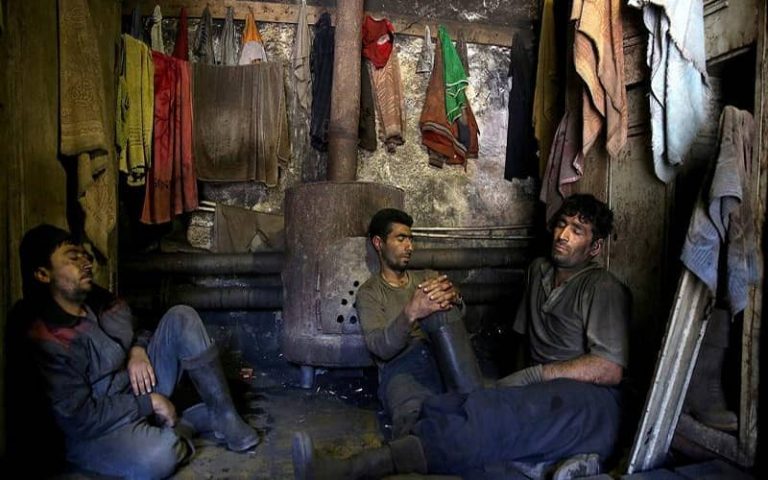
Fifty-eight percent of Iranian society, including workers and their families, are struggling to remain alive, according to the chair of the Supreme Labor Council’s Wage Committee Faramarz Toufighi. On December 30, 2020, in an interview with Tasnim news agency affiliated to the Islamic Revolutionary Guard Corps (IRGC) Quds Force, Toufighi pointed out rampant prices of essential goods. “Currently, the population of workers and their family members is more than 49 million people, which makes up about 58 percent of Iran’s society. Regarding the high prices, with a maximum revenue of 30,000 million rials [$120], this strata is struggling to remain alive, not just to make ends meet,” he said. In his remarks, the Wage Committee’s chair explained that having a small apartment and a Pride Car has become a workers’ dream. “In such circumstances, while workers wish to have minimums, there are rich people who invest with massive sums and enjoy luxury lifestyles,” Toufighi added.
Iran: Improving Citizens’ Livelihood or Stealing From the Nation
This is the flipside of the existing gap between society’s classes in Iran. While officials and their children and relatives enjoy aristocratic lifestyles, many citizens cannot make ends meet despite hard work day and night. Earlier, Majid Farahani, the chair of Tehran City Council’s Budget and Financial Supervision, acknowledged that “today, we have seven poor deciles, and only three deciles of society are above the poverty line. We had never experienced such status quo,” according to Tasnim on December 14, 2020. Notably, around ten million underground workers in Iran do not receive minimum wages, according to a member of the Supreme Labor Council Ali Aslani. Therefore, Iranian workers have no share of the country’s national assets, including oil revenue. Instead, Lebanese Hezbollah, Palestinian Hamas, Iraqi Shiite militias, Yemeni Houthis, and other extremist proxies line their pockets with impoverished Iranians’ wealth. “There are workers whose rights are not supervised by anyone, and they receive even less than the minimum wage. Some of them receive 7 or 8 million rials [$28–$32] per month,” the semi-official ISNA news agency quoted Aslani as saying on January 2. On the other hand, new people add to the country’s unemployed population every day due to the government’s mismanagement and squander of national resources on irresponsible projects. Officials’ shambolic policies have even earned criticism from government-linked individuals.
Seventy Percent of Iran’s Construction Workers Are Unemployed
“Might officials actually live with workers’ salaries?” Toufighi questioned, adding, “In the past nine months, the product basket’s price has increased by around 200 percent. During a two-year period, housing expenditures both in prices and rents have become fivefold,” he added. Observers believe that given unbridled inflation, workers’ purchasing power is too insignificant despite the increase in wages. They reported that working families had lost their purchasing power by 100 percent. Workers’ representative at the Supreme Labor Council Nasser Chamani blamed the government’s failure to clarify a sufficient wage for workers. In this context, while the workers’ purchasing power has dropped by 100 percent, the government must probably increase their minimum wage. In other words, the government, as the greater employer, must define a fair salary for workers, which has denied performing it so far. “This backwardness—regarding inflation rate and workers’ minimum wage—must be offset to improve workers’ living situation,” Chamani said.

Tehran’s Hostage-Taking Government Executes Three Prisoners

0
At dawn on Sunday, January 3, Iranian authorities executed two other political prisoners and one ordinary inmate at Zahedan Central Prison in Sistan and Baluchestan province, southeastern Iran. The executed political prisoners were Hassan Dehvari and Elias Qalandarzehi, and the ordinary inmate was Omid Mahmoudzehi. The government implemented these sentences while the lawyer of Dehvari and Qalandarzehi, Mostafa Faqihi, had announced that the trial was distorted. He had registered for a retrial at the Supreme Court Secretariat for his clients. “When we precisely studied the case of the two convicted prisoners in the Zahedan Revolutionary Court, our findings showed that their trial had legal problems. In this respect, their sentences are wrong. Therefore, as the most normal legal action in this process, we requested a retrial,” Faqihi explained. “On Saturday [January 2], this retrial was registered at the Supreme Court Secretariat. So, this case was in the process of being designated to an appeal court,” the lawyer added. The State Security Forces (SSF) detained Dehvari and Qalandarzehi on April 5, 2014, on security charges. The Revolutionary Court sentenced them to death on December 19, 2016. Omid Mahmoudzehi had previously been sentenced to death for several allegations, including Muharebeh, the Iranian authorities’ formal excuse for killing citizens.
Iran: Seven Silent Executions at the End of 2020

Two Political Prisoners Kept as Hostages

At night on Friday, January 1, the prison guards transferred Dehvari and Qalandarzehi to solitary confinement, preparing them for the execution. In this context, their family members complained to the authorities. Iranian Baluchi human rights defenders had already announced that the government kept these prisoners due to their relatives’ membership in dissident groups. Authorities claimed that Dehvari’s brother and Qalandarzahi’s relatives are members of anti-government groups. In response to their families’ complaints, Iranian authorities acknowledged that as long as their relatives do not turn themselves in, their death penalties will remain active. Notably, the government still chases Dehvari’s brother and Qalandarzaehi’s relatives despite these inhuman executions. On December 26, the Iranian government hanged three inmates at Zahedan Central Prison, including political prisoner Abdolhamid Mir-Baluchzehi. Iranian authorities hanged this political prisoner while the judiciary had registered an appeal for a revision of the case. However, the regime suddenly executed this political prisoner. “The website of the Judicial Services has registered an appeal for the revision of the case of Abdolhamid Mir-Baluchzehi, and we are waiting for the case to be referred to a branch (for revision). But his family today informed me that he had been relocated from the general ward of the Prison of Zahedan, and they feared that he was going to be executed,” tweeted Mostafa Nili, Mir Baluchzehi’s lawyer, on December 24. Furthermore, on January 1, human rights defenders reported that Iranian authorities have silently executed at least seven prisoners at Mashhad’s Vakil-Abad Prison, in northeastern Iran, and Ahvaz’s Sepidar Prison, in the southwest of the country during the past week. The Iranian government is the world’s record-holder of executions per capita. In 2020, they had executed more than 250 prisoners, including juvenile offenders, women, political activists, and prisoners of conscience. Out of six juvenile offenders who were executed in 2020 across the globe, four were in Iran.
Tehran Hangs Juvenile Offender On the Eve of 2021

Iran: Seven Silent Executions at the End of 2020

In the final days of 2020, Iranian authorities silently executed at least seven prisoners at Mashhad’s Vakil-Abad Prison, in northeastern Iran, and Ahvaz’s Sepidar Prison, in the southwest of the country. Human rights groups acknowledged that the government simultaneously implemented death penalties for four prisoners in Sepidar Prison on Thursday, December 24. One of the executed prisoners was identified as Jafar Zabi. However, there is no information about the three others.

Execution After Ten Years

In this respect, the human rights association No to Prison – No to Execution revealed shocking details about these executions. “One of the executed prisoners was Jafar Zabi. This prisoner had been detained at the age of 18 under the accusation of murder during a clash with a man named Heydari. After ten years of being held in prison, he was eventually hanged at the age of 27,” a source familiar with the issue told the human rights association. “A day before the execution, Jafar’s mother had pleaded with the case’s judge to give a one-month deadline to convince the victim’s family to revoke the sentence. However, the judge did not postpone the death penalty, and a day later, Jafar was executed,” the source added. No Iranian state-run media reflected the news despite the government delivering the corpses to their families.

Execution of Three Political Activists and Prisoners of Conscience in Mashhad

Furthermore, Iranian authorities executed three Sunni prisoners Hamid Rast-Bala, Kabir Sa’adat-Jahani, and Mohammad-Ali Arayesh at Mashhad’s Vakil-Abad Prison on Thursday, December 31. Notably, on the same day, the judiciary implemented the death penalty of a juvenile offender Mohammad Hassan Rezaei at the Rasht Lakan Prison, in the north of Iran.
Tehran Hangs Juvenile Offender On the Eve of 2021
According to Human Rights Activists News Agency (HRANA) on January 1, the sudden implementation of the execution of these [three] prisoners took place while their families were deprived of the last visit with their loved ones. Previously, on December 30, the prisoners had been transferred to an unknown place. In 2015, intelligence agents affiliated to the Ministry of Intelligence and Security (MOIS) had detained Hamid Rast-Bala, Kabir Sa’adat-Jahani, and Mohammad-Ali Arayesh along with Farhad Shakeri, Isa Eid-Mohammadi, Hakim Azim-Gorgij, Taj-Mohammad Khormali, Abdolrahman Gorgij, and Hossein Varasteh-Soleimani. For 10-12 months, they had been kept in solitary confinement at the detention center of Mashhad’s intelligence department. Later, they were transferred to Vakil-Abad Prison and held there for around four years. Sources familiar with the issue also acknowledged that the judiciary had deprived these citizens of their chosen lawyer and a fair trial. According to human rights activists, the Iranian government executed more than 250 inmates in 2020, including four juvenile offenders, nine women, and ten political activists and prisoners of conscience. Iran is the world’s record-holder of executions per capita.
Iran: Life Under the Whip of Execution

New Wave of Arrests in Khuzestan Province

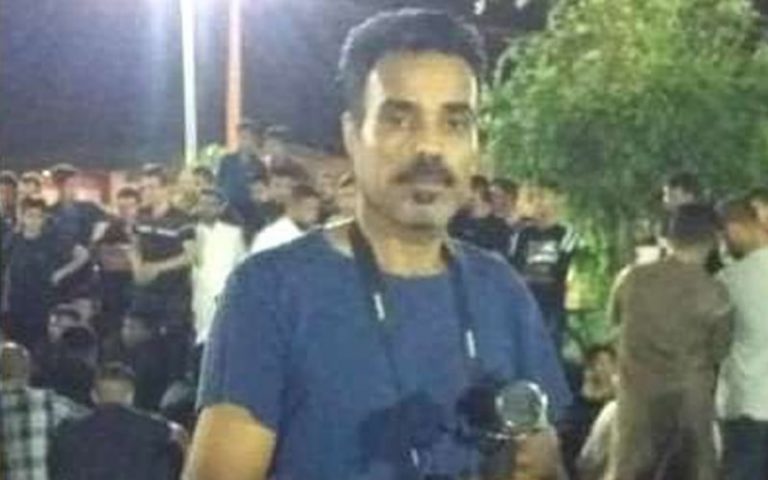
According to human rights activists, Iranian authorities have launched a new wave of arrests in Khuzestan province, southwestern Iran. The human rights association No to Prison – No to Execution reported that at dawn on December 20, intelligence agents affiliated to the Ministry of Intelligence and Security (MOIS) detained Mr. Hossein Zadeh Shaye (Shenavari). Mr. Shaye is 42 years old and from the Taleghani district in Bandar Mahshahr county. He is a cameraman and in addition to cultural activities, he was filming concerts. Mr. Shaye was also collaborating with another cultural activist Fatemeh Tamimi, who had been arrested on December 9. Tamimi along with her partner Maryam Ameri—who was also arrested on December 10—were collecting traditional stories, lullabies, and songs in the Arabic language from local villagers. Shaye had also aided them to produce and publish these pieces on Tamimi’s Instagram page—followed by 25,000 people—to register them as part of the region’s history.
Iran: Civil Rights and Cultural Activists Arrested, Further Detentions Expected
Intelligence agents brutally raided the homes of these activists and seized their personal belongings such as laptops, smartphones, and memory cards, in addition to detaining them. To instill a sense of fear, they conducted the raid with several vehicles at Mr. Shaye’s home before dawn. “At 4:00 am on December 20, forces of the intelligence department sieged Hossein Zadeh Shaye’s home with several vehicles. They instilled a sense of fear among this family and impounded all filming equipment, including his camera, mobile, and computer. Then, intelligence agents transferred Hossein Zadeh Shaye to Ahvaz Intelligence Department,” a source familiar with the issue said. Mr. Shaye suffers from intestinal pain, chronic asthma, and kidney stone infection. In this context, his family is deeply concerned about his health and life regarding inhuman torture and ill-treatment usually practiced through interrogations. The Shaye family urged international and human rights organizations to pressure the Islamic Republic to release this cultural activist immediately and unconditionally. “He is one of the advocates for Iranian Arabs in Ahvaz, who reported on these people’s suffering and misery,” said the family. Furthermore, on December 30, the judiciary convicted Lamia (Sahba) Hemadi, 23, to seven years in prison for ‘Baghi,’ [riot] and ‘acting against national security.’ She was also a cultural activist, and the autocrats could not tolerate her activities. In the past month, the State Security Forces (SSF) and MOIS agents have arrested a significant number of civil rights and cultural activists. They detained Azhar, Abbas, and Reza Albo-Ghabish—all of them under 20 years old—in early December, Fatemeh Tamimi on December 9, Maryam Ameri on December 10, and Zeinab Savari along with her little brother and sister on December 11. Observers say that the Iranian government continues to intimidate society with such oppressive actions. They reasoned that given public disappointment about the government’s miserable performance in different sectors, including economic issues, civil rights, combating the novel coronavirus, and procuring the Covid-19 vaccine, the ayatollahs have intensified oppressive measures to quell any protest at the beginning.
World Must Push Iran to Procure Covid-19 Vaccines for its Citizens

Tehran Hangs Juvenile Offender On the Eve of 2021

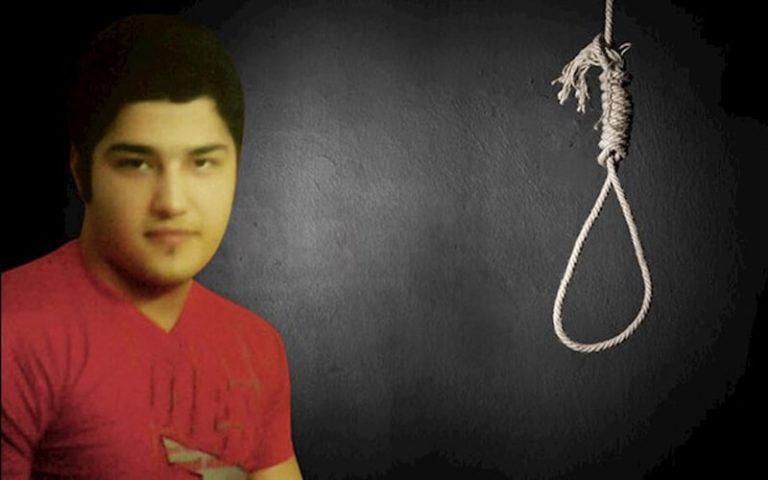
In a horrible violation of human rights and international conventions, Iranian authorities executed juvenile offender Mohammad Hassan Rezaei at the Lakan Prison, in Rasht city. Security forces arrested Rezaei 12 years ago, accusing him of murdering a man. However, in the lack of reliable evidence, interrogators severely tortured him and coerced him to accept the crime. Afterward, Iran’s judiciary filed forced confessions as testimony and sentenced him to death. Mohammad Hassan Rezaei was the fourth juvenile offender, hanged in 2020. Human rights activists and organizations previously expressed their concerns over the immediate execution of Rezaei. Since December 18, Amnesty International launched an urgent action, calling human rights defenders to demand Iranian authorities to suspend the death penalty. However, the government finally transferred him to solitary confinement on Wednesday, December 30. Authorities acknowledged the Rezaei family to visit their loved one for the last time. “After more than 12 years on death row, Mohammad Hassan Rezaei was transferred to solitary confinement in Lakan Prison in Rasht on Thursday, and his family was told that his execution would be carried out ‘in a week’. The Iranian authorities are yet again waging an abhorrent assault on children’s rights and making an absolute mockery of juvenile justice,” said Diana Eltahawy, Deputy Director for the Middle East and North Africa at Amnesty International. “Mohammad Hassan Rezaiee arrested at 16 and tortured to “confess” is hours away from execution in a prison in Rasht, Iran. The Supreme Leader Ali Khamenei, President Hassan Rouhani, and Foreign Minister Mohammad Javad Zarif must halt his execution now and ensure a fair retrial in accordance with the rules of juvenile justice. #SaveHassan,”  Amnesty Iran tweeted on December 30. “Iran is one of the last remaining countries in the world which continued to carry out executions, even for crimes committed by minors, in violation of its obligations under the International Covenant On Civil and Political Rights and Convention on the Rights of the Child,” wrote Iran Human Rights Monitor on December 31. According to human rights defenders, the Iranian government has executed at least 257 prisoners, including political and civil rights activists, prisoners of conscience, women, juvenile offenders, and followers of religious and ethnic minorities. The Iranian opposition extremely slammed the Iranian authorities for this execution. “A prisoner was executed today in Rasht after 13 years of imprisonment. He had been arrested at the age of 16. Continued executions in Zahedan, Sanandaj, and Urmia show that this regime cannot survive without torture and executions,” the President-elect of National Council of Resistance of Iran Maryam Rajavi tweeted, adding, “I call for urgent action to save death-row prisoners, particularly minors, whose execution is in violation of international conventions.”

Iran: Improving Citizens’ Livelihood or Stealing From the Nation

0
These days, the Iranian Parliament (Majlis) Speaker Mohammad Bagher Ghalibaf prepares himself for the 2021 Presidential election. In this context, he raises ridiculous claims about people’s livelihood dilemmas and their hardship. He has claimed that the Majlis will pay attention to citizens’ problems. “We study the 2021-22 budget bill article to article and will principally reform it in the way that benefits the people’s livelihood and our dear country,” Majlis’s official website ICANA quoted Ghalibaf as saying on December 20. Notably, the Majlis Speaker has a notorious background in corruption and embezzlement, which forced him to resign as Tehran Mayor in 2017. Tehrani residents know him as someone who donated public estates and properties to his allies and relatives.
Iran’s Presidential Election and Intensification of Crises
In May 2017, during the Presidential campaign, Vice-President Eshaq Jahangiri shed light on Ghalibaf’s corruption cases. “Mr. Ghalibaf, have you ever known about the Ghavamin bank conditions? You established many of these credit institutions,” Jahangiri said. Furthermore, in 1999, as the commander-in-chief of the State Security Forces (SSF), he played a leading role in the crackdown on student protests. During the 2017 Presidential debate, President Hassan Rouhani revealed Ghalibaf’s ruthless methods called ‘putting students in pipes’ to suppress protesters. “Mr. Ghalibaf, you always planned to put [protesters] into ‘pipes.’ Every time, you were saying in the secretariat [of the National Security Supreme Council], ‘Let me put these students into pipes over two hours. If we didn’t object to you, now, all the Iranian universities would have been filled with pipes,” ILNA news agency quoted Rouhani as saying on May 12, 2017. Ghalibaf is also proud of crimes against dissidents, including supporters of the Mojahedin-e Khalq (MEK/PMOI), in the 1980s. “I’d be among club wielders on the ground if it was necessary to beat [people], and it is my pride. Since 1979 I was beating [MEK leader] Massoud Rajavi‘s supporters. We were beating them on the streets and in colleges and were stopping them. We were among Beheshti’s supporters and they were Massoud Rajavi’s. We have been club wielders on the ground since then,” Ghalibaf said in a Basij meeting in Tehran Sharif University on May 12, 2013. Moreover, the Majlis itself is considered one of the corrupt centers, which issues ‘necessary licenses’ for plundering institutions. Several officials implicitly admit to the Majlis’s role in profiteering policies, saying, “The budget bill depends on expenditures of [official’s] loved ones.” On December 16, the state-run Ofogh TV Channel even stepped further and bluntly blamed MPs for looting people’s belongings. “Improving the livelihood is carried out by withdrawing the nation’s savings,” the TV Channel said in a broadcast. On the same day, Shargh daily pointed out expenditures that are supposed to be covered through people’s pockets. “The same Majlis, whose members were at the top of flu vaccine receivers’ lists and some of them were rejecting automakers’ gifted cars because the cars were not SUV-model, these MPs are supposed to receive a 1.88-trillion-rial [$7.286 million] welfare credit,” Shargh wrote on December 16. “Thanks to the chart—published for the first time about the 2021-22 budget bill and which showed how executive organs spend credits—we obtained interesting figures about welfare expenditures of the country’s legislator apparatus. The big number belongs to the Majlis, and the Guardian Council will also spend 130 billion rials [$504,000] on welfare fields [alone],” the daily added.
Iran: 2021-22 Budget Bill and Economic Crisis
This is while MPs systematically benefit from special privileges such as a Dena+ automobile and billion rials of low-interest loans for residing in the best areas in the capital, renting an office, and hiring staff, who are usually chosen from their relatives. Surprisingly, Ghalibaf claimed he would improve impoverished people’s livelihood while each lawmaker has received 2 billion rials [$7,750] as the housing right. Notably, this huge bonus is in addition to stellar salaries and pensions. On the other hand, to help the budget bill gain approval, Rouhani’s government has filled MPs’ accounts with countless advantages. Rouhani grants generous privileges to MPs while many of the administration’s employees and workers, including municipal workers, have yet to receive their wages for several months. However, as people endure additional pressure due to the coronavirus consequences, the government prefers to fill MPs’ pockets. “For five months, you did not pay my salary. As a sweeper and municipal worker, how should I respond to my family? How can I say to my children that I have no money?” a municipal worker said in a clip circulated on social media. However, MPs’ luxury lifestyles and windfall salaries have intensified public hatred of the legislator apparatus. Many people believe that no one represents them at the Majlis and all of the ‘lawmakers’ are Supreme Leader Ali Khamenei‘s appointees and merely obey and implement his orders. The economic gap between governors and the people they governed displays systematic corruption and officials’ abuse of power. This issue prompted officials to frequently warn each other about public ire and potential anti-establishment protests. “Officials’ and managers’ aristocratic lives and forgetting the hardships faced by society’s low-income and needy classes are the reasons for the people’s growing economic and living dilemmas. Any kind of negligence about the future would lead the country to serious challenges,” ICANA quoted Hossein Noosh-Abadi, MP from Tehran, as saying on December 16. Ghalibaf’s hollow gestures and Noosh-Abadi’s remarks prove the country’s fragile conditions. In reality, the Iranian government is deeply concerned about potential protests, which may end the dictatorship’s rule. Officials’ 41 years of failures and the coronavirus consequences have placed society in a volatile state, and this volcano may erupt at any moment.
IRGC Rushes for Iran’s 2021 Presidential Election

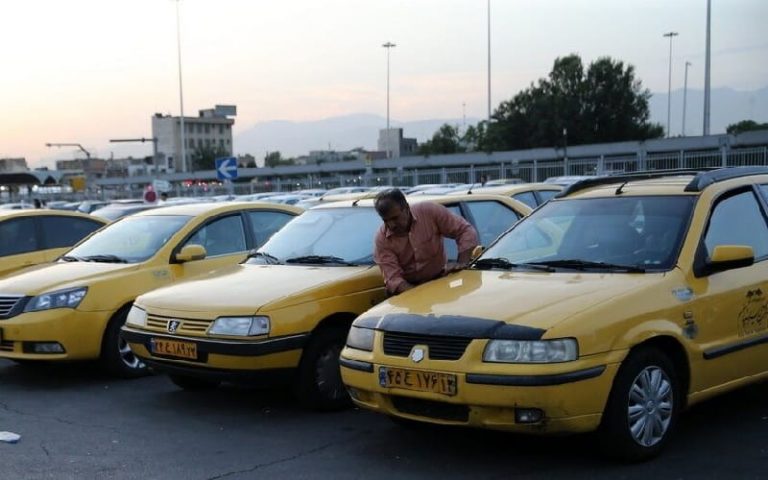
Iran: Taxi Drivers Faces $40 Million of Disadvantage Since Pandemic Began

0
According to Ali Aslani, Deputy Chief of the Iranian Taxi Driver Association, from February to November, taxi drivers’ daily incomes have decreased by nearly 65 percent. He estimated that this percentage is equivalent to more than 8 trillion rials [$32 million] disadvantage for this business. “In metropolitans, there are 123,888 taxi drivers working with an average daily income of 1.8 million rials [$7.20]. There are 296,112 others who are working in different cities with an average daily income of 1.1 million rials [$4.40],” Aslani said. In this respect, the monthly income of a taxi driver is less than 55 million rials [$220]. Notably, these people must spend more than half of this money on gas and car maintenance expenditures. Furthermore, the taxi driver is one of the most vulnerable careers, particularly in the coronavirus era. Due to their job conditions, they have to go onto the streets to make ends meet. In the most dangerous situation and while Covid-19 claims hundreds of lives every day, this tailor strata must continue its job with close relations with passengers. In other words, to gain meager money, they must endure their work’s difficulties, including high prices of spare parts, worn-out cars, gas and tire prices, on the one hand, and coronavirus risks and additional expenditures of health and hygienic items and equipment on the other hand. They also must be patient under any condition. Health and hygienic expenditures, including face masks, gloves, and protection shields that separates drivers from passengers, cost around 100,000 rials [$0.40] per day. On the other hand, drivers must pick up only one passenger at a time due to health protocols, which means another disadvantage for these strata. This is while, the price of essential goods occasionally changes every hour, and these people must work hard to earn a meager living. In such circumstances, health measures are not a priority for them, and their main concern is how to feed their families. On December 27, in an interview with Eqtesad Online website, Aslani provided an estimation of taxi drivers’ disadvantage during the Covid-19 pandemic. “In the past 10 months, taxi drivers suffered by exactly 8,269,921,600,000 rials [$33.08 million],” said the Deputy Chief of the Iranian Taxi Driver Association, adding, “This amount has surpassed 10 trillion rials [$40 million] until November 20.” “Van taxi drivers dealt with the most disadvantage because their conditions are far worse than other drivers. They faced the largest decrease in income,” Aslani said. Notably, since the emergence of Covid-19 in Iran, at least 86 taxi drivers have lost their lives to the disease only in the capital Tehran.
Iranian Nurses, Forgotten Angels

World Must Push Iran to Procure Covid-19 Vaccines for its Citizens

On December 27, Iranian media published Hamas Co-founder Mahmoud al-Zahar’s remarks, praising Qassem Soleimani, the former chief of the Revolutionary Guards (IRGC) Quds Force. In an interview with Iran’s state-controlled Arabic language al-Alam, al-Zahar admitted that in 2006, Qassem Soleimani delivered at least $22 million in cash to him and to his assistants. Qassem Soleimani, as the mastermind of Tehran’s terrorist activities in the Middle East and across the globe, was killed in a U.S. drone attack near the Baghdad International Airport on January 3, 2019. Soleimani’s death was an irreparable blow to the ayatollahs’ terror machine and significantly decreased Tehran’s atrocities in the Middle East despite IRGC commanders’ vows for a ‘harsh revenge.’ “My first meeting with ‘martyr’ Qassem Soleimani was after I became the Palestinian Foreign Minister in 2006. I visited several countries, including Iran. I met with my Iranian counterpart and a few other officials. Prior to my return, I also met with Mr. Qassem Soleimani,” said Mahmoud al-Zahar in his interview with al-Alam. “The meeting with President Mahmoud [Ahmadi] Nejad was positive. I had some requests from him, and he referred me to Mr. Qassem Soleimani. In a meeting, I told [Soleimani] that our critical problem is paying our employees’ paychecks, support, and aid that we must provide,” he added.
Extension of Iran Arms Embargo Is an Imperative Act
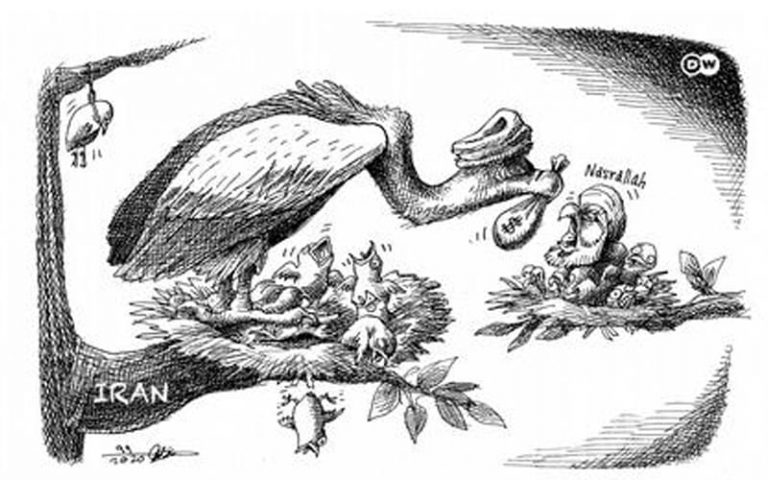
Later, he explained how the former IRGC-QF commander immediately granted the country’s national reserves to fund a radical ally of the government. “A decision was quickly made because I had to leave the next day. I saw $22 million in cash in several suitcases at the airport. We had agreed on more, but since we were a nine-man delegation, we could not carry more due to flight instructions. There were 40 kilograms of money in each suitcase,” al-Zahar elaborated. This is while the government frequently grumbles about U.S. sanctions and economic pressure, claiming they have paralyzed the country’s ability to purchase food and medication. However, in reality, any transaction and financial contract with Iran is merely deposited into IRGC commanders’ pockets, funneling extremist militias and funding proxy and sectarian conflicts in the region. In the 2016 Davos session, former Secretary of State John Kerry acknowledged to CNBC that some of the money Iran received in sanctions relief would go to groups considered terrorists. “I think that some of it will end up in the hands of the IRGC or other entities, some of which are labeled terrorists,” he said in the interview in Davos on January 21, 2016. Also, Lebanese Hezbollah’s Secretary-General Hassan Nasrallah bluntly acknowledged that the Iranian government bears all Hezbollah members’ stipends and expenditures. “We are openly saying and being transparent and honest that all Hezbollah’s budget, salaries, funds, food, drink, weapons, missiles, and everything come from the Islamic Republic of Iran,” Nasrallah said in a speech aired by Hezbollah-run TV in July 2016. In this respect, while the theocratic state has shamefully taken Iranians’ lives and health hostage for political and economic interests and delayed in procuring credible Covid-19 vaccines, the international community must keep up pressure on the ayatollahs until they stop squandering the country’s resources on terrorism and warmongering. On December 7, a COVAX spokesperson declared that U.S. sanctions do not prohibit Tehran from purchasing vaccines and necessities to counter the health crisis. Governments must push Iranian officials to procure required doses of coronavirus vaccines immediately. This pressure would spare Iranians’ lives and health and decrease the ayatollahs’ and IRGC’s abilities to jeopardize peace and security in the region and across the globe.
Iran: Covid-19 Vaccine and Ayatollahs’ Dirty Business

Iran’s Female Breadwinners Are Fighting Losing Battle Against Deadly Poverty

Most Iranian families have been subjected to increased economic and social problems throughout 2020 because of the coronavirus outbreak, but those headed by women have suffered the most because of the government’s institutionalized gender-based discrimination. Regardless of the virus, the gender-based harassment or discrimination they may suffer, or anything else, female heads of household must still leave their house in order to put food on the table and almost all are in need of help because they have little savings to provide a buffer during these times.
Iran: Rural Women Are the Most Marginalized People

Official Statistics of Female Breadwinners

While the authorities are eager to hide or disguise situations, leaks from inside the government report 4 million female breadwinners, likely because of increasing divorce rates. Sociologist Amanullah Bateni advises that 71 percent of divorced women have dependent children and 90% of those would not get married again, but that absent fathers create a whole realm of problems for the families. He said that a third of sex workers are married to a prisoner and the overwhelming cause of their problems is poverty, while 48.7 percent of female heads of household are around 60 years old, which makes it harder to get a job.

Female Breadwinners’ Employments

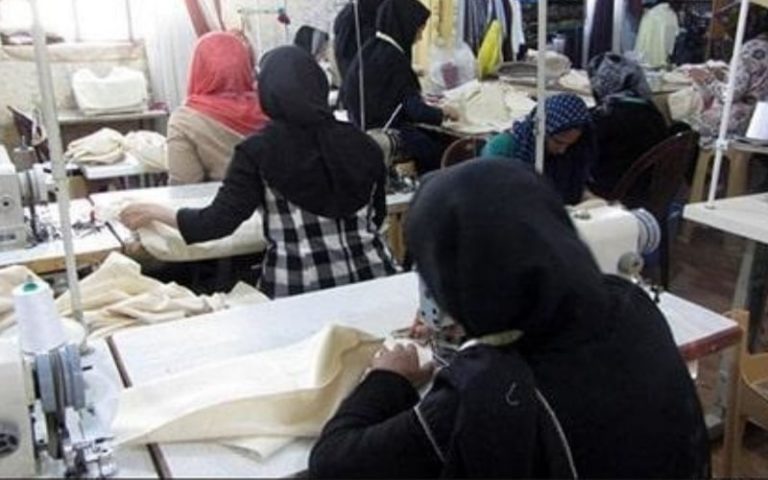
The most common jobs for female breadwinners involve cooking, making pastry, pickling, packaging, carpet-weaving, teaching, personal care, and tailoring, but many of these were affected by the pandemic, as a result of knock-on economic problems and fewer people at markets. “Especially for women who make food or handicrafts from home, the current health protocols have caused an increase in costs and a decrease in customers,” said Mojtaba Naji, the Social Affairs Deputy of Isfahan’s Welfare Department. While Somayeh Ghasemi Tusi, Deputy of Women’s and Family Affairs in Mazandaran Governorate, said:  “There are 800 active kindergartens in Mazandaran province with 8,000 female employees. About 30-40 percent of these women are heads of household and are negatively affected by the closure of kindergartens.”
Female Peddlers in Iran Risking Death
One of the biggest problems, caused by the mullahs’ discriminatory laws that means many girls are marrying and having kids before they finish education, is low levels of education for women, leading to jobs that are part-time, uninsured, and with little in the way of benefits. These women are the first to go during hard economic times. In addition, the government has not helped, providing only a meager amount of welfare that is far below the poverty line. Most female heads of household are fighting with deadly poverty and face attack from the regime’s agents. No wonder they are now facing a huge amount of mental and physical problems.