Home Blog Page 300

Iranian Officials Stuck as Power Slips Away

For over 40 years, Iran’s clerical government has maintained its grip on power through domestic repression and foreign terrorism, and warmongering, none of which is in line with modern countries.

Of course, it is the illicit actions abroad that have raised concerns amongst those in the EU and US, so Supreme Leader Ali Khamenei and President Hassan Rouhani know that even if further negotiations take place to prop up the Joint Comprehensive Plan of Action (JCPOA), it will focus on far more than the nuclear deal.

Khamenei defended Iran’s regional actions and missile program on January 8, saying that Iran had a “duty” to do this because it “strengthens” their alliances across the Middle East, reiterating that ayatollahs will not give up its missiles or regional influence.

Khamenei Bans Importing COVID Vaccines, Leading Iran to More Deaths

But German Foreign Minister Haiku Moss said on behalf of the EU that any new deal with Iran must contain increased nuclear restrictions, an end to ballistic missile testing, and limits on Iran’s regional power.

So, the international community is clearly targeting one of the two branches of Iran’s power. The other, domestic repression, is being targeted by the people.

Over the past few months, protesters in Iran have attacked hundreds of centers controlled by the Revolutionary Guard Corps (IRGC), the Basij, and the Intelligence and Security Ministry (MOIS), while also burning countless posters of Iran’s leaders.

The intention of these activists, often guided by the Resistance Units of the Mujahedin-e Khalq (MEK), is to overthrow the ruling system in Iran and the institution of democracy.

Their actions are on the rise and many, including in Iran’s state-run media, are predicting that a popular protest will happen in 2021, based on previous protests in 2019 and 2017.

IRGC Rushes for Iran’s 2021 Presidential Election

Why are they so certain? Well, these nationwide protests, which rocked the clerical government to its core and ended in a bloody crackdown that left thousands of protesters dead, began over economic concerns and these have only worsened since because of the ayatollahs’ mishandling of the pandemic.

Khamenei is stuck in an unwinnable situation. To try and ease the economic crisis and prevent protests, he must negotiate with the West so that sanctions on Iranian oil sales can be eased. But if he does this, he will look weak, which is dangerous for him ahead of the election in June.

Thus, he is closing ranks, which included purging the parliament of people he suspected would not support him and changing the rules for presidential candidates to favor his allies, like parliamentary speaker Mohammad Bagher Ghalibaf. The idea being that if he can ensure total, unyielding control over the system, he can negotiate.

But will the rest of the world want to negotiate? It’s looking less likely by the day.

Iran’s Presidential Election and Intensification of Crises

Iran Has Tanker Seized by Indonesia Just Weeks after Seizing One from South Korea

On Sunday, January 24, the government of Indonesia announced that its coast guard had seized two tankers within its territorial waters, one of which was sailing under the flag of the Islamic Republic of Iran.

Tehran responded the following day by demanding answers and contradicting Jakarta’s explanation of the incident, and it did so without any apparent acknowledgment of the irony.

Earlier in the month, Iran’s Islamic Revolutionary Guard Corps (IRGC) had seized a South Korea-flagged tanker in the Strait of Hormuz, leading to numerous questions about the Iranian regime’s intentions and the credibility of its initial explanation.

Iran’s New Piracy and Blackmail

The IRGC’s action came just ahead of a pre-planned visit from a South Korean delegation that was expected to discuss the possible release of seven billion dollars in Iranian earnings from oil sales, which remained frozen in accordance with U.S. sanctions.

Many observers quickly assumed that the ship’s seizure was intended to provide Tehran with added leverage in this discussion. And although the Islamic Republic officially denied this at first by stating that the tanker had violated the law by polluting the waterway, the cover-story was soon abandoned by some officials and state media outlets.

The regime’s false claims, in that case, may have further damaged its credibility regarding the more recent case. But that has not stopped Tehran from trying to promote its own narrative.

However, that narrative has been comparatively vague, with Foreign Ministry Spokesperson Saied Khatibzadeh saying only that the seizure of the Iranian ship was a “technical issue” and that it would be quickly resolved.

“Our Ports Organization and the shipowner company are looking to find the cause of the issue and resolve it,” he said in a televised news conference on Monday even those Jakarta had already explained that the tanker was “caught red-handed” illegally transferring oil from one ship to another.

Iran’s Oil Smuggling Problem

Ironically, the incident near Indonesia proved to be reminiscent of Tehran’s apparently false allegation of pollution by the South Korean ship. Indonesian coast guard spokesman Wisnu Pramandita explained that the nature of the rendezvous between the Iranian-flagged ship and its Panamanian-flagged counterpart was immediately obvious because there was oil spilling into the waters around them.

These sorts of ship-to-ship transfers are a common feature of Iran’s strategy for evading U.S. sanctions, steadily ramped up throughout the latter half of the Trump administration and caused Iran’s oil exports to decline from more than two million barrels per day to merely a few hundred thousand.

The precise number has been difficult to pin down, largely because of the uncertain volume and effectiveness of the ship-to-ship transfers, which allow middlemen to purchase Iranian oil at a discount and then sell it to customers who may or may not be aware of its origin and the associated risk of penalties from the U.S. Treasury.

Unresolved questions about these smuggling operations are arguably beneficial to Iran in terms of state propaganda. Since the international community is aware that illicit transfers are taking place, the Iranian regime enjoys some degree of credibility when claiming that it has effectively weathered the sanctions and kept itself in a position to defy Western demands for some time to come.

Iran’s Oil Minister Bijan Zanganeh made precisely this claim last week when he said that the Islamic Republic had achieved record highs specifically in the sale of refined petroleum products, which can be sold off piecemeal to small industries and private buyers.

Disaster of Oil-Presell to the People by Iran’s Government

Zanganeh went on to say that by keeping its head above water in this fashion, the Iranian oil industry was preparing to “return to the market stronger than before” in the event that sanctions are removed.

By portraying the U.S. sanctions as ineffective, he and other officials are evidently hoping to convince the new White House to take a different tack and remove sanctions as a stepping stone toward negotiations.

But although President Joe Biden has indicated that he is open to returning to the nuclear deal that his predecessor pulled out of before restoring and expanding sanctions, he has also ruled out the possibility of the U.S. taking the first step toward restoring the former status quo.

The Ayatollahs Hope U.S. Elections Will Save Them from Public Outrage

If Zanganeh’s claims about Iranian impervious had any chances of changing Biden’s mind on this point, those chances most likely diminished in the wake of both maritime incidents.

Both can easily be interpreted as signs of Iran’s economic weakness and mounting desperation for cash infusions that will help the regime to stave off both compromise and collapse for a little while longer.

In the first place, Tehran took on the considerable risk of international blowback by seizing a South Korean tanker and providing a highly questionable explanation for it.

And it did so in exchange for a comparatively little promise of reward. So far, South Korea has shown no sign of being willing to release Iran’s seven billion dollars or risk U.S. sanctions enforcement in order to secure the release of its ship or sailors.

Indonesia’s seizure of the Iranian-flagged vessel does not reveal anything new about the Islamic Republic, but it does serve as a reminder of the lengths to which the regime must go in order to circumvent Iranian sanctions.

As more information reaches the international press about the illegal activity that was interrupted, the incident may also reveal the extent of Iran’s financial losses from these sorts of dealings.

That in turn may reinforce perceptions of an Iranian economy on the brink of collapse, with the U.S. and its allies holding most of the leverage in future talks over matters including but not limited to the Iranian nuclear program.

Le Drian Should Get Tougher on Iran

French Foreign Minister Jean Yves Le Drian said earlier in January that the 2015 Iran nuclear deal was deteriorating, urging Iran to stop its violations at once and abide by the restrictions.

However, these comments still fall short, according to the Iranian Resistance. They advised that while he is less likely than some others in Europe to appease the ayatollahs over their violations, stressing that change is needed immediately because of the threat posed by a nuclear-ready Iran, he is not calling for “appropriate policy demands.”

The Iranian opposition coalition National Council of Resistance of Iran (NCRI) said that the Joint Comprehensive Plan of Action (JCPOA) cannot be solved through negotiations because that will only lead to the same situation again.

Therefore, they say that Le Drian is wrong to balance his condemnation for Iran violations with criticism of the U.S. for pulling out of the deal in 2018, citing Iranian noncompliance.

In the interview where Le Drian criticized the Islamic Republic for beginning to produce uranium metal, which doesn’t have any real function outside of nuclear bombs, he criticized the U.S.’s maximum pressure campaign.

Tehran Is Concerned About a New “JCPOA Plus”

“It increased the risk and threat from Iran. This implies that Iran’s violations were a reaction to the U.S. campaign when we know that certain violations predate the U.S. withdrawal,” said the French Foreign Minister.

The Iranian Resistance offered these five points to prove that the JCPOA had failed in its objectives:

  • Iran’s nuclear infrastructure remained intact, so they were not prevented from building a bomb.
  • Iran continued its nuclear program after the deal was signed, which allowed them to resume 20 percent enrichment uranium without delay when they wanted to.
  • Iran’s violation proves that they are still dedicated to getting a nuclear weapon.
  • Iran’s failure to fulfill its promises has destroyed the faith placed in it.
  • Iran is blackmailing the world with the nuclear threat.

Iran’s New Piracy and Blackmail

“The appropriate answer is not to panic or offer more concession to the regime but to send a sharp and clear message that if it does not stop the provocation and fully abide by its commitments, European countries will adopt a maximum pressure policy.” the Resistance said.

They advised that the maximum pressure campaign is ramped up by all nations that wish to see a non-nuclear Iran because the only way to stop ayatollahs is to show them the “complete economic and diplomatic isolation” is the consequence of continuing these malign actions.

Iranian dissidents believe this would lead, eventually, to the deterioration of the Iranian government’s malign behavior and terrorist activities in the region and its nuclear extortion alike.

Taliban’s Political Deputy Arrives in Iran

0

On January 27, Taliban’s political deputy Mulla Abdulghani Baradar arrived in Tehran, heading a Taliban delegation. This is while the Afghan government has explicitly announced its objection over Iran’s approach toward this group. Previously, in December 2019, Mulla Baradar had traveled to Iran and visited Foreign Minister Mohammad Javad Zarif at the Ministry.

The Afghan government strongly opposes hosting this group, describing it as “contrary to all principles and relations between countries.” Earlier, in 2018, Taliban Spokesperson Zabihollah Mojahed pointed to the visit of the group’s representatives to Tehran and meeting with several Iranian authorities.

“The Islamic Republic of Iran is Afghanistan’s neighbor and an Islamic State alike. We have common interests. Regional security is important for us, and peace and stability in the region is impossible without collaboration between neighboring and regional countries,” the Taliban Spokesperson said.

On the other hand, there has been no optimistic news about the peace negotiations between the Afghan government and the Taliban in Qatar. Furthermore, there are many ambiguities about the negotiations’ outcome.

Western Policymakers Ignore Iran-Al Qaeda Relationship at Their Peril

Talks with a Terrorist Entity

Taliban’s representatives have arrived in Tehran for negotiations and talks while the Iranian government has designated the group as a terrorist entity. Already, in an interview with the Afghan TV Channel Tolou, Zarif said that his government still recognizes the Taliban as a terrorist group.

“According to [the Iranian government’s] law, Taliban is still a terrorist entity, and Iran has yet to revoke the Taliban’s terrorist designation,” Zarif said.

Iran’s Top Security Official Blames the U.S. for Failure of Peace Negotiations

Ali Shamkhani, the Secretary of Iran’s Supreme National Security Council, claimed, “Peace negotiations are a U.S. show-off.” During his visit with the Taliban’s delegation, Shamkhani blamed the U.S. strategy in Afghanistan, saying, “It ensures the continuation of war and bloodshed between different tribes and proposes to create an impasse between various groups.”

This is while U.S. Special Representative for Afghanistan Reconciliation Zalmay Khalilzad had previously underlined Tehran’s destructive and irresponsible role in the peace negotiations.

Following the talks with Taliban’s representatives, Shamkhani praised the group’s hostility against the U.S. “During today’s visit with Taliban’s political delegation, I found that the group’s leaders are determined in the struggle against America,” Shamkhani tweeted. “Someone, who has spent 13 years in Guantanamo Prison under their torture, did not put aside the regional struggle against the U.S.”

Iran FM’s Afghanistan Comments Cause Controversy

Mulla Abdulghani also acknowledged his group’s readiness for protecting the Iran-Afghanistan borders. He also affirmed the Taliban’s willingness for border partnerships with the Islamic Republic.

During the U.S. invasion of Afghanistan, Tehran allowed American fighters to strike the Taliban’s bases via its sky. However, following the Taliban’s overthrown in December 2001, Iranian authorities hosted Taliban fugitives, including the son of Osama Bin Laden, Hamza, and Al Qaeda’s second-in-command, Abdullah Ahmed Abdullah, known as Muhammad al-Masri, and his family, for years.

In fact, Tehran wanted a weak terrorist group to pull its strings easily. In this respect, Iranian authorities hosted high-ranking individuals of Taliban and Al Qaeda to exploit the groups at the best time.

Now, due to the Iranian government’s awkward corner, observers believe that Tehran seemingly uses this hidden card to win required privileges from the new U.S. administration.

Iran Continues Killing Afghans on the Ground Despite Vowing a Probe

Iran’s Human Rights Abuses in 2020

Iran Human Rights Monitor has just produced its annual report on human rights abuses in Iran in 2020, pulling together these atrocious violations into a single, harrowing document.

Key themes include:

  • Executions, especially of political prisoners
  • Corporal punishment, including floggings and amputations
  • Prisoner mistreatment, including inhumane sanitary conditions and torture
  • Crackdowns on those who support and defend human rights, including lawyers, activists, teachers, journalists, students, and more, which has included arbitrary arrest and extrajudicial killings

Executions in Iran in 2020

Iran executed at least 255 people in 2020, upholding its place as one of the world’s top executioners, with around 57 of these people killed for crimes other than murder, including political actions, drug offenses, sexual offenses, drinking alcohol, robbery, and the vague “waging war on God.”

Those executed included at least six juvenile offenders, eight women, and 12 political prisoners, including champion wrestler Navid Afkari.

Of course, given the secrecy of the regime, these figures were reported by human rights activists inside Iran who risked their lives. We can assume that all of the figures in this report are a minimum.

Iran: Seven Silent Executions at the End of 2020

Corporeal Punishment Against Offenders in 2020

At least 19 people were flogged in 2020 for “crimes” including peaceful protest, criticizing government officials, demanding their rights, and drinking alcohol. This included protesters Ali Azizi, Elyar Hosseinzadeh, Foad Enayati, Ahmadreza Haeri, and Mohammad Baqer Souri.

Meanwhile, the regime continued to issue lashing or amputation sentences in violation of the United Nations’ International Convention Against Torture, and eight people are at imminent risk of having their fingers amputated.

The increase in issuing and carrying out these sorts of punishments, especially against political activists, is an attempt to intimidate the public and prevent further protests that could spur the overthrow of the regime, as very nearly happened in 2019.

Iranian Authorities Ban Prisoners from Treatment

Torture is common in Iranian prisons and is the favored method for extracting false confessions, with the most common forms being sleep deprivation, flogging, beating death threats, and threats against loved ones.

The vivid descriptions of these are available in the report and in a separate Amnesty International report, but reading them is highly disturbing.

Amnesty International: Iran Uses Torture as Punishment

In addition to torture, prisoners are deprived of medical treatment and kept in unsanitary conditions, which makes them more vulnerable to the coronavirus.

Iran Human Rights Monitor called on the international community to hold the regime to account for crimes against humanity and stand with the Iranian people in their fight for justice, freedom, and human rights.

Their full report can be downloaded here.

EU Must Adopt Punitive Measures Against Tehran in Assadollah Assadi’s Case

0

On February 4, a criminal court in Antwerp, Belgium, is supposed to issue its final sentence about Iran’s third counselor Assadollah Assadi in Vienna. On July 1, 2018, in a joint operation between European law enforcement, Assadi was arrested in the German state of Bayern for transferring and delivering 1lb of explosive material and a detonator to a terrorist couple in Luxemburg to attack a major gathering of Iranian dissidents in Paris.

The Iranian government has a notorious background of exporting and sponsoring terrorism. However, Assadi is the first Iranian official arrested, and he is now waiting for the court’s verdict.

European security services revealed that the senior Iranian diplomat was the mastermind of a bomb plot against a gathering held by the Iranian opposition coalition National Council of Resistance of Iran (NCRI) in Villepinte, a suburb of Paris.

At the gathering, more than 100,000 Iranian dissidents and hundreds of politicians, human rights activists, lawmakers, including members of the U.S. Congress, the European Parliament, and parliaments of Arab countries, had attended to announce their solidarity with the Iranian people’s desire for a free and democratic Iran.

Belgian authorities exposed that the NCRI President-elect Maryam Rajavi—the gathering’s keynote speaker, was the main target of the bomb plot. Assadi’s accomplices, including Nasimeh Na’ami, 36, and Amir Sadouni, 40, admitted that their boss had affirmed, “Maryam Rajavi is the target.”

‌Based on undeniable evidence and documents, Belgian prosecutors urged the court to sentence Assadi to 20 years in prison. They also demanded judges sentence Assadi’s accomplices to 15 to 18 years prison, in addition to revoking their Belgian citizenship.

Historical Trial of Iranian Diplomat in Europe

Nonetheless, aside from the court’s verdicts, the Assadi case puts the international community in a historic position. On the one hand, European leaders cannot ignore the Iranian government’s threats against their national security. On the other hand, they are enthusiastic about gaining more economic privileges through the ayatollahs.

Back in November 2020, in a question for written answer E-006258/2020, MEP Gianna Gancia asked the EU High Representative Joseph Borrell about the EU’s response to the Iranian government’s terror activities on European soil.

“On November 27, 2020, Assadollah Assadi, an Iranian diplomat based in Vienna, will face court in Antwerp on charges of personally organizing a delivery of TATP explosives to a couple who intended to attack a gathering in Paris in the summer of 2018,” Ms. Gancia said.

“Hundreds of prominent politicians from both sides of the Atlantic attended the gathering, including many European dignitaries. Assadi lost his diplomatic immunity within 48 hours and was handed over to the Belgian authorities. He has been awaiting trial ever since,” she added.

“While being interrogated, Assadi highlighted acts of terrorism carried out by the Iranian regime in the broader Middle East and speculated that there were a number of terrorist groups watching his case and standing ready to launch new attacks on Western soil if Belgium does not ‘support them’ by letting the defendant off.

“1. Does the Vice-President of the Commission / High Representative of the Union for Foreign Affairs and Security Policy agree that such conduct is powerful evidence of the need for a firmer policy against the Iranian regime’s threatening activities in Europe?

“2. What recommendations has he made to the Government of Iran regarding the threats that its arrested diplomat Assadolah Assadi spoke about in an attempt to influence the outcome of his trial on terrorism charges?” MEP Gancia added.

This is a major test for the EU. The European States and particularly the European Union must clarify their priorities, Iran watchers say. Many MEPs like those who attended the gathering and were potential victims of the plot expect a firm approach toward Tehran.

In this context, in addition to legal consequences, European leaders must penalize the world’s number one state-sponsor of terrorism, shut down its embassies in the European States, and expel its ‘diplomats,’ dissidents say.

Iran’s FM Zarif Should Be Held to Account for Terrorism

Ninety Percent of Iranians Are in ‘Total Poverty’

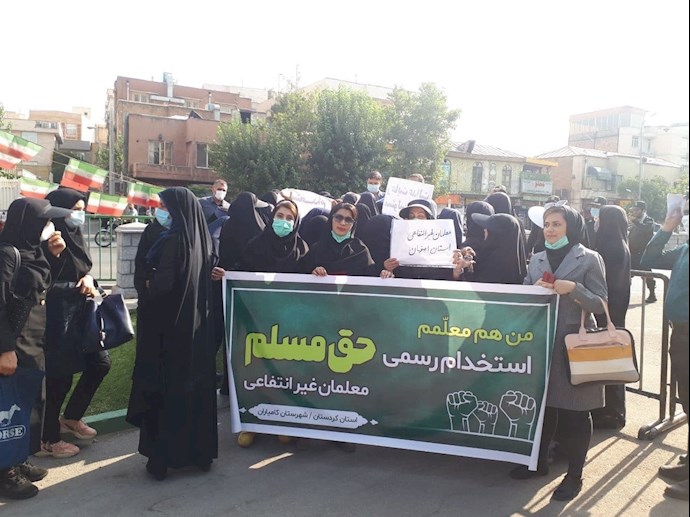
The Iranian paper Arman Daily reported Thursday that over 90 percent of Iran’s working people are now in “total poverty” with “skyrocketing prices” stopping them from buying even the most basic food items.

This sums up the type of life that the Iranian government is inflicting on the majority of the 80 million Iranians, with even some authorities even stating that the poverty line is more than three times above the average wages for workers.

Many Iranians have gone without meat for months and have dramatically reduced their consumption of rice and dairy products because of the price rise in supposedly cheap items, like bread.

Parliament (Majlis) Speaker Mohammad Bagher Ghalibaf has even spoken about the practice of “borrowing bread,” while the media reports on bread being sold in half loaves or people searching through garbage bins.

Iranian Workers Are Victims of Capital Focus in the Hands of Khamenei and the IRGC

President Hassan Rouhani has repeatedly claimed that the full store shelves indicate no such problem in Iran, but he fails to recognize why those shelves are full, which is because people can’t afford to buy anything in a country that is the eight-richest in terms of natural resources.

This problem was not solely caused by the coronavirus pandemic, because the Centre of Statistics reported that Iran’s Gross Domestic Product (GDP) dropped by 10 percent between 2016 and 2019.

“Due to the mullahs’ destructive policies, the distribution of wealth in Iran is abysmally unfair,” wrote the Iranian opposition Mojahedin-e Khalq (MEK/PMOI).

“The ruling elite and their cohorts, which account for a very small percentage of the population, have a very large share of the country’s wealth, which they acquire through abuse of power, deceitful economic policies, and repression of ordinary people. The rest of the people have to feed off the crumbs of what the mullahs leave for them,” the opposition added.

Many officials have admitted to the wealth gap, but they still try to blame it on sanctions, when the reality is that systematic corruption causing the problem in different sectors. This cannot continue and this will drive the Iranian people into the streets once again, as officials’ corruption did in 2019 and 2017.

Iranian officials were only able to hold onto power then because they cracked down violently, killing thousands of protesters with little reprise by the international community.

The Iranian people cannot wait for things to change. The Arman Daily warned high-ranking officials, writing, “Know that tomorrow is too late. The wails will transform into screams, and quieting those screams will not be easy.”

Iran Media Warns of Protests Over Crises

Iranian Media: Officials Only Bring Poverty and Inflation to the People

On January 25, Iranian media outlets once again revealed the government’s weakness in fulfilling its strategic plans. For instance, while high-ranking officials cannot hide their enthusiasm for recent political developments in the United States, Kayhan daily—Supreme Leader Ali Khamenei’s mouthpiece—carried the title, “The Godfather has returned; Terror Squads… Ready.”

Khamenei’s mouthpiece has even attributed recent protests against Russian President Vladimir Putin and explosions in Baghdad to the new U.S. President Joe Biden. In contrast, media and publications affiliated with President Hassan Rouhani insist on the imperative of negotiations with the U.S. and acquisition.

The Ayatollahs Hope U.S. Elections Will Save Them from Public Outrage

In this respect, ‘reformist’ authors warned officials over society’s volatile condition and inoperable socioeconomic crises in different fields. They also expressed their concerns over dissidents’ growing popularity—particularly the National Council of Resistance of Iran (NCRI) and Mojahedin-e Khalq (MEK/PMOI). Iranian authorities consider dissidents’ acceptance as a substantial threat to the Islamic Republic’s survival.

In its edition, Mardom Salari daily criticized the 2021-2022 budget bill and admitted to the continuous cycle of recession and inflation as a result of systematic corruption. “In such circumstances, the [Rouhani] administration has to borrow from the Central Bank of Iran (CBI) or in the case of urgency, it should receive a loan from the National Development Fund based on Supreme Leader’s permission,” the daily wrote.

“These foreign exchange resources and banknotes printed by the CBI will raise liquidity and inflation in society. As a result, this condition will negatively affect the people’s livelihood, national economy, and Gross Domestic Product (GDP). An increase will also follow it in unemployment and devaluation of investments,” Mardom Salari added.

Eqtesad-e Saramad daily pointed to the government’s 800-percent growth in tax revenue through the Stock Market. Notably, in recent weeks, Tehran Stock Market shareholders have held several rallies in front of the Bourse Organization and Economic Ministry due to a sharp drop in their investments. Now, the daily disclosed the whereabouts and fate of people’s properties and savings.

Budget Settlement Reveals Systematic Corruption in Iran

“This question remains, given that the government received huge taxes when investors had rushed to the bourse, nowadays, how much would the administration be accountable for the dire conditions of the stock market and creditors?” Saramad-e Eqtesad wrote.

“Many working families are below the poverty line or are exposed to the nutrition poverty,” Kar va Kargar daily cited remarks of an official of the Khomeini Relief Committee. “Currently, the nutrition poverty line is 6.7 million rials [$27] for each person. If you consider a family of three with the minimum wage, many working families are below the poverty line or are exposed to the nutrition poverty,” the official added.

On January 21, the MEK’s official website reported that around 90 percent of Iranian working families face absolute poverty. “Regarding workers’ current incomes, which is lower than the poverty line by three times, and rampant high prices, many people can no longer purchase their critical necessities,” the website wrote.

Mardom Salari daily also blamed Khamenei’s faction for their objections to the 2015 Iran nuclear deal, formally known as the Joint Comprehensive Plan of Action (JCPOA). “Some radical elements say that the JCPOA’s ineffectiveness led Donald Trump to withdraw from the deal,” the daily wrote.

“These people had seemingly forgotten that Trump did not withdraw from the JCPOA after one year and four months of taking power, until after the MEK launched the December 2017-January 2018 incident. They pushed the country to street riots for several days via their strategic method of ‘Resistance Units.’ According to Rouhani, following the incident, Trump had been encouraged to abandon the JCPOA,” Mardom Salari added.

Tehran Is Concerned About a New “JCPOA Plus”

Furthermore, the daily slammed ‘principalists’ for describing ‘reformists’ as the main reason for sanctions. “[Hardliners] have seemingly forgotten that all of the state’s problems began with the MEK’s activities. One of MEK’s high-ranking officials held several events in the U.S. and accused the state of producing nuclear weapons. Also, on June 14, 1991, AP reported, ‘[Chair of NCRI’s Foreign Commission] Mohammad Mohaddessin says that Iran attempts to produce nuclear weapons.’ And on June 26, 1991, the Washington Post wrote, ‘The MEK says that Iran is determined to proliferate nuclear weapons,’” the daily added.

“[Hardliners] have also forgotten that the MEK revealed the nuclear issue and made a political turmoil in the international level, which contributed to the United Nations Security Council’s consecutive resolutions. Even on February 23, 2006, then-U.S. President [George W. Bush] confirmed that ‘the MEK published details about Natanz [nuclear facilities] and Arak [heavy water facility],’ which caused sensitivity. Then the International Atomic Energy Agency was involved, and we faced consecutive resolutions of the Board of Governors,” Mardom Salari wrote.

“Maybe [hardliners] do not remember that ‘General’ Qassem Soleimani was assassinated when the MEK held more than 100 press conferences in Washington, Berlin, Paris, Brussel, London, and other Western capitals between 2002 to 2019. Using their agents in our security-research institutions, they received enormous documents and provided them to Western governments, which made our generals—particularly ‘General’ Soleimani—targets,” the daily ended.

Iranians Furious Over Ignored Domestic Abuse

Iranian police and the judiciary have provoked the Iranian people’s anger over their lack of response to the domestic violence suffered by Ashraf Sadat Hosseini over the past 27 years.

Most recently, the Tehran resident was stabbed with a machete during a violent assault by her husband and was near death by the time her son, Alireza, arrived home and took her to hospital, which the family can ill-afford.

A journalist who visited her in the hospital reported the following injuries:

  • Blinding
  • Multiple wounds to her face requiring stitches
  • Amputation of several fingers and part of one palm
  • Paralysation of the other hand

As with most cases of domestic abuse, this was not the first time. In fact, Hosseini had made statements to the police on multiple occasions – most recently about the time that he hit her over the head with a heavy vase and broke her ribs – but each time, he has been let off, with the police saying that they “couldn’t do anything.”

Her husband sought revenge on Hosseini for making this report to the police. In this respect, he tried to kill her this time, only leaving the scene (and taking one of her fingers) because people turned up.

Hosseini wrote a letter to Judiciary Chief Ebrahim Raisi, in which she questioned why the government allows this type of abuse to continue.

“Why shouldn’t the judiciary, the government, and the [Islamic Republic] system support a woman who wants to live with dignity? Why shouldn’t these people be stopped; why does the law not impose restrictions on them?” she wrote.

Facts on State-Sponsored Violence Against Iranian Women

The Iranian director of Women and Family Affairs, Massoumeh Ebtekar, has remained silent on the issue, which is a growing one in Iran, has increased 15-fold since the start of the coronavirus pandemic, according to Mashhad Welfare Department head Hassan Marvi.

This is particularly concerning, considering that Forensic Medicine Organization head Abbas Masjedi Arani reported that 85,420 women were victims of domestic abuse in 2019, although the true figure is likely much higher.

Not just because of the lack of transparency by the Iranian government, which is the world leader in domestic violence, but also because of the social pressure that would prevent many women from reporting the abuse to police in the first place.

Many may also not report their abuse because they know that the government will not do anything and that reporting the abuse could leave them in real danger of further attacks.

Violence Against Women Still Going Strong in Iran

Unprecedented Violations of Human Rights Against Iranian Baluchis

In recent weeks, Iranian Baluchis have faced unprecedented oppression by the Islamic Revolutionary Guards Corps (IRGC) and other repressive apparatuses.

According to Baluchi human rights activists, at least 16 citizens have been hanged at the Zahedan Central Prison in only 35 days. The number of executions in one prison has severely shocked the people. Activists say this number is unprecedented.

The Names of Executed People

Iranian authorities executed Behnam and Shoeib Rigi on December 19, 2020; Abdolbaset Khesht on December 20, 2020; Hamid Mirbaluchzehi and Mehraban Barahouei on December 26, 2020; Elias Ghalandarzehi, Hassan Dehvari, and Omid Mahmoudzehi on January 3; Majid Rigi on January 9; Joma Zarouzehi on January 13; Mohammad Anvar Alizehi on January 19; Younes Khaneshini, Abdolraouf Kabdani, Younes Jamshidzehi, and Shamsoddin Bajizehi on January 20; and Abdolsattar Anshini on January 23.

Tehran’s Hostage-Taking Government Executes Three Prisoners

Oppressive Measures Against Locals

Moreover, on January 23, the State Security Forces destroyed a new Sunni mosque that was under construction in Iranshahr city. Local reports say that this action was carried out under the order of Mostafa Mohami, the representative of Supreme Leader Ali Khamenei for Sistan and Baluchestan province.

“The destruction of the mosque was taken place in cooperation with the local security council and armed forces. Indeed, the Ministry of Intelligence and Security (MOIS) had prepared the scene and played the key role,” citizens reported.

Following the government’s sectarian action, locals gathered in front of Nour mosque, protesting officials’ oppressive actions. In response, government-backed individuals threatened religious men to prevent any protest.

Mullahs Increase Persecution of Sunni Muslims in Iran

Baluchi People’s Dire Living Conditions

The Iranian government amplifies pressure on residents of Sistan and Baluchestan province while many families suffer from rampant poverty. On the other hand, the state Oil Company has recently cut Baluchi truckers’ fuel quota, putting them in an awkward corner.

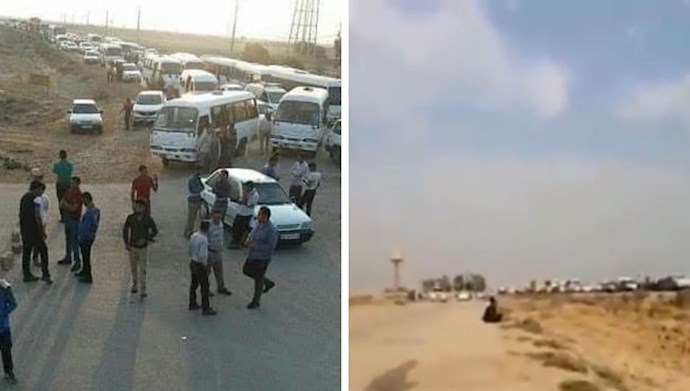
In recent weeks, truckers have held several rallies in different cities, protesting unnotified and unreasonable expiration and cut off of their fuel quota cards. However, truckers have received nothing but hollow promises despite hard work.

To cover their expenditures and fill their families’ food baskets, many citizens make ends meet through transferring and purchasing fuel. However, they practically risk their lives for meager money given the oppressive forces’ bloody reaction.

In recent months, the State Security Forces (SSF) has used lethal force to prevent citizens from engaging in this business, causing the death of several impoverished residents.

On Sunday, January 24, the SSF raided Kolahduz district in Iranshahr county under the pretense of countering trafficking. In their attack, oppressive forces of the SSF, MOIS, and plainclothes agents, targeted defenseless citizens with live ammunition. The attack prompted national wrath against the authorities’ crackdown on oppressive people in the southeastern province.

A Look Back at Last Year’s Protests in Iran