Iranian police and the judiciary have provoked the Iranian people’s anger over their lack of response to the domestic violence suffered by Ashraf Sadat Hosseini over the past 27 years.
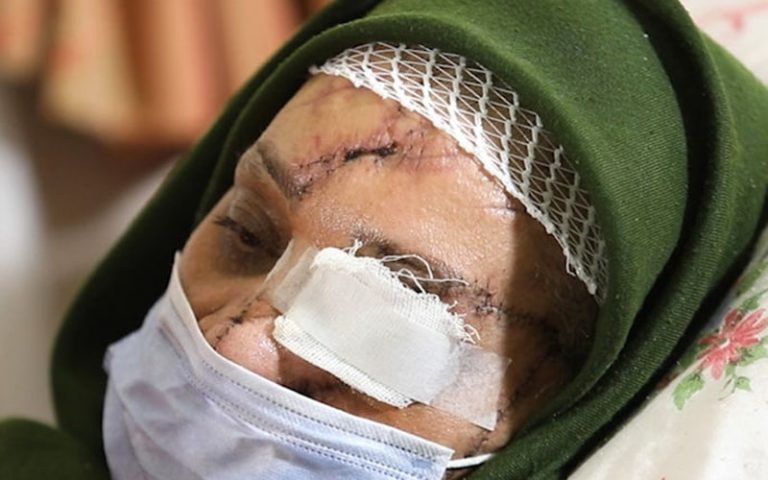
Most recently, the Tehran resident was stabbed with a machete during a violent assault by her husband and was near death by the time her son, Alireza, arrived home and took her to hospital, which the family can ill-afford.
A journalist who visited her in the hospital reported the following injuries:
Blinding
Multiple wounds to her face requiring stitches
Amputation of several fingers and part of one palm
Paralysation of the other hand
As with most cases of domestic abuse, this was not the first time. In fact, Hosseini had made statements to the police on multiple occasions – most recently about the time that he hit her over the head with a heavy vase and broke her ribs – but each time, he has been let off, with the police saying that they “couldn’t do anything.”
Her husband sought revenge on Hosseini for making this report to the police. In this respect, he tried to kill her this time, only leaving the scene (and taking one of her fingers) because people turned up.
Hosseini wrote a letter to Judiciary Chief Ebrahim Raisi, in which she questioned why the government allows this type of abuse to continue.
“Why shouldn’t the judiciary, the government, and the [Islamic Republic] system support a woman who wants to live with dignity? Why shouldn’t these people be stopped; why does the law not impose restrictions on them?” she wrote.
The Iranian director of Women and Family Affairs, Massoumeh Ebtekar, has remained silent on the issue, which is a growing one in Iran, has increased 15-fold since the start of the coronavirus pandemic, according to Mashhad Welfare Department head Hassan Marvi.
This is particularly concerning, considering that Forensic Medicine Organization head Abbas Masjedi Arani reported that 85,420 women were victims of domestic abuse in 2019, although the true figure is likely much higher.
Not just because of the lack of transparency by the Iranian government, which is the world leader in domestic violence, but also because of the social pressure that would prevent many women from reporting the abuse to police in the first place.
Many may also not report their abuse because they know that the government will not do anything and that reporting the abuse could leave them in real danger of further attacks.
In recent weeks, Iranian Baluchis have faced unprecedented oppression by the Islamic Revolutionary Guards Corps (IRGC) and other repressive apparatuses.
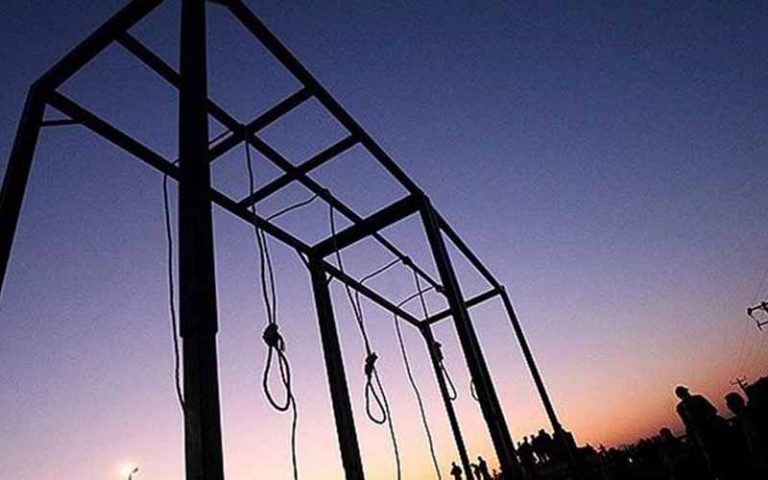
According to Baluchi human rights activists, at least 16 citizens have been hanged at the Zahedan Central Prison in only 35 days. The number of executions in one prison has severely shocked the people. Activists say this number is unprecedented.
The Names of Executed People
Iranian authorities executed Behnam and Shoeib Rigi on December 19, 2020; Abdolbaset Khesht on December 20, 2020; Hamid Mirbaluchzehi and Mehraban Barahouei on December 26, 2020; Elias Ghalandarzehi, Hassan Dehvari, and Omid Mahmoudzehi on January 3; Majid Rigi on January 9; Joma Zarouzehi on January 13; Mohammad Anvar Alizehi on January 19; Younes Khaneshini, Abdolraouf Kabdani, Younes Jamshidzehi, and Shamsoddin Bajizehi on January 20; and Abdolsattar Anshini on January 23.
Moreover, on January 23, the State Security Forces destroyed a new Sunni mosque that was under construction in Iranshahr city. Local reports say that this action was carried out under the order of Mostafa Mohami, the representative of Supreme Leader Ali Khamenei for Sistan and Baluchestan province.
“The destruction of the mosque was taken place in cooperation with the local security council and armed forces. Indeed, the Ministry of Intelligence and Security (MOIS) had prepared the scene and played the key role,” citizens reported.
Following the government’s sectarian action, locals gathered in front of Nour mosque, protesting officials’ oppressive actions. In response, government-backed individuals threatened religious men to prevent any protest.
The Iranian government amplifies pressure on residents of Sistan and Baluchestan province while many families suffer from rampant poverty. On the other hand, the state Oil Company has recently cut Baluchi truckers’ fuel quota, putting them in an awkward corner.
In recent weeks, truckers have held several rallies in different cities, protesting unnotified and unreasonable expiration and cut off of their fuel quota cards. However, truckers have received nothing but hollow promises despite hard work.
To cover their expenditures and fill their families’ food baskets, many citizens make ends meet through transferring and purchasing fuel. However, they practically risk their lives for meager money given the oppressive forces’ bloody reaction.
In recent months, the State Security Forces (SSF) has used lethal force to prevent citizens from engaging in this business, causing the death of several impoverished residents.
On Sunday, January 24, the SSF raided Kolahduz district in Iranshahr county under the pretense of countering trafficking. In their attack, oppressive forces of the SSF, MOIS, and plainclothes agents, targeted defenseless citizens with live ammunition. The attack prompted national wrath against the authorities’ crackdown on oppressive people in the southeastern province.
At the beginning of January, Iranian Supreme Leader Ali Khamenei banned the import of coronavirus vaccines from the U.S., UK, and even France, which resulted in the immediate cancellation of 150,000 doses donated by American philanthropists.
While the long-term implications are not yet known, the regime has said that vaccinations will not begin into the summer and many are wondering if that will even help because the domestic vaccine is being panned by Iran’s medical experts and media.
It does not help that the government has underplayed the scale of the virus from the start in order to justify a lackluster response to it, despite the hundreds of billions of dollars under Khamenei’s control that could have been used to fund the healthcare system or pay non-essential workers to stay home.
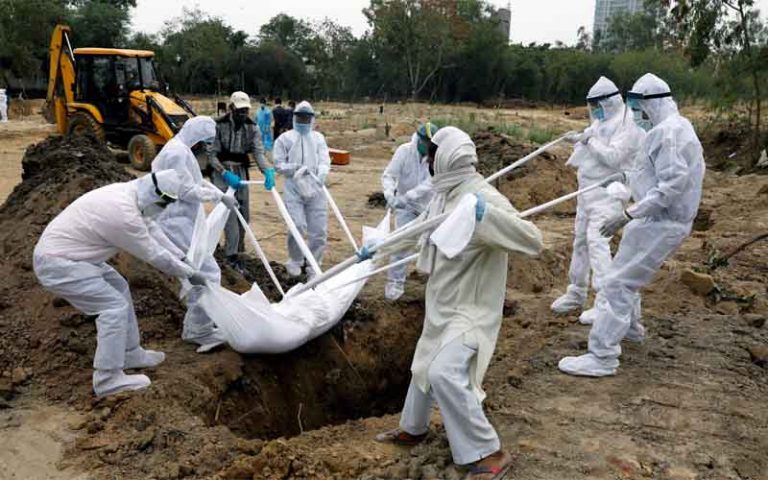
They claim that there have been 57,000 coronavirus deaths, but the reality is that this number now exceeds 205,800 based on detailed reports provided by dissidents.
Even when the government acknowledges how bad the situation is, they shirk responsibility and blame the people for rising cases and deaths. People forced to make the heart-breaking choice between staying home and starving to death or going to work and possibly catching the coronavirus.
Worse still, the authorities may have a more malign reason for banning vaccine imports and refusing to lockdown the country than just wanting to keep more money for themselves.
The pandemic allows the regime to enforce bans on public gatherings because they fear that any gathering will turn into a protest and an uprising. Public fear over a contagious disease and increased power to stop mass gatherings are helping the government keep its shaky grip on power.
The establishment has every right to be afraid, considering that the previous protests of December 2017 and November 2019 very nearly saw them thrown from power.
Iranian authorities even admitted that these protests were the result of the dissidents, despite constantly claiming that the Resistance has little support in Iran.
But while the pandemic has so far prevented a protest, the anger is growing over the bungled response. That anger needs an outlet and soon the Iranian people will decide that they would rather risk death than live under tyranny.
Regardless of whether or not they have a vaccine, they will come to the streets and remove the theocratic dictatorship.
Not only has Khamenei all but assured the end of the government, but he’s also made clear that sanctions relief won’t help them manage the pandemic because they weren’t even willing to allow donations of vaccines.
The world should increase pressure on the autocratic government with the hope that this would ensure that the Iranian people are vaccinated quicker.
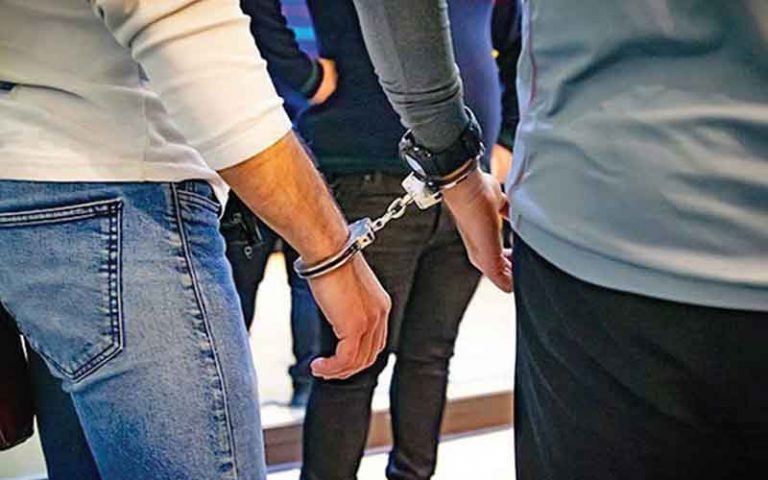
The Iranian government has arrested at least 26 Kurdish citizens and activists from Kurdish cities or areas with a large Kurdish population in the past week.
These people were arrested without warrants across Bukan, Mahabad, Marivan, Rabat, Sarvabad, and Sardasht, and are now detained in intelligence institutions. Some of those arrested by intelligence agents were beaten, while their homes were raided and their belongings seized.
Let’s look at it in more detail.
Arbitrary Arrests in Kurdish Region
Arrests in Bukan County, West Azarbaijan Province
On January 9, intelligence officers affiliated with the Ministry of Intelligence and Security (MOIS) ransacked Azimeh Nasseri’s home. They arrested her without any previous notice.
Arrests in Marivan County, Kurdistan Province
The Marivan Department of Intelligence summoned Jabbar Pirouzi, Salman Adavi, Sirvan Karim, and Zanyar Motamed to their offices, detaining all four and beating Motamed violently during the arrest.
While Dana Samadizadeh, Karou Alidad, and Karvan Minoui were also arrested and interrogated, but released after several hours, following signing written pledges.
Arrests in Mahabad County, West Azarbaijan Province
The intelligence services here arrested:
Afshin Mam Ahmadi
Darya Talebani
Iman Abdi
Salar Rahavi
Shapour Kazarpour
Sirvan Nouri
Suran Hosseinzadeh
Arrests in Sardasht County, West Azarbaijan Province
Here, intelligence agents arrested three people from Rabat City near Sardasht on January 9. They are Bahman Yousefzadeh, a Payam Nour University student whose home was ransacked and personal effects were taken, and Farhad and Fereydoun Mousapour.
Arrests in Sarvabad County, Kurdistan Province
Kurdish citizens Akram Advaii and Siamak Advaii were arrested in Sarvabad county by intelligence agents, but no information is available on the charges or their fate.
In a related story of discrimination against ethnic and religious minorities, a Baha’i citizen has been stopped from completing the university admission process because of her faith and is unable to continue higher education.
Mahsa Foruhari has tried for ten years to enter a university, after passing the national admission exam, but has been stopped every time. This year, she even applied to universities that don’t look at that test but base their acceptance on overall educational records, and still, her enrolment was denied. When she logged into the admission website, an error message said her files were “incomplete.”
The Iranian government systematically violates the rights of the 300,000 Baha’is in the country, including denying them entrance to higher education and government jobs, because they don’t recognize the faith or permit it to be practiced publicly.
This has been the case since 1979, even though Iran has signed up to the International Covenant on Economic, Social, and Cultural Rights and the International Covenant on Civil and Political Rights, which require the government to make higher education accessible to everyone equally and guarantees the Iranian people’s right to freedom of thought, conscience, and religion.
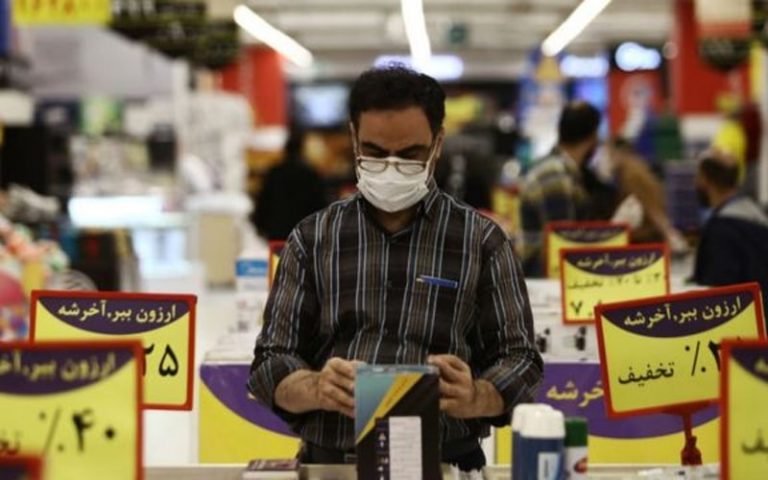
According to Iranian state media outlets, the price of bread and eggs have practically increased despite officials’ claims. On January 23, Vatan-e Emrouz daily acknowledged that the price of eggs has been raised in the past month and each egg box—containing 30 eggs— has reached 550,000 rials [$2.20] and each egg is sold for between 17,000 to 20,000 rials [$0.07 to 0.08].
A day earlier, Kayhan daily also reported that even though the price of bread had yet to increase and there is no official permission on behalf of relevant authorities, but bakeries are selling 8,500-rial [$0.03] Taftoon bread for 10,000 rials [$0.04] and 20,000-rial [$0.08] Sangak bread for 25,000 to 30,000 rials [$0.1 to 0.12].
This is while the poverty line has reached 100 million rials [$400] and based on the best estimations, more than 60 million of Iran’s population—approximately 80 percent—live below the poverty line.
In an interview with Fars news agency, affiliated with the Islamic Revolutionary Guard Corps (IRGC), chief of the Traditional Bakers Association Bizhan Nowruz Moghaddam justified this issue. “Currently, private bakeries receive half-subsidized flour, which compels them not to observe approved price. They have practically been semi-public bakeries,” he said on January 22.
“The price that was approved and announced in September 2019 does not cover bakers’ expenditures due to the increase in inflation rate and the increase in prices of all other goods,” said Nowruz Moghaddam, adding, “Of course, last year’s enactment had declared that the price is the criterion for action as long as the production costs do not increase. Therefore, bakeries did not act illegally.”
On the other hand, despite a surplus of egg production in the country, egg prices have dramatically increased in recent months. This is while officials frequently speak about a decrease in prices, according to Khabarban website on January 22.
Furthermore, Mashreq website reported a rampant increase in the price of eggs during the past month. “It is around one month that the egg price has been immeasurably raised, and the price of each egg box has reached 450,000 rials [$1.80] and each egg is traded at between 15,000 to 20,000 rials [$0.06 to 0.08]. Despite officials’ promises about a decrease in prices, the prices have yet to change,” the website wrote.
This is while the government claims that the country annually produces about five million tons of eggs. Last week, in his first press conference, the Spokesperson of Agriculture Ministry Mohammad Mehdi Boroumand announced, “Egg production in the country is at more than one million tons, and it is forecasted that this amount will increase this year.”
However, many citizens are deprived of this essential good, which is known as the pauper’s meal among Iranian families. Meanwhile, the price of other protein products like red meat, chicken meat, and dairy items have continuously increased in recent months.
In such circumstances, the government exports eggs to neighboring countries, including Iraq and Afghanistan while many people struggle hard to fill their food basket with this basic good. The high prices and scarcity of essential goods and necessities are a direct outcome of officials’ mismanagement or a specified plan.
Previously, government-backed companies and institutions kept poultry feed in ports to balance the chicken price. In April 2020, poultry farmers were compelled to eliminate around 16 million single-day chicks due to a lack of feed. At the time, high-ranking officials interfered to ease public hatred.
However, not only did the price of chicken not decline but also the high prices expanded to almost all essential supplies and foodstuffs. Now, it seems that Iranian officials plan to starve citizens and take away their morale for objecting to the political system.
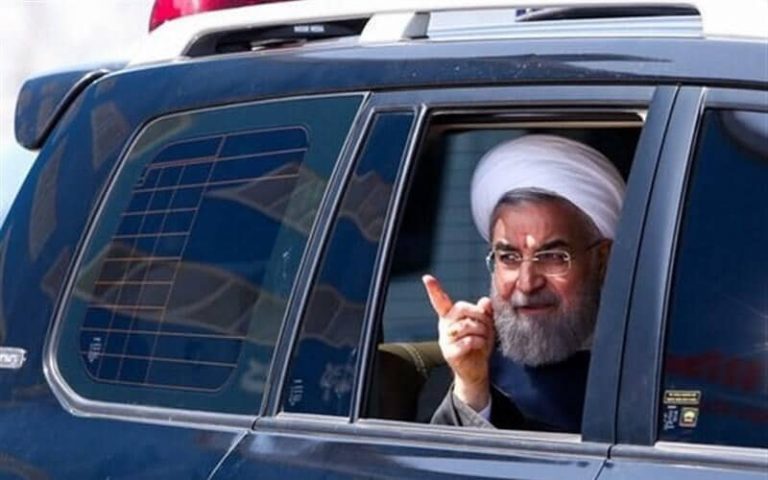
Iranian President Hassan Rouhani said Saturday that deaths from Coronavirus in Iran were less than 100 per day, but the Iranian opposition Mojahedin-e Khalq (MEK/PMOI) were reporting at least 500 people coronavirus deaths per day at the time.
However, he then appeared to backtrack by saying that the situation was fragile, even blaming people for any rise in infections, and a fourth wave would not only lead to increased hospital admissions but also deaths, which he referred to as “a rush to the cemeteries”. While health ministry spokesperson Alireza Raisi warned that each new wave would mean 8,000-10,000 new deaths, although that figure is likely much higher.
These ridiculously low death counts are just some of the bizarre claims made by the government, including that people in the U.S. and Europe are starving to death during the pandemic, while Iranians are “shedding tears of joy” because of the Islamic Republic’s assistance.
Of course, many Western governments have provided billions to save people from running out of money, while the Supreme Leader Ali Khamenei sits on billions that have not been dished out.
Rouhani also reiterated that Iran will not have a vaccine until the summer at the earliest, promising domestic vaccines and a deal agreed with another country, even though the state-run media has mocked the domestic vaccine, citing medical experts from inside Iran, and condemned the previous deals with Cuba to test a vaccine not approved by the World Health Organisation on Iranians.
All while, Khamenei banned the import of approved vaccines from the UK and US, instead opting for the unapproved ones out of Russia, China, and India. Understandably, the public is outraged and regime officials are scrambling to justify this with baseless claims that the vaccines cause cancer, impotence, or are a method to implant “GPS chips” into humans to make them into robots.
Not only is this ludicrous and false, but even if we buy into the idea that humans can be turned into robots, a GPS chip couldn’t do that. It’s a global positioning satellite chip. It could, at most, track the locations of humans, but even this is unclear because we don’t tend to implant trackers into human flesh.
The media said that the government was “shooting itself in the leg” with these comments and increasing the tenseness of the situation, which the Iranian Resistance suggested could be the thing to cause the overthrow of the Iranian regime.
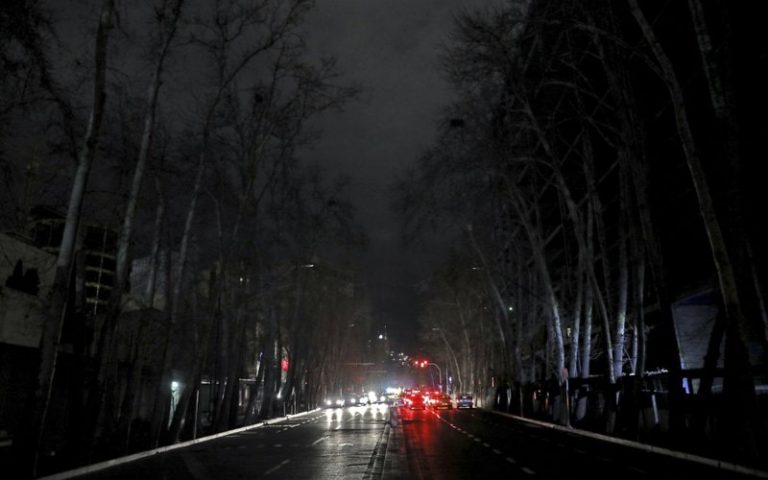
In recent weeks, Iranian citizens have faced unprecedented power outages, leading Iran’s capital and major cities to darkness. In this respect, millions of people spend the majority of nights without electricity in the dead of winter.
The government uses mazut and low-price fossil fuel to keep power plants running, causing a blanket of toxic smog and hazardous participles over the sky in Tehran. This is while Iran lies on the world’s second gas reserves. However, the leaders’ intractable decisions have isolated the country and prevented Iranians from using their natural resources.
The extraordinary air pollution endangers many citizens’ lives and health, particularly in the middle of the coronavirus pandemic. Iranian dissidents have reported the Covid-19 death toll has surpassed 205,000, which is a chilling number for an 80-million population.
This statistic — and even one-fifth of it — is enough to register Iran as the worst coronavirus-hit country in the Middle East. Now, the people must endure air pollution while they are being blamed by officials for the high Covid-19 fatalities.
In such circumstances, Iranian state media outlets and experts unveiled that the government is granting electricity to the Chinese for mining cryptocurrency at Rafsanjan Trade Zone in Kerman province, southeastern Iran. Furthermore, some media revealed that officials have established enormous Bitcoin farms in various areas.
According to reports, the government authorized 24 Bitcoin processing centers that consume an estimated 300 megawatts of energy a day, attracted tech-savvy Chinese entrepreneurs to tax-free zones in the country’s south, and permitted imports of computers for mining.
Tehran’s generously subsidized electricity has put the country on the crypto-mining map. In Iran, electricity goes for around 4 cents per kilowatt-hour, compared to an average of 13 cents in the United States. Furthermore, Iran is among the top 10 countries with the most Bitcoin mining capacity in the world — 450 megawatts a day.
On Tehran’s outskirts and across Iran’s south and northwest, windowless warehouses hum with heavy industrial machinery and rows of computers that crunch highly complex algorithms to verify transactions.
Notably, due to the national currency rial’s devaluation, officials have an indescribable appetite for untracked currencies like Bitcoin. In this respect, contrary to their publicity stunts and positions — trying to dominate the cryptocurrency industry —officials tempt their affiliated individuals to launch these farms.
“Iran’s government has sent mixed messages about Bitcoin. On one hand, it wants to capitalize on the soaring popularity of digital currency and sees value in legitimizing transactions that fly under Washington’s radar… On the other hand, the government worries about limiting how much money is sent abroad,” wrote AP on January 22.
Recent power blockages and using mazut for plants have prompted public ire against the government’s policies. In this respect, officials have been compelled to reverse some decisions out of fear of a spark in the country’s powder keg.
“The priority is with households, commercial, hospitals, and sensitive places,” said Mostfa Rajabi Mashhadi, spokesman of Iran’s electricity supply department.
However, it is unclear that how long this situation would last and when the government would launch cryptocurrency farms once again. Not least given that the new U.S. government has signaled that it has no immediate intention of offering multi-billion relief packages and pallets of cash to Iran.
An agent for the Iranian government was arrested at his home in Watertown, Massachusetts, on Monday, after ten years lobbying in secret for the mullahs whilst posing as an independent political scientist.
Kaveh Lotfolah Afrasiabi, also known as Lotfolah Kaveh Afrasiabi, is charged with “acting and conspiring to act as an unregistered agent of the Government of the Islamic Republic of Iran, in violation of the Foreign Agents Registration Act (FARA)”, according to a U.S. Justice Department press release.
“For over a decade, Kaveh Afrasiabi pitched himself to Congress, journalists, and the American public as a neutral and objective expert on Iran. However, all the while, Afrasiabi was actually a secret employee of the Government of Iran… who was being paid to spread their propaganda,” said John C. Demers, Assistant Attorney General for National Security.
Demers said that Afrasiabi had “intentionally avoided” registering his affiliation with the Justice Department, as required by the Foreign Agents Registration Act, and will now be held responsible for his actions.
“Afrasiabi allegedly sought to influence the American public and American policymakers for the benefit of his employer, the Iranian government, by disguising propaganda as objective policy analysis and expertise,” said Acting U.S. Attorney Seth DuCharme.
“This Office is committed to the robust enforcement of the Foreign Agents Registration Act, which provides the American people the tools they need to evaluate opinions and arguments in the marketplace of ideas by requiring foreign agents to declare their paymasters. Those, like the defendant, who conceal the full extent of their work for a foreign government when the law requires disclosure will face consequences for their actions,” he added.
Afrasiabi has now appeared in a Boston federal court before U.S. Magistrate Judge Jennifer C. Boal.
As with many of Tehran’s lobbyists in the U.S. and Europe, Afrasiabi’s main target was the Mojahedin-e Khalq (MEK/PMOI), which the government likes to falsely portray as a terrorist group that has no support in Iran, but because he posed as an independent political scientist, it took too long to see this as propaganda.
Alireza Jafarzadeh, deputy director of the U.S. branch of the National Council of Resistance of Iran (NCRI), the MEK’s parent organization, said the move to arrest Afrasiabi and hold him to account was “welcome and long overdue”, but warned that there are more like him across the U.S.
“Unfortunately, for the past three decades, the Iranian regime has been running an extensive network of agents and operatives, many of them U.S. persons, in clear violation of American law. The impunity with which Tehran has run its emissaries in the United States had emboldened them,” Jafarzadeh said.
Britain, France, and Germany, who are the three European signatories to the 2015 Iran nuclear deal, sent out a joint statement on Saturday to express their concerns over Iran’s latest violations of the deal and threats to go further unless the world agrees to meet its demands.
They said they were worried over Iran starting work on uranium metal production, as this material can be used in the core of nuclear bombs and has “no credible civilian use”, and predicted “potentially grave military implications.”
It failed, however, to say what would happen if Iran didn’t comply with the agreement, which is typical of Europe’s appeasement of Iran.
French Foreign Minister Jean-Yves Le Drian described the latest moves as the regime advancing its nuclear weapons capability, rejecting Iran’s claim that their nuclear research is academic or about power generation, which shows growing support for an assertive strategy on Iran.
His Iranian counterpart Mohammad Javad Zarif accused him of spreading “absurd nonsense” and said that European nations had done nothing to save the agreement, following the 2018 withdrawal of the United States.
This is a lie. Europe has done everything to save the deal, even after Iran’s many public violations. Iran has failed to save the deal because it can’t keep to its side of the bargain.
EU foreign policy chief Josep Borrell said Monday that Europe “deeply regrets the worrying steps taken by Iran” and has major concerns over the violations but still seems keen to keep the deal as is, even when it’s clearly not fit for purpose. Iran’s nuclear ambitions are dangerous for the region and the world, but that doesn’t mean they should be allowed to do what they want for fear of retaliation.
The best way to deal with the Iranian regime is strength. It’s ending a deal that the mullahs have already violated. It’s joining the US in getting a new deal that will work for everyone.
“The right approach to Iran’s blackmail is not to offer more concessions but to build an international coalition to put more pressure on the regime,” the Iranian Resistance wrote.
“Doing so would put the International community in a position to not only forestall Iran’s nuclear weapons capability but also to make positive strides in dealing with a wide range of issues, from Iran’s ballistic missile tests to the proliferation of Iran-backed regional militias, to the ongoing trends of hostage-taking, human rights abuses, and repression of dissent in Iran,” the NCRI added.
Iran’s currency has plummeted in the past decade thanks to inflation and negative economic growth, meaning that the people’s purchasing power has decreased significantly, according to a Parliament (Majlis) Research Centre report earlier this month.
In the period March 2019-March 2020, food prices soared 22.5 percent, but in the period March 2020-March 2021, this is expected to rise to a 47 percent increase, while data shows that calorie consumption per person has been steadily declining since 2011.
The increase in food costs has increased levels of poverty across the country, with state-run media reporting that 96 percent of people in North Khorasan Province receive cash subsidies to bolster their income.
The subsidy is only about $2, allowing for only a few loaves of bread to be purchased, so it’s not especially helpful for starving people, but the fact that almost all people are on it, should show how desperate the situation is.
In fact, Majlis Speaker Mohammad Bagher Ghalibaf said in 2017, whilst running for President, that 96 percent of the country are in poverty.
President Hassan Rouhani boasted recently about his “monthly livelihood support package for 60 million people”, which began in November 2019, but this means that almost 10 percent of the country are too poor to afford the basics.
How can that be allowed to happen in the 21st century in a country that has the world’s second-largest gas reserves and third-largest oil reserves? Let alone for it to be something to take pride in.
Meanwhile, as could be expected, the misery index keeps on rising in Iran. The state-run media reported last year that 28 percent inflation and a 9.25 percent unemployment rate resulted in a 37.65-percent misery index, 16 percent higher than that in 2017.
And this is just according to the official stats. Economist Farshad Momeni reported a 70 percent misery index in December, while others have pointed to an unemployment rate of 24 percent at the start of the coronavirus pandemic.
The problems in Iran far preceded the Covid-19 crisis and will be around for ages after the virus has gone. The true problem here is the Iranian government, whose policies cause economic, health, and other crises and exacerbate even those they did not cause.
So long as power is held by the minority and not the majority, these problems will continue in Iran and get worse. The only way to improve the lives of the Iranian people and ensure economic growth is fundamental changes in Iran’s political system and institute a democratic government, which prioritizes the people’s interests at all.