Iran Aims to Block Social Media in the Event of War With U.S.

Infographic-Social Media in Iran

By Jubin Katiraie

The head of the Iran’s Passive Defense Organization has said that the country would block its citizens’ access to social media if war were to break out with the U.S.

Brigadier-General Gholamreza Jalali of the Islamic Revolutionary Guard Corps said in a speech on Sunday, may 26th, that the U.S. “uses social media for media and psychological operations to influence Iranians’ minds.”

Lack of Iran Funding Leaves Hezbollah Facing Economic Crisis

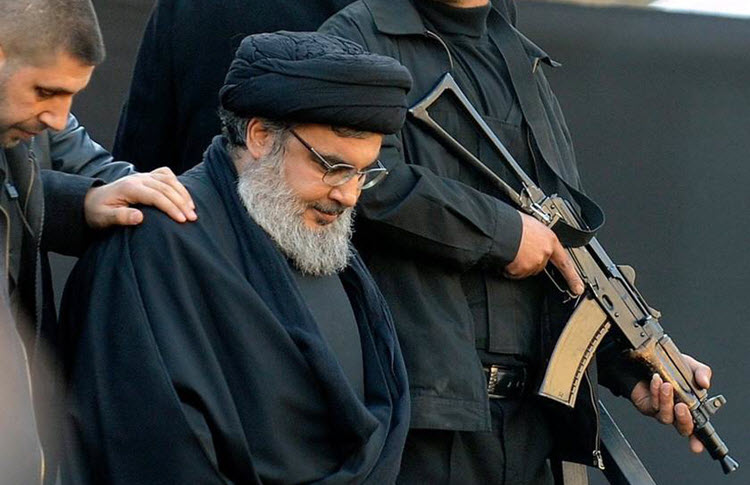
Hezbollah leader Hassan Nasrallah

By Pooya Stone

In early November, the sanctions reimposed by the US targeted Iran’s oil revenue. They aimed to cut Iran’s exports down to zero. Previously, the US had granted temporary import waivers to China, India, Greece, Italy, Taiwan, Japan, Turkey and South Korea to ensure low oil prices and no disruption to the global oil market. The waivers were not renewed when they expired.

Iran and Hezbollah in an Economic Freefall

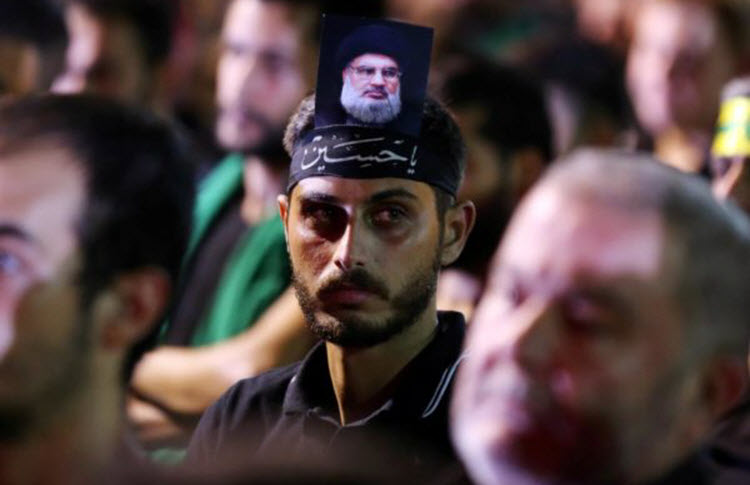
A supporter of Lebanon’s Hezbollah leader Hassan Nasrallah has his picture on his head

London, 26 May – The U.S. administration’s reestablished sanctions on Iran have started strong and are likely to become even stronger in the future. The US Treasury Department’s recent statement that the so-called “significant reduction waivers,” which allowed certain countries to continue buying Iranian oil in reduced quantities, were ended and that no new waivers were upcoming was a major positive development. The US terrorist designation of the Revolution Guards Corps, which in addition to their military activities control important segments of the Iranian economy, was another welcome step. The totality of US sanctions has been effective and has imposed heavy costs on Iran.

To be sure, further ratcheting up of US sanctions can be highly effective and should be undertaken. In this regard, blacklisting not just individual Iranian banks, but the totality of the Iranian banking sector would be the most powerful step. It is also possible for the US to bolster the existing shipping-related sanctions to apply to all vessels that carry cargo to and from Iran. While these steps may well be taken by Washington in the future, it is important for other countries concerned about Iran’s maligned activities to support US sanctions with strong efforts of their own.

With this in mind, key US Middle Eastern allies, with the GCC in the lead, can and should promptly impose Iran- and Hezbollah-related secondary sanctions. This approach would have several major benefits. First, it would be effective in intensifying the pressure on Iran by further squeezing the Iranian economy. From a purely economic perspective, GCC-driven sanctions would be particularly efficacious vis-à-vis those European and Asian companies that do a lot of business in the Gulf and the Middle East. Without a sufficient footprint in the US, such companies do not worry about US secondary sanctions. But if forced to choose between doing business with Iran and participating in the GCC economy, they are highly likely to opt for the latter.

The secondary sanctions process would also present a valuable opportunity to bankrupt Hezbollah, which would be both a symbolic and practical blow to Tehran. This is because Hezbollah is both a model utilized by Iranian foreign policy and a vital power projection tool for Tehran. Turning Hezbollah from an asset into a liability would be invaluable. The key element of Hezbollah’s focused portion of the secondary sanctions would be to have them apply not only to Hezbollah but to all Hezbollah-affiliated entities, such as the Amal Movement.

GCC-led sanctions would also have an important symbolic effect, helping to drive a wedge between the Iranian mercantile class – the Bazar – and the mullahs. In this regard, the fact that the sanctions have thus far been multilateral but now include key Middle Eastern powers would underscore the isolation of Iran.

In addition to imposing secondary sanctions of its own, the GCC should consider participating in the sanctions enforcement efforts. These should be focused on companies and entities that are engaged in sanctions-busting activities. Turkish or Qatari companies that have so far largely escaped punishment for Iranian sanction violations would be particularly promising targets.

Having the GCC lead in this area, both by adopting secondary sanctions of its own and participating in the sanctions enforcement efforts, would be greatly beneficial. It would enhance the efficacy of the currently existing sanctions-related efforts and manifest a united front against Tehran. This overall strategy would help cement the alliance between GCC countries and the US, while also serving as a powerful rebuke to the European countries that have chosen to side with Iran. Overall, it would also demonstrate that GCC countries are practicing a 21st century level of sophisticated diplomatic and economic statecraft.

Source: Al Arabiya

Tensions Between Russia and Iran in Syria

0
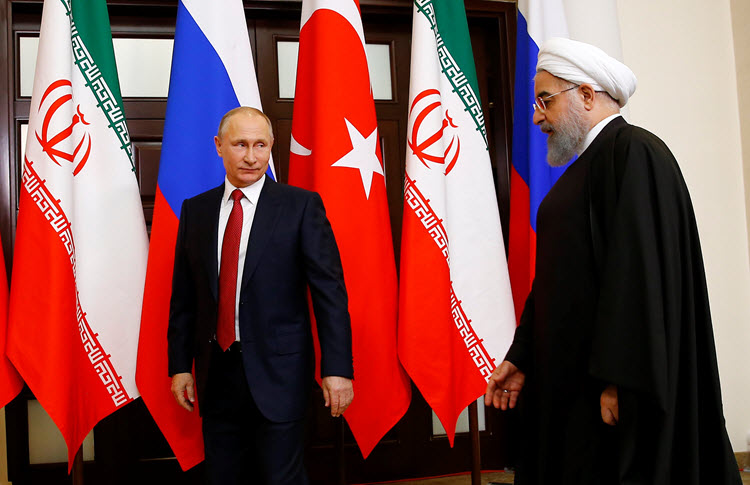
Russian President Vladimir Putin meets with his Iranian counterpart Hassan Rouhani

By Jubin Katiraie

Iran has become quite isolated in the region because of its belligerence. It has been involved in some horrific conflicts and has spread chaos further and further afield.

It now seems that relations between Iran and Russia are starting to rapidly deteriorate. It has been reported that Russian military police carried out a raid on militiamen that are backed by Iran. The raid took place a week ago at the international airport in Aleppo, Syria.

Iran Must De-Escalate Tensions With US

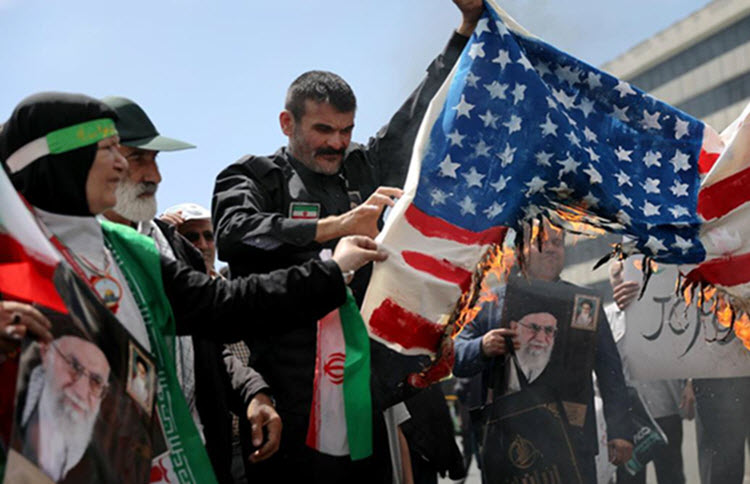
The burning of the American flag by fans of the Islamic Revolutionary Guard Corps in Tehran

By Pooya Stone

The buildup of tensions between the US and Iran are reaching their peak, as American lawmaker, Representative Michael McCaul, ranking Republican on the House Foreign Affairs Committee has pointed out.

McCaul refers to recent intelligence regarding Iran’s threat to US interests in the Middle East, that he says was extremely detailed. He told USA Today, “To the extent I can discuss it, it was human intelligence.” He added, “One of the Hezbollah cells is known for its kidnapping and killing operations, and their directive was to go in and kill and kidnap American soldiers.”

Iran: Serious Conflicts on Top

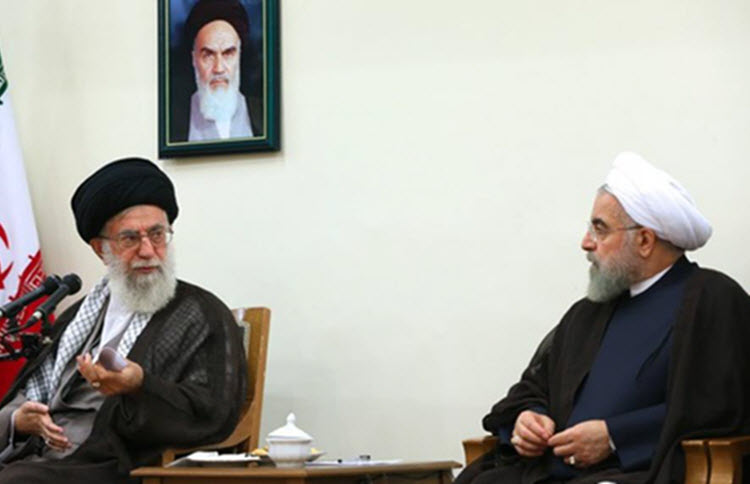
Supreme Leader Ali Khamenei

By Jubin Katiraie

The Iranian rulers’ internal disputes continue to grow, even as domestic and global crises increase. In fact, at a Saturday night meeting with reporters, Iran’s President Hassan Rouhani called political rivals who have attacked him and his allies, “traitors”.

Iran: Police Stormed YOGA Class and Arrested 30 Men and Women for Their Outfits

A group of 30 men and women were arrested for taking part in a private yoga class in city of Gorgan, north of Iran.

London, 26 May – A group of 30 men and women were arrested for taking part in a private yoga class in the city of Gorgan, north of Iran.

The city’s police force said men and women were wearing inappropriate clothes!

Mixed sports are illegal in Iran while yoga is allowed so long as classes are single-sex and the teacher is licensed.

Iranian police have arrested 30 people for taking part in a private yoga class in the city of Gorgan, in the north of the country, according to an official news agency.

The group of men and women were stopped for wearing inappropriate clothes, the Young Journalists Club said.

A member of Golestan Province’s Crime Prevention Unit was reported as saying that the yoga teacher was among the arrested, and had been referred to the regional prosecutor.

It is claimed the man teaching the class had advertised it on social media and that he did not have a license to teach.

Justice Department official Massoud Soleimani told Arab News they were arrested for wearing ‘inappropriate outfits’ and had ‘behaved inappropriately’.

He also revealed that the residence where the arrests took place has been monitored for some time beforehand.

Yoga schools in Iran advertise their services online and publicize that they have instructors.

In 2017, Ali Majdara, president of Iran’s Sports For All Federation announced a ban on activities that use ‘rhythmic motions’ and ‘dance’ including Zumba.

Tension Intensifies in Persian Gulf

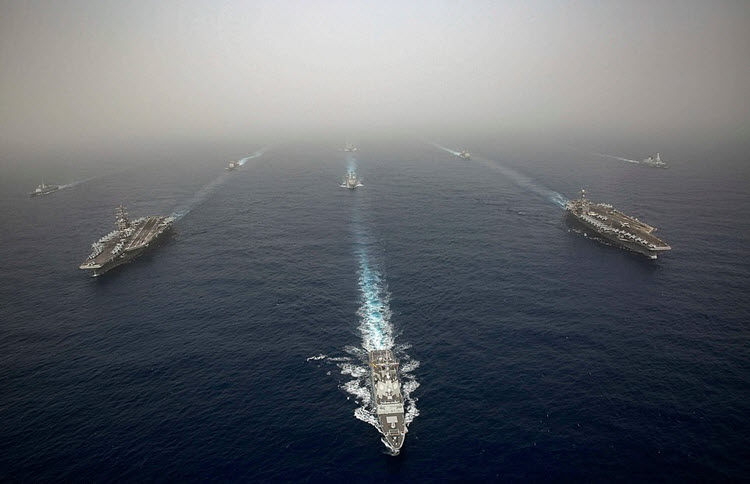
The USS Abraham Lincoln is in the Persian Gulf

By Pooya Stone

The US and its Arab allies are edging towards a confrontation with Iran in a contested waterway through which 20% of the world’s tradeable oil passes daily.

In synchronization with its Arab allies, notably Saudi Arabia, and with Israel, the US is intensifying pressure on Iran to wind back its support for what it terms “bad actors” in the region.

Syria: Using Chlorine Gas on Civilians

0
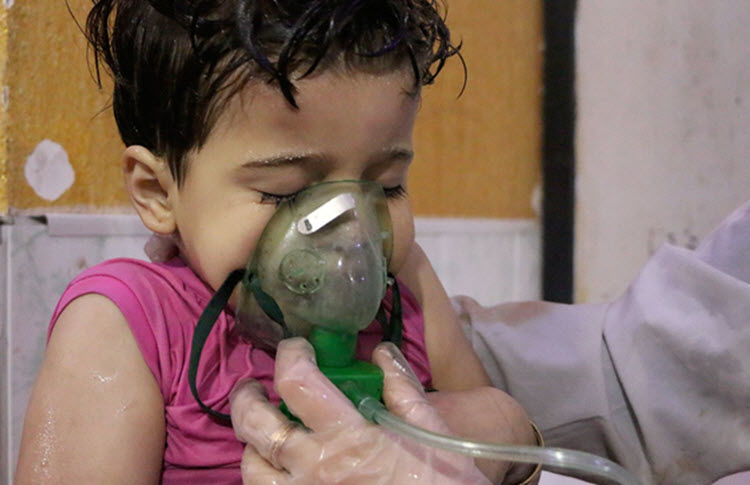
using chlorine gas on civilians in Syria

London, 25 May – Washington, May 24, 2019 – The US administration is warning the Syria of a “quick and appropriate” response for the possible use of chemical weapons against its own civilians.

Reuters cited a US State Department statement saying that Washington sees signs the Syrian government may be using chemical weapons, including an alleged chlorine attack on Sunday in northwest Syria. The Trump administration is warning that Washington and its allies would respond “quickly and appropriately” if this were proven.

“Unfortunately, we continue to see signs that the Assad regime may be renewing its use of chemical weapons, including an alleged chlorine attack in northwest Syria on the morning of May 19,” State Department spokeswoman Morgan Ortagus said in a statement.

“We are still gathering information on this incident, but we repeat our warning that if the Assad regime uses chemical weapons, the United States and our allies will respond quickly and appropriately,” she said.

Ortagus said the alleged attack was part of a violent campaign by Syrian government.

President Bashar al-Assad’s forces violating a ceasefire that has protected several million civilians in the greater Idlib area.

“The regime’s attacks against the communities of northwest Syria must end,” the statement said. “The United States reiterates its warning, first issued by President Trump in September 2018, that an attack against the Idlib de-escalation zone would be a reckless escalation that threatens to destabilize the region.”

The State Department statement accused Russia and Assad’s forces of “a continuing disinformation campaign … to create the false narrative that others are to blame for chemical weapons attacks.”

“The facts, however, are clear,” the statement said. “The Assad regime itself has conducted almost all verified chemical weapons attacks that have taken place in Syria — a conclusion the United Nations has reached over and over again.”

In January, U.S. National Security Adviser John Bolton warned the Syrian government against using chemical weapons again.

Interactive Map Detailing Iran-Backed Militias

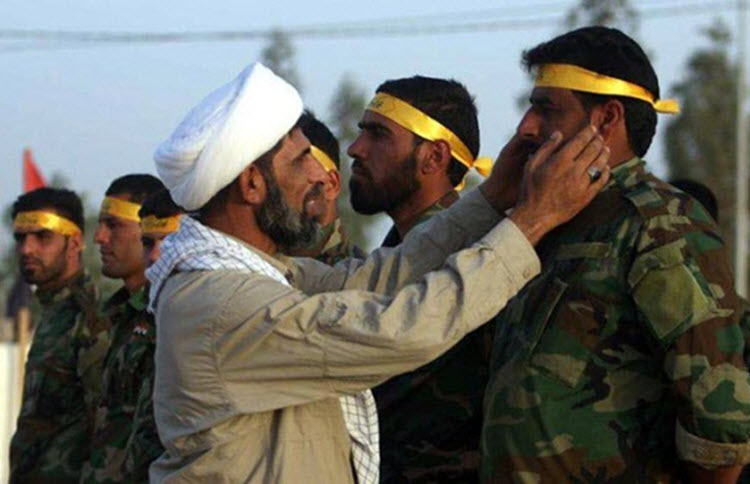
Iran-backed militias including the Badr Organization, Hezbollah and Asa’ib Ahl al-Haq

By Jubin Katiraie

The U.S. think tank Washington Institute released an interactive map showcasing Iran’s growing influence in the Middle East by detailing the whereabouts, operations and force deployments of Iran-backed militias in the region. Al Arabiya reported.

The institute said that the information and sources used to create the map was compiled mainly from primary source data, including contacts within militia circles and social media analysis collected for nearly ten years.