Home Blog Page 307

Iran: Prices of Goods Soars 107 Percent

0

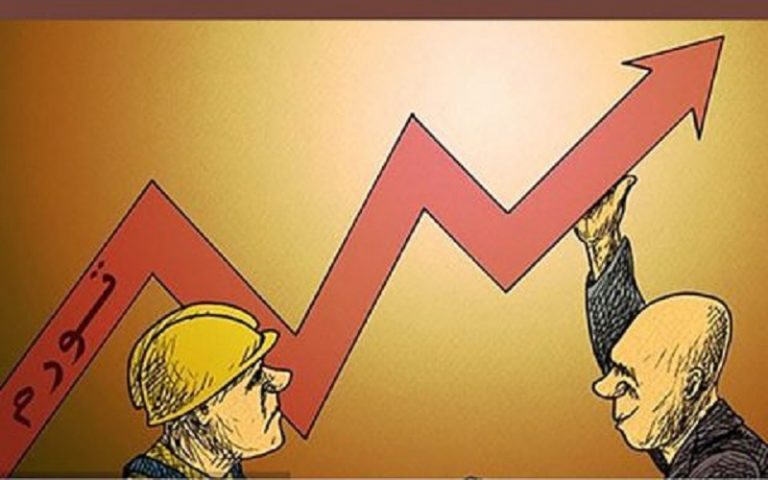
The price of goods in Iran has risen to 107 percent compared with last November, according to the Ministry of Industry, Mines and Trade’s latest statistics, and when compared with the reports for the rest of this year, it is obvious that the price increases are growing at an exponential rate. 

“The highest hike was in the price of Pakistani basmati rice from 110,700 rials [about $0.45] in November last year to 240,300 rials [about $0.94] in the same month this year, the Tabnak website reported on December 15.

Of course, despite this revelation, Iran’s Consumer and Producer Protection Organization still increased the price of diesel oil by 53 percent and petrol by 40 percent. The semi-official ISNA news agency said that the new price was supposed to prevent a decline in supply, but this rise, along with all the others, comes as state media continually warns of a sharp decline in the living conditions of ordinary Iranians and the possibility of an uprising on the horizon. 

“Even before the Covid-19 outbreak, the economy was not in good shape... With the spread of the Covid-19, its condition has worsened and now is hospitalized in the ICU. As a result, people’s tables and pockets are becoming more empty day by day, The Jahan-e-Sanat daily wrote on the same day.

Iranian Authorities Use Coronavirus as a Political Reason

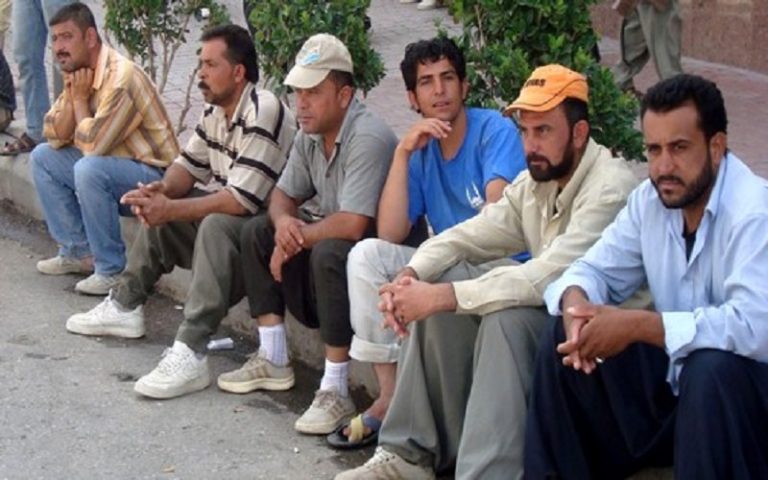
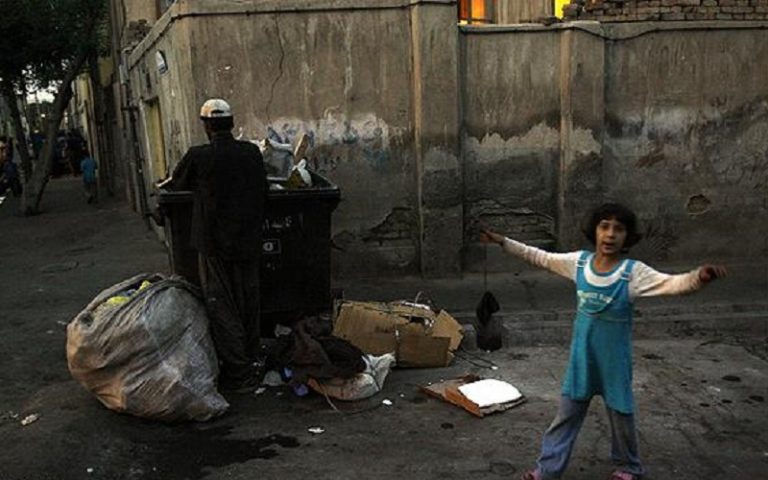
They advised that the poverty line is now 100 million rials [about $962] and over half of the population live below it, including the 11 million unemployed and the 21 million living in neighborhoods, ‘dark zones,’ without access to basic public services. The paper warned that the situation is worse for marginalized groups, like disabled people and the elderly. 

“Today seventenths of the people are poor and only threetenths of the society are above the poverty line…We never had such a situation. Social harm is very important in Tehran,” announced Majid Farahani, head of the Budget and Financial Supervision Committee at Tehran City Council, on December 15.

“During last week’s visit to the shelters, it was found that the number of poor people that go to the shelters has doubled. The rate of theft has doubled, and according to research, social harm has increased among the middle class and the poor,” he added.

Iranian Families Cannot Ignore Economic Dilemmas Even During Yalda Night Festival

It is clear that the government cannot and will not do anything to manage this crisis, caused by systematic corruption and mismanagement. Therefore, the Iranian people see the continuation of protests as the main way to free themselves from this nightmare and replace the untransparent and corrupt system with a democratic government.  

Iranian Families Cannot Ignore Economic Dilemmas Even During Yalda Night Festival

0

As a traditional festival, Iranian families annually celebrate the “longest night of the year,” Shab-e-Yalda [Yalda Night in Persian] as a sign of the victory of the light and beauty over the cold and darkness.

For many centuries, Iranian citizens have seized this opportunity to gather and spend time together in specific ceremonies. They particularly adorn their tablecloths with different nuts, sweets, pomegranates, watermelons, and other fruits.

Grandparents usually recite poems of Hafez on this night, which is added as a special ceremony in Iran’s List of National Treasures since 2008.

However, the Yalda Night festival has become a nightmare for Iranian families in recent years. Given the rampant poverty and economic dilemmas, most of the population is wrestling with high prices for basic goods, let alone the specific fruits and nuts of this ancient night.

According to a report by iranfocus.com, Yalda Night has turned into a nightmare for Iranian families rather than an ancient ceremony. “Each family of four should pay at least 1 million rials [$7.7], and since families are gathering together at this ceremony, elders of families should pay much more, around 1.5 to 2 million rials [$11.5-15.3],” the report read.

“Iranian people regularly serve sweets at their ceremonies on Yalda night. Now, the minimum cost of one kilogram of sweets is around 300,000-350,000 rials [$2.3-2.7]… Families have to purchase different kinds of sweets, which means paying much more than 700,000 rials [$5.4],” the report added.

“Iranian families cannot avoid setting nuts on their tablecloths on the occasion of Shab-e Yalda… Therefore, each Iranian family should pay at least 2.5 to 3 million rials [$19.2-23] for a kilogram of a mixture of these nuts,” the report noted, adding, “With a ballpark figure, each family should spend 5 million rials [$38.4] only for the Yalda ceremony.”

Critics might say 5 million rials equal to less than $40, which is not much. However, the reality is, over 80 percent of Iran’s population are living below the poverty line and receive a monthly subsidy worth less than $3.5.

This means those older families, who have no income and rely heavily on subsidies, must spend their five-month subsidy for one night. In this scenario, they must save the rest of their subsidies to spend on the Nowruz celebration, which is more important and requires more expenditures.

Furthermore, according to Javan Online affiliated to the Islamic Revolutionary Guard Corps (IRGC), this year, the price of Yalda Night’s foodstuff, including fruits, nuts, and sweets, has experienced a 100-percent increase.

However, working families, who struggle hard to make ends meet, are not in better condition. Many families have not seen red meat, fresh fruit or vegetable, egg, and other food for months. In the best condition, they can purchase a loaf of bread and some cheese daily to feed their family members.

On the other hand, Iranian families are scrambling against the novel coronavirus this year, which has rubbed additional salt on their wounds. According to the Iranian opposition Mojahedin-e Khalq (MEK/PMOI), around 190,000 citizens have lost their lives to the Covid-19 as of December 20.

Regarding the health and hygienic costs, as well as the sharp drop in business, unemployment, and the decrease in people’s purchasing power, many people should prioritize health above other issues.

In such circumstances, while the population, particularly children, need pleasant events like celebrations and ceremonies more than ever, they must ignore this traditional ceremony due to economic problems.

The government has recommended families to hold remote celebrations. However, many citizens who are forced to sell their body organs or even newborn babies, cannot feed their families, let alone prepare for Yalda Night and spend additional money on internet connectivity.

These parameters prompted citizens to complain to officials about the country’s dire economic conditions. In interviews with IRGC-run media, citizens openly criticized the government for fluctuating prices, which change every moment.

Zarif Personally Involved in Iranian Terrorism and Hostage-Taking

0

Iranian Foreign Minister Mohammad Javad Zarif is personally involved in the government’s terrorism, human rights violation, and propaganda. He plays the role of intermediate for his hostage-taker government and justifies his superiors’ harrowing crimes.

After 41 years, the world has seemingly grasped that domestic suppression and export of terrorism are the bread and butter of the religious dictatorship ruling Iran. All Iranian officials are involved in human rights violations and terror activities in some way or another.

The Islamic Revolutionary Guard Corps (IRGC) is the foremost responsible for ensuring these egregious paths through its foreign division Quds Force and Basij paramilitary forces. In this respect, any ties with this entity is tantamount to approving the government’s terrorist and oppressive policies.

However, when it comes to Iranian Foreign Minister Mohammad Javad Zarif, no one can downplay his personal involvement in terror plots. Two foiled terror plots against Iranian dissidents in Albania and France, orchestrated by Tehran’s embassies, seriously questioned the nature of Iran’s diplomatic mission on European soil.

Late last month, an unprecedented trial began in Belgium involving a high-ranking Iranian diplomat and three accomplices. Zarif’s “diplomat,” Assadollah Assadi, stands accused of smuggling a bomb into Europe while traveling on a diplomatic passport, to bomb the Free Iran Rally of the Iranian opposition in Paris.

According to Belgian prosecutors, Assadi was not acting on his own but undertook the operation on orders from the highest levels in Tehran. Moreover, on November 27 and December 3, Assadi refused to attend the Antwerp Court based on Zarif’s order.

Historical Trial of Iranian Diplomat in Europe

“Instructions reached Assadi via the Foreign Ministry. Zarif was aware of the plot. And direct involvement would come as little surprise given Zarif’s public affection for the IRGC and [the eliminated Qods Force commander Qassem] Soleimani,” explained Bruce McColm, the Director for Institute for Democratic Strategies, in an article for Townhall.

Furthermore, back in April 2019, Zarif was welcomed as an honored guest at the IRGC headquarters. Zarif is on record as saying he held weekly meetings with Soleimani to coordinate policy.

On the other hand, Zarif is known as the “propaganda minister” due to his role in justifying the government’s human rights violations inside the country and portraying a lovely image of Tehran’s aggressive actions beyond its borders. In 2019, the U.S. imposed sanctions on Zarif due to his role in the Iranian government’s malign activities.

While Foreign Ministry spokesperson Saeed Khatibzadeh claimed Iran’s judiciary is independent and “any meddling in the issuance or execution of judicial rulings is unacceptable,” Zarif recently signaled other countries that Tehran is ready for a ‘prison swap.’ He professed his country’s readiness for prisoner exchanges involving Western nationals who have been taken hostage in the Islamic Republic in recent years.

The event showed Zarif’s role as a broker and negotiator for the hostage-taker government of Iran. Zarif’s comment once again proved that Iranian officials see terrorism and warmongering as leverage for ‘diplomatic relationship.’ As they constantly pursue making a nuclear bomb to blackmail the international community and receive political and economic concessions, dissidents believe.

U.S. Designates Iran Official and University over Quds Force Connection

“Diplomatic chiefs in the Iranian regime are petty international peddlers of the regime’s terrorism. That is why Zarif should be shunned, the regime’s agents expelled, and the regime’s embassies, which provide strategic and tactical logistical support to the regime’s terrorists, must be shut down once and for all,” McColm concluded.

Iranian Authorities Only Respond to Firm Policy

0

Following Iran’s announcement that it had executed French resident Ruhollah Zam, several European countries pulled out of a Europe-Iran Business Forum and the European Union condemned the execution “in the strongest terms” in a statement that reiterated its opposition to the death penalty and raised concerns of a systematic denial of due process in Iran’s Judicial system.

These are vital first steps but holding Iran to account for human rights violations cannot end with a statement and a canceled—or worse, postponed—business summit.

The decision by France, Germany, Austria, and Italy to pull proves that reducing relations with Iran will have more of an effect on the ayatollahs’ behavior than maintaining them. However, why is this not the policy towards Iran all the time? After all, Iran’s egregious crimes against humanity have been well documented for over 41 years.

Why are these countries—and many more—content to appease the Iranian government rather than hold them to account for their actions? When do they know that getting away with these actions only emboldens the Iranian authorities to commit more crimes, including on European soil and against European residents or citizens?

EU Must Adopt a Firm Policy Against Tehran’s Terror Attacks

One of these long-ignored crimes—the 1988 massacre of 30,000 political prisoners—was recently described by United Nations human rights experts as an example of ongoing crimes against humanity for the enforced secrecy surrounding it. They demanded a response from Tehran– and promises of an investigation – by September, but this never came and now the experts are calling for an international investigation through the publication of the letter.

“[Previous failures by the international community to investigate] had a devastating impact on the survivors and families as well as on the general situation of human rights in Iran and emboldened Iran to continue to conceal the fate of the victims and to maintain a strategy of deflection and denial that continue to date,” the letter read.

That the government has ignored this letter shows just how used the ayatollahs are to their problems going away and the international community letting them slide. After all, officials have even said publically that they were proud to take part in the massacre of non-violent activists, including children.

Following the European pushback over Zam’s execution, Tehran summoned for questioning the French and German ambassadors in Tehran as a protest, claiming that the execution was none of their business, even though Zam had refugee status in France and was kidnapped by the Islamic Revolutionary Guard Corps (IRGC).

The government is terrified of being held to account, which is why the world must do it.

Tehran Still Dodges Investigating Murderers of 176 Passengers of PS752 Flight

0

Iran started 2020 by losing Qassem Soleimani, the commander of the Islamic Revolutionary Guard Corps’ Quds Force (IRGC-QF), during a U.S.-drone strike in Baghdad. In response, authorities took harsh revenge—not on the U.S. but on Iranian citizens.

On January 8, the IRGC Aerospace Forces (IRGC-AF) bragged about a massive missile attack on U.S. troops hosted in Ain al-Assad base, northern Iraq. The attack left no casualties among the “Great Satan’s infantry.” However, several hours later, the IRGC-AF shot down a commercial flight, killing all 176 passengers and crew on board.

Iran’s Missile attack, Taking Revenge from the U.S. or Iranians

Iranian officials immediately denied the IRGC’s involvement in the incident. They continued their denials for three days until reliable satellite evidence and footage proved that two missiles downed the Flight PS752 of the Ukrainian Airlines.

On January 11, IRGC-AF chief Amir-Ali Hajizadeh admitted that the IRGC air defense system shot down the airplane. However, he outlined “human error” as the reason for the villainous tragedy. He also admitted that he and his superiors knew that the IRGC anti-aircraft system had targeted the jetliner at the beginning hours.

However, after more than 11 months, Iranian authorities gave no answers to grieving families and international parties whose people were on the plane. According to international aviation laws, Tehran should lead the investigation, which permitted it to wipe away its footprints.

In such circumstances, when the reason comes to military activities, outsider analysis is further restricted. Sovereignty is afforded to the perpetrator and the review is essentially eliminated when that country does not have an independent civil aviation authority or transparent judicial system, which Iran does not.

In their ‘investigations,’ judiciary officials raised ridiculous explanations to downplay the IRGC’s crime. Despite routine night vision, video, radar, and other identification systems, Tehran claims that “the operator was apparently unable to distinguish friend from foe.”

This is while the 40-meter-long civilian jetliner had just taken off from Khomeini international airport. If these words were right, how could Iranian officials dare use their private and smaller airliners? Furthermore, the enemies’ missiles or fighters were undoubtedly supposed to come from western borders, not from the country’s heart to the border.

Iranian officials also say, “The operator acted unilaterally and fired two surface-to-air missiles.” This is another ironic excuse because if it was true, this act is in direct violation of applicable procedures not to fire at all without his command center’s authorization.

In such a scenario, aside from any consequence, the operator had acted as a rogue element that wasted defense reserves. Therefore, this violation should have made the operator and the assistant accountable and prone to be prosecuted in a military court.

The fact that evidence clearly shows the reason was not a ‘human error’ as a significant number of other commercial passenger jets took off and landed at the international airport before and after PS752 without being attacked. On the other hand, even if there was a human error, why did the authorities initially downplay the event and lay blame on the pilot and airliner’s manufacturer? Why did they delay to hand over the black box for six months?

Based on these undeniable documents and reasons, on December 16, Canadian Minister of Foreign Affairs François-Philippe Champagne said in an interview with CBC News that he doesn’t believe Iran when it says Flight 752 was shot down as a result of human error.

Earlier, in a 74-page report, Canada’s special adviser on the federal response to Iran’s shootdown of the airliner Ralph Goodale rejected Tehran’s ‘investigations.’ “There are indications of incompetence, recklessness and wanton disregard for innocent human life. It is incumbent upon Iran to respond to these concerns in candid and compelling terms or risk the loss of international confidence in its ability to maintain a safe airspace,” Goodale noted.

Tehran is not eligible to lead the investigations. Iranian authorities would never investigate themselves, not least since their record includes arbitrary arrests, extrajudicial executions, and gross human rights violations. Therefore, the countries that lost their citizens must refer the case to the United Nations Security Council and call for an impartial and international trial.

Harsh Treatment of Iranian Political Prisoners

Ayatollahs Avoid Allocating Budget to Resolve Khuzestan Water Crisis

0

Iran is the richest country in the world in terms of natural gas reserves and the third richest in oil reserves, according to the Gas Exporting Countries Forum (GECF), with most of the reserves being in the southern Khuzestan province. Khuzestan also has seven rivers, including Karun, one of the country’s biggest, and five major dams.

Given the wealth of natural resources and water, why have so many people there been suffering from a lack of potable water over the past few years?

Water Crisis in Iran Felt Most by Poorest

Back in August, MP Mojtaba Yousefi advised that 800 villages in Khuzestan have no access to safe drinking water on a regular basis and that there was not yet the budget to fix the dire situation. Meanwhile, Khuzna news agency reports that 700 villages lack running water and have to rely on tankers.

And the situation gets worse still.

“Potable water quality in the suburbs is less than 50 percent. Our concern is not limited to the microbial contamination of the water. The water lacks chlorine or does not contain any chlorine. If the Water Organization is busy with infrastructural issues, they can at least control the amount of the chlorine,” said Dr. Mehran Ahmadi Balutaki, the head of West Ahvaz Health Centre, which is inside the provincial capital, on December 11

That’s right. In the midst of the coronavirus pandemic and a flood crisis, which the government has failed to confront, the people of Khuzestan are also being subjected to a lack of water purification. In Ahvaz, the potable water was mixed with sewage, according to Gholamreza Qasemian, the head of Meshkat seminary, on December 7, creating a real danger to those forced to drink it.

“It is not tolerable to see the mixing of water and sewage where 200 billion cubic meters of water is stored behind its dams. Allocation of 3 percent of oil income to Khuzestan province is a considerable budget. An investigation is needed into why a significant amount of this budget has not been paid,” said Hassan Darwishian, the head of the Inspection Organization of Iran, on December 8.

Iran: 2021-22 Budget Bill and Economic Crisis

He further stated that this budget would be able to solve many problems in Khuzestan if it were actually paid.

The government claims to have spent more than $47 million in the Khuzestan cities of Mahshar and Khomeini Port but due to systematic corruption, it is unclear exactly how this has been spent. Much of Iran’s wealth is spent by the ayatollahs on a nuclear program, ballistic missiles, the export of terrorism, and domestic repression.

In June, the people of Khuzestan protested the water crisis again and the authorities cracked down violently.

UN General Assembly Condemns Human Rights Violations in Iran

On Wednesday, December 16, 2020, the United Nations General Assembly (UNGA) adopted a resolution censuring the grave and systematic violation of human rights in Iran, marking the 67th time UN bodies have adopted resolutions condemning rights abuses in Iran. The resolution gained 82 affirmative votes, declaring the international community’s deep concerns about the human rights conditions in the country.

The latest condemnation by the UN’s highest human rights body indicates that other countries are following developments inside Iran and they are aware of the government’s atrocities against its citizens. This issue signals to the ayatollahs that contrary to previous years, they cannot do whatever they want against the people, Iran experts say. Furthermore, due to their fragile socioeconomic conditions, the world would not turn a blind eye to their crimes and would consider human rights conditions as a pivotal element in any talks.

The resolution condemns the “high frequency of the imposition and carrying-out of the death penalty” in Iran. The UNGA also mentions the Iranian government’s international obligations, including executions undertaken against persons on the basis of forced confessions.

Since the November 2019 anti-government protests, Iranian interrogators and judiciary officials have practiced extreme and inhuman torture on detainees, pushing them to confess to alleged crimes. According to former prisoners, several arrestees lost their lives under severe torture and other ill-treatment.

On September 2, 2020, Amnesty International provided damning information obtained through 60 interviews with released detainees of the November 2019 protests. They testified that interrogators and torturers committed horrible crimes including beating, flogging, sexual abuses, and mock executions to coerce protesters to make televised confessions.

Also, on December 3, 2019, Iranian Interior Minister Abdolreza Rahmani Fazli ordered the Islamic Republic of Iran Broadcasting Organization (IRIB) to air forced ‘confessions’ of those arrested during the ‘unrest and riot.’ This order prompted criticism even inside the government.

Criticism From Inside Iran’s Government Over Broadcasting of Forced Confessions

Notably, judiciary officials file forced confessions as reliable evidence to sentence defendants to long-term prison and also the death penalty. Mostafa Salehi and Navid Afkari were hanged in August and September respectively based on torture-tainted admissions. They frequently rejected their words, announcing that their confessions were under torture. However, ‘judges’ gave no care and handed down their execution sentences.

The UNGA resolution also points out to death sentences issued and implemented for “crimes that do not qualify as the most serious crimes, including crimes that are overly broad or vaguely defined.” The UN considers these merciless executions a violation of the International Covenant on Civil and Political Rights.

Tehran has sentenced the most number of minors to death globally. The UNGA announced its concerns over “the continued imposition of the death penalty against minors,” which is in violation of the Convention on the Rights of the Child.

The Resolution also called on the religious dictatorship ruling Iran to release all political prisoners, prisoners of conscience, civil rights activists, and human rights defenders immediately and unconditionally. Currently, there are thousands of people in Iran’s prisons, who have been held due to their political thoughts or faith, according to human rights experts.

In November 2019, during the bloodiest suppression in the Islamic Republic’s history, authorities arrested over 12,000 peaceful protesters, in addition to murdering at least 1,500 citizens, including women and children. Up to now, Iran’s judiciary has yet to prosecute agents who used lethal force against unarmed demonstrators. Instead, under the leadership of Ebrahim Raisi, one of the known perpetrators of the mass killings of political prisoners in 1988, the judiciary has issued many death sentences against arrested protesters.

Deaths Under Torture for Arrested Iran Protesters

Through the 67th resolution condemning human rights violations in Iran, the UNGA also declared its concerns about the prevalence of Covid-19 in Iran’s prisons. Many reports show that the authorities have left prisoners without basic health and hygienic equipment. Sources from prisons also acknowledged that a number of prisoners have died of the novel coronavirus so far. However, the Prison Organization rejects the news and severely tries to cut off prisoners’ communication with the outside. The guards’ efforts well show the vile conditions of prisoners and the threats posed to their lives and health.

The Iranian opposition coalition National Council of Resistance of Iran (NCRI) welcomed the adoption of the 67th UN resolution, condemning the grave and systematic violation of human rights in Iran. NCRI President-elect Maryam Rajavi said, “the main perpetrators of the atrocities mentioned in this resolution are those who have been continuously involved in crimes against humanity during that past four decades, particularly the massacre of political prisoners in 1988, the brutal suppression of the November 2019 uprising that leftover 1,500 protesters killed, and 12,000 arrested.”

“Clerical regime leaders must face justice for four decades of crimes against humanity, putting an end to their impunity,” she said, adding, “where the religious fascism ruling Iran does not pay the slightest attention to the UN General Assembly resolutions, it is time for the Iranian regime’s human rights dossier to be referred to the UN Security Council and the regime’s leaders to be held accountable for four decades of crimes against humanity.”

EU Policy on Tehran Leads to Terrorism

0

The European Union’s appeasement policy towards Iran has led to the ayatollahs feeling emboldened to commit acts of terror on European soil, including the attempt to bomb an opposition rally in Paris, for which Iranian diplomat Assadollah Assadi and three accomplices are currently on trial.

Trial of Iranian Terrorists Should Restrict Tehran’s Terror Machine

The Bomb Plot Against the Iranian Opposition’s Rally in 2018

In summer 2018, Assadi and his accomplices were arrested in Germany, Belgium, and France after they tried to bomb a rally in France that was attended by 100,000 people, including hundreds of dignitaries and Resistance President Maryam Rajavi.

Assadi brought the 500 grams of TATP explosives in his diplomatic luggage from Iran to Austria, where he was the third secretary at the Iranian embassy. He then handed the bomb off to Amir Sadouni and Nasimeh Naami on June 28, 2018, in Luxembourg.

Sadouni and Naami were arrested driving through Belgium and the bomb was found in their bags. Assadi was arrested in Germany, driving back from the meet, where he, importantly, did not have diplomatic immunity. The fourth person was in France and was supposed to watch the bomb explode and text Assadi to confirm.

Goes Right to the High-ranking Iranian Officials

Assadi is not a rogue agent, according to the Belgian prosecutor. He was an agent of the Intelligence Ministry and working on the direction of the highest levels of the government. The plan was approved by the Supreme National Security Council, headed by President Hassan Rouhani, in a session attended by Foreign Minister Mohammad Javad Zarif.

Zarif, of course, denies this and calls the bomb plot a “false flag”, but why then did he order Assadi not to appear in court and answer questions? Surely, if the Iranian authorities were not involved, they would cooperate. This is a big indication of guilt, but still, the EU falsely regards Zarif as a “moderate”, even as he plots terrorism in their borders.

The fact is that negotiating with criminals like Zarif only makes them feel like it is acceptable to pursue malign objectives like this.

“The foiled bomb plot in 2018 proved that the EU’s appeasement policy would make EU citizens and overall security the first victims of those ‘turbaned crocodiles’ in Tehran… Holding the regime to account and taking a firm step to counter its terrorism will certainly secure peace in our time,” the Iranian opposition wrote.

They called for Europe to:

  • sanction Zarif and the Iranian Foreign Ministry for terrorism
  • shut down the regime’s embassies and so-called cultural centers
  • expel Iran’s agents


Iran: Covid-19 Vaccine and Ayatollahs’ Dirty Business

0

Following the World Health Organization (WHO)’s approval for the Covid-19 vaccine, governments prioritize purchasing this magical elixir to contain the health crisis. In the past week, thousands of people in different countries received vaccine shots, and media reported that many shipments of coronavirus vaccines have transferred to various regions across the globe.

Contrary to other countries, Iranian authorities refrained from purchasing vaccines ‘for the people,’ claiming, “There are various barriers for purchasing and importing the Covid-19 vaccine to the country.”

This is pursuant to the ayatollahs’ known excuse to blaming citizens and foreigners for all the country’s dilemmas. “The address of all troubles is the White House,” said President Hassan Rouhani during a cabinet meeting in September.

“The [Covid-19 ] vaccine’s payment is ready, there are will and order [to purchase the vaccine], but America is the obstacle,” Rouhani said on December 9.

Earlier on December 7, the Central Bank of Iran (CBI) Governor Abdolnasser Hemmati had also claimed, “U.S. sanctions do not permit banking transactions for purchasing the vaccine from COVAX.”

In response, the spokesperson for Geneva-based Gavi, the Vaccine Alliance, rejected Tehran’s top banker allegations. “There is no legal barrier to Iran procuring vaccines through COVAX as the U.S. Treasury’s Office on Foreign Assets Control had issued a license covering coronavirus vaccine procurement,” the spokesperson told media on December 7.

Iran’s Economy Suffers from State-Backed Mafia, Not Sanctions

A few days later, an Iranian state-run paper unveiled the truth about officials’ baseless explanations. “Regarding the coronavirus vaccine, officials announced that importing foreign vaccines is impossible. However, we witness that coronavirus vaccines have been imported from credible countries and are used by officials, their children [Aghazadeh], and relatives,” Aftab-e Yazd daily wrote on December 14.

Notably, at the beginning of the pandemic in Iran and while officials argued the lack and shortage of kits for Covid-19 tests, in their political rivalries, some sources exposed that the government had imported and allocated 1,500 kits only to members of the Parliament (Majlis).

These facts declare that sanctions, U.S. policies, and banking transactions are just explanations to justify the government’s failures. The truth is that there are Covid-19 vaccines, and the government imports from credible companies but not ‘for the people and their health.’ The vaccines are for authorities, their relatives, and inner-cycle agents.

The State-Backed Medicine Mafia Uses Covid-19 as a Spoil

More harmfully, some influential individuals and entities sabotage are importing large dimensions of Coivd-19 vaccines to the country. These individuals and entities account for the state-backed medicine mafia in Iran, under the thumb of the Islamic Revolutionary Guards Corps (IRGC).

Inside the Systematic Hoarding of Face Masks in Iran

In fact, the mafia proposed to line its pockets with immense privileges of ‘domestic vaccines,’ while professionals say there is no forecast for Iran-made vaccines until the next summer.

“Iranian companies and institutions need time to reach tangible results in producing the coronavirus vaccine. During this period, we will once again be held back in the fight against Covid-19,” Mehr news agency quoted Abbas Aghazadeh, head of General Assembly of Iran’s Medical Apparatus Organization, as saying on December 7.

He also revealed how officials’ cultural, political, and ideological prejudices cost people’s lives. “When the lives of millions of Iranians are at stake, one cannot insist on cultural, political, and ideological competitions,” Aghazadeh added.

Furthermore, in its December 14 edition, Jahan-e Sanat daily shed lights on officials’ profiteering purposes to plunder needy and coronavirus-hit people. “Iran’s Food and Medicine Organization is under pressure to approve domestic vaccine and anti-coronavirus medicine because the Health Ministry’s approval means siphoning massive incomes for drug companies,” the daily wrote.

Though, who are—it is better to be said, ‘who is’—the owner of these companies? According to media and reliable evidence, the IRGC approximately owns all drug-maker and -distributer companies in Iran. These companies follow as:

– Barkat Pharmaceutical holding and its subordinated companies affiliated to Execution of Imam Khomeini’s Order (EIKO), an IRGC’s close ally

– Iran Darou Company

– Drug-maker Tolid Darou Company

– Sobhan Oncology Company

– KBC Company (Import)

– Alborz Distribution Company (drug distribution)

– Etela-e Alborz Investment Company

– Alborz Balk Company

– Farabi Pharmacy

– Razak Pharmacy

– Ati Farmad Company

– Biosan Company

– Alborz-Zagros Company

– Ghadir Investment Company

– Darougar Holding affiliated to Bonyad-e Shahid [Martyr Foundation]

Therefore, Iranian officials’ claims like ‘sanctions,’ ‘U.S. prohibitions,’ and ‘not permissions for banking transactions’ are baseless pretenses to refuse to import standard vaccines and immunize the public. The government’s excuses are a flagrant confession to their ominous intentions for ensuring the state-backed mafia’s privileges at the expense of citizens’ lives and health.

Moreover, the Iranian government’s terrorism, human rights violations, and nuclear ambitions prompted the international community to impose and reimpose sanctions. The officials would not spend the country’s resources to contain the pandemic and did not consider any budget for purchasing Covid-19 vaccines in the 2021-22 budget bill.

Instead, they would gain a multi-million wealth windfall to cover their terrorist and nuclear bomb-making expenditures, as well as providing new equipment for the IRGC and the State Security Forces (SSF) to counter probable protests and upheavals.

“Even if the Covid-19 vaccine was produced [inside the country], it would face the barrier of ‘untransparent economy,’” said Keyhan Azadmanesh, chief of the Iranian vaccine-maker company, pointing out the state-backed medicine mafia. “This barrier prevents us from planning how much doses of medicine should be produced at what price?” he added.

The Nightmare of Rising Prices and Housing Rent in Iran

The Outcome of the Government’s Delay and Refusal for Purchasing Covid-19 Vaccine

The profiteering policy applied by the government and IRGC-owned pharmacies practically claims more lives. According to the Iranian opposition Mojahedin-e Khalq (MEK/PMOI), as of December 16, at least 186,200 people have lost their lives to the coronavirus. The Health Ministry claims that the fatalities are around 52,883 cases, severely challenged by officials, professionals, and state-run media.

However, the government’s delay and refusal to purchase credible vaccines, as well as their untransparent measures, are a kind of playing with fire. Because the people “will undoubtedly protest” when they “witness the disease has quelled in many countries, including neighboring countries such as Iraq and Afghanistan,” due to the consumption of credible vaccines, according to health expert and member of the Covid-19 Task Force Dr. Mohammad Reza Mahboub-Far.

“If our neighboring countries carry out vaccination and we still remain waiting, the social resilience will finish, and it would appear in the form of street protests,” Dr. Mahboub-Far sounded alarms on December 12.

Child Abuse on the Rise in Iran

0

Child abuse in Iran increased 12.5 percent in 2019, according to Abbas Masjedi Arani, head of the National Coroner’s Office, while Reza Jafari, head of the Social Emergency Department of the Welfare Organization, said that child abuse was the most common form of domestic violence in the country, citing 16,000 cases in six months in 2017.

As bad as this is, it may well be a vast underestimate because Mehrdad Motallebi, the social affairs deputy for the Welfare Organization in West Azerbaijan Province, said that 13,000 cases were registered in that province between March 2017 and March 2018.

Psychologist Hashem Varzi said that the type of child abuse is changing and that phenomena like “child laborers, addicted children, [and] child brides are not even included in the statistics.

“Neglecting the basic needs and rights of a child such as nutrition, health, shelter, adequate clothing, security, love, and education are also obvious examples of child abuse,” he said.

The Future of Iran and Its Children Is in Danger

The main reason for the incredible levels of child abuse is that the laws fail to punish it effectively and, therefore, fail to prevent it. Domestic violence is not a separate crime in Iran, the bills that are supposed to protect women and children are constantly held up in the Parliament (Majlis) or judiciary, and many laws exist that violate children’s rights, including honor killings and child marriage.

Iran’s Guardian Council even objected to parents/legal guardians/others responsible for the care of children being fined or imprisoned is a child in their care died, lost one of the senses, lost a body part, or was injured on any part of their body, including the head, face or neck, as a result of “negligence, carelessness, lack of skill, or failure to observe”.

Meanwhile, the government amputates hands for petty theft.

Worse still, child abuse in Iran has risen during the coronavirus pandemic due to rising social ills like poverty and mental health problems.

“Violence against children has increased fivefold. Before the Coronavirus crisis, the cases involved physical violence against children and even rape. The difference today is that the beating of children by their parents is constantly being repeated,” said social harms researcher Mohammad Reza Mahboubfar.

And, of course, girls are more likely to be victims than boys because of the regime’s ingrained misogyny.

The Systematic Trafficking of Iranian Girls

Salamatnews.ir wrote back in 2018 that 52 percent of abused children are girls and 57 percent of abusers are fathers. This was backed up as recently as November by the Welfare Organization in Chaharmahal & Bakhtiari Province.