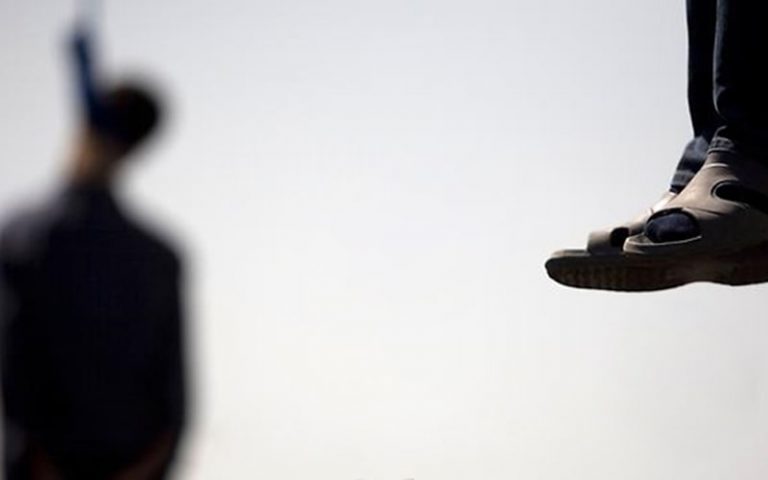
The Iranian regime executed European resident Ruhollah Zam on Saturday, sparking condemnation from France, Germany, and several other countries, and resulting in the government summoning their Ambassadors in Tehran, but why would Iran summon the ambassadors?
Simply, the appeasement policy of the European Union has led Tehran to fear no consequences for their actions.
Therefore, Iranian authorities feel emboldened to react in an extreme matter when they receive even the slightest pushback to their barbarism.
After all, even though EU foreign ministers adopted the “global human rights sanctions regime” earlier this month to target the perpetrators of serious human rights violations.
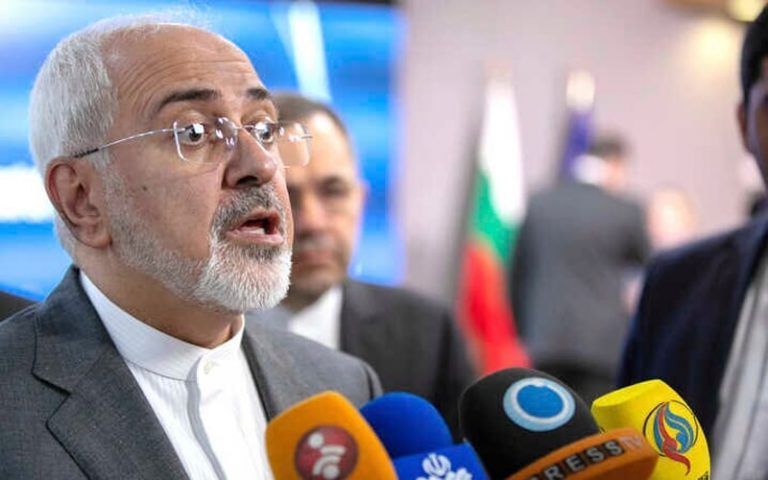
Foreign Policy Chief Josep Borrell was set to deliver a joint keynote address with Iranian Foreign Minister Javad Zarif this week at a business forum—It was postponed last minute because of Zam’s execution.
However, Iran’s human rights abuses are not limited to this one execution, so the EU should not be engaging with Iran full stop because it allows the ayatollahs to sweep their crimes under the rug and displays the EU as prioritizing business over human rights.
What point is there to condemn an execution after the fact if you do not act any differently after?
Tehran massacred 30,000 political prisoners in 1988 and the international community ignored it, leading the government to kill 1,500 protesters in the streets in November 2019.
Nonetheless, Iranian authorities even stepped further and executed protesters this year despite international campaigns to spare their lives.
Engaging with Tehran helps to minimize their crimes and Zarif barely even pretends to be the moderate face of the Iranian government abroad.
Last year, he told protesting Iranian expatriates in Europe that they would be “eaten alive” by his government’s thugs.
Europe must change tact and prioritize human rights over monetary gains because Iran’s human rights violations do not stop at their borders. Case in point, the attempted bombing of an Opposition rally in France in 2018, for which diplomat Assadollah Assadi and three accomplices are on trial.
“The time has come for the European Union to take concrete actions against the Iranian regime. The EU should sanction all the regime’s leaders, particularly their chief apologist, Zarif, for human rights violations,” the Iranian opposition said.
“The EU should lead an international investigation into the 1988 massacre and the mass killing of 1500 protests in 2019 in Iran and hold the regime’s authorities to account for their crimes. Any economic relation with the regime should be contingent on the end of human rights violations in Iran,” Iranian dissidents added.
In the past four decades, the ayatollahs have turned Iran into a giant prison. A scary jail that even bans citizens from thinking outside of the Führer’s desires and paths. Adolf Hitler exploited the Germans’ national sensitives. However, Iran’s Führer,the Supreme Leader, pulls the strings of citizens’ religious beliefs.
Under the theocracy ruling Iran, the people have systematically been banned from freedom of expression, free media, and dissent. Having an opposite idea or respecting plurality are unforgivable crimes and ‘defendants’ face life imprisonment, torture, and physical elimination.
In such a prison, authoritarians allow only one kind of media to continue its activity, one that delights the Supreme Leader’s system or merely publishes and promotes its opinion. This media should serve oppressive apparatuses. Furthermore, it must defend state-backed terrorism and facilitate torturing and eliminating opponents.
Today, 81-year-old Ali Khamenei is Iran’s Supreme Leader. He inherited this position from the Islamic Republic founder Ruhollah Khomeini in 1989. Evidence shows that he has prepared his son Mojtaba and paved the path for allocating the rule to him after his eventual death. Observers believe Khamenei’s health condition has deteriorated due to his incurable cancer.
Tyranny, Censorship, and Falsification Policy
Exploiting the public’s religious thoughts, the dictatorship jeopardizes the people’s lives, health, and fate. They have distorted every concept to take their advantages, and their foremost goal is preserving their tyranny in power.
Since 1979, they betrayed Iranian citizens and diverted the people’s struggle for equality and freedom. Instead of a democratic government, they shaped a cruel dictatorship under the banner of the ‘faith,’ which is far more oppressive than its predecessor.
However, nationwide protests displayed that the government’s oppressive policies have been defeated and authorities can no longer cut off Iranians’ access to the outside. Thanks to technology and the emergence of new devices for easier and more stable communications, today, people can simply spread their voice and show their complaints and grievances.
This development also enables different classes of society to act with mote unity and coordinate their activities. Furthermore, they can rapidly send fresh reports about human rights violations and crackdowns on protesters outside the country. This issue would ease the scale of suppression and lead the international community to punish the dictatorship.
Netizens’ Activities Restrict Human Rights Abusers
For instance, in recent months, the clerical fascism faced international condemnation over its human rights abuses inside Iran. On December 16, the United Nations once again condemned the Iranian government’s grave and systematic violation of human rights. A day later, the European Parliament issued a condemnation and expressed its concerns about Iran’s human rights conditions.
In response, Iranian officials rejected international calls for improving the people’s fundamental rights. They blamed the opposition Mojahedin-e Khalq (MEK/PMOI) for prompting the world to support peaceful protests and protesters. Notably, because of its expanded domestic network, the MEK plays a key role in exposing the ayatollahs’ and IRGC’s atrocities and crimes.
Earlier in late August, Iranian netizens had forced the government to suspend the death penalty against three young men detained by the State Security Forces (SSF) during gas protests in November 2019. Moreover, social media activists attracted the international community’s attention to Navid Afkari’s case, Iranian wrestling champion, who was nonetheless eventually executed for participating in peaceful protests.
People’s Shift to Cyberspace and the State’s Concern
Furthermore, people’s activities in cyberspace extremely concern the authorities. In this context, a known ‘reformist’ Abbas Abdi warned the government about incoming challenges. He explained that the state’s main challenge related to neither foreign relationship nor the economic field. It laid in the cultural area and monopolized media that have polarized society and led it to cyberspace.
In his article titled, ‘Shifting to virtual society,’ he admitted to the government’s weakness in curbing further discontents and protests. “Two decades ago, we had a media system and a real society. We could control society by many ways, including security, intelligence, judicial, or media forces. In reality, the monopolized media was the connection ring between all of the controlling elements,” Abdi wrote in Etemad [Trust] daily on December 19.
“However, with the emergence of satellites, internet, and then smartphones and social media, we witnessed alternative media shaping alongside official media. These [new media] are independent of official power. Therefore, the [state] has no effective power to supervise them,” he added.
This is a flagrant admission of the government’s prolonged efforts to cut off the people from the world. In summary, Abdi explicitly says that the censorship policies have been defeated and the people do not trust state-run media anymore.
In reality, the government’s oppressive measures pushed the people to gain reliable news through ‘unofficial’ sources, while ‘official’ sources broadcast and publish nothing but fake news and propaganda against political dissidents, minorities, and foreign countries. Failure to confine people’s thoughts and acknowledges is the authorities’ nightmare. They occasionally name it ‘losing the state’s social resources’ or ‘ending the people’s resilience;’ however, it has an apparent outcome: more anti-establishment protests.
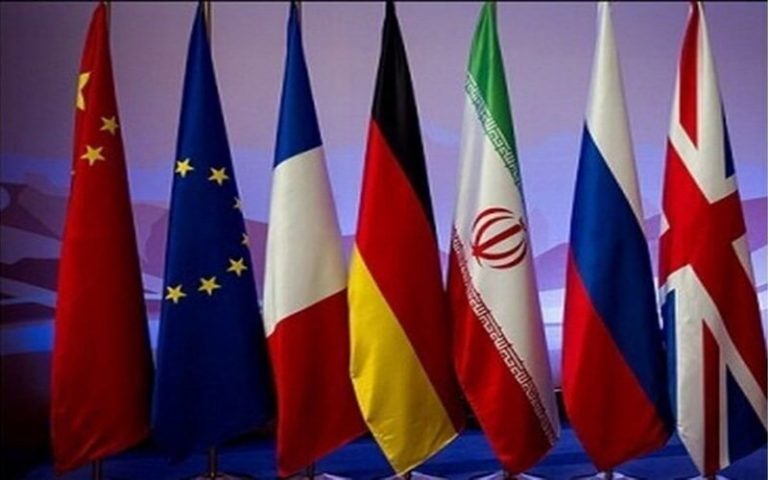
Foreign ministers from countries participating in the 2015 Iran nuclear deal held a virtual meeting on Monday to discuss the prospects for salvaging the agreement by bringing the United States back onboard after its presidential transition on January 20.Although it was the first such meeting of such high-level officials in more than a year, it marked no significant change in strategy for any of the six countries involved. While Russia and China continue to stand firmly behind the Islamic Republic, the three European signatories still refuse to challenge Iran’s theocratic government in any meaningful way.The British, French, and German foreign ministers essentially used the meeting as an opportunity to beg Iran for patience, in anticipation of the U.S. walking back the assertive policies adopted by the Trump administration and resuming a strategy that closely matches the conciliation on offer from Europe. While the U.S. urged “maximum pressure” on the Iranian government over the past two and a half years, the European Union imposed no new consequences for malign activities, even when the Islamic Republic ceased compliance with the Joint Comprehensive Plan of Action (JCPOA) altogether.
It is difficult to see what incentive Tehran would have to comply with any Western demands under those circumstances. And even if did so, the relevant changes would be limited to activity in the nuclear sphere. Monday’s meeting effectively gave the ayatollahs a free pass to continue their provocations and abuses in other areas, and it suggested that they would face little to no consequences as long as the JCPOA remained technically in force.Even if the European signatories insisted on rejecting the U.S. view of the JCPOA, they had many opportunities to endorse the broader focus underlying it.The issues that the foreign ministers of Britain, France, and Germanyoverlooked are manifold, and they should have been at the forefront of policy discussions for any employee of a Western foreign office, especially foreign ministers.Less than a month before that meeting, a trial began in a Belgian court for four agents of the Iranian government, including a high-ranking diplomat who served as the third counselor at the embassy in Vienna until he was arrested in Germany in July 2018. That individual, AssadollahAssadi, was reportedly the mastermind of a terror plot that would have seen explosives detonated at a rally of Iranian expatriates and their political supporters in the heart of Europe.A verdict in the case is expected before the end of January, and Assadi could face 20 years in prison for attempted terrorist murder. He is the first Iranian diplomat to be formally prosecuted in such a case, though he is by no means the first to be accused of having ties to terrorist agents and operations.Nonetheless, the case has received scant attention from Western policymakers, who generally appear willing to let the legal process run its course and then leave it at that.This attitude essentially ignores input from Belgian prosecutors who have consistently emphasized that the 2018 terror plot was undertaken on orders from high in the Iranian government’s hierarchy. Thus, it sends a message to that government that it will face no consequences for decisions that could have led to the deaths of Western personnel.This basically invites the ayatollahs to try again. In fact, there is good reason to believe that Tehran will take that invitation even more seriously in the wake of Monday’s meeting, which involved friendly dialogue between Foreign Minister Javad Zarif and his European counterparts.
As Iran’s top diplomat, Zarif is the direct overseer of Assadi and other Iranian diplomats with alleged ties to terrorism. For Tehran, it is surely safe to assume that if Western officials don’t even have a stern word to say to him on any topic other than the JCPOA, their policies won’t be any more assertive toward the government as a whole.If this assumption goes unchallenged where Iran’s foreign terrorism is concerned, it will surely encourage even more confidence among the ayatollahs with regard to their impunity in domestic affairs. And in contrast to recent Iranian threats against European citizens, the consequences of this perceived impunity are not just theoretical.Many hundreds of Iranian activists and dissidents have been killed just in the past three years, as the Islamic Republic has moved through a virtually unprecedented period of domestic unrest.This situation reveals serious vulnerabilities in the clerical state’s hold on power, but it also underscores the lengths to which the government will go in maintaining its grip. When the Iranian people staged a spontaneous uprising across nearly 200 cities in November 2019, the Islamic Revolutionary Guard Corps (IRGC) responded by opening fire on crowds of protesters with live ammunition, apparently aiming to kill in many cases.And kill they did, in staggering numbers. The National Council of Resistance of Iran (NCRI) has estimated that 1,500 peaceful protesters and innocent bystanders were fatally shot in a matter of days, while thousands were arrested and placed at risk of torture and execution in Iranian prisons.This too went completely unmentioned in Monday’s meeting and has barely been raised at all in European discussions involving the Iranian government. The British, French, and German foreign ministers have once again overlooked a crucial opportunity to address both recent and pending human rights abuses.The consequences could be dire, and if those consequences still go unanswered, they could set the stage for even worse malign Iranian behavior, targeting foreign adversaries as well as domestic critics.The NCRI has duly warned that more domestic reprisals are likely to be looming, partly because Iranian authorities remain severely anxious about the prospect of further unrest, and partly because the government faces no apparent consequences – not even the collapse of the JCPOA – if it expands upon the crackdowns it has already undertaken.The NCRI has also made an effort to emphasize that for European governments, safeguarding the rights of the Iranian people is not only the right thing to do; it is a check on Iranian behavior that might affect Western interests in the long run.These two aims are so interwoven that it doesn’t matter which one motivates the nations of Europe to change policy. Either way, the necessary outcome is a broader focus and a more assertive tone in any international dialogue with or about Iran’s foreign minister, its president, its supreme leader, or the entire rotten government.
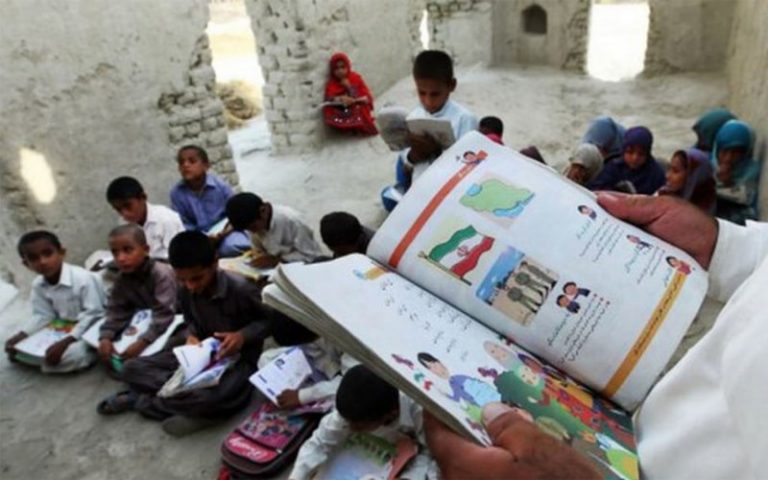
In Iran, there are one million dropouts from schools, which is another dimension of the rampant poverty and government mismanagement. Currently, while the novel coronavirus has engulfed the country, a lack of education facilities and space, worn-out schools, and inappropriate infrastructure for online curriculum have pushed many students to leave school.
Many families, particularly working ones, cannot provide smartphones or proper devices for their children to educate. On the other hand, communication services’ weakness is another problem, and the government is unable to extend internet services to rural areas.
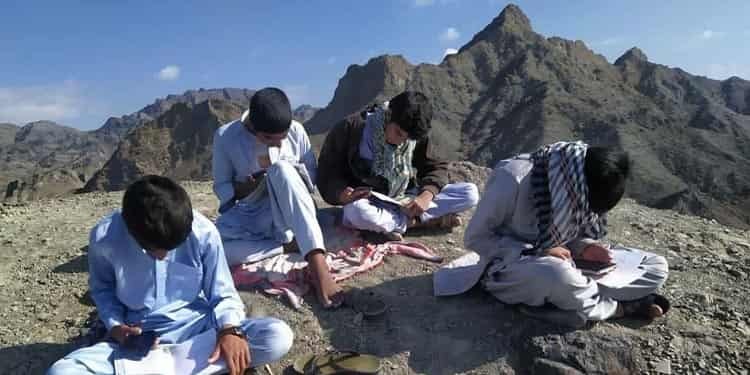
In outlying areas, students must climb mountains and risk their lives every day to access the internet. Minister of Welfare and Social Security Mohammad Shariatmadari officially announced that there are 147,000 dropouts, which is equivalent to 2 percent of Iranian students total.
However, there is a considerable difference between official and unofficial statistics. Institutions familiar with this social phenomenon estimate the real number of dropouts at several times the Welfare Ministry’s figure.
One Million Dropout Students
Director-general of Association for Protection of Children’s Rights Farshid Yazdani announced that there are around one million dropout students in Iran. “We believe that dropouts of education include all children between six to 18 years old. Therefore, there were around one million dropouts in the past education year,” Yazdani said.
“Around 2 percent of children do not go to schools due to residing in impassable areas and absolute poverty,” said Sociologist Shahla Kazamipour, adding, “All the while, not all students have access to adequate facilities for education. There are still around 500,000 illiterate children across the country.”
Students Lack Access to Government Education Application
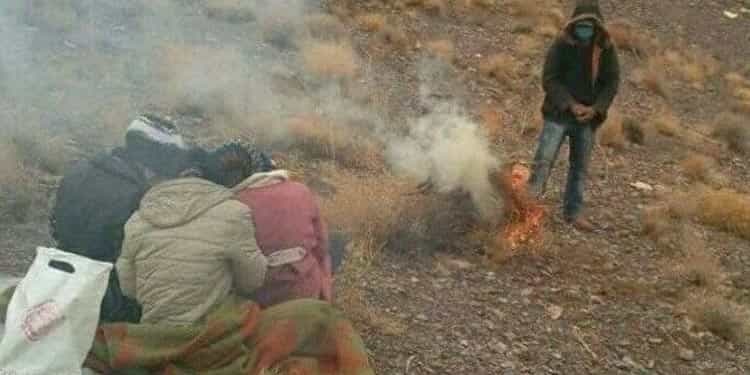
Iranian students must gather around the fire to receive education due to the lack of educational infrastructures.
Following the coronavirus outbreak, Iranian officials frequently advertise a state-run education application called Shad [happy] which ostensibly empowers students to attend classes remotely. However, the Ministry of Information and Communication Technology has not still been able to resolve technical obstacles to ensure students’ and teachers’ access.
Online Classes’ Conditions in Khuzestan Province, Southeastern Iran
In Khuzestan province, there are 153,000 students in around 40,000 families. The province faces severe problems in providing online services to residents, which deprived most students of online classes. Statistics show at least 13 percent of students have dropped out of education.
Provincial Governor Gholamreza Shariati raised the “lack of middle-schools in some villages” as one serious reason for the growing number of dropouts. “Of 27,000 students in Ramhormoz county, at least 4,000 students do not have mobile phones,” Chief of Education Department of Ramhormoz Rahim Rostami said.
In Palam Zangou village in the Sousan Izeh district, students have been deprived of a school and proper classes. They gather around the fire every day to heat themselves and receive education despite the severe cold. “A Conex has been offered to the village’s students, but its ground transfer is impossible,” a villager said.
Given the lack of proper internet services, Iranian students have to climb mountains and hills to attend online classes.
Online Classes’ Conditions in Qazvin Province, Central Iran
Several villages in Auj county lack an internet network. Therefore, students have no access to online classes and are deprived of education. Several students climb mountains and hills to access the internet. However, they can no longer go to the tips during the cold season and have been forced to drop out of education.
Out of 100 villages in Auj county, 36 villages lack internet services. “23,000 students in Qazvin province are forced to drop out the education,” Chief of Provincial Education Department Hassan-Ali Asghari said in an interview with Mehr News Agency, adding, “233 villages have no access to the internet throughout the province.”
He believes that the shortage of school and education places are the main reason for dropping out of education in impoverished areas and slums. “Regardless of the shortage, around 23 percent of our schools across the province are worn-out and need rebuilding and reforming,” Asghari added.
Online Classes’ Conditions in Ardabil Province, Northwestern Iran
“Given the lack of adequate communication infrastructures, the students in 39 villages and 21 urban schools are deprived of access to Shad application,” said Governor of Kousar county Vahid Kan’ani. According to locals and students, Shad [happy] education network has turned into a Na-Shad [unhappy] service.
Online Classes’ Conditions in South Khorasan Province, Northeastern Iran
In many villages, including Hassan-Abad and Mohammad-Abad-e Zirkouh, there is no possibility to access the internet and Shad application, locals reported. “More than 300 schools in the province’s rural areas are deprived of internet connectivity,” announced Mohammad-Ali Vaghei, the director-general of the South Khorasan Education Department.
Online Classes’ Conditions in Kohgiluyeh and Boyer Ahmad Province, Southern Iran
According to the province’s Education Department, more than 3,625 students are educating in nomadic areas. “83 percent of nomad students have no internet access,” said Esmail Rezaei-Nik, the Education Department chief.
“According to the Education Ministry’s statistics, 3.5 million students cannot use Shad application because of lack of internet access or insufficient smartphones,” said member of the Parliament (Majlis) Education and Research Commission Mohammad-Reza Ahmadi.
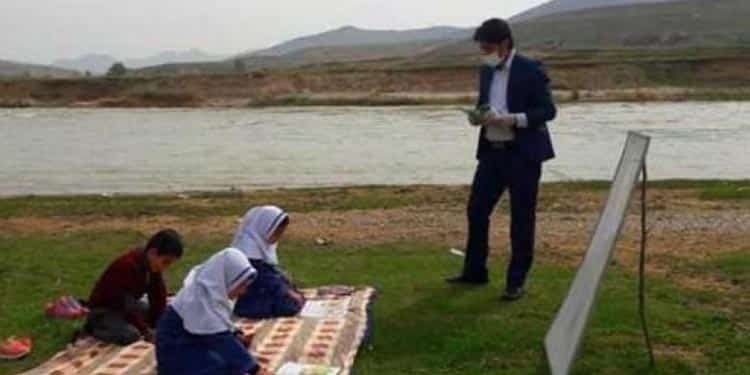
Iranian teachers have to hold their classrooms in pastures because of the lack of proper educational facilities.
Online Classes’ Conditions in Golestan Province, Northern Iran
Also, in the north of Iran, students do not have access to the Shad application in many rural areas. For instance, locals in Narli-Agi Sou are not able to achieve internet connectivity, let alone the education application, which requires a high-speed network.
“Students in Narli-Agi Sou village must climb mountains and hills in cold and rainy days to access the high-speed internet not to remain back of curriculum and other students,” a local said.
“Out of 1,885 elite students, 641 of them lack internet access, meaning 34 percent,” said the Chief of Elite Section of Education Department Abbas Khanali, adding, “Families’ incapable of purchasing mobiles and Tablets are the main reason for students’ inaccessible to Shad application.”
Online Classes’ Conditions in Kerman Province, Southeastern Iran
In Normashir county, the lack of communication infrastructure, poverty, and deprivation caused 30 percent of students not to access the Shad application in this region.
“We live in an area where internet connectivity is a problem. Many residents don’t even have a smartphone in their homes. In this county, families are crowded. In families, there is rarely a smartphone; all children cannot access the internet,” a resident said.
“Our children do not have proper facilities here. Especially, there is no internet network to connect the Shad application. To access the internet, children must go to other villages or climb high mountains and hills,” another resident said.
The education condition on the ground is far worse than what Iranian officials claim. The number of dropouts is severalfold the statistics provided by either the Education Ministry or Welfare and Social Security Ministry.
However, the growing dropout rate is merely one of many social phenomena in Iran. Given the ayatollahs’ mismanagement, Iranian citizens not only suffer from internet inaccessible, leading many students to drop out of education, but also their lives and health are seriously at risk due to the government’s failure in containing the health crisis.
Furthermore, unbridled poverty has pushed many families below the poverty line. Worse, poverty and lack of adequate internet connectivity have led numerous students to commit suicide. This is the flipside of the officials’ costly and irresponsible policies that squander national reserves to fuel terrorism and make nuclear weapons instead of refining and improving the country’s infrastructures.
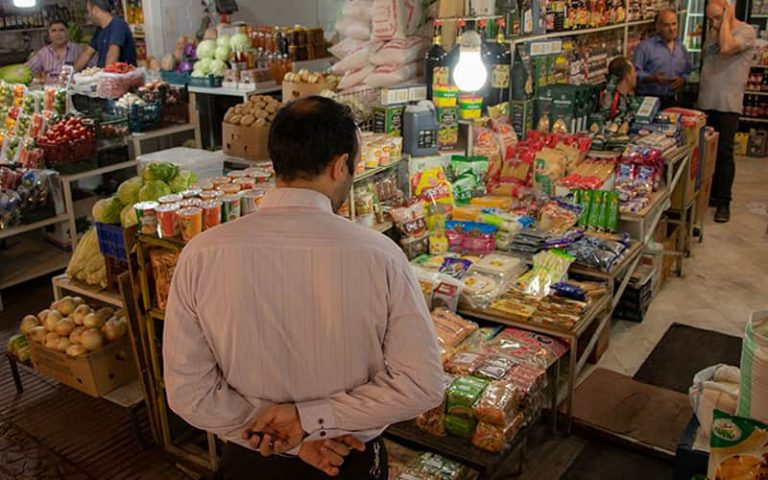
The price of goods in Iran has risen to 107 percent compared with last November, according to the Ministry of Industry, Mines and Trade’s latest statistics, and when compared with the reports for the rest of this year, it is obvious that the price increases are growing at an exponential rate.“The highest hike was in the price of Pakistani basmati rice from 110,700 rials [about $0.45] in November last year to 240,300 rials [about $0.94] in the same month this year,” the Tabnak website reported on December 15.Of course, despite this revelation, Iran’s Consumer and Producer Protection Organization still increased the price of diesel oil by 53 percent and petrol by 40 percent. The semi-official ISNA news agency said that the new price was supposed to prevent a decline in supply, but this rise, along with all the others, comes as state media continually warns of a sharp decline in the living conditions of ordinary Iranians and the possibility of an uprising on the horizon.“Even before the Covid-19 outbreak, the economy was not in good shape... With the spread of the Covid-19, its condition has worsened and now is hospitalized in the ICU. As a result, people’s tables and pockets are becoming more empty day by day,” The Jahan-e-Sanat daily wrote on the same day.
They advised that the poverty line is now 100 million rials [about $962] and over half of the population live below it, including the 11 million unemployed and the 21 million living in neighborhoods, ‘dark zones,’ without access to basic public services. The paper warned that the situation is worse for marginalized groups, like disabled people and the elderly.“Today seven–tenths of the people are poor and only three–tenths of the society are above the poverty line…We never had such a situation. Social harm is very important in Tehran,” announced Majid Farahani, head of the Budget and Financial Supervision Committee at Tehran City Council, on December 15. “During last week’s visit to the shelters, it was found that the number of poor people that go to the shelters has doubled. The rate of theft has doubled, and according to research, social harm has increased among the middle class and the poor,” he added.
It is clear that the government cannot and will not do anything to manage this crisis, caused by systematic corruption and mismanagement. Therefore, the Iranian people see the continuation of protests as the main way to free themselves from this nightmare and replace the untransparent and corrupt system with a democratic government.
As a traditional festival, Iranian families annually celebrate the “longest night of the year,” Shab-e-Yalda [Yalda Night in Persian] as a sign of the victory of the light and beauty over the cold and darkness.
For many centuries, Iranian citizens have seized this opportunity to gather and spend time together in specific ceremonies. They particularly adorn their tablecloths with different nuts, sweets, pomegranates, watermelons, and other fruits.
Grandparents usually recite poems of Hafez on this night, which is added as a special ceremony in Iran’s List of National Treasures since 2008.
However, the Yalda Night festival has become a nightmare for Iranian families in recent years. Given the rampant poverty and economic dilemmas, most of the population is wrestling with high prices for basic goods, let alone the specific fruits and nuts of this ancient night.
According to a report by iranfocus.com, Yalda Night has turned into a nightmare for Iranian families rather than an ancient ceremony. “Each family of four should pay at least 1 million rials [$7.7], and since families are gathering together at this ceremony, elders of families should pay much more, around 1.5 to 2 million rials [$11.5-15.3],” the report read.
“Iranian people regularly serve sweets at their ceremonies on Yalda night. Now, the minimum cost of one kilogram of sweets is around 300,000-350,000 rials [$2.3-2.7]… Families have to purchase different kinds of sweets, which means paying much more than 700,000 rials [$5.4],” the report added.
“Iranian families cannot avoid setting nuts on their tablecloths on the occasion of Shab-e Yalda… Therefore, each Iranian family should pay at least 2.5 to 3 million rials [$19.2-23] for a kilogram of a mixture of these nuts,” the report noted, adding, “With a ballpark figure, each family should spend 5 million rials [$38.4] only for the Yalda ceremony.”
Critics might say 5 million rials equal to less than $40, which is not much. However, the reality is, over 80 percent of Iran’s population are living below the poverty line and receive a monthly subsidy worth less than $3.5.
This means those older families, who have no income and rely heavily on subsidies, must spend their five-month subsidy for one night. In this scenario, they must save the rest of their subsidies to spend on the Nowruz celebration, which is more important and requires more expenditures.
Furthermore, according to Javan Onlineaffiliated to the Islamic Revolutionary Guard Corps (IRGC), this year, the price of Yalda Night’s foodstuff, including fruits, nuts, and sweets, has experienced a 100-percent increase.
However, working families, who struggle hard to make ends meet, are not in better condition. Many families have not seen red meat, fresh fruit or vegetable, egg, and other food for months. In the best condition, they can purchase a loaf of bread and some cheese daily to feed their family members.
On the other hand, Iranian families are scrambling against the novel coronavirus this year, which has rubbed additional salt on their wounds. According to the Iranian opposition Mojahedin-e Khalq (MEK/PMOI), around 190,000 citizens have lost their lives to the Covid-19 as of December 20.
Regarding the health and hygienic costs, as well as the sharp drop in business, unemployment, and the decrease in people’s purchasing power, many people should prioritize health above other issues.
In such circumstances, while the population, particularly children, need pleasant events like celebrations and ceremonies more than ever, they must ignore this traditional ceremony due to economic problems.
The government has recommended families to hold remote celebrations. However, many citizens who are forced to sell their body organs or even newborn babies, cannot feed their families, let alone prepare for Yalda Night and spend additional money on internet connectivity.
These parameters prompted citizens to complain to officials about the country’s dire economic conditions. In interviews with IRGC-run media, citizens openly criticized the government for fluctuating prices, which change every moment.
Iranian Foreign Minister Mohammad Javad Zarif is personally involved in the government’s terrorism, human rights violation, and propaganda. He plays the role of intermediate for his hostage-taker government and justifies his superiors’ harrowing crimes.
After 41 years, the world has seemingly grasped that domestic suppression and export of terrorism are the bread and butter of the religious dictatorship ruling Iran. All Iranian officials are involved in human rights violations and terror activities in some way or another.
The Islamic Revolutionary Guard Corps (IRGC) is the foremost responsible for ensuring these egregious paths through its foreign division Quds Force and Basij paramilitary forces. In this respect, any ties with this entity is tantamount to approving the government’s terrorist and oppressive policies.
However, when it comes to Iranian Foreign Minister Mohammad Javad Zarif, no one can downplay his personal involvement in terror plots. Two foiled terror plots against Iranian dissidents in Albania and France, orchestrated by Tehran’s embassies, seriously questioned the nature of Iran’s diplomatic mission on European soil.
Late last month, an unprecedented trial began in Belgium involving a high-ranking Iranian diplomat and three accomplices. Zarif’s “diplomat,” Assadollah Assadi, stands accused of smuggling a bomb into Europe while traveling on a diplomatic passport, to bomb the Free Iran Rally of the Iranian opposition in Paris.
According to Belgian prosecutors, Assadi was not acting on his own but undertook the operation on orders from the highest levels in Tehran. Moreover, on November 27 and December 3, Assadi refused to attend the Antwerp Court based on Zarif’s order.
“Instructions reached Assadi via the Foreign Ministry. Zarif was aware of the plot. And direct involvement would come as little surprise given Zarif’s public affection for the IRGC and [the eliminated Qods Force commander Qassem] Soleimani,” explained Bruce McColm, the Director for Institute for Democratic Strategies, in an article for Townhall.
Furthermore, back in April 2019, Zarif was welcomed as an honored guest at the IRGC headquarters. Zarif is on record as saying he held weekly meetings with Soleimani to coordinate policy.
On the other hand, Zarif is known as the “propaganda minister” due to his role in justifying the government’s human rights violations inside the country and portraying a lovely image of Tehran’s aggressive actions beyond its borders. In 2019, the U.S. imposed sanctions on Zarif due to his role in the Iranian government’s malign activities.
While Foreign Ministry spokesperson Saeed Khatibzadeh claimed Iran’s judiciary is independent and “any meddling in the issuance or execution of judicial rulings is unacceptable,” Zarif recently signaled other countries that Tehran is ready for a ‘prison swap.’ He professed his country’s readiness for prisoner exchanges involving Western nationals who have been taken hostage in the Islamic Republic in recent years.
The event showed Zarif’s role as a broker and negotiator for the hostage-taker government of Iran. Zarif’s comment once again proved that Iranian officials see terrorism and warmongering as leverage for ‘diplomatic relationship.’ As they constantly pursue making a nuclear bomb to blackmail the international community and receive political and economic concessions, dissidents believe.
“Diplomatic chiefs in the Iranian regime are petty international peddlers of the regime’s terrorism. That is why Zarif should be shunned, the regime’s agents expelled, and the regime’s embassies, which provide strategic and tactical logistical support to the regime’s terrorists, must be shut down once and for all,” McColm concluded.
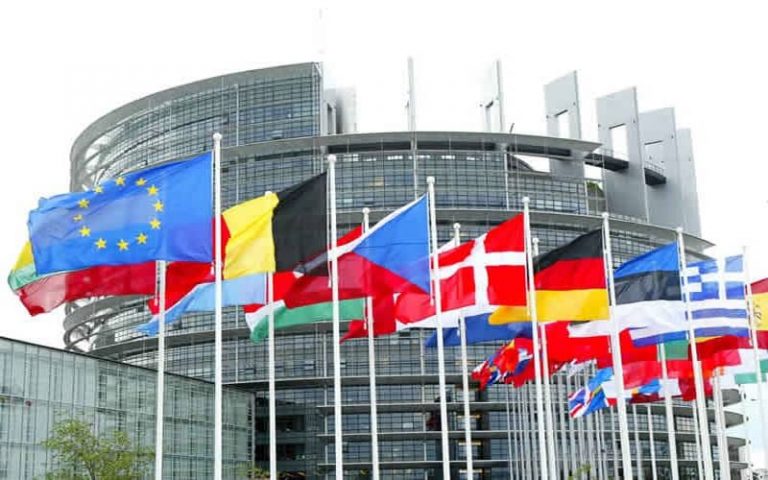
Following Iran’s announcement that it had executed French resident Ruhollah Zam, several European countries pulled out of a Europe-Iran Business Forum and the European Union condemned the execution “in the strongest terms” in a statement that reiterated its opposition to the death penalty and raised concerns of a systematic denial of due process in Iran’s Judicial system.
++ cancelled ++ Due to current developments in #Iran@GermanyinIran and other EU Member States will not participate in the Ambassadors’ Panel on Economic Diplomacy of the Europe-Iran Business Forum scheduled to take place on Monday in Tehran. https://t.co/K7MPP81UeE
These are vital first steps but holding Iran to account for human rights violations cannot end with a statement and a canceled—or worse, postponed—business summit.
The decision by France, Germany, Austria, and Italy to pull proves that reducing relations with Iran will have more of an effect on the ayatollahs’ behavior than maintaining them. However, why is this not the policy towards Iran all the time? After all, Iran’s egregious crimes against humanity have been well documented for over 41 years.
Why are these countries—and many more—content to appease the Iranian government rather than hold them to account for their actions? When do they know that getting away with these actions only emboldens the Iranian authorities to commit more crimes, including on European soil and against European residents or citizens?
One of these long-ignored crimes—the 1988 massacre of 30,000 political prisoners—was recently described by United Nations human rights experts as an example of ongoing crimes against humanity for the enforced secrecy surrounding it. They demanded a response from Tehran– and promises of an investigation – by September, but this never came and now the experts are calling for an international investigation through the publication of the letter.
“[Previous failures by the international community to investigate] had a devastating impact on the survivors and families as well as on the general situation of human rights in Iran and emboldened Iran to continue to conceal the fate of the victims and to maintain a strategy of deflection and denial that continue to date,” the letter read.
That the government has ignored this letter shows just how used the ayatollahs are to their problems going away and the international community letting them slide. After all, officials have even said publically that they were proud to take part in the massacre of non-violent activists, including children.
Following the European pushback over Zam’s execution, Tehran summoned for questioning the French and German ambassadors in Tehran as a protest, claiming that the execution was none of their business, even though Zam had refugee status in France and was kidnapped by the Islamic Revolutionary Guard Corps (IRGC).
The government is terrified of being held to account, which is why the world must do it.
Iran started 2020 by losing Qassem Soleimani, the commander of the Islamic Revolutionary Guard Corps’ Quds Force (IRGC-QF), during a U.S.-drone strike in Baghdad. In response, authorities took harsh revenge—not on the U.S. but on Iranian citizens.
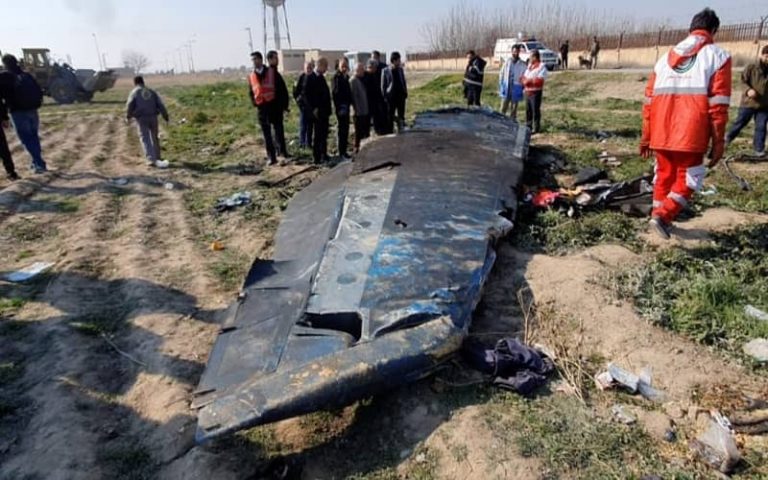
On January 8, the IRGC Aerospace Forces (IRGC-AF) bragged about a massive missile attack on U.S. troops hosted in Ain al-Assad base, northern Iraq. The attack left no casualties among the “Great Satan’s infantry.” However, several hours later, the IRGC-AF shot down a commercial flight, killing all 176 passengers and crew on board.
Iranian officials immediately denied the IRGC’s involvement in the incident. They continued their denials for three days until reliable satellite evidence and footage proved that two missiles downed the Flight PS752 of the Ukrainian Airlines.
On January 11, IRGC-AF chief Amir-Ali Hajizadeh admitted that the IRGC air defense system shot down the airplane. However, he outlined “human error” as the reason for the villainous tragedy. He also admitted that he and his superiors knew that the IRGC anti-aircraft system had targeted the jetliner at the beginning hours.
However, after more than 11 months, Iranian authorities gave no answers to grieving families and international parties whose people were on the plane. According to international aviation laws, Tehran should lead the investigation, which permitted it to wipe away its footprints.
In such circumstances, when the reason comes to military activities, outsider analysis is further restricted. Sovereignty is afforded to the perpetrator and the review is essentially eliminated when that country does not have an independent civil aviation authority or transparent judicial system, which Iran does not.
In their ‘investigations,’ judiciary officials raised ridiculous explanations to downplay the IRGC’s crime. Despite routine night vision, video, radar, and other identification systems, Tehran claims that “the operator was apparently unable to distinguish friend from foe.”
This is while the 40-meter-long civilian jetliner had just taken off from Khomeini international airport. If these words were right, how could Iranian officials dare use their private and smaller airliners? Furthermore, the enemies’ missiles or fighters were undoubtedly supposed to come from western borders, not from the country’s heart to the border.
Iranian officials also say, “The operator acted unilaterally and fired two surface-to-air missiles.” This is another ironic excuse because if it was true, this act is in direct violation of applicable procedures not to fire at all without his command center’s authorization.
In such a scenario, aside from any consequence, the operator had acted as a rogue element that wasted defense reserves. Therefore, this violation should have made the operator and the assistant accountable and prone to be prosecuted in a military court.
The fact that evidence clearly shows the reason was not a ‘human error’ as a significant number of other commercial passenger jets took off and landed at the international airport before and after PS752 without being attacked. On the other hand, even if there was a human error, why did the authorities initially downplay the event and lay blame on the pilot and airliner’s manufacturer? Why did they delay to hand over the black box for six months?
Based on these undeniable documents and reasons, on December 16, Canadian Minister of Foreign Affairs François-Philippe Champagne said in an interview with CBC News that he doesn’t believe Iran when it says Flight 752 was shot down as a result of human error.
Earlier, in a 74-page report, Canada’s special adviser on the federal response to Iran’s shootdown of the airliner Ralph Goodale rejected Tehran’s ‘investigations.’ “There are indications of incompetence, recklessness and wanton disregard for innocent human life. It is incumbent upon Iran to respond to these concerns in candid and compelling terms or risk the loss of international confidence in its ability to maintain a safe airspace,” Goodale noted.
Tehran is not eligible to lead the investigations. Iranian authorities would never investigate themselves, not least since their record includes arbitrary arrests, extrajudicial executions, and gross human rights violations. Therefore, the countries that lost their citizens must refer the case to the United Nations Security Council and call for an impartial and international trial.
Iran is the richest country in the world in terms of natural gas reserves and the third richest in oil reserves, according to the Gas Exporting Countries Forum (GECF), with most of the reserves being in the southern Khuzestan province. Khuzestan also has seven rivers, including Karun, one of the country’s biggest, and five major dams.
Given the wealth of natural resources and water, why have so many people there been suffering from a lack of potable water over the past few years?
Back in August, MP Mojtaba Yousefi advised that 800 villages in Khuzestan have no access to safe drinking water on a regular basis and that there was not yet the budget to fix the dire situation. Meanwhile, Khuzna news agency reports that 700 villages lack running water and have to rely on tankers.
And the situation gets worse still.
“Potable water quality in the suburbs is less than 50 percent. Our concern is not limited to the microbial contamination of the water. The water lacks chlorine or does not contain any chlorine. If the Water Organization is busy with infrastructural issues, they can at least control the amount of the chlorine,” said Dr. Mehran Ahmadi Balutaki, the head of West Ahvaz Health Centre, which is inside the provincial capital, on December 11
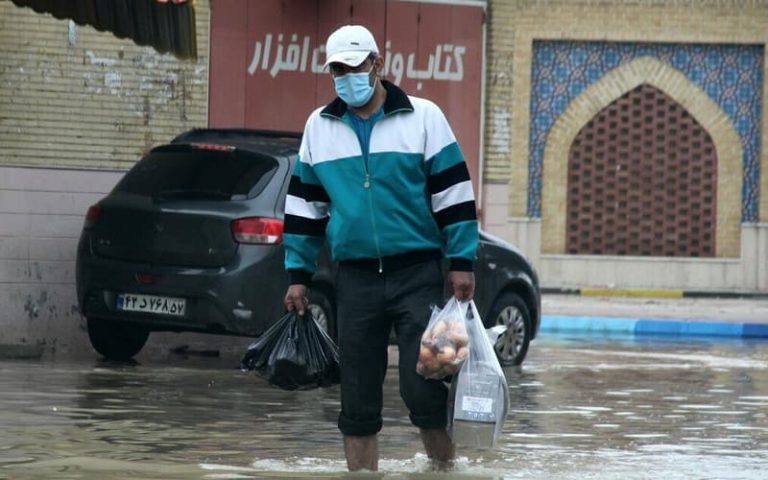
That’s right. In the midst of the coronavirus pandemic and a flood crisis, which the government has failed to confront, the people of Khuzestan are also being subjected to a lack of water purification. In Ahvaz, the potable water was mixed with sewage, according to Gholamreza Qasemian, the head of Meshkat seminary, on December 7, creating a real danger to those forced to drink it.
“It is not tolerable to see the mixing of water and sewage where 200 billion cubic meters of water is stored behind its dams. Allocation of 3 percent of oil income to Khuzestan province is a considerable budget. An investigation is needed into why a significant amount of this budget has not been paid,” said Hassan Darwishian, the head of the Inspection Organization of Iran, on December 8.
He further stated that this budget would be able to solve many problems in Khuzestan if it were actually paid.
The government claims to have spent more than $47 million in the Khuzestan cities of Mahshar and Khomeini Port but due to systematic corruption, it is unclear exactly how this has been spent. Much of Iran’s wealth is spent by the ayatollahs on a nuclear program, ballistic missiles, the export of terrorism, and domestic repression.
In June, the people of Khuzestan protested the water crisis again and the authorities cracked down violently.