Proof Iran Is Responsible for 2018 Bomb Plot

0
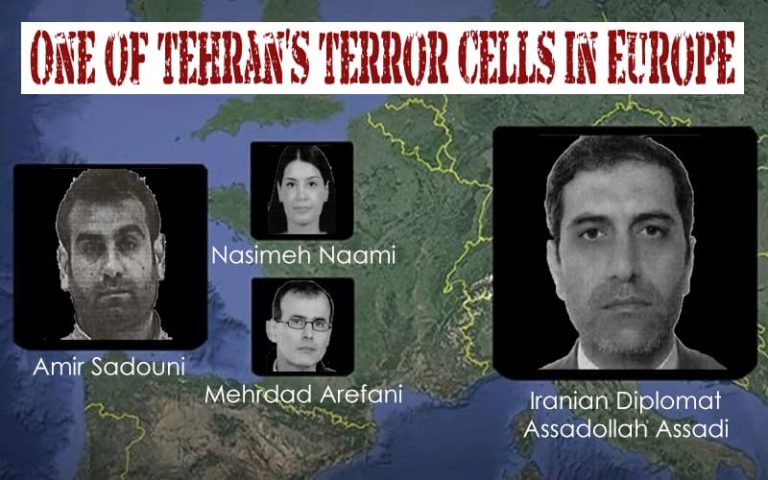
On Friday, we saw the first time an Iranian diplomat Assadollah Assadi was put on trial for terrorism. Assadi, who was stationed at the Vienna embassy, was arrested for trying to bomb a rally held by the Iranian Resistance in France in 2018, and ever since, the Iranian government has tried every trick in the book to get him released, from false claims of diplomatic immunity to threats of further terrorism. Of course, the Belgian prosecutor rejected Assadi’s diplomatic immunity, highlighting that he was arrested outside of Austria and that diplomats can be stripped of their immunity by a host country if they are planning mass murder, which is what Austria has done. Assadi has refused to take part in the trial, claiming that he does not recognize the court, and is represented by his lawyer, hired by the Iranian Foreign Ministry. The real reason that he has not appeared in court is that his masters in Iran ordered him to boycott the trial to avoid answering questions, but the prosecutor explains that this shows that the entire Islamic Republic is responsible for the plot.
Trial of Iranian Diplomat and His Accomplices for Bombing Opposition’s Rally
This was confirmed by evidence revealed in court by Assadi’s accomplices. Amir Sadouni messaged an unindicted agent known as Negar on WhatsApp after meeting Assadi in Luxembourg on June 28 and confirmed Supreme Leader Ali Khamenei’s involvement. The message read: “He [Assadi] told me that after [the bomb is exploded] he would go see Agha [master, a term used by the regime’s officials and affiliates to address Khamenei] personally.” In a message sent out at the same time that Assadi’s trial began, Maryam Rajavi, the president-elect of the National Council of Resistance of Iran (NCRI) and the primary target of the plot laid out how she had previously revealed the role of Khamenei, President Hassan Rouhani, and other high-ranking officials played in this operation. “The Supreme National Security Council, presided over by Hassan Rouhani, made the decision to bomb the Iranian Resistance’s annual gathering at the Villepinte, and the regime’s Supreme Leader Ali Khamenei approved it. Khamenei, Rouhani, Javad Zarif and the mullahs’ Intelligence Minister Mahmoud Alavi must face justice for decades of crimes and terrorism,” she wrote.
Historical Trial of Iranian Diplomat in Europe
While this is the first time that an Iranian diplomat has been put on trial for terrorism, it is far from the first time that an Iranian diplomat committed acts of terrorism. The government leaders should be prosecuted for this and Western countries should shut down the Iranian embassies, which are used to breed terrorism and espionage.

Historical Trial of Iranian Diplomat in Europe

0
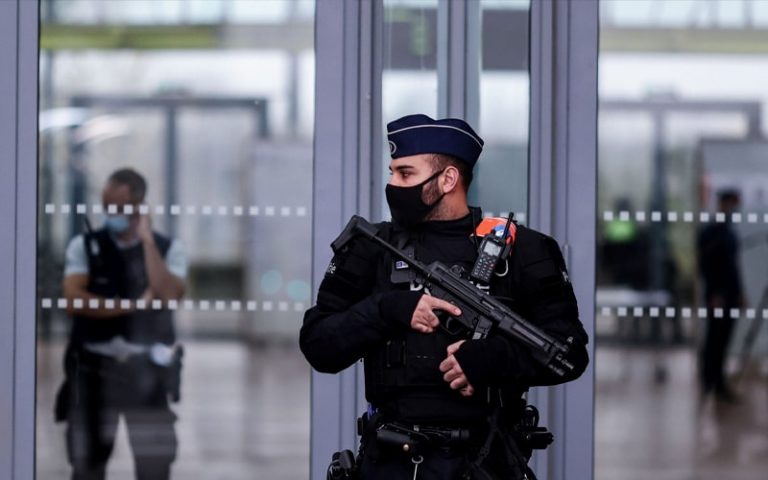
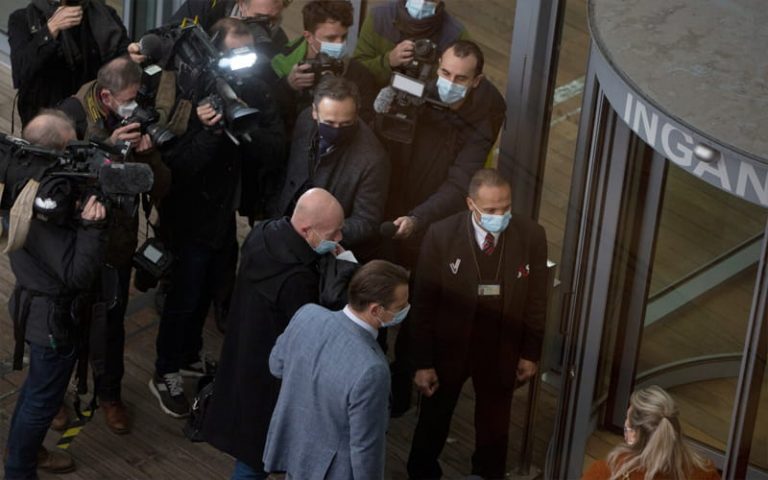
On December 3, the historical trial of Iranian diplomat Assadollah Assadi in Belgium attracted international media attention. Assadi is the first diplomat to ever be tried in Europe due to involvement in a terror attempt. Despite the Iranian government’s best efforts, which included bribery, falsely claiming diplomatic immunity, and threatening more acts of terror, the trial of Assadi and his three accomplices for attempting to blow up the 2018 Free Iran rally began on Friday in Belgium.
Beginning the Trial of the Iranian Diplomat Terrorist Assadollah Assadi
Iranian officials’ efforts to get Assadi released, rather than write him off as a rogue agent, has caused a scandal. However, the ayatollahs clearly considered the damage to be worth it for the chance of stopping the trial. It also goes some way to back up the Belgian prosecutor’s assertion that Assadi was not acting of his own volition but on the orders of his government. Not only will this case see Assadi behind bars for 20 years, if the prosecutor’s recommendation is taken into account, but it will also be a condemnation of the Iranian government and provide the perfect catalyst for all Western nations to re-evaluate their policy on Iran. The world, especially Europe, will see that the appeasement policy has only emboldened the Iranian government to commit heinous acts of violence in foreign countries, even those who have been over backward to accommodate the ayatollahs. “So many years of turning a blind eye on the regime’s terrorism have prompted the regime’s diplomat-terrorist to carry out a terrorist operation on European soil, yet claim he claims he has diplomatic immunity and should not go on trial,” the Iranian coalition opposition National Council of Resistance of Iran (NCRI) wrote. As noted in a Politico article on the subject on November 27, “the case will likely have grave ramifications for EU-Iran relations”. The world will be watching the trial and the EU’s reaction intently, waiting for a signal about how to treat Iran now. They must now choose between justice or trade and they are very unlikely to side with the mullahs after this.
Europe Must Take Iran Terror Threat Seriously
The NCRI recommended that European Countries immediately:
  • designate as terrorist organizations Iran’s Ministry of Intelligence and Security (MOIS) and the Islamic Revolutionary Guards Corps (IRGC)
  • shut down the regime’s embassies and cultural and religious centers because they are hubs for terrorism and espionage
  • make diplomatic relations contingent with the regime ending their terrorism on European soil
The trial is expected to conclude this month and all four are expected to be given long prison sentences.

Iran’s Third Major Flood in Three Years

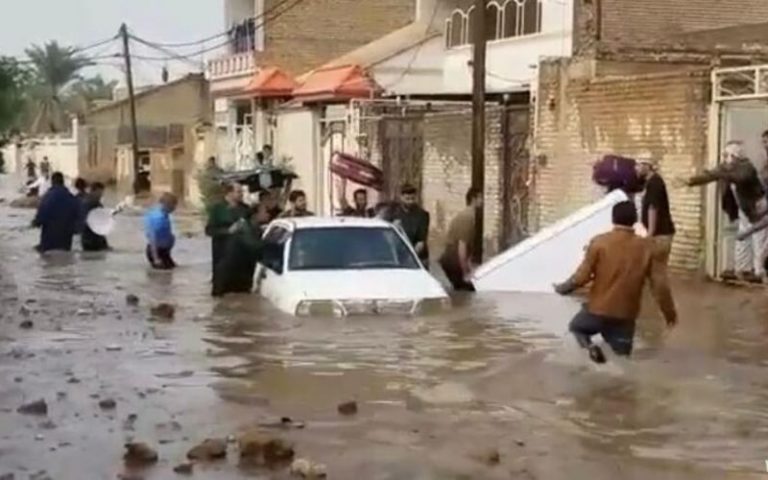
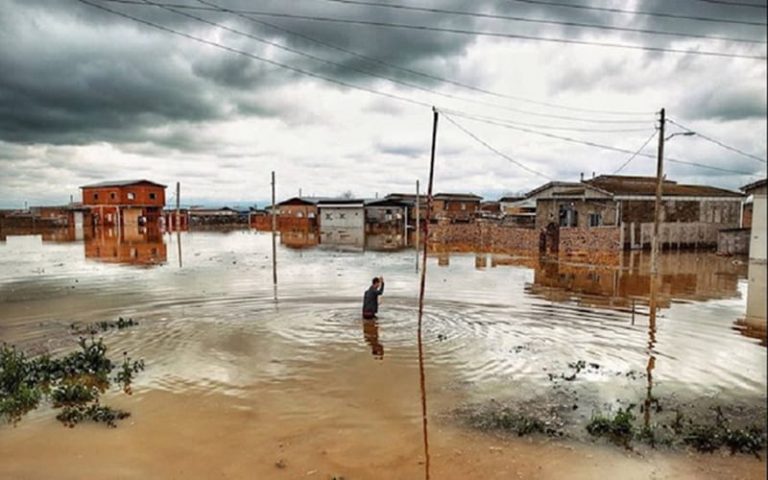
Eight Iranian provinces have suffered severe damage in recent floods and thousands of residents have been impacted across 51 cities in Bushehr, Fars, Golestan, Ilam, Khuzestan, Kohgiluyeh and Boyer-Ahmad, Lorestan, and Qazvin. In Khuzestan, floodwaters disrupted traffic in the cities of Ahvaz, Mahshahr, Omidiyeh, and Ramshir, while in the mountainous areas of Kohgiluyeh and Boyer-Ahmad province, landslides have blocked roads. “Heavy rainfalls will bring society’s health in a more dangerous situation during the coronavirus outbreak. This is while according to forecasts, we will have a lot of rain in the coming days,” said Majid Nasserinejad, MP from Khuzestan province. This is interesting because the politicians and the state-run media are eager to blame these floods solely on the rain. However, the truth is that meteorology centers began warning about this heavy rain in November. Notably, this is the third year in a row that a large number of provinces saw major floods at this time. Given that, shouldn’t the authorities have enacted some sort of evacuation plan over the past couple of months? Shouldn’t they have built better flood defenses? Shouldn’t they have done something? The sad truth is that the government is not doing anything to prevent the floods or mitigate the damage, even though they certainly have enough money stored away to do so. They are not dredging lakes or rivers, clearing the drains, or even refraining from the environmental destruction that is causing banks to burst. Even Naserinejad admitted this, warning that the floods could become more serious. And yes, they could. Two years on from the 2018 floods and those who lost their homes are still living in makeshift shanties that are at risk of being torn down by the authorities because they’re not up to code or don’t have the right permits. To add insult to injury, Defense Minister Amir Hatami announced that defense spending would be doubled in the next budget, at a time when people are struggling to make ends meet because of the irreparably broken economy. Maryam Rajavi, the President-elect of the National Council of Resistance of Iran (NCRI), expressed her deep sympathy with the people affected by the floods and asked for all Iranians to rush to their aid. She then called out the regime for its “destructive policies in wasting our nation’s wealth in unpatriotic nuclear, missile programs, [and] the export of terror and war” which has made Iranians “vulnerable” to floods, earthquakes, and the coronavirus.

The Floods Pass Through State-Backed Mafia Tunnel in Iran

0
Stunning images of floods devastation and the sinking of the Jarahi town in Mahshahr, south-western Iran, should never be considered a natural event. Such incidents, with this volume of destruction of the foundations of bio-nature, can be considered a natural event when all measures of prevention and care and climatic attention have been taken until then such catastrophes seem inevitable. The news and images of the devastating floods damage to the people, along with the cries and pleas for help of the homeless people, hurt the soul of every observer. According to Mehdi Valipour, head of the Iranian Red Crescent Society for Rescue and Relief, ‘eight provinces have been flooded in the past 72 hours.’ “The houses of Ahvaz and Mahshahr are flooded and no one cares. This repetitive series happens every year. It is not known how these credits have been spent, otherwise, areas with sewage problems and water collect in it are clear,” the state-run daily Resalat quoted Sirous Davoodi, representative of non-governmental organizations in Khuzestan province, as saying. “These losses are due to the uncertainty of how the World Bank loan is spent,” Resalat quoted Hajir Kiani, Secretary of the Khuzestan Association of Nature and Environment Lovers, as saying.
Corruption in Iran Exposed Again 
The idea that a flood or an earthquake or any natural disaster can pass through a mafia tunnel and suddenly find meaning and function other than a natural disaster is, of course, far from the mind; but there is evidence that floods in the Islamic Republic have become a mafia phenomenon. Such a mafia phenomenon has become so widespread that it has manifested itself in a report in a state-run daily. Following the devastating floods that have turned the city of Jarahi in Mahshahr county into a war-torn and devastated city, Resalat daily published an article that revealed one aspect of the state-backed financial mafia in Iran. In its December 1 edition, Resalat acknowledged the arrival of the World Bank to help ‘improve water and sewage’ in several cities in Iran. But the World Bank loan’s fate is now unclear, according to the daily. Apparently, it has suffered an ‘unknown fate.’ “It is not clear how and where the large budgets that flowed into the water and sanitation sector were spent. In 2004, a $149-million loan was allocated by the World Bank to rehabilitate and complete water and sewage in the cities of Ahvaz, Shiraz, Babol, and Sari. To date, however, there has been no written report on how it was allocated, and it appears to have met with an unknown fate.” The daily then quoted the official news agency IRNA as saying in an interview with Darvish Ali Karimi, former CEO of Ahwaz Water and Sewerage: “A $150-million-conditional loan was provided by the World Bank: with 10,000 rials for each dollar in 2004. This money could have turned the city of Ahvaz upside down in terms of water and sewage conditions. It was a five-year commitment.” In the meantime, the managing director of Ahvaz Water and Sewerage is replaced, and a person named Habibollah Moradi replaced Darvish Ali Karimi. What needs to be determined is the fate of the World Bank’s $150-million loan for Ahwaz Water and Sewerage. Moradi attributed the fate of the World Bank loan to U.S. sanctions, while from 2004 to 2009, which was the end of the project implementing commitment, there were no sanctions at all. “Two years and five or six months elapsed from the loan period, and then the sanctions canceled the World Bank projects,” Moradi said. The plundering by the financial mafia is so obvious that even Resalat daily cannot deny the contradiction. “The effective date of this loan is November 16, 2004, and the expiration date of the loan is October 1, 2009. Matching the loan execution and expiration dates with the claims about the fate of this money is in conflict,” the daily wrote. “The first is that the expiration date of this loan does not overlap with the time of imposition of sanctions, and the second is that the loan has been allocated and there is no report on the allocation of ‘part’ of this loan in the World Bank statistics,” the daily revealed.

Iran’s FM Zarif Should Be Held to Account for Terrorism

0
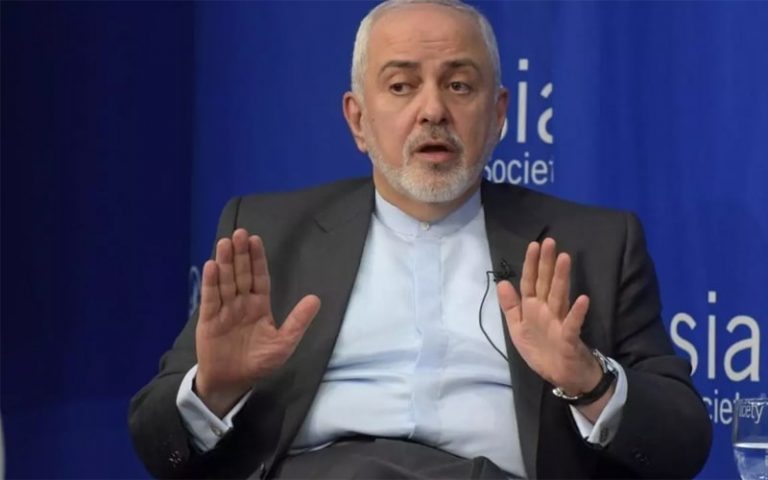
The trial of Iranian diplomat Assadollah Assadi and his three co-conspirators for the attempted bombing of the 2018 Free Iran rally in Paris began on Friday. Many people believe this trial should shine a light on terrorism as a whole, especially the role played by Iran’s embassies and diplomats. The Belgian court is expected to sentence the four defendants to prison before the end of December, in what would be a happy new year for all. However, Assadi is far from the first Iranian diplomat to be responsible for terrorism in Europe, he’s just the first to be held to account. This trial should be a wake-up call for Western powers about the dangerousness of trusting Iran’s diplomacy. The politicians across Europe must concede now that comprehensive changes are needed. The changes maybe include the closure of the Iranian embassies and multilateral sanctions and travel bans against leading officials, like Foreign Minister Javad Zarif. This would acknowledge that the international community’s assessment of Zarif as a ‘moderate’ was incorrect. Nonetheless, this truth can be clearly seen in his praise for the most violent officials, institutions, and policies, as well as his long history of carrying out and covering up acts of terrorism by his government and its proxies. Case in point, Zarif called it a “great honor” to visit the headquarters of the Islamic Revolutionary Guard Corps (IRGC), tour the facility, and meet with high-ranking officers just after the United States designated the IRGC as a terrorist entity. Furthermore, he has frequently bragged about his collaborative relationship with the former chief of the Quds Force (IRGC-QF) Qassem Soleimani, also designated a terrorist and killed by the U.S. in January 2020. “The developments like the Assadi terror trial reveal that Zarif is in a position to play a very substantial role in the perpetration of other such acts on foreign soil,” the National Council of Resistance of Iran (NCRI) wrote. The bomb plot would have endangered the lives of the 100,000 attendees of the Free Iran rally in Paris, including hundreds of dignitaries from across Europe, North America, and the Middle East, who would have been collateral damage if the plot to murder the NCRI President-elect Maryam Rajavi had worked. Now, we know that Assadi smuggled the bomb into Europe on a diplomatic passport and handed it over to his hired terrorists in Luxembourg – where he does not have diplomatic immunity. This makes it imperative to implicate the Foreign Ministry because there are multiple accounts of thwarted terrorist plots on European soil, just like this one, involving Iranian diplomats. Assadi is just the only one brought to trial. Each case shows evidence that is enough to expel diplomats from France, Albania, and the Netherlands. How is this not evidence enough of Zarif’s support for terrorism? Europe’s failure to hold Zarif to account means they are “courting peril” from a system desperate to “project strength” and “damage organized opposition”. “Zarif’s responsibilities have expanded greatly over more than three decades, but his role has remained much the same. As awareness about Iranian terrorism grows in the wake of the Belgian court case, the regime’s Foreign Minister will surely take the lead in denying, downplaying, and justifying his own diplomat’s crimes,” the NCRI wrote. “Before December is over, the international community will have to push his protests aside in order to hold the four aspiring terrorists accountable. Zarif himself should also be held to account not just for the 2018 plot but also for his general complicity with decades of Iranian terrorism,” the Iranian opposition added.

Trial of Iranian Diplomat and His Accomplices for Bombing Opposition’s Rally

0
On December 3, a court in Antwerp, Belgium, held the second day of the high-profile trial of Assadollah Assadi, a Vienna-based Iranian diplomat. On July 1, 2018, European prosecutors detained Assadi for orchestrating a bomb plot against the Iranian opposition’s rally in a suburb of Paris. According to evidence, the Iranian diplomat had personally transferred 1lb of explosive material TATP from Tehran to Vienna on a commercial flight. Afterward, he delivered the device to the operative team, including Amir Sadouni, 38, Nasimeh Naami, 35, and Mehrdad Arefani, 54, in Luxemburg. Assadi’s accomplices had Belgian citizenship. On November 27, following the end of the first hearing—while Assadi as the first defendant was absent—Belgian prosecutors urged the court to sentence: -Assadollah Assadi to 20 years in prison -Amir Sadouni to 18 years in prison -Nasimeh Naami to 18 years in prison -Mehrdad Arefani to 15 years in prison Given the misuse of their Belgian nationality to facilitate the bomb attack, the prosecutors called the court to revoke the Belgian citizenship of Sadouni, Naami, and Arefani. The prosecutors also urged the court to confiscate the terrorists’ money and property because the Iranian Ministry of Intelligence and Security (MOIS) had paid the money to the defendants to carry out the terror plot.
Iran’s IRGC and MOIS Must Be Designated as Foreign Terrorist Organizations (FTO)
Assadi refused to attend the second hearing. According to the Iranian opposition National Council of Resistance of Iran (NCRI), Iranian Foreign Minister Mohammad Javad Zarif ordered Assadi not to participate in the court. Reliable evidence and undeniable documents and details obtained from Assadi’s note and communication with the operative team left no doubt over his role in the crime. On the other hand, Assadi’s absence encouraged his accomplices to lay all the blame on the Iranian diplomat. The attorneys for the defendants surprisingly highlighted Assadi’s role to evade their clients’ own responsibility. The defendants claimed that Assadi had deceived them to carry out the plot while they have received over 150,000 euros in cash and credit. In their messages, traced by European authorities, the terrorists expected more rewards. The attorneys for Naami and Sadouni also tried to downplay the role of their clients. They claimed that the defendants were unaware of the bomb’s capacity and they had believed that it would not harm anyone. Notably, during the defusing of the bomb, a police defuser robot was damaged and a police officer was wounded. Despite contradictory claims raised by the defendants and their attorneys, the court once again highlighted the Iranian high-ranking officials’ involvement in the plot. The NCRI President-elect Maryam Rajavi, who was the main target based on evidence and prosecutors’ argument, pointed out the role of Iranian Supreme Leader Ali Khamenei, President Hassan Rouhani, Foreign Minister Zarif, and Intelligence Minister Mahmoud Alavi. She also affirmed the imperative of shutting down all the Iranian government’s front centers and institutions that pave the path for terror plans under the banner of cultural or religious activities. “It is now time for an international tribunal to be set up and to prosecute the leaders of the regime, who are the true masterminds of hundreds of terrorist acts around the world,” the NCRI delegation also announced.

Shocking Statistics of Murdering Women in Iran

Iran is one of only six countries that have not signed the United Nations Convention on the Elimination of All Forms of Discrimination Against Women and women living there are denied even the most basic rights over their bodies, relationships, children, education, and employment. Meanwhile, men are allowed to beat and even kill their wives and children, which means that violence against women is not only prevalent but also sanctioned by law. Let’s look at just some of the so-called honor killings, which account for 50 percent of homicides, that occurred since February because of the misogynistic policies of the ayatollahs and the laws that allow men to kill women with impunity.
Mandatory Hijab State-Sponsored Violence Against Women in Iran
February 2020
  • Kowsar Gol Soghanloo, 15, was set on fire by her husband
March 2020
  • Hadith, 11, was strangled to death by her father after he realized that he would not receive a harsh punishment for murdering her
May 2020
  • Hajareh Hussein Bor, 20, was murdered by her husband after repeatedly complaining of domestic violence
  • Romina Ashrafi, 13, was beheaded with a sickle by her father, even after telling a judge that he was abusing her
  • Sarina Ghafouri, 25, was killed by her brother who wanted to stop her from remarrying
June 2020
  • Fatemeh Barhi, 19, was beheaded by her husband after she tried to leave him
  • Mina was killed by her ex-husband
  • Somayeh Fathi, 18, was killed by her father and brother, even though she was pregnant
  • Reyhaneh Ameri, 22, was killed by her father with an ax, three years after he was first caught trying to murder her
Two more Honour killings in Iran this week 
July 2020
  • A young woman from Maragheh was set on fire by her husband on July 23, following repeated requests for divorce that were ignored by the judicial authorities
  • A 20-year-old was put in a coma after her father hit her with a hammer
  • Parang Ghazi was killed in a brutal assault by her husband
  • Fatemeh Ghozati, 16, died after being thrown from an 11th-floor window by her step-uncle, but the death was labeled a suicide despite complaints made by her mother who had seen the crime
August 2020
  • Fatemeh Kebriaei, 28, was killed by her husband during a violent assault after she left him.
  • Leila was shot dead by her husband just minutes after he was released from prison for trying to kill her with an ax.
  • Fatemeh Hawasi, 16, was shot dead by her brother
  • Maryam Atmani, was set on fire by her husband and died
“Under the current regime, the prevailing medieval view is that officially and in all laws, women are second-class citizens and subservient to men. This idea is part of the mullahs’ ideological pillar on the basis of all policies,” the Iranian opposition National Council of Resistance of Iran (NCRI) wrote. “In a structure such as the one in Iran, even if the killer is punished, a state assassination adds to the regime’s crimes and spreads the killing. However, the context and form of the issue still remain, and the men of this intellectual apparatus are increasingly driven to brutal behavior,” the NCRI added.

Tehran’s Monopoly and Economic Instability

Since the ayatollahs and their brokers captured Iran’s economy, they only provided economic facilities and opportunities only for their loyalists in field of commercial, industry, and production areas, and the private section and non-affiliated sectors of the economy with this government, were deprived of their activities and implementation of their plans. The private sector has to run for months in the maze of administrative bureaucracy to receive its licenses, while one of the indicators of free competition in any country is the lack of monopoly in decision-making for economic activity. In Iran’s political economy, unilateral domination of economic activity has not only not decreased but government oversight bodies have always been one of the main obstacles in this regard. Also, setting regulatory rates for foreign currencies and setting prices for goods and commodities make it very difficult for non-governmental producers to carry out their activities. Ordering prices, on the one hand, and informal market prices, on the other, have caused government officials to always take advantage of this rent-seeking scheme in various areas of economic activity.
Mess in Iran’s Government
The monopolistic policy of managing the economy of a country of 80 million people not only frustrates the domestic producers and professionals but has also drawn attention from international institutions. The Fraser think tank reported a 15-degree drop in economic freedom in Iran, ranking Iran 158 out of 162 countries. “In its latest report, the Fraser Research Institute examines the decline in economic freedom in 162 countries during 2018. This report, which is based on the statistics of 2018 (1397 Persian calendar year), gives Iran a score of 4.8 in terms of economic freedom and ranks the country 158, in the red zone,” Eghtesad News daily wrote on November 22. Government-linked economists acknowledge that the cause of the economic turmoil is the existence of institutions that have exclusive monopoly decisions. “In political economy, the interests of some golden signatures and monopolies hinder economic growth and business prosperity in the country,” Tasnim news agency wrote on November 25. Other known disadvantages of the Iranian government’s monopoly in the economic field are concern, fear, and ultimately the flight of investors in the field of scientific and sustainable industrial production. In 2018, parallel to international sanctions and the fall in oil prices, the government of Hassan Rouhani set a price order for currency and other goods and services. The move caused concern and fear among investors and private sector activists, who failed to calculate the import of raw materials, machinery, and parts needed for production, and production costs began to rise suddenly. The volume of economic instability anywhere in the world reduces the motivation of the private sector and investment activities. In such an environment where the exchange rate and inflation are rising day by day, investing was no longer reasonable and with a secure future. When the price of the U.S. dollar increases from 40,000 to 200,000 rials and it does not have the necessary stability, there is no hope of investing. “Therefore, if a production unit wants to invest in any sector of the economy, it faces a series of instabilities in which exchange rate fluctuations and the obligation to set a price lower than the real price are at the top,” Jahan-e-Sanat daily wrote on November 25. “All this has led to negative investment growth and its reduction to less than the annual forecast, and at the same time investors have turned to deposit in banks; An issue that could be a wake-up call for future economic and investment activities,” the daily added. Investors who have invested in the Iranian government’s monopoly soon realized that they made a mistake. In their media, they spoke about the freezing of the economic atmosphere and the impossibility of continuing their work. “The bitter reality is that in the 2000s, the flow of investment in the Iranian economy in all three places [private-government-foreign] has been freezing and it will not be long before the material and physical capital invested in recent decades due to lack of modernization and lack of replacement and increase in depreciation, are being destroyed,” Jahan-e-Sanat wrote on November 26. Now, the general public interested in the growth and development of Iranian society is saying with one voice that the only obstacle to the growth and development of Iran is the removal of the monopoly barrier of the government officials that governs the fate of the people.


Iran: Human Rights Situation in November 2020

At the beginning of every new month, Iran Human Rights Monitor produces a report into the dire situation of human rights in Iran and we summarise it. As always, reading the full report is encouraged, but obviously, both the report and the summary can be distressing to read. Overall, in November, Iranian authorities took many steps to suppress dissent ahead of the anniversary of the 2019 protests that shook the ayatollahs’ grip on power and saw a deadly crackdown. This is most apparent in the pressure security forces put on the families of the November 2019 martyrs, in order to silence them and prevent them from holding memorial ceremonies. At the same time, the security forces began arresting former political prisoners and relatives of Mojahedin-e Khalq (MEK/PMOI) members en-masse, while summoning others and warning them against marking the anniversary of the protests. Iranian authorities have also weaponized the coronavirus to control the populace, not only with the hopes that the lack of control would prevent gatherings but also as an excuse for mass arrests. This is far from the only method that the government is using to intimidate the public. Indeed, they’ve continued to issue death and corporeal punishment sentences, increase pressure on political prisoners and arrest dissidents. Let’s look at those now:

Executions in Iran—November 2020

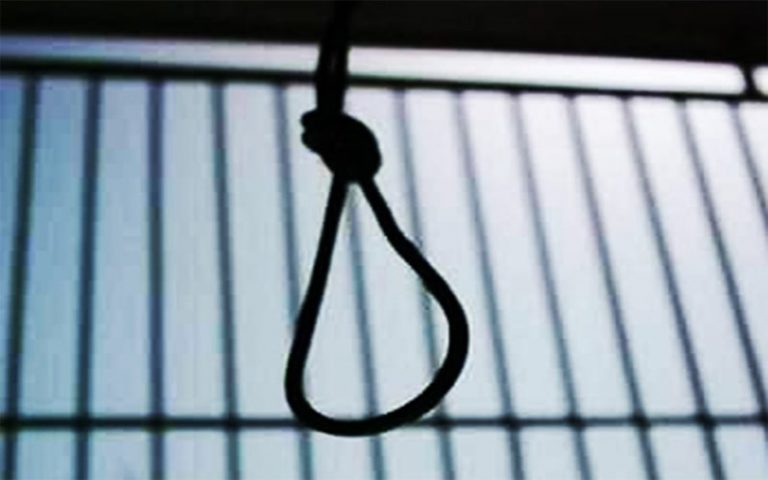
At least eight people were executed in November, including at least one in prison for a non-violent offense – Fakhreddin Dastiyar arrested on drug charges. Meanwhile, Iranian-Swedish emergency medicine specialist Ahmadreza Djalali was moved to solitary confinement on November 24, ahead of his execution.

Arbitrary Murders in Iran—November 2020

At least 10 people were killed by security forces in the streets, many of them porters, who work long hours transporting heavy goods across mountainous terrain for little money. They are forced to do this because of poverty and the need to take care of their children, but the government sees them as a threat to their smuggling business, so they kill them. Those killed, often without warning, include:
  • Vasim Fardinzadeh
  • Hakan Mohammadzadeh
  • Kamal Alam Holavi
  • Hassan Dallayi Milan
  • Siavash Kore
  • Mehdi Ali Zehi
  • Abdollah Gorgij
  • Taxi driver Khosrow Sharifi
  • Shop owner Saadi Rostamzadeh

Torture in Iran—November 2020

At least two people died under torture in prison, including  Mohammad Davaji, 19, who was arrested for getting into a fight and tortured in front of other prisoners to “teach them a lesson”, and Farhad Vosuqi, a 27-year-old father. At least five floggings were carried out, even though it is banned by the United Nations. The victims include:
  • Labour activist Davoud Rafie, who went to court to fight against being laid off from his job at the Pars Khodro automobile manufacturing company for taking part in a worker’s strike, was not sentenced by the court and was lashed 74 times without prior notice.
  • Mehdi Khairi, who was tried in absentia in July for the crimes of “insulting” a judge, was flogged 35 times.
  • Iranian Christian convert, Zaman (Saheb) Fadaei was flogged 80 times for drinking communion wine.
  • Two men were lashed 74 times in public, as well as prison time, for robbery.
Additionally, at least 260 people were arrested arbitrarily, and the violation of religious freedom continued systematically with the raid on dozens of houses of Bahai citizens and the imprisonment of four Christian converts Iran Human Rights Monitor called on the United Nations Secretary-General, Human Rights Council, High Commissioner for Human Rights, Special Rapporteurs, and all human rights organizations to secure the release of political prisoners, at least until the pandemic is over, to avert a humanitarian catastrophe. It also urged the formation of an international fact-finding commission to visit Iran’s prisons.

Iranian Authorities’ Confused Reactions to Nuclear Expert’s Death

0
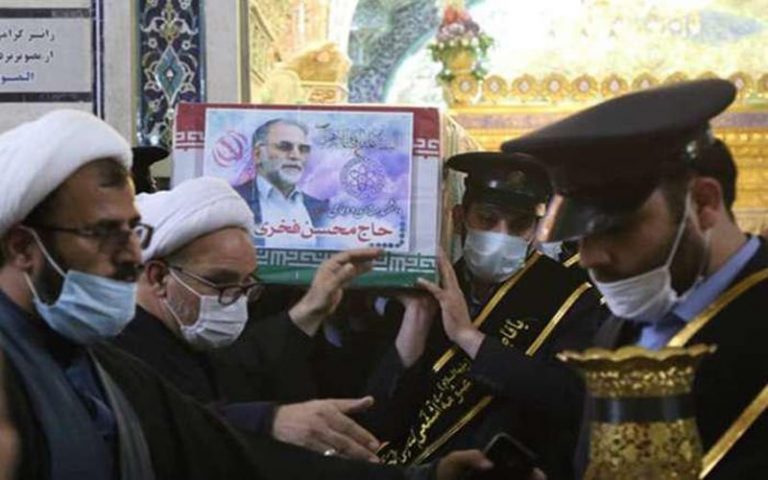
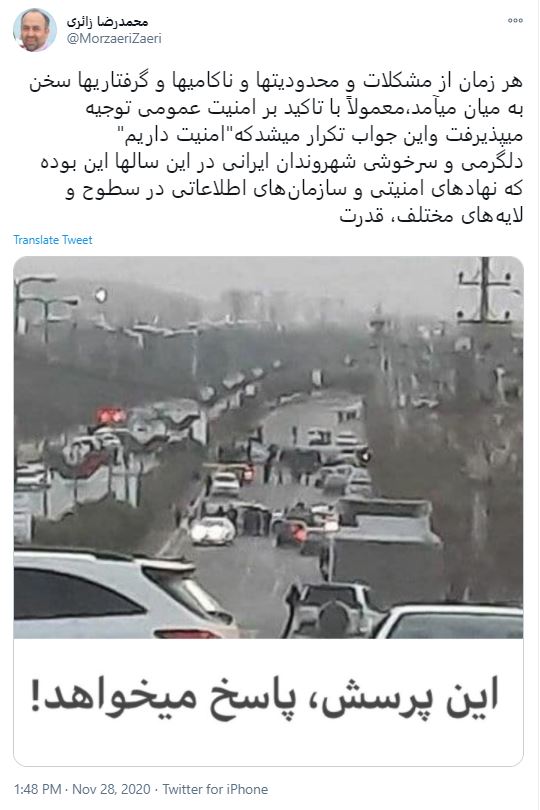
On November 27, the Iranian government confirmed reports about the death of its prominent nuclear scientist Mohsen Fakhrizadeh. The Iranian coalition opposition National Council of Resistance of Iran (NCRI) previously revealed that he was in charge of Tehran’s efforts for obtaining nuclear weapons. “Fakhrizadeh was the father of Iran’s nuclear bomb-making projects,” according to the dissidents. Fakhrizadeh’s death severely shocked political and military figures. In the wake of reports, conservative factions affiliated to the Supreme Leader Ali Khamenei and the Islamic Revolutionary Guards Corps vowed to take harsh revenge. “We will receive blows if we do not strike,” a piece on the November 28 edition Vatan-e Emruz read. There is no evidence of who had killed Iran’s key person as of this report. As always, Iranian authorities laid blame on foreign governments. However, they have no proof, and despite their primary claims about the detention of an alleged assassin, the media later revealed that the government did not arrest anyone. Furthermore, the blue Nissan owner—which had exploded during the attack—had departed the country a month earlier. On the other hand, Iranian authorities have been stuck in a difficult position. They cannot turn a blind eye to the event and indifference will extremely tarnish their stance not only inside the country but also among their proxies around the Middle East. Also, Tehran cannot ignite a war for different reasons. First of all, in the past two years, the ayatollahs have dramatically lost their resources due to crippling U.S. sanctions. More importantly, they hopefully await the incoming U.S. administration to resume nuclear negotiations and any act of war may affect their counterparts’ enthusiasm for new talks. “The trap of tensions,” Arman-e Meli daily, affiliated to the ‘reformist’ faction, wrote on November 28. These conditions sparked a new round of political rivalries in Iran. The November 29 Parliament (Majlis) session gave a sense of these rivalries. “Some of remarks and comments—either before or after the assassination [of Fakhrizadeh]—are rooted in this obvious point that appealing the enemy for negotiations contains this wrong message that Iran is weak. The enemies’ impression of a weak Iran will lead to more economic pressure and less security,” the official website of the Majlis (ICANA) quoted the Speaker Mohammad Bagher Ghalibaf as saying on November 29. On the same day, members of the Majlis Energy Committee also announced that they would focus on: – Ending cooperation with the International Atomic Energy Agency (IAEA) – Withdrawing from the 2015 nuclear deal, formally known as the Joint Comprehensive Plan of Action (JCPOA) – Expelling IAEA inspectors from the country – Increasing uranium enrichment to 20 percent, which is far beyond the JCPOA limitations, which allowed the Iranian government to enriched up to 3.67 percent and stockpile only 300 kilograms. Fakhrizadeh’s death also revealed the Iranian government’s failure in protecting its high-ranking profiles. Former Defense Minister and current military advisor to the supreme leader Hossein Dehghan, who is said to be Khamenei’s preferred candidate for the upcoming presidential election in June 2021, admitted to the state’s vulnerability. “Some media reports and individuals’ remarks are because they are uninformed about the issue. Fakhrizadeh was completely protected, his protection was provided by high-ranking security teams, and he had [bulletproof] vehicles. However, this event took place… This [attack] was not the first and we previously experienced assaults on Imam Khomeini shrine or the Islamic Consultative Assembly [Majlis]. It is imperative to find from where this [security] breach has carried out?” TV Channel Five aired Dehghan’s remarks on November 28. In a thread on Twitter, a figure close to Khamenei leaked regime loyalists’ concerns over the death of Fakhrizadeh and more significant issues that the government must deal with. Mohammad Reza Zaeri wrote: “[In the past few years,] whenever we spoke about problems, restrictions, failures, and dilemmas, [Hassan Rouhani‘s administration] usually responded to us that ‘We have security.’ ‘Citizens’ were happy about the expertise of the country’s security institutions and intelligence organizations. However, were they uninformed [about the threat against Fakhrizadeh]?” Zaeri tweeted on November 28.
Mohammad Reza Zaeri, a figure closed to Khamenei, sounded alarm bells over social consequences of Fakhrizadeh's death
Mohammad Reza Zaeri, a figure closed to Khamenei, sounded alarm bells over social consequences of Fakhrizadeh’s death
“Certainly, this question is prone to convincing answers, and relevant institutions can respond to it with precision and transparency. They should present the answers to public opinion, saving audiences from confusion and mayhem, and take back citizens’ valuable trust to the ruling system,” he added. “In such sensitive circumstances, we must only trust in our people and not leave their questions unanswered. Otherwise, we will face daily decreases and erosion of the state’s social capital and public trust. In such a scenario, a disaster far greater than the lack of [Fakhrizadeh] awaits us,” Zaeri warned.