Home Blog Page 322

Tehran’s Monopoly and Economic Instability

Since the ayatollahs and their brokers captured Iran’s economy, they only provided economic facilities and opportunities only for their loyalists in field of commercial, industry, and production areas, and the private section and non-affiliated sectors of the economy with this government, were deprived of their activities and implementation of their plans.

The private sector has to run for months in the maze of administrative bureaucracy to receive its licenses, while one of the indicators of free competition in any country is the lack of monopoly in decision-making for economic activity.

In Iran’s political economy, unilateral domination of economic activity has not only not decreased but government oversight bodies have always been one of the main obstacles in this regard.

Also, setting regulatory rates for foreign currencies and setting prices for goods and commodities make it very difficult for non-governmental producers to carry out their activities.

Ordering prices, on the one hand, and informal market prices, on the other, have caused government officials to always take advantage of this rent-seeking scheme in various areas of economic activity.

Mess in Iran’s Government

The monopolistic policy of managing the economy of a country of 80 million people not only frustrates the domestic producers and professionals but has also drawn attention from international institutions. The Fraser think tank reported a 15-degree drop in economic freedom in Iran, ranking Iran 158 out of 162 countries.

“In its latest report, the Fraser Research Institute examines the decline in economic freedom in 162 countries during 2018. This report, which is based on the statistics of 2018 (1397 Persian calendar year), gives Iran a score of 4.8 in terms of economic freedom and ranks the country 158, in the red zone,” Eghtesad News daily wrote on November 22.

Government-linked economists acknowledge that the cause of the economic turmoil is the existence of institutions that have exclusive monopoly decisions. “In political economy, the interests of some golden signatures and monopolies hinder economic growth and business prosperity in the country,” Tasnim news agency wrote on November 25.

Other known disadvantages of the Iranian government’s monopoly in the economic field are concern, fear, and ultimately the flight of investors in the field of scientific and sustainable industrial production.

In 2018, parallel to international sanctions and the fall in oil prices, the government of Hassan Rouhani set a price order for currency and other goods and services.

The move caused concern and fear among investors and private sector activists, who failed to calculate the import of raw materials, machinery, and parts needed for production, and production costs began to rise suddenly.

The volume of economic instability anywhere in the world reduces the motivation of the private sector and investment activities.

In such an environment where the exchange rate and inflation are rising day by day, investing was no longer reasonable and with a secure future.

When the price of the U.S. dollar increases from 40,000 to 200,000 rials and it does not have the necessary stability, there is no hope of investing.

“Therefore, if a production unit wants to invest in any sector of the economy, it faces a series of instabilities in which exchange rate fluctuations and the obligation to set a price lower than the real price are at the top,” Jahan-e-Sanat daily wrote on November 25.

“All this has led to negative investment growth and its reduction to less than the annual forecast, and at the same time investors have turned to deposit in banks; An issue that could be a wake-up call for future economic and investment activities,” the daily added.

Investors who have invested in the Iranian government’s monopoly soon realized that they made a mistake. In their media, they spoke about the freezing of the economic atmosphere and the impossibility of continuing their work.

“The bitter reality is that in the 2000s, the flow of investment in the Iranian economy in all three places [private-government-foreign] has been freezing and it will not be long before the material and physical capital invested in recent decades due to lack of modernization and lack of replacement and increase in depreciation, are being destroyed,” Jahan-e-Sanat wrote on November 26.

Now, the general public interested in the growth and development of Iranian society is saying with one voice that the only obstacle to the growth and development of Iran is the removal of the monopoly barrier of the government officials that governs the fate of the people.
Iran: Human Rights Situation in November 2020

At the beginning of every new month, Iran Human Rights Monitor produces a report into the dire situation of human rights in Iran and we summarise it. As always, reading the full report is encouraged, but obviously, both the report and the summary can be distressing to read.

Overall, in November, Iranian authorities took many steps to suppress dissent ahead of the anniversary of the 2019 protests that shook the ayatollahs’ grip on power and saw a deadly crackdown.

This is most apparent in the pressure security forces put on the families of the November 2019 martyrs, in order to silence them and prevent them from holding memorial ceremonies. At the same time, the security forces began arresting former political prisoners and relatives of Mojahedin-e Khalq (MEK/PMOI) members en-masse, while summoning others and warning them against marking the anniversary of the protests.

Iranian authorities have also weaponized the coronavirus to control the populace, not only with the hopes that the lack of control would prevent gatherings but also as an excuse for mass arrests.

This is far from the only method that the government is using to intimidate the public. Indeed, they’ve continued to issue death and corporeal punishment sentences, increase pressure on political prisoners and arrest dissidents. Let’s look at those now:

Executions in Iran—November 2020

At least eight people were executed in November, including at least one in prison for a non-violent offense – Fakhreddin Dastiyar arrested on drug charges. Meanwhile, Iranian-Swedish emergency medicine specialist Ahmadreza Djalali was moved to solitary confinement on November 24, ahead of his execution.

Arbitrary Murders in Iran—November 2020

At least 10 people were killed by security forces in the streets, many of them porters, who work long hours transporting heavy goods across mountainous terrain for little money. They are forced to do this because of poverty and the need to take care of their children, but the government sees them as a threat to their smuggling business, so they kill them.

Those killed, often without warning, include:

  • Vasim Fardinzadeh
  • Hakan Mohammadzadeh
  • Kamal Alam Holavi
  • Hassan Dallayi Milan
  • Siavash Kore
  • Mehdi Ali Zehi
  • Abdollah Gorgij
  • Taxi driver Khosrow Sharifi
  • Shop owner Saadi Rostamzadeh

Torture in Iran—November 2020

At least two people died under torture in prison, including  Mohammad Davaji, 19, who was arrested for getting into a fight and tortured in front of other prisoners to “teach them a lesson”, and Farhad Vosuqi, a 27-year-old father.

At least five floggings were carried out, even though it is banned by the United Nations. The victims include:

  • Labour activist Davoud Rafie, who went to court to fight against being laid off from his job at the Pars Khodro automobile manufacturing company for taking part in a worker’s strike, was not sentenced by the court and was lashed 74 times without prior notice.
  • Mehdi Khairi, who was tried in absentia in July for the crimes of “insulting” a judge, was flogged 35 times.
  • Iranian Christian convert, Zaman (Saheb) Fadaei was flogged 80 times for drinking communion wine.
  • Two men were lashed 74 times in public, as well as prison time, for robbery.

Additionally, at least 260 people were arrested arbitrarily, and the violation of religious freedom continued systematically with the raid on dozens of houses of Bahai citizens and the imprisonment of four Christian converts

Iran Human Rights Monitor called on the United Nations Secretary-General, Human Rights Council, High Commissioner for Human Rights, Special Rapporteurs, and all human rights organizations to secure the release of political prisoners, at least until the pandemic is over, to avert a humanitarian catastrophe. It also urged the formation of an international fact-finding commission to visit Iran’s prisons.

Iranian Authorities’ Confused Reactions to Nuclear Expert’s Death

0

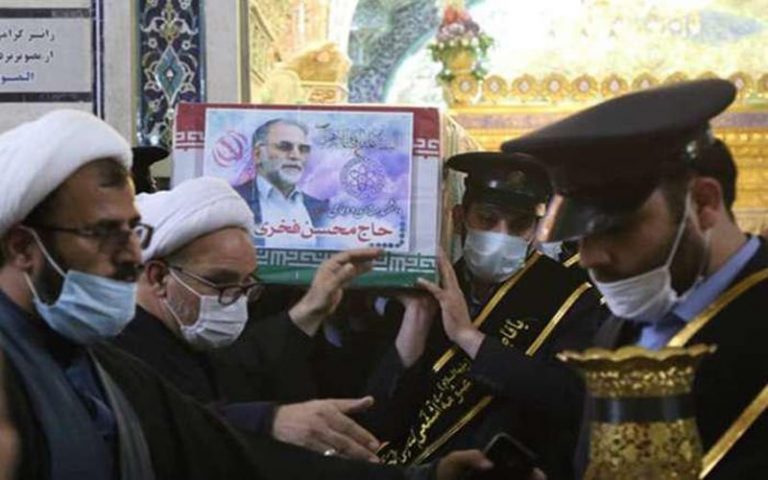
On November 27, the Iranian government confirmed reports about the death of its prominent nuclear scientist Mohsen Fakhrizadeh. The Iranian coalition opposition National Council of Resistance of Iran (NCRI) previously revealed that he was in charge of Tehran’s efforts for obtaining nuclear weapons. “Fakhrizadeh was the father of Iran’s nuclear bomb-making projects,” according to the dissidents.

Fakhrizadeh’s death severely shocked political and military figures. In the wake of reports, conservative factions affiliated to the Supreme Leader Ali Khamenei and the Islamic Revolutionary Guards Corps vowed to take harsh revenge. “We will receive blows if we do not strike,” a piece on the November 28 edition Vatan-e Emruz read.

There is no evidence of who had killed Iran’s key person as of this report. As always, Iranian authorities laid blame on foreign governments. However, they have no proof, and despite their primary claims about the detention of an alleged assassin, the media later revealed that the government did not arrest anyone. Furthermore, the blue Nissan owner—which had exploded during the attack—had departed the country a month earlier.

On the other hand, Iranian authorities have been stuck in a difficult position. They cannot turn a blind eye to the event and indifference will extremely tarnish their stance not only inside the country but also among their proxies around the Middle East.

Also, Tehran cannot ignite a war for different reasons. First of all, in the past two years, the ayatollahs have dramatically lost their resources due to crippling U.S. sanctions. More importantly, they hopefully await the incoming U.S. administration to resume nuclear negotiations and any act of war may affect their counterparts’ enthusiasm for new talks. “The trap of tensions,” Arman-e Meli daily, affiliated to the ‘reformist’ faction, wrote on November 28.

These conditions sparked a new round of political rivalries in Iran. The November 29 Parliament (Majlis) session gave a sense of these rivalries. “Some of remarks and comments—either before or after the assassination [of Fakhrizadeh]—are rooted in this obvious point that appealing the enemy for negotiations contains this wrong message that Iran is weak. The enemies’ impression of a weak Iran will lead to more economic pressure and less security,” the official website of the Majlis (ICANA) quoted the Speaker Mohammad Bagher Ghalibaf as saying on November 29.

On the same day, members of the Majlis Energy Committee also announced that they would focus on:

– Ending cooperation with the International Atomic Energy Agency (IAEA)

– Withdrawing from the 2015 nuclear deal, formally known as the Joint Comprehensive Plan of Action (JCPOA)

– Expelling IAEA inspectors from the country

– Increasing uranium enrichment to 20 percent, which is far beyond the JCPOA limitations, which allowed the Iranian government to enriched up to 3.67 percent and stockpile only 300 kilograms.

Fakhrizadeh’s death also revealed the Iranian government’s failure in protecting its high-ranking profiles. Former Defense Minister and current military advisor to the supreme leader Hossein Dehghan, who is said to be Khamenei’s preferred candidate for the upcoming presidential election in June 2021, admitted to the state’s vulnerability.

“Some media reports and individuals’ remarks are because they are uninformed about the issue. Fakhrizadeh was completely protected, his protection was provided by high-ranking security teams, and he had [bulletproof] vehicles. However, this event took place… This [attack] was not the first and we previously experienced assaults on Imam Khomeini shrine or the Islamic Consultative Assembly [Majlis]. It is imperative to find from where this [security] breach has carried out?” TV Channel Five aired Dehghan’s remarks on November 28.

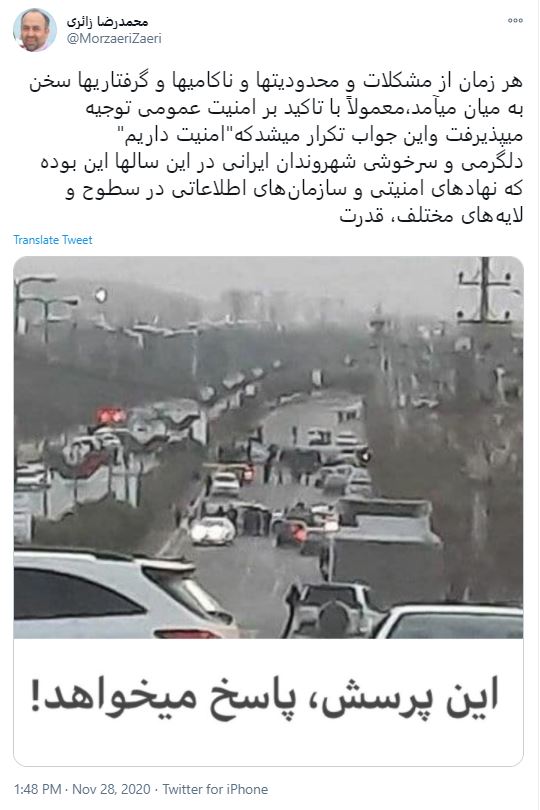
In a thread on Twitter, a figure close to Khamenei leaked regime loyalists’ concerns over the death of Fakhrizadeh and more significant issues that the government must deal with. Mohammad Reza Zaeri wrote:

“[In the past few years,] whenever we spoke about problems, restrictions, failures, and dilemmas, [Hassan Rouhani‘s administration] usually responded to us that ‘We have security.’ ‘Citizens’ were happy about the expertise of the country’s security institutions and intelligence organizations. However, were they uninformed [about the threat against Fakhrizadeh]?” Zaeri tweeted on November 28.

Mohammad Reza Zaeri, a figure closed to Khamenei, sounded alarm bells over social consequences of Fakhrizadeh's death
Mohammad Reza Zaeri, a figure closed to Khamenei, sounded alarm bells over social consequences of Fakhrizadeh’s death

“Certainly, this question is prone to convincing answers, and relevant institutions can respond to it with precision and transparency. They should present the answers to public opinion, saving audiences from confusion and mayhem, and take back citizens’ valuable trust to the ruling system,” he added.

“In such sensitive circumstances, we must only trust in our people and not leave their questions unanswered. Otherwise, we will face daily decreases and erosion of the state’s social capital and public trust. In such a scenario, a disaster far greater than the lack of [Fakhrizadeh] awaits us,” Zaeri warned.

Iranian People Feel Sting of High Prices

There is immense pressure on Iranian people nowadays because of the coronavirus pandemic and the dire state of the economy, both of which are down to the authorities’ mismanagement, which means that most people are unable to afford even the most basic food items.

“With the rising price of chicken in the last twenty days, the consumption of chicken legs, gizzard, and liver has increased threefold. Buying chicken is beyond the purchasing power of a high percentage of the population,” said the head of the Poultry and Fish Traders Association Mehdi Youssef Khani.

Indeed, chicken consumption decreased by 70 percent and many are forced to buy the parts of the bird that are usually thrown away, like the three examples noted above. Like all basic goods, the cost of chicken has skyrocketed recently.

Tasnim news agency reported last month that milk, butter, oil, and meat have all increased and that the government is still issuing the permission to raise the cost of goods, while the spokesperson of the Dairy Industry Association, Mohammad Reza Bani Taba, said the cost of milk would increase by 50 percent.

State-Backed Mafia Removes Red Meat From Iranians’ Food Basket

Why Are Goods Too High in Prices?

Well, mullahs’ are increasing costs in order to cover their budget deficit, but they are also scared that this will cause retaliations from the people, like what happened in the November 2019 uprising, which began over the tripling of fuel prices overnight. Many of the increases now are being increased secretly, incrementally, and through using confusing tactics, such as increasing flour costs and reducing bakery quotas to justify the rising price of bread.

What Are the Officials Saying?

Despite all this, President Hassan Rouhani still claims that he is in control of these rising costs, to which one could reasonably say “in control of increasing prices”.

While Supreme Leader Ali Khamenei has, in complete contradiction, said that people’s livelihoods are “dire” right now and that there is no justification for price increases, but make no mistake, he does not care for people’s lives.

After all, he could well do something to change this by ordering the prices are cut, given that he is the most powerful figure in Iran and that he oversees a vast economic empire worth hundreds of billions of dollars. He is only concerned about preventing the people from getting angry and coming out to protest, which could well see the downfall of his regime.

All of the agencies overseen, either directly or indirectly, by Khamenei has increased prices. Take for example the “market regulation task force,” which increased the costs of 20 basic goods in one day.

“The only valuable argument for these insane skyrocketing prices of basic goods is that the regime has a corrupt and broken economy in hands of looting officials in power. The real problem lays in the mullahs’ establishment. As long as they are in power, people’s misery and suffering will continue,” the Iranian Resistance wrote.

The Truth of $7 Billion of Goods Deposited at Iran’s Customs

0

After the 2018 sanctions against Iran, the brokers affiliated with the government find out that soon they will have no opportunity to benefit from the oil exports and its dollars.

Given the sanctions’ pressure, drop in the oil price, and extreme budget deficits and government debts, officials had no choice but to make the entry channels of imported goods smaller and narrower to heal the lost currencies’ casualties.

The government’s brokers and smugglers coerced the Central Bank of Iran (CBI) to import millions of tons of goods and supplies needed by the market. They highlighted the market’s shortage of essential goods through affiliated media. They also made millions of dollars to clear these goods.

The CBI, which knew that the remaining amounts of foreign currencies were gradually declining, created obstacles in the distribution of foreign exchange rents in order to overcome the situation.

This fight over the dollars, which was supposed to be a new income source and huge profits for government importers, turned into a mafia and factional war. Each of which on one side of the conflict seeks to make profits of billions of rials.

As the mafia war intensified over importers of goods and currency distributors, public opinion gained more and more information from untold stories.

Why billions of dollars of goods have been deposited in the country’s ports and customs, and the CBI and the Customs Office do not allow clearance?

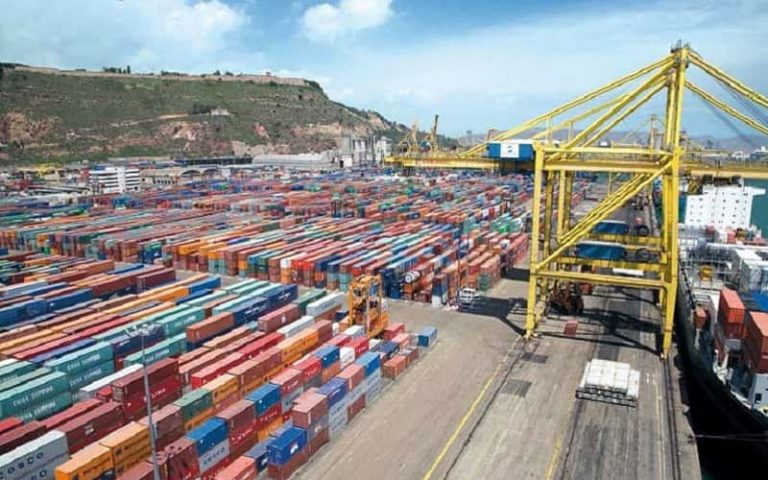
“About seven billion dollars of goods have been deposited in the country’s customs. Under the pretext of shortage of basic goods and their decay during this period, significant pressure was applied to clear them. Finally, the import order was issued in the applicant’s currency. But why was the CBI opposed to allocating applicant currency for imports, and what would be the consequences?” Eghtesad Online wrote on November 2.

Iranian Officials Deceptively Play with Unemployment Statistics

Deposition of Goods at Customs, What Is the Reality of the Story?

On the other hand, the government media exploited the situation to take advantage of the market shortage and pressure the sectors that had the authority to distribute government currency.

“Blocking the ways to exports and increasing the inflow of foreign exchange from non-oil exports of small exporters and locking in imports with the term ‘customs clearance’ has become two tools to prolong the period of crisis in the domestic market. The term ‘customs clearance’ has entered the country’s media literature two years ago and has played a role in justifying the high cost of goods and shortages in the market,” Tasnim news agency wrote on September 30.

However, in its November 15 report, Javan Online shed more light on the dilemma’s root. “A review of measures and approvals to reduce the deposit of goods from 2018 to November of this year indicates the lack of proper strategy and planning, along with disagreements between trade-related agencies and the CBI to provide foreign exchange,” the website wrote.

“The accumulation and deposition of goods in ports and customs became a new challenge in the second half of 2018, because, before that, basic goods, essential raw materials of production and intermediates were available in warehouses or at the country’s entry points and were cleared almost without any problem… Gradually, with the tightening of sanctions and a sharp decline in oil exports and, consequently, the country’s limited foreign exchange resources, the issue of goods deposited in customs increased,” Javan Online added.

For the first time in the second half of 2018, customs officials warned in reports of an increase in the volume of goods behind the country’s gates. Many of them are either not declared to customs for various reasons or, if stated, customs formalities and clearance permits are suspended for various reasons.

“But the fact is that there is significant damage in this area. Some commodity owners import goods that are not necessary and a priority for the country and are stored, so with the code name of sediment, the government is under pressure to determine its task. With these descriptions, the main problems of sedimentation went back to the issue of specialization and currency supply,” Fars news agency reported on November 14.

Why the World Rejects Iran as an Economic Partner?

On the other hand, the private sector cannot compete with the government’s factions and only complains about this matter.

“Some tried to import large quantities of goods contrary to the notification instructions… Others can easily re-import goods into the country, convert the imported goods into rials, repurchase the mentioned items. They can re-leave the country and continue the money laundering and smuggling cycle through money laundering and using it as the applicant currency,” Jahan-e Sanat daily quoted Majid Reza Hariri, President of the Iran-China Chamber of Commerce, as saying on November 25.

“Therefore, there is no applicant currency and no import without currency transfer. All import needs are met either through the free currency market, which increases the high demand for money despite the limited supply of the market and raises the currency price, or through the sale of smuggled goods abroad,” he added.

“To find out the facts, it is enough to look at the announcement of the import of 420 containers of home appliances. To see to what extent domestic organized gangs, that all institutions and organizations are involved in forming and strengthening it, and are changing the rules and regulations in their favor,” Hariri ended.

Why Iran Tries to Shut Down Internet?

0

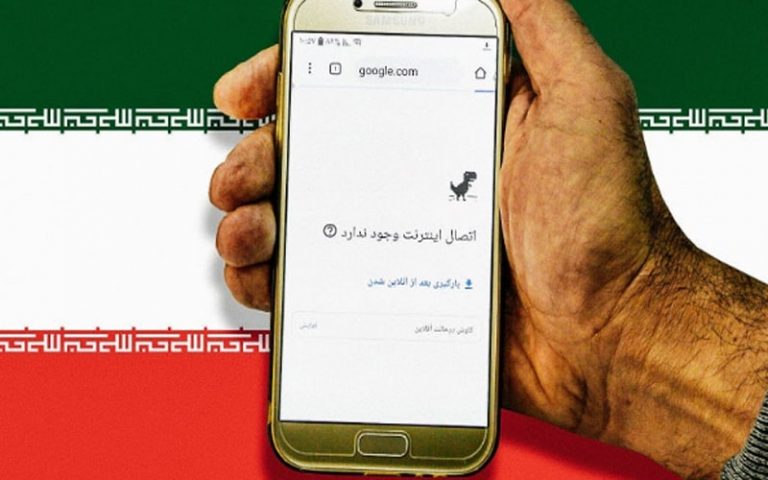
The Iranian government is slowing down, disrupting, or even cutting off the internet inside its country as a method of social control.

The authorities and the suppressive forces, like the Revolutionary Guards (IRGC) and the Basij, express fear daily over the “freedoms” of the people on the internet possibly leading to protests, which then forces politicians to pass laws regulating the internet and suppressing information.

Iran’s New Internet Crackdown

This isn’t new. In the 1980s, the ayatollahs tried to ban VCRs for the same reason, with arrests and fines for being caught in possession of a videotape or the machine to play it on. These laws were rescinded in 1993 when satellite TV channels posed a greater concern for the continued rule of the ayatollahs.

These channels aired programs on issues that the ayatollahs had tried to cover up over the years, which led to a ban on satellite TVs and creation, distribution, repairing, or possession of satellite TV dishes punishable by fines, flogging, and prison.

This too failed. Those who detested the government (and these numbers just keep growing) installed the dishes anyway, risking punishment for access to information. Some 70 percent of households now have a dish and the authorities know that punishment is futile. After all, the information they keep trying to hide is now being widely shared online.

Even state-run media outlets like Shargh daily warned that fighting the internet would be another crushing defeat for ayatollahs and warned the ayatollahs against filtering the internet because the people would find a way around it anyway.

So, given that the government knows that the repression just leads to further rebellion, why continue? They certainly can’t stop the spread of information, but they must try because their rue depends on obscuring as much of the truth from as many of the people for as long as possible or the government would stand no chance against the people in power.

Iran Plans to Block All Messaging Apps

“Submitting to the smallest gap in this dominance would give way to a series of retreats for the regime, which in turn means the beginning of the end for Iran’s regime. The bubble of a totalitarian establishment based on ‘lies’, ‘hypocrisy’ and ‘repression’ must always be protected in every way with the most extreme and barbaric methods,” the Iranian opposition Mojahedin-e Khalq explained.

“Of course, failure of the regime to impose these oppressive restrictions indicate the Iranian people’s strength and determination who have stood against the mullahs’ repressive ambitions,” it added.

Political Rivalries Amplify as More Iranians Go Below Poverty Line

0

For years, all Iranian factions have promised to improve the living conditions of people but every single time that power changed hands, it never even came within reach of everyday Iranians.

The country’s poverty rate has steadily been increasing since the ayatollahs came to power, with more people unable to afford the basics, and things are set to get worse still as unemployment rises because of the uncontrolled spread of the coronavirus.

In the end, it didn’t matter whether the hardliners or the reformists were in control because the Supreme Leader Ali Khamenei is the country’s final-say individual and both factions are loyal to him, meaning there is hardly any difference between the two.

“The two ruling factions are disputing on how much to help people! One offers a plan, the other rejects it, but executes the same plan. The government has said from the beginning that it opposes the parliament’s livelihood package plan because there is no financial source to guarantee it,” wrote Aftab-e Yazd daily, adding, “However, now the president has announced that livelihood assistance will be provided to some segments of the society.”

The ayatollahs have stolen hundreds of billions of dollars from the Iranian people over the years, using it for terrorism, warfare, and lining their own pockets, which has only increased poverty.

Wasting Iranian People’s Wealth on Proxy Wars and Terrorist Acts

In 2013, President Hassan Rouhani claimed on the campaign trail that a vote for him meant a vote for ending subsidies, implying that people would be self-sufficient.

In fact, things have gotten worse, with inflation at 40 percent, decrease in value of the currency, economic growth at minus 7 percent, and liquidity at over 30 trillion rials [$120 milllion], something even admitted to by the media and the Statistical Center of Iran.

The Statistical Center of Iran even said that “purchasing power has halved” since August 2017 due to a 100 percent increase in inflation.

This is backed up by international economic institutions and media like the Economist, which said only Tehran has seen such an increase in inflation in such a short time.

Now, of course, the factions are blaming each other ahead of next year’s presidential elections, each hoping to ensure the hollow victory for their side by making the same tired old promises. More than ever before though, the people aren’t listening.

“It doesn’t matter who wins, everyone is trying to win, but no one asks what the difference will be for the society. Of course, people no longer listen to these factional debates, and they say, ‘They are all the same,’” said Ahmad Hakimipour, Secretary-General of the ‘Will of the Iranian Nation Party.’

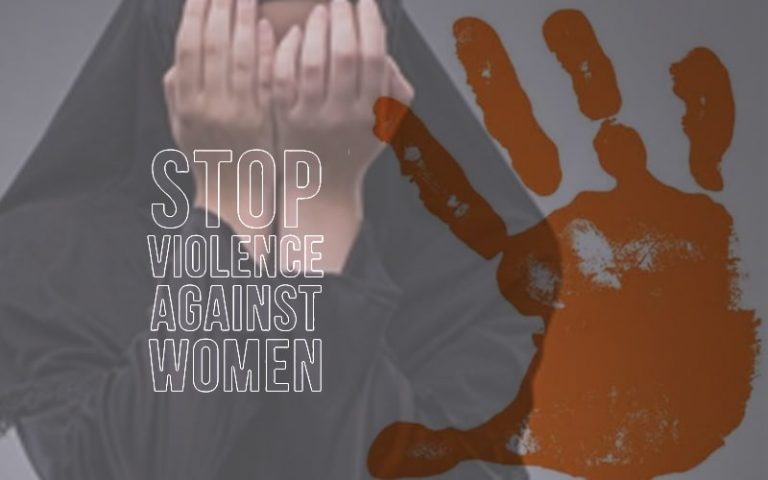
Violence Against Women Still Going Strong in Iran

November 25 was the International Day for the Elimination of Violence against Women, but for Iranian women that is still so far out of grasp. In fact, even officials admit that reports of violence against women have increased by at least 20 percent compared to previous years.

The problem is that, unlike most countries, Iran has not criminalized violence against women; rather it is promoted. Let’s look at the main types of this behavior.

Iranian Authorities Impose and Implement Forced-Veiling Rules

Women in Iran are denied the right to chose how they dress, even though the vast majority of people oppose compulsory hijab, but this isn’t even about the denial of this basic freedom. Rather it’s about the way women and girls who do not abide by this sexist dress code are treated.

There are over 27 institutions tasked with enforcing the compulsory hijab, with many women being beaten, stabbed, or attacked with acid by the officials for not wearing the hijab or even allowing it to slip accidentally.

Honor Killings Backed by Iran’s Misogynist Law

Hundreds of Iranian women are killed in “honor killings” each year, with the state-run ISNA news agency estimating the numbers to be “between 375 and 450,” which accounts for 20 percent of all murders in Iran.

This is systemic because the government condones it, with the Penal Code stating that fathers and paternal grandfathers cannot be sentenced to death for killing their child or grandchild. It even states outright that a husband can legally kill his wife on the spot if he catches her cheating on him.

Thirteen Y/O Iranian Girl Beheaded by Father in a So-Called Honor Killing

Officials and Clerics Promote Early Marriages

Iranian girls can be married at 13, or nine with a judge’s approval. Recently, the Parliament (Majlis) has rejected bills to increase the marriage age to 16, which is violence against the most vulnerable.

Some 600,000 underage girls are married each year, including 234,000 involving girls under the age of 15. They are likely to be married to a much older man, forced to have sex early, get pregnant and give birth early, and be subjected to domestic violence.

Iranian Women and Girls Exposed to Domestic Violence

Iran doesn’t have a law to combat domestic violence and the Majlis has created numerous obstacles to joining the International Convention on the Elimination of All Forms of Discrimination against Women, which only four United Nations countries have not signed.

Since the start of the Coronavirus pandemic, many provinces have reported a 50 percent to 1000 percent increase in social emergency calls linked with domestic violence.

Systematic Harassment Against Women’s Rights Defenders in Iran

Women’s rights activists are significantly abused in Iran, receiving long-term prison sentences, which is followed by horrific systematic abuse in prisons that is designed to break the spirit of prisoners and deter other activists.

In one case, three female anti-hijab activists – Yasaman Aryani, Monireh Arabshahi, and Mojgan Keshavarz – were given 55.5 years for failing to wear the Hijab, on the charges of “association and collusion against national security,” “disseminating propaganda against the state,” “encouraging and preparing the grounds for corruption and prostitution,” and “insulting the sanctities”. None of them received legal representation.

The Violence Against Women Bill

In September 2019, the Judiciary announced that it had approved a VAW bill after eight years but by the time this bill reached the government, its purpose was changed and it was stripped of all power and just doubles down on existing protections for those who abuse women.

“If the bill is passed, the situation for women will be significantly worse. The current bill eliminates the word violence against women and the parts that had addressed women’s security has either been omitted or changed somehow. As a result, the nature of the bill is totally lost,” said former MP from Tehran Parvaneh Salahshori.

Iranian Authorities Use Coronavirus as a Political Reason

0

In Iran, every political, social, and economic issue becomes a confusing mess. Due to the government’s perspectives, all the subjects are considered security issues and there is no expertise.
Therefore, the subjects have no chance to find their real place, and political-security rivalries are sparked among them. And the coronavirus outbreak is one of the topics that has become very serious now. In this context, the pandemic is now the most crucial political-security issue for the government.
From the coronavirus’ transfer to Iran by Revolutionary Guards (IRGC)-owned Mahan Airlines planes to the officials’ deliberate silence at the beginning of the outbreak from Qom, and the resignation of two officials of Health Ministry in recent weeks, everything is due to the political and security nature of this issue.

Coronavirus: New “Human Error” by the Iranian Government

In the meantime, these political and security challenges have contributed to the loss of more than 170,000 lives in Iran. The officials’ resignation is now revealing some of the realities behind the curtains of the coronavirus outbreak.
In recent months, Iran’s President Hassan Rouhani continuously bragged about the Islamic Republic’s progress fighting against the virus and advancing even countries like Germany and the USA.
Of course, Rouhani, due to his two characteristics, charlatanism and fraud, never provided any evidence or scientific proof. Now, after these two resignations, it is clear that he and his government are empty-handed behind the scenes.
After nine months of the political game, Health Minister Saeed Namaki revealed all the ministry’s research department in the field of the coronavirus were wrong. “98 percent of their research does not work,” he said.
In response to Namaki’s remarks, Reza Malekzadeh, Deputy Minister of Research and Technology of the Ministry of Health, resigned and unveiled a few more behind the scenes of lies and deception.
“You have shied away from accepting responsibility whenever the morbidity and mortality rate has increased. And whenever the statistics go down a bit, you claim to teach the world how to manage the coronavirus crisis, and you have recently talked about launching a vaccine production campaign in Iran,” Malekzadeh wrote.
Another aspect of these resignations, which shows how political the coronavirus in Iran is, and it depends on factional interests, is the regime’s security officials’ reaction in the state media.
The essence of these two people’s resignation has not yet dried up, the whole story of security and even espionage is being shown, and the cases are being opened in the usual way of regime’s propaganda.
On November 23, a Telegram channel affiliated to the IRGC demanded the arrest of the two resigned. This IRGC channel introduced Reza Malekzadeh as a person related to the ‘Zionist World Health Organization (WHO),’ writing: “Turned Iranian citizens into laboratory mice of the organization’s drugs.”
On the other hand, Rouhani’s faction seized the opportunity and tried to ruin the entire nine-month coronavirus crisis and Rouhani’s statistics on these two.
On Twitter, Alireza Moezzi, a member of the president’s office, tried to sacrifice Reza Malekzadeh because of the government’s mistakes. “Rouhani’s remarks were based on estimates by the Deputy Minister of Health,” he posted.
It can be seen how much the Health Minister and President were claiming the horn from the first day that all the coronavirus affairs are under control.
But when the politicalized coronavirus did not help the regime, they immediately sacrificed their subordinates. In the meantime, the coronavirus has now resulted in more than 170,000 casualties from Iran’s population.
A noteworthy point in these games, which can strengthen a prediction, is the beginning of political competition within the government, intending to prepare itself for the 2021 presidential election show.

IRGC Rushes for Iran’s 2021 Presidential Election

In this show, the coronavirus has become a compromise between the interests of the factions and shows that from the beginning, there was no will or decision on the part of Supreme Leader Ali Khamenei and Rouhani to confront it, and everything that happened – like the example above—was a political and security game with life and existence of the people.

Iran Diplomat on Trial for Terrorism

0

Friday, November 27, 2020, is a day that will go down in the history books as the first time that an agent of Iran has gone on trial in Europe for terrorism. According to reports, the Belgian Judiciary demanded a sentence of up to 20 years imprisonment for Assadollah Assadi for orchestrating a bomb plot against the Iranian opposition rally in Paris on June 30, 2018.

While there will be four defendants in the dock, it will essentially be the Iranian government on trial because a high-ranking diplomat will be tried for the attempted bombing of the 2018 Free Iran rally in Paris, something he did under the orders of the highest levels of the government.

Assadi, who was then serving as the third counselor at the Iranian embassy in Vienna, not only masterminded the operation but also arranged the delivery of an explosive device into Europe, personally handed it off to an Iranian-Belgian couple in Luxembourg and gave them instructions to drop it off at the rally site in Paris.

Trial of Iranian Terrorists Should Restrict Tehran’s Terror Machine

European investigations tracing the device back to its origin determined that the plot was known about and approved of by Iran’s top officials, including President Hassan Rouhani and Supreme Leader Ali Khamenei.

Belgian state security service’s chief said the plot was “not a matter of Assadi’s personal initiative” but instead “conceived in the name of Iran and under its leadership”, while the Belgian judiciary spokesperson said that “practically all” Iranian embassy employees are members of the Iranian Secret Service.

The National Council of Resistance of Iran (NCRI), whose rally Tehran targeted, wrote: “The June 2018 terror plot simply stands apart from others of its kind because the fingerprints of higher authorities are more clearly impressed upon the evidence. This is apparently a testament both to the perceived value of the target in that case and to the vulnerable situation that the regime found itself in when attempting to confront that target.”

That vulnerable situation was the threat of overthrow by an angry populace, who had staged nationwide protests in December 2017 and January 2018 with help from the pro-democracy group, the Mojahedin-e Khalq (MEK/PMOI), something that even Khamenei was forced to admit.

The rally, attended by 100,000 people and hundreds of dignitaries, was a prime place for the regime to target because of the horrific damage that could have been done, not just to NCRI members but also its President-elect Maryam Rajavi and those sitting near her, like former mayor of New York Rudy Giuliani and former US Ambassador to the UN Bill Richardson.

This was a big risk that Tehran took as if Western countries would not respond to the assassination of their dignitaries on Western soil by the ayatollahs. It shows that mullahs were desperate and vulnerable.

The international community will be able to (and should) exploit that because they have the moral imperative to react strongly when their own is targeted by terrorists. The West can use this trial as an impetus to dismantle diplomatic relations between Iran and themselves, knowing that Iran’s embassies are the breeding grounds for terrorism. They must close the embassies and expel Iranian diplomats.