Home Blog Page 325

Two Political Prisoners Denied Medical Care Despite Covid-19 Symptoms

0

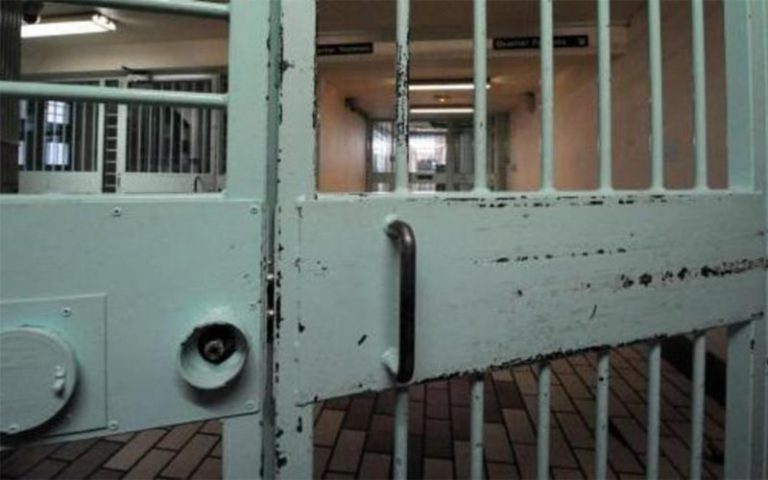
At least two Iranian political prisoners in Evin Prison have been denied medical care, even though they are displaying symptoms of coronavirus (COVID-19), including fever, headache, lethargy, the loss of taste and smell.

Mohammad Banazadeh Amirkhizi, 65, has several serious medical conditions, including heart failure, that put him at a higher risk of serious illness and death from COVID-19. While Payam Shakiba suffers from migraines that have made his symptoms more severe.

There have been several reports that prisoners at Evin Prison are at greater risk of coronavirus because of the unhygienic and overcrowded conditions that they are forced to endure.

For instance, prisoners are not given cleaning products for either themselves or their surroundings, which would kill the virus. This means no soap, no bleach, no wipes. They’re also not provided with masks or gloves, which are essential to slow the spread.

These things are sold at a horrendous mark-up at the prison store, but many cannot afford these and are not allowed to receive them in packages from their families outside.

Furthermore, as we alluded to earlier, political prisoners are denied adequate medical treatment as a matter of course, which means that they are more vulnerable to the Coronavirus; both contracting it and developing complications as a result.

Banazadeh, a veteran political activist, was initially arrested by the Intelligence Ministry in November 2009 for supporting the Mojahedin-e Khalq (MEK/PMOI) and was released in November 2014.

He was rearrested in February 2016 and sentenced to 11 years in Evin Prison and two years in exile in Nikshahr, Sistan and Baluchistan Province, by Judge Mashallah Ahmadzadeh at Tehran Revolutionary Court in November 2017. This was upheld in the appeals court in July 2018.

Shakiba was arrested in July 2008, for revealing the sexual misconduct of a senior administrator at Zanjan University, where he was studying. He was sentenced in March 2010 to one year in prison for “causing public anxiety” and “instigating illegal gatherings against national security”, as well as being barred from returning to university for two semesters. This was reduced to six months in prison on appeal, which he served November 2010-March 2011.

He was rearrested in 2016 and sentenced to six years in prison in November 2017.

On August 22, Banazadeh Amirkhizi, Shakiba, and another political prisoner Majid Assadi were all transferred from Rajai Shahr Prison to Ward 209 of Evin Prison, which is run by Iran’s Intelligence Ministry, for interrogation over a new case opened against them.

Amirkhizi, Shakiba, and Assadi were summoned to the Evin prosecutor’s office in July and told that new charges for “propaganda activities against the establishment” had been brought against them.

Suffocating Iranians Under the Burden of Inflation

0

In Iran, under the rule of the ayatollahs, prices have changed, and inflation is constantly rising so severely that it is literally suffocating the people. However, it is amazing that the government of President Hassan Rouhani claims there is an abundance of goods in the market.

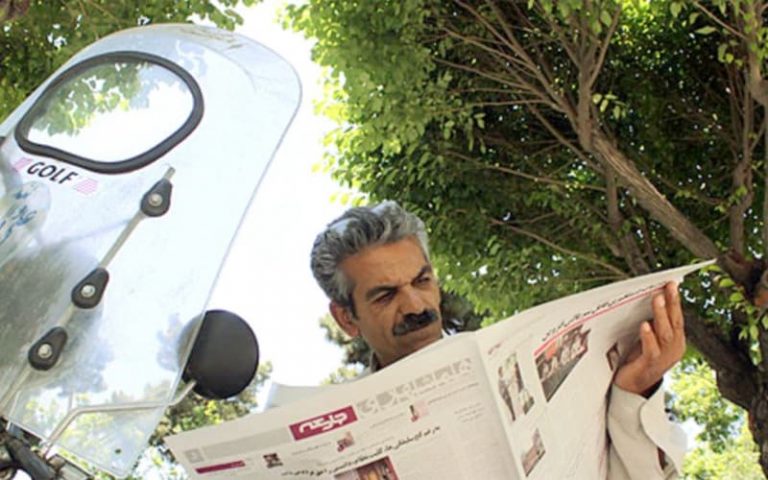
In its November 10 edition, Jahan-e Sanat daily wrote about the pressure of high prices on people’s lives. “A recent report by the Statistics Center shows that the engine of price growth has been activated, and if policymakers fail to curb inflation, we will see prices rise in the coming months and more households fall below the poverty line. According to the statistics provided, the point-to-point inflation rate in October reached 41.4 percent,” the daily wrote.

“Thus, Iranian households have spent more than 40 percent to buy the same set of goods and services compared to October of last year. Obviously, this rate targets the consumption basket of households and has caused the income of people to not cover their daily expenses.

“If we look at the inflation rate of edible and non-edible goods, we find that the livelihoods of low-income deciles are more affected by recent inflation than other groups,” Jahan-e Sanat added.

60 Million Iranians Below the Poverty Line

“We had a lot of hardships and problems throughout 2018 and 2019, but our food shelves were not empty, and people were not in dire need of basic necessities,” Rouhani had claimed on May 27, according to state TV.

In April, Rouhani also claimed that the shelves of stores in Western countries were empty and everything could be found in Iran.

Those statements aroused the hatred of all the people because the shelves of stores were not empty due to their growing poverty and they could no longer afford to purchase basic necessities.

“The momentary increase in the price of basic goods and the lack of basic goods have led to citizens’ dissatisfaction. In the meantime, the lack of supervision is heard more than ever among the people’s grievances, and the weak strata of society have no choice but to reduce their daily purchases,” according to a report wired on October 23 by the Tasnim news agency.

“The market has been abandoned in the true sense of the word, and the heavy pressure of this abandonment and carelessness by the officials is on the people, especially the weak,” the report added.

The same news agency, according to the Statistics Center, published the inflation rate in September of this year, in which it acknowledged the crushing inflation and its growing trend.

“The inflation rate in October reached 4.41 percent. In other words, households in the country have spent an average of 4.41 percent more than September 2019 to buy a ‘set of identical goods and services,’” the Tasnim report concluded.

According to the Statistics Center, the inflation rate has been increasing compared to the last few years. The state-run Eghtesad Online website, in October, acknowledged the highest inflation rate in the last ten years.

“Monthly inflation recorded in the first month of the autumn season is the highest monthly inflation since the early 2000s. Also, average prices in October this year compared to the same month last year increased by more than 41 percent,” the website wrote.

These conditions have doubled pressures on the Iranian people, a burden that is literally preventing people from making ends meet.

How State-owned Companies Are Devouring Iranian Economy

“Point-to-point inflation was still above 20 percent. All this shows how much more pressure the inflation spill we are facing this year has put on the household,” the Eghtesad Online website wrote on October 24.

“People are confused due to various economic problems. It is as if no one is thinking about dealing with high prices and we do not know why wild horses have left prices alone. People, especially those with a fixed monthly income in front of inflation, do not know how to make a living,” Arman daily wrote on November 10.

However, the government is doing its best to hide the cause of this inflation, which is caused by the sharp growth of liquidity due to the budget deficit.

Citing a report by the Central Bank, Vatan-e-Emrooz daily on November 5 exposed the government’s obvious theft from people’s pockets.

“According to the latest Central Bank report regarding the major monetary indicators at the end of September this year, the volume of liquidity has reached 28.95 trillion rials [$115.8 million]. Thus, the liquidity index in the first six months of this year has increased by 17.1 points, and in September of this year it has increased by 36.2 points,” the report reads.

Ayatollahs’ Pardoning of Political Prisoners Is a Ruse

Iran’s Judiciary spokesperson Gholam-Hossein Ismaili claimed on Tuesday, November 10, to have pardoned 157 “security convicts”, which is the ayatollahs’ codename for political prisoners, despite the ayatollahs taking desperate action to silence dissidents before the anniversary of the 2019 nationwide protests.

“In the evolution of amnesty and proposed amnesties, especially the recent amnesty, the basis of expert work is a detailed review of judicial cases, monitoring the actions and behavior of convicts during the sentence in the provincial and central amnesty commissions of the judiciary and considering and in the process of amnesty to make sure that the convicts have repented and remorse and rehabilitated. Because in such cases where expert work is done, we see that those whose convictions have been pardoned rarely commit a crime again or do not commit a crime at all,” said Esmaili.

Of course, as always with the ruling theocracy in Iran, this is a total lie. Esmaili’s comments about “expert work” actually refer to the government’s inhumane treatment of prisoners, especially those arrested in the major Iran protests in 2018 and 2019.

This shocking abuse and torture were detailed in a recent Amnesty International report – Trampled Humanity – which showed how government agents are mistreating detained protesters.

“Torture was used to punish, intimidate, and humiliate detainees. It was also routinely used to elicit “confessions” and incriminating statements, not just about their involvement in the protests, but also about their alleged associations with opposition groups, human rights defenders, media outside Iran, as well as with foreign governments,” the report read.

It listed the following horrific tortures:

  • hooding or blindfolding
  • forced into painful stress positions for long periods
  • beating with sticks, rubber hosepipes, knives, batons, and cables
  • punching, kicking, and flogging
  • deprivation of food and water
  • suspension from the ceiling
  • months of solitary confinement
  • deprivation of medical care

The Iranian Judiciary talks of pardon some 150-odd political prisoners, but it executed two peaceful protesters over the past three months – Navid Afkari, and Mostafa Salehi– despite ongoing appeals to save their lives that sparked international attention.

Further, it executed over 1500 peaceful protesters. Where were their pardons? This just highlights that the international community must intervene to stop the executions and torture as well as secure the release of all political prisoners.

“The clerical regime must be ousted from the UN and its leaders must face justice for their systematic violations of Human Rights, a crime against humanity, and trampling human dignity,” said Maryam Rajavi, the president-elect of the Iranian opposition.

Tehran Restricts IAEA’s Access to Contested Nuclear Sites

Following a recent report from the International Atomic Energy Agency (IAEA) that revealed Tehran’s secrecy over hoarding low-enriched uranium, Iranian authorities banned inspectors from further supervision. According to IAEA, the Iranian government has stockpiled more than 12 times the amount of uranium allowed under the 2015 nuclear deal, formally known as the Joint Comprehensive Plan of Action (JCPOA).

“Iran continues to increase its stockpile of low-enriched uranium far beyond the limits set in a landmark nuclear deal with world powers and to enrich it to greater purity than permitted,” the UN’s atomic watchdog agency said on November 11.

For years, the world’s major powers hoped to halt Iran’s nuclear ambitions by giving it lavish privileges and sanctions relief. In contrast, the ayatollahs not only did not stop their nuclear bomb-making projects but also expanded their activities and constructed new sites, according to dissidents.

In this respect, on October 17, the National Council of Resistance of Iran (NCRI) U.S. Representative Office exposed two secret Iranian nuclear sites that had been kept away from the UN nuclear watchdog’s eyes. The NCRI’s revelation sounded alarm bells about the military aspects of the ayatollahs’ nuclear programs.

“Organization of Defensive Innovation and Research (Sazman-e Pazhouheshhaye Novin-e Defa’i), known by its Persian acronym SPND, is the institution within the Ministry of Defense pursuing this project.  The Islamic Revolutionary Guard Corps heavily control the Ministry of Defense (IRGC),” NCRI Deputy Representative in the U.S. Alireza Jafarzadeh said.

He provided further details over the IRGC’s role in nuclear projects. Jafarzadeh also explained how the ayatollahs used the JCPOA incentives to expand their nuclear programs, as well as their terrorist activities abroad.

Iranian Opposition Reveals New Details About Military Aspects of Tehran’s Nuclear Program

The Iranian government renewed skepticism about their nuclear activities by limiting international inspectors’ access to contested sites. Chair of the Parliament (Majlis) National Security and Foreign Policy Committee Mojtaba Zonnour announced the government’s new decision.

“The Islamic Republic will continue to reduce the access granted to inspectors from the International Atomic Energy Agency (IAEA), which is tasked with performing oversight on Iran’s contested nuclear sites,” Zonnour said on November 11.

Therefore, because of severe limitations applied by Tehran, the agency can no longer perform supervisory actions and keep tabs on Iran’s nuclear advancements. All the while, the JCPOA architects believed that they would fulfill “unprecedented verifications” that have never been performed in history.

The fact that the Iranian government keeps increasing its stockpile of low-enriched uranium with higher purity than allowed in spite of elusive talking points, trying to loosen sanctions against the ayatollahs’ adventure. Up to now, Tehran’s lobbies severely endeavor to incite the upcoming U.S. administration—either Democrat or Republican—to re-engage in negotiations with Tehran. However, the ayatollahs’ illegal stockpiling of low-enriched uranium proved that the problem has laid in Iranian leaders’ ominous intuitions, not in foreign governments.

End of Tehran’s Joy Over the Lifting of UN Arms Embargo

Iran Sees Darkest Days for Press Freedom

0

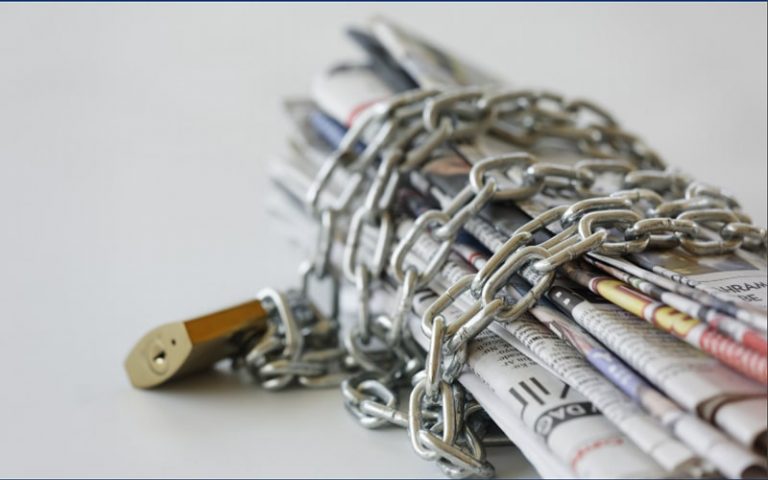
Iran is currently experiencing some of the darkest days for press freedom that it has ever seen or indeed that any country has ever seen, with the government using the persecution of journalists to stifle calls for freedom.

According to just the official figures, which are generally much lower than the true figure, some 20 journalists have been sentenced to death there in the past 20 years, while Reporters Without Borders (RSF) says that Iran has executed more journalists in the past 50 years than any other country on earth.

What Is the Iranian Cyber-Army’s Mission?

“Sentencing prisoners of conscience including journalists to death is the most extreme way to suppress freedom of expression. It is time the Islamic Republic finally abandoned these cruel punishments from another era,” RSF secretary-general Christophe Deloire said.

Of course, the government arrests journalists under multiple different false reasons, including:

  • propaganda against the state
  • acting against national security
  • dissemination of lies
  • insulting
  • collaboration with enemy governments
  • espionage

But the Iranian Constitution makes clear that the press cannot write things that are harmful to the system or the public, which appears to be anything that the authorities do not like.

To mark the International Day to End Impunity for Crimes against Journalists, which was last week, we have a report on the situation of female journalists in Iran who were persecuted just for doing their jobs.

  • Zahra Kazemi: This Iranian-Canadian journalist was arrested outside Evin Prison in Tehran in 2003 for taking pictures of a protest by the families of Evin prisoners. She was beaten to death in custody by Tehran’s Prosecutor Saeed Mortazavi, but the government covered it up.
  • Nada Sabouri: This journalist took part in a protest in 2014 following an attack by Evin Prison guards on detainees and was sentenced to 3.5 years in prison for “collusion against the system.”
  • Tahereh Riyahi: This social editor for the semi-official BORNA news agency was arrested by the Intelligence Ministry in 2016 and accused of” propaganda against the state”. In her last phone call, she told her family not to wait for her anymore.
  • Zeinab Rahimi: This former environmental journalist for the semi-official ISNA news agency, was dismissed in April for “communicating with the enemy”.
  • Kowsar Karimi: The first to report on the demolition of houses in Abolfazl village, was arrested in September on the charge of “propaganda against the state”.
  • Aliyeh Motallebzadeh: This photographer, women’s rights activist, and head of the Association Defending Freedom of the Press, was transferred to Evin Prison in October 2020 and is serving three years in prison.
  • Negar Massoudi: This photographer and documentary filmmaker who was reporting on acid attacks against women in Isfahan, was arrested by Intelligence Ministry agents in October 2020.
  • 50 female journalists were fired from the semi-official ANA news agency in September 2018 because of their gender.

“Cracking down on freedom of the press in Iran is not a new phenomenon. The mullahs’ oppressive regime is expanding its suppressive measures as it is engulfed in irremediable crises,” the Iranian Resistance wrote.

“The Iranian regime’s dark record on freedom of the press and treatment of journalists in Iran must be censured by international organizations. The regime must be held to account for its persecution of journalists and reporters in Iran.”

71 Iranians Summoned to Court Over July Protests

0

Some 71 Iranians were summoned to the Public and Revolution Court in Behbahan, southeastern Khuzestan Province, on Saturday over their roles in the July protests.

They must all appear in court within five days to face the trumped-up charges of “insulting the Supreme Leader, disrupting public order and the country’s security, and assembly and collusion against national and foreign security”.

What Were the July 2020 Protests in Southern Iran?

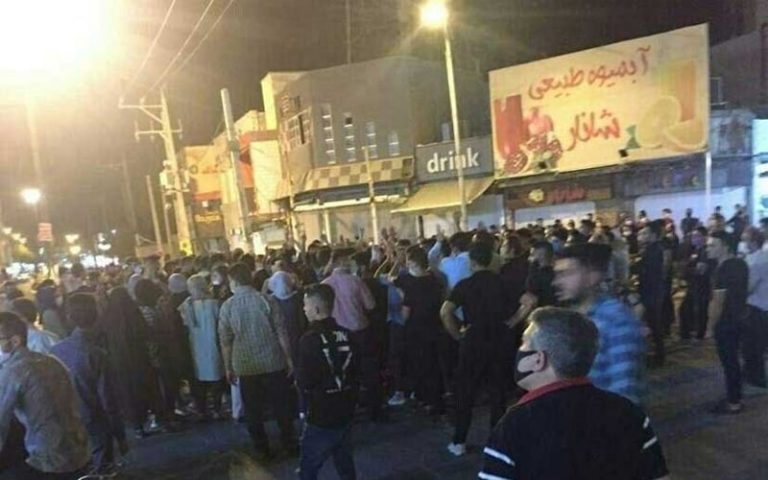
On July 16, Iranian people poured into the streets of Behbahan and Shiraz to protest the dire economic conditions, which were the sole result of the government’s mismanagement, as well as the death penalty given to three young protesters—Amir-Hossein Moradi, Mohammad Rajabi, and Saeed Tamjidi—arrested in the November 2019 protests.

These protests were completely peaceful until the State Security Forces (SSF) showed up and fired tear gas into the crowds in order to disperse the anti-establishment protesters. Videos posted by activists and protesters on social media show SSF cruelty versus defenseless protesters.

The authorities also cut off the internet in Behbahan and restricted it across Khuzestan, according to Netblocks.org and locals on Twitter. This is a common tactic to prevent protesters from talking to each other or the outside world.

Khuzestan Province’s Security Chief Heydar Abbaszadeh said on July 19 that all of the “instigators” were arrested and called the protest “a transgression”. He claimed that “a handful” of people had rallied in a Behbahan square “under the pretext of complaining about high prices” and yelled slogans “against the norms of the society”, which is government lingo for demanding regime change.

He did not announce the number of people arrested or give out any names, but it was reported on social medial that Farzaneh Ansarifard was arrested. She is the sister of Farzad Ansarifard, a man killed during the November 2019 protests in Behbahan that were part of a wider protest across the county.

In fact, the July protests can be seen as a continuation of the November 2019 protests, in which protesters in Behbahan were some of the first to be targeted by the security forces, resulting in dozens of protesters there being shot.

This included:

  • Mehrdad Dashti Nia
  • Mahmoud Dashti Nia
  • Farzad Ansari Far
  • Mohammad Hossein Ghanavati
  • Ehsan Abdollah Nejad
  • Mohammad Hasham

A further 36 Behbahan protesters were given harsh sentences for taking part in the nationwide protests. On October 22, they were sentenced to a total of 109 years in prison and 2,590 lashes, while everyone receiving a fine of 30 million rials [approximately $107].

From Satellite to Internet, Iran’s Regime Fears ‘Freedom’

0

In the long list of the prohibited topics of discussion in Iran under the rule of the mullahs, the internet is among the most central. The internet which compared to other nations is offered at a very low speed, but even this thin stream has been blocked and cut down by the government with very complicated filtering.

There hardly a day that the clerics don’t complain about the so-called ‘social crises that the internet has brought for their ‘security’.

So, the regime’s MPs, are enacting ‘laws’ to suppress any freedom. Looking a little further in the past, one finds such examples in the history of this regime. From the banning of the video device of the eighties, which finally in the summer of 1993, the mullahs inevitably officially accepted the defeat and the arrest, fines, and flogging for a videotape or the video device ended.

But this was not because the regime’s minds about freedom were changed, it was because they were facing a much worse enemy from the side of their views, which was the satellite.

Therefore, after the defeat in the case of the ‘video apparatus’, they went to war with ‘satellite’, and the law banning the use of satellite was put on the agenda of the parliament on September 20, 1994. According to this ‘law’, any ‘importing, transporting, maintaining, distributing, operating, installing, and repairing’ satellites is considered a ‘crime‘ and is punishable by fines, flogging, and imprisonment.

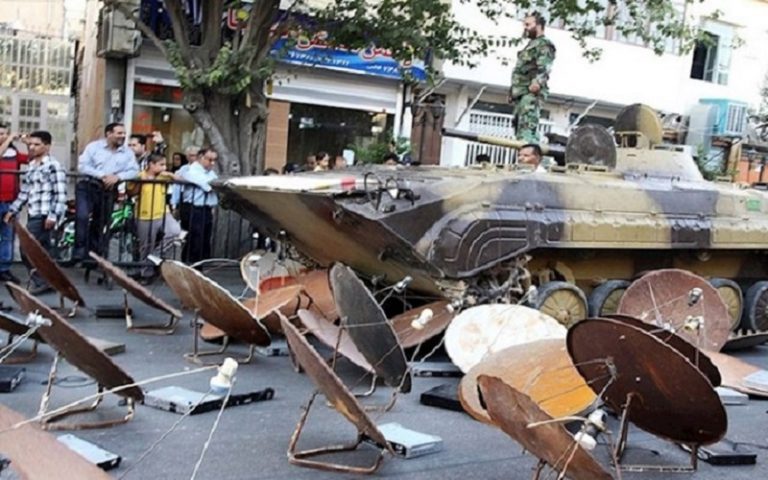
But in the end, the fight, including that by the regime’s armored vehicles, which squeezed the satellite dished on the streets in ridiculous shows, did not in the favor of this regime, and they accepted the defeat even if they have not admitted it publicly.

Government officials have repeatedly admitted that with such a ridiculous struggle, they are only mocking themselves in the eyes of the people.

Including one of Hassan Rouhani’s cabinet minister at the time, acknowledged that more than 70 percent of Iranians use satellites without leaving room for Iran’s supreme leader Ali Khamenei’s howls, and mocked the regime.

While the conflict between the regime and the satellite was still hot, this time the ‘Internet’ was the scourge of the system. Needless to say, if the regime’s restrictions, punishments, and fines, were able to block video and satellite, ‘filtering’ could be able to block the Internet and prevent the people from using it.

All these discussions are raising one question, why is Khamenei is fearing so much the internet? Why does he enter into a double-edged sword that he knows makes the Iranian people more of an enemy and does not have the ability to shut down and control it completely?

Basically, the reactionaries are incompatible with new phenomena. Because they consider it a threat to their existence and their petrified thinking.

When such reactionaries also attain the levers of ‘government,’ they are always afraid of this ‘consciousness’ because they know well that any ‘consciousness’ can destroy their superstition and ignorance apparatus and prove the invalidity of their vanities. So, they go through anyway to silence such voices.

This logic had examples in the history of the world before our present-day Iran, but what the Iranian people experienced was the most brutal and filthy kind of history.

With the rise of Khomeini, a new kind of dictatorship and religious fascism emerged. Because the government based on absolute dominance wants to dominate the people of Iran from the mind and conscience to the homes of the people. Because by accepting the smallest gap in its system, it will tear up.

The glass life of this totalitarian government is based on ‘lie’, ‘duplicity’, and ‘repression’. This is a clear and fluent expression by Khamenei, who said that the first retreat of his regime would lead to a chain of retreats that would eventually lead to its collapse.

Of course, the failure of the clerical regime to impose these restrictions shows the strength of the people who have not yet allowed their repressive demands to be fulfilled. A fact that the officials explicitly acknowledge.

The state-run daily Shargh wrote: “Do not experience video or satellite bans on the Internet. The parliament should learn from the failure of the implementation of the law banning the use of satellite receiving equipment, which is in its 26th life this year, and should not go to the law for filtering social networks and media, because people find ways to circumvent it.” (Shargh daily, November 5)

Iran’s November Protests Are Not Over

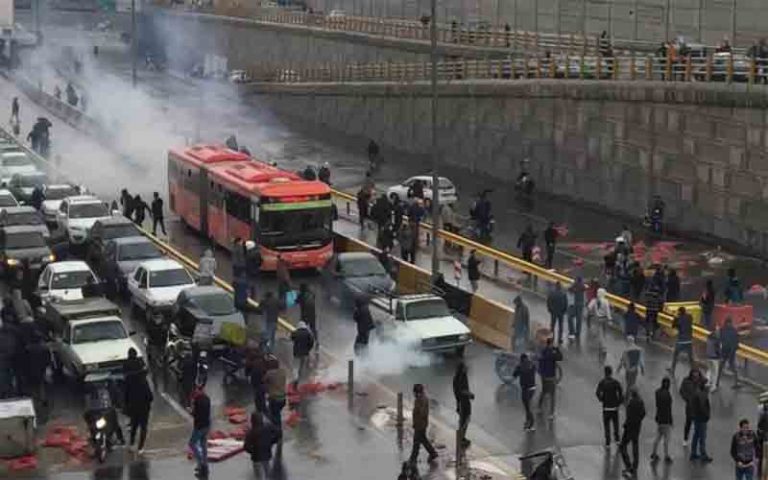
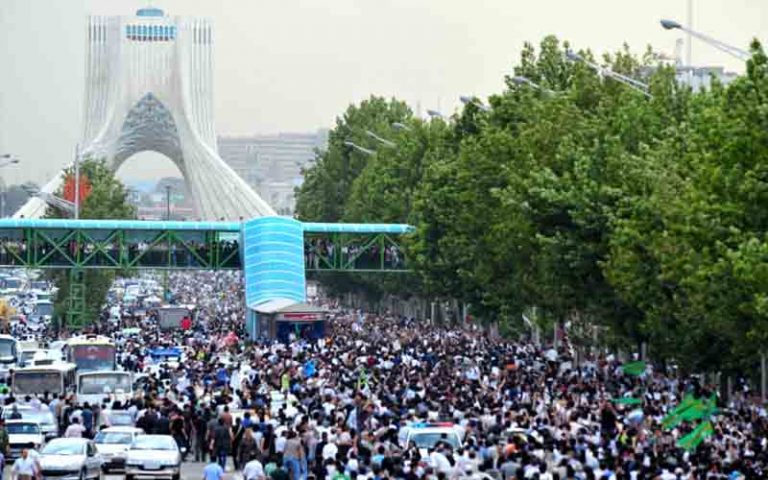
In November 2019, Iran saw the largest anti-establishment protests since the 1979 revolution, sparked by the tripling of fuel prices on November 15 and quickly becoming an admonishment of the regime as a whole, spreading to around 200 towns and cities.

The ruling system was terrified by this level of protest, something they’d not expected even though their previous biggest protest had begun less than two years earlier and related protests had plagued the country in the period in between.

A Look Back at Last Year’s Protests in Iran

Supreme Leader Ali Khamenei ordered his security forces to do “whatever it takes” to stop the protests, which led to 1,500 peaceful protesters being shot in the streets in just a few days—figures obtained by the Mojahedin-e Khalq (MEK/PMOI) and independently verified by Reuters.

The protests were led mostly by women and young people, which is not surprising given that Iranian women are the biggest victims of Iran’s ruling system and that the youth are more likely to support progressive change in Iran, even if they were born under the ayatollahs’ rule.

“A special mission was defined for women. They played a key role in both attacking the female Basij bases and in motivating the youth. No casualties were reported among them, yet their style of employing women was like the MEK women’s tactics,” wrote Javan daily affiliated to the Revolutionary Guard Corps (IRGC).

Most media outlets and officials admitted that the protests were well organized, with then-Security Commission spokesperson Seyed Hossein Naghavi Hosseini even saying that the MEK trained people for this in the prior two years. While one MP said that the unrest reached over 500 cities.

Had the authorities not instituted their violent crackdown, the protests would have no doubt continued. The attempts to crush the protesters were described by some Iranian militiamen as similar to a major ground attack in the 1980s Iran-Iraq war, while IRGC Basij commander Salar Abnoush described it as a “full-scale world war”.

But this brutal suppression did not have the effect the ayatollahs hoped for. In January, there was another protest over the downing of a passenger plane and it is likely that there would have been more over the following months had the coronavirus pandemic not hit.

All the signs indicate that the Iranian government is in its final phase because the ayatollahs are incapable of solving the Iranian people’s problems, so the Iranian people are not questioning what the authorities will do, but are preparing for the next opportunity to actualize fundamental changes.

Iranian People Prepare for Anti-Establishment Protests

Iranians Expect the World to Stand with Them, Not Against Their Desire

0

These days, Iranian officials, including Foreign Minister Mohammad Javad Zarif, express their joy over the U.S. political development. They obviously raise their expectations about the U.S. future administration while the recent U.S. Presidential elections’ fate is still unclear.

“And the world is watching whether the new leaders will abandon disastrous lawless bullying of [the] outgoing regime—and accept multilateralism, cooperation, and respect for [the] law,” Zarif tweeted. However, he immediately added that “Deeds matter most,” showing his concerns over the future.

All the while, Iranian authorities like the Supreme Leader Ali Khamenei and President Hassan Rouhani have tried to show themselves as indifferent to the U.S. developments.

“Regardless of the outcome, one thing is absolutely clear, the definite political, civil, and moral decline of the U.S. regime,” Khamenei reacted to the U.S. elections on Twitter.

However, Rouhani implicitly showed his eagerness to renegotiate with the “Great Satan,” the term Iranian officials use to address the U.S.

“We hope those who sanctioned have grasped that their path was wrong, and mistake and they will not obtain their goals. We hope that the three-year experience would be a lesson to them that will make the next U.S. administration to succumb to the law and regulation, and return to all its commitments,” Rouhani said.

Notably, Tehran time and again announced that it would not obey the terms of the 2015 nuclear deal, formally known as the Joint Comprehensive Plan of Action (JCPOA), and flagrantly put restrictions aside and resume provocative uranium enrichment.

Furthermore, in his January 22 interview with state television’s Channel Four, the head of Iran’s Atomic Energy Organization Ali-Akbar Salehi revealed that his government did deceive foreign nuclear negotiators and watchdog over Arak heavy water facility.

Back in 2011, in his book titled “National Security and Nuclear Diplomacy,” Rouhani exposed that Tehran was exploiting nuclear negotiations to reach a point of no return in its nuclear program.

“While we were talking with the Europeans in Tehran, we were installing equipment in parts of the facility in Isfahan. In fact, by creating a calm environment, we were able to complete the work in Isfahan,” Rouhani wrote.

In other words, Iranian officials openly admitted that they do not recognize any principle and breach all norms to obtain their goals. On the other hand, they have proven that no one can trust them, and they merely understand the language of firmness and power.

In this respect, Khamenei is right that there is no matter who will take the U.S. office. Because, under the ayatollahs’ rule, Tehran will continue its attempts for achieving nuclear weapons, destabilizing the Middle East, and blackmailing the world by terrorism, whether Republicans govern the U.S. or Democrats.

Therefore, it is very important that the world keep pressures on the Iranian government to end its foreign adventurism and domestic suppression, Iranian dissidents argue. In April 2011, former U.S. President Barak Obama highlighted that the dictators are the most unstable rulers. “The power of the masses can topple autocrats,” he said.

In this context, as the Iranian government sees more domestic protests and public fury, betting on the ayatollahs’ collapsing economy is the latest option in front of foreign companies and investors.

Trusting the fraudulent and corrupt leaders of Iran would just lead the Middle East to more destabilization. Dissidents point out that the people of Iran expect the international community to respect their desire for a democratic government, which respects people’s lives.

“Neda [Agha-Soltan] died with open eyes. Shame on us who live with closed eyes,” said the late U.S. Senator John McCain in June 2009. Iranians hope that foreign officials would not be more disgrace about their approaches toward Iranian protests.

Iran’s Dictatorship Is Concerned Over Growing the Society’s Political Knowledge

“Iranian society’s sensitivity to the U.S. election could be the result of a profound subversive transformation that may lead to any unpleasant action. These conditions can ultimately warn it against any logical action in crises,” wrote Ebtekar daily on November 4. 

In passing through virtual web pages and social networks and reviewing the Iranian media abroad as well as the state media, most of the content of Iranians inside and outside the country shows attention to political and trade union issues about the ayatollahs’ rule and the critical situation in Iran under the dominance of this dictatorship. 

Iranian officials and some government-linked media outlets have repeatedly expressed their fear of the reaction of social networks to the establishment’s political and economic crimes in recent months. 

Iranian Media Warns Over Uprising 

What is the reality of this assessment of the remarkable feature of Iran’s society and the hysterical reactions of the government to it? 

Before addressing the various aspects of such coordinates about Iran’s society and its relation with this government, it should be noted that in the societies under the dominance of a dictatorship, the political rule is struggling to intervene and prevent the people from becoming politicized, and it is using any apparatus like psychological or religious propaganda. 

In societies where people react to newspapers and news about the performance of governments, there are two possible reactions from governments: 

One is to pay the price for democracy and accept the criticism of the people, and the other is to exercise absolute political and religious tyranny. 

In the meantime, the characteristic of the Islamic Republic from the very beginning of domination has been to establish the absolute rule of the supreme leader, or as it is called by the government, the Guardianship of Islamic Jourist [Velayat-e-Faghih]. Political and religious absolutism with two complementary characteristics: 

  1. Everyone should submit to this Velayat-e-Faghih and say yes and must be in pact with him. 
  2. No voice, activity, or presence opposed to this absolutism is tolerated and is considered as rebellion and opposition to the representative of God and Islam. 

In the last 41 years, these two qualities have been complementary to each other, which have transcended the clerical system beyond the definitions of well-known dictatorships and made it the perpetrator of the most unbridled crimes. 

Therefore, this government, with its military arms and so-called ideological arms, has gone to the most private thoughts, actions, and words of the Iranian people, and its policy has always been to dominate different sections of Iranian society to its absolute rule, from experts, scientists, artists to athletes and writers. 

This feature, which the state media refers to as the ‘politicization of Iranian society,’ is the result of these two complementary traits in this system. 

But this is not the whole story. It remains to be seen how the invasion of privacy and human rights, with the most unbridled crimes committed by the ayatollahs’ rule, will lead to a political and social approach in Iran. 

Iran Arrests Thousands Arbitrarily Fearing an Protest

This reaction is a clear feature of the public outcry and politicization of Iranian society against the system of Velayat-e-Faqih.

With the politicization of Iranian society, the clerical government is now suffering from punishment. The effects of all encroachments on the affairs of personal life, as well as the violation of the limits of individual and social freedoms, have accumulated in the public memory and have turned into public hatred against the Velayat-e-Faqih system. 

Now this politicized society, in the process of uniting with the necessity of freedom, has demanded the overthrow of the clerical rule. In domestic and international political developments, such a society sees the national and historical interests of Iran in the complete rejection of the clerical system. Hence, it monitors the international equations or the balance of power in terms of its distance and proximity to the country’s national interests. 

These are the obvious realities in Iranian society that the state-run daily Ebtekar has expressed concern about in its November 4 edition.