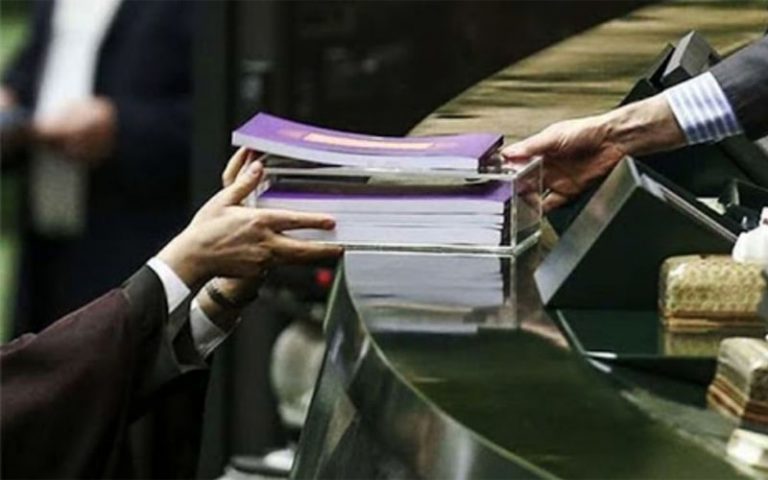
Iran’s 2021-22 Budget Bill, A Perfect View of Government’s Dilemmas and Crises

Since December 2, when Hassan Rouhani’s administration submitted the 2021-22 budget bill to the Parliament (Majlis), there has not been a day without political rivalries about a strange amount of budget deficits and other dilemmas in Iran. In this context, MPs, officials, and even Rouhani’s allies admit that the government would face further economic obstacles in the upcoming year. The Iranian authorities’ problem is rooted in a set of socioeconomic crises, corruption, and mismanagement seriously affecting the people’s livelihood, and it would ignite a new round of nationwide protests at every moment. Furthermore, citizens must deal with the novel coronavirus on the one hand, and on the other hand, they have to endure the coronavirus’s ominous consequences while the government has left them without support.
A Look at Iran’s 2020-2021 Budget
In this respect, the 2021-22 budget bill is a perfect view of all dilemmas that the government confronts. More importantly, this issue has been activated while authorities see no solution for the current crises and are challenged by unprecedented public hatred. Therefore, officials are severely concerned about leaking the actual government’s expenditure and revenue despite all political rivalries. However, loyalists to the Supreme Leader Ali Khamenei, who have been convinced that they would form the next cabinet, do not want to endure the ends of Rouhani’s fake statistics and hollow figures. In the 2021-22 budget bill, the Rouhani government did not consider the expenditure of purchasing the Covid-19 vaccine, according to MPs. Officials also did not care about over one million employees and workers who have lost their jobs due to the pandemic. Moreover, the bill has no article for paying arrears and delayed paychecks of selfless medical staff, let alone millions of employees, teachers, retirees, and public services workers. The authorities’ cross-party concern is how to cover the predicted budget. In other words, neither MPs nor other officials do not actually mention people’s dilemmas and hardships during their speeches. For instance, former Islamic Revolutionary Guard Corps (IRGC) commander and the current Secretary of the Expediency Council Mohsen Rezaei said, “We still remain under sanctions until the next five years. How is it possible that we sell oil over 2 million barrels [per day (BPD)] during the next year?”
Iran’s Main Oil Company Owes $34-billion to the Banking System
Chief of the Majlis Research Center Alireza Zakani also highlighted the deficits. “The 2021-22 budget bill has exactly a 3.2 quadrillion rials [$12.307 billion] of deficits. This means the shaping of hyper-inflation. It means that we deposit meager money into people’s pockets, then withdraw tenfold of that from the people,” Zakani said. “Economists believe that the next year’s budget bill without oil revenue and the Central Bank [of Iran (CBI)]’s loans are equivalent to 6 quadrillion rials [$23.077 billion] of deficits. This amount is 13 times the credit line of Mehr Housing projects or the people’s cash subsidies. The approval of [the 2021-22 budget dill] leads the country to hyperinflation in the next year,” Javan daily affiliated to the IRGC wrote on December 13. The flagrant flaws of Rouhani’s budget bill even prompted his allies to express concern. “In the administration’s proposed budget bill to the Majlis, there is a focus on increasing current expenditures and relying on unreal and unachievable resources. As a result of the 60-percent increase in public expenditures and insignificant growth of incomes, the government proposed to cover 3.2 quadrillion rials [$12.307 billion] of its costs—including payments and pensions—through selling the estates and properties or loans,” wrote Jahan-e Sanat daily linked to Rouhani’s faction on December 13. “Expert examinations show that due to unreal reliance on oil revenues, the government still lacks around 3.2 quadrillion rials [$12.307 billion] of deficits to cover its regular expenditures even if it could sell all bonds… This amount of deficit would increase liquidity and result in severe inflation in the upcoming years… Inflation imposes pressure on the impoverished classes of society more than others,” Jahan-e Sanat added. On the other hand, in its December 13 edition, Hamdeli daily cited an expert’s remarks about social crises and warnings about possible upheavals on behalf of slum-dwellers due to falling below the poverty and absolute poverty lines. “Based on what rationale do we decrease the budget that was supposed to raise welfare indicators in slum-dwelling areas, while we realize that many of the post-revolution social unrest began from these districts? We know that social harms are tied with ‘society’s security,’” Hamdeli wrote. Iran experts argue that Iranian officials only remember the people’s problems when they want to address potential protests, which can trigger the end of the Islamic Republic. However, their solutions are designated to nip protests in the bud, not focusing on how to resolve the people’s problems.
Tehran’s Desperation Against Economic Crisis
In reality, the government announces that it has cut all its relations with the people while it responds to social and economic grievances with lethal force and does not consider people’s dilemmas in the country’s annual budget bill. During the bloody suppression of November 2019, the people realized that under the rule of the ayatollahs and IRGC, they have no share of their homeland’s resources other than poverty and misery. And all indicators display that the army of hungry people, slum-dwellers, and abandoned and needy citizens await an opportunity to release their fury against the entire ruling system, as the Hamdeli author sounded the alarm bells.

Facts on State-Sponsored Violence Against Iranian Women

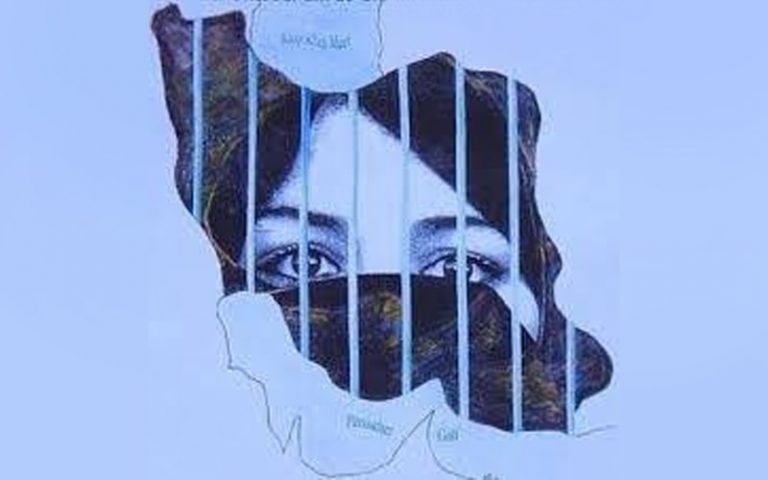
Most violence against Iranian women is perpetrated by state agents, according to the Women’s Committee of the National Council of Resistance of Iran, and here were will run down exactly how.

Violence Against Human Rights Activists

Female human rights defenders are regularly subjected to state-sponsored violence, with the authorities only intensifying its crackdown in recent years, viewing all human rights as threats to national security and failing to abide by the rights enshrined by the United Nations. Human rights defenders are routinely subjected to:
  • torture
  • mock executions
  • denial of medical care
  • violence
  • sleep deprivation
  • arbitrary arrest
  • unfair trials
  • the violent dispersal of protests
  • travel bans
  • harassment of their relatives
Furthermore, human rights lawyers are routinely arrested to prevent them from defending their clients.
Iran: Khamenei’s Lieutenants Order Their Thugs to Carry Out Acid Attacks

Violent Arbitrary Arrests

The security apparatus arrests anyone who opposes them, using the State Security Force (SSF), the Islamic Revolutionary Guard Corps (IRGC), the paramilitary Bassij, and even universities’ disciplinary committees to restrict freedom of thought, expression, and gathering. Many women are arrested violently in public or at their houses, without legal warrants, and over the past year have been kept in prisons that do not meet minimum hygienic requirements at any time, let alone during a pandemic. Here are just some of those arrested in 2020:
  • Melika Gharagozlou
  • Saba Azarpake
  • Maryam Khoshandam
  • Farzaneh Jalali
  • Roghieh Hassanzadeh
  • Somayyeh Namadmal
  • Zohreh Sarv
  • Kowsar Karimi
  • Parizad Hamidi

Iranian Women Lack Access to Justice

Political prisoners and many ordinary prisoners do not have access to justice, with legal proceedings failing to conform to their own laws, let alone international ones. Often, they are placed in solitary and forced to make false confessions under torture with no contact with the outside world, let alone a lawyer. Many go on hunger strike in the hope of getting a lawyer.

Treatment of Political Prisoners

In addition, political prisoners are routinely brutalized as the authorities hope to gain false confessions, cooperation, or information. If this violence fails, then they deprive the prisoner of medical treatment or have ordinary prisoners harass them. The Women’s Committee has issued several statements about this over the past year, especially the cases of:
  • Zahra Safaei, who was threatened in June by several inmates hired by the Intelligence Ministry, attacked in August by two inmates and denied treatment for a heart stroke in October.
  • Golrokh Ebrahimi Iraee, who is deprived of visits with her political prisoner and cancer patient husband, Arash Sadeghi, and was summoned by the IRGC Intelligence to undergo interrogations for a new case filed against her.

Execution of Women in Iran

Iran is the world leader in the execution of women, with 109 women executed since 2013, despite the fact that many were domestic abuse victims with no legal recourse against their husbands (i.e. divorce or imprisonment). Most of the women executed are themselves victims of domestic violence and discriminatory family laws. Many acts in self-defense against mistreatment by their husbands and a system that miserably fails to protect them.
Iran: World Record Hold in Domestic Violence
The death sentences are issued at the end of unfair, closed-door trials coupled with torture to force prisoners into making confessions. In a letter published on July 27, 2019, political prisoner Golrokh Ebrahimi Iraee, addressed the issue of women convicted of murder and sentenced to death: “In meeting women convicted of murder, I learned that a large percentage of them had murdered their husbands —instantly or based on a premeditated plan—after years of being humiliated, insulted, battered, and even tortured by them and because of being deprived of their right to divorce. Although, they consider themselves criminals but are convinced that if any of their repeated appeals for divorce had been granted, they would not have committed such a crime.”

Iran: Civil Rights and Cultural Activists Arrested, Further Detentions Expected

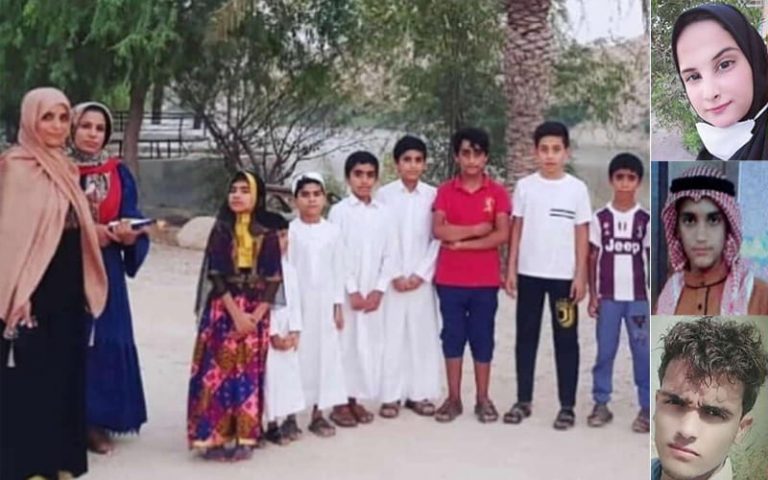
According to human rights activists, Iranian authorities have begun a new wave of arrests in Khuzestan province, southwestern Iran. In their latest oppressive operation, the State Security Forces (SSF) targeted cultural activists in the city of Ahvaz. Locals reported the SSF has detained at least five activists and transferred them to unknown places. In this respect, on December 11, the human rights association No to Prison – No to Execution stated, “A day after the detention of Fatemeh Tamimi, a cultural activist from Ahvaz, in Jarahi district, authorities detained at least four others. Maryam Ameri, Tamimi’s partner, is among arrestees.” “Since ten days ago, security institutions time and again summoned and interrogated Ameri. However, on December 10, they finally detained her,” the report added. It is said that security forces had raided Ameri’s home and confiscated her laptop, smartphone, and a few memory cards, in addition to detaining and transferring her to an unidentified place. Her family’s efforts for achieving information about her fate stayed fruitless and her whereabouts and condition remained secret. Ameri and Tamimi were collecting traditional stories, lullabies, and songs in the Arabic language from local villages. They were publishing these pieces on Tamimi’s Instagram page—followed by 25,000 people—to register them as part of the region’s history. According to sources familiar with their efforts, they had prepared a 20-part documentary and were on the verge of publishing it. Maryam Ameri had previously managed the Gargi’an cultural ceremony, which is a celebration for children.
Iran: Human Rights Situation in November 2020
Simultaneously, authorities detained a civil rights activist Azhar Albo-Ghabish and his two brothers Abbas and Reza in Shadegan city. All of them were under 20 years old. Locals said that Albo-Ghabish’s activities were limited to aiding needy people across the city. Human rights activists condemned this arrest, saying, “all their activities were carried out peacefully and according to Iran’s constitution.” They believe that the government attempts to divert civil rights activities to pave the path for more restrictions on civil rights and cultural actions. Activists demanded the immediate and unconditional release of all detainees. According to reports, the SSF also arrested a female teacher Zeinab Savari alongside her brother and little sister in Hoveizeh city on December 11. According to eyewitnesses, the government seemingly intends to continue these arbitrary and illegal arrests in the upcoming days. The detention of cultural and civil activists intensified following the execution of Iranian journalist Ruhollah Zam on December 12, which prompted international condemnation against human rights violations in Iran. However, according to opposition activists, Iranian authorities see suppression as the sole instrument to counter public hatred and silence citizens’ grievances and fundamental demands.

Iranian Officials fail to Address Problems; Protests Imminent

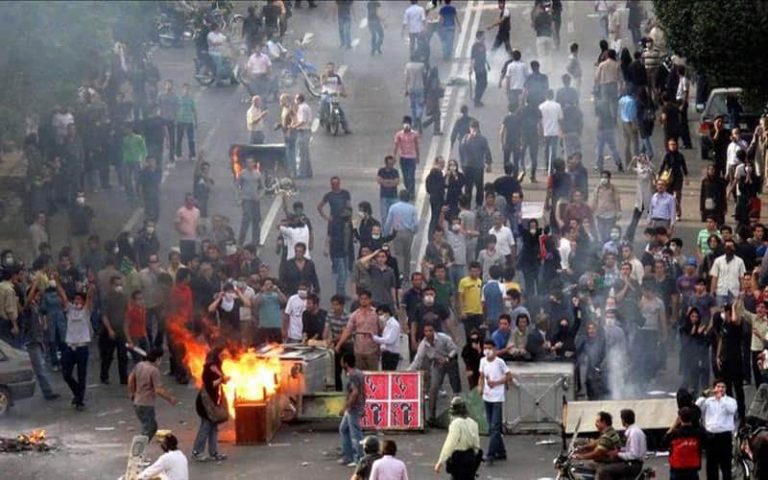
One year on from the 2019 protests over the sudden tripling of fuel prices, alongside numerous other economic complaints, and the Iranian government has still failed to resolve the problems its people were facing, which means that another nationwide protest is coming and this one is likely to shake off the ayatollahs’ grasp on power. “When in November 2019, people became aware of the gasoline price hikes by the leaders of the three branches of powers, protests ignited. Some considered the information method and, more importantly, the sudden increase in the price of people’s product basket, as the real reason for these protests, because all the people were affected,” Sharq daily wrote on Saturday. The protests began over economic issues, but quickly became political and spread across the entire country. The protesters demanded regime change and attacked the oppressive centers. The government failed to address any demands or even lower the fuel price instead of imposing a heavy crackdown and killing 1500 protesters in the streets while arresting thousands of others. Instead of quelling the people’s anger, this just increased the hatred people have for the entire ruling system. “The flames suddenly engulfed dozens of cities and the initial protests gradually [reached a height] that could have been extinguished in another way… The course of events from then until today must be addressed, and we should be concerned about what is happening in society,” Sharq added. This refers to the crises that have engulfed the regime since November 2019, including the slaying of its terror mastermind Qassem Soleimani, increased international isolation, rising economic problems, the people’s growing hatred of the regime, and, of course, the coronavirus outbreak, which the ayatollahs have failed to deal with. “We cannot easily ignore the November 2019 protests, although it can be ignored. Unfortunately, the authorities, who must find the root causes of such incidents and eliminate them and seek treatment, have decided to do a cover-up. When the scope of the protests is widespread, and on such a large scale, the administration should look for a way to find the source of the protests,” the daily continued.
Iran’s November Protests Are Not Over
In this article, the paper also spoke about protests from across the social strata prior to the uprising, which the government sought to quash, and the people’s demands, which the authorities ignored. All the people wanted was to prevent the rulers from destroying the economy with mismanagement and corruption, but the state attacked the people instead. Furthermore, in its Saturday edition, Siasat-e Rouz daily wrote that the government is trying to blame economic problems on other causes, but admitted that “mismanagement and inconsistency” by the regime were the reason for issues like the prices of meat, poultry, rice, and fruits increasing every day.
Luxury Fruits Imported with ‘State Loans’ for the Rich While Millions Live in Poverty in Iran

U.S. Designates Iran Official and University over Quds Force Connection

0
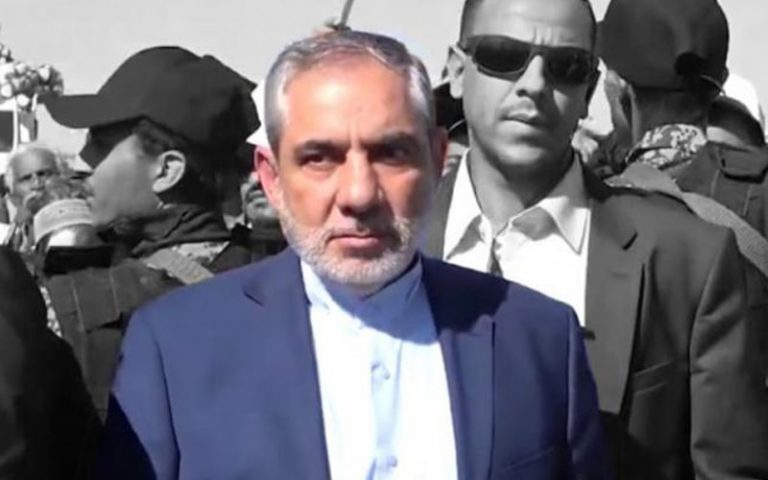
The United States Treasury Department’s Office of Foreign Assets Control (OFAC) designated Iranian envoy to the Houthis in Yemen and official in the Revolutionary Guards (IRGC) Quds Force, Hasan Irlu, on Tuesday, for supporting “IRGC-QF efforts to provide advanced weapons and training to the Houthis” over several years. “He coordinated with other senior IRGC-QF leaders to support the group’s operations throughout the Arabian Peninsula and Yemen. Irlu maintained a relationship with former IRGC-QF Commander Qasem Soleimani. He has also provided training to Hizballah members in Iran,” the statement read. It further designated Iran’s Al-Mustafa International University and all of its branches around the world, which are a front for the IRGC-Quds Force recruitment efforts in the fields of intelligence collection, operations, and militias sent in to fight the Syrian civil war on behalf of Bashar Al-Assad.
A Glance at Qassem Soleimani’s Crimes in Syria
“Recruits from Al-Mustafa International University have been sent to Syria to fight on behalf of IRGC-QF-led militias. The IRGC-QF established the Fatemiyoun Division, an Iranian-led Shia militia composed of primarily ethnic Afghan residents in Iran, as well as the Zaynabiyoun Brigade, a militia group composed of Pakistani Shia, as expeditionary forces to fight in Syria,” the Treasury Department stated. “Multiple students from the university have been killed fighting in Syria. The Fatemiyoun Division and Zaynabiyoun Brigade are both designated under counterterrorism and human rights authorities,” the statement added. Treasury Secretary Steven T. Mnuchin said that Irlu’s appointment as an envoy to the Houthis shows that Iran is indifferent to resolving the civil war, in which millions of Yemenis are suffering. He further advised that the hiring of foreign students for intelligence operations by the IRGC-QF shows just how much the cell has infiltrated” Iranian society and the “pervasive role” it plays in foreign policy,  both of which have led to the erosion of trust in the country’s public and private institutions by the Iranian people and foreign governments alike. This designation comes at the same time that Iranian “diplomat” Assadollah Assadi is standing trial in Antwerp, Belgium, along with three accomplices, for trying to bomb the 2018 Free Iran rally in Paris, after using his diplomatic privileges to smuggle a bomb into Europe, which he personally handed over to a sleeper cell.
Tehran’s Terror Activities Must Be Stopped
“The regime has been using its diplomatic missions and its so-called cultural and religious organizations to export terrorism across the globe. Now, it is time for the world community to shut down all of Iran’s embassies and centers and expel the regime’s agents,” the Iranian Resistance wrote.

Iran’s Economy Is on the Verge of Free Fall

0
In Iran, basic goods have now soared above levels that we would consider normal for luxuries, which means that the vast majority of people are unable to make ends meet. The price of items like poultry and oranges have tripled, while tomatoes and milk are four times more expensive. Red meat meanwhile, well that’s something that 70 percent of people just can’t put on the table, according to the semi-official ILNA news agency, with many people relegated to purchasing bones. As food prices rose, so did poverty, with the poverty line now set at 100 million rials ($385) a month and minimum wage under 20 million rials ($77). Incomes have dropped by one-third in three years, while the dollar exchange rate increased eightfold, gold coin price 18 times, property seven times, and cars ten times.
Iran’s Economy Suffers from State-Backed Mafia, Not Sanctions
“The 26.2 percent increase of poultry prices, 13 percent increase of the price of meat, and 9.2 percent increase of rice prices indicate what other than authorities’ economic mismanagement in stabilizing the country and resolving people’s economic issues?” Siyasat-e Rouz daily wrote Saturday. The government tries to blame this on international sanctions, imposed in the past few years because of the government’s malign nuclear program, but the truth is that systematic corruption and mismanagement in the ruling system are the true cause. The authorities’ own Statistics Centre reports that the marked decline in sales of meat, dairy, rice, and oil to the middle classes began a decade ago before even the Obama-era sanctions kicked in, and many inside the establishment are openly questioning this version of events.
High Prices for Essential Exacerbate Social Problems in Iran
Said Leilaz, an official close to the faction of President Hassan Rouhani, called the sanctions myth a “despicable lie”. While economist Ehsan Soltani, who is also close to Rouhani, advised that $60 to $80 billion has left the country in two years without a trace, which he put down to “corruption.” Meanwhile, Sabzineh website wrote Monday that Iran’s misery index has “increased by nearly 40 percent in 8 years”, largely as a result of the dire economy. “In other words, the regime officials’ corruption, embezzlement, and plundering of national wealth to fund terrorism abroad and oppression inside Iran have expedited Iran’s economic downfall. The regime’s mismanagement and corruption have resulted in a massive inflation rate and liquidity,” the Iranian opposition National Council of Resistance of Iran (NCRI) wrote. The people realized this, which is why they participated in the November 2019 uprising and called for regime change. They know the government cannot and will not solve their problems.

Tehran Is Concerned About a New “JCPOA Plus”

0
‘JCPOA Plus’, is an expression that Iran’s state-run daily Javan has used in its December 7 edition to describe the upcoming events surrounding Iran’s nuclear case. The 2015 Iran nuclear deal, which the U.S. withdrew from in 2018, is known formally as the Joint Comprehensive Plan of Action (JCPOA). ‘JCPOA Plus’ means adding a new JCPOA or adding new partners to the current JCPOA. The newspaper wrote in a mocking and biting tone, which indicates the current miserable situation of Iran: “The JCPOA has reached a point where claimants for joining it are growing from East Asia to West Asia and from there to southern Europe. “An event that might completely destroy this brain-dead agreement. On Saturday, Bahraini Foreign Minister Abdul Latif bin Rashid al-Zayani said that any amendment to the Iran nuclear deal should include aspects that have raised concerns in the region. “An hour later, it was reported that the Japanese also wanted to be the seventh country to join negotiations with Iran. Aside from the Persian Gulf Arabs and the Zionist regime (Israel), some time ago, Italian Foreign Minister Luigi Di Mayo said in an envelope that he wanted to join the talks with Iran. “At the same time, the Spaniards secretly have the same desire. Apparently only Transnistria which is not independent to apply for accession to the negotiations or consideration,” Javan wrote.
Tehran Still Breaches JCPOA
These nervous stances are a clear acknowledgment of the fact that even in the event of a possible new negotiation on the JCPOA, things will not turn on their heels. The world now realizes that appeasement in the face of Iran’s unbridled terrorism and its nuclear agenda will hurt the interests of all countries, the clerical dictatorship’s opponents argue. It is not possible to get rid of the threats of this dictatorship by giving consecutive concessions. The global sensitivity and consensus about the JCPOA indicate that the ayatollahs are facing a rocky path to keep this ‘brain-dead agreement’ (JCPOA) alive. Meanwhile, the concern of Iran’s neighboring countries, which have tasted Tehran’s state-sponsored terrorism in their countries much more, is greater than other countries, Iran watchers say. More than ever, they feel that they must stand up to terrorism and push back the ayatollahs’ nuclear ambitions. This, first of all, reflects the fragile and down-to-earth situation of the clerical dictatorship in the regional equation. “Primarily what we expect is that we are fully consulted, that we and our other regional friends are fully consulted in what goes on vis-a-vis the negotiations with Iran,” Saudi Foreign Minister Prince Faisal bin Farhan said on Saturday. “The only way towards reaching an agreement that is sustainable is through such consultation,” he said on the sidelines of a security conference in Manama, Bahrain. “I think we’ve seen as a result of the after-effects of the JCPOA that not involving the regional countries results in a build-up of mistrust and neglect of the issues of real concern and of real effect on regional security,” he added. The Saudi Foreign Minister also opposed the plan to revive the JCPOA, arguing that the agreement did not cover all issues related to Iran’s nuclear and other activities. He noted that in recent years, the country has been linked to numerous missile and drone strikes. An agreement beyond the JCPOA must stop Iran’s missile program in addition to its nuclear program and end the terrorist dictatorship’s support for its proxy forces in the region, many Iran experts argue. German Foreign Minister Heiko Maas has also stressed his distrust of the regime, saying that the previous agreement was not enough. Maas has called for a new, international nuclear agreement with Tehran. In such contexts, the Javan daily notes with concern and despair the position of the Russian ambassador in Vienna, saying: “Any new nuclear deal with Iran would take many years and is still unclear that it would reach a conclusion.”
Iranian Opposition Reveals New Details About Military Aspects of Tehran’s Nuclear Program
It can thus be said that what was adopted in the Iranian Parliament (Majlis) under the title of ‘Strategic Action Plan for the Lifting of Sanctions’ has created new troubles and ills for this dictatorship searching for a nuclear bomb. This is a bottleneck that will get tighter over time.

Students’ Protests Continue in Iran

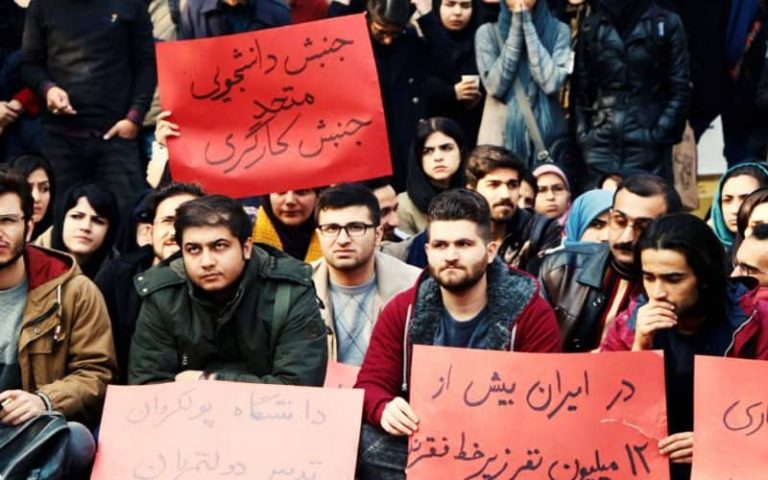
Student Day in Iran, held on December 6, commemorates the day in 1953 when the Iranian police killed three unarmed Tehran University students in cold blood. It is observed by freedom-loving students who remember not just the trio killed that day, but the thousands of students who lost their lives fight for freedom and the hundreds of thousands more who were imprisoned or tortured. Iranian students, especially women, have always been at the forefront of the fight for freedom, no doubt because of the horrific restrictions imposed on women and young people. In the nationwide protests of December 2017 and November 2019, students came out and took part, chanting “Reformer, Hardliners, the game is over”. On Student Day 2019, students commemorated the 1,500 protesters killed by security forces during the protests and the government sent thousands of their forces to universities to stop protests, something that ultimately proved unsuccessful. The students chanted:
  • “A student dies but will never succumb”
  • “The people fed up with oppression stand together”
  • “Prison, gun, or batons will not silence us”
  • “My martyred brother, we will continue on your path”
  • “The classroom is empty; the student is in prison”
  • Political prisoners must be freed”
Despite increased control at universities, large scale protests broke out there in January, following the Islamic Revolutionary Guard Corps’ (IRGC) shooting down a Ukrainian passenger plane and killing 176 passengers.
Tehran Concurrently Admits and Conceals
The security forces attacked the students with batons, tear gas, guns, and water cannons, but the students chanted:
  • “1,500 people were killed in November”
  • “Death to this state, all these years of crime”
  • Khamenei is a murderer, his rule is invalid”
After the protests, the authorities issued unfair sentences against students, especially female students. The protests would have continued throughout the year if not for the Coronavirus pandemic, which ayatollahs used as a weapon to oppress protests, even if hundreds of thousands of people died in the process.
Iran: Public Murder and Torture to Halt Protests
Iran’s student union council wrote on December 1: “Although the closure of the university to prevent the spread of COVID-19 has been disastrous for students, it has been a blessing for university officials. The most important advantage for university officials is for students to lose the right to use the university environment as part of the public space.” “While officials at the Ministry of Science, a government institution, try to show concerns about students’ health, the fact remains that official and unofficial death tolls and government policies to reduce the number of Coronavirus victims demonstrate the opposite,” they added.

Iran on the International Human Rights Day

In 1948, the United Nations Educational, Scientific and Cultural Organization (UNESCO) named December 10, as the Human Rights Day. Also, 72 years ago, today, the UN General Assembly (UNGA) adopted the Universal Declaration of Human Rights as a cornerstone for building a new world, where leaders respect people’s rights without considering their race, color, creed, and other differences. However, in our world, there are a few authoritarian states that still violate their citizens’ basic rights in spite of the international community’s will. The Islamic Republic ruling Iran is among these autocratic governments while it responded to any people’s cry for inherent rights with violence. For instance, the ayatollahs used lethal force to crack down on hundreds of thousands of people who had come onto the streets to protest gas price hikes in November 2019. As a result of brutal suppression, over 1,500 citizens were killed, and at least 12,000 others were detained. The fate of many detainees is still unclear. In its September 2 report, Amnesty International revealed a part of the torture and other ill-treatments practiced against November detainees. “Widespread torture including beatings, floggings, electric shocks, stress positions, mock executions, waterboarding, sexual violence, forced administration of chemical substances, and deprivation of medical care. Hundreds subjected to grossly unfair trials on baseless national security charges. Death sentences issued based on torture-tainted ‘confessions,’” Amnesty wrote. However, the Bloody November of 2019 is not the whole story despite international condemnations and calls for an impartial investigation. On October 18, during the 75th session of UNGA’s Third Committee, which is focused on social and human rights issues, the UN Special Rapporteur on the situation of human rights in Iran, Javaid Rehman, said that there is a “clear pattern” of Iranian authorities trying to “silence public dissent over the social, economic and political situation.” In this respect, the UNGA issued its 67th condemnation resolution against the Iranian government for ongoing and systematic human rights abuses. Nonetheless, the condemnation did not halt Iranian authorities’ crimes against the people. Following the UNGA session, the government increased the suppression and suffocation in society. Iranian officials, including the Supreme Leader Ali Khamenei, frequently issue warning about the foes’ plan to disrupt the country’s security. Practically, Khamenei and other authorities pave the path for more oppressive measures under the excuse of ‘security.’ Following the Supreme Leader’s remarks, the State Security Forces (SSF), the Islamic Revolutionary Guard Corps (IRGC), and Basij paramilitary forces affiliated to the IRGC began new round of crackdown on ordinary citizens. In fact, the government tried to nip any protest in the bud on the anniversary of nationwide November protests. They increased oppressive patrols in cities and towns, arrested citizens for bogus allegations, and even gunned down several young people in board daylight. The IRGC commander-in-chief Hossein Salami also vowed to launch home-to-home searches. He ridiculously claimed that his forces intend to “counter the novel coronavirus” and raid and destroy the “virus safehouses.” Furthermore, the religious state, particularly judiciary, increased pressure against inmates. From December 10, 2019, to 2020, the Iranian government has totally executed 255 prisoners in different jails across the country, according to human rights groups. In this period, authorities executed at least four underage inmates, eight women, and eight political prisoners. The Iranian government also arbitrarily killed several citizens in poor provinces such as Sistan and Baluchestan, Western Azarbaijan, and Kurdistan. Border guards violently targeted porters and killed at least 74 of them under the excuse of combating trafficking. There are some juveniles among victims. The continuation of human rights violations in Iran clearly shows that the ayatollahs do neither respect their own people’s basic rights nor recognize international norms. The current ruling system apparently declared its will to preserve power at all costs. In this respect, the citizens constantly chant the slogan, “They are lying that the U.S. is our enemy, our enemy is right here,” “death to Khamenei,” “death to Rouhani,” and “IRGC, shame on you, get rid of our country.”

Iran: World Record Hold in Domestic Violence

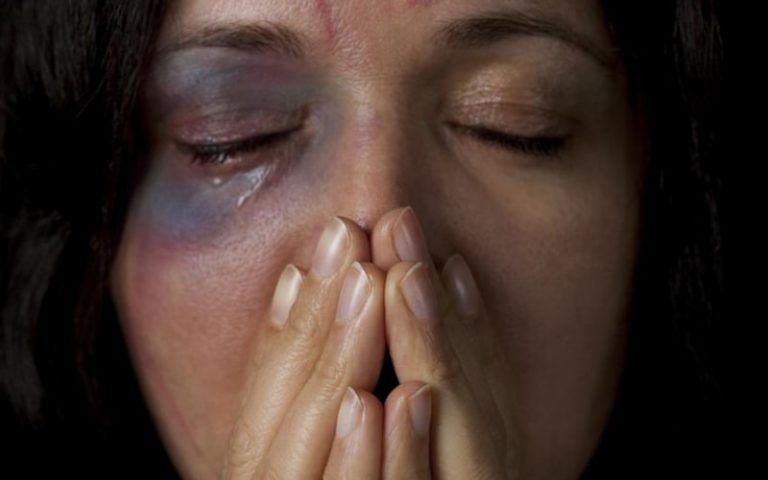
Iran has yet another world record to add to its collection. In addition to being the world’s leading executioner per capita and the world’s foremost state sponsor of terrorism, it is now the country with the highest levels of domestic violence against women. In fact, sociologist Amanollah Qaraei Moghaddam said that the chair of the Social Aid Association had previously announced that “40 percent of domestic violence in the world is carried out in [Iran].” Domestic abuse is not an easy thing to deal with, even when the law and society are on the side of female victims, but legal loopholes that negate a woman’s right to safety mean the situation is so much worse in Iran. The authorities began admitting that violence against women was rising in 2018, but what they likely meant was that reports of such violence were increasing, with 85,420 women filing complaints in 2019. Fatemeh Ghassempour, head of the Research Center on Women and Family in Tehran, said: “66 percent of Iranian women experience domestic violence in their lifetime.” This is double the world average, but still likely an understatement of the true problem. The Borna News website, which underestimated the number of cases, advised that only a third of all cases are reported.
Iranian Women Have the Highest Suicide Rate in the Middle East
Social ailments expert Mohammad Reza Mahjoubfar is the one who said that “Iran holds the world record on domestic violence (against women)”, claiming that no house is safe and blaming government mismanagement over the “economic and social consequences of the coronavirus pandemic” for the rise in domestic abuse. There is a bill to “provide security for women” but it’s incapable of stopping violence and does nothing to protect the rights of women. To protect women, domestic violence must be criminalized, offenders must be punished, and psychological violence should be recognized as violence. In addition, supportive institutions must be set up and more shelters established so that women can actually access them. Otherwise, domestic violence will only grow. One of the biggest domestic violence issues in honor killings, which are estimated to account for eight murders per day. “The enforcement of the law against honor killings has been in a way that presently, men have a free hand in carrying out physical, verbal, and psychological violence against girls and women in their families. By relying on existing male-dominated laws that grant them immunity against the implementation of maximum punishment, they commit any crime and murder,” Mahjoubfar wrote.
Another Veil of Crime Against Iranian Children