Iran: Life Under the Whip of Execution

What goes on in the prison cells of ordinary prisoners in Iran, which are less considered by the foreign media and cyberspace? Is anyone listening to their cries? What do we know about the methods of torture and psychological pressure in prisons? What are the meanings of words like, “horror sentence,” “money rope,” or “floor sleepers”?
The Nightmare of Rising Prices and Housing Rent in Iran
The following is a report by a prison aid worker who summarized some of his observations for the information of the people: You may not have heard of the ‘horror sentence.’ Unfortunately, this sentence has been carried out in Iranian prisons for many years and is shattering the souls of the death row prisoners. Death row prisoners fall asleep every night with the image of death and the last day of their lives, and in principle, they are living only for the day they wake up. These prisoners are always waiting for the prison guard to rush into the hall and transfer them to solitary confinement to serve their sentences. This is a nightmare that accompanies death-row prisoners for a month, a year, and maybe several years. Prison officials deliberately carry out the ‘horror sentence’ to intimidate other detainees and prevent possible riots. In this way, the prisoner is transferred to solitary confinement to serve his death sentence, and sometimes he is kept in solitary confinement for two to three days and then returned to the hall. Some prisoners are even taken to the gallows and returned. This is perhaps one of the worst forms of torture. The seconds for a prisoner sentenced to the ‘horror sentence’ pass like years. After the execution of each prisoner, the atmosphere inside the halls is extremely heavy and sad. The emotional connection between the prisoners is very deep and strong. Due to the distance from the family and the hard life inside the prison, when someone is executed from inside a hall, anxiety, and panic are seen in the eyes of other prisoners.

Infecting Prisoner with Methadone

Wardens inside the prison sometimes systematically distribute methadone to the inmates to calm them down and prevent them from protesting. After a while, once the inmate becomes contaminated with ready-made methadone, they can be easily controlled. Whenever he wants to raise his voice in protest, his methadone is cut off, which keeps him calm and silent. This is something they can never do with political prisoners. All kinds of drugs are exchanged and bought and sold systematically inside the prisons by the prison staff and officers. The entry of materials into the halls is controlled by staff and wardens. By doing so, prison officials both pocket large sums of money and control addicts and the needy more easily and painlessly.
Iran: Human Rights Situation in September 2020
Prisoners who are transferred to solitary confinement to serve their death sentences are given large amounts of psychotropic pills and narcotics the night before their execution so that they become almost anesthetized at the time of execution and no protests or clashes occur during the execution. Prisoners are sometimes released on the pretext of a health facility or cultural unit and transferred to solitary confinement after being beaten. Some prisoners self-harm with razors or small knives. In one case, a prisoner had been stabbed his artery and bleeding so much before his execution, so that he was almost taken to the gallows under anesthesia and then was executed. Iran’s rulers have been committing these crimes inside prisons for years. Every effort is made by the prison guards so that the news of the execution and even the number of those executed does not leak out of the prison, and the families of the executed are pressured not to contact the media. Like many people, I thought, that an ‘innocent go to the gallows, but is not executed,’ but I saw many prisoners in Iranian prisons who were innocent, they did not even meet a lawyer, and they were sentenced to death in a 20-minute trial and then they were executed. In addition to the prisoners who fell victim to poverty and discrimination and the coercion of the Revolutionary Guards (IRGC) and looters, I saw prisoners who were executed only because of their beliefs, or criticism, or dissent. Prisoners who were executed only for the personal vote of a judge, and whose bodies were buried in complete silence and unawareness by their families and officers, and whose families were forced to deposit the rope money into the prison account before the body could be delivered.
60 Million Iranians Below the Poverty Line
In my opinion, the most difficult and painful moment for a prisoner is when he meets with his family in person the night before the execution. A hard and heavy meeting that lasts half an hour. This visit will remain in the minds of the mother, father, wife, and child of the prisoner for the rest of their lives. The number of executions inside the Karaj ‘penitentiary’ increased so much that in 2016, so that the prison staff was forced to set up mechanized execution booths to execute 12 people simultaneously. Along with prisons such as Gohardasht, Karaj, Mashhad, Zahedan, Urmia, Karaj Central Prison is one of the prisons where most executions take place in absolute silence. There are heavy sentences, long prison terms, and executions mostly in halls 1, 2, and 3.

Guided Clashes Between Prisoners

One of the methods used by prison guards to control prisoners is to create fights and disputes between them. That way the head of the prison tries to harm other prisoners by hiring one prisoner, and if there is going to be an elimination, it is a sure way that leaves no trace of the wardens. Keeping political prisoners and prisoners with ordinary crimes together next to each other and in common halls is done with the same purpose and in order to create a psychological atmosphere and harass political prisoners. In this criminal way, prisoners are tortured or even sexually and mentally abused by fellow prisoners. In this way, the prison officials and agents did not commit any crime and their bloody hands were hidden. Of course, in most wards, political prisoners consciously, while helping and attracting ordinary prisoners, thwart the sinister plans of the Revolutionary Guards and agents.
UNHCHR: Release Iran’s Political Prisoners


Tehran’s Incurable Crises

0
The Iranian government which is now looking for a lifeline in the upcoming U.S. presidential election in the hope of getting rid of just some of its crises is forced to show how deep these crises are, but nothing, especially aiding hands from outside the country and let alone from inside, can solve its crises. These crises are reflected on a daily basis in the official media and the admissions of the officials.

Allocation of 2.1 Trillion Rials from the Credit of the Health Ministry to the Armed Forces

The Hamshahri daily, affiliated with the President Hassan Rouhani, on October 29 revealed the story of the one billion euros that Supreme Leader Ali Khamenei had allocated to fighting the coronavirus from the National Development Fund, and quoted the Minister of Health Saeed Namaki as saying: “From the 1 billion euro that the Supreme Leader agreed for dealing with the coronavirus and the President also ordered to settle with us by October 29, to date we have received about 50 percent of it. Statistics from the Program and Budget Organization show that 2.1 trillion rials [$7 million] out of one billion euros allocated from the National Development Fund for controlling the coronavirus have been allocated to the Armed Forces so far.”

Stealing from the Pockets of the People by Creating Inflation

“The government’s budget this year is 6 quadrillion rials [$30 billion]. Of this amount, about 2 quadrillion rials [$10 billion] has been taxed by the government, and part of it, which is about 100 trillion Tomans, the government has sold assets. “About 250 trillion tomans out of 600 trillion tomans of the government budget has a deficit. Its resources will be done through inflation and will be paid out of the people’s pockets. In fact, the government puts its hand in the pockets of the people and finances part of its budget deficit from the people,” Iran daily wrote on October 29.

Controversy Over the Budget of the State-run Radio and Television

The huge budget deficit led to a controversy at the top of the government over the allocation of a staggering budget to the Khamenei-controlled radio and television. “The Broadcast budget is ‘Non-transparent’ and is ‘an economic entity’ that ‘also has very heavy losses’. The annual budget of the Radio and Television reaches about 10 trillion Tomans. Many IRIB programs that cost a lot of money to produce do not reach as many audiences as an Instagram page,” Iran added.
A Part of Khamenei’s Economic Empire in Iran 

The Iranian Parliament (Majlis) Seeks to Promote Demagoguery from the Pockets of the Workers

Hassan Sadeghi, President of the governmental organization, “Trade Union Veterans” said: “The Parliament seeks demagoguery in 2021 elections out of workers’ pockets.” Referring to the decision of the parliament to launch a coupon system for food, he added: “The 11th Majlis wants to withdraw 150 trillion rials [$750 million] from the pockets of the poor and distribute this money among different classes of people in order to gain popularity. They want to cover the costs of the third round of subsidies from the working class’s assets in order to carry out their so-called election slogan,” ILNA news agency wrote on 27 October.

Acknowledging the Closing of The Entry of Dollars into the Economy and the Closure of Banking Transactions

In its issue of 29 October, Eghtesad-e-Saramad daily dealt with the economic suffocation of the state and emphasized the need to withdraw from officials’ claims and align with the world. “The erratic set of the country’s economy is not based on any of the principles, rules, and requirements of economics and is unrealistic. The country’s political-economic complex has been driven into isolation by two factors: inefficient government economic policies and sanctions. Now, the entry of dollars into the country’s economy has been closed and Iran’s banking and monetary exchanges have been restricted or blocked,” the daily wrote. The International Monetary Fund’s latest report on the situation in the Middle East, including Iran, states that Iran’s available foreign exchange reserves were about $121.6 billion in 2018, but will drop to $8.8 billion this year. The state-run daily Jahan-e-Sanat also referred to the statistical lies of the Central Bank and wrote: “If it is the case that Iranian banks have given 4.22 quadrillion rial [$22.1 billion] to firms in six months only for working capital of all economic sectors and considering the average price of each dollar is equal to 200,000 rials, with a simple calculation, we can say that banks have provided $21 billion in facilities for economic activities, which is equivalent to three billion dollars per month. “Given the negative growth rate of economic activity in the first half of this year, what has happened to these loans? It seems that the central bank should once and for all abandon this type of numbers creations it has invented.”

Analysis: Iran and a Painful Week of the Coronavirus

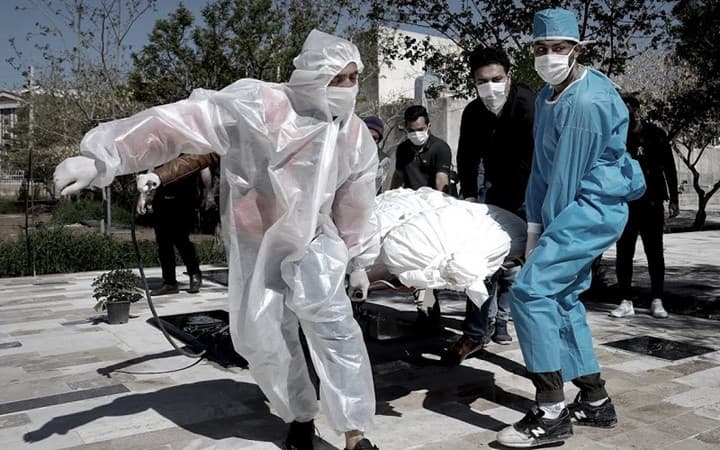
Iran has experienced a painful week with the coronavirus. Despite all the lies and secrecy of the government, the Iranian Ministry of Health called last week in Iran the bitterest week in the coronavirus pandemic. A week that broke a new record with 2503 deaths and 44,377 people were infected. These numbers are very painful for Iran’s 80-million population. This is a new statistic that, according to the experts of the Ministry of Health, should be multiplied by two, three, or four. If we take the statistics of the Iranian opposition as an indicator, the total number of deaths has exceeded 136,000. 
Coronavirus: New “Human Error” by the Iranian Government

The Differences Between Governments Are Significant 

German Chancellor Angela Merkel has said that the coronavirus deaths are not a number to her. There are human lives that she has to fight to save. But unfortunately, for the rulers of Iran, the dead and the sick are not just numbers. Rather, they are the spoils of the wind to escape any possible protest of the people. Nevertheless, October 29 has become the darkest coronavirus day in the country. Worse, the total number of patients indicates darker days in the upcoming weeks.  The pandemic situation in Iran is such that, unlike in previous months, the numbers can easily describe the horrible situation in the country. In one day, 415 people died from the Covid-19. The next day, 8,293 people are infected with the virus, and thousands more are hospitalized.  “The situation is very terrible and there is no room at all in hospitals,” said Minoo Mohraz, a member of the National Coronavirus Taskforce. 

Record-breaking Victim Statistics 

Earlier, this record was broken on October 20, with the death of 340 people. In the last seven days, an average of 351 people has been infected with coronavirus per day, according to official statistics.  In general, in the first week of October, a total of 2503 people died of COVID-19. A number that shows that Iran is not only facing its darkest coronavirus day, but it has also had its worst coronavirus week, with the official death toll almost doubling from a few weeks ago. 

More Victims Are on the Way 

Unfortunately, last week the number of patients increased sharply compared to previous weeks. The increase in these numbers, while not initially scary at first, heralds’ darker days ahead. According to experts, almost two weeks after the increase in the number of patients, the number of victims of the disease will increase significantly.  In the last seven days, the record number of patients in Iran was broken. On Thursday, 8,293 people became infected with the coronavirus. This situation was not just about one day. While in the last week of September, for the first time, the number of infected people exceeded 5,000, last week, the number of infected people per day was more than 5,800, with an average of 6,597 people being infected with coronavirus every day.  “God knows how long this process will continue if the rallies continue… and the closures do not take place, this process will continueBut we will definitely see an increase in the number of victims. Because we are hospitalizing critically ill patients, their hospitalization means an increase in the number of coronavirus deaths in the country,” Mohraz said. 

Who Is the Cause of the Deadly Coronavirus Leap in Iran? 

On October 28, the state media wrote about a corner of the catastrophic situation and the defenseless people against the coronavirus.  “Unfortunately, in the last 24 hours, 415 COVID-19 patients have lost their lives. The total number of deaths from this disease reached 33,714,” said Sima Sadat Lari, the Health Ministry Spokeswoman. On the same day, Reza Karami Mohammadi, head of the Crisis Prevention and Management Organization of Tehran, while acknowledging that the number of deaths in Iran is higher than in other parts of the world. “The annual casualties of the coronavirus in Iran have exceeded the annual casualties of the eight-year war!” he said. But the question is, what caused this deadly coronavirus leap in Iran?  Could the cause be other than the government’s criminal policies such as holding entrance exams, reopening schools, etc.?  After all, who issued the permit for thousands of Basijis to gather in Mashhad, even at the peak of the coronavirus? These scandalous scenes are related to the two days before October 28. The system itself has called it the deadliest day of the coronavirus.  How is it that in the same city of Mashhad, the gathering of hundreds of people at the tomb of Shajarian is forbidden? But is it permissible for thousands of Basijis to gather?  What can this mean other than the government’s intentional use of coronavirus deaths to prevent an uprising? 

The Ayatollahs Hope U.S. Elections Will Save Them from Public Outrage

It was reported on Thursday that a number of top Iranian officials had publicly downplayed the significance of the upcoming U.S. presidential election. Their comments on the subject tend to evoke the idea that American leaders are inherently anti-Iranian and committed to the goal of imperial influence and regime change that has never been acknowledged by any major policymaker, not even President Donald Trump.  Some of Iran’s critics have openly lamented that several close politicians to the National Council of Resistance of Iran may have helped to shape the “maximum pressure” strategy. There is some view considers this policy as contributing to the conditions that might lead to a democratic revolution inside Iran. But that influence did little to move the needle toward outright endorsement of regime change or even formal acknowledgment of the Resistance movement that is actively pushing for that outcome. 
The Importance of US House Resolution 374 on Iran
Nonetheless, Iran’s Parliament Speaker Mohammad Bagher Ghalibaf declared without evidence in September, “America has a deep-rooted enmity against the Iranian nation and whether Trump is elected or Biden, it will not have any impact on the U.S. main policy to strike the Iranian nation.”  Interestingly, the reports that cited this quotation on Thursday also pointed out that Ghalibaf’s remarks stood in contrast to what most Iranians were saying when asked about the U.S. election, which is scheduled for Tuesday but may lack an official outcome for several days as states tabulate the record numbers of early and absentee ballots brought about by the coronavirus pandemic. Polling by one Iranian state-owned entity determined that 55 percent of people expect that the outcome of the election will affect Iran “a lot.” At the same time, roughly half of the population seems to anticipate that Trump will win. It’s not immediately clear where these attitudes come from, and reports in global media draw no real conclusions about the specific effects that Iranians anticipate from each electoral outcome. On the former point, one possibility is that the aforementioned statements from Iranian officials have left the public with the impression that Trump’s comparatively belligerent approach to Iran policy is more representative of underlying trends in the U.S. But on the other hand, the Iranian people do not generally look to Iranian state media or to regime officials for such insights – a fact that was even acknowledged by a hardline Iranian think tank, Asra, in a report early this year.  Although most foreign media outlets are banned in the Islamic Republic, many citizens defy those bans by using virtual private networks to circumvent internet blocksThat being the case, Iranian attitudes about the U.S. election may see greater influence from those sources’ reporting on statements from American politicians and commentators, including the presidential candidates themselves. 
Iran Plans to Block All Messaging Apps
President Trump has been very clear about his expectations in the event of his reelection. He reportedly believes that the Iranian regime is holding out hope for victory by his Democratic challenger, Joe Biden and that this prospect is the sole reason why the regime hasn’t capitulated to “maximum pressure” by striking a new agreement with the U.S. already. Trump’s predecessor, Barack Obama spearheaded nuclear negotiations that led to a seven-party deal which went into effect in January 2016. But roughly two and a half years later, Trump pulled the U.S. out, promising to pursue an alternative that would much more seriously impede Iran’s progress toward a nuclear weapon while also limiting its interventionism and malign activities in the surrounding region.  So far, Tehran has flatly refused to negotiate with the U.S., while the other participants in the Joint Comprehensive Plan of Action have remained committed to the deal even as Iran ceased compliance in reaction to the re-imposition of U.S. sanctions. As a result of this non-compliance, experts now estimated that Iran’s “breakout time” for a nuclear weapon has shrunk from about one year to as little as three months.
Iran Desperately Plays Its Latest Atomic Cards
For their part, Iranian officials are trying to use the reduced breakout time as leverage for convincing the deal’s European signatories – Britain, France, and Germany – to implement countermeasures that might reduce the impact of U.S. sanctions. But in doing so, the Iranians have put the deal at an increased risk of collapse. The three European nations even went so far as to trigger a dispute resolution mechanism earlier this year in response to Iranian violations. Tehran’s risky strategy arguably lends credence to the U.S. administration’s assessment of the situation. Iran’s economy is in awful shape and that the government will eventually be forced to reach out for some sort of relief in order to forestall total collapse. This, he has explicitly stated, could happen immediately after Trump is sworn in for his second term, at which point the White House would push for a much more restrictive alternative to the JCPOA.  Biden has been rather less specific about what he expects from Iran in the event of his election. But in debates and media interviews, he has given the impression that the hoped-for outcome is broadly similar, though it would be reached by many different means. As Biden was vice president when the JCPOA was negotiated, it is little surprise that he has defended the deal as largely serving its purpose up until the U.S. withdrawal. Yet he has also seemingly embraced the notion that it is imperfect and could be strengthened after talks between the two nations reopen. 
UNSC Votes for an Arms Race at the Expense of Iranian People
Biden’s vision for that reopening apparently involves the U.S. resuming participation in the JCPOA as written, but only on the condition that Iran already resumes full compliance. Only then would a Biden White House be expected to urge a re-examination of the agreement’s terms, in partnership with traditional allies who have been at odds with the Trump administration on this matter for more than two years.  In both Iran and the U.S., expectations about the impact of each potential outcome depend upon one’s assessment of how successful or unsuccessful the Trump administration’s “maximum pressure” strategy has been so far. Biden’s plan for re-engagement might make sense both to Americans and to ordinary Iranians if they believe that Tehran can still hold out for additional months or years in the face of that pressure. But for those who agree that the regime is near its breaking point, changing course in January would surely seem foolish.  Recently, Alireza Miryousefi, the spokesperson for Iran’s mission to the United Nations, alleged that “the U.S.’s addiction to sanctions has not paid off” and that “the U.S. has out-sanctioned itself.”  Miryousefi’s comments were accompanied by ridicule for the latest measures imposed by the U.S. Treasury Department, namely the designation of the Iranian Oil Ministry, the National Iranian Oil Company, and the National Iranian Tanker Company as valid targets for counterterrorism sanctions. That designation stems from allegations that the three companies have been instrumental in channeling Iran’s petroleum revenue into the hands of the Islamic Revolutionary Guard Corps’ foreign special operations division, the Quds Force. However, the sanctions are also redundant in practice, as the three entities had already been fully sanctioned in accordance with the U.S. withdrawal from the JCPOA.  These latest sanctions are not the first to be deemed largely ornamental after being imposed by the Trump administration. But this is not to say that the symbolic value of those sanctions is insignificant. With each new designation, the Trump administration reiterates its commitment to enforcing existing sanctions to the fullest extent possible. And this potentially an important signal to the roughly 50 percent of Iranians who expect Trump to win reelections. That segment of the population is sure to extensively overlap with the portion of the population that supports Iran’s pro-democracy Resistance movement, and thus supports heavy sanctions on the clerical regime. 
Iran Arrests Thousands Arbitrarily Fearing an Protest

Tehran Bans Female Doctor from Working Due to Her Husband’s Complaint

The Iranian government has banned a female doctor, who used to care for 180 to 200 coronavirus (COVID-19) patients daily, from working because her husband filed a complaint.  The doctor worked at Imam Hossein and Baghyatollah hospitals as an emergency room specialist, a vital job at any time, let alone during a pandemic, but her husband complained to the court in August that his wife’s job had disrupted his life and her duties towards the family. This is despite the fact that she had chosen the emergency room specialty with the agreement of her husband and that she arranged her nights on call to coincide with his frequent business trips.  One can only imagine the disruption caused to the family lives of people who lost husbands and wives during the pandemic because there wasn’t a doctor to treat them. At first, the court rejected this because their marriage certificate stated that the woman was in medical school, so he clearly didn’t mind that she’d be working in this field when he married her. The court said that there was no evidence that the doctor worked in private hospitals and that, because of the pandemic, all medical staff was working overtime, so she was not doing anything wrong.  Then, the husband appealed the case and the Revision Court of Tehran Province rules that the doctor should only be allowed to work in the university hospital that hired her out of medical school.  The Revision Court made this ruling at a time when Iran has the highest per capita coronavirus death toll in the world (136,300 on Tuesday, according to the National Council of Resistance of Iran) and when a serious shortage of medical staff due to illness, death, and not having enough staff in the first place is making matters worse.  This is because Article 1105 of Iran’s Civil Code states that “the family is headed by the husband and the woman may not leave home without the husband’s permission”, while Article 1117 says that “the husband can prevent his wife from engagement in any profession or industry that contradicts family interests or his own or the wife’s dignity”.  Of course, this is far from the first time an Iranian woman has been forced to give up her career on her husband’s say-so. In a famous case, eight Iranian athletes were prevented from competing at the Olympic games because their husbands refused to let them leave the country.
Female Iranian Athletes Leave Country; Not to Return

Iran Arrests Thousands Arbitrarily Fearing an Protest

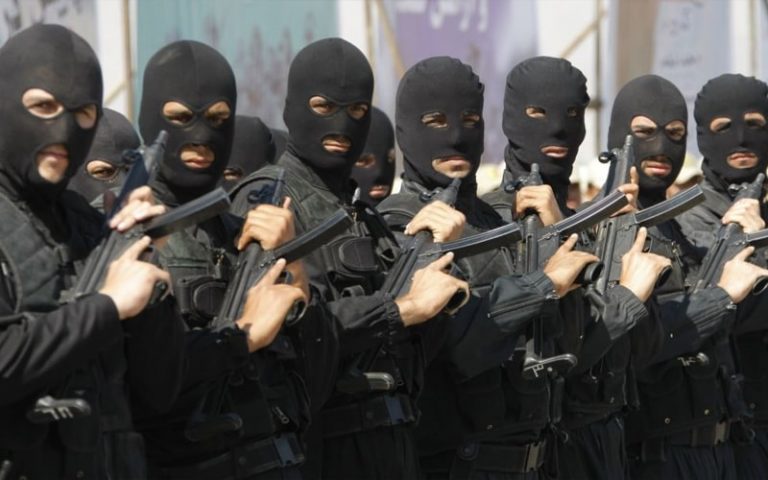
Iranian authorities have settled on widespread and heavily publicized arrests of “security disruptors” in order to scare the people out of anti-establishment protests or any gathering that could spur an anti-establishment protest. Mohammad Reza Yazdi, the commander of the Revolutionary Guards’ (IRGC) Mohammad Rasulallah brigade in Tehran, told state-run television on Monday that the role of his forces in the suppression of the people has increased dramatically since 2018, which was just after a major upheaval threatened to unseat the entire ruling system. “In coordination with our brave brothers in the State Security Forces and Tehran’s prosecutor’s office, we have deployed Razaviun units in all cities to maintain the security… These efforts will continue until we can stop any attempt at disrupting security in the capillaries of cities,” Yazdi said. A similar protest occurred in November 2019, so IRGC deputy commander Ali Fadavi increased the deployment of Razaviun security patrol units, controlled by the IRGC Basij forces, with the intention of quelling anti-establishment protests across the country. On Sunday, Rahim Jahanbakhsh, State Security Forces commander in Zanjan, told the IRGC- affiliated Tasnim News Agency that 1,500 “security disruptors” who “spread rumors and cause[d] tensions in the society” had been arrested since February; something that is no doubt to do with the coronavirus pandemic and the authorities’ dire response. “Cyberspace is a reality of the society, and this space has become a reality, which requires the expansion of security efforts in this domain,” he said. It seems more like that the government was trying to hide accurate reports of coronavirus infections and deaths in order to make themselves look better so they arrested people sharing the truth. That same day, Kermanshah State Security Forces commander Ali Akbar Javidan reported that that they had arrested 5,550 people labeled as “thugs and thieves” from March to September for causing “tensions and fear”  in society. On Friday, Kuhdasht State Security Forces commander Nabiollah Ghassemi said there were 98 arrests in police operations for “bad behavior” that threatened “public peace and security”. While last Tuesday, Semnan State Security Forces commander Abdollah Hassani reported that 3,000 people were arrested; 80 percent of whom were under 35, and cited cybercrime as one of the main reasons. The ayatollahs have stepped up arbitrary arrests in order to scare the country into compliance. However, repression, a poor economy, and the government’s failed response to the pandemic mean that resentment is only growing. Many officials leaked their concerns over a new round of protests, using the term “nitrate of disappointment,” referring to Beirut’s major explosion.

UNGA Condemns Iran for Human Rights Abuses

The United Nations General Assembly condemned the Iranian government on Monday for its ongoing and systematic human rights abuses.  During the 75th session of UNGA’s Third Committee, which is focused on social and human rights issues, the UN Special Rapporteur on the situation of human rights in Iran, Javaid Rehman, said that there is a “clear pattern” of Iranian authorities trying to “silence public dissent over the social, economic and political situation.” He mentioned that in the past few months, the government has handed down and carried out multiple death sentences for protesters, citing the arbitrary execution of wrestler and political prisoner Navid Afkari in September as “emblematic”.  “This grievous violation of the right to life is the latest execution in a series of protest-related death sentences, despite allegations of torture-induced forced confessions and other serious fair trial violations,” he said.   Before Afkari’s execution, political prisoner Mostafa Salehi was executed in August and his family has since had their home stolen by the official. There are dozens of more political prisoners on death row, many under torture, and there is increased concern about the protesters arrested during the November 2019 protests. After all, the State Security Forces (SSF) shot 1,500 peaceful protesters dead in the street, so what would they do behind closed doors?  Deputy U.S. Representative to the Economic and Social Council Courtney Nemroff also raised concerns about Afkari’s, other political prisoners, and ongoing human rights abuses.  “We remain concerned about death sentences imposed following unfair trials and forced confessions reportedly obtained through torture. The most vicious recent example is the execution of wrestler Navid Afkari on September 12,” she said.
Iran Acts with Impunity in Executing Navid Afkari
Nemroff further said that the government enjoyed impunity over its criminal activities since 1979 and urged the international community to conduct “an independent investigation” into the 1988 Massacre of 30,000 political prisoners, including the alleged involvement of judiciary chief Ebrahim Raisi.  This comes after Iranian authorities have increased the repressive measures used against the people, especially peaceful protesters. In October alone, the SSF members have killed several young people in the streets, and security authorities have been boasting about mass arrests under the guise of getting violent thugs off the streets. At the same time, conditions in Iran’s prisons have severely deteriorated, particularly for political prisoners.  Maryam Rajavi, the president-elect of the National Council of Resistance of Iran (NCRI), again called on international bodies to intervene on human rights in Iran, especially for political prisoners. 

Iranian People Prepare for Anti-Establishment Protests

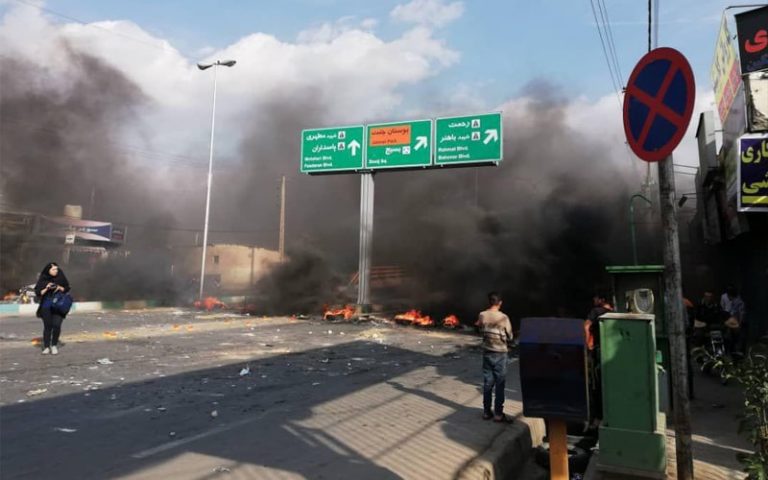
On the cusp of the first anniversary of the November 2019 protests, Iranian officials and state-run media express their concerns about resuming nationwide demonstrations. For instance, in its October 27 edition, Resalat daily affiliated with the radical Motalafeh (coalition) party leaked its fears in a piece titled, “A word about November 2019.” The daily points out that in November protests, known and trained individuals had participated in many hotspots. November 2019 paved the path for taking away Qassem Soleimani, the former commander of Revolutionary Guards (IRGC) Quds Force. “2019 was one of the most important landmarks of the post-Islamic Revolution era. The route of developments in Iran and the region expose that there were ominous plans for fundamental changes,” Resalat wrote. “Set of pressures had turned 2019 into a special year. Gasoline price hikes were a spark on keg powder, which had previously been ready. Three-fold increase in the gasoline price and rationing it had consequences. However, retracting the decision would bring more dangerous results,” the daily added. Then, Resalat continues that “Since while ago, organized groups were activated to use disappointment environment and potential protests. November 2019 paved the path for these persons to appear in the scene with weapons and military equipment.” “The November sedition [a term used by state-run media to demonize popular protests] was not supposed to be extinguished. It was a start point for a chain of more expanded unrest and disrupting the country’s security, intelligence, and law enforcement apparatuses. It was launched to create instability and insecurity inside Iran.” “Less than two months later, Qassem Soleimani was assassinated by the U.S. in January… It seems that adversaries are implementing parts of a new conspiracy in the near future. In this respect, in addition to being aware and countering domestic and foreign seditions, notifying public opinion over these movements should be considered,” Resalat concluded.
The Future of Iran and the Region Without Qassem Soleimani, Commander of the Quds Force
However, Resalat is not the only outlet to release their scare over the upcoming protests and society’s volatile conditions. “Reformist” figures are also deeply concerned about the people’s disappointment and complaints. On the same day, in an interview with the “reformist” daily Etemad, Javad Imam reminded the November protests and their definite impacts on society. He sounded alarms about citizens’ outrage against the government’s mismanagement in different fields. “Today, the pressures have been intensified in comparison to the pre-coronavirus era or even November 2019. Therefore, the scale of disappointment has increased,” he said. Imam also mentioned the dire economic conditions. “Several people have lost their careers. Several employees experience sharp declines in their salaries. Meanwhile, we deal with rampant inflation, which increased disappointment,” he added. The reformist expert also highlighted that the people no longer trust in “reformist officials” and counted President Hassan Rouhani’s failures. “On the other hand, the administration could not take a serious step about sanctions, budget deficits, and living pressures. It did even nothing in tax issue despite many merchants and employees yielded severe disadvantages.” Imam also reminded the society’s volatile situation and the likelihood of new protests. “Salaries are not raised, but expenditures grew several times, and people must endure all these troubles. The likelihood of people’s reaction has increased,” he concluded.
Iran’s Government Faces Protests ‘On the Tarmac’

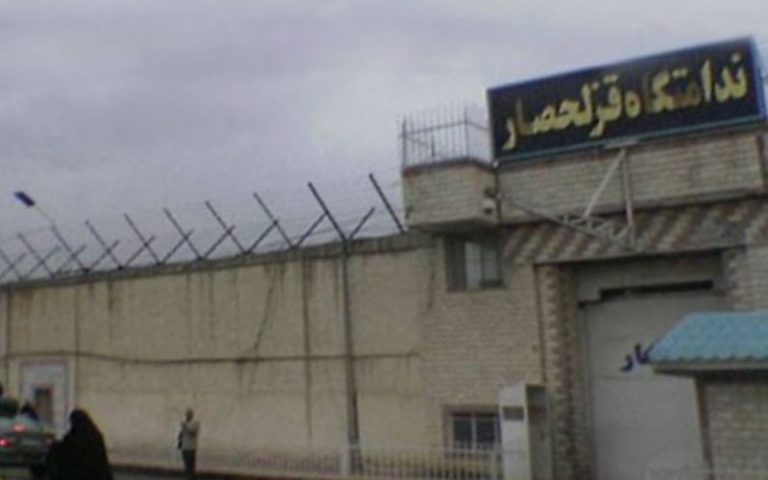
Wave of Arrests Makes Overcrowding Worse at Qezal Hesar Prison

A massive wave of arrests in October has further increased the dangerously large number of prisoners in Qezel Hesar Prison in Karaj, Iran, with 2,000 detainees transferred there in just four weeks, according to Iran Human Rights Monitor. And this is just in one prison in one province. 

Why have there been so many arrests? 

The government is terrified that massive protests will form on the anniversary of the November 2019 protests, so the ayatollahs ordered mass arrests of those that might be involved under the pretext of protecting national security, decreasing tensions, or getting violent thugs off the streets. Of course, the truth is that this means anyone who an anti-establishment sentiment on social media, particularly young people, who authorities are especially afraid of.  This includes 1,500 people in Zanjan Province, 5,550 people in Kermanshah Province3,000 people in Semnan Province, and 98 people in Lorestan Province. All of these were boasted by leading figures in the State Security Forces or the Revolutionary Guards (IRGC).  “The Razavioun patrols, which were created to provide security, started [a series of] preparations two years ago. Last year, these preparatory activities were completed, and this year they have been fully implemented,” said IRGC Brigadier General Mohammad Reza Yazdi. “In other words, in coordination with our SSF brothers at Tehran’s Judiciary, we have launched the Razavioun patrols across the Province to create security … and in coordination with the prosecutor and with the help of SSF, the continuation of this task will be to develop and extend our activities at all levels and in all areas of the city to confront those who want to disrupt the people’s security,” he added.
Iran Protesters Given Major Sentences 

What does this mean at Qezel Hesar Prison? 

There are supposedly no political prisoners in the prison, but with a new total of 14,000 inmates, it may be impossible to tell. What’s certain is that the influx will make poor conditions worse.  What are conditions like? 
  • Inmates must buy their own beds or wait years for one to be provided 
  • Prison food is badsmelling and low quality 
  • Complaints by inmates are ignored 
  • Prisoners are not given medical attention when sick 
  • Ill detainees are not held in quarantine during the pandemic 
  • Prisoners are forced to study the Quran, whether or not they are Muslim 
  • Many inmates are held in limbo 
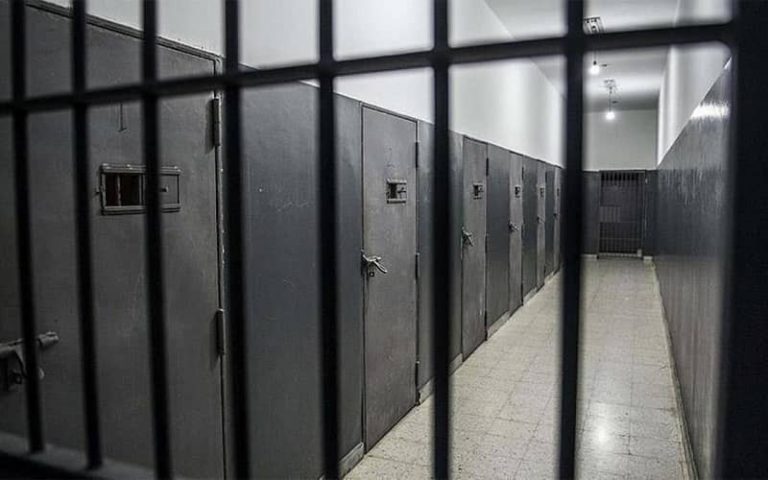
Some 1,800 detainees sentenced to death are held on Ward 2, with just four halls to hold them all. These halls have large rooms (5X5 meters) that hold 40 prisoners and small rooms (4X3 meters) that hold 11. Given the lack of personal space, 15 prisoners must sleep on the floor in the large rooms and three in the small rooms.  Many of the other prisoners are detained on drug-related offenses that bear heavy sentences, but the drug mafia controlled by the prison’s warden and guards still operates, buying drugs from outside and selling it to prisoners. 
Iran’s 2020 Budget, in Support of Suppression and Corruption

Iran Protesters Given Major Sentences 

Iran’s Behbahan Court, in Khuzestan province, has sentenced 36 protesters including two women, arrested during November 2019 protests a total of 109 years in prison, 2,590 lashes, and a 33 million rials [$110] fine.  The protesters were informed of their sentences on October 22, just days before the anniversary of the 2019 protests, during which Behbahan was a hotbed of protest. 
Iran Sentences January Protesters to Flogging and Prison 
Let’s look at the sentences of these women: 
  • Roghieh Taherzadeh was ordered to pay 33 million rials [$110] if she wanted to avoid three months in prison for the “crime” of insulting government agents while on duty 
  • Maryam Payab  was given one year in prison and 74 lashes for “disruption of public order” 
In related news, another protester – this time from Khorramabad, Lorestan Province – was sentenced to one year in prison.  Fatemeh Khoshrou, 32, who was arrested on November 16, 2019, alongside 69 other citizens in Khorramabad, was told about her sentence via email. She was tried in absentia on October 5 by Branch 1 of the Revolutionary Court of Khorramabad on charges of: 
  • leading riots 
  • disrupting public order by taking part in illegal gatherings 
  • collaborating with hostile and dissident groups 
  • preparing and sending footage of illegal gatherings to operatives in Turkey 
Khoshrou was held in Khorramabad detention center for 18 days, where she was brutalized and put under pressure to make false confessions on TV, before being moved to Ward 209 of Evin Prison in Tehran. After 34 days under interrogation, she was transferred to Khorramabad Prison. She was temporarily released 10 days later, in mid-January, on a 100 million Tomans bail until her trial was convened and her sentence finalized. 
Female Political Prisoners Suffering in Iran
During the November 2019 uprising, some 1,500 peaceful protesters were murdered by special forces, including about 400 women. Supreme Leader Ali Khamenei had ordered the special forces to “do whatever it takes to stop [the protesters]”.  Of course, these numbers are a conservative estimate because the government is well versed in trying to cover up its crimes and the Iranian Resistance could only uncover so many deaths. Never asked, this is undoubtedly one of the most horrific crimes of the 21st century.   Maryam Rajavi, the Iranian opposition President, has repeatedly urged the United Nations and the European Union to take immediate action to save more protesters by dispatching fact-finding missions to Iran to investigate this, visit prisons, and secure the release of those arrested. She called on the UN Security Council to declare the Iranian government, specifically Khamenei, President Hassan Rouhani, and IRGC Commander Hossein Salami, as perpetrators of crime against humanity.