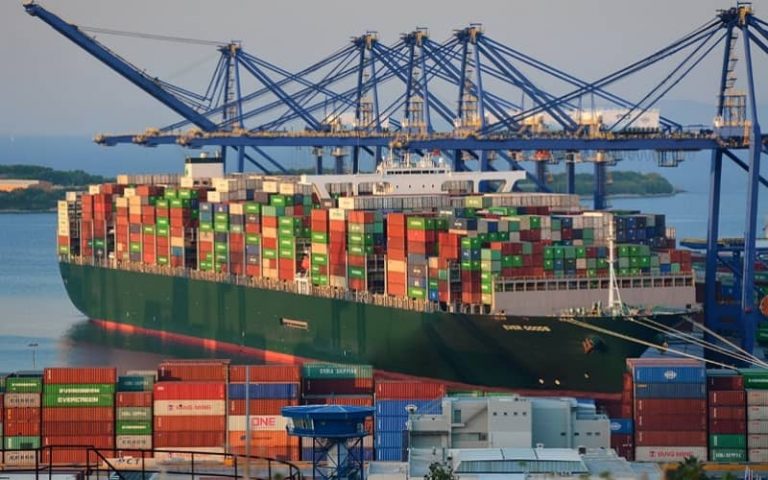
Tehran’s Non-Petrol Exports See Decline Alongside Oil Exports

0
No one exactly knows how much crude oil the Iranian government extracts, produces, and exports. However, massive budget deficits, a significant shortage of foreign currency, and the national currency’s devaluation against the U.S. dollar show Iran’s oil revenues have drastically declined. Recently, Tehran appealed to and even threatened South Korea to release its blocked money but received nothing as a result. In addition to South Korea, China—as Tehran’s strategic ally—has refused to release the Iranian government’s frozen assets.
Sharp Drop in Iran’s Imports/Exports

How Much Oil Did Tehran Export in 2019?

According to official statistics, Iran exported one-third of the oil that had been predicted in the 2019-2020 budget bill. Observers forecast that this value will decrease in the current year. However, the government has not yet provided details about the exported crude oil and condensate in 2019. According to senior officials in President Hassan Rouhani’s administration, the oil revenue was roughly around $8-9 billion in 2019. The Central Bank of Iran (CBI) Abdolnasser Hemmati, First Vice President Eshaq Jahangiri, and economic deputy Mohammad Nahavandian announced the same number in separated remarks. “In 2019, the country’s oil revenue—and not just the administration—was $8.9 billion. Therefore, given the National Development Fund’s 20 percent stake and the National Oil Company’s 14.5 percent stake, the administration’s total and gas condensate exports were over $5.8 billion. In this context, Iran has exported 490,000 barrels per day (BPD) based on receiving $50 per barrel,” Donyay-e Eghtesad daily wrote on May 24.

Giving False Hopes Instead of Real Stats

In this respect, MPs questioned the administration’s representative about false estimations. Why did the administration close the oil presell amount on 1.5 million BPD despite the sanctions? MPs asked. “‘If we close the budget plan on 500,000 BPD instead of 1.5 million, it means that we have succumbed to the U.S.,’ said the administration’s representative. In other words, in a radio program, an official of the Planning and Budget Organization explicitly acknowledged that the administration noted high figures in the budget bill to create hopeful space,” Fars news agency, affiliated to the Revolutionary Guards (IRGC), reported on May 24. Furthermore, according to customs statistics, the government’s non-petrol income has reached $13.556 billion in the past six months, the lowest figure in the past decade. “In the past six months, non-petrol exports declined by 34 percent in comparison to the last year, which is the most severe drop in the span of two decades. The country’s imports also yielded a 21.66 percent decrease compared to the last year and have reached $16.783 billion. Therefore, Iran’s financial interaction was $30.349 billion, the poorest foreign trade in the past decade,” Mashregh daily wrote on October 10.

Significant Drop in Pistachio and Carpet Exports

Once upon a time, Iran had monopolized the pistachio and carpet worldwide market. However, the government has lost these privileges and failed its traditional clients. “Regrettably, we are losing the pistachio position in global markets due to the dire export conditions… We can earn more U.S. dollars if the administration does not make trouble for [pistachio] exporters with insisting on its routines. However, the administration insists on its instructions,” Fararu website quoted Mehdi Seifoddini, secretary of Farmers’ Union in Kerman province, as saying on October 13. Meanwhile, in 2018, Iran earned $238 million through exporting humanmade carpet. However, this industry met a sharp decline in 2019 and reached $73 million. “In 2018, Iran’s carpet exports to the U.S. as the main intention for Iranian carpets, and our traditional market stopped. In this regard, the carpet export decreased around $200 million while we faced a drastic decline in 2019 and the value of carpet exports reached less than $100 million,” said Hamed Chaman-Rokh, member of the managing board of Manmade Carpet Exporters’ Union, in an interview with Jahan-e Eghtesad daily on September 10. In conclusion, given the Iranian government’s insistence on irresponsible and costly policies inside the country and abroad, Iran’s non-petrol revenues fell in the fate of oil revenues. However, the ayatollahs still continue funding extremist proxies in the Middle East region, advancing their ballistic missile programs and nuclear ambitions.
Extending Iran’s Arms Embargo Is in Favor of Iranian Citizens
In this respect, the current ruling system that has cut Iran from the worldwide banking system and international commerce is the main barrier to its industry and development. They also stockpiled billions of dollars in personal accounts or financial institutions rather than aiding needy people who sell their organs or even their newborn babies to make ends meet. They also imposed the IRGC’s additional budget on the country, while many people are losing their lives to the health infrastructure’s weakness.


Iran’s Child Suicide Tragedy

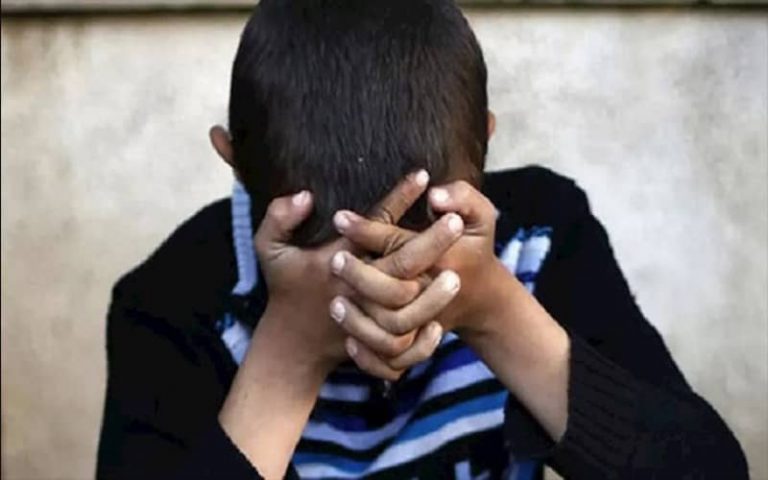
As suicide rates rise among disadvantaged people in Iran, the suicide rate among children and adolescents has risen too, and its nature and quality are more appalling than ever. Children and adolescents who have committed suicide in recent days are mostly from poor families. The severity of suicide among children and adolescents due to poverty is such that state media are forced to report it in some cases, despite the scandal and stigma it will leave on the system.
Iranian Children Dying from Poverty Increases
Such children have no hope for the future and see their future in the poor image of their parents and other close relatives, many of whom are not even able to provide the daily bread for their meals. In Bushehr province, two children committed suicide due to the poverty of their families and the impossibility of getting a smartphone to participate in ‘Shad‘ online classes. Education officials in Bushehr province denied that one of the children committed suicide because they did not have a smartphone, while Mohammad Mousavi’s mother said, “The school principal had said several times that he wanted to give a phone to three students, but that did not happen. There were no phones and the only reason for my son’s grief that caused this disaster was not having a phone.” The governor of Nishapur reported the suicide of three people in the city, aged 15, 17, and 22, and two of them died.
Gradual Increase in the Price of Bread, Another Deceptive Step by Iran’s Regime’s to Loot the People
A 10-year-old child in Ilam, western Iran, hanged himself and died due to the poverty of his family. In Parsabad Moghan in Ardabil province, a 16-year-old boy committed suicide with a hunting rifle and died. In a village in Urmia, a 13-year-old girl committed suicide due to the family’s financial poverty, lack of a smartphone, and an inability to attend online classes. The fact is that the Ministry of Health of the government and other relevant institutions never announce the exact number of suicides and deaths resulting from it, especially the suicide of children and adolescents. Certainly, the cases of child suicide are more than the cases reported by the media.  “Statistics will not be announced unless made public. Of course, after a while, the noises fall asleep again. The government does not provide statistics, and many families do not report the cause of their child’s death as a suicide. Even for the coronavirus, accurate statistics are not provided,” Bartarinha website quoted a government-linked expert Mustafa Eghlima as saying on October 22. This situation is due to the state’s political and economic institutional corruption, about which Tasnim news agency wrote: “The presence of wealthy people in important centers of power, where macro-social and economic decisions are made, confirms that poverty, although measured by economic indicators with a social manifestation, is a phenomenon related to policy-making and politics. “In such a way that some of those sitting on the path of management either own large capital or use it in the influence of the owner of capital, policies, and decisions are naturally laid out in such a way that the distribution of national capital and revenues is diverted from its fair form and is directed to the pursuit of specific and limited group interests. “And what reaches the other strata, according to their relation to the center of the capital, becomes less and less to the point that some people reach a very small share, equal to zero.”
Iran: Shocking Poverty and Its Class Divide

Iran: Officials Admit to the Dire Economic Situation

The economic situation of the Iranian people has deteriorated to the point that Iran’s leaders and state organizations have no choice but to acknowledge it. This condition is the cause of many social disorders such as addiction and suicide.  “About 19 million people in Iran are marginalized and homeless,” said Abbas Akhoondi, the former Minister of Roads and Urban Development, in July 2017. Also, President Hassan Rouhani implicitly approved the statistic. Meanwhile, in November 2019, Ali Rabiee, the spokesman for Rouhani’s administration, declared, “53 percent of Iranians do not own a car.”  In December 2019, another of Rouhani’s ministers, Mohammad Shariatmadari, announced, “60 million Iranians are receiving subsidies.” This figure is equivalent to 75 percent of Iran’s population. 
Connex Sleepers, the Other Face of Marginalization in Iran
According to the July 2019 report of the Statistics Center of Iran tallied by the 2016 census, “51 percent of the people of Tehran are tenants.”  “More than 70 percent of Iranian workers are minimum wage earners,” said Hadi Abui, the Secretary-General of the Supreme Council of Workers of Iran, in April 2016. In addition to the statements of the officials, the poor economic situation of the Iranian people has been a key topic in much of the state media.  “There were about 38 million marginalized people in Iran,” Shoare-e-Sal daily quoted Fardin Yazdani, a housing economist, as saying in July 2020.  Furthermore, back in March 2017, the Parliament (Majlis) news agency Khane-e-Mellat (ICANA) cited Shahab Naderi, a then-MP, as saying, “80 percent of the Iranian society is below the poverty line.  In June 2016, Shahr Ara News website reported that the number of working children in Iran is “between 3 and 7 million“—a figure which is now significantly higher.   The media also report that 3 million female-headed households are bearing the brunt of the hardships of life in the current miserable situation in the country.  In September 2019, Bahar News website quoted Nasser Aslani, the Deputy Director of Supply and International Affairs of the Anti-Narcotics Headquarters, as announcing the existence of 4.408 million addicts in Iran.  According to the Independent, in Iran, 13 people commit suicide every day.  in June 2016, Radio Zamaneh website also listed the causes of suicide in Iran. “For years, official suicide statistics have not been published in Iran. But various studies show that more than 70 percent of suicides are of economic origin,” the website wrote. In other words, poverty is the cause of 70 percent of suicides in Iran. 
Iran and the Crisis of ‘Serial Suicides’
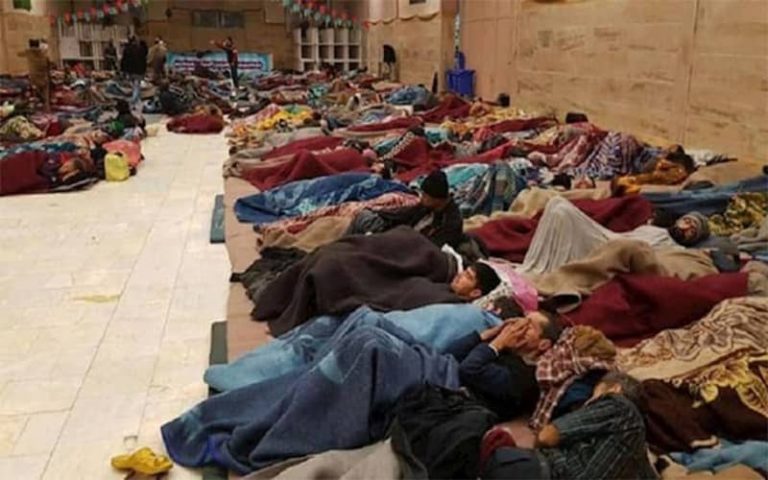
In such circumstances, the government has reduced the education budget. “Currently, the share of education in the public budget in the country is about 8.9 percent, while in the world this number is 14 percent. That is, the government decided to shift the education to the private sector and pay the minimum wage to 100,000 people in education,” the deputy chairman of the parliamentary education commission, Mahammad Vahidi, revealed in an interview with Tasnim news agency on October 25. He also admitted that currently, 3.5 million students do not have access to the “Shad” application [an application created for online education because of the coronavirus outbreak], according to Tasnim. There is rising homeless in the capital Tehran—700,000 people sleep in care houses. On Saturday, October 24, the advisor of Tehran’s mayor said that “Last year, we had about 490,000 people serving at night in Tehran’s care houses. However, this year, this number is expected to increase to 700,000 at night. Last year, 22,000 women spent the night, and this year 27,000 of our homeless women spent the night in Tehran’s care houses.”
Iran: Rural Women Are the Most Marginalized People

Another Veil of Crime Against Iranian Children

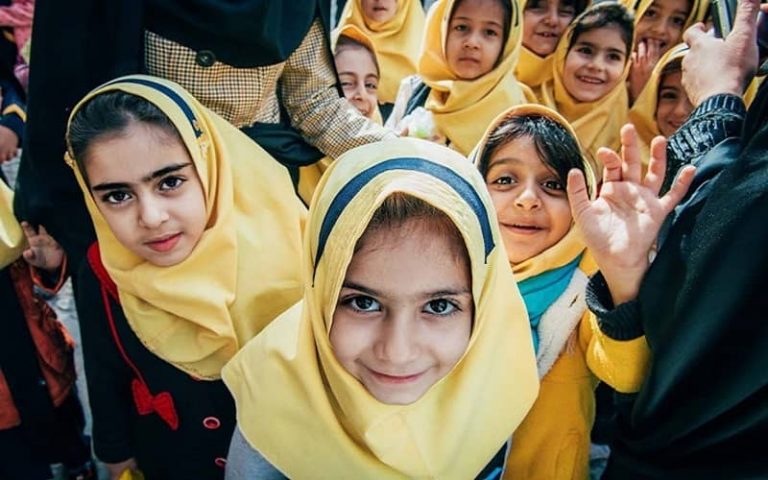
One of the most tragic and catastrophic effects of the Islamic Republic’s era in Iran has been lowering the legal age of marriage. The Iranian government has snatched the lead from other authoritarian regimes in the gross violation of the rights of children and women, such that today Iranian girls and women look to the much better conditions in Afghanistan, India, Pakistan, and even the Persian Gulf countries.  For some time now, the state has been using the marriage loan scheme to facilitate its backward and oppressive thoughts towards the children and women of this country. However, apart from the principled and theoretical opposition of this approach to human, moral, religious, and universal human rights principles, its catastrophic and criminal effect is also seen in the practical field, which the Iranian society will undoubtedly suffer from the damage of it for years and decades. 
Iran: Children Who Make Ends Meet Through Searching Garbage
Here we show some of the effects of this ‘legal crime’ on the body and soul of half of the Iranian people:  

History of Marriage Age Laws in Iran 

“In 1931, the Civil Code introduced physical talent for couples for the first time in articles. After that, in 1934, in Article 1041 of the Civil Code, the issue of minimum age was discussed for the first time. According to this article, 15 years for girls and 18 years for boys was the minimum age for marriage,” the semi-official ISNA news agency reported on May 13. “The marriage of girls between the ages of 13 and 15 and the marriage of boys between the ages of 15 and 18 were also made conditional by the court. Years later, with the enactment of Family Protection in 1974, in accordance with Article 23, the minimum age for marriage for girls was increased to 18 years and for boys to 20 years; and marriage between 15 and 18 years for girls was conditional on a court order,” ISNA added. In the same report, it is stated that back in 1982, some parts of the civil law were amended; Including Article 1210, which changed the age of childhood to the age of legal maturity. That means 9 lunar years for girls and 15 years for boys. Accordingly, Article 1041 was changed, and the minimum age for marriage was 9 lunar years for girls and 15 lunar years for boys.  After much debate on this issue and public opposition and reactions to these reactionary laws, in 2002 the minimum legal age for marriage for girls reached 13 years and for boys 15 years; with the permission of the parents and, subject to expediency, at the discretion of the court.  In practice, the law led to major legal, social, and family problems, and measures were taken to amend it, but the clerics and governmental institutions prevented its changes.  In 2017, Article 1041 was once again challenged in the Parliament (Majlis). “According to the amendment submitted to the Islamic Consultative Assembly (Majlis), the marriage of a girl before the age of 16 and a boy before the age of 18 was prohibited; Marriage between the ages of 13 and 16 in girls and 16 to 18 in boys was subject to the permission of the legal guardian and a court order, provided they were physically able to marry with a forensic opinion. However, this plan was rejected in 2018 by the Legal and Judicial Commission of the Islamic Consultative Assembly,” ISNA wrote. The intellectual foundations and public views of the current ruling system in the human and social spheres are so catastrophic and criminal that it cannot even be fully recounted in public media.  During more than 40-year history of the Islamic Republic, the poor and impoverished sections of the society, as a result of the state’s miserable economic policies, have been forced to abuse their children as a means of livelihood and use the laws and facilities donated by the clerical government as a pretext for this legal crime.  No child would want to go to the house of a man the same age as her father and grandfather and marry and have children instead of playing with her peers and toys and going to school and gaining the necessary knowledge and education during this period. but the domination of the religious fascism’s culture in Iran and the poverty and deprivation of the family have led these little children to such a catastrophic fate.
The Future of Iran and Its Children Is in Danger
The living and economic situation of families in Iran is so unhealthy, depressing, and mingled that the family is not anymore able to meet the right marriage age, and this has led the government to provide loans to facilitate the early marriage, and this misguided strategy led to the sale and purchase of girls from poor families who, for little money, who became accomplices to crimes against their children.  Last year, the official IRNA news agency made a shocking report on the relationship between marriage loans and child trafficking. “With the increase in marriage loans to 30 million tomans in 2019, the number of children spouses and marriages of children under 15 has quadrupled in some parts of the country, and some families are actually selling their daughters to receive these loans. Statistics released by the Civil Registration Organization on the divorce of girls under the age of 13 show an increase in the phenomenon of child marriage in the country, and experts believe that this will have dire consequences in the future,” IRNA on December 31, 2019. Furthermore, Arman-e Meli paper provided unexpected details, indicating how many children are in queues for marriage loans. “Statistics from the Central Bank also confirm this, and the number of applicants under the age of 15 for marriage loans in 2018, compared to the previous year, 2016, has increased about 70 times. Also, in the first five months of this year, the number of marriage loan applicants for people under 15 has increased almost 90 times compared to 2017. In the last decade, nearly 400,000 girls under the age of 15 have been married off in Iran,” Arman-e-Meli wrote on the same date. On October 11, Massoumeh Ebtekar, President Hassan Rouhani’s deputy for Women and Family Affairs, expressed her concerns over the physical and psychological cons of children’s marriage. “In our view, reaching the intellectual maturity of marriage is sufficient, but under 13 years it is really a child and has many physical and psychological consequences. In the current law, we do not have a base for the age of marriage, although in the notes it is restricted to the opinion of the judge and the experts, but in our opinion, there are problems in the field of child-marriage, which is evidenced by the statistics of 30,000 marriages under the age of 14 in one year. In particular, an increase in the number of marriage loans can inadvertently cause the sale and purchase of girls and children as marriages,” Tabnak website quoted Ebtekar as saying.
Iran: Children between 12 and 15 Forced into Marriage

Marriage Loans Are Very Embarrassing Events

“Lending websites are also full of 60 million marriage loans. Many of these sites do not allow you to talk directly with the seller. Most of the sellers are from the deprived areas of the country. If you are asking about their age class, they evade and respond that their marriage is legal and that they have been granted a marriage loan,” semi-official ILNA news agency wrote on December 29, 2019. “One of the sellers is the father of the bride and says: His daughter and son-in-law start their business with the remaining 30 million. He does not say the age of his daughter and suffices as to say that ‘she could certainly have married the husband’, I gave her away. The groom says he cannot afford the 60 million loan installments, so he wants to sell her,” ILNA concluded.

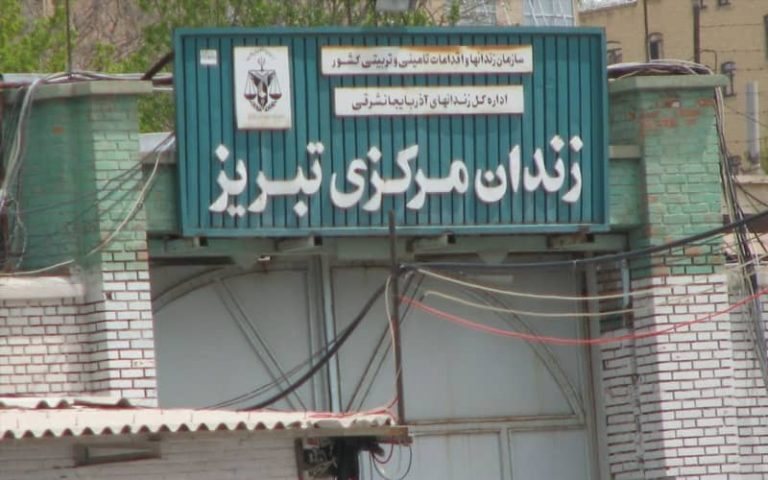
Iran: Sick Old Woman Forced to Sleep Outside in Cold by Tabriz Prison Authorities

Prison authorities in Tabriz forced a 60-year old woman in need of medical care for herpes zoster to sleep out in the yard as temperatures plummeted. Shahin Solhjoo had initially been moved to the dispensary, then solitary confinement, after contracting herpes zoster, but prison guards scared of getting sick themselves, moved her back to the general ward after two days; a decision that makes no sense because if more inmates are infected then the guards would be more likely to get sick. Then, the guards ordered Solhjoo, who is in grave pain from herpes zoster, to sleep in the yard; something that her fellow prisoners on the women’s ward objected to, saying that she should be taken to hospital, especially as she might also have contracted the coronavirus (COVID-19), so she’ll need an examination from a doctor and close supervision. Prison authorities claim that they don’t have the money to take her to hospital, which is why they haven’t, but this doesn’t ring true. First, it cannot possibly cost that much to take her to the hospital because she’s an elderly woman jailed for stealing a phone due to poverty. She would only need one guard and a driver at most. Second, even if it did cost too much to transfer her to the hospital, why make her sleep outside in the cold rather than treat her in the dispensary? Third, delay and denial of adequate medical treatment to ill or injured prisoners is a common tactic of the Iranian authorities, although illegal under international law and the covenants that Iran has signed up to. The idea is to increase pressure on the prisoner in order to break their spirit or get them to confess to crimes they didn’t commit. It isn’t surprising that Solhjoo got sick on the women’s ward of Tabriz prison. At least nine inmates there contracted the coronavirus in the last week of September and the guards failed to quarantine the sick people at all, using just a flimsy curtain to separate the sick from the well.
How the Coronavirus Has Affected the Women’s Ward at Evin Prison
Of course, anyone would get sick in the prison conditions. The food given to prisoners is low quality, smelly, and cannot be cooked because prisoners do not have a stove. Even the food sold at high prices in the prison store is low quality, so how are prisoners supposed to boost their immune system? The simple answer is that they’re not.

Connex Sleepers, the Other Face of Marginalization in Iran

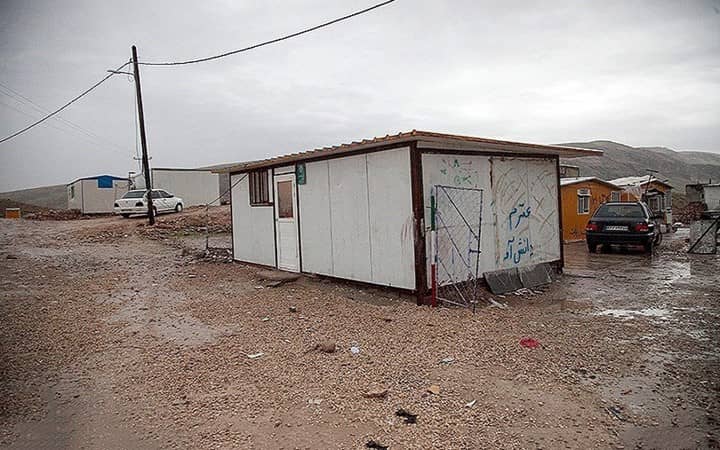
Most official statistics in Iran cannot be trusted, and each government institution has its own statistics. However, according to the most general statistics, more than 30 million marginalized people now live across the country. Marginalized people are the unfortunate immigrants of the cities or those expelled from the major cities. They have settled on the outskirts of metropolitans in shantytowns in the hope that they will pay less for housing. The state-run daily Eqtesad-e-Saramad reports on a new phenomenon among Iranians who live in slums: “When the villagers and even the inhabitants of the counties went to big cities and metropolises like Tehran, they found that they could not afford to pay rent because of low wages and the employment slump. So, they went to the outskirts of the city. “In the meantime, however, the Connex sleepers are a relatively new phenomenon. However, Connex sleeping is also a type of marginalization and temporary residence but based on the idea that any place that has a roof, can become a house. For the suburban population of the capital, it has more security and comfort than the slums.”
Homeless Citizens and Iran’s Housing Mafia
The paper then points out the disadvantages of this type of living, noting that the Connex sleeping is apparently a more affluent circuit than the slums: “The Connexes, therefore, are home to the more affluent marginalized population, which, of course, does not solve the housing problem for the homeless, and the numerous marginalization problems and harms for the dwellers of this shelters. This has become a scourge that contributes to various social ills. “However, some officials are still in a state of denial, and they believe that this type of housing is not common in Tehran. But a warning from Massoud Rezaei, deputy chairman of the parliament’s social commission, about the danger of an outbreak of the Connex sleeping in the capital shows that the damage must be taken seriously.” “In addition to all that has been said above about immigration and the problem of immigrant housing, this new phenomenon must be added to this issue. The Connex sleeping next to the tomb and the rooftop sleeping are now in vogue. Owners of Tehran housing agencies say this is a new way of living in Tehran. “Sellers and installers of the Connexes also say the phenomenon is more prevalent in the suburbs. Some real estate consultants in Tehran report the limited existence of these blocks in the middle of the city, including District 22,” the outlet added. “Currently, in District 22 of Tehran Municipality, the neighborhoods around it and around the ‘Persian Gulf Lake’ and the areas around Hashtgerd county, workers are experiencing rooftop sleeping. An issue that is the starting point of Connex living and suburbanization.” But the inhabitants of these Connexes are betting on the losing horse while this outlet added: “The head of the Iranian Real Estate Advisors Association says: ‘Living in common spaces in these Connexes is not legal, and buyers can only use these Connexes on their own land.'” “Hesam Aqba’i emphasizes that the condominiums do not have a title deed and that it is not legal to conduct transactions in the real estate consultants’ units to buy or mortgage and rent them.” The daily then added: “Builders and sellers, however, say they have rented out most of the second-hand Connex units to the lower deciles of society at low rates. And usually, they do not rent these units from official bases. Of course, renting is rare in such cases, and everyone is looking to buy these mobile units.” According to a housing market activist: “This phenomenon is seen in some areas of Tehran in the form of renting a trailer, but it is illegal to build a Connex on the roofs of houses and common areas. However, these illegal cases are not dealt with seriously in the city structure and can be easily solved by paying money from the owners.”
Iran: Shocking Poverty and Its Class Divide

EU Must Adopt a Firm Policy Against Tehran’s Terror Attacks

0
Two years ago, on June 30, 2018, European law enforcement managed to foil a terror attack in Villepinte, suburb of Paris. In a joint operation, Belgian, German, and French authorities disbanded a terror squad commanded by a senior Iranian diplomat Assadollah Assadi. Belgian prosecutors called the group a “sleeper cell,” which provided details and prepared a bomb attack against the Iranian opposition gathering. At the time, the National Council of Resistance of Iran (NCRI) held a grand meeting with 100,000 supporters and hundreds of distinguished politicians, MPs, human rights defenders, and former officials from around the world.
U.S. House Stands with Iranians’ Desire for Freedom
They had attended the event to declare their support for the NCRI and its President-elect Maryam Rajavi for replacing the religious fascism ruling Iran with a democratic government, which is intolerable for the ayatollahs. Following the attack’s failure, Iranian officials, including Foreign Minister Mohammad Javad Zarif, tried to evade responsibility. Zarif described it as a “false-flag operation” on the eve of President Hassan Rouhani’s visit to Austria while the foreign minister’s agent had been arrested with sufficient evidence. The arrest of a diplomat on duty sounded alarms about the Iranian government’s exploitation of diplomatic privileges to target dissidents. In December 2018, the Albanian government expelled the Iranian ambassador and his deputy from its territory for involvement in a bomb plot against members of the main Iranian opposition group Mojahedin-e Khalq (MEK). Several of Tehran’s lobbies attempted to attribute the attack to rogue elements. However, in November 2019, Zarif rejected this theory at a Parliament (Majlis) public session. “We are not an institution to act by ourselves. Is it possible to do something in this country without reporting?” he said. “Assadollah Assadi is not an exemption. He is the normality,” said former Italian Foreign Minister Giulio Terzi, who was a potential victim of the plot. These malign behaviors prompted many prominent figures, particularly potential victims of Assadi’s plot in France to file a complaint against Tehran’s terrorist agent and his co-conspirators. On October 22, several of them attended an online conference hosted by the NCRI and discussed the Iranian government’s terror activities on European soil. They demanded EU leaders shut down Iranian embassies as centers of coordination and logistic providers for terror attacks.

Potential Victims’ Remarks at the NCRI Webinar

“This terrorist plot was ordered and blueprinted in Tehran at the highest level of Iranian regime leadership, including the Foreign Ministry and the Ministry of Intelligence and Security (MOIS),” said Farzin Hashemi, a potential victim, and member of the NCRI Foreign Affairs Committee. “In my seven-hour testimony during the investigation, I provided details of the decision-making and the enabling process of this operation… I stressed again that the decision for this operation had been made by Khamenei, Rouhani, Zarif, Alavi, the regime’s intelligence minister, and implemented only afterwards,” said Maryam Rajavi, the terrorists’ primary target. “We are sure that it is indispensable that this diplomat represented a state,” said prominent human rights and international criminal law lawyer William Bourdon. “It is a bit surprising that the secret agent is trying to invoke the Geneva Conventions. You cannot pretend to be a diplomat when you are caught trying to bomb a civilian population,” said criminal law lawyer Rik Vanreusel. “This is one of the most important terrorism cases in the 21st century… The victims attacked in this case, the NCRI, has been the target of systematic attacks by the regime,” said international criminal law lawyer Christophe Marchand. “I hope that the courage and skills of our lawyers are matched by those of the governments that are involved. The burden is now on all of us if we want to assure that no one else is a victim of state-sponsored terrorism,” said former U.S. Senator Robert Torricelli as a complainant and potential victim. “The decision to resort to terrorism is carried out by the regime’s Supreme National Security Council, where there are key centers of power, including the supreme leader, the president, the speaker of parliament, and the IRGC commander,” said former French intelligence officer Claude Moniquet. “This is a historical test or challenge for the EU, whether they want to stand on their democratic standards or alongside a terrorist regime. This regime will fall,” said chair of the NCRI Foreign Affairs Committee and potential victim Mohammad Mohaddessin. “I was the event’s moderator… Assadi violated each of the core principles of diplomacy,” said former MEP from Scotland Struan Stevenson.

End of Tehran’s Joy Over the Lifting of UN Arms Embargo

0
Until October 18, Iranian authorities tirelessly touted lifting the UN arms embargo as a significant achievement. President Hassan Rouhani and Foreign Minister Mohammad Javad Zarif bragged about their fruitful foreign policy. They had even stepped further and portrayed this “achievement” as a lifeline for trade and achieving colossal revenue. However, they did not specify who is supposed to purchase Iranian arms and how Tehran would receive the money? They did not and could not blame U.S. sanctions for the lack of customers and the market. The fact that extremist groups and outlaw states—such as Lebanese Hezbollah, Iraqi Shiite militias, Yemeni Houthis, and Bashar al-Assad dictatorship—are Tehran’s sole clients. Apart from them, there are no legal states that prefer to purchase weapons from an unstable government instead of from prominent and well-known companies. Moreover, neither China nor Russia would purchase Iranian armaments. They were looking for a market to sell their weapons. However, they will receive nothing in return for their weapons. Why? Because, in December 2019, the Iranian authorities refused to join the Financial Action Task Force’s bills and thus cut the country’s banking system from the international monetary bodies.
Auctioning Iran, for a Dirty Vote at the UN Security Council
The ayatollahs have no more money to purchase weaponry systems and their dire economic conditions reveal this reality. On October 21, the chief of State Security Forces (NAJA) Brigade Gen. Hossein Ashtari complained about the shortage of the NAJA’s budget at the Parliament (Majlis) session. In recent months, the price of almost all essential goods dramatically increased. The national currency Rial’s value has unprecedentedly dropped against the U.S. dollar and the exchange rate for each USD stands at over 320,000 rials in the free market. Furthermore, there has been no day without employees and workers’ protests for their delayed paychecks and arrears in Iran. Meanwhile, the novel coronavirus has deteriorated the country’s economic power. However, most importantly, it has diminished public trust, and even the most loyal forces to the supreme leader Ali Khamenei criticize the government’s approach against the health crisis. In such circumstances, as people’s rage is going to erupt, foreign pressures are the ayatollahs’ last concern. They relentlessly search for an income-resource to ease society’s fury. Since April, when they lifted health restrictions and compelled citizens to opt between the coronavirus and starvation, many people fell victim to the disease. Now, regarding the unprecedented daily COVID-19 death toll, which reached 337 on October 19, they even deal with objections among their inner circles. In this respect, political rivalries have amplified and MP Mojtaba Zol-Nour, chair of Security and Foreign Affairs Commission, spoke about executing the president. “The majority of the Iranian people today will not be satisfied with less than your dismissal, and the Supreme Leader should order to execute you 1,000 times,” he said on October 18. Therefore, lifting the UN arms embargo, as Rouhani’s significant achievement, not only did not bring privileges for the Iranian government but also exposed cracks and failures. Rouhani finally admitted that it was merely a hollow gesture. “Our arms embargo was lifted. It is not important how many weapons we can purchase or sell. It is important to obtain our rights. The people are in dire conditions, but they must realize our worldwide political successes,” Rouhani said in the October 21 cabinet meeting.
UNSC Votes for an Arms Race at the Expense of Iranian People

Iran: Nine Economic Protests in Two Days

The Iranian people held nine protests over economic concerns, with many demanding unpaid wages, on Monday and Sunday. Let’s look at a quick breakdown.

Wedding Hall Owners

Roughly 40 wedding hall owners and employees gathered outside the Tehran Guilds Chamber on Monday to protest the coronavirus (COVID-19) restrictions that shutdown their place of business.
COVID-19 in Iran: 337 Is Not a Number, It Is a Heartbreaking Story of Human Loss
The head of the Wedding Hall Union said that wedding hall employees, bridal gown vendors, and wedding photographers have all become unemployed. He said: “It has been about nine months that wedding halls have been shut down, and hall owners do not have any other source of income.”

Defrauded Car Buyers

People who bought an Azvico car three years ago and are still yet to receive their vehicle (6,000 in total) held a protest outside the Industry, Mine, and Trade Organization in Tabriz to demand their undelivered cars.

Livestock Farmers

Farmers gathered outside the Judiciary in Tehran to protest the high price and scarcity of feed for their animals, which is the result of the government’s mismanagement. One farmer accused the authorities of importing meat from Brazil and not supporting Iran’s farmers, who are going bankrupt.
State-Backed Mafia Removes Red Meat From Iranians’ Food Basket

Petrochemical workers

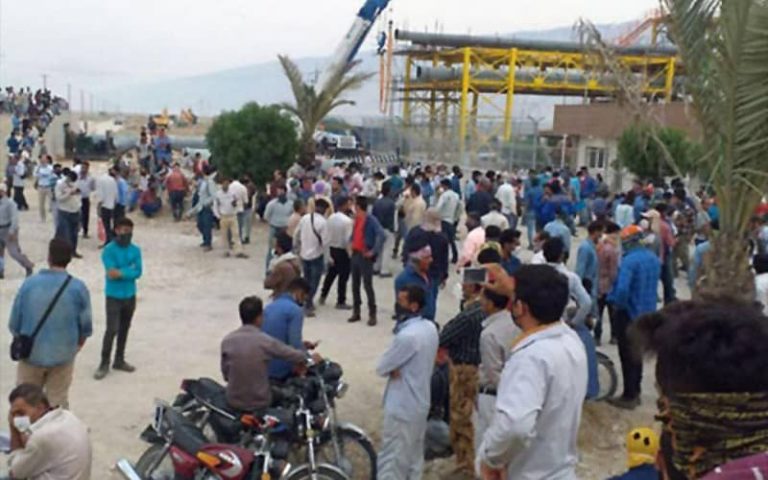
In Mahshahr, southwestern Iran, petrochemical workers rallied to demand their unpaid wages. This came two days after workers at the Parsian Gas Refinery Company in Lamerd went on strike to demand that their wages dating back to June be paid.

Family Law Protesters

Iranians gathered outside the Islamic Consultative Assembly Building in Tehran to protest Iran’s “family laws”.

Firefighters

Firefighters in Dehdasht gathered on Sunday to demand the three months’ worth of unpaid wages that they’re due. One firefighter said: “It has been two years that I developed asthma due to work conditions. We have not received overtime payment and now it has been three months that we have not been paid our basic wages.”

Beetroot Farmers

Beetroot farmers in Naqadeh, northwestern Iran, protested outside the Soldoz Sugar Factory over non-payment for goods provided.

Oil Industry Pensioners

In Ahwaz, southwestern Iran, and Isfahan, central Iran, pensioners gathered to protest changes to the Oil Pension Fund Code, which has taken some of their pensions away. Representative Abdulsaheb Ghalebi said that because pensioners were “vulnerable, elderly and ailing” and have unemployed children, they cannot make ends meet without their pension.
Iran: August Marked by Hundreds of Protests

Hamidieh Municipality Workers

Employees of the Hamidieh Municipality marched to demand their 15 months’ worth of unpaid salaries.

Iran’s Government Arrests Youth in Connection With November 2019 Protests

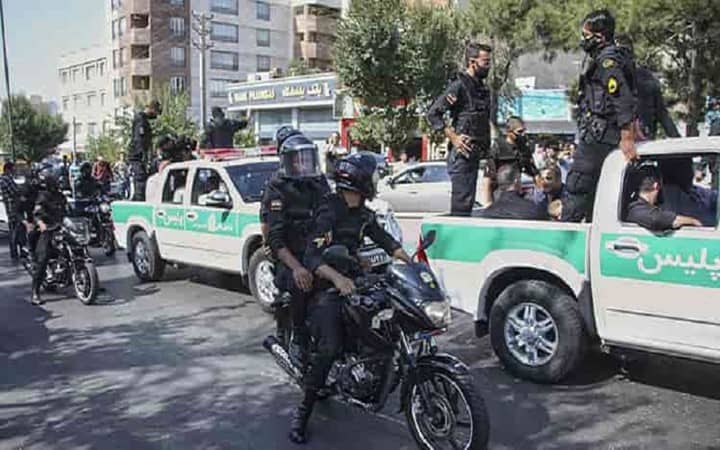
On October 14, the East Azerbaijan police commander announced the arrest of 176 young men under the pretext of thugs. According to him, these arrests were made in honor of Iran’s State Police or Niruy-e Entezami-e Jomhuri Eslami (NAJA) Week. But the issue has nothing to do with NAJA week or any other occasion created by the government. Rather, the repression of so-called ‘thugs’ is due to the government’s fear of the youth on the eve of the anniversary of the November 2019 protests.

New Wave of Arrest in Tehran

On September 28, Hossein Rahimi, the police chief of Greater Tehran, announced the arrest of 389 people, who he labeled ‘thugs’. While three weeks ago, there was no occasion called NAJA week. Rahimi said he did so at the repeated request of the people, and that the arrests were the fifth step in their plot. He explained that for these arrests, 125 neighborhoods have already been identified and in a coordinated operation, this number of young people has been arrested.
Protesters of November Protests Still Missing – Families Under Pressure to Say They Support the Regime

The Arrest of Youth in Gilan

On October 1, Azizallah Maleki, the police commander of Gilan, stated, that during a plan, 26 people were arrested who disturbed the order and security of Rasht, Langrud, Anzali, and Siahkal cities. He also called the detainees thugs. He stressed that those who disrupt the order and security will be dealt with decisively. In this regard, cyberspace will be regularly monitored. Until there is no safe place for such people. Such arrests and attacks have taken place in other provinces of the country. Which are all with the same theme and with the same purpose. Security forces in every city of Iran, in the name of fighting thugs and maintaining security in cities and cyberspace, arrest young people and throw them in prisons.

Degrading Youth in the Name of Public Order

On October 12, the repressive forces of the clerical government took another inhumane act to intimidate the youth. With a show accompanied by the torture of the accused, they put several young people in a car and drove them around the city. Revolving with constant beatings and pressure to insult themselves. This shocking spectacle quickly spread in cyberspace. There was a wave of internal and external disgust. These barbaric and hateful moves provoked much opposition. And showed the inhuman face of the ruling ayatollahs on the world. On October 14, the judiciary chief Ebrahim Raisi came on the stage and condemned this inhuman show in fear of the people’s reactions, saying that such acts were done without judicial permission.
What Is the Iranian Cyber-Army’s Mission?
This criminal cleric did not comment on other issues, such as the amputation of fingers and the demolition of poor people’s houses, as well as the cutting down of old trees that are being carried out on a daily basis around the country. He did not state any of them that they have been done without judicial permission. Such an approach indicates that he was forced to retreat from his decision when faced with a wave of global opposition.

The Means of Security in Iran

The law enforcement commanders of this administration have set up the arrests in every Iran’s city, their message was that they wanted to establish security. What is the meaning of security in this clerical culture? In a word, for the current rulers, security is summed up in maintaining the survival of this system. Any move that is against their survival is considered as an act against the security and the perpetrator is considered to be disturbing their order and stability, who should be arrested and punished.

Arbitrary Arrest of Youth in November 2019

In November 2019, more than 12,000 young people were arrested at the scene and in the days that followed. By identifying photos and videos taken at the scene. Or obtained by CCTV cameras. A large number were arrested in the following days. All these young people are against the security in the eyes of the ruling and their repressive officials. There were those who endangered the security of the system. Over the past few months, there has been a clear wave of popular opposition and discontent. Unemployment, poverty, and coronavirus, like a plague, have destroyed their entire lives. These misfortunes have not gone unanswered and led the youth of the country to fight against these injustices. The people, workers, and especially the show at every opportunity, by any means, that they are tired of this government and want to overthrow it.

Resistance Units Symbolize Young Iranian Rebellion

Setting fire on repression centers and mobilization bases are among the targets that are attacked daily by the Resistance Units, affiliated to the opposition Mojahedin-e Khalq (MEK). The writing of slogans calling for the death of the dictator and other slogans expressing the illegitimacy of the ruling government on the walls of cities is being done in abundance. The photographs and banners of former Revolutionary Guards (IRGC) commander Qassem Soleimani and the Supreme Leader Ali Khamenei are torn or burned in every location. This is what is considered to be detrimental to the security of the system, and in terms of the clerical rule, the perpetrators must be arrested and punished. It is for this reason that the closer we get to the anniversary of the November protests, the more the ruling ayatollahs try to suppress the protests again. In the case of the death of Mohammad-Reza Shajarian, a popular Iranian singer, it was shown that any popular gathering, for any reason and on any occasion, would quickly turn into an anti-government movement. On the first night of Shajarian’s death, while his body was still in the hospital, the crowd in front of Jam Hospital, in addition to honoring and celebrating this popular artist, also raised their voices against the dictator, with the slogan ‘death to the dictator’. Such slogans are the death knell of the rulers and are against the security of the system.
Iran: “Arresting the Leaders” of the Uprising; Why?