Home Blog Page 302

Western Policymakers Ignore Iran-Al Qaeda Relationship at Their Peril

0

In a recent speech, Secretary of State Mike Pompeo made it clear that Western policymakers have been wrong to assume an inherently antagonistic relationship between Iran’s Shiite theocracy and the Sunni terrorist group Al Qaeda.

Pompeo revealed for the first time that Al Qaeda’s second-in-command, Abu Muhammad al-Masri, was killed on the streets of Tehran last year. His presence there was indicative of a larger pattern of Al Qaeda operatives being given safe passage or stable residence in Iran, and it lends credence to Pompeo’s allegation that Iran is now effectively the central base of operations for the terrorist group responsible for 9/11.

It would be difficult to overstate the danger that this relationship poses to the United States and its allies. Iran has a long history of channeling its own terrorist objectives through a range of proxy groups like Hezbollah.

The regime’s capabilities are potentially multiplied by the addition of another high-profile organization to this network, especially if that occurred at a time when new proxies were proliferating across the Middle East.

Civil conflicts in Syria, Iraq, and Yemen have given the Islamic Republic ample opportunity to recruit and cultivate militant operatives in each of those locales. Many of them now stand at the head of groups that swear allegiance to Iran’s supreme leader and are most likely prepared to demonstrate their devotion through operations beyond Iran’s borders.

Of course, Al Qaeda does not share this motivation. Western policymakers are correct in noting that the Sunni organization rejects the brand of Islam for which Ali Khamenei aspires to be the sole global leader. But mutual antagonism of Western democracies is and always has been reason enough for Al Qaeda and Iran to work toward the same goals.

Intelligence reports have variously found that the two entities were more than willing to put aside their ideological differences in order to undermine American and European interests. It is for that reason that Iran sheltered Al Qaeda operatives in the wake of the 9/11 attacks and the U.S. invasion of Afghanistan.

Their shared goals also led to Iran acting as a funnel for Al Qaeda fighters trying to make their way to Syria, where they helped to prolong and intensify the civil war, leading to a much deeper Iranian footprint on the country.

This and related developments have greatly imperiled the prospects for regional stability and global security. But much of this could have been avoided if Western policymakers had been appropriately sensitive to the broad, multi-sectarian networks that were beginning to develop years ago. Pompeo’s recent speech did not convey altogether new information.

It only highlighted the outcome of a long process whereby Islamist terror groups have been cooperating to strengthen their hand against foreign powers that were largely preoccupied with other matters.

Iran Helps Al-Qaeda to Rebuild

Pompeo identified 2015 as the turning point where cooperation between Iran and Al Qaeda became systematic and formalized. This, he noted, was when the United States, the European Union, and three of its leading member states were laser-focused on concluding a nuclear agreement with the Islamic Republic.

Not only did that process encourage the Western powers to turn a blind eye to developments that might have threatened the negotiations, but it also promoted those negotiations as a sign that Iran, an Islamist state, was fundamentally different and more trustworthy than Al Qaeda, an Islamist non-state actor.

This assertion of the Iranian regime’s legitimacy was unearned and unwarranted. It was also duly exploited by Iranian entities like the Islamic Revolutionary Guard Corps, which celebrated the 2016 implementation of the Joint Comprehensive Plan of Action by capturing a U.S. Navy boat and briefly detaining 10 American sailors.

No doubt, the lack of consequences for that and other provocative incidents has emboldened the Islamic Republic to pursue more of the same, sometimes directly and sometimes through its proxies.

In 2018, this trend apparently culminated in a terrorist plot that, had it been successful, would have been the worst Iranian terrorist attack to take place on Western soil in decades. In June of that year, the pro-democracy coalition known as the National Council of Resistance of Iran (NCRI) held its annual rally of Iranian expatriates near Paris.

Historical Trial of Iranian Diplomat in Europe

On the day of the event, an Iranian-Belgian couple was arrested while trying to cross into France carrying an explosive device that had been given to them in Luxembourg by a high-ranking Iranian diplomat, Assadollah Assadi.

When the trial of these individuals began in November, it was established that the bomb was powerful enough to kill hundreds of people in the initial blast, not to mention those who might have died in an ensuing stampede.

A verdict for Assadi, the would-be bombers, and a fourth accomplice is expected to be handed down by the Belgian court this week. Assadi faces a 20-year sentence and he deserves every minute of it, but his individual culpability must not overshadow the fact, highlighted by prosecutors in his case, that he was acting under the direction of government authorities in the Islamic Republic.

His conviction and sentencing should bring greater international attention to the overall phenomenon of Iranian terrorism, as well as the general phenomenon of religious terror since these are increasingly one and the same.

If Iran was willing to use one of its own diplomats in an attempt to carry out a bombing in the heart of Europe, one can only imagine what the regime might be willing to do through its proxies in the near future, especially if it knows that Western policymakers don’t even believe in those proxies’ relationships with Tehran.

If the Biden administration or the foreign policy leadership of the European Union decides to ignore the relationship between Iran and Al Qaeda, it does so at its peril. Unfortunately, the EU has lately given the impression that it is more concerned about imperiling the nuclear deal. But if that deal is threatened by the straightforward demand that Iran ends its relationship with Al Qaeda, then it is surely not a deal worth saving.

EU Policy on Tehran Leads to Terrorism

Tehran Plays ‘Good Cop, Bad Cop’ with the West

Iranian authorities are masters at the “good cop, bad cop” strategy, a method of alternating threats and friendly gestures to fool the West into thinking that there is a moderate section in the Islamic Republic.

However, as the Iranian coalition opposition National Council of Resistance of Iran (NCRI) has repeatedly pointed out, this is not true and both sides are pursuing the same objective: appeasement.

The Iranian government would have the West believe that the “reformist” President Hassan Rouhani and his aides are the good cops, who want a true democracy but need concessions from the West to stop the Islamic Revolutionary Guard Corps (IRGC), or bad cops, from getting too angry and instituting a dictatorship. This false distinction encourages the West to appease the ayatollahs, even in the face of malign actions, because the West must fear it getting worse.

“We have seen this, for instance, in conciliatory nuclear agreements like the 2015 Joint Comprehensive Plan of Action (JCPOA), which provided the entire regime with relief from effective economic sanctions in order to forestall the threat of nuclear weapons development,” the NCRI wrote.

Tehran Is Concerned About a New “JCPOA Plus”

“Iran didn’t have to offer much in order to secure that outcome. The good cop just had to promise that he would hold back the bad cop from unleashing the most extreme punishment imaginable,” the Iranian opposition added.

There can’t be many more effective threats than possible nuclear annihilation, but even smaller threats are remarkably effective, such as Iran’s long and troubling history of hostage-taking, which was resurrected last week when the IRGC seized a South Korean tanker in the Strait of Hormuz.

They said that ship was illegally polluting Iranian waters, but these unsubstantiated claims were rejected by the ship’s owner and Iran’s state-run media then admitted that this was designed to pressure South Korean negotiators over the $7 billion in Iranian oil revenues that are frozen under U.S. sanctions.

Of course, Foreign Minister Mohammad Javad Zarif, citing judicial independence, has tried to say that he has no control over this and that this is a matter for the courts, but that is not true.

Iran’s FM Zarif Should Be Held to Account for Terrorism

The Judiciary is not independent and there is no real distinction between the beliefs and goals of the government and the IRGC, but Zarif needs the West to believe that there is so that he can keep negotiating with them, without surrendering the IRGC’s leverage, and secure what the government wants.

“That euphemistic narrative must be rejected by the international community, regardless of whether South Korea ultimately agrees to release the seven billion dollars,” the NCRI stated.

“Toward that end, Western policymakers and the media could strike a significant blow against the Iranian “good cop, bad cop” routine by showing the evidence of collaboration between the two sides of that routine,” the statement added.

Iran Commits to Provocation Ahead of Start Date for New U.S. President

On Wednesday, January 13, South Korea’s Vice Foreign Minister Choi Jung-Kun met with a number of Iranian officials in Tehran but was rebuffed in his efforts to secure the release of a South Korean-flagged tanker that was seized by the Islamic Revolutionary Guard Corps (IRGC) on January 4.

The incident is apparently part of Iran’s bid to compel the South Korean government to facilitate the release of seven billion dollars in frozen Iranian assets, but the accompanying show of force by the IRGC may have also been intended to reinforce an aggressive posture toward the United States and other leading adversaries.

This latter motive was on display in other developments that coincided with Tehran’s public rejection of negotiations that might facilitate the release of the tanker, Hankuk Chemi.

Wednesday also marked the first of two consecutive days of military drills outside the Strait of Hormuz, in the Gulf of Oman. The operation involved the test firing of surface-to-surface cruise missiles, the development of which had been lauded by Iranian military figures in prior months as a deterrent against Western influence in the region.

Why Iran Arms Embargo Should Be Extended?

Images of the two-day drills were shared widely via Iranian state media on Thursday, though officials strayed from familiar patterns by sharing few specific details about the equipment that was used.

In July, however, the Islamic Republic professed to have tested cruise missiles with a range of about 275 miles. This sort of gesture represents an expansion of the regime’s preexisting focus on ballistic missile technology, which noticeably persisted in the run-up to this week’s naval exercises.

Recently, Rear Admiral Alireza Tangsiri, the head of the IRGC’s naval division, participated in a ceremony to unveil a new underground missile base that is reported to be several miles long and located near the Persian Gulf coast.

Soon thereafter, he appeared on state television to deliver remarks highlighting a range of supposed examples of Iran demonstrating effective strength in the surrounding region.

Among these were the 2019 downing of an American spy drone that authorities said had strayed into Iranian airspace, though the U.S. said it was continually operating over international waters.

That incident brought Iran and the U.S. to the brink of war, with President Donald Trump reportedly calling off a planned retaliatory airstrike at the last moment, after determining that the likely casualties would constitute a disproportionate response to the destruction of an unmanned aircraft.

Trump would make a similar calculation the following year after Iran launched a volley of missiles at Iraqi military bases where U.S. personnel were stationed, causing traumatic brain injuries in dozens but killing none.

In that case, the Iranian strike was itself a retaliation against the killing, on January 3, 2020, of Qassem Soleimani, the head of the IRGC’s foreign special operations division, the Quds Force.

Who Was Qasem Soleimani, the Head of Iran’s IRGC Qods Force Terror Group?

The recent first anniversary of the Soleimani killing raised widespread concerns that Iran might take further provocative actions and once again inflame the danger of open conflict.

Hardline officials and members of the IRGC had never really ceased to threaten such retaliation in the intervening year, and so American forces made a point of demonstrating their readiness to meet any regional threat, in hopes of deterring Iran.

This included the deployment of a guided-missile submarine, the USS Georgia, to the Persian Gulf, as well as four separate deployments of B-52 bombers to fly non-stop from the U.S. to the edge of Iranian airspace.

If Tehran did have any concrete plans for violently marking the anniversary of Soleimani’s death, it would appear that the deterrence worked, since there have been no reports of anything other than performative saber-rattling by Iranian forces.

However, there are also signs that American officials believe the threat has not sufficiently abated. Following the passage of the January 3 anniversary, it was announced that Georgia would be departing the Persian Gulf and returning home, but this announcement was promptly reversed by the Department of Defense, and Thursday’s Iranian missile drills ended up taking place in the immediate vicinity of the submarine.

In fact, that American vessel even appeared in Iranian state media broadcasts, where it was presumably intended to given the impression that Iranian shows of force had effectively deterred a more heavily-armed “enemy” from encroaching directly onto Iranian territory.

That message was separately conveyed on Wednesday by Tangsiri and others, as they sought to turn public attention toward another recent anniversary, arguably overshadowing unfulfilled, hardline demands for a retaliatory display on the anniversary of Soleimani’s death.

In lieu of such a display, Tangsiri attempted to portray his forces as having already conclusively demonstrated that Iran is prepared to repel further aggression from Western powers.

“If a country intends to invade or threaten our Islamic homeland, as on January 13, 2016, our answer will be absolutely decisive and tough,” he said, referring to an incident exactly five years ago in which the IRGC seized a U.S. Navy boat, briefly detained 10 sailors, and used their images extensively in state propaganda.

A statue was later erected to commemorate the arrests, and Supreme Leader Ali Khamenei awarded the nation’s highest honor to the IRGC members who were involved.

However, Tangsiri’s reference to foreign invasion dramatically overstates the facts of the case. The boat in question only barely strayed into Iran’s territorial waters after breaking down during a training exercise near Farsi Island.

The accompanying fanfare from Iranian media was somewhat undercut by the fact that the sailors’ release was negotiated after about a day, and carried out without further incident or any known concessions on the American side.

That being the case, it seems reasonable to conclude that ongoing references to the incident in Iran are intended primarily or solely for a domestic audience, and especially for hardline entities that are eager to believe in the narrative of an effective “Resistance Front” against Western influence in the region.

The latest military drills and displays of new weapons, however, are most likely intended both to reinforce this narrative domestically and to raise concerns among Western policymakers about the possibility of future conflict, which may be costly even if it doesn’t pose a genuine, long-term threat to the U.S. military.

In a recent editorial for Fox News, Heritage Foundation scholar James Carafano argued that Iran’s impulse to exploit these concerns is especially strong now that the U.S. is transitioning from the Trump administration to the Biden administration.

The latter has signaled interest in returning to the nuclear deal from which his predecessor withdrew. And Carafano believes that this has encouraged Iran in the belief that it will soon be able to return to prior conditions in which “it had good success with past American administrations and the Europeans by acting increasingly aggressive.”

“This is not just about going back to the deal. If that is all Tehran wanted, it could have just sat pat and done nothing. This is about getting an even sweeter deal than they got from Obama,” Carafano added, referring to the administration in which Biden served as vice president.

Under President Barack Obama, the U.S.-led six other world powers in negotiating the controversial agreement that granted Iran wide-ranging relief from economic sanctions in exchange for voluntary restrictions on Iran’s enrichment and stockpiling of nuclear material.

After President Trump triggered the re-imposition of sanctions, the Iranians began violating the terms of the deal, abandoning them altogether in January 2020 after the Soleimani incident.

Inspectors from the International Atomic Energy Agency have remained in the country since then, but their most prominent role has since become the confirmation of incremental steps toward nuclear weapons capability which Iran has proudly announced, albeit while denying that that is the end goal.

Iran MP Calls for Leaving the NPT

Last week, the IAEA confirmed that Iran had begun enriching uranium to 20 percent fissile purity, thereby returning to the level of progress the country had achieved before entering into the 2015 agreement.

Now, Iran is reported to be further reducing compliance with the deal by starting research on the production of uranium metal. Under the terms of the Joint Comprehensive Plan of Action (JCPOA), Iran was explicitly barred from conducting that research for 15 years.

However, the regime underscored the ease with which these provisions can be broken when it casually informed the IAEA of its intentions. If the research ultimately yields an enriched final product, that uranium metal would have the potential to be used in the core of a nuclear weapon.

The latest violation has predictably put Iran’s most serious critics on edge, especially after observing that violation in the context of Iran’s ongoing nuclear build-up. The government of Israel has called upon the United Nations to immediately convene meetings to discuss these developments.

The Ayatollahs Hope U.S. Elections Will Save Them from Public Outrage

More specifically, it has urged a comprehensive embargo on military equipment and missile technology. In an interview with the Wall Street Journal, Jake Sullivan, Biden’s choice for National Security Advisor, emphasized that the Biden administration would act “in consultation with our allies and partners.”

And although he showed considerable interest in negotiations as an alternative to the Trump administration’s “maximum pressure” strategy, Sullivan also said that the goal of those negotiations would be “to tighten and lengthen Iran’s nuclear constraints, as well as address the missile program.”

Tehran Continues Abusing Prisoners

Regarding the horrible situation of human rights in Iran in 2020, the Iran Human Rights Monitor Iran-HRM.com provided a comprehensive report. In this respect, human rights activists provided valuable details about the government’s ill-treatment against prisoners, particularly political activists, prisoners of conscience, and followers of ethnic and religious minorities.

As is common under the government, Iranian prisoners were subjected to harassment, psychological and physical torture, denial of medical treatment, and executions in breach of international law.

No Separation for Political Prisoners

Prisoners of conscience were constantly placed on wards with violent offenders, which is a violation of the Principle of the Separation of Categories of Crimes, in order to exert pressure on them.

This happened in prisons across the country, but the main offenders were listed as the Central Prison of Karaj, Sepidar Prison of Ahvaz, Qarchak Prison in Varamin, and the Great Tehran Penitentiary.

Several times this resulted in the assault or threatening of political prisoners by ordinary criminals, sometimes encouraged by the authorities.

For example, in September, Parastoo Mo’ini and Forough Taghipour were attacked by inmates on the orders of the Qarchak Prison warden, while in July, Jafar Azimzadeh was attacked twice in one day by two inmates whom he didn’t know, and Behnam Mousivand and Behnam Mahjoubi were attacked in Evin prison.

Solitary Confinement, Officials’ Means for Pressuring Inmates

Authorities have again used lengthy solitary confinement to exert pressure on prisoners, especially to break hunger strikes. This was used against numerous detainees from the November 2019 protests, who were also denied medical treatment for injuries relating to torture.

November Protesters’ Lives in Danger in Iran Prison 

It was also used against protester Navid Afkari and his brothers, arrested during August 2018, political prisoner Arjang Davoudi, 67, who has suffered severe beatings, and students Ali Younesi and Amir Hossein Moradi, arrested in April.

Authorities Torture Prisoners by Medical Treatment Denial

It’s a common abuse of their rights to deny medical care to sick or wounded prisoners., but the government has ramped up this torture against prisoners during the coronavirus pandemic.

Some key examples of political prisoners abused in this way include:

  • Saber Rezaei
  • Changiz Ghadam Khairi
  • Mohammad Reza Saifzadeh Pezeshkan
  • Saeed Eghbali

Fabricated Cases Against Inmates

Authorities have brought fabricated cases against several political prisoners, including Soheil Arabi, Niloufar Bayani, Nejat Anvar Hamidi, Majid Assadi, Mohammad Bannazadeh Amirkhizi, and Payam Shakiba, to intimidate them.

Two Political Prisoners Denied Medical Care Despite Covid-19 Symptoms

Attacks Against Defenseless Prisoners

Iranian authorities openly attacked prisoners on multiple occasions last year, most often during the protests over wanting release during the pandemic to reduce fatalities.

There is also a systematic effort to get prisoners addicted to drugs, which further intimidates them and makes them more vulnerable.

Iranian Infected with Hep A after Drinking Water Mixed with Sewage

Many Iranians in Khuzestan province have contracted Hepatitis A after drinking water contaminated with sewage due to recent floods and authorities’ mismanagement.

Mohammad Reza Izadi, the head of the Ahvaz City Council Investigation, Supervision and Inspection Commission, said Tuesday: “For several months, I was provided with confidential documents from the ABFA company’s archive stating that the health center had reported people contracting Hepatitis A. In other words, the mixing of water and sewage caused intestinal diseases, but these cases were not addressed.”

These floods, which also destroyed many houses, came at a time when Iranians were already being made sick by the out-of-control Covid-19 pandemic and dangerous levels of air pollution.

It’s not even the first time that sewage has contaminated the water in Khuzestan, due to the non-standard sewage systems, and made people sick. In 2018 Khuzestan Health Centre chief Shokrallah Salmanzadeh reported 34 cases of Hepatitis A in two cities because of water pollution.

A couple of years earlier, Karun River National Conference’s scientific committee member Ebrahim Rajabzadeh advised that most cancers in the province were linked to lead and mercury in the water.

Locals are denied safe water, even though this province contains the majority of Iran’s natural resources, including gas, because of mismanagement.

This was confirmed by Inspection Organization head Hasan Darwishian on December 8, who blamed predictable “infrastructural shortages” for the problem, saying that the drainage plan began in 2006, but only 40 percent was completed.

Regarding the other health crises faced by the Iranian people, these are also caused by mismanagement and a general disregard for the people.

Air pollution in Iran has been exacerbated recently by the burning of mazut fuel in factories, supposedly because of a shortage in gas, but they actually have 33.2 trillion cubic meters in gas reserves. Authorities just want to sell that to fund their malign activities.

The government tried to blame the people for overconsumption and actually caused a blackout in several cities on Tuesday, saying that it was blackouts or air pollution.

Meanwhile, coronavirus deaths surpassed 200,000, and Supreme Leader Ali Khamenei vaccines from the US or UK.

Khamenei Bans Importing COVID Vaccines, Leading Iran to More Deaths

“On the one hand, the inhuman clerical regime squanders the Iranian people’s wealth on the unpatriotic nuclear, missile, and terrorism projects. On the other hand, it kills people through the consumption of fuel oil,” said Maryam Rajavi, the President-elect of the National Council of Resistance of Iran (NCRI).

“The mullahs’ only concern is to preserve their regime. For them, the lives, health, and well-being of the people are worthless. As long as this regime is in power, there will be no attempt to buy vaccines, no clean air, and no solutions to contain the damage caused by floods and earthquakes,” she added.

Why Iran Does Not Purchase Covid-19 Vaccines

In Iran, media outlets controlled by the Supreme Leader Ali Khamenei try to justify the government’s refusal to purchase Covid-19 vaccines. For instance, on January 14, Asr-e Iran daily quoted a letter signed by ‘2,500 physicians’ as explaining irreparable consequences of U.S. and British vaccines.

In response, during political rivalries, outlets linked to President Hassan Rouhani revealed parts of the truth. “Who would believe your words?” wrote Arman daily, affiliated with the ‘reformist faction.’

Why Iranians Don’t Trust the Ayatollahs?

“Recent remarks raised by some authorities and officials have intensified skepticism over the effect of political reasons on the Covid-19 vaccine issue. These remarks either prompted the people to mock them or question the [government’s] strategy,” the daily wrote on January 14.

“Obviously, several individuals just reiterate or raise comments to make someone happy. However, these remarks lack a scientific basis,” Arman added.

In this context, Iranian officials have raised strange comments. For instance, Ali Asghar Annabestani, member of the Parliament (Majlis) Social Affairs Commission, said, “American and British vaccines will make its users sterile and they are carcinogenic.” This is while according to Iranian officials, Tehran has yet to receive any shot of Pfizer or Moderna vaccines and certainly has yet to make scrutiny.

On the other hand, Hossein Kan’ani Moghaddam, a figure close to Khamenei, claimed that the U.S. and UK have planned to install a GPS tracker in our bodies, which would make us such iron men. “Remarks such as these are nothing but a shot in one’s own foot,” Arman wrote.

“Earlier, officials had announced that the sanctions have blocked the country from procuring vaccines. This is an issue and contradiction that needs to be questioned… However, GPS trackers, sterilizing, and carcinogen consequences, or survey results are not a helpful answer,” the daily added.

Also, Mardom Salari, daily another media aligned with ‘reformists’, quoted the remarks of an anonymous South Korean official in its January 14 edition. “This [South] Korean official claimed that Seoul has fulfilled all required procedures for transferring the money, including taking a special license from the U.S. However, it is entirely at Iran’s discretion how this country would like to purchase the Covid-19 vaccine,” the daily wrote.

However, the Iranian government still refrains from procuring reliable Covid-19 vaccine while the virus claims more lives every hour. Furthermore, back on January 8, Reuters reported an agreement signed between Iran and Cuba to carry out the last stage of the vaccine clinical tests in Iran.

The fact is that while Khamenei has prohibited the government from procuring necessary doses of Covid-19 vaccines from credible companies, Iranian officials put the lives of Iranian citizens at risk by testing unsafe vaccines on the people to gain political advantages.

Iran: Covid-19 Vaccine and Ayatollahs’ Dirty Business

This is the flipside of Iranian authorities’ horrible policies at the expense of Iranians’ lives and health. Such decisions have not only prompted people’s anger but have also prompted officials to oppose high-ranking officials openly.

“The priority to procure and purchase the vaccine is a dire necessity that must be carried out solely based on a scientific approach and according to national interests, going beyond any political reservations,” wrote the head of the Medical Apparatus Organization and chair of the National Scientific Associations in a joint letter to Rouhani on January 11.

Meanwhile, on December 10, a member of the National Covid-19 Task Force Minoo Mohraz said in an interview with Ruydad24 that she does not recommend the Chinese and Russian vaccines. Both vaccines are made up of a weak vaccine and are similar to the Iranian vaccine, according to the website.

The Ayatollahs Devastate Iran’s Car Manufacturing Industry

Upon releasing their latest model, called ‘Tara’, in late December, Iran’s largest car manufacturing company, Iran Khodro (IKCO), came to discover that the car would not start when it was unveiled for the first time in late December 2020.

This was recently reported by Iranian dissidents, including the National Council of Resistance of Iran (NCRI), and Mojahedin-e Khalq (MEK/PMOI) who also said that the same incident with the same car happened when Iranian President Hassan Rouhani tried to start it up in front of the press.

The MEK went on to say, “The ayatollahs’ policy is nothing but plundering Iran’s resources and they are not about to improve Iran in any field except those strengthening their dictatorship with terrorism, costly missile, and nuclear programs. This is the main reason that Tara doesn’t start…its why Iran’s vehicle manufacturing industry has not yet started and has been broken apart.”

Iran Khodro was founded in 1962. When the ayatollahs seized power in the revolution of 1979, IKCO was sheltered by the governmental National Industries Organization and the ayatollahs and the newfound Islamic Revolutionary Guard Corps (IRGC) continued to produce the cars after they took over the company.

White-Collar Criminals in Power in Iran

The latest model, Tara, is similar to the Peugeot 301, but it’s wasting Iranian’s money due to the poor quality of the build. This failure can be said for its predecessors.

The MEK reported that Paykan was Iran’s national vehicle until 2005. The ayatollahs said that they would replace it with the new Paykan using the design from the Peugeot 405 chassis, but after spending an estimated $2-3 billion, the car never reached the production line.

Another estimated $1 billion was spent on designing a new “national car” called Samand, which used the same Peugeot model, but it failed the safety tests conducted by Thatcham Research, a European New Car Assessment program at its London testing facility.

“In this day and age, all the knowledge and technology are available to produce decent, safe vehicles,” the MEK went on to say. “The regime just couldn’t produce anything that could match modern safety standards.”

In comparison, South Korea car manufacturing companies began just 5 years after Iran, but today they have become one of the most successful cars making industries in the world.

According to the dissidents, in both the Shah and ayatollah eras, IKCO and other major factories were under the influence of corrupt policies of the government.

“The Shah did not want the industry to be independent, and the ayatollahs completely ruined the industry,” they said.

In 2017, Iran’s state-run TV revealed that Iran’s vehicle parts manufacturing industry is quite simply, a mafia gang.

An IKCO employee reported that gangs directed the operations of the business and when a new president came into power, he brought his own gang and much of the profits went into their pockets.

To date, IKCO has continued to change the designs of their pre-made cars or combine different parts of various vehicles whilst claiming they are making new designs, when in fact only the names of the models are changing.

Iran’s IKCO Raises Price of Eight Automobiles

Iran’s Prisons: A Coronavirus Vector in 2020

Iran’s unsanitary and overcrowded prisons were a vector for infections long before the Covid-19 outbreak, so everybody could plainly see that they were going to become disease epicenters through 2020 and likely 2021. However, the authorities did not take the needed precautions to protect prisoners and this resulted in more deaths.

They could have released non-violent prisoners, provided cleaning supplies (i.e., soap and bleach), medical equipment and supplies, and even increased the ability to spend time outside.

They could have ensured clean water for drinking and bathing, as well as safe and adequate food. None of this happened, even though international human rights institutions repeatedly urged Tehran to release political prisoners and protect those in their care.

Iran: Covid-19 Patients Are Deprived of Treatment in Prison

“The Iranian authorities must stop denying the health crisis in Iran’s prisons and take urgent steps to protect prisoners’ health and lives,” Amnesty International said in July.

In fact, the government only increased the number of people detained, especially political prisoners, which shows that they took advantage of the pandemic to kill their opponents. Although, given the government’s secrecy, accurate statistics are impossible to find.

Let’s look at what happened in the prisons.

Evin Prison

In Evin Prison, the majority of prisoners in wards 4, 7, and 8 got coronavirus, but the prison dispensary only gave them tranquilizers before sending them back, saying they wouldn’t be allowed to stay in the clinic even if they tested positive. This led to more infections.

Great Tehran Penitentiary

The dispensary lacked essential medical resources and nurses and doctors were often absent. The clinic was also contaminated, with infectious waste left for days, something which caused a protest.

In November, several political prisoners were denied medical treatment for coronavirus symptoms.

Qarchak Prison

In July, three women died from suicide, one of them – Monireh Bahrami – because she had coronavirus and feared the symptoms, for which she was unlikely to receive treatment.

Female Political Prisoners Suffering in Iran

Adilabad Prison

Coronavirus spread through the prison, but inmates were denied suitable medical treatment or transfer to an outside hospital. The government tried to cover it up, but the news got out.

One inmate said: “The quarantine method in this prison is just a formality. New arrivals are supposed to be quarantined for 14 days but they are discharged to the wards before the end of this period. Some inmates are brought to the ward right after arrest and do not go through the quarantine… The air we breathe in this closed area is unhealthy. There are too many prisoners and the prison is overcrowded.”

Central Prison of Urmia

This prison has one of the highest coronavirus infection rates, with not one doctor to visit the sick and only one nurse who was unable to see every patient, especially those more seriously ill.

Vakilabad Prison

The inmates are denied medical treatment for anything more serious than a headache, with sick prisoners merely quarantined until they start to feel better.

An informed source reported in November that there were several coronavirus deaths here daily, but they are listed as “natural death” to prevent the truth from leaking and no COVID tests are done here.

Sepidar Prison

In Sepidar Prison, sanitary conditions are so bad that the toilets don’t flush, cells are filled with insects, and meals are barely edible.

“There is no doctor or nurse in the center for women’s health on most days of the week. The number of suicide attempts among female prisoners is seriously on the rise. The women who attempt to take their own lives hope to be transferred to the medical center so that they could spend several days in a place with better conditions or eventually die,” said one former inmate.

Why Iranians Don’t Trust the Ayatollahs?

0

While the Iranian government has been surrounded by enormous crises and dilemmas inside the country and abroad, officials inevitably make damning confessions. In recent days, officials from both factions of the establishment have admitted to massive distrust toward the ruing system among citizens. Their remarks, however, reveal the officials’ illegitimacy and instability.

Officials have also been stuck in an awkward corner. On the one hand, they blame each other for skyrocketing embezzlement, corruption, and secrecy, reckoning these facts to be the main reasons for the “erosion of the state’s human resources.”

Simultaneously, they attack the opposition, particularly the Mojahedin-e Khalq (MEK/PMOI), blaming it for improving society’s knowledge and awareness.

However, they intentionally admit to the dissidents’ credibility among citizens and the failure of their 41-year effort to demonize and discredit them. In other words, the ayatollahs and their agents implicitly acknowledge the people’s trust in the MEK and distrust in the government.

“We must note that if there is no trust, even if we inject the [domestic Covid-19] vaccine into ourselves, film, and broadcast the scene, somebody is bound to say that ‘Officials have used foreign vaccines or injected water into themselves.’ Look, there are 4,000 MEK members in Albania. They provide content in Persian [language] against us every day,” said Deputy Health Minister Iraj Harirchi in an interview with the state-run T.V. Channel One on December 13.

Iranian Media Admit to MEK Position

On January 8, Supreme Leader Ali Khamenei‘s announcement of a ban on the import of foreign Covid-19 vaccines shocked everyone. In its January 10 edition, the state-run Mostaghel daily provided a considerable view of the state’s stalemate. In this respect, the daily obliquely admitted the decision had prompted a massive wave of fury among citizens.

To justify the supreme leader’s criminal decision, which will undoubtedly lead to many more deaths, the daily reiterated the ayatollahs’ accusations against the MEK. In fact, it tried to invalidate information and revelations provided by the dissidents. However, it was another implicit acknowledgment of public distrust toward the state and of citizens’ belief in the MEK and their news.

Inside Iran’s Coronavirus Crisis– Provided by MEK and NCRI

Why Do Iranians not Trust the Ayatollahs’ Establishment?

Following the warnings about public distrust and the nitrate of disappointment—referring to the Beirut explosion in August 2020, the officials tried to restore the regime’s relationship with society. This is while the establishment has responded to any grievances—even economic demands—with lethal force.

For instance, in November 2019, Khamenei bluntly ordered oppressive forces, including the Islamic Revolutionary Guard Corps (IRGC) and its paramilitary Basij Force, as well as the State Security Forces (SSF) and agents of the Ministry of Intelligence and Security (MOIS), to do whatever it takes to end social protests. The latest cruelty raises deep distrust and fury among citizens, while officials cannot ignore this reality.

“If we hear that an Iranian person has become the chief of NASA or an Iranian individual has invented a new technology in Germany, we will believe it. However, if the technology were invented inside Iran, many would not believe it,” said the spokesperson of the National Covid-19 Task Force Alireza Raisi in an interview with the IRGC-controlled YJC on January 3.

Nonetheless, Raisi did not clarify why the Iranian people no longer trust the government and its statements, because doing so would lead to him losing his position.

Since the beginning of the Islamic Republic, the ayatollahs have not kept any of their promises. The regime founder Ruhollah Khomeini vowed that the government would bring the oil revenue to the people’s food basket. However, in the past 41 years, food baskets have only shrunk due to officials’ economic crimes, embezzlement, nepotism, corruption, and mismanagement.

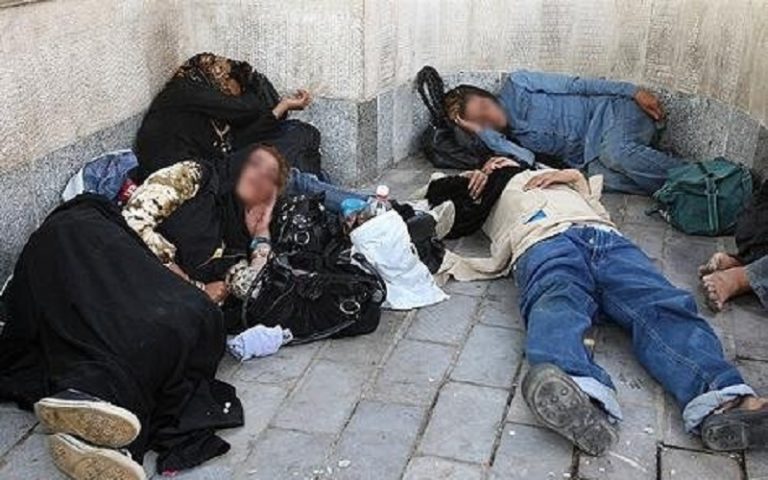
He had promised that urban services like running water and electricity would be provided to the people for free. However, not only have the prices of water and electricity increased, but also many citizens have lost their homes and been forced to take refuge in slums, on rooftops, and in cars to spend the nights.

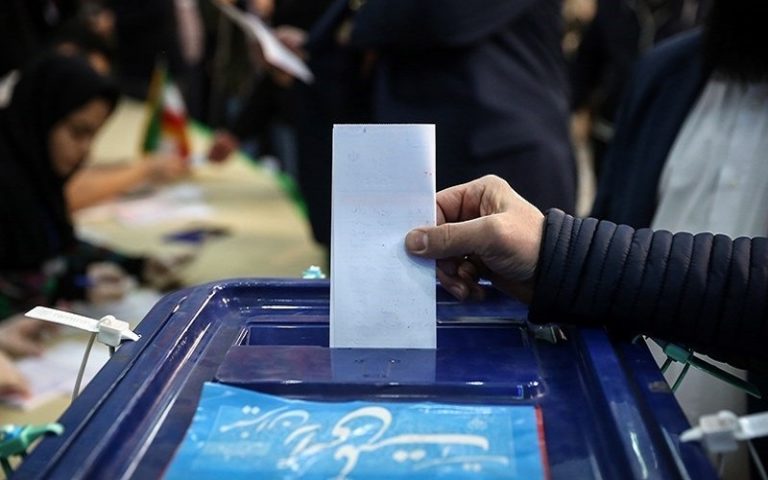
In the past year, the ayatollahs intentionally covered up the coronavirus outbreak inside the country to mark the 41st anniversary of the establishment. They continued this fatal policy to hold the Parliamentary elections in February, which was confronted with unprecedented apathy.

The Islamic Republic and both of its factions insisted on holding crowded ceremonies during the Shiite Muslim ritual of Muharram. President Hassan Rouhani flagrantly said, “We must hold Muharram ceremonies at all costs.” It forced millions of students to attend places contaminated with the coronavirus to take college entrance exams.

Rouhani and his Education Minister Morteza Haji-Mirzaei reopened the schools while many health professionals warned that the government could not ensure Covid-19 protocols in schools.

Why Iran Reopens Schools Despite the Coronavirus Risk?

Furthermore, Khamenei and Rouhani sent millions of workers to workplaces – and factories – tainted with the coronavirus to restart the country’s economic cycle. They pushed many citizens to use public transportation services while they could not implement social distancing protocols.

Meanwhile, they blamed the people for not observing health recommendations and laid the blame for the coronavirus’s resurge on citizens. Also, officials claimed that family gatherings were the main reason for the rising number of fatalities.

Officials also resorted to any excuse to avoid purchasing credible Covid-19 vaccines. Initially, they claimed that U.S. sanctions do not allow them to procure vaccines. Then, they announced that they do not have enough money to purchase vaccines.

Later, they resorted to banking transaction dilemmas and even raised the issue of the lack of appropriate refrigerators as a barrier. But eventually, Khamenei directly appeared on state-run T.V. and prohibited the purchase of Covid-19 vaccines from the U.S., U.K., and even France while the World Health Organization (WHO) had approved these vaccines.

Khamenei Bans Importing COVID Vaccines, Leading Iran to More Deaths

In a nutshell, the Iranian government has a notorious record of secrecy and hypocrisy. It increased the gasoline price in November 2019 and killed 1,500 peaceful protesters, reckoning that the plan would offset the country’s massive budget deficit. However, a few weeks later, it sent several flotillas of gasoline to Venezuela for free.

Furthermore, in January 2020, the government shot down a Ukrainian civil airliner, killed all 176 passengers and crew on board, and denied that the IRGC had a role. However, only three days later, reliable evidence and documents forced the IRGC Aerospace Commander Amir Ali Hajizadeh to admit to the crime.

“At the first hour of downing the plane, I informed my superiors about IRGC mistake in the incident,” he said. The government also uses mazut for power plants while confiscating a South Korean oil tanker in the Strait of Hormoz for polluting the Persian Gulf waters.

All the facts mentioned above lead us to the main question that is, “Why should the Iranian people trust the ayatollahs?” In fact, the officials’ actions have left no place for any confidence in the current ruling system.

In practice, the government’s horrible record is the main reason for public distrust and the widening gap between rulers and people, which has pushed citizens to resort to protests and uprisings as their last recourse.

U.S. Designates Two Pillars of Khamenei’s Economic Empire

0

On January 13, the U.S. Department of the Treasury’s Office of Foreign Assets Control (OFAC) designated two key entities of the Iranian Supreme Leader Ali Khamenei’s economic empire, their leaders and subsidiaries.

These economic conglomerates include Astan-e Quds Razavi (AQR) and the Execution of Imam Khomeini’s Order (EIKO), which play crucial roles in the government’s aggressive and oppressive policies.

“EIKO and AQR control large swaths of the Iranian economy, including assets expropriated from political dissidents and religious minorities to the benefit of Supreme Leader Ali Khamenei and senior Iranian government officials,” the U.S. Treasury Department stated.

Iran: A Glance at the Supreme Leader’s Mafia

“These institutions enable Iran’s elite to sustain a corrupt system of ownership over large parts of Iran’s economy,” said Treasury Secretary Steven Mnuchin, adding that these entities and individuals “enrich themselves while claiming to help the Iranian people.”

Since the establishment of the Islamic Republic of Iran in February 1979, the ayatollahs have either founded or confiscated giant conglomerates to achieve their goals. In this respect, the first Supreme Leader Ruhollah Khomeini added the AQR to his subsidiary organizations. Furthermore, his successor Ali Khamenei founded the EIKO on April 26, 1989, based on Khomeini’s two-paragraph order.

EIKO Monopolizes Iran’s Economy

The EIKO is a business juggernaut under Khamenei’s direct supervision. It has expanded its activities in nearly every sector of the Iranian economy, including energy, telecommunications, and financial services.

In 1979, Khomeini appointed three individuals, including Habibollah Asgaroladi, Mehdi Karroubi, and Hassan Sane’i, to manage, maintain or sell properties confiscated or abandoned during the chaotic years following the 1979 Islamic Revolution.

Since its establishment, the EIKO has been involved in systematic violations of dissidents’ rights by confiscating land and property from opponents, including political opponents, religious minorities, and exiled Iranians. EIKO chief Mohammad Mokhber was directly appointed by Khamenei. He is tasked with implementing the Supreme Leader’s ‘resistance economy’ path.

The EIKO is also activate in the field of medicine and in cooperation with the Islamic Revolutionary Guard Corps (IRGC) controls the medicine market in Iran. Recently, Khamenei tasked EIKO with producing domestic Covid-19 vaccines while the company lacks basic infrastructure. In this respect, to control the Covid-19 vaccine production, the government prohibited the import of foreign and credible coronavirus vaccines, which put the lives of many Iranians at risk.

Khamenei Bans Importing COVID Vaccines, Leading Iran to More Deaths

Tehran Exploits AQR to Fund Terrorism

On the other hand, the AQR is a tax-exempt conglomerate that engages in underground and illicit activities with impunity. According to Khomeini’s order, Iranian authorities exploit the institution’s mind-blowing revenue for funding terrorism and warmongering abroad.

The organization is one of the major financiers of the New Horizon seminars and meetings used to recruit foreign agents for the IRGC-Quds Force.

In such meetings and seminars, the ayatollahs’ agents gather from across the globe. According to reports obtained through the Iranian government, these agents provide security intelligence from different countries, particularly Western states, to Iran. The ayatollahs and their security apparatuses use the information for terror attacks.

In summary, the designation of these two giant economic firms that monopolize the Iranian people’s assets for improving the ayatollahs’ ominous proposes is a vital action for restricting Tehran’s malign and terrorist activities in the Middle East and across the globe.

In this respect, dissidents argue that it is imperative that the rest of the world recognize these entities as they are and blacklist them while Ali Khamenei has bluntly announced his decision for more contraction and suffocation inside Iran and export of terrorism abroad.

EU Ministers Must Address Tehran’s Terrorism and Human Rights Abuses during Nuclear Talks