The Iranian government deliberately covers-up whereabout had buried three Kurdish political prisoners
By Jubin Katiraie
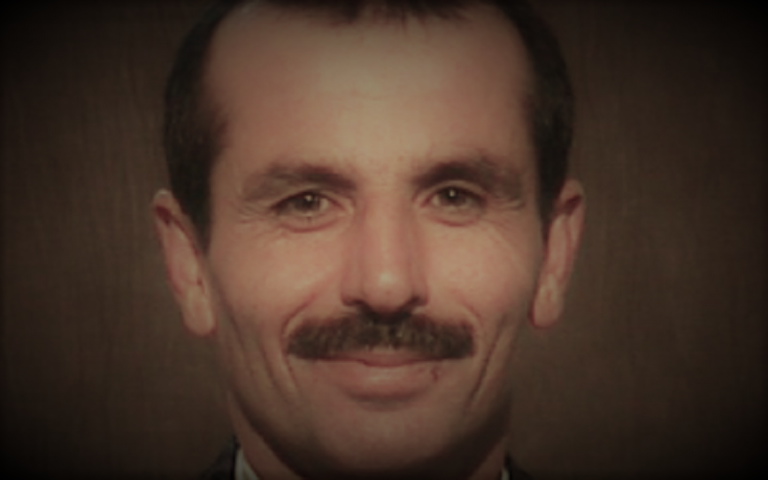
Three Kurdish political prisoners, Ramin Hossein Panahi, and Zaniar and Loghman Moradi, were executed by the Iranian regime. Their executions have resulted in calls by the international community for the regime to put an immediate halt to executions in the country.
The families of these three Kurdish men have been trying to find out where the bodies of their loved ones have been laid to rest, adding to their already agonizing situation.
Ramin Hossein Panahi, 24 years old, Loghman Moradi, 32 years old, and Zaniar Moradi, 30, were executed in Gohardasht Prison in Karaj. As with many political prisoners, their trials were a shambles and a mockery of the legal system. Not only were they tortured into making confessions, but they were also denied access to lawyers and to their families.
Earlier this week, international organization Amnesty International has called on the Iranian regime to stop torturing the families and to answer their questions.
Amnesty International condemns deliberately hiding of graves of three Kurdish political prisoners executed in 2018
In a statement, Amnesty International described the regime’s treatment of the families of the three executed mean as “severe psychological suffering”. The organization also stated that the Iranian regime’s deliberate concealing of their burial places “is a violation of the prohibition of torture and other cruel, inhuman or degrading treatment and punishment found under Article 7 of the International Covenant on Civil and Political Rights”.
Amnesty International explained that the regime’s secrecy on this issue is a violation of the rights of the families. Not only are the families not told where their loved ones are buried, but they are also, as a consequence, being prevented from holding a mourning ceremony and from placing a tombstone in their memory. They are denied a burial place and cannot visit a grave site to pay their respects, lay flowers, place photographs, and so on. This, said Amnesty International, is a violation of “cultural rights of family members to attend funerals”.
The statement read: “This violates Article 15 of the International Covenant on Economic, Social and Cultural Rights, to which Iran is adhered.”
The families of these men are distraught. The mother of young Ramin Hossein Panahi said: “There is no grave to cry over. I have been restless for the past few days. I have cried on the grave of my other child, Ashraf Hossein Panahi. My Ramin was innocent. Why don’t you let me at this old age, me and his father, to visit our child’s grave?”
The treatment of political prisoners in Iran is very concerning. Their dreadful mistreatment by the regime is partly an attempt by authorities to dissuade further dissent in society.
However, the regime’s attempts to bully the people into silence are not working. If anything, it is making the people of Iran even more determined to speak out against the regime.
Earlier this week, two prisoners were executed in secret. The only details known about these executions are that they were in the cities of Karaj and Borujerd.
It is the responsibility of the international community to finally speak up and hold the regime accountable.
Despite the international community’s appeals and calls for revoking the death sentences of Navid Afkari, Iranian authorities executed this wrestling champion on September
By Pooya Stone
At dawn on Saturday, September 12, 2020, Iranian authorities executed Navid Afkari, a 27-year-old wrestling champion, an innocent individual, and a protester. In September 2018, security forces detained Navid for participating in the August 2018 protests. He was severely tortured by interrogators to confess to what he had never committed.
"I realized that they were just looking for a neck to feet their noose," said Iranian wrestling champion #NavidAfkari, a few days before his execution. The people of Iran and the world would #NeverForget!#RIPNavid?pic.twitter.com/TXmfchjqEy
Iranian authorities executed Navid Afkari despite an international campaign to spare his life. In the past week, many athletes inside Iran and abroad constantly demanded the Iranian government to suspend the unfair sentence against him.
On September 1, in an initiative by a group of Iranian athletes and sports champions, members of the Iranian opposition National Council of Resistance of Iran (NCRI), alongside 48 Iranian sports champions, wrote to the UN Secretary-General, the International Olympic Committee President, UN High Commissioner for Human Rights, and President of the Human Rights Council, calling for their urgent intervention to halt Afkari’s execution.
Mr. Moslem Eskandar Filabi, a national hero in Iran and winner of 17 national and international wrestling competitions, and Chairman of the NCRI Athletics Committee, Dr. Mohammad Ghorbani, a gold medalist in the 1971 World Wrestling Championships in 1971, and Messrs. Bahram Mavaddat, Asghar Adibi, Hassan Nayeb Agha, and Abbas Novin Rouzegar, members of Iran’s national football team and NCRI members, were among the signatories.
Additionally, two wrestling champions Mohammad Reza Geraei and Mohammad Ali Geraei announced their support for Navid Afkari and posted image of this death-row political prisoner on their Instagram pages.
Iranian athletes demanded authorities to abolish the death penalty against Navid Afkari
Furthermore, many international figures and athletes, including the U.S. President Donald Trump, Senator Marco Rubio, the State Department Spokesperson Morgan Ortagus, Amnesty International, President of the Ultimate Fighting Championship (UFC) Dana White, Executive Director of World Players Association Brendan Schwab, U.S. national champion wrestler and founder of non-profit Wrestler Like a Girl Sally Roberts, and many others.
However, the Iranian government rejected the international appeals and even refused a retrial in the Navid Afkari case. Mrs. Maryam Rajavi, the president-elect of the National Council of Resistance of Iran (NCRI), severely condemned this crime. “The religious fascism ruling Iran will not survive a day without executions, torture and domestic suppression. By spilling the blood of young people like Navid Afkari the mullahs seek to maintain their hold on power in the face of Iran Protests,” She tweeted.
The religious fascism ruling #Iran will not survive a day without executions, torture and domestic suppression. By spilling the blood of young people like #NavidAfkari the mullahs seek to maintain their hold on power in the face of #IranProtests.
Mrs. Rajavi also called on the United Nations Security Council, the UN Human Rights Council, and UN High Commissioner for Human Rights Michelle Bachelet to take practical, effective measures against the regime in Iran over the execution of Navid Afkari and 120,000 political prisoners.
The UNSC, its member states, the @UNHumanRights, the UN High Commissioner for #HumanRights, the EU &all int’l human rights authorities must take practical, effective measures against the regime in #Iran for the execution of #NavidAfkari & 120,000 political prisoners. pic.twitter.com/wCBlMOPSl9
As the world urges Iranian authorities to stop ruthless sentences, the judiciary issues and upholds more death penalties
By Jubin Katiraie
On September 10, following the inhuman death sentences against peaceful protesters detained in August 2018 and November 2019, Branch 38 of the Iranian supreme court upheld the death penalty against seven Sunni political prisoners for the third time.
These prisoners of conscience were captured in 2009 based on a fake scenario provided by the Ministry of Intelligence and Security (MOIS). Farhad Salimi, Qassem Absteh, Davood Abdollahi, Ayub Karimi, Anwar Khezri, Khosrow Besharat, and Kamran Sheikha, incarcerated in Urmia, Evin, and Gohardasht prisons.
Already, Branches 41 and 42 upheld the death sentences against these captives on bogus and repeated charges such as “acting against national security,” “propaganda against the state,” “corruption on earth,” and “waging war against God ‘moharebeh.’” Given their families’ appeal for retrial, Branch 38 of the supreme court “reviewed” the case and showed that different judiciary system sections are all cut from the same cloth.
Emphasizing death penalties in parallel with the worldwide campaign for stopping executions in Iran indicates that the government relies on suppressive measures rather than enjoying a public base. “These execution sentences are meant to intimidate the public and prevent popular uprisings”, the Iranian coalition opposition National Council of Resistance of Iran (NCRI) stated on the same day.
In recent weeks, Iranian authorities issued several severe sentences against jailed people, particularly protesters. In July, the supreme court upheld the death penalty against detained youths for participating in the November 2019 nationwide protests.
Excessive punishment against peaceful protesters prompted Iranian citizens and netizens to oppose the judiciary’s ruthless sentences openly. In a joint campaign on social media and into the streets, millions of Iranians and their friends across the globe trended نکنید_اعدام# and #StopExecutionInIran, compelling the judiciary to suspend their punishment.
On August 5, the judiciary secretly hanged Mostafa Salehi, who was detained for participating in the December 2017-January 2018 uprising. The issue corresponded with a wave of condemnation inside Iran and abroad. More particularly, the government faced public anger when the people realized that Salehi had admitted to allegations under torture, and the court had sentenced him based on enforced confessions.
“Amnesty International condemns the execution of protester Mostafa Salehi, which was carried out in Esfahan prison on 5 August despite serious unfair trial concerns incl torture and other ill-treatment & the denial of access to a lawyer during the investigation phase of his case.
“Mostafa Salehi was convicted of murder for the killing of a Revolutionary Guards member during nationwide protests in Dec 2017-Jan 2018. He maintained his innocence and independent media reports suggest that the prosecution authorities failed to provide evidence of his guilt,” the Iran desk of Amnesty International tweeted on August 6.
2) Mostafa Salehi was convicted of murder for the killing of a Revolutionary Guards member during nationwide protests in Dec 2017-Jan 2018. He maintained his innocence and independent media reports suggest that the prosecution authorities failed to provide evidence of his guilt.
Later, in mid-August, Iranian authorities transferred four protesters detained in December 2017-January 2018 protests to solitary confinement to hang them. Once again, the people of Iran managed to save the lives of the protesters. Of course, they are still on death-row and their lives are at risk. However, the people’s will spared the lives of these young protesters at least until this moment.
In late August, the supreme court upheld the death sentence against the 27-year-old champion wrestler Navid Afkari, which led to global outrage against the Iranian government’s merciless penalties. Many athletes inside Iran and abroad condemned the brutal sentence and rights groups called the United Nations to intervene and pressure Iran to abolish the death penalty.
Thanks to a worldwide humanitarian campaign, Iranian authorities have thus far refrained from executing this wrestling star. On the other hand, prosecutors exercise harrowing torture against detainees, including Navid Afkari and his brothers and other protesters, to accept false accusations during televised confessions.
On September 5, Aida Younesi, sister of award-winning Iranian student Ali Younesi, revealed that the interrogators had suggested Ali and Amirhossein Moradi, another award-winning student, to accept alleged crimes and then judicial officials will reduce their death penalty to life imprisonment. Notably, these elite students have yet to be tried as of this report.
Earlier, on September 2, Amnesty International organization shed light on horrible torture and ill-treatment exercised by Iranian authorities against detainees, particularly protesters. In this respect, many political prisoners pass dire conditions in jails and dungeons contaminated with the coronavirus. Despite the Iranian judiciary propaganda about offering furlough to prisoners due to the coronavirus pandemic, the rest of the political prisoners did not receive such furloughs.
Instead, in tandem with the second and third wave of the health crisis, intelligence officers raided and detained more citizens on “security charges.” They are mostly relatives of members of the Mojahedin-e Khalq (MEK), like Forugh Taghipour, Fatemeh Mosanna, Parastu Moeini, Zahra Safaei, and fourteen others. These female political prisoners are held at Qarchak Prison in Varamin county suburb of Tehran.
According to reliable sources, the head of the prison Mehdi Mohammadi has hired and provoked several prisoners for dangerous crimes to murder these prisoners by creating fake clashes. “Some ordinary women prisoners have said that the head of the prison hired us to beat and fight these prisoners,” Iran Human Rights Monitor reported.
Majid Assadi, Jafar Azimzadeh, Nasrin Sotoudeh, and Behnam Mousivand are among the political prisoners who have experienced brutal behavior on behalf of the prison officials.
Regarding reports revealing flagrant violations of human rights principles, it is imperative that international bodies, particularly the UN, take urgent action and persist on sending a fact-finding delegation to Iran and inspecting Iran’s dungeons, the opposition has said. Iranian authorities detained over 12,000 protesters in November 2019, many of whom are exposed to torture and heavy sentences. Rights organizations must compel authorities to respect the conventions they had signed before and immediately release all political prisoners, activists say.
Iranian authorities insist on the execution of champion wrestler Navid Afkari while the world severely objects
By Pooya Stone
On Thursday, Thomas Bach, the president of the International Olympic Committee, expressed “extreme concern” over the case of NavidAfkari. Iran’s Supreme Court upheld two death sentences for this champion wrestler last week, ostensibly on charges that he had killed a security guard. But Afkari alleges that he and two brothers were tortured in detention and pressured to issue false confessions. His lawyer and other advocates maintain that the actual basis for his death sentences was his participation in anti-government protests in August 2018, during a period that the Iranian Resistance leader Maryam Rajavi referred to as a “year full of uprisings.”
Bach’s comments on this case came two days after the World Player’s Association issued a statement calling Afkari’s pending execution a “horrific act” that would contradict “the humanitarian values that underpin sport.” The statement also expressed confidence in Afkari’s innocence and noted that it appeared as if he had been “unjustly targeted by the Iranian authorities who want to make an example out of a popular, high-profile athlete and intimidate others who might dare exercise their human right to participate in a peaceful protest.”
A similar sentiment was expressed the previous week by 48 Iranian professional athletes who signed a statement in support of their colleague and his brothers, Vahid and Habib, who have been sentenced to 54 and 27 years in prison, respectively. Their open letter was addressed to the United Nations Secretary-General, two UN human rights authorities, the president of United World Wrestling, and Thomas Bach, the OIC president. It explained that the execution of “athletes, champions, and Olympians” is not a new phenomenon in the Islamic Republic, as the clerical regime “cannot tolerate popular figures” who publicly express dissent.
The Iranian athletes’ statement called for the imposition of “severe sanctions” on that regime in the event that it refuses to vacate Afkari’s death sentence. The WPA statement then addressed its recommendations specifically to Bach and other leading sports authorities, insisting that Iran should be expelled from world sporting competitions if the execution moves forward. The Iranian judiciary has not yet announced a date for that execution, but there is no clear pattern of behavior when it comes to executions, and Afkari’s unusually high profile could lead to repeated delays or prompt the regime to order him hanged with little advance notice.
It is not clear whether or not Bach’s remarks were offered directly in response to the WPA, which represents approximately 85,000 athletes from various sports throughout the world. But those remarks stopped short of commitment to Iran’s expulsion, or to any other specific course of action. Still, his expression of concern echoes those which have been offered by other influential voices, including US President Donald Trump, who tweeted a simple request that Iran’s leaders “spare this young man’s life” last week.
Trump’s message also acknowledged that Afkari’s “sole act was an anti-government demonstration,” but presented no specific threat in connection with the case. Nonetheless, this may have been enough to elicit a response from the Islamic Republic, which broadcast a more than a 10-minute segment on Afkari the next day. The package included footage of his confession without acknowledging the allegations that it was obtained via torture. The Associated Press noted that it resembled the “at least 355 coerced confessions aired by Iranian state television over the last decade.”
On one hand, the broadcast seems to suggest that Tehran is feeling an unusual amount of pressure over Afkari’s case, and feels the need to immediately counter international advocacy through state media. This may be grounds of optimism among those urging that he be given a commutation or a new trial. But on the other hand, the regime’s defiant response to international pressure may point to the possibility of additional retaliation being visited not just on Afkari but also on other political prisoners, including Western nationals.
Although there is no clear evidence of a direct connection between the two cases, it is certainly worth noting that the Iranian judiciary took new action in the case of an equally high-profile prisoner on Tuesday, summoning the Iranian-British dual national NazaninZaghari-Ratcliffe before the country’s Revolutionary Court to inform her that she was to face new charges in a trial on Sunday.
Zaghari-Ratcliffe has served more than four years of a five-year sentence and was technically eligible for release in March, though this was not considered by the judiciary. Sunday’s trial on the charge of spreading propaganda against the system stems from a case that was initially opened in October 2017, then closed without resolution. Tehran has a long history of using such revived cases, or altogether new cases, to arbitrarily extend the sentences for political prisoners whom authorities do not wish to release. Being aware of his fact, Zaghari-Ratcliffe’s husband Richard Ratcliffe warned about the potential for this outcome well in advance.
Now that those warnings have proven prescient, Ratcliffe is pointed to the new case as further proof that his wife’s detention is a hostage situation. Her case has repeatedly been linked to an outstanding debt involving arms sales that were arranged with the previous Iranian government then left incomplete after the Islamic revolution. The United Kingdom has resisted paying that debt, leading to praise from some who view this as a form of ransom and criticism from others who see it as evidence that Downing Street is not doing everything in its power to repatriate hostages.
With or without the debt settlement, Tehran may demand other concessions from the UK or its allies, including a reduction in pressure over separate cases that are considered purely domestic matters for the Islamic Republic to resolve as it sees fit. As long as such issues remain at an impasse, it will be reasonable to assume that tensions between Iran and the West will continue increasing. And manifestations of that trend may already be emerging both in political and military spheres.
On Tuesday, it was announced that Margot Arthur, a career civil servant chosen to serve as a commercial adviser to the British embassy in Iran, had been denounced by Iranian authorities as a spy. The associated rhetoric was highly reminiscent of Zaghari-Ratcliffe’s 2015 arrest, in that she was identified, without evidence, as “one of the main elements” in a vaguely-defined “infiltration plot.”
Then, on Thursday, Iran’s Navy began a new round of provocative military exercises near the Strait of Hormuz, accompanied by intimations that American aircraft had intruded into the area of operations, but had withdrawn in response to Iranian threats. The operation comes only two months after the Islamic Revolutionary Guard Corps’ naval forces demonstrated their supposed readiness for war with the US by swarming upon a mock-up of an American aircraft carrier.
Iran’s President Hassan Rouhani, on 2 September, put a part of his government’s economic record in public and while addressing the issue of the coronavirus and other current issues of the country, he claimed that in the first quarter of this year, the economy has shrunk only 1.7 percent. He also made a highly dubious comparison, saying that ‘many countries have experienced negative economic growth of 9% or 10% and 12% to 13% during these four or five months during the corona period.’
When the facts push back Rouhani
Addressing the whitewashing by the President in the field of macroeconomics of the country does not require much careful study and analysis of charts and evaluation of research circles. It is just enough to listen to the workers of the country who are now for more than a month on the streets and are crying:
“Our purchasing power has decreased by 70 percent compared to previous years. The salary of about 65% of retired workers is less than 3 million Tomans, while the poverty line has been announced by the officials as 6 million Tomans. We conclude that 70 percent of retirees are below the poverty line.” (ILNA, 3 September)
“According to the annual statistics of the International Monetary Fund, the Islamic Republic of Iran in 2019 experienced the highest decline in GDP (minus 8.2%) among the countries of the world. Only 15 countries in the world had a decrease in GDP in 2019, and Iran is one of the few countries in the world that has followed this downward trend for three consecutive years.” (Mostaghel, 2 September)
While the state media are crying about a “liquidity explosion”, the president is claiming that, “Thank God, the growth of our monetary base has been less than 3% in these five months, which shows that the path of our economy is on the right path that we are following.”
It would seem strange, then, that just a few days before him, the Chairman of the Central Bank Naser Hemmati said about the same issue: “I am happy to tell people that liquidity is controlled and the monetary base in the first five months of this year has grown by only 4% compared to the end of last year, and liquidity has increased by 12% during this period”. But his President downplayed the statistics and said just, ‘three percent’. It seems that for this government, one percent up or down in the statistics of the monetary base does not make any difference.
According to the official announcement in the last days of 2019, the liquidity figure was more than 265.7 trillion Tomans. Hemmati claims that this figure has grown by 12 percent in the first five months of this year and has reached 297.6 trillion Tomans. Hemmati was pleased that this liquidity growth rate was slower than in previous years, but official statistics (central bank) show that the liquidity growth rate in the first five months of all the years of the last decade was lower than 12 percent, and therefore this year’s liquidity growth rate is considered as a record.
What do official and international statistics say?
In this regard, the Statistics Center of Iran says in a report that the country’s economy in the spring of this year has shrunk by 3.5 percent compared to last year. The report shows that Rouhani has looked at a part of the report where GDP has fallen by 1.7 percent, excluding the oil sector.
Interestingly, the same report also mentions the negative growth rate of economic groups. The services group, which accounts for nearly half of GDP, had a negative growth of 3.5 percent. In addition, the industrial and mining sector grew negatively by more than 4 percent, and the agricultural sector, with all the fake advertising, achieved a negative growth of 0.1 percent.
The most obvious is the oil and gas sector, which recorded a negative growth of 14.3 percent. Of course, no one knows the true amount of oil and gas production or the government’s export figures, and these numbers and figures have an official aspect and are far from reality.
International organizations estimate that in recent months, Iran’s oil exports have been in the range of 300,000 barrels. With the help of techniques to circumvent sanctions and use of other countries’ flags and other tricks.
It is because of this dire economic situation that the International Monetary Fund says Iran’s economy is 6 percent smaller than last year. This organization had assessed Iran’s GDP in 2018 and 2019 as negative 7.6 and 5.4 percent. The World Bank also forecasts a slowdown in Iran’s economic growth in 2020 to negative 5.3 percent.
The negative growth of Iran’s economy during the last three years reached 9.8 percent and the per capita decrease in Iran’s GDP during this period amounted to about 215,000 tomans.
More interestingly, in early September, when Rouhani announced that the economic damage from the coronavirus was 3 percent, the Minister of Economy of his government had indicated 15 percent damage to the economy a few months earlier, which again showed that Rouhani was either unaware of these official statistics or not at all does not care about the statistics.
Meanwhile, the state-run daily Jahan Sanat wrote: “In recent weeks, with the continuation of high inflation, which began in 2018, the issue of Venezuelazation of Iran’s economy has once again become a hot topic in the media and even scientific circles of the country. Although this risk is probable, it is not very likely and a much more important and likely danger threatens Iran’s economy.
“And that is the transformation of Iran’s economy into an example of a failed economy. If Venezuela has become an unsuccessful economic model due to the formation of hyperinflation, Iran’s economy can also become another example of a failed economy. (Jahan Sanat, 3 September)
Online conference panel about the 1988 Massacre in Iran and the UK government’s responsibility about human rights violations inside Iran
By Jubin Katiraie
Iran’s Supreme Leader Ayatollah Ruhollah Khomeini issued a fatwa in July 1988 ordering the execution of imprisoned opponents, including those who had already been tried and were serving their prison terms. This was the beginning of what turned out to be the biggest massacre of political prisoners since World War II.
Following the decree, some 30,000 political prisoners were extra-judicially executed within several months.
Khomeini’s decree called for the execution of all political prisoners affiliated to the main opposition group People’s Mojahedin Organization of Iran (PMOI or MEK) who remained loyal to the organization.
Now for many years the people of Iran and the families of the 1988 victims are seeking justice. According to this demand in a British Parliamentary online conference discussed this issue to find a way to bring the Iranian regime to justice and force the international community to make the regime accountable.
MP David Jones started the session as he said: “The 1988 massacre is often referred to as the worst crime since the Second World War. The alarming human rights situation in Iran is a serious matter for the international community. For too long, the regime has escaped accountability.
“Allowing a repressive theocratic regime to buy weapons from the market will end in disaster. The issue of accountability is an important process of stopping Tehran’s malign activities and its pursuit of nuclear weapons.”
MP Steve McCabe: “The Iranian regime is planning another trumped-up charge against Nazanin Zaghari-Ratcliffe. From Nazanin’s life to nuclear weapons, we cannot negotiate with this regime. We cannot trust them. The lifting of sanctions encouraged the mullahs to think we do not care where they buy weapons from. They incite more violence through their network of proxies.
“We have already failed the Iranian people by ignoring the 1988 massacre, by giving the regime billions of pounds as a result of the failed nuclear deal, by not recognizing the opposition and NCRI President-elect Maryam Rajavi. The people we are dealing with, like Ebrahim Raisi, are responsible for the 1988 massacre. They continue to slaughter people, including 1,500 people in the November 2019 protests.”
Mrs. Maryam Rajavi President-elect of the NCRI in a message to the conference demand:
“To put an end to the crimes of this regime, and to counter its warmongering actions in the region, the following steps are necessary:
An international fact-finding mission must be set up to seek justice for victims of the 1988 massacre, and hold the perpetrators of this grave crime against humanity accountable.
The UN Security Council must address the terrible situation of human rights in Iran. The UN Security Council must send to Iran an international delegation accompanied by representatives of the Iranian Resistance. They must visit the regime’s medieval prisons, visit the prisoners and particularly, meet those arrested during the November 2019 uprising.
As the Iranian Resistance called for, just a few hours after signing of the JCPOA, the six UN resolutions must be re-imposed and all sanctions on weapons sales to Iran must be re-imposed. Supporting the Iranian people’s desire to overthrow the regime ruling Iran is necessary for peace and stability in the region.”
MP Bob Blackman said about the EU’s wrong policies toward Iran which makes this regime more aggressive against the people: “Sadly, we are aligning ourself with the failed policy of appeasement pursued by the European Union, which for the last four decades, has provided the regime in Iran with immunity for its egregious human rights violations including the 1988 massacre of 30,000 political prisoners, and on its terrorism to preserve diplomatic dialogue, prioritize trade and, in recent years, keeping alive a disastrous and flawed nuclear deal that will allow Iran to advance its nuclear and missile program.”
Kirsty Brimelow QC said: “The evidence reported has not been denied by Iran. I have heard accounts of family members and survivors of the 1988 massacre, including a father who was told to pay for the bullets used to kill his daughter. One woman said she believed her son might still be alive. She said she still sleeps near the door, so she does not miss the news of the return of her son.”
Michelle Mulherin, former Irish Senator: “When a government turns on its own people, it is the obligation of the international community to take action. There are families who very much want to achieve justice. I support the call and the efforts, and it is an issue that I have taken up with our Minister of Foreign Affairs and I will continue to do so.”
Irish Senator Ivana Bacik said: “As Amnesty International documented, Iranian authorities have treated the killings as state secrets. No official has been brought to justice.
“I support your call for the establishment of an investigation into this crime. Along with my colleagues, I will be proactive to bring attention to this cause. There should be an investigation in the extra-judicial killings. The responsibility lies with us to not let this issue be swept under the carpet. The regime should know that the world is watching.”
Tahar Boumedra, legal expert and former head of the UNAMI: “The UN has been informed. The successive special rapporteurs on the situation of human rights in Iran have consistently called on Iran to investigate this crime. The special rapporteur has been banned from visiting Iran.
It is clear Iran is unwilling to investigate. The UN has proven to be reluctant to impose such an investigation. What is next? The reality is the UN General Assembly resolution should focus on setting up an independent investigation into this crime instead of calling on Iran to investigate on its own. We have to be realistic and take action. And that action is setting up an independent commission and investigation.”
The food basket of the people of Iran is shrinking more and more
By Pooya Stone
Rising exchange rates and inflation in Iran have a significant impact on the prices of living for people and reducing their purchasing power.
This is at a time when the majority of them are at risk of poverty and the class gap has peaked and the Gini coefficient confirms this gap. Due to the wrong policies of the government, the people’s food baskets are getting smaller every year compared to the previous year.
Some government experts estimate that ‘between 2005 and 2019, the Iranian food basket is reduced by about 30 percent’ (Setareh Sobh daily, September 7).
Ali Akbar Sayari, the regime’s deputy health minister, admitted: “Currently, 30% of the people in the country are hungry and do not have food, which is also confirmed by the Ministry of Welfare.” (Aftab website, 20 August 2016)
At the time that this official said that 30 percent of the population have nothing to eat, the majority were below the poverty line, and at the same time many tables were empty of essential food items and people were malnourished.
Now, four years have passed since then, and in a situation where the country’s economy is shrinking year by year, it is clear how empty the people’s food baskets are.
One of the signs that people’s tables are becoming more and more empty of basic foods is the increase of the army of the unemployed, garbage collectors, labor children, and beggars who knock on every door to get just a piece of bread.
In 2018, when the price of the dollar was about 16,000 tomans and did not reach the current price of 23,000 to 26,000 tomans, the purchasing power of the people decreased by 80%. It is clear that in the current situation, people’s purchasing power is much less, and their tables are getting smaller and smaller than before.
In this regard, Etemad daily on 6 September, in an article entitled, “Rising food prices increase the risk of malnutrition” wrote: “In recent years, the weakening of household purchasing power has intensified to the point that occasional declines in inflation have not been able to positively affect the household table and the shrinking their shopping basket, especially for food items, and field observations show that households buy less food than in the recent past.
“But the latest statistics which belong to the last winter show that, “Per capita meat consumption in the country’s households has decreased from 6.8 kg in 2016 to 5.4 kg in 2018. However, some unofficial reports indicate the elimination of more or fewer protein products such as meat and poultry for vulnerable households in the country, because during this period, according to official reports, red meat with a 171 percent increase in price from 35,000 tomans per kilo in April 2016, increased to 95 thousand tomans in March 2018.
“On the other hand, the head of the Institute of Nutrition and Food Industry Research of the country also spoke about a 134 kg difference in the consumption of dairy and milk products in Iran compared to developed countries.
“According to the latest report of the Statistics Center of protein products such as red and white meat and poultry meat in August 2019, compared to the same period in 2018, it had an increase of 2.77 to 4.77 percent.”
According to the calculation of the author of Etemad’s article, “the cost of a month’s meal for a family of four varies from 600,000 tomans to 2.5 million tomans. Considering that the minimum salary approved for this year, which is 2.8 million Tomans for a family, only 300,000 Tomans will remain for other costs such as rent, treatment, education, and entertainment.”
Regarding the high price of fruit and its effects on the families table that state-run website Khabar Fori on 12 August wrote: “We removed meat and poultry from the table and now it’s time for fruits and vegetables. You cannot live with water! The body needs protein and vitamins. There is a lot to talk about, but no one is listening.”
And referring to interviews with the people on Fruit and vegetable market, this website added: “This increase is so large that only the high-income strata can afford it, and the rest of the society, who are in the middle or weak levels, cannot afford it. How can the working class with a salary of fewer than 2 million tomans and the living costs afford? Recently, the fruit has become an item that the poor can only watch from a distance, and consuming it has become a dream for them!”
And about the workers table the Resalat daily on 5 August wrote: “The labor salary does not reach even the end of the month. You have to close your eyes and do not think about many things so that the wheels of the life can rotate. In a word, you should be obsessive about the income-expenditure atmosphere and manage the costs and incomes in a masterful way, so that the children do not feel the destitution.
“Believe me, there are people who make their day with only one loaf of bread. Clothing, food, and entertainment are strange words for some of the workers.”
The skyrocketing prices and the people’s empty tables are in a situation when the regime’s President Hassan Rouhani in a nonsensical way claimed that, “Fortunately, the dear people of our country have witnessed that we have had the least difficulty in providing the items they need.”
The human rights situation in Iran continues to arouse concern from the world’s leading watchdog groups
By Jubin Katiraie
The human rights situation in Iran continues to concern international human rights organizations. During the month of August, there has been additional pressure put on political prisoners. Many have been given extremely harsh sentences, and many have been flogged.
The Iranian regime has been under increasing domestic and international pressure in the past few years and it is trying to regain some of the control that it has lost by trying to silence the people who are speaking out more and more about the regime.
There are at least 20 political prisoners that have been sentenced to death, with half of them being protesters during the past three major uprisings.
Furthermore, the conditions in prisons remain very worrying, especially because of the Coronavirus health crisis. With every day that passes, more and more prisoners are contracting the virus. And worse, they are not being given the medical treatment that they need. The prisoners are extremely vulnerable because they are not provided with hygiene products and social distancing is impossible in such overcrowded places.
Executions are still being carried out with great frequency and it is thought that at least 28 prisoners were executed during the month of August. Four of them were on drug-related charges, two were female and one was a prisoner that was a minor at the time of the alleged crime. Political prisoner Mostafa Salehi was executed at the beginning of the month. His crime was to participate in a major protest.
Approximately 140 female prisoners in the Central Prison of Urmia initiated a hunger strike because of the prison’s failure to appropriately respond to cases of COVID-19. Several contagious prisoners were not isolated, leaving the other prisoners at risk. Their concerns have been ignored.
During the month of August, there were numerous protests and strikes across the country. The regime’s response has once again been one of violence. It does not want people to rally in the streets because it is aware that the number of participants can grow quickly. For this reason, the regime has been handing out harsh prison sentences to deter dissent.
The families of imprisoned protesters are also put under incredible pressure and have been threatened by security forces.
Religious minorities continue to be suppressed. Religious freedom is non-existent in the country and the regime’s persecution has been criticized by religious leaders across the world. Four Christians from Rasht were sentenced to 13 years imprisonment last month and their crime was to participate in peaceful religious activities, attending church gatherings, and promoting their religion. The regime considers this as acting against national security.
The Baha’i community is also continually persecuted by the Iranian regime and during the course of last month, many members have been subjected to harsh and unfair treatment because of their faith. Several were given prison sentences for “insulting the sanctities of Islam” and others were arrested and sent to jail after having their homes raided and personal items confiscated.
And these are just some examples of a human rights situation that continues to degrade.
Iran regime’s state-run dailies, which examine and criticize every political, economic, and social issue, ultimately cannot hide their fear of any upcoming uprisings and acknowledge in various terms the danger that lurks on the way of the regime.
One of the topics being discussed these days is the reopening of schools and the dangers posed to children, adolescents, and their families by the increasing prevalence of the coronavirus.
Earlier, experts and even officials at the governmental Coronavirus Taskforce and medical officials and many other officials warned President Hassan Rouhani of the danger of reopening schools, but despite these warnings, the Rouhani government decided to reopen the schools.
After the reopening, the issue that raised the concerns of the regime’s officials is that the consequences of this decision of Rouhani’s government may face the regime with popular dissatisfaction and even in the form of widespread popular protests, in a situation where the risk of an uprising is very high due to political, social and economic crisis.
While criticizing Rouhani and the relevant institutions for this action, they also warned Rouhani that the negative reaction of the people to the reopening of schools may be similar to their reaction to the increase in the price of gasoline, which is very dangerous.
On this subject, the state-run daily Resalat on 6 September with the title, “Signaling right, but turning left” wrote: “While the Ministry of Education wants to definitely bring students to schools, leaving aside how coronavirus is dangerous for a 22-year-old student but not dangerous for an 11-year-old student, the more serious question is why they announce such a decision three days before the schools reopen?
“If a decision is to be changed, the reasons must be told to the people and the society must be informed and persuaded about the issue. The opposite of this view is that the chief executive, on Friday morning, at the same time as the public, be informed of the beginning of the gasoline price plan, and it is natural for the society to resist such a decision. And as a result of internal shortcomings and external abuses, those bitter events arise that everyone knows the description of.”
The ‘bitter events’ it is referring to are events such as the widespread public uprisings in recent years, including the November 2019 uprising, which the author of this state-run daily implicitly referred to as the petrol price-raising incident.
And the Vatan-e-Emrooz daily is also concerned that the government’s coronavirus management plan, including the reopening of schools, will ‘reduce public confidence in critical situations’ and ‘make public reactions to this decision (the decision to reopen schools) a new challenge.’
They are aware of the fact that the regime is involved in many crises, and the pervasive crises that have engulfed it may turn into a social uprising such as the uprisings of recent years, especially the November 2019 uprising, of which the Rasalat daily explicitly warns.
Because now the ‘challenge of distrust’ is more than ever ‘obvious’ and ‘is a challenge’ that ‘will cause the decline of the collective matter and the originality of individual decisions of society in the face of external crises will find its way.’
Vatan-e-Emrooz further warned the regime about such decisions. Referring to the increase in the gasoline price as an example, it wrote:
“The increase in gasoline prices, which was denied even a few weeks before its implementation by the Minister of Oil, led to fiery protests that even many government officials and governors warned about.”
It emphasized that: “The negative reaction of the society to the plan to reopen schools and the disobedience of a large number of families in the face of this plan can also be considered as a serious warning at the beginning of the ‘state of statelessness’.” (Vatan-e-Emrooz, 6 September)
Ebtekar daily also called the reopening of schools a ‘nail in the coffin of public trust.’
The author of the article accuses Rouhani and the decision-makers in his government and wrote: “They either do not realize or ignore the unfortunate consequences of these behaviors. It is not bad for those around the President who are mostly intelligence involved people, to review all the strange things that have happened to the society from November 2019 until yesterday.
“It seems that this trend is going to completely change the coordinates of social reactions in Iran. Naturally, this situation cannot be considered a stable situation and it is obvious that this situation will undergo major changes in the not too far future.” (Ebtekar, 6 September)
The author explicitly acknowledged that the current situation of the regime is not ‘stable and lasting’ but shaky and that is why they are concerned about the changing situation.
The second day of the protest of the Mahshahr Municipality workers
By Jubin Katiraie
For some time now, various groups of workers and employees have been holding strikes and protests.
At the beginning of the week, employees of the Rural Telecommunications Company from a number of different sites across the country gathered in front of the parliament building. They expressed their anger at officials for failing to acknowledge and address their numerous issues.
Some of their grievances are related to their salaries and bonuses that have been withheld, and the major discrimination with regards to paying.
The protesters have called for talks to be held between officials of the Rural Telecommunication Company and workers, but in the presence of members of parliament. They have also called for an end to the discrimination in wages that is noted between workers in urban and rural areas.
Many workers in the company have also been put on temporary contracts, denying them the job security that permanent employees have. There are calls for this to change.
The workers have also called for the payment of all overdue wages and insurance premiums. Some payment issues go back to 2009 and in some cases even before this.
Many of the employees have worked for the company for decades, yet are still working for very small salaries. They, like many people across the country, are very badly affected by the economic crisis that has caused prices and costs to skyrocket.
Other protests have been taking place across the country too. Employees from the Haft Tappeh Sugarcane Company in the city of Shush have been protesting for 85 days. They have been gathering outside the governorate building in Shush and have vowed to continue until their demands have been addressed in their entirety.
They are continuing to reiterate their demands, which include the immediate arrest of a corrupt official that has caused mayhem. The workers want to see the CEO of the Haft Tappeh Sugarcane Agro-Industrial Complex, Omid Assadbeigi, arrested and sent to jail for life on corruption charges. And they have also called for all corrupt employees to be fired.
Many workers of the factory have seen their wealth embezzled and one of the demands is to see these funds returned. And once again, like many workers across the country, they want their delayed salaries to be paid and their insurance brought up-to-date.
Also protesting delayed wages were municipals workers in Sarbandar city in the province of Khuzestan. Some are requesting more than six months’ worth of unpaid wages and outstanding bonuses and insurance premiums.
Because of the regime’s widespread corruption and its terrible mismanagement of the country’s resources the people are finding themselves up against increasing financial hardship. Furthermore, job conditions are appalling and safety is often compromised.
Only a few days ago, four people died after a mining accident in the province of Kerman. The workers were not provided with the necessary protective equipment and very few safety protocols were put in place. This type of accident occurs far too frequently in the country.