Following the beheading of Romina Ashrafi, 14, by her own father and a spate of honour killings earlier this year, which sparked righteous indignation from the Iranian and global community, President Hassan Rouhani announced that relevant proposed bills would be expedited and passed.
The problem is that these bills only sound good, they don’t do good.
For example, the bill on Provision of Security to Women (PSW) passed to Rouhani’s administration in September 2019, was stripped of the limited content it contained about supporting women with officials admitting at the time that it “unlikely” to produce “a positive outcome”.
The Bill to Protect Children and Adolescents – passed on June 7 after 11 years of delays – doesn’t address any policies or laws that harm children and juveniles in Iran. It failed to allocate a budget to support child labourers, child widows or families living in poverty, to raise the marriage age of girls to anything above 13, or increase the age of criminal accountability for girls from nine.
The bill, first proposed in 2009, has been stripped of any power it had through subsequent amendments and long delays. It will not protect children even if it is enforced, although there is no real chance of that.
For one thing, it contains a passage on punishments taken directly from the original Penal Code, which leads us to believe that inflicting “physical, psychological, social, moral, security or educational” harm on a child was already illegal but the government wasn’t doing anything.
For another, it requires the Ministry of Education to report children who have not enrolled in school or who have dropped out, but as education is not compulsory or free, what good would this do? Turns out, they’re planning to make school compulsory, even though the Director of the Department of Education in Kermanshah admitted that the Education Ministry doesn’t have the budget to make it free, so this would further impoverish the Iranian people and increase deprivation for the children.
The bill also contains wording suggesting that the exploitation of child labourers would be penalized, but is this really true when many state-linked institutions benefit from child labour?
Worse still, in Article 9, there are horrific exemptions for parents who commit crimes against their children, like Ashrafi’s father, will only be sentenced to a maximum of five years. Five years for the murder of a child, while anti-establishment protesters are often given excessive punishments such as long-term imprisonment, severe fines, lashes, etc.
This bill is likely to do more harm than good to Iranian children. Do not applaud it. A fundamental change in Iran’s political structure, which certainly begins from the tarmac, is the only way to protect children.
Forty-one years ago, in February 1979, Iran was taken hostage by fundamental clerics led by Ruhollah Khomeini, who later became the first supreme leader of the Islamic Republic. Earlier, the Iranian people had taken to the streets, pursuing the overthrow of the monarchic dictatorship.
They managed to topple Shah Mohammad Reza Pahlavi after paying a heavy price and many being killed by security forces. However, they were once again trapped in the clutches of a cruel dictatorship, religious fascism. Under the ayatollahs’ rule, many ordinary people fell victim to the state’s mismanagement and horrible policies.
“Preserving the [Islamic] State, is the foremost necessity,” Khomeini frequently reiterated, paving the path for unbelievable crimes under the pretext of religion. In this respect, the ayatollahs founded the Islamic Revolutionary Guard Corps (IRGC), as the leading oppressive and aggressive apparatus.
On September 21, speaking to the TV Channel Five, Senior IRGC Spokesperson Abolfazl Shekarchi explained that “defending the ideologic frontiers of the Islamic Republic and the Islamic Revolution” is “the ‘natural mission’ of the IRGC.” In fact, this terrorist organization is the ayatollahs’ main instrument to preserve their rule.
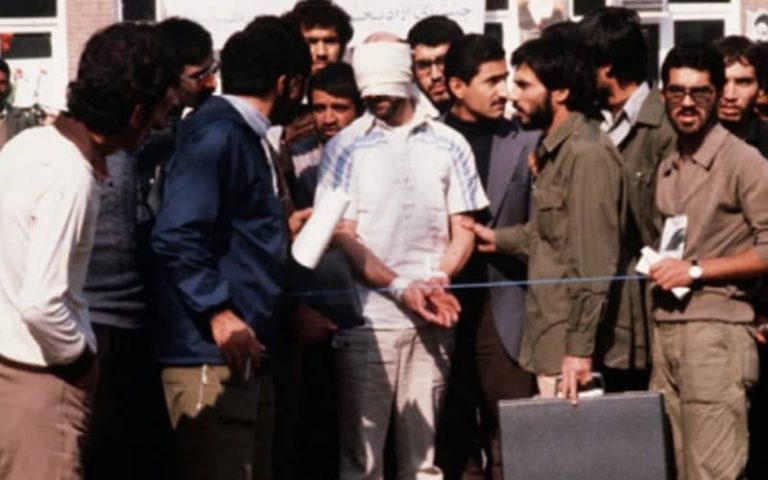
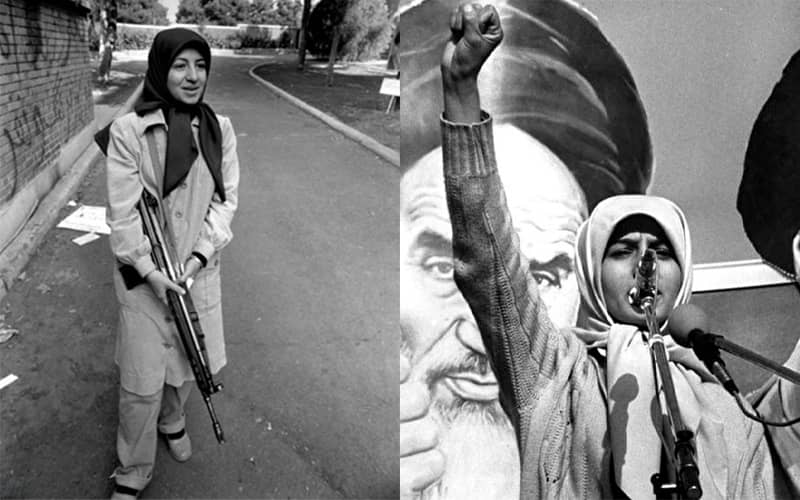
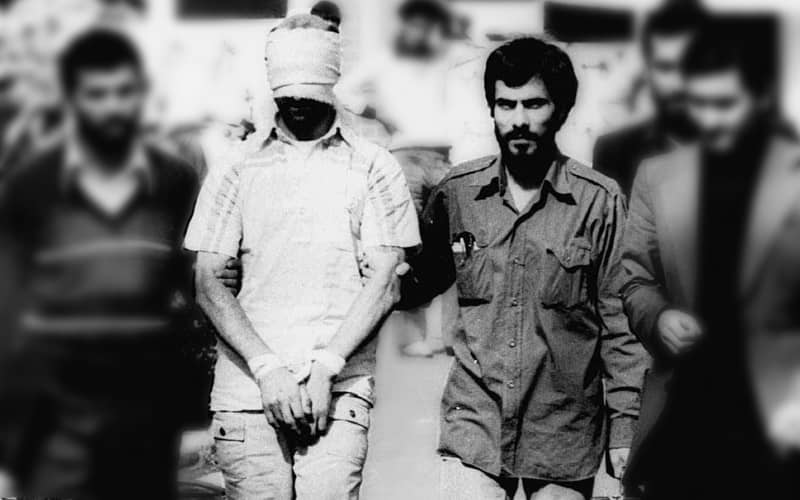
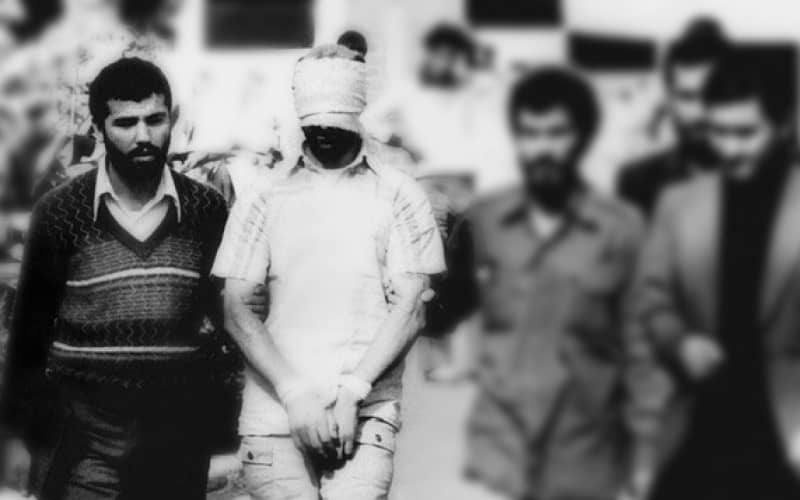
In addition to taking hostage the Iranian people’s fate, the theocracy ruling Iran has terrorized other nations—either in the Middle East or across the globe—as an element of power. As his first act of terrorism, Khomeini ordered his loyalists to take over the U.S. embassy in Tehran on November 4, 1979.
The current supreme leader, Ali Khamenei, attended the scene and played a crucial role in provoking thugs, who had named themselves “Students followers of the line of the Imam [Khomeini].” Khamenei, however, was not the only incumbent regime official who was involved in the hostage-taking crisis.
Many members of the so-called reformist faction, who have taken the highest positions in President Hassan Rouhani’s administration, were involved in the incident. Despite their “reformist” or “moderate” titles, they have never expressed regret for raiding and occupying a foreign embassy, which caused enormous disadvantage for the people.
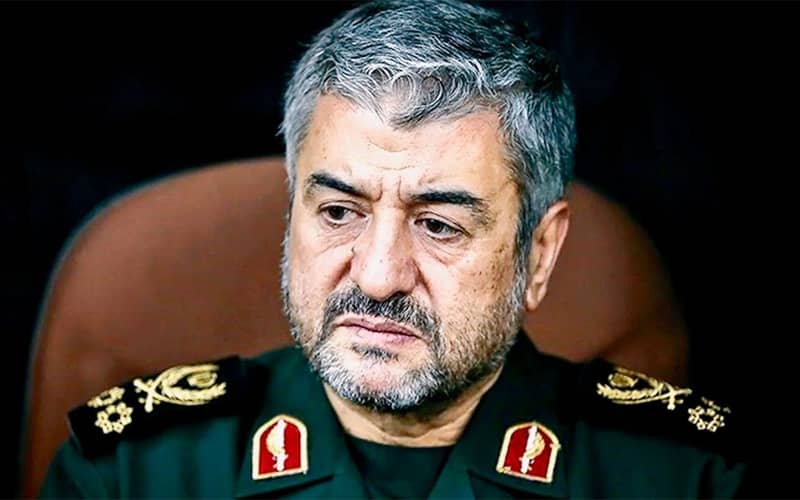
Mohammad Ali Jafari, former IRGC commander-in-chief, praises the takeover of the U.S. embassy in Tehran
Instead, several authorities still defend and justify the terrorist act. “Had it not been for the American embassy hostage-taking, our revolution would not last for over 40 years and the revolution would be annihilated in the first decade,” Mohammad Ali Aziz Jafari, former IRGC commander-in-chief and current chief of Baghiatallah base, said in November 2018. Baghiatallah base is an IRGC subsidiary responsible for implementing and justifying Khamenei’s cultural and social decrees.
Massoumeh Ebtekar, deputy president and spokesperson of U.S. embassy’s hostage-takers in 1979
Aside from Jafari, several so-called reformists played a pivotal role in the 1979 hostage-taking crisis. Massoumeh Ebtekar, Deputy President in the administrations of Hassan Rouhani and Mohammad Khatami, was the spokesperson for the hostage-takers.
At the time, Ebtekar explicitly announced that she is ready to personally put a gun to the head of one of the hostages and kill him.
Iran's regime can always count on @CNN to push its talking points. Today it gave VP Masoumeh Ebtekar 16 mins to portray the terrorist Soleimani as the victim.@camanpour didn't mention that her guest was Spox for 1979 US Embassy hostage takers Compare Ebtekar's remarks now & then pic.twitter.com/qa7GwMHT6z
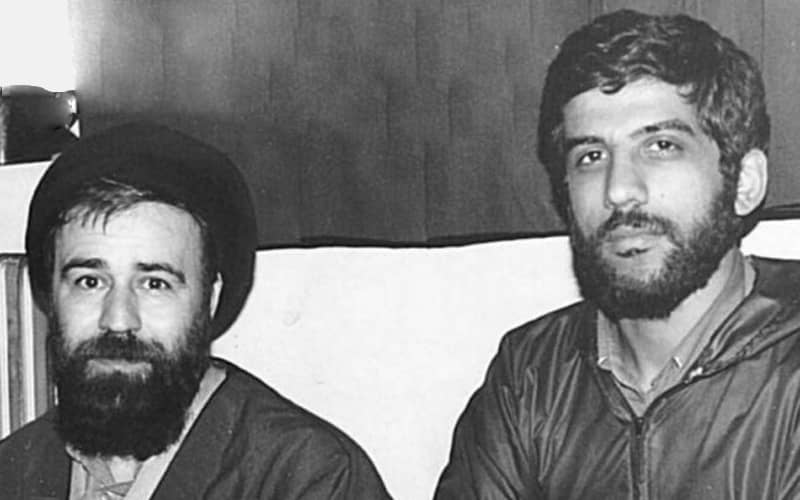
Hamid Abutalebi, a political advisor to the president, was also among the hostage-takers. For 15 years, he worked as the Iranian regime’s ambassador to several European states, including Italy, Belgium, Australia, and the European Union. In 1993, he was personally involved in the assassination of Mohammad Hossein Naghdi, representative of the Iranian coalition opposition National Council of Resistance of Iran (NCRI) in Rome.
Hamid Abutalebi, former ambassador, advisor to President and one of the implements of the 1979 U.S. embassy hostage-taking in Tehran
In 2014, Rouhani nominated him as the Iranian representative to the United Nations in New York. However, the U.S. administration refused to grant him a visa due to his roles in the 1979 hostage-taking of the U.S. embassy and the Naghdi assassination.
Hossein Dehqan, former Defense Minister and one of the implements of the 1979 U.S. embassy hostage-taking in Tehran
The Defense Minister in Rouhani’s first administration, Hossein Dehghan, was also among “Students follower of the line of the Imam.” Following the release of American hostages, Dehghan joined the IRGC. From 1982 to 1984, he was in Beirut, playing a crucial role in shaping Lebanese Hezbollah. According to U.S. media, Dehghan was one of the masterminds of bombing the U.S. embassy and U.S. Marines barracks in Beirut in the 1980s.
Ezzatollah Zarghami, former chief of Iranian state-run TV and one of the implements of the 1979 U.S. embassy hostage-taking in Tehran
Ezzatollah Zarghami, head of Iran’s propaganda apparatus (IRIB) between 2004 and 2014, was another player in the 1979 hostage-taking. He also has strong ties with the supreme leader, and because of his role in censorship and oppressive measures, he is considered one of Khamenei’s confidants.
Throughout its four-decade history, the Iranian government has tried to gain political and economic leverage through abductions. Previously, a former IRGC commander Hassan Abbasi pointed out to kidnapping foreign nationals as a profitable business for the IRGC. “Look at how the IRGC generates funds. The IRGC detains a spy like Jason Rezaian. The U.S. pleads for him to be released,” he described the kidnapping as a pressure card in February 2020.
Abbasi added that in response to the U.S.’s requests to release the hostages, “we say: No, you have to pay for him. Our government gets paid $1.7 billion to hand over this spy. Thus, by detaining just one spy, the IRGC earns the equivalent of the $1-2 billion it was supposed to receive from the government budget,” Abbasi added.
In this context, the Iranian government has a dark history. For instance, on July 19, 1982, Iran-backed forces abducted the president of American University David S. Dodge in Beirut. Kidnappers transferred him to Tehran. He was supposed to be a part of the captive swap between Iran and Israel.
“Several of Lebanese Shiite forces kidnapped American David Dodge. ‘This hostage must be swapped with [then-IRGC commander in Syria] Haj Ahmad Motevasselian,’ they announced,” said Motevasselian’s successor Mansour Kouchak-Mohseni on July 7, 2012.
Furthermore, in his book, “I narrate for the history,” an IRGC founder and IRGC Minister (1982-89) Mohsen Rafighdoost revealed damning details about the IRGC’s extraterritorial and blackmailing operations. He explained how he received the decree to assassinate the Shah’s last prime minister Shahpour Bakhtiar and how he formed a squad to carry out the assassination in Paris.
Afterward, he recounted that the IRGC operation failed, and French security forces detained the Lebanese-led operative team. Anis al-Naqqash, as the head of the terror squad, was sentenced to several years in prison. However, his cohorts in Lebanon attacked the French embassy in Beirut and kidnapped four diplomats. Moreover, Lebanese terrorists hijacked a civil plane to subdue the French government.
“I was in prison in France… One day, someone came to me from the French Foreign Ministry … I asked, what do you want? He/she said we don’t know whether our hostages are alive or not?” Naqqash said in a televised interview on February 11, 2017.
Naqqash explained how the Iranian government blackmailed France, forcing the French to pay $1 million in ransom and expel Iranian Resistance leader Massoud Rajavi from France. “The first condition is that one million dollars must return to Iran. He/she said OK, and what is the next demand? I told him/her expel Massoud Rajavi [the Iranian opposition leader] from France,” Naqqash added.
Additionally, Iranian authorities time and again kidnapped dissidents in Turkey and Iraq. Members and supporters of the People’s Mojahedin Organization of Iran (PMOI/MEK) were the first victims of the Iranian government’s abductions.
The ayatollahs also kidnapped U.S. and British citizens and military forces in Iraq and even in international waters. They also took hostage dozens of foreign and dual nationalities who had traveled to Iran, accusing them of “espionage.” Tehran sought to gain political leverage through these operations.
As the latest hostage-taking mission, Iranian authorities detained Franco-Iranian academician Fariba Adelkhah to compel the French government to release their detained diplomat Assadollah Assadi on behalf of the European Union. Assadi was directly involved in a bomb plot that targeted the NCRI’s annual gathering in France in 2018. However, as the Iranian government loses its grip on the country, foreign states no longer buy into the blackmailing of Tehran’s mullahs and adopt firmer decisions.
In this respect, the NCRI and its president-elect Maryam Rajavi has frequently called on the international community to take practical and effective actions to counter the ayatollahs’ terrorism and warmongering abroad. Rajavi demanded the U.S. and EU governments to compel the Iranian government to respect the people’s human rights, abolish the death penalties, and free all political prisoners, prisoners of conscience, and protesters unconditionally.
She also called on the civilized world to recognize the Iranian people and their organized Resistance’s struggle to get free of the hostage-taking government of clerics and preserve their national assets to counter the novel coronavirus, not to kill innocent people and build nuclear weapons.
Under the rule of Iran’s Velayat-e-Faqih (supreme religious rule), which has dominated the fate of a nation for forty years, its basic principle is to disregard human knowledge and experience. The petrified mullahs in alliance with its brokers and intermediaries of the traditional markets and the Revolutionary Guards (IRGC) have deprived the Iranian nation of growth and prosperity and by dominating all the facilities, wealth, and rich resources of this land, they have begun to impoverish the main owners of this wealth and plunder the people out of their latest properties.
Many years ago, the Iranian middle class was a major part of Iranian society. This class had a hand in production, art, trade, science had a relatively reasonable leadership in the society, and it could, while maintaining its standard of living, extend it to a large section of society and reproduce itself.
Like other countries, this process could have led the lower and poorer sections of society to a more prosperous life, but with the actions of Iran’s government, not only did the middle class not grow and expand, it was drawn to the poorer sections of society.
Abbas Argon, a member of the regime’s chamber of commerce in Tehran, says the recent decision by members of parliament to provide food aid to 60 million people is a clear sign of the spread of poverty and misery in Iran. He said:
“In the current situation and with the current inflation rate, people’s baskets are getting smaller. If a person had received a salary of 4 million Tomans until the last two years, that is, he had an income of $1000. If now, taking into account the 20% increase in salaries, if it has reached five million tomans, this figure is close to $250, which means that in the last two years, the purchasing power of the people has become a quarter.” (ILNA, 9 October)
Of course, these calculations can be flawed and are not showing the painful realities of the majority of Iranian life being destroyed. The simple and clear reason for this is the calculation of the exchange rate in the market, which has various types that have practically made the exchange rate of other goods and commodities dependent on it and in practice has caused it chaos.
The rising rate of inflation on a daily basis and, worse, the high cost of goods and services necessary for survival in Iran, has in practice erased the meaning of the hypothetical lines of relative and absolute poverty and below and above it.
For several days now, the usual calculations to meet the basic needs of life show that a family of four must have an income of at least 10 million tomans per month in order not to fall from its current status to lower levels.
But how many Iranians are able to have such an income? Workers whose wage situation of two or three million tomans is known to be at the bottom of the valley of the poverty line, while they are bargaining with their neighborhood baker for bread and are forced to make and credit for it. This situation has provided a new indicator of the international definition of the poverty line.
It is said that in absolute poverty, a person cannot provide the basic necessities of life, such as shelter and food. Do kidney sales fit into this definition?
It is said that in relative poverty, the problem is the loss of living standards and the lack of minimum welfare. Has not a large part of Iran’s middle class lost this index today?
Argon, a member of the chamber of commerce in Tehran, admitted: “With such practices, our middle class will move to the poor and the poor will be in absolute poverty so that they will not be able to provide the necessities of life such as food and clothing.”
When the presidents of great countries and prominent personalities and international officials speak of the richness of Iranian culture and civilization, the question arises that why in the current period of time there is no trace of that glory and prosperity in the people’s lives?
Why has a nation with the highest reserves of expensive minerals, oil, and gas and four seasons of favorable climate and nature been drawn into such darkness? Where has the income and product of all these resources gone and who has looted it?
Farshad Momeni, a government expert admitted: “Only in terms of the continuous weakening of the value of the national currency and the bankruptcy in the allocation of foreign exchange resources and the consequent turmoil in the country’s economic management system, once $330 billion and once $250 billion of strategic foreign exchange reserves have been destroyed. I wish that the whole tragedy was just this destruction. (Darayan daily, 10 October)
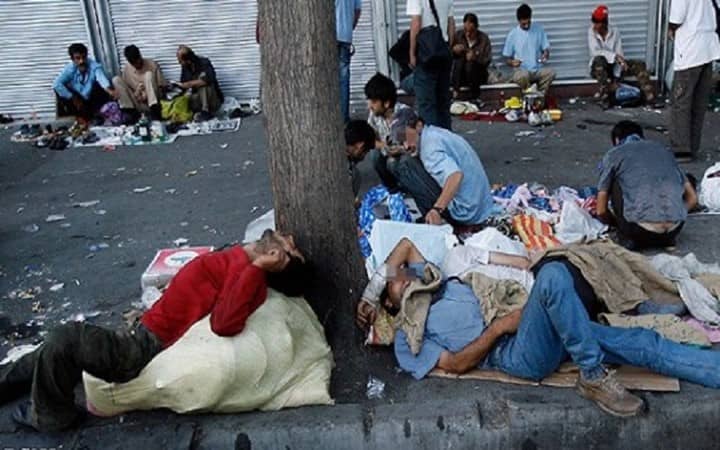
The class situation in Iran can now be seen in the streets of Iran, along with the Lavasan palaces and the garbage collecting children.
Pedram Soltani, former vice-president of Iran’s chamber of commerce, said: “During these years, the coercive sum of the country’s economy is a losing sum. In recent years, the country’s economic growth rate has been negative consecutively, and this negative growth has reached significant numbers of four, six, and seven percent.”
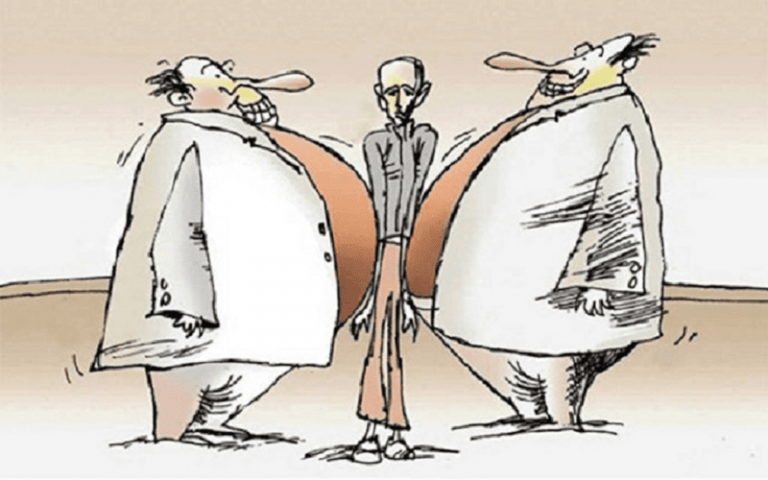
“The winners of this situation are groups close to the centers of power and decision-making, whether, in times of recession, inflation, or prosperity, they always benefit. The wealth of the country is in their hands, and this wealth can be expanded in any closed and opaque economy wherever it is twisted.”
And about the rest, which constitutes the majority of the people, he said: “Also, those whose business is not profitable are in debt, they have borrowed to solve their problems, but this debt has also been accumulated on their previous debts. The wage earners and the unemployed are also a significant number and are the breadwinners of the household, and perhaps nearly 60 million of our population of 80 million.” (Tejarat news 10 October)
These days after the latest U.S. sanctions over the Iranian government’s banking system, authorities try to blame the sanctions for all the country’s and of course the people’s misery. But the people themselves are saying something else. Despite the danger which they are facing, an Iranian citizen recorded a video message criticizing Supreme Leader Ali Khamenei for all the misery, which is clearly showing that Iran’s government bears all the responsibility.
An interesting video of an Iranian citizen from Mashhad which is addressing and criticizing Khamenei about the miserable people’s conditions in Iran.
An Iranian citizen from Mashhad, who is fed up with the extent of the destruction of the country, recorded a video addressed to Khamenei. After seeing the crowded situation of the judiciary and the deteriorating situation of the people, this man turned to Khamenei, the Supreme Leader, and said: ‘You consider yourself the leader of the Islamic Republic. What are you doing?’
Addressing Khamenei’s past speeches, while he said that if a country is in cultural and economic poverty, its officials should be blamed he asked him, “Now, who should we blame?!”
“Greetings to all my compatriots and my dear friends. In this video clip, I’m speaking with you Mr. Khamenei, which you know yourself as the leader of the Islamic Republic – Republic has thousands of meanings, as you know and I cannot announce them in this clip – because of delivering my message.
“Mr. Khamenei today I was in the justice in Mashhad, it was so crowded, woman addict, they have handcuffed women together, all the people are caught in pain, they have spread the dust of poverty, misery, and death like something very accurate over the people.
“I thought for a moment, Khamenei what are you doing, didn’t they inform you about all of that, you are the leader you must “crying tears of blood”, that your people are living like that. Then you are sitting at the peak, I do not know that the advisers around you made the biggest betrayal against you, while they did not inform you in the right way.
“The Iranian people are all homeless Mr. Khamenei. In 1988 behind the podium you are very strongly saying, that if a country is underdeveloped in terms of economic poverty, financial poverty, and cultural poverty, the country officials must be blamed.
“Today, who should we blame? Everyone who criticized you, at night they tear him to pieces in front of his home, throw him into the dungeon, they tie him up in the basement. Which one of the Quran’s verses has instructed such action? In which of your beliefs is this written? You do not follow this law that you have written yourself. You collect us to say, ‘death to America’, and now it is important to you which one of these idiots become the president of America, that is in your benefits.
“Was this the Islamic Republic? Mr. Khamenei, your people are homeless, your people are becoming prostitutes, your people are becoming addict, the youth are depressed, the girls have psychological damages, what are you doing up there?
“You are sitting just in between of a few, who with a hard fist, but brainless, are saying ‘I give my life to you’. OK, imagine that their lives are given to you. OK, now imagine that all of Germany which has the biggest gold reserve belongs to you, the U.S. Treasury Department belongs to you, at least they put a just a few bricks over our graves.”
In recent days, the poverty line in Iran for each family of four has reached 100 million rials [$333.3], and with the increase of the poverty line, class differences have intensified more and more.
On October 5, Arman daily wrote in a bitter satire about the social crises. “The gratifying thing is that other social classes and the separation of the strata of society have lost their former meaning, and thanks to the officials, for most of the country, we are all gathered together under the ground floor.”
The result of this ‘grace’ is that the salaries and incomes of nearly 28 million rials [$93.3] give those who have a salary and income, reaches a maximum of fewer than 10 days of their costs, and those who are unemployed and poor their situation is clear.
Additionally, Gholamreza Mesbahi Moghadam, a member of the Expediency Discernment Council, highlighted the huge class differences. “Today, some have amassed great wealth while a significant portion of society has fallen below the poverty line. This incident has reduced the people’s hope for the government and indicates inefficiency. Continuation of this approach will cause a blow to the system,” Mesbahi told Arman daily.
“The deciles of society have changed. Now we have seven deciles that are in need. Previously, we had three upper deciles, three lower deciles. These statistics do not exist at all, and something about four middle deciles, now almost no middle decile exists,” a government-linked expert Mohsen Ghadimi said in an interview with TV Channel Two on October 5, regarding the downward trend and the tendency of the middle classes towards poverty and deprivation.
According to Mahmoud Jam Saz, “The ninth decile is declining and moving towards poverty, and the middle class no longer exists.” (Etemad daily, September 27)
According to the Etemad daily, “In Iran, none of the responsible institutions provide accurate and reliable numbers for the poverty line. In 2011, the poverty line was announced at a little over 5 million rials [$35 based on 2011 U.S. dollar exchange rate], and in May 2020, according to the Parliamentary Research Center, this figure reached 90 million rials [$562.5 based on May 2020 U.S. dollar exchange rate]. And of course, the center stated that ‘30 to 40 percent of Iranians have incomes below this figure’.”
These conditions have caused “a small number of people to have skyrocketing wealth while the rest of society is disappearing,” Etemad added.
In describing the current economic and social conditions, the Mardomsalari daily on September 17, wrote: “In these bad economic conditions, it can be said that the country’s economy is to a large extent in a state of half-life. We have to think about the plight of those who have no source of income in this coronavirus crisis and have to work hard to make and income through daily and false jobs. We must think about the poor living conditions of the poor and, as the saying goes, the underprivileged. Economically, they no longer have the power, and they are being destroyed. This is while our economic cycle operates with the efforts of this lower class of society.”
Highlighting the people’s situation, the state-run daily Mostaghel on October 5, wrote: “Does Iranian society deserve all this disorder? Who is responsible for wasting the life and soul of the people? The middle class is dying, and the newcomers [new rich people] are becoming more cohesive.”
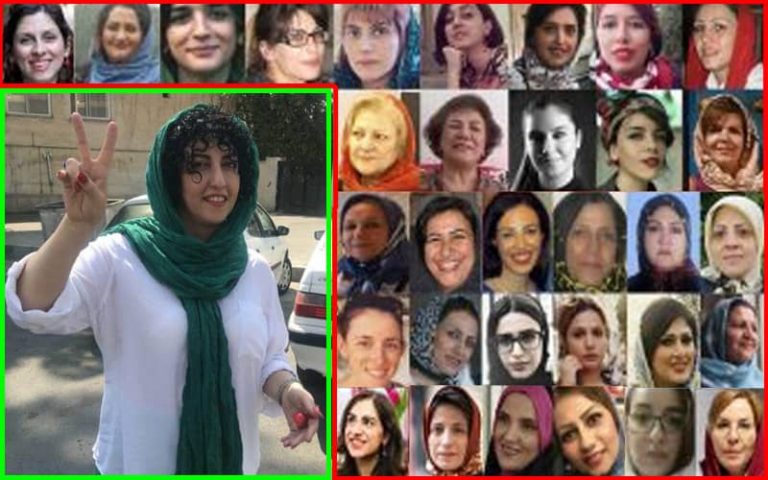
On October 8, Iranian authorities finally succumbed to international pleas and released human rights defender Narges Mohammadi. Since 2015, Mohammadi was unjustly detained for bogus charges such as disturbing national security, spreading propaganda against the establishment, and insulting the supreme leader Ali Khamenei.
Amnesty International welcomed the release of Mohammadi and described it as great news and appreciated those helped her release. “Iranian human rights defender Narges Mohammadi has been released from prison! She should never have been unjustly jailed for over five years for her peaceful human rights activism,” Amnesty tweeted.
Great news! Iranian human rights defender Narges Mohammadi has been released from prison! She should never have been unjustly jailed for over 5 years for her peaceful human rights activism. Many thanks to everyone across the globe who worked tirelessly for her release! #Iranpic.twitter.com/1dp5cQd1t7
Mrs. Mohammadi was not the last Iranian female prisoner who was unjustly held behind bars. In recent years, Iranian authorities arrested many citizens for their activities for humanitarian affairs, abolishing the death penalty, political beliefs, and creeds, as well as members of ethnic and religious minorities.
On October 5 and 6, the Revolutionary Guards (IRGC) Intelligence Department raided four female labor and social media activists’ homes and arrested them in the Iranian capital Tehran and Ilam provinces, western the country. Khadijeh Mehdipour, 23, was detained in Ilam. Shabnam Ashouri, 23, Neda Pir-Khezranian, and Andisheh Sadri were also arrested in Tehran province. There is no information about the whereabouts of the two latest.
Furthermore, female inmates, particularly political prisoners, are in vile conditions. In April, the judiciary bragged about giving emergency furlough to hundreds of thousands of prisoners due to the coronavirus outbreak. However, no political prisoner, prisoner of conscience, and detained protester benefit from the furlough. Of course, in tandem with the second wave of the disease, authorities ordered all prisoners to return to contaminated jails and pushed them in contaminated wards without testing or passing the quarantine period.
The judiciary’s move placed many prisoners at the coronavirus risk. Activists argue that the government intends to get rid of political prisoners through the deadly virus. In this respect, there are enormous reports over prisoners’ infection with the Covid-19 in different prisons across the country.
Female political prisoner Massoumeh Senobari, 32, was detained in her hometown Tabriz city, northwestern Iran, on March 6, 2019. She was subjected to torture and ill-treatment during her interrogating procedure. IRGC Intelligence agents raided her home and destroyed and looted her personal belongings. The Revolutionary Courts sentenced her Senobari to collectively eight years in prison for “propaganda against the state,” “membership in the Iranian opposition Mojahedin-e Khalq (MEK),” and “insulting the supreme leader.”
Recent reports obtained by the MEK indicate Senobari has contracted the coronavirus in the women’s ward of the Central Prison of Tabriz. “Massoumeh Senobari has bad coughs. She suffers from high fever, sore throat, dry mouth, pain in the lungs and all over her body,” a source reported.
Also, on September 24, authorities transferred Mina Rad, a young poetess and writer, to the notorious Qarchak Prison in Varamin city, suburb of Tehran. In the past two years, agents of the Ministry of Intelligence and Security (MOIS) frequently summoned and interrogated her for participating in the late 2017-early 2018 protests.
Additionally, on September 28, judicial authorities extended the detention of Faranak Jamshidi, an environmental activist, for the third time. Since June 28, she is held in the central prison of Sanandaj, the capital of Kurdistan province.
In recent years, Iranian authorities have detained hundreds of women in protests or due to contacting their relatives affiliated to the opposition, particularly the MEK. Moreover, the MOIS and IRGC intelligence department has arrested and disappeared several mothers and sisters who looked for the fate of their loved ones. Many family members of political prisoners, who were mass killed in the summer of 1988, are behind bars for questioning and searching for their loved ones’ graves.
Of course, the facts mentioned above are the tip of the iceberg. In recent years, Iranian authorities have detained hundreds of women and girls in protests or due to making relations with their relatives affiliated to the opposition, particularly the MEK. Moreover, the MOIS and IRGC intelligence department have arrested and disappeared several mothers and sisters who looked for their loved ones’ fate. Many family members of political prisoners, who were mass killed in the summer of 1988, are behind bars for questioning and searching for their loved ones’ graves.
In this context, as rights groups and activists express their joyful for releasing Narges Mohammadi, they should keep the pressure on the Iranian government to release the rest of the female political prisoners, dissidents say. Otherwise, the ayatollahs would exploit the international community’s negligence and exert more pressure on other prisoners.
As the rest of the world is continuing its fight against the coronavirus, the Iranian government is concentrating on increasing the activities of its security forces; preferring to arm militias with guns, rather than medical staff with personal protective equipment.
Why? Because authorities want to quell any opposition and further upcoming protests. This can be seen in the actions that they have taken over the past month, including:
Putting Revolutionary Guard Corps (IRGC) “hit squads” in every neighborhood to stop protests in the planning stage
Creating a central headquarters to arrest protesters
Sentencing protesters to death and executing those on death row
Increasing control on social media by arresting and summoning users
Launching Hijab campaigns (Nazer) to enforce the mandatory veil and suppress women
This aims to suppress freedoms and frighten society to prevent protests, largely led by women.
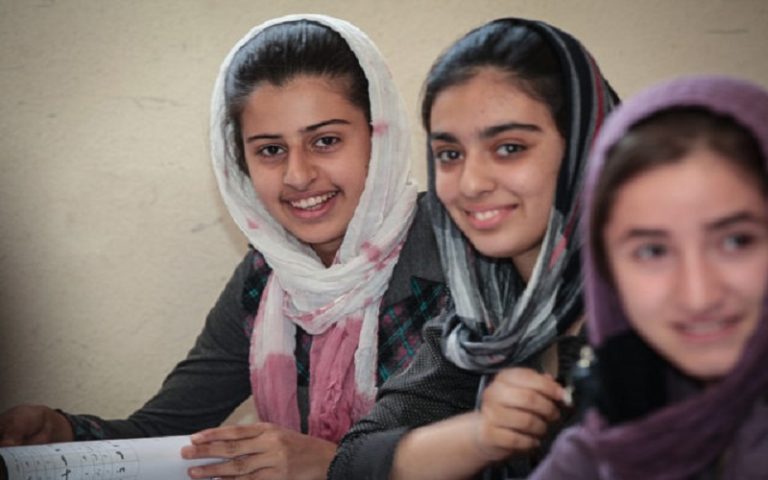
With that in mind, let’s look more closely at the mandatory hijab, which is opposed by a massive 70 percent of the country.
The punishment for a woman appearing publically without her hair completely covered can include long-term prison sentences and 74 lashes under the ridiculous charge of “spread of corruption and prostitution”. Activist Saba Kord Afshari was given 24 years in prison for opposing mandatory Hijab.
But these measures aren’t working and there’s a 5 percent decrease every year in the number of people who support mandatory Hijab, with even religious areas widely opposing it. In fact, there are 110 laws, directives, and ratified documents on Hijab that the clerical rule just can’t enforce.
So, officials are trying to make it less safe for women who oppose mandatory Hijab by urging for the State Security Force (SSF) to have greater powers to deal with offenders.
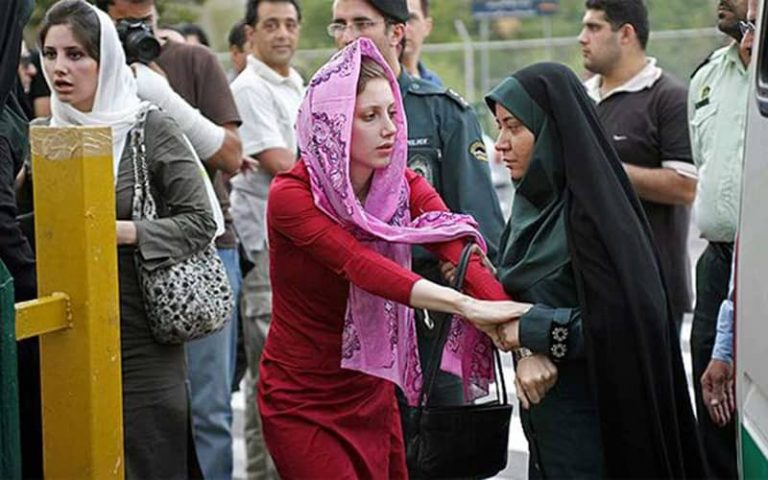
Now, the “Nazer” Hijab Campaigns have sent thousands of armed militants out into the streets to harass, attack, and arrest women and girls who are not observing the Hijab, but the true objective is to scare women out of anti-establishment activities because they see women as the power players in the Resistance.
Women must now observe the Hijab in their cars (or when passengers in a car), in shops, recreation areas, and even in photos online, summoning users who might post a photo of themselves in their own house not wearing the Hijab. Even female students must submit a photo of themselves wearing the Hijab for their online profile or they face being banned from class.
The Women’s Committee of the National Council of Resistance of Iran (NCRI) wrote: “In the present volatile state of Iranian society, the government seeks to ramp up repression through suppression of women. They send their repressive forces to the streets to crack down on women during their Hijab Campaigns. These suppressive measures, however, will only act as a catalyst expediting the eruption of anti-regime protests. They will lead to uprisings which will eventually overthrow the mullahs’ tyrannical regime.”
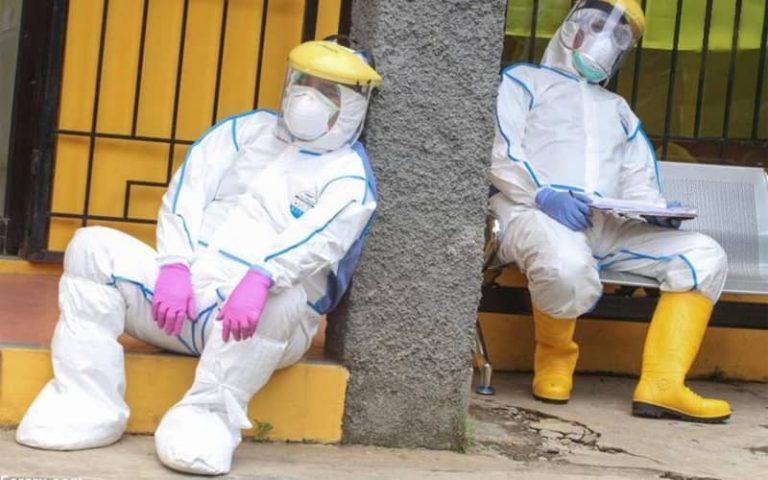
Iran has one of the highest coronavirus infection and death rates in the world, but the ayatollahs are failing to provide medical equipment or even pay the minimum salaries for the medical staff risking their lives to save others.
Not only that but rather than encouraging people to stay home and keep safe, Minoo Mohraz, a member of the National Coronavirus Combat Task Force, has accused the government and the Education Ministry of actually encouraging people back out.
Officials are using the pandemic to ensure it keeps their shaky grasp on power because it is so dangerous for angry citizens to meet in the kind of crowds that signified the November 2019 protests, which links back to why they are not providing even the most basic of equipment or medicines to hospitals. Essentially, the most high-ranking officials are directly responsible for the marked increase in infections and deaths over the past couple of months.
Mohraz said: “We can no longer talk about a first or third wave. Unfortunately, the country is constantly on the Coronavirus wave… The Coronavirus is like a time bomb that can explode at any moment and destroy all infrastructure.”
Nearly 120,000 people have now died from the coronavirus pandemic, including many medical staff, although the government has not provided statistics. Not only has the authorities failed to provide extra support to these everyday heroes, but they’ve failed to even pay their basic salaries. Many have not been paid in months, which has resulted in dire living conditions across the board for healthcare workers.
Even though the supreme leader Ali Khamenei controls an estimated $1 trillion in various charitable institutions that are supposed to help the poor, they have not provided any money for the things seriously needed by the people.
Not even one-third of the €1 Billion promised to the Ministry of Health by the government in March has been distributed, so how can they pay for medicine, equipment, facilities, and salaries?
The crisis is so dire that officials are being forced to acknowledge the dire state of the healthcare system, with the governor of Alborz saying that the endurance of the system is under threat, while Mohraz advises that there are no empty beds and that patients are being treated in hallways and outdoors.
Deputy Health Minister Iraj Haririchi said: “We are ashamed that our health personnel have not been paid their salaries or overtime wages for three or four months. Any staff who have been paid have received less than the minimum wage set by the Ministry of Labor.”
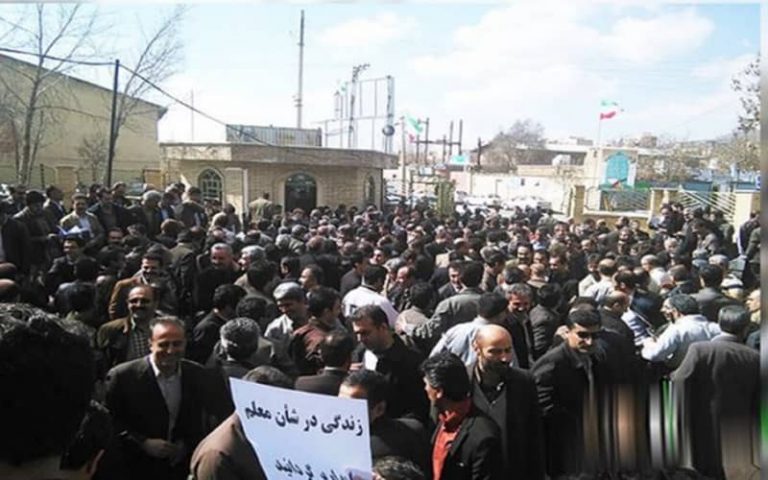
There were 358 recorded protests across Iran in September, according to Iranian Resistance, which is an average of 12 protests a day.
The protests, which took place in 87 cities, show an 8% increase in the number of protests compared with the 331 that took place in August.
Most of the September protests were over economic grievances, featuring workers and pensioners demanding their missed payments, with some holding protests for several consecutive days and some traveling to Tehran to take their protest to the parliament.
September protest breakdown:
Workers: 217 protests in 58 cities
Pensioners: 26 protests in 18 cities
Teachers: 14 protests in three cities
Students: 11 protests in seven cities
Farmers: six protests in four cities
Prisoners: six protests and five hunger strikes in five cities
Defrauded creditors: four protests in three cities
Truck drivers: one protest
Other sectors: 78 protests in 37 cities
Even regime officials and state-run media are beginning to acknowledge that major protests are imminent, with Head of the Security and Law Enforcement Department Hossein Zolfaghar saying that calls for protests have increased three-fold in the past year and the state-run daily Ebtekar saying that the public doesn’t trust the regime.
The paper wrote: “It seems that for various reasons, Hassan Rouhani is distancing himself from the people and society. But he and his advisors do not mention that this could be the end of people’s trust toward the state. They do not realize what consequences this behavior could have… The president’s advisors who are well-experienced intelligence men” should take note of “what has happened since November 2019 until today.”
This was at the beginning of the month. By late September, the state-run media were warning that the people’s widespread mistrust of the mullahs would lead to nationwide protests because the regime was ignoring their demands.
Iranian political strategist Saeed Hajjarian even admitted that the people had a right not to trust the mullahs, pointing out that hatred of the clerics was a unifying factor for most Iranians. While regime-affiliated university professor Bijan Abdolkarimi said that the divide between the people and the mullahs was being exacerbated by officials who refuse to pay attention to public demands and that this would lead to regime overthrow.
He said: “We will definitely see more of [the November 2019 style] protests… I think the political power in the country has not been able to meet the people’s demands.”
Iran under the Hassan Rouhani administration hit all records and placed as the first administration in the economic crises term throughout the whole Islamic Republic history. He has raised huge and astronomical debts more than any previous administration, and in the field of rising inflation and liquidity, none of them can match his record.
The negative economic growth of the 2000s, much of which was in the hands of the government which rose from the “reformist faction,” has been a disgrace. The completely wrong and irresponsible management in the face of coronavirus has also left thousands of dead and poor people in the country.
One of the most important tasks that Rouhani has mentioned in his record is the issuance of bonds for administration financing. The total number of financial bonds approved in the budget bill and bonds that have been published with the agreement of the Supreme Economic Coordination Council reaches 2.3 quadrillion rials [$7.66 billion]. The issuance of this volume of securities means that the administration must allocate higher amounts at the time of the annual maturity to pay the principal and interest on the securities.
Rouhani’s administration has resorted to high taxes to cover deficits and its expenditures, transferring administration property at low prices, and most recently, selling shares of state-owned companies in the stock market, which play the role of a piggy bank for the administration’s spending and financing bankrupt companies.
However, perhaps the most destructive economic actions of the Twelfth Administration have been to sell more debts and turning to a ‘Ponzi Game’. Selling bonds to repay previous debts, selling even more of these bonds to pay off new debts, and the growing interest of these bonds, which are a serious threat to the Greekization of the Iranian economy.
Selling the Future of the Next Generations by the ‘Ponzi Game’
“According to the laws contained in this year’s budget bill, the administration can issue 800 trillion rials [$2.66 billion]of financial securities. Due to the special economic situation, the Supreme Economic Coordination Council issued a permit to issue 1.5 quadrillion rials [$5 billion] of surplus securities to increase the total marketable securities of the administration to 2.3 quadrillion rials [$7.66 billion]. Many deny the importance of financing from here and believe that this approach has no result other than selling the future,” according to Jahan-e Sanat daily on October 7.
With the extreme use of the sale of bonds, the administration enters the cycle of the Ponzi game and in order to repay the principal and interest of these bonds at maturity, it is forced to issue new bonds, which naturally have a higher interest rate. In this way, over time, the debt burden will only increase, and we will see an administration debt crisis in the coming years.
Government-linked experts believe that the path taken by the Rouhani administration is the same as that taken by the Greeks two decades ago which led to bankruptcy. They owed so much that they had no choice but to surrender to the creditors. One of the important indicators in this field is the ratio of debts to Gross Domestic Product (GDP), which according to the estimates of the Parliamentary Research Center is projected to be between 60 and 74 percent in the coming years.
According to official statistics on the debt of the administration and state-owned companies last year, this figure has reached over 10 trillion rials [$33.3 million].
“Administration debt reached 5 quadrillion rials [$16.6 billion] by the end of September 2019. Also, the debt of state-owned companies has increased to 5.25 quadrillion rials [$17.5 billion]. In total, the debt of the administration and state-owned companies reaches 10.25 quadrillion rials [$36.165 billion],” according to Eghtesad Online website on June 23.
An economic expert from the rival faction to Rouhani said to him: “We warn the system of fundamental decisions that this path, that is relying on foreign currency and rial debts, puts us on the path of the swamp. This process of advancing in the swamp will create a dangerous path for us,” ILNA news agency wrote on January 6.