Home Blog Page 304

Dangerous Instability and Hyperinflation, Iran’s Economy in 2021

0

In the latest World Bank estimate of the state of Iran’s economy, the statistics provided again show negative economic growth and the economy shrinking in the past three years.

Iran’s Economy Has Shrunk by 16.5 Percent Over the Past Three Years

According to a World Bank report, Iran’s economy has shrunk by a total of 16.5 percent over the past three years. This is a statistic for the underprivileged, who also have a hard time making bread, and millions who are hungry, which means that their tables are getting smaller.

A noteworthy point in this report is the forecast of economic growth of 1.5 percent next year, which is rejected by both economists inside the government and the report of the Research Center of Iran’s parliament.

Some economic analysts in the country not only do not consider the conditions facing the system to be prone to any development and progress, but also assess the continuing decline and rise of the current situation with many problems.

Iran’s Government: “We Are 40 Years Behind the World”

Impossibility: A Possible Possibility

One of these economists wrote in an article entitled ‘Run Ahead’: “The economy and market in Iran have unique definitions in such a way that their coordinates are different from other countries in the world. The business score, degree of economic competitiveness, corruption rate along with the instability of trends in the country are so unfavorable that not only has made development impossible in such an environment but also production has faced many challenges in such conditions,” wrote Donya-e-Eghtestad wrote on January 7.

Economic Growth Is Just an Illusion

The Research Center of Iran’s Parliament has also recently announced its concerns and warnings about the 2021 budget. The center, which has also questioned the optimism of the World Bank, says that economic growth and production boom and inflation should not be pursued at all, which are now just an illusion, but what is possible and desirable is ‘predictability and economic stability’.

That is, the situation should not lead to the chaos resulting from demagogic schemes and the distribution of money that can only be obtained through the printing of banknotes.

Illusion of Growth

The lack of a realistic view of the 2021 budget revenues will put the economy in a state of instability, the report said.

“The study emphasizes that ‘the risk of hyperinflation is not far away’ and emphasizes that the expansion budget can only be reasonable if it does not threaten the macroeconomic stability of the country. This is unattainable for the year 2021,” Donya-e-Eghtestad added.

Thus, even a specialized parliamentary body, like other economists out of power, believes that any hope and expectation for growth slightly above zero in Iran is a mirage and that the more formidable danger of ‘super-inflation’ is imminent.

Economic Growth Aren’t Iranian Policy-Makers’ Priority

Government economic analysts believe that “policymakers should not make the fundamental mistake of proposing expansionary budgets because of the recession, as government resources are currently very limited and financial expansion will certainly lead to monetary expansion, leading to the risk of hyperinflation,” Alef website wrote on January 7.

“Therefore, if the 2021 budget is calculated on the basis of unrealistic sources, the country’s economy will be caught in the trap of high inflation and more instability in various markets,” Alef website added.

A noteworthy point in predicting very low probable growth for next year is acknowledging the fact that growth from oil sales and spending its revenues on missile construction and the cost of exporting terrorism and filling the pockets of the factions sitting on oil wells can make no difference in livelihoods of millions of Iranians.

The parliamentary research report explicitly points to this fact: “This study shows that for next year, under different scenarios, we can have a small positive economic growth or, if oil revenues increase, a significant positive growth through this sector,” Eghtesad 24 website wrote on January 7.

“However, it should be noted that even if there is significant positive economic growth, we cannot expect a significant improvement in the living conditions of households, especially in the lower deciles. Because this economic growth will be in sectors that do not have a significant impact on employment,” Eghtesad 24 added.

The Picture of Iran’s Economy in 2021

Studies and evaluations of international institutions and government centers in Iran show that the expectation of growth and the dream of overcoming the incurable economic crisis is nothing more than a fantasy. This means that there is no longer any window of hope that can straighten the broken back of the system, and the improvement of the living conditions of millions of poor people who are suffering from hunger and disease is a delusion.

Money for Tackling Air Pollution Wasted on Iran’s Global Terrorism

Air pollution in Tehran and many other metropolises have made life difficult for people in Iran, especially in the coronavirus conditions where people, especially patients, need to breathe more outdoors.

In the recent crisis of air pollution, patients are the first people whose lives are endangered by breathing polluted air. In metropolitan cities, the air pollution situation is such that there are few people who are not exposed to it.

To reduce the effects of air pollution, experts recommend consuming dairy products and fruits, but with their skyrocketing prices in the past few months, their preparation has become virtually impossible for many Iranians.

The air pollution situation is so critical that an environmental expert considered the casualties worse than the coronavirus, and in this regard, Ebtekar daily wrote on January 3: “The issue of using diesel fuel in power plants has made breathing conditions so difficult that now it threatens people.

World Must Push Iran to Procure Covid-19 Vaccines for its Citizens

“Experts have always stressed that the problem of air pollution is much more dangerous than the problem of the coronavirus, a virus that has spread around the world with less than two million deaths today, but air pollution causes seven million premature deaths worldwide each year.”

Endangering people’s health due to air pollution is severe that Majid Farahani, a member of Tehran’s City Council, acknowledged: “Air pollution has reduced the life expectancy of Tehran residents by an average of five years, and the number of air pollution deaths are equivalent to a giant Airbus crashing in Tehran every week, and we (the government) do not care!” Fars news agency wrote on September 9, 2018.

Experts and the state media agree that the cause of air pollution is due to fuel oil for power plants, workshops, manufacturing plants, petrochemicals, steel mills, etc.

In this regard, Arman daily wrote on January 3: “Some 15 million liters of fuel oil have taken people’s breath away.”

In justifying this crime against the people and their health, Issa Kalantari, head of the Environmental Protection Organization, said: “Refineries are currently full of fuel oil, and no one buys them due to international sanctions, so we have to use fuel oil in some places,” the daily added.

An environmental expert accused Rouhani government officials, including Kalantari, of lying, saying: “Officials have pursued a policy of lies, and we all know that the country’s power plants and industries are burning fuel oil. The reason for this is very clear. Until a few years ago, Iran sold 15 billion liters of fuel oil to the UAE,” Arman continued.

In the current situation where Tehran and many metropolises are suffering from severe air pollution, the temporary solution to reduce air pollution is to close the metropolises, but the government refuses to do so because they do not want to pay such a price.

According to the report of Tasnim news agency, Abdulreza Rahmani Fazli, the interior minister, in response to a request by many people regarding the closure of Tehran, said: “No decision has been made for the closure,” Tasnim wrote on January 3.

In addition to the people, government environmental experts also recommend that Tehran and the polluted metropolises be closed for at least a few days to reduce the burden of air pollution.

In the winter, the smoke and polluting gases of power plants, after being released into the air, return to the ground due to the cold weather and cause air pollution.

Regarding the reason why the Rouhani government did not close Tehran and the polluted metropolises, Fazli added: “We have to manage the situation with the least cost.”

Wasting Important Resources for Reducing Air Pollution on Regional Interferes

Iran’s government claims that it does not have the necessary budget to carry out the measures due to sanctions, but sanctions and lack of funding are a trivial excuse to which this establishment and Hassan Rouhani’s government resort.

Because when it comes to inciting war in the region, they waste the people’s wealth freely, and sanctions are not an obstacle.

Mahmoud Chaharbaghi, one of the leaders of the Islamic Revolutionary Guard Corps (IRGC), while saying a memory about the dead Quds force commander Qassem Soleimani, said: “The Supreme Leader [Ali Khamenei] told Sardar Soleimani to go and protect Bashar al-Assad. General Soleimani’s mission was to prevent the overthrow of Bashar al-Assad’s government in Syria,” State TV Channel One aired Chaharbaghi’s remarks on January 2.

Who Was Qasem Soleimani, the Head of Iran’s IRGC Qods Force Terror Group?

It is natural that the maintenance of Bashar al-Assad is not without massive costs for the Iranian people, and billions of dollars of Iranian wealth have been spent on it.

Mohammad Reza Naghdi in charge of coordinating the IRGC admitted that they had spent nearly $17 billion on all expenses related to diplomacy, culture, defense, and security in Syria.

Certainly $17 billion is an underestimation. On May 20, 2020, Heshmatollah Falahatpisheh, the former head of the Security Committee of Iran’s parliament, said that $30 billion had been spent in Syria.

Wasting Iranian People’s Wealth on Proxy Wars and Terrorist Acts

This is at a time when the cost of solving the problem of air pollution is much less than the money spent in the region over the years.

The solution that the government has devised to solve the air pollution crisis is nothing but lies. Massoud Tajrishi, the government deputy environment minister, said: “There is no will to eliminate air pollution in Tehran,” wrote Setareh-e-Sobh daily on January 3.

Iran Executes 30 in Three Weeks

Iran has executed 30 prisoners in just under three weeks, according to a report by the Iranian Resistance.

This list of executions includes at least two political prisoners and three Sunni prisoners, Hamid Rastbala, Kabir Sa’adat Jahani, and Mohammad Ali Arayesh.

The latest executions came on the same day that State Security Force (SSF) deputy commander Qassem Rezaei instructed his agents to “break the arms” of defiant youth and claimed that the only right prisoners have is to life, which not only shows violations of international law but also seems to say that the executions violate the rights of prisoners.

It should come as no surprise that Iran violates international law on the rights of dissidents. Amnesty International has confirmed that they opened fire on protesters in November 2019, killing hundreds, and several rights groups have confirmed the massacre of prisoners in 1988.

The reason that Tehran is increasing its oppression of people now is that they fear another uprising – despite the coronavirus pandemic that is raging – because the crises that caused the last uprising have only gotten worse, including inflation, corruption, and human rights abuses. All the while, the government doesn’t try to help the people but rather wastes the money on missile programs and terrorist groups; something that enrages the people.

Iran’s New Piracy and Blackmail

But given the increased oppression, documented by human rights groups, shouldn’t the international community step in?

After all, seven United Nations human rights experts wrote to the Iranian authorities in September regarding the 1988 massacre and demanding an investigation into these “crimes against humanity” and the “systematic impunity enjoyed by [perpetrators]”. Indeed, Judiciary Head Ebrahim Raisi and Justice Minister Alireza Avaei were high ranking death commission members.

Well, the European Union has “condemned” Iran’s human rights violations, but refuse to take actions to help the matter, such as ending the appeasement policy or making relations contingent on an end to terrorism and human rights abuses.

Let’s not forget that in December, Iranian diplomat Assadollah Assadi went on trial for attempting to bomb an opposition rally in France, with prosecutors saying that he acted on the orders of Iran’s highest authorities—These leaders also haven’t disavowed him as a rogue agent.

“The Iranian people have to pay the price of the EU’s failure in abiding by its humanitarian values. The 2018 bomb plot showed that EU citizens also have to pay a heavy price when their leaders maintain negotiating with the terrorist regime in Tehran,” the Iranian Resistance stated.

EU Policy on Tehran Leads to Terrorism

“The EU should act now. It should go beyond letters and condemnations, and it should not allow the regime to make executions in Iran ‘regular’ for the world community. If not contained, the regime will spread terror and chaos across the globe,” the statement added.

Economic Growth Aren’t Iranian Policy-Makers’ Priority

In the past four decades, Iranian authorities have shown that they do not care about democracy and economic growth. Instead, they spend all the country’s national resources and capacities on preserving their rule.

Economic growth is, of course, the outcome of a scientific procedure and responsible policymaking, which relies on known financial norms. Such a system certainly benefits from mankind’s science and experience. In contrast, China’s improvement and that of its neighboring countries showed that economic succession and growth would not be achieved through an autocratic government.

Iran Suffers from Economic Confusion

According to government-linked economists and their studies and analysis, Iran’s economy suffers from chronic and long-time confusion. In developed countries, the path of economic improvement is defined as the economic growth axis. All the while, economic growth is no longer among Iranian policymakers’ priorities for many years.

Economists examine three indicators to describe a country’s economic situation, including inflation, employment, and particularly economic growth. However, Iranian economist Farhad Nili, who had already collaborated with international bodies, believes that officials have put aside economic growth for a long while.

“Economic growth was not politicians’ first priority. Therefore, people’s welfare has gradually been reduced. Among decisionmakers and policymakers, economic growth is neither seen nor determinative,” Nili said in an interview with Donya-e Eqtesad paper on December 26.

“[Economic] growth should have become the main goal of the country’s long-term decisions. However, it’s not seen that economic improvement had been raised a binding restriction in the country’s long-term decisions; as inflation is not a short-term binding in decisionmakers’ adoptions,” he added.

Statistics About Economic Growth Are Just a Show

Iranian officials deeply neglect real economic growth and try to dupe society with fictional statistics. In other words, improving people’s welfare is the inevitable result of economic improvement. However, in such circumstances, not only has citizens’ well-being not improve but it is deteriorating by the day.

This deterioration may be seen in the increase in essential goods’ prices, drop in the national currency, disappearing necessary supplies, rising taxes, and skyrocketing rents and house prices, pushing many citizens to reside in slums.

In a nutshell, economic growth is a longstanding concept. In this context, the figures provided by the Central Bank of Iran (CBI) or the Statistics Center or short-time fluctuations in national incomes cannot be considered as reliable indicators for economic development.

Unbridled Poverty, An Inherent Outcome of Iran’s Systematic Corruption

In other words, 1.5-percent positive or negative growth in a year cannot surprise economists or make a fundamental change in a country’s economic path.

“If you see that a 1.5-percent growth has made policymakers happy, it is not because of their concerns about the people’s welfare, or they say, ‘Nice, our growth may expand the people’s product basket.’ No, [policymakers] tout this growth to say that ‘sanctions were ineffective’ and non-economic decisions did not badly harm the people’s economic interests. Therefore, raising these figures for positive change is probably a kind of a show,” wrote Tejarat-e Farda website on December 26.

Economy Isn’t Policymakers’ Priority

Furthermore, in addition to economic growth, the country’s inflation and employment rates are very important. However, Iranian rulers do not pay attention to these critical elements in either policymaking or macro schedules. Another economist Davoud Souri says that Iranian officials do not prioritize financial issues.

“[Economic] growth, along with inflation and unemployment, are among the most important financial indicators. However, economic issues are not considered as policymakers’ concern generally. In this status quo, economic policymaking has turned into a routine issue,” Donya-e Eqtesad quoted Souri as saying on December 26.

“Our politicians absolutely see no reason to react to economic dilemmas or to recognize them as an actual concern,” Souri added, raising the alarm about people’s financial grievances and its severe consequences for Iran’s rulers.

Political Tyranny, the Main Cause of Poverty and Underdevelopment

Iranian officials have practically been crippled to resolve society’s problems due to systematic corruption engulfed all over the ruling system. They attempt to dissuade people’s demands and protests by following the Eastern states’ pattern. However, it seems that they have even failed in such a plan and could not gain significant achievement in this context.

For more than 41 years, the ayatollahs have mixed a political tyranny with outdated religious beliefs, which has put not only the economy but also health, culture, agriculture, industry, and everything on the verge of collapse. Officials frequently warn and blame each other for the erosion of public trust.

They believe that people’s fury and disappointment are the leading and efficient threat to their ruling system. However, despite repeated warnings, they have no solution to regain public trust. In this respect, they tirelessly line their pockets and foreign accounts with national resources, send their family members to Europe, Canada, and Australia, and await their dark fate.

Iran: Improving Citizens’ Livelihood or Stealing From the Nation

Revelations Over Soleimani’s Killing of Coalition Forces

0

The head of an Islamic Revolutionary Guard Corps (IRGC) and Quds Force front company – Nader Talebzadeh of New Horizon, which was sanctioned by the U.S. government in 2019 – revealed that Iran’s deceased terrorist mastermind Qassem Soleimani “used Improvised Explosive Devices (IED)” to target American forces in Iraq.

“Who made so much trouble for them [American troops]? It was the same commander of shadows. Who trained [Iran’s terrorist proxy groups] and used the tactic of using roadside bombs, who were like stones? The Americans called these bombs IEDs,” he said.

Who Was Qasem Soleimani, the Head of Iran’s IRGC Qods Force Terror Group?

“I remember how disturbed they were, how the U.S. media reflected this disturbance in 2003 after the U.S. occupied Iraq. Who disturbed them? Whose idea was it? The IED is the abbreviation of Improvised Explosive Device, meaning inventory explosions, so the target couldn’t recognize whether it was a bomb or a stone,” Talebzadeh added.

“The target would pass this object, then, for example, its Humvee, its tank would blow away. We saw the footages, but whose terrifying shadow was behind it, who devastated them? One day we should make films about it, and all other works he [Soleimani] had done. One of them was the IED in Iraq, for which the Americans continued blaming Iran and the Quds Force. This was one of his little initiatives to make Iraq unsafe for the Americans,” he continued.

Talebzadeh went on to boast about how Tehran’s terrorism is still a threat and that they were behind the recent attacks on the U.S. embassy in Iraq, which proves what the Iranian Resistance has been saying for ages about Iran’s disastrous impact in the Middle East, and their claims about his use of IEDs against U.S. troops, which were published last January.

“Soleimani and his proxy groups in Iraq and Afghanistan were behind the flow of IEDs to Iraq and Afghanistan. The devastating IEDs were used extensively during the war in Iraq between 2003 and 2011, and it is called the number one killer of the war [and] 17 percent of all US service personnel deaths between 2003 and 2011,” the Resistance wrote.

“The sophisticated IEDs were secretly manufactured in Iran’s military industry factories under the order of the Quds force and were distributed in Iraq and Afghanistan. Later Iran’s military factories manufactured a more powerful and deadlier roadside bomb called explosively formed projectiles (EFPs). EFPs were built under a confidential order by the Quds Force in Iran. Explosively formed projectiles were advanced improvised explosive devices that were harder to detect, could penetrate thicker armor and be more lethal than traditional IEDs.”

Soleimani had also used the IEDs to target members of the Mojahedin-e Khalq (MEK/PMOI) in Iraq during the 1990s, including the 1999 attack on a bus full of MEK members, killing six and injuring 21.

Soleimani was killed on January 3, 2020, in a U.S. airstrike on a convoy in Baghdad.

“It is time for EU leaders to stop the appeasement policy, shut down the mullahs’ embassies in Europe, expel Iran’s agents, and sanction all the Iranian regime’s officials for their roles in terrorism and human rights violations. The EU should make it clear for Tehran that its terrorist activities will no longer be tolerated,” the Iranian Resistance said.

Zarif Personally Involved in Iranian Terrorism and Hostage-Taking

Tehran Jeopardizes Global and Regional Peace with Unlawful Enrichment

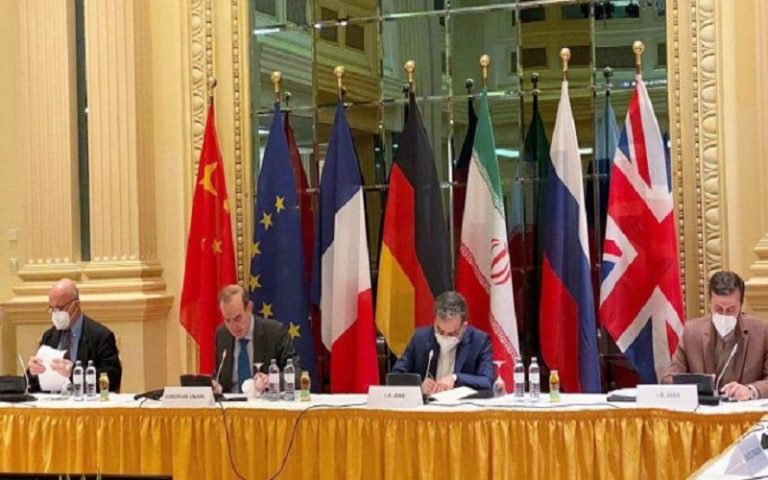
On Tuesday, January 5, Tehran announced its new breach of the 2015 nuclear deal with world powers, formally known as the Joint Comprehensive Plan of Action (JCPOA). A day earlier, government spokesperson, Ali Rabiei had declared President Hassan Rouhani has ordered enriching uranium to 20 percent purity in recent days.

According to a ‘law’—passed by the Parliament (Majlis) last month, Rouhani’s government started “producing and storing 120 kilograms of uranium enriched up to 20 percent per year.”

Tehran took this disputed step while its leaders acknowledged that it might destroy global attempts for reviving the flawed JCPOA agreement. In this respect, Rouhani had initially opposed the step, describing it as “detrimental to the course of diplomatic efforts.”

Tehran Still Breaches JCPOA

Iranian Foreign Minister Mohammad Javad Zarif also boasted and justified this illegal action. “We resumed 20 percent enrichment as legislated by our Parliament,” he tweeted, adding that the International Atomic Energy Agency (IAEA) had been “duly notified.”

While Zarif’s government had constantly breached the JCPOA, he blamed other JCPOA signatories for “years of non-compliance.” However, he could not veil his concern about the international consequences and wrote, “Our measures are fully reversible.”

Iranian officials attributed their unlawful decision to the West, particularly the U.S. government. However, they simultaneously hope that the incoming U.S. administration would return to the JCPOA. In other words, they made two mistakes, which put their establishment in a bottleneck.

First, if as they predict a Biden administration would return to the JCPOA and grant them economic reliefs, they must once again retreat from their recent ambitions. This action may look like a victory for Tehran. However, due to recent development and the Majlis’ density of radical elements, the government’s retraction—which needs Supreme Leader Ali Khamenei’s approval, would contribute to severe shockwaves inside Iran’s governing establishment.

Tehran Is Concerned About a New “JCPOA Plus”

Furthermore, if the ayatollahs refuse to negotiate, not only would they not gain economic and political privileges but also they would likely be confronted with a stronger policy toward Iran. In such a case, the European leaders would pressure Tehran to not just acquiesce to nuclear restrictions, but respect its people’s basic rights, limit its ballistic missile programs, and end its malign behavior in the region.

In this respect, as Zarif had forecasted, the ayatollahs’ new ‘nuclear extortion’ sparked international concern. In this respect, the European Commission also voiced its concerns over Iran’s plan to enrich its underground Fordow nuclear facility to 20 percent purity.

The Lead Spokesperson for the External Affairs of the European Union Peter Stano emphasized that “Iran must be prevented from acquiring nuclear weapons.”

“Iran’s decision to increase uranium enrichment has dire consequences. Iran must honor its nuclear pledges,” Stano said in an interview with alalrabiya.net, adding, “the European Union urges Iran to fulfill its nuclear obligations.”

The United States called Tehran’s new step a form of ‘nuclear extortion.’ “Iran enriching uranium to 20 percent at Fordow is a clear attempt to increase its campaign of nuclear extortion, an attempt that will continue to fail,” said a State Department spokesperson.

Even Chinese foreign ministry spokeswoman Hua Chunying described the ayatollahs’ illegal enrichment as a critical juncture and “extremely complex and sensitive.”

Tehran had previously breached its nuclear obligations by enriching uranium to a level greater than the 3.67-percent limit provided for in the JCPOA. However, its recent violation, which puts the enrichment on the 20 percent threshold, is considered a critical step to achieving the 90-percent purity needed for weapons-grade proposes.

Furthermore, the government started the plan at the severely protected Fordow facilities, which are buried deep under the mountains. According to the JCPOA, Tehran was banned from enrichment at the Fordow facilities.

In this context, the Iranian government’s recent adventurism along with building new covert sites and working on warheads once again shows the ayatollahs’ intention for achieving nuclear weapons. Tehran persistently claims that its religious beliefs prohibit it from obtaining weapons of mass destruction and nuclear weapons.

Iranian Opposition Reveals New Details About Military Aspects of Tehran’s Nuclear Program

However, the beliefs that allowed it to kill at least 1,500 peaceful protesters during only two days in November 2019 are not very reliable in such a status quo. The fact that the ayatollahs kept their nuclear sites a secret until they were exposed by their opposition is a major source of concern.

In this context, the international community must force Tehran to stop its nuclear activities with the language of power and firmness, which the ayatollahs and their appointees well realize. “The re-imposition of six Security Council resolutions, the complete halt to enrichment, the closure of nuclear sites, and anywhere, anytime inspections are indispensable to prevent the regime from acquiring a nuclear bomb,” the National Council of Resistance of Iran (NCRI) stated on January 2.

Iran’s New Piracy and Blackmail

0

Following the seizure of a South Korean oil tanker in the Strait of Hormoz, Iranian media outlets signaled the government’s main goal through this piracy. In this respect, the media unveiled officials’ dilemmas in various fields, including the economy, society, and international relationships.

Regarding the government’s economic problems, Iranian outlets highlighted state-backed parties’ roles and profiteering policy in the unprecedented air pollution. Simultaneously, they admitted to public hatred and the establishment’s concern about the eruption of another round of nationwide protests.

State-run media also blamed officials for the intensification of the government’s isolation. On the other hand, they explicitly revealed Tehran’s purpose of capturing a South-Korean-flagged tanker. Notably, in recent weeks, Iranian officials such as the Central Bank of Iran (CBI) Governor Abdolnasser Hematti had been paving the path for this piracy by grumbling about the government’s frozen funds in South Korean banks.

Iranian State-run Media Admit to Piracy

Vatan-e Ruz paper, affiliated to the Supreme Leader Ali Khamenei‘s Office, carried the headline: “We Captured Thieves”. “The seizure of this oil tanker in the Persian Gulf may send a serious message to the South Korean government. A message that leaves Seoul two options: paying its long-time debt to Tehran or [sacrificing] the security of [its flotilla] at the naval highway of the Persian Gulf and its communication with Arab partners,” the daily wrote.

Iran: A Glance at the Supreme Leader’s Mafia

“The impounding of South Korea’s oil tanker can more than ever before show [Iran’s] grave will for exerting pressure on this country to pay its debts to our country,” Vatan-e Ruz added.

Arman daily affiliated to ‘reformists’ quoted a government-linked expert Ali Bigdeli on the Islamic Republic’s intention through the South-Korean tanker’s illegal capture. “It is true that the South-Korean government cannot pay Iran’s demands through the banking system. However, humanitarian principles rule that this country pays at least some of its debts in the form of [Covid-19] medicine and vaccines,” the daily wrote.

This is while the Iranian government faces no barrier and restriction for purchasing medicine or procuring Covid-19 vaccines. In his earlier February 2020 press conference, then-Spokesperson of Foreign Ministry Abbas Mousavi openly said, “Food and medication had never been sanctioned.”

Corrupt and Inefficient State Versus Public Distrust

Iranian media generally pointed out public distrust toward the officials’ remarks and recommendations, which apparently shows the government’s inefficiency and the gap between the state and society.

Aftab-e Yazd daily raised a meaningful question, titling, “What would happen if we shut down [Tehran] City Council?” “As always, the people follow the news and comment. However, they do not care about politicians’ ideas and views, who have succeeded seats in Pasteur [Street—the President’s bureau], Baharestan [Street—the Parliament (Majlis) building], or Behesht [Street—the central branch of the judiciary],” the daily wrote.

“Fabricated Clash Between Left and Right,” wrote Mostaghel daily, pointing out false conflicts between ‘reformists’ and ‘principlists.’ “Talking to individuals who obtained [official] seats through rent-seeking, lobby, nepotism, political games, and are ruling according to the interests of themselves and their relatives, you are the reason for the collapsing in people’s trust,” the daily wrote.

IRGC Rushes for Iran’s 2021 Presidential Election

Mardom Salari daily blamed officials for indifference about society’s dilemmas. “Air pollution, like many other problems, has become normal for the officials; there is no decision for shutting down Tehran,” the daily noted.

Another outlet controlled by President Hassan Rouhani severely criticized the Majlis for interfering in foreign policies. “The Majlis’s Shadow on Foreign Policies,” wrote Ebtekar daily. In its piece, the daily also highlighted the state’s stalemate and forecasted that “easing tensions in Iran’s foreign relations are out of reach in the near future.”

Ebtekar also underscored the Majlis’s recent law about 20-percent uranium enrichment is an extreme barrier for the government’s foreign policies. “Do these plans decrease the country’s foreign policies’ dilemmas or lift the sanctions? Who are directly responsible for the consequences of such plans?” the daily questioned.

The State’s Dire Political, Military, and Security Conditions

‘Reformist’ media outlets frequently emphasized the imperative of negotiations and concessions to the West. This faction portrays the ruling system’s fate as ‘bleak’, whereas officials still insist on isolation and contraction.

“The Risk of Increasing Tensions Between Iran and the U.S.,” wrote Setareh-e Sobh daily. The ‘reformist’-dominated daily pointed to sanctions and the government’s regional isolation, writing, “These pressures intend to put the [Iranian] state in a political, military, and security impasse to restrict the state’s presence in the region.”

Setareh-e Sobh sounded alarm bells about society’s volatile situation, adding: “There is no cheaper solution than negotiating with the U.S. Because the accumulation of domestic problems has left no way but using the diplomatic instrument.”

“Diplomatic Revenge or Psychological Operation” was Jahan-e Sanat daily’s title. In its piece, the daily warned about the deteriorating Iran-U.S. relationship, writing, “If the U.S. could not open this knot with fingers, it would use military forces.”

“In such circumstances, the slightest undiplomatic behavior may lead to irreparable damages… Therefore, Majlis should not increase tensions with provocative plans in this sensitive status quo,” Jahan-e Sanat wrote.

Iran’s Hostage-Taking Government Only Responds to Firmness

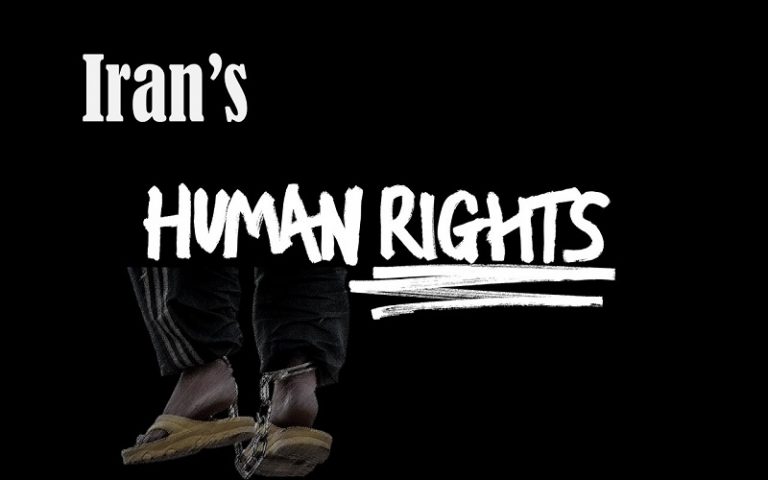
A Glance at Iran’s Human Rights in 2020

As we enter 2021, it’s time to look back at human rights in Iran during the past year, with the help of the Iran Human Rights Monitor, and to describe the situation as bleak would be a horrific understatement.

This article will focus solely on the staggering number of executions carried out in Iran, which is the world record holder for executions per capita, executions of juvenile offenders, and executions of women.

Iran: Life Under the Whip of Execution

While the death penalty can never be justified in human society for any reason, the Iranian government uses it for a variety of non-violent crimes, including using drugs, drinking alcohol, and intentionally vague ‘Muharebeh,’ waging war on God.

Human Rights Violators’ Record in 2020

In 2020, they executed at least 255 people, with just 54 of those announced by official sources. Of those executed, 198 were charged with murder, but it is important to stress the lack of due process in the justice system, which makes for unfair trials.

What’s more, Iran’s laws don’t separate murder based on degrees, which means that the death sentence is applied regardless of motive. In the case of female murderers, many were victims of violence and killed their abusers.

At least 26 of those executed were charged with drug offenses, at least 12 were political prisoners arrested during nationwide protests, and at least four were juvenile offenders.

“The collected statistics cannot depict the reality of what is going on in Iran because the highly repressive conditions do not allow access to the true data by human rights activists.

On the other hand, many executions in Iran are carried out secretly. Therefore, the actual statistics must be considered higher than those presented here,” Iran HRM wrote.

They said that the government uses the death penalty to terrorize and intimidate the Iranian people, which is just one of the reasons the regime was condemned by international human rights organizations. Iran HRM urged the United Nations to take immediate action to stop this egregious abuse.

Iran on the International Human Rights Day

Political Prisoners’ Executions

  • April 23: Abdol-Basset Dahani was executed after making confessions under torture.
  • April 11: Mostafa Salimi was hanged for taking part in a prison break following the coronavirus pandemic first coming to Iran
  • May 11: Hedayat Abdollahpour was executed by a firing squad
  • July 14: Diako Rasoulzadeh and Saber Sheikh Abdollah were hanged after making confessions under torture.
  • August 5: Mostafa Salehi was hanged for taking part in the December 2017-January 2018 protests
  • September 12: Wrestling champion, Navid Afkari, 27, was hanged for his role in the August 2018 protests
  • December 12: Ruhollah Zam was executed in a crackdown on protests in prison

Iran’s Government: “We Are 40 Years Behind the World”

One of the main challenges of Iran’s economy is the practical possibility of growth and promotion of domestic products and the ability to export quality products in global markets. Otherwise, any country that fails to do so will be phased out of the international economic system.

Economic Indicators of Iran According to Reputable International Centers

Last year, when the coronavirus had not overtaken Iranian society and the crime of the mullahs in the field of health had not been revealed, Alef website on 30 December 2019 in a report citing the report of reputable international centers, examined and compared the country’s economic index with leading countries in the Middle East.

This report in the field of industry and products ‘Made in Iran’ states: “Statista International Statistics Institute, through field research in 52 countries, ranks ‘Iran made’ products 50th.”

Iran’s Low Position in The World Production Index

The low level of industrial production, which is the basic basis for non-oil exports, has also been accepted by the Ministry of Industry, Mine and Trade, which is itself in charge of production and trade. In a report on the decline of Iran’s position in the global economy, the Center for Business Studies and Research of this Ministry says:

“A study of the global position of Iran’s economy in 2019 shows that Iran is not in a good position in some international indicators related to production, especially global competitiveness, business ease index and global innovation index,” Jahan-e-Sanat daily wrote on December 28, 2020.

The same report shows the negative growth of the industrial sector, especially since 2018. The decline in investment to compensate for the depreciation of production and the lack of increase in new capacity adds to a decade of decline in this area.

Statistics show that in 2019, inflation in the production sector reached more than 36 percent, and the rate of this variable in 2020 was still high.

Iran claims It Will Reduce Inflation While 45 Million Have Inadequate Income

Closure of Industrial Units

Also, the study of the situation of industrial and production units shows that in 2019, some 40 percent of active industrial units (more than 14,000 units) with a capacity of less than 50 percent were operating and more than 70 percent of the reason for the closure was lack of liquidity and about 20 percent lack of market (About 10,000 units). In this regard, it is said that in the period 2016-2019, the average share of production guilds was estimated to be less than 20 percent.

The Decline in Foreign Trade in the Last Decade

No jump in exports and imports due to production constraints and lack of competitiveness in global markets over the past decade has led to the decrease of exports of 75.8 million tons (down to 14 percent) worth $21.6 billion (down to 20 percent), imports 21.8 million tons (down to 1 percent) worth $23.1 billion (down to 18.5 percent), the average price per ton of exported goods at $285 (down to 6.8 percent) and the average price per ton of imported goods at $1057 (down to 17.5 percent),” Jahan-e-Sanat added.

Two Dangerous Scenarios

It is these shocking realities in the field of production and exports that have led the Chamber of Commerce to express concern that the Iranian government is an ‘exceptional’ government that stubbornly goes beyond the FATF standards and has practically brought exports to a standstill. Finally, there are just two ways in front of this government:

There are two scenarios in this story that seem to have reached the last days. Iran should abandon normal foreign trade. In this case, the risk of phasing out of tangible and observed global trade must be accepted over time,” wrote Eghtesad News website on December 31, 2020.

Iranian economic activists and businessmen have come to the conclusion that Iran is gradually removing itself from the normal world economy due to the non-acceptance of the FATF.

What Is Happening With Iran and FATF?

“Overhead costs and complex ways to bypass end foreign trade capability. Another scenario is for the country’s governing institutions to accept the truth of the world and to organize their foreign trade in such a way that they can sustain the economy,” Eghtesad News added.

Which, of course, means backing away from the regime’s nuclear and terrorist policies.

Excluding Iran from the World’s Largest Free Trade Agreement

“Recently, a very important economic agreement was reached between 15 countries of Asia and the Pacific, including ten countries of Southeast Asia (ASEAN) and 5 countries of China, Japan, South Korea, Australia and New Zealand in the form of the world’s largest free trade agreement called the Comprehensive Regional Economic Partnership. Which, unfortunately, was not given much attention in Iran,” wrote Eghtesad-e-Mardom daily on December 28, 2020.

“The cost of exchanging the economy, especially the production sector, has increased significantly due to sanctions, and the country’s competitiveness in the region has decreased. The result of these issues has been a near halt in Iran’s economic growth over the past decade, a decline in real household incomes, and a decline in investment in the country,” Eghtesad-e-Mardom added.

Iran: 58 Percent of Society Struggle Just to Remain Alive

Fifty-eight percent of Iranian society, including workers and their families, are struggling to remain alive, according to the chair of the Supreme Labor Council’s Wage Committee Faramarz Toufighi.

On December 30, 2020, in an interview with Tasnim news agency affiliated to the Islamic Revolutionary Guard Corps (IRGC) Quds Force, Toufighi pointed out rampant prices of essential goods. “Currently, the population of workers and their family members is more than 49 million people, which makes up about 58 percent of Iran’s society. Regarding the high prices, with a maximum revenue of 30,000 million rials [$120], this strata is struggling to remain alive, not just to make ends meet,” he said.

In his remarks, the Wage Committee’s chair explained that having a small apartment and a Pride Car has become a workers’ dream. “In such circumstances, while workers wish to have minimums, there are rich people who invest with massive sums and enjoy luxury lifestyles,” Toufighi added.

Iran: Improving Citizens’ Livelihood or Stealing From the Nation

This is the flipside of the existing gap between society’s classes in Iran. While officials and their children and relatives enjoy aristocratic lifestyles, many citizens cannot make ends meet despite hard work day and night.

Earlier, Majid Farahani, the chair of Tehran City Council’s Budget and Financial Supervision, acknowledged that “today, we have seven poor deciles, and only three deciles of society are above the poverty line. We had never experienced such status quo,” according to Tasnim on December 14, 2020.

Notably, around ten million underground workers in Iran do not receive minimum wages, according to a member of the Supreme Labor Council Ali Aslani. Therefore, Iranian workers have no share of the country’s national assets, including oil revenue. Instead, Lebanese Hezbollah, Palestinian Hamas, Iraqi Shiite militias, Yemeni Houthis, and other extremist proxies line their pockets with impoverished Iranians’ wealth.

“There are workers whose rights are not supervised by anyone, and they receive even less than the minimum wage. Some of them receive 7 or 8 million rials [$28–$32] per month,” the semi-official ISNA news agency quoted Aslani as saying on January 2.

On the other hand, new people add to the country’s unemployed population every day due to the government’s mismanagement and squander of national resources on irresponsible projects. Officials’ shambolic policies have even earned criticism from government-linked individuals.

Seventy Percent of Iran’s Construction Workers Are Unemployed

“Might officials actually live with workers’ salaries?” Toufighi questioned, adding, “In the past nine months, the product basket’s price has increased by around 200 percent. During a two-year period, housing expenditures both in prices and rents have become fivefold,” he added.

Observers believe that given unbridled inflation, workers’ purchasing power is too insignificant despite the increase in wages. They reported that working families had lost their purchasing power by 100 percent.

Workers’ representative at the Supreme Labor Council Nasser Chamani blamed the government’s failure to clarify a sufficient wage for workers. In this context, while the workers’ purchasing power has dropped by 100 percent, the government must probably increase their minimum wage.

In other words, the government, as the greater employer, must define a fair salary for workers, which has denied performing it so far. “This backwardness—regarding inflation rate and workers’ minimum wage—must be offset to improve workers’ living situation,” Chamani said.