Home Blog Page 312

Female Peddlers in Iran Risking Death

Female peddlers in Iran are facing humiliation and the risk of death to make ends meet in these trying times.

Battling poverty and institutionalized misogyny, these women are forced not only to work long hours for meager money but also to avoid taking the spaces occupied by their male counterparts. Thus, they must work in the most crowded spaces, where the risk of contracting coronavirus is highest.

There are at least 4 million female heads of household in Iran, with the Iranian regime admitting that 82 percent of them are unemployed and living under the poverty line, which is astonishing because the regime likes to hide statistics that make them look bad. These women are doing whatever they need to so that their family stays alive.

However, the government is doing its best to ensure the opposite it seems, with insanely strict rules around welfare services. To qualify, a woman must be earning less than 60 percent of the minimum monthly wage or they are considered ineligible. But if they are making less than the Labour Ministry’s determination of a minimum wage, how can they be considered to be okay without welfare?

Even those who qualify for welfare will find that it does not provide for necessities for them, let alone their children, so they must peddle goods to survive.

Suffocating Iranians Under the Burden of Inflation

“I have to work in this high-risk subway station several hours a day; I have no other way to make a living. I am the head of the household and have two student children. My rent is more than one million Tomans. What should I do?!” a woman who sells scarves in the subway station told ILNA news agency.

“My husband is sick and lying at home. I have to work. Half of my income goes to renting the house! On the outskirts of Karaj, I rent for more than one million tomans a month. Can I afford to be unemployed?! I’m afraid of the Coronavirus, I’m very afraid, but I have no choice; prices have gone up, and I have to be on the subway more than before,” ILNA quoted a 60-year-old woman as saying.

Of course, the official information on peddlers is muddled at best.

Seyed Ali Mafakherian, CEO of the Tehran Organization and Jobs Company, said in September that Tehran had 10,000 peddlers, while Tehran City Council member Hassan Khalilabadi attributed the increase to the coronavirus and rising unemployment as a result, particularly among women.

The government, rather than help the impoverished people or, at the very least, stopping stealing from them, is blaming poor people for their problems and even violently attacking the most vulnerable.

“[Security] officers take us off the trains or do not allow us to work at the stations. They just say, ‘go, get away from here!’ In general, the agents do not treat us well,” a woman said.

“I have given the necessary warnings for this and the monitoring center provides reports … At the entrance of the stations, if we notice the women peddlers, their presence will be prevented. We will deal with the presence of female peddlers,” said Farnoush Nobakht, CEO of Tehran and Suburbs Metro Operating Company.

Of course, as economist and professor Zahra Karimi Moghari, points out, the only way to removed female peddlers is to create decent jobs that give them financial security.

However, the experience shows that the ruling system will not do this. Iranian authorities want to maintain power and they consider the suppression of women as an ideal way to stifle the entire society.

The Role of Iranian Women in Recent Protests

Iran: Four Protests in a Day

0

Iranian authorities’ mismanagement and failures placed workers in dire living conditions. In this respect, there has been no day without protests and strikes across Iran. In fact, while the third wave of Covid-19 claims more lives every day, the army of hunger workers has no choice but to raise their voice for fundamental rights.

According to reports obtained by activists and tallied by Iran News Update, impoverished employees and workers hold at least four protests in different Iranian cities. The demonstrations follow as:

Protesting Rally by Workers of Technical Buildings of Southeastern Railways

A number of workers of technical buildings of southeastern railways held a protesting rally. They demanded employers to serialize the workers’ shift in the railway area of Kerman-Zahedan.

“There are 270 contract workers. In such a status quo, while the number of coronavirus patients is increasing every day, we have to attend the workplace due to the employer’s pressure and fear of dismissal. We must participate in our work without any preemptive equipment to make ends meet,” a worker said.

Notably, workers say the company directors and staff participate in the place every other day. Also, a day earlier, Abdolhamid Shahouzehi, 40, lost his life to the coronavirus after enduring pain and suffering for two weeks. He was an experienced contract worker in technical buildings of the southeast of Zahedan city, the center of Sistan and Baluchestan province.

Analysis: Iran and a Painful Week of the Coronavirus

Protesting Rally by Farmers in Isfahan

In the Khorasgan district, eastern Isfahan, farmers held a rally, protesting water transfer from the Zayandehroud river. They gathered in Pezoh square, demanding authorities to stop the process.

The government transfers the water of Isfahan’s main river while the province, particularly Isfahan city residents, experienced unprecedented drought in recent years. In this context, they time and again rallied and even destroyed transferring equipment and pipes. However, the State Security Forces (SSF) violently suppressed their protests every time.

Protesting Rally by Seasonal Workers of Haft-Tappeh Sugarcane Complex in Khuzestan

In the city of Shush, Khuzestan province, the managing board of Haft-Tappeh Sugarcane Complex fired many workers under the excuse of finishing the period of their contracts. The managers dismissed many workers without any financial support while they already protested unpaid salaries and pensions.

Following the managers’ orders, fired workers held a rally in front of the company’s bureau, although they were likely to be suppressed by the oppressive SSF. In fact, the complex took revenge on workers’ protests for several months, which attracted public attention to the complex’s unfair and unjust policies against workers.

“According to Amili Bahari, seasonal workers of the factory became unemployed. He told workers that ‘your contracts have been finished. Go to your homes. I’ll be calling you,’” reported the Workers’ Independent Channel, a non-profit Telegram Channel updates the workers’ conditions.

Rally of Job-Seeker Youths in Khuzestan

In the city of Behbahan, Khuzestan province, a number of youths, who were seeking a job, gathered in front of the Bidboland-No. 2 refinery’s gateway. They protested unemployment and the lack of jobs in the oil-rich province of Iran.

A Look Back at Last Year’s Protests in Iran

Iran Diplomat Tried on Terrorism Charges in Europe

0

The Iranian government has tried everything to stop its agents from standing trial on terrorism charges in Europe, even threatening the Belgian authorities with retaliation from armed militias.

However, after a two-year investigation into the foiled bomb plot designed to blow up the 2018 Free Iran rally in Paris, Assadollah Assadi and his three accomplices will be tried on November 27 in Antwerp.

The Plot

Assadi, a diplomat at the Iranian embassy in Vienna, wanted to bomb the Free Iran gathering, organized by the National Council of Resistance of Iran (NCRI), which would threaten the lives of all 100,000 people in attendance, including hundreds of foreign politician and dignitaries.

He received the 1lb of TATP explosives and drove them to Luxembourg, where he posed as a tourist in a Pizza Hut restaurant to make the handoff to the two terrorists that he’d hired. They then headed for France, while he headed back to Austria.

European agents arrested the terrorist couple in Belgium, uncovering their car bomb quickly and detonating it safely, while more agents arrested Assadi in Germany.

This is important because has he crossed the border into Austria he could have claimed diplomatic immunity. It might not have worked because he committed the crime outside Austria and Austria could revoke that immunity, but he’d definitely have claimed it.

The Order

Assadi did not make this plan on his own. Indeed, he was acting on the direct orders of the highest-ranking members of the Iranian government, who wanted to punish the Iranian opposition Mojahedin-e Khalq (MEK/PMOI), a popular pro-democracy group that is the main party of the NCRI coalition, for their role in the December 2017-January 2018 protests that threatened to unseat the ayatollahs.

Jaak Raes, the head of Belgium’s security service, said recently that the terror plot “was not a matter of Assadi’s personal initiative” but had been thought up and approved at the highest levels of the government.

This is evident from the open threats made by Iranian officials, which basically admit that all Iranian embassies are terrorist centers that threaten their host country and those around it.

The Outcome

This is not simply a terrorism trial, it is a state-sponsored terrorism trial and the penalty for getting the outcome wrong will be dire.

“In response to this terrorist act on European soil, the Western governments should increase relevant economic pressures as well as closing the embassies through which terrorist-diplomats like Assadi have been allowed to operate for so long,” the NCRI stated.

“They should also stop welcoming Javad Zarif, as the main person in charge of the regime’s embassies and their terror acts, on their countries and they should designate him and his ministry as a terrorist organization,” the statement reads.

Iran: 2021-22 Budget Bill and Economic Crisis

0

Iran is going through its worst economic crisis. A devaluation of the countrys national currencyskyrocketing prices, low incomes, severe economic sanctions, and government mismanagement have overwhelmed Iran’s society. In the meantime, many officials accuse each other of the calamity and warn of mirage of the 2021-22 budget.   

On November 17, Irans deputy Vice-President Eshaq Jahangiri warned the parliament about the new 2021-22 budget, saying, The Parliament (Majlis) is issuing new commitments for next year’s budget that cannot be met with even ten times the current budget. We cannot increase the country’s resources through imagination and fiction. 

Not even showing respect for the Majlis Speaker Mohammad Bagher Ghalibaf, he alluded to the fact that the latter needed education in financial matters before entering budget problems.  

Infighting by Iranian Officials Due to Massive Pressure

Increasing Taxes, Like Ancient Monarchs

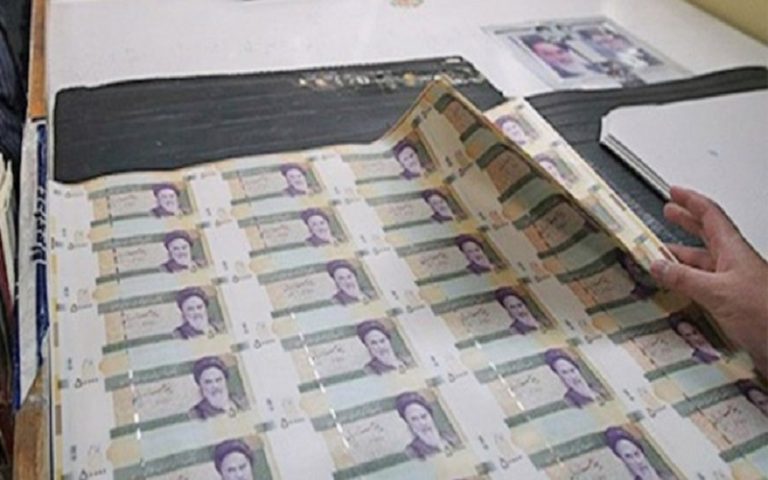
For years, Iranian officials used tax increases, printing unsupported banknotes, and taking advantage of the exchange rate increases to compensate for their budget deficit and handle the economic crisis.

However, these methods are not responsive all the time and have been viewed by skepticism within the government because any increase in state taxes from any sector will inevitably increase inflation and increase prices in other sectors. 

“In these difficult times when the government is facing a lack of oil resources and heavy U.S. sanctions, it is not possible to increase customs duties and not face the consequences in society, Jahangiri emphasized and issued a warning, Some say we should increase customs resources. Such calculations increase the price of all goods in the country.

No doubt the countrys economic crisis is the responsibility of the Supreme Leader Ali Khamenei and President Hassan Rouhani as the highest accountable officials. The countrys currency has started to devalue since 2012, and a brief review of Irancrises since the beginning of 2011 shows the acceleration of instability and the loss of control over the country’s problems. 

Peyman Molavi, Secretary of the Iranian Association of Economists, believes that to bring back the value of the countrys currency is as hard as moving mountains 

The devaluation of the countrys currency has started since 2012. If we want to go back to those years, we need to have an economic growth above 8 percent and $150 billion of investment,” he told Eghtesad Pouya website on November 17. 

The increase in liquidity must be prevented, and the budget deficit must be resolvedEven if sanctions were lifted and the lack of trade with foreign countries resolved, it would still take six years to reach the economic status of 2012. There is no short-term solution to restore the value of the national currency, Molavi added. 

One should, however, not forget that hundreds of billions of dollars of oil revenues in the time of former President Mahmoud Ahmadinejad did not have a more brilliant result for the Iranian people.

A Look at Iran’s 2020-2021 Budget

One should also remember that the protests back in January 2018, due to the economic situation of the country, broke out when the sanctions were not yet so severe, and the U.S. was still part of the 2015 Iran nuclear deal, formally known as the Joint Comprehensive Plan of Action (JCPOA).

Therefore, the leading solution for Irans economy may not be economic first. The fact that the Islamic Republic’s officials in all factions have plundered the countrys wealth for more than 41 years.

To ensure their government’s survival, they spent Iran’s national resources on terrorism and proxy wars abroad, and domestic suppression has hardly any miracle solutions for the economy. In this respect, the people whose share of their natural wealth was merely poverty and misery see protests and strikes as the sole solution to take back their inherent rights.

U.S. Treasury Sanctions Iran’s Mostazafan Foundation

0

On Wednesday, the Office of Foreign Assets Control (OFAC) inside the U.S. Treasury issued sanctions against Iran’s Islamic Revolution Mostazafan Foundation (Bonyad Mostazafan). They said that rather than being a charitable organization, it is “an immense conglomerate” with 160 holdings in the sectors of finance, energy, construction, logistics, information technology, and mining, which Supreme Leader Ali Khamenei uses to enrich his office and his allies, as well as punish dissidents.

“Iran’s Supreme Leader uses the Bonyad Mostazafan Foundation to reward his allies under the pretense of charity. The United States will continue to target key officials and revenue-generating sources that enable the regime’s ongoing repression of its own people,” Secretary Steven T. Mnuchin said.

It and its entities were designated under Executive Order 13876, which targets Iran’s Supreme Leader and his office.

Iran Official Admits the People Don’t Trust the Regime

What Entities Are Involved?

  • Sina Energy Development Company (SEDCO) and its subordinate companies:

    • Payandan Company
    • Coal Tire Refining Company
    • Pishro Iran Financial and Investment Company
    • Pars Energy-Gostar Drilling and Exploration
    • North Drilling Company
  • Behran Oil and its subsidiary companies:

    • Beh Tam Ranakar Company
    • Behran Trading Company
    • Tabchem Chemical Industries
  • Kaveh Pars Mining Industries Development Company (KMID) and its subordinate companies:

    • Pars Sarralle Company
    • Damavand Mining
    • Tehran Cement Company
    • Kaveh Khozestan Aluminum Company
    • Arvand Kaveh Steel Co.
    • Kaveh Shargh Steel Co.
    • South Kaveh Steel Co.
    • International Trade & Industrial Technology ITRITEC GmbH
    • Turira Company
    • Somic Engineering and Management Co
    • Tehran International Transport Co
    • Pishgaman Horizon Development Iranian Business Trading Company
    • Sina Financial and Investment Holding Company
  • Bank Sina and its subsidiary:

    • Sina Currency Exchange Company
  • Omran va Maskan Iran Company
  • Paya Saman

    Pars Company and its subordinate companies:

    • Raman Company
    • Melli Sakhteman Company
    • Day Company
    • Taloon Company
  • Parsian Tourism and Recreational Centers Company and its subordinate companies:

    • Sina Port and Marine Services Development Company
    • Bonyad Shipping Agencies Company
    • Bonyad Eastern Railway Company
    • Sina Pars Rail Company
  • Sina Paya Sanat Development Co. and its subordinate companies:

    • Sanati Doodeh Fam Company
    • Shisheh va Gas Industries Group
    • Iran Tire Manufacturing Company
    • North Wood Industry Company
    • Selkbaf Co, Aliaf Company
    • Hejab Textile Company
    • Sina Tile and Ceramic Industries Company
    • Pars Tile Company
  • Iran Electronic Development Company (IEDC)

  • Rah Negar Middle East Pars Company

  • Peyvand Tejarat Atieh Iranian Company

Meanwhile, OFAC designated Iranian Intelligence Minister Mahmoud Alavi for the key role that his ministry has played in the abuses of the Iranian people’s human rights, particularly during the November 2019 protests.

Other people being designated include:

  • Bonyad Mostazafan Foundation president Parviz Fattah
  • Bonyad Mostazafan Foundation deputies Amir-Mansour Borghei, Javad Ghana’at, Khosro Mokhtari, and Mohammad-Ali Yazdan Joo
  • SEDCO’s managing director Javad Oji
  • KMID’s managing director Seyyed Mohammad Atabak
  • Sina Financial’s Mohammad Eskandari and Mohsen Alikhani
  • Sina Bank’s Seyyed Zia Imani
  • IRGC Brigadier General Heidar Abbaszadeh
  • IRGC Colonel Reza Papi

“As a result of today’s action, all property and interests in property of the persons designated above for blocking sanctions must be blocked and reported to OFAC if their property or interests in property are in the United States or in the possession or control of U.S. persons,” the statement read.

“In addition, persons that engage in certain transactions with the individuals or entities designated today may themselves be exposed to sanctions. Furthermore, any foreign financial institution that knowingly facilitates a significant transaction or provides significant financial services for any of the persons designated today could be subject to U.S. correspondent account or payable-through account sanctions,” U.S. Treasury Department added in its statement.

Iran’s Economy Suffers from State-Backed Mafia, Not Sanctions

In Iran, President Hassan Rouhani and allies attribute the country’s economic dilemmas to sanctions. However, economists and experts believe that Rouhani and his faction are misleading society, and most of the financial problems are not related to sanctions but rooted in the corrupt and flawed system.

In this respect, there are numerous instances of officials’ mind-blowing corruption cases and multi-billion embezzlement that put Iran’s economy on the verge of collapse. At the same time, all parts of the ruling system are involved in systematic corruption, and the counter-corruption departments are themselves the source of fraud and looting.

Fight Against Corruption in Iran’s Judiciary or Khamenei’s Successor?

In other words, rent-seeking, bribes, corruption, and smuggling have grown in Iran as an inherent outcome for Iran’s sick economy. While productive industries do not run the country’s financial system, attributing problems to foreign reasons is a joke. Therefore, today Iran suffers from the lack of healthy production relationships before any sanction or restriction imposed by “Great Satan”—the term Iranian authorities use to describe the United States.

“The economy’s main problem is lying and incriminating others to divert public opinion from bitter truths that imposed by the government. As a routine, the U.S. is announced as the country’s dilemmas while the government’s functions have originated these dilemmas. The [problems] have no tie with [U.S.] sanctions,” said economist Hossein Raghfar in an interview with Resalat daily on October 14.

“Instead, the government has destroyed the country’s economy, and the source of problems is inside the country. Domestic mafia gives a wrong address for resolving economic problems,” he added.

Raghfar also explained how the rulers’ mismanagement and failed policies destroyed Iran’s production capacities and made the country dependent on imports. “In six years, from 2005 to 2011, the imports’ value reached from $16 billion per year to $90 billion, and the country became more dependent and consumerist by importing saddle to the toothpick,” he said.

“If [the government] controlled fake demands and did not deposit foreign exchange resources to the pocket of those who took it out of the country, the sanctions would not become effective. However, officials are not willing for this [control] to happen,” Raghfar added.

“During 2018 and 2019, according to the Central Bank of Iran (CBI) statistics, the country earned $180 billion through exports. However, it is unclear where these foreign exchanges were used? According to studies, the government could provide [the people’s] essential and production goods up to $35 billion. Moreover, it could ensure the country’s foreign exchange fund for three years,” he said.

Therefore, Iran’s financial structure faces fundamental obstacles, which have been rooted in the institutionalized corruption in all of the governing system’s sectors. As a result of these structural problems, Iran’s national production faces an unprecedented recession, and it has been stopped in many parts.

A massive amount of smuggling and hoarding of essential commodities is a flagrant illustration of systematic corruption and non-transparency in production activities, which directly affected Iran’s economy.

“Today, we witness the country confronts serious challenges. We see wherever the public supervision has been weakened, security and military supervision and traditional confrontations could not resolve the country’s main issues and challenges such as combating corruption and rent-seeking,” ILNA news agency quoted Mahmoud Mirlouhi, member of Tehran City Council, on November 17.

This is while the security and military apparatuses are among the most corrupt organs. For instance, under the former judiciary chief Sadegh Amoli Larijani, Iranian media outlets revealed that the judiciary chief has 60 private bank accounts. Larijani later declared that the Supreme Leader Ali Khamenei had issued a decree in this context during the tenure of his predecessor Mahmoud Hashemi Shahroudi.

Also, the corruption cases of Akbar Tabari, former executive director of the judiciary during Larijani and Shahroudi’s tenure, have shocked the people by this magnitude of cheating and abuse of power. On the other hand, the IRGC controls hundreds of official and unofficial ports wharves and has specific customs.

The Systematic Corruption in Iran’s Judiciary

The current judiciary chief Ebrahim Raisi was the head of Astan-e Quds Razavi conglomerate that almost possesses Mashhad, Iran’s second metropolitan and thousands of hectares of residential and farm estates across the country, as well as hundreds of factories and workplaces.

Notably, Astan-e Quds is one of the pillars of Khamenei’s $200-billion economic empire. According to the Astan-e Quds statute, the Supreme Leader appoints its head, and he only reports to the Supreme Leader. The institution benefits from tax exemption and facilitates Tehran’s illicit transactions under the pretense of endowments and donations.

“Annoying class differences, poverty, corruption, discrimination, insufficiencies in the administrative system, intermediation, and brokerage, which have unfortunately done by children or appointees of directors and officials, indicate our failure in implementing justice and a fair rule,” Hossein Hagh-Verdi told Radio Farhang on November 17.

In fact, while Khamenei and the institutions owned by his office have monopolized 80 percent of the national production, corruption expands crazily. Iranian authorities neither can nor will spend national resources for the sake of people due to the state’s flawed structure.

Unbridled poverty and the rising poverty line are the flipside of systematic corruption, destruction of national production, and rent-seeking growth. However, the sole solution for these painful dilemmas is political changes and establishing a transparent government based on the rule of law. In recent years, the Iranian people, time and again, demonstrated their desire to achieve such a government in nationwide protests.

Nurses in Iran Are Overworked, Underpaid, and Getting Sick

0

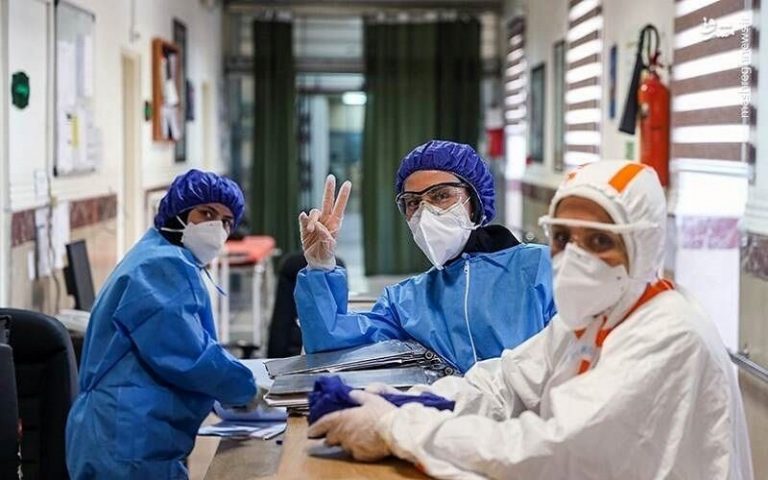
The coronavirus pandemic has been a living nightmare for many countries, with governments across the world forced to look at their healthcare system, especially their medical staff who are bearing the brunt.

Many countries have taken special measures to ensure the mental and physical health of key workers so that they can continue to take care of patients.

This is not the case in Iran. Medical staff get no special treatment. In fact, many of them with salaries of roughly $100 a month—four to five times under the official poverty line—have not been paid for several months, which Health Ministry officials have admitted.

Even state-run media has reported that over 90 percent of Iranian nurses are unhappy with their working conditions and salaries, which has led to many leaving the country or the profession in order to secure basic and safe working conditions.

Iran COVID-19 Situation: All Provinces Are Either ‘Red’ or on Alert

“Now, we are seeing these nurses migrate to other countries… The Foreign Ministry is obligated to declare the exact number of migrating nurses. Unfortunately, nowadays we are seeing 250 daily nurses file petitions for migration to foreign countries,” said Armin Zare’ian, director of Iran’s Council of Nurses.

“Several factors lead to these requests, from exhaustion and fatigue due to eight months of continuous, around-the-clock work since the early days of the coronavirus pandemic, to not receiving salaries and temporary employments which prevent nurses from enjoying insurance and many other benefits,” he added.

During the early days of the pandemic, the head of Iran’s Medical Council reported a 125,000-nurse shortage, with less than one nurse per hospital bed; something that has decreased sharply, putting more pressure on those who remain.

The secretary of the House of Nurses Organization reported last month that some 30,000 nurses were infected with COVID-19, which has definitely made the situation worse.

The problem is that, although this problem was known about for a while, the government has promised to do things and never followed through, including with the 10,000 nurses they promised to hire this year. They’ve not been hiring for years, even though roughly 3,500 nurses retire each year.

Dismissal of Iranian Nurses During the Corona Era, the Answer to Their Sacrifices

The state has failed to pay existing medical workers or hire new ones but they did have a spare 200 million euros to pay the terrorists affiliated to the Islamic Revolutionary Guard Corps (IRGC) Quds Force and $1,800 per month per member of the Lebanese Hezbollah.

“The regime neglects the Iranian people’s needs, and especially nurses who are facing the coronavirus pandemic parallel skyrocketing high prices, This leaves them in harsh conditions due to poverty and Covid-19,” the Iranian Resistance wrote.

Tehran Still Breaches JCPOA

0

On Wednesday, November 18, the UN nuclear watchdog once again asked Iran to explain the origin of uranium particles found at an undeclared site south of Tehran. Previously, Iranian authorities rejected the existing site, claiming there is a carpet-cleaning facility.

In February 2019, the International Atomic Energy Agency (IAEA) inspectors took environmental samples that showed traces of processed uranium at the “carpet-cleaning” factory. Since then, the Vienna-based UN watchdog and the United States seek Tehran’s answers on where those traces came from. However, the ayatollahs evade the questions.

“We believe they need to give us information which is credible. What they are telling us from a technical point of view doesn’t add up, so they need to clarify this,” IAEA Director General Rafael Grossi told a news conference during a quarterly meeting of his agency’s 35-nation Board of Governors.

Earlier, on October 16, the Iranian coalition opposition National Council of Resistance of Iran (NCRI)-U.S. Representative Office exposed two secret sites in Tehran and Isfahan provinces.

“New information received from sources within the Iranian regime reveals that a new center has been built to continue its work for the weaponization of the Iranian regime’s nuclear program,” said Alireza Jafarzadeh, deputy director of the NCRI-U.S. Representative, in a press conference.

Jafarzadeh explained the Organization of Defensive Innovation and Research (Sazman-e Pazhouheshhaye Novin-e Defa’i), known by its Persian acronym SPND, is the institution within the Ministry of Defense pursuing this project.

He revealed that the SPND has built up new sites in the Sorkheh-Hessar region, east of Tehran, and in the Abadeh region, Isfahan province. “Since the mid-1990s, the IRGC has gained the control of a large area north of the town of Abadeh where it has built a site linked to the plan to build nuclear warheads. The plan is called AMAD (currently SPND). To this end, the IRGC controlled vast areas of land, including some coal mines,” Jafarzadeh revealed.

In 2015, the world’s major powers were optimistic that an accord could halt the ayatollahs’ longstanding thirsty for nuclear weapons. However, the time displays that not only the Iranian government did not refrain from efforts to weaponize its nuclear programs but also abused generous reliefs to expand its controversial projects.

The ayatollahs consider nuclear weapons as insurance for their survival and the expansion of their regional influence. However, the people of Iran apprehensively see their national assets go in vain when the country severely needs to advance its health apparatus.

Unfortunately, Tehran’s rulers have taken hostage the people’s fate, health, and lives to blackmail the international community on economic concessions. The bitter experience of the 2015 nuclear deal, formally known as the Joint Comprehensive Plan of Action (JCPOA), did never improve the Iranian people’s livelihood and welfare. Instead, it boosted the authoritarians’ power to apply more suppression and export terrorism abroad.

Tehran Restricts IAEA’s Access to Contested Nuclear Sites

Iran Media Acknowledges Ayatollahs’ Plan to Use COVID Against People

0

On the anniversary of the 2019 protest in Iran, state-run media have acknowledged that the government is using COVID-19 as a way to prevent the restive society from another nationwide anti-establishment protest.

So far, the Iranian opposition Mojahedin-e Khalq (MEK/PMOI) reported that over 159,000 people have died from COVID-19 in Iran because the ayatollahs are deliberately failing to contain the pandemic.

However, President Hassan Rouhani has refused the two-week national lockdown that medical experts and local politicians have been calling for, citing the economy. Someone should tell him that dead people don’t spend money.

“Experts’ proposal to close crisis centers for two weeks was not approved yesterday at a meeting of the National Combatting Covid-19 Task Force chaired by Hassan Rouhani. So, who is responsible for the rising death toll?” Vatan-e Emrooz daily wrote Sunday, November 15.

25 Million Iranians Have Contracted Coronavirus, 30–35 Million Others Are Exposed to Virus: Rouhani

While Resalat daily questioned how anyone could believe that the state was concerned about the economy when they “ruined the economy within the last seven years”. This is an important point because the government has long tried to blame sanctions for the economic decline, even though the real cause is the ayatollahs’ missile building, terrorism funding, and institutionalized corruption. They also asked what the economic cost is of thousands of deaths per day.

“We would certainly see severe consequences and pay a heavy price with so many people losing their lives. Unfortunately, the bottom line is that the methodology of preventing and spreading the coronavirus has been completely wrong from the beginning. So far, the government has made no effort to control the virus,” Jahan-e Sanat daily wrote.

We should note that Rouhani is not alone in weaponizing COVID-19 against the people; after all, it was Supreme Leader Ali Khamenei who called it a “blessing” and many other officials have refused to come out in opposition to it.

Hamdeli daily asked on Saturday how many people would have to die every day for the government to make a COVID-19 plan.

“If the government cuts the budgets of institutions that have no interest in the present and the future of the country, yet have a budget line, or cuts the salaries of tens of millions of government officials, it may be able to alleviate some of its financial problems. The government could also then help people amid the coronavirus crisis,” Hamdali wrote on November 14.

This suggests that the ayatollahs’ plan to use COVID-19 and the rising death toll to prevent another protest has failed.

Iran: Public Murder and Torture to Halt Protests

During the past weeks, the religious fascism ruling Iran has intensified suppression in the streets to terrify the fed-up people, particularly youths who are the leading force of protests.

In this respect, the State Security Forces (SSF) launched a new round of oppressive measures, including humiliating youths; killing two young men in Mashhad and Esfarayen cities in northeastern Iran; and beating a pregnant woman in Abadan in Khuzestan province, southwest of the country.

All the mentioned actions were taken place in the streets. Many people describe these brutalities as “street torture.” However, the question is, why the government insists on performing such disgusting actions in public?

Iranian authorities believe that they can control public ire by creating panic and horror among citizens.

Resorting to open suppression is one of the last cards of dictators, which reveals that they have no social base despite their hollow claims.

The Iranian people have experienced this kind of suppression in the entire history of the Islamic Republic.

In the past four decades, the ayatollahs tried to quell the people’s eagerness for fundamental rights and freedoms through the Revolutionary Guards (IRGC) patrols and SWAT patrols.

Furthermore, they invented several units under cover of religious thoughts such as patrols of Amr-e Be Marouf and Nahy-e Az Monkar (enjoining good and forbidding wrong) and countering Bi-Hijabi (women who refuse compulsory hijab).

Iran Arrests Thousands Arbitrarily Fearing an Protest

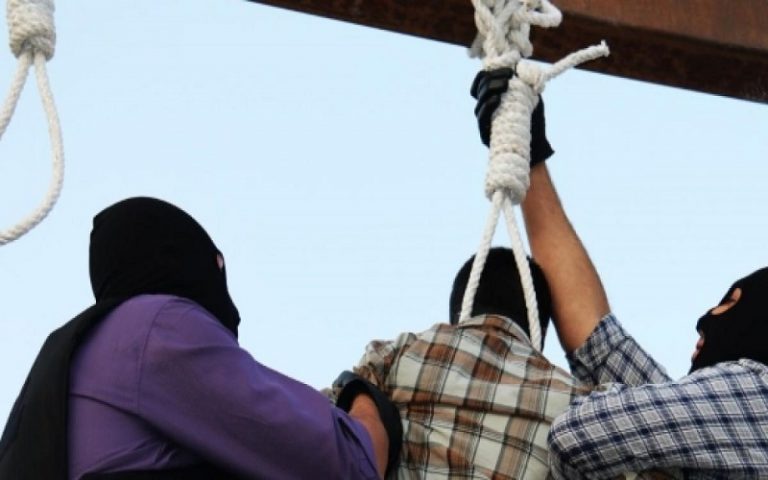
On the other hand, the Iranian government commits crimes against humanity under the excuse of religious punishments. Public stoning, hanging, and amputating people’s fingers are only some instances of tortures mandated by the ayatollahs’ penal code.

Moreover, the ayatollahs promote acid attacks on defenseless girls and women under the pretense of ensuring men’s zeal. On October 2, the Supreme Leader Ali Khamenei’s Representatives in the city of Isfahan, central Iran, and Bojnourd, northeastern Iran, called their thugs to assault “norm-breaker” women.

“The atmosphere of the society should be made insecure for these people, who are also few in number, and they should not be allowed to break the norms easily in the streets and parks,” said Khamenei’s Representative in Isfahan Yousef Tabatabai.

“The phenomenon of bad hijab and lack of hijab in society is like a virus among the people, and it must be confronted. In addition to the police and the judiciary, to deal with the lack of hijab, people should also get involved in this matter and be moral polices. Therefore, we must be sensitive to non-coronaviruses,” said Abolghasem Yaghoubi, the Friday prayer leader and Khamenei’s representative in North Khorasan province.

However, Iranian citizens never gave in to the government’s oppressive measures and restrictions, and they frequently show their objection to the ayatollahs’ actions.

In the past two years, these objections have emerged in the form of nationwide protests. As the authorities said, the people seek an opportunity to express their wrath against the entire ruling system.

Truly, increasing the suppression and restrictions is a testimony to public anger and distrust toward the rulers.

This is the main issue that authoritarian regimes try to conceal by a flagrant crackdown on simple cries. However, the government is simultaneously losing its credit even among its loyalists, which put its survival on the verge of collapse.

In this respect, a “reformism-theorist” Abbas Abdi describes recent protests as “illness,” adding that the establishment can just “contain the illness’s symptoms” with suppression.

According to Abdi, once the government thought it had defeated social disappointment and “healed the patient,” the “illness emerged with more intensity” in November 2019.

In his interview with Etemad daily, Abdi described Iran’s condition as a powder keg, which might explode with a small spark.

“The problem has not been resolved, and sooner or later, another event can detonate this powder keg. Therefore, we must go further than that decision and learn from the protests. We must await the repetition of these incidents,” Etemad wrote on November 16.