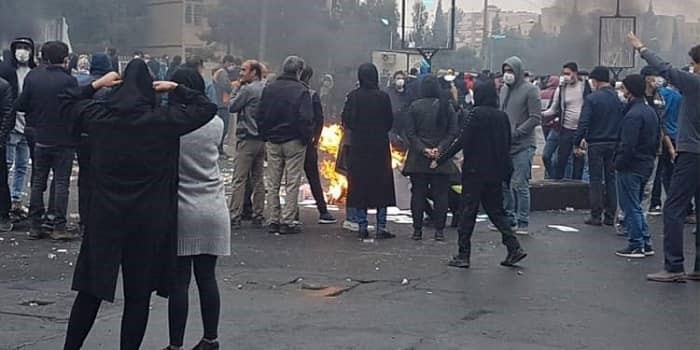
Iran authorities strengthen their efforts to dominate cyberspace as the people openly express their will for changing the current political system and collaborate their anti-establishment protests
By Jubin Katiraie
Conventional wisdom has it that authoritarian states use propaganda to pave the path for suppressing dissidents and executing extreme measures. They use media outlets and social media to whitewash their crimes and disguise victims as offenders. To achieve their goals, authoritarians have form armies of fake accounts who merely reiterate their message in social media. In this respect, millions of unemployed people are good targets for recruitment and improving propaganda operations with minimum capital.
Fake armies are usually known as “anonymous” experts, sources who spoke on the condition of “anonymity,” or an official who prefers to remain unknown due to the issue’s sensitivity. However, the question is why these reliable sources cover their identity while they repeat officials’ comments in other languages?
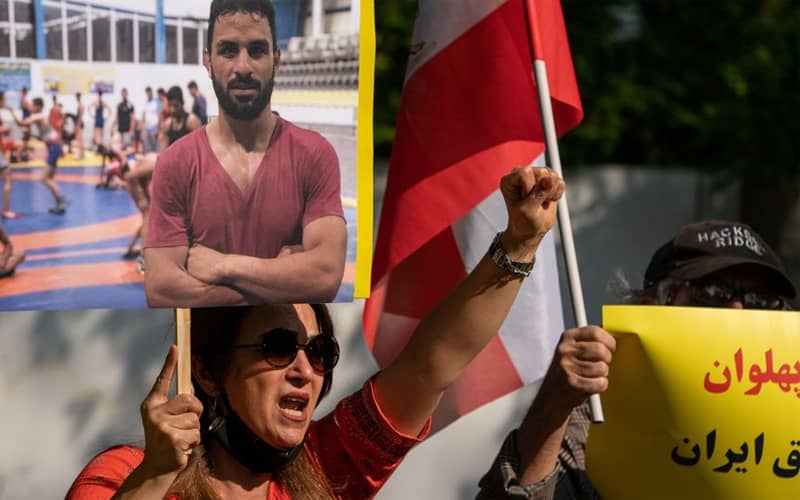
State-backed propaganda missions have drastically intensified inside Iran and abroad in parallel with the escalation of the Iranian people’s protests. For instance, in a coordinating operation, Iran’s cyber-army attempted to demonize hundreds of thousands of protesters who peacefully took to streets. Cyber agents openly supported the execution of detained protesters and rudely expressed their happiness for hanging Mostafa Salehi and Navid Afkari.
Government-linked accounts explicitly repeated authorities’ false accusations and said, “Detainees of the November 2019 protests have been sentenced to death due to their involvement in an armed robbery.” Also, they compare the situation of Iran under the religious dictatorship with the status of democratic countries like France or the United States.
“Events like the November 2019 protests are taking place everywhere around the world; they are naturally happening in France or the United States,” they post on messaging apps. However, they intentionally avoid saying the whole story. They do not say that protesters in other countries are not being shot systematically. Furthermore, even Iranian state media affirmed that many police officers and security agents had been tried for using excessive force against demonstrators.
However, Iranian authorities have never prosecuted any police officer for targeting barehanded protesters during the November protests or even shooting down a commercial airliner in January. Instead, they captured many citizens and bystanders and tortured them to extract televised confessions about things they had never done. Afterward, they sentenced the poor detainees to inhuman sentences to terrify society.
Once again, they deliberately circumvent the truth to insinuate their audiences that protesters deserve merciless punishments. They would truly like to style rights groups and activists as defenders of implementing the death penalty. Then, Iran’s cyber army blamed activists for controversial behaviors.
The Iranian government’s cyber agents simultaneously paved the path for the execution of protesters. They trended ‘#Execute’ on Persian-language Twitter and demanded the implementation of the death penalty against protesters, arguing that death-row demonstrators had committed murder, invasion of privacy, armed robbery, and bombing attacks.
All the while, Babak Paknia, the lawyer of Amirhossein Moradi, Saeed Tamjidi, and Mohammad Rajabi, three youths arrested during the 2019 protests, rejected all accusations and announced there is no relevant evidence to his clients’ cases. “As the lawyer of the case, I say that there is no charge of murder, invasion, armed robbery or bombing in the case; The video published in cyberspace, which is stolen from a store, has nothing to do with the case of our clients. If you have no faith, at least be honest,” Paknia tweeted.
به عنوان وکیل پرونده عرض می کنم،هیچ اتهامی ناظر بر قتل،تجاوز،سرقت با اسلحه گرم و بمب گذاری در پرونده وجود ندارد؛ فیلم منتشره در فضای مجازی که از فروشگاهی سرقت می شود اصلا ربطی به پرونده موکلین ما ندارد.اگر دین ندارید لااقل آزاده باشید#امیرحسین_مرادی#سعید_تمجیدی#محمد_رجبی
However, the ayatollahs’ anonymous soldiers extended their propaganda operations in other aspects. To justify and conceal crimes committed by authorities and security forces, they assault Kurdish porters (Kolbars) and even charity organizations.
“Kolbars were shot and killed due to smuggling cargo or drug” and “Managing boards of non-profit charity organizations are in touch with the enemies and demonize the country’s situation under the guise of charity activities” are seen in Persian-language posts on social media as a part of the Iranian cyber army’s mission.
In addition to the mentioned misinformation campaigns, Iranian authorities constantly spread fake news about dissidents. For instance, the Ministry of Intelligence and Security (MOIS) and the intelligence department of the Revolutionary Guards (IRGC) are annually printing and producing hundreds of books, movies, and TV series, as well as publishing thousands of articles to demonize the Mojahedin-e Khalq (MEK) organization.
As a part of the ayatollahs’ misinformation campaigns, cyber agents are tasked to circulate these allegations in social media apps to disturb the organization’s reputation among citizens. These activities have been amplified in the past years. This shows the growth of the opposition’s popularity among the people, especially between the young generation, which has prompted forty members of the Parliament (Majlis) to submit a plan for banning all messaging apps.
The continuation of Iran’s propaganda missions despite the country’s dire economic condition and efforts to shut down social media and launch a state-control network apparently reveals authorities’ concerns about cyberspace. Earlier, the supreme leader had highlighted security threats imposed by social media. “If I was not the leader of ‘the Islamic Revolution,’ I definitely became the head of the country’s [department] for cyber affairs,” Khamenei said in November 2014.
He had also compared the importance of cyber activities with the entire Islamic Revolution, saying, “The cyberspace is as important as the Islamic Revolution.” The Iranian government never accepts its failure in the domination of cyberspace. However, these remarks and plans for restricting messaging apps clearly exposed Iran’s oppressive apparatuses cannot confront Iranian netizens. During the November protests, a week of internet blockage also showed the truth that the government has not been able to suppress citizens who use any means to express their objections and coordinate their efforts and anti-establishment activities.
Read More:
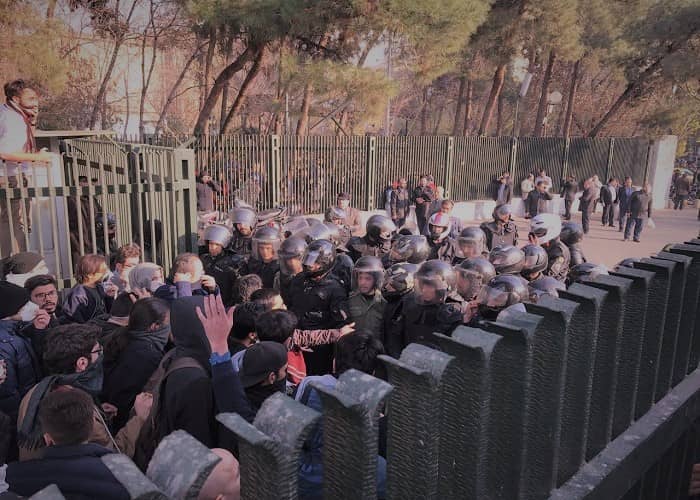
Iran, protest in 2018, archive image
By Pooya Stone
The Iranian regime is attempting to stop any dissent by imposing heavy sentences on protesters, warning in state media that nationwide protests, bigger than was ever seen before, are coming, which is why they must punish peaceful protesters with long prison terms, floggings, and even executions.
Human rights activists, eyewitnesses, and former detainees report that arrested protesters are routine:
Harassed
Tortured
Beaten
Flogged
Given electric shocks
Suspended from the ceiling
Mock executions
Waterboarded
Sexually abused
Denied medical care
Prevented from contacting their families or lawyers
Interrogated in solitary confinement
Iran Human Rights Monitor produced a brief report on the abuses levied at protesters, including children, who merely exercised their right to freedom of expression.
Execution
Two protesters were recently executed: Mostafa Salehi, 33 and a father-of-two, and Navid Afkari Sangari, 27, and a champion wrestler. They were killed for taking part in protests, no matter what bogus charge they were tortured into confessing to.
But there are ten more protesters on death row, including Amir Hossein Moradi, Saeed Tamjidi, Mohammad Rajabi, Mohammad Keshvari, Hossein Reyhani, Hadi Kiani, Mehdi Salehi Qaleh Shahrokhi, Mohammad Bastami, Majid Nazari Kondari, and Abbas Mohammadi.
Flogging
In the past year alone, the regime has handed down 28 flogging sentences to protesters, numbering 1270 blows in total.
This included:
Vahid and Habib Afkari Sangari, who was sentenced to 74 lashes each and long prison terms
Ali Azizi and Aliyar Hosseinzadeh flogged on June 8
Moradi, Tamjidi, and Rajabi sentenced to 222 lashes in total as well as their death sentences
Morteza Omidbiglou who was given 222 lashes along with a long prison term and forced labor
Mohammad Eghbali Golhin sentenced to 74 lashes, 11 years in prison, and one year in exile
Fatemeh Kohanzadeh, sentenced to 50 lashes, prison, and forced labor
Keyvan Pashaei, Ali Azizi, Amin Zare, Salar Taher Afshar, Aliyar Hosseinzadeh, and Yasin Hassanpour, sentenced to 20 lashes, eight months in prison, and a 15 million rials fine each
Iran Human Rights Monitor said: “[We] call on the international community, and in particular human rights organizations, to strongly condemn the killing and execution of protesters by the Iranian regime. The UN Security Council must place the dire human rights situation in Iran on its agenda and send an international delegation to visit the prisons in Iran. They must meet with the prisoners, especially those arrested during the November 2019 uprising.”
Read More:
Protests spread across Iran this weekend, featuring people from all walks of life. (Image: Archive)
By Jubin Katiraie
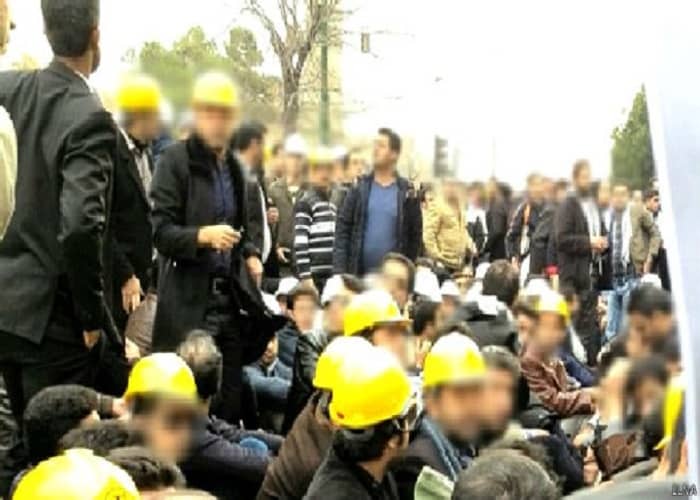
On Sunday, contract workers expelled from the Sports Affairs Department in Gachsaran’s Oil and Gas Exploitation Company protested outside the governor’s office demanding their return to work and reminding us that they had not been paid for three months before they were fired.
One protester said: “For several weeks now, a group of sports coaches, whose only source of income was coaching in this company, have been fired under various pretexts, including company officials saying they are no longer needed. Each of them has more than ten years of work experience and their status is left in limbo so far.”
Meanwhile, over 200 employees and contract workers from the Abadan Refinery protested outside the company’s head office in Abadan over the refinery’s job classification plan. They said that the adjustment plan measures over contract workers’ payments were not implemented and they are also demanding an increase in wages based on work experience and specific duties.
The labour representatives who attended decision-making meetings were chosen by politicians, so they cannot be trusted to represent the workers.
On Saturday, workers of the Khalkhal Water and Sewerage Department in Ardabil, gathered in Khalkhal to protest the eight-month delay in receiving their wages, to which the local head of the regime’s Labour Union and Social Welfare Office threatened to fire them.
On Friday, the Revolutionary Guards (IRGC) shot and killed Hassan Khandeh-pour, who was married with three children and wounded another civilian, known only as “Arab”, in the Gader Mountains near Oshnaviyeh, where the two were grazing their livestock. The IRGC took Arab to an IRGC detention centre in Naqada and stole 410 sheep. This will no doubt lead to protests.
The Iranian parliament warned on Sunday that deteriorating economic conditions for workers will lead to further protests, with MP Ali Babaie admitting that all workers are below the poverty line.
MP Anvar Habibzadeh said: “Along with the difficult novel coronavirus situation, recession, inflation and unemployment are all rampant. Unbridled inflation has spread to people’s essential goods. People send me hundreds of messages daily complaining about skyrocketing prices. Dear colleagues, with these devastating prices, how can a worker feed his family”?
“The country’s economic growth has been negative for eight years. The government that claimed would solve people’s problems is now desperate for a solution. The country’s revenues have decreased by 34% since 2013. People’s purchasing power has decreased to one-third of the previous year and prices skyrocket suddenly and continually. Agricultural inputs such as corn, soybeans, etc. increase 10 times overnight, construction inputs increase more than 10 to 20 times, and poultry and meat prices skyrocket,” said Kamal Alipour, one of the regime’s MPs, on Sunday.
Read More:
Iran’s economic sanctions after the trigger mechanism (snapback)
By Pooya Stone
Iran’s Friday prayer leaders as one of its main speakers about the government’s situation showed last Friday the authorities’ fear about the upcoming events. While many state-run media are trying to show a strong position of the clerical establishment and show that the authorities do not care about the UN ‘snapback’ mechanism, the reality is so bitter that its prayer leaders are forced to show their concerns.
At first, in various cities, they demonstrated the authorities’ fear of social conditions and their critical situation.
Cleric Ibrahim Hosseini said in Saveh, fearing the consequences of the execution of Navid Afkari, said: “Should he be rewarded for taking part in the overthrow against the system, or should he be doubly punished?”
Cleric Qasem Hashemi in Shahinshahr said: “Distorting the image of the armed forces among the Iranian nation and creating security holes is one of the plans of other enemies of the Iranian nation before next year’s elections.”
Mohsen Mahmoudi in Varamin undermined the policies of the Rouhani government and said: “What kind of economic situation is this, and why is the government not accountable and only chanting slogans, by what logic can this economic situation be justified? People condemn this wrongdoing and will not forgive those who have deliberately plundered the people.”
Ali Vahdanifar in Dehdasht expressing concern over the anger of the people said: “The patience of the revolutionary nation has its limits. If the goals of the leadership are not considered, the revolutionary nation will define its task with the liberals, the Westerns, and those who are begging the West.”
In Lavasanat, cleric Saeed Lavasani said: “Activation of the trigger mechanism means the defeat and complete death of the JCPOA, which means the path that we went for seven years and put all the facilities of the nation on it, now we must return that way.
“The mechanism of the Security Council is such that it allows the United States to take such an action, which, although China and Russia have formally opposed it, implicitly acknowledges that a new legal challenge is emerging in the Security Council that will lead to long discussions, of course, it is not in our interest.”
Cleric Hassan Dehshiri in Ardestan said: “The upcoming US and Iranian presidential election has enemies with plans that put the issue of security, livelihood, health, and unity on the agenda to shake (the system).”
Cleric Ali Khatami in Zanjan said: “The enemy has a plan for the next year and is desperate to strike at the system. We must be vigilant and not allow the enemies and ill-wishers of the system to achieve their goals.”
“Today, oil sales, financing, and imports are in trouble, and debtors like China, Turkey, and North Korea are not paying their debts to the country,” said Dori Najafabadi, Supreme Leader Ali Khamenei’s representative in Markazi province.
“The Islamic Republic is in a state of war and the wants to overthrow the system with intense pressure and sanctions from the United States and non-Americans,” he added.
In its new report, the Iranian Resistance shed light on human rights violations inside Iranian prisons, particularly against detained protesters and political prisoners
By Jubin Katiraie
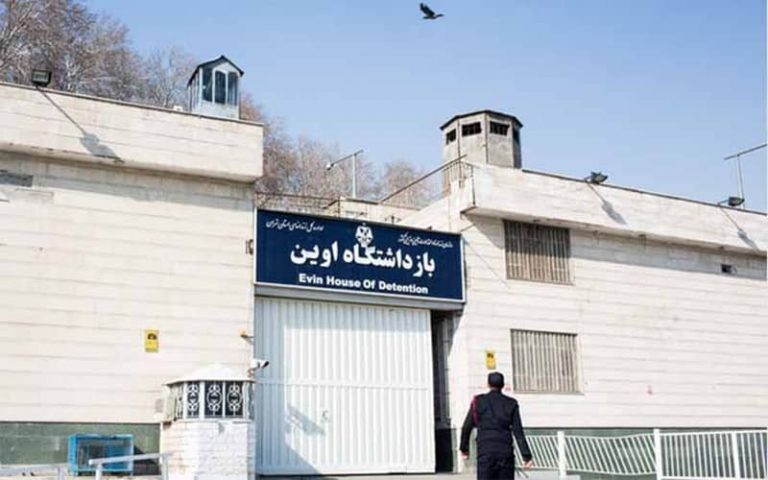
The Iranian Resistance has once again called for an international delegation to visit Iranian prisons after it emerged that protesters arrested during the November uprising are being secretly held in the torture chambers of the Intelligence Ministry (MOIS), the Revolutionary Guards (IRGC), and the State Security Forces (SSF) before being moved to Gohardasht, Evin, and Greater Tehran prisons.
Here, hundreds of protesters have been torture. The Iranian Resistance provided some stark and chilling examples of this, only able to print the initials of the prisoners:
A-M
His hands were tied behind him on a chair and he was beaten with a shocker and a baton. His arms were tied behind his back and interrogators stood on his chest. He was forced to crouch under a table for hours, subjected to the worst comments. He was threatened with rape and execution if he didn’t “confess”.
K-J
He was tied to a radiator and beaten with a pipe before they forced him under a table and beat him in that position too. He was then stripped and chained in an unnatural position, whist being flogged and beaten. He was made to lie on the floor, whilst guards stood on him. He notes that many protesters around him were raped.
Sh-N
He was beaten whilst wearing metal shackles, which broke a bone in his leg that is still not healed ten months later.
J-B
He was hung by his arms, which were wrenched behind his back, and tortured with a shocker and a baton.
A-M, F-M, S-M, H-R, M-A
They were beaten on the head and feet with a hose filled with small bullets.
M-A
He was tortured with batons and shockers on the sensitive parts of his body.
G- A
He was tortured with a shocker and a baton, forced to strip, and then hit on the genitals with the shocker.
M-A
Twice the regime pretended to execute him, once shooting a bullet near to his head while he was blindfolded.
A-R
He was given a mock execution, made to stand on a stool with his rope in a noose for hours.
A-K
This underage protester was tortured with a shocker and baton, whipped, and had his nails pulled out.
The Iranian Resistance said: “[We] once again calls on the United Nations Secretary-General, the Human Rights Council, and the High Commissioner as well as other human rights organizations to take urgent action to secure the release of detained protesters who are subject to torture and execution. It also emphasizes the need for an international delegation to visit prisons and detention centers of the clerical regime and to meet with the prisoners, particularly the detained protesters.”
As the Iranian government spends the national resources on aggressive and oppressive policies, many people in Iran, e.g. in Sistan and Baluchestan province, have to bear intolerable hardships
By Pooya Stone
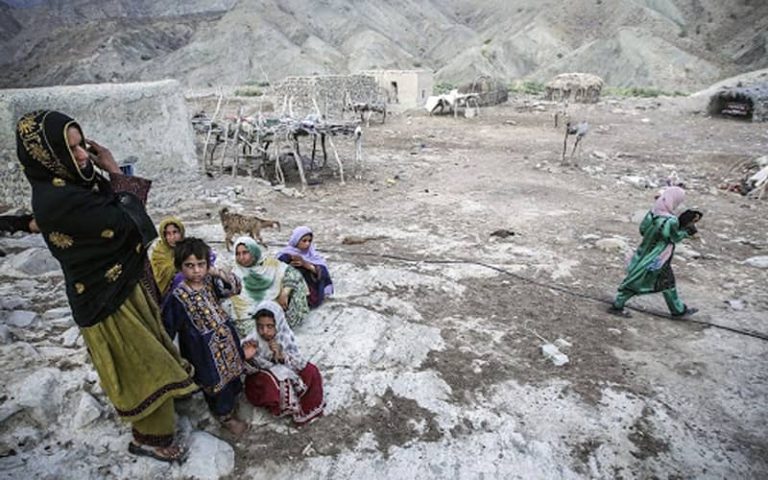
Those living in Iran’s Sistan and Baluchestan province are facing untold social and economic problems because of longstanding deprivation and poverty, which is becoming worse as inequality becomes more pronounced.
Some have even fled the province for neighboring Kerman, which itself is one of the poorest provinces in the country, where the Baluch people live in tents, with no electricity or running water.
All of this despite the vast wealth of the ayatollahs and the country’s natural resources.
On September 5, Ali Khezrian, a member of the Parliament (Majlis), said: “We traveled to the city of Iranshahr, the second-largest city in southeast Iran, and visited its villages. Unfortunately, the people of this area are deprived of facilities, such as showers and toilets. There were no suitable electricity facilities in the villages,”
It might, as the state-run media report, be hard to imagine people living in these conditions in the 21st century, but this is true for Sistan and Baluchestan province. Children go about in rags and without shoes, they pull food from rubbish piles, and some of them die or are grievously injured when fetching water from ponds because of marsh crocodiles. All because the government refuses to put the much-needed infrastructure in place when these dangers have been known about for years.
Worse still, authorities steal the water that fills the dams during the rainy season for use in factories and government facilities affiliated with the Revolutionary Guards (IRGC).
Water is far from the only essential that the people here lack. They suffer greatly from gas shortages, with only five cities and seven villages (out of 47 and over 10,000 respectively) have gas mains. Everywhere else, women are sent to carry heavy gas canisters on long distances or collect firewood, with some losing their lives as a result.
Children are also deprived of proper education, with schools taking place in tents and not having the minimum facilities for students. This has been exacerbated by the coronavirus crisis with students unable to attend online courses because they don’t have smartphones or internet access.
The Iranian Resistance wrote: “There is no reason for the people of Sistan & Baluchestan to live in these difficult circumstances, other than that the regime’s leaders have looted their share of Iran’s wealth… The billion-dollar fortunes of the regime’s leaders inside and outside the country, especially Khamenei’s $200 billion property, have been stolen from these people at the price of their food, water, and other livelihood and recreational facilities. But surely one day, the anger of the people will bring down the mullahs’ oppression and exploitation, and overthrow the mullahs’ regime.”
Iran’s Government Faces Protests ‘On the Tarmac’
By Jubin Katiraie
The expression ‘on the tarmac’ has in recent years been added to Iran’s political culture. The term is used as a replacement for ‘protests and uprisings’ by government officials.
In recent years, and especially in the last four years, the Iranian political scene has witnessed protests and uprisings against the entire government in Tehran.
At first glance, these protests may seem to have an economic basis, but looking more closely at the protests of recent years, it becomes clear that the main nature of these protests is political.
The December 2017-January 2018 uprising ostensibly began in protest to the high prices in Mashhad, but a few days later, the slogan “Reformist, Hardliners, the game is over” in the University of Tehran showed that the entire clerical system had been targeted by the people and students.
Relatively sporadic protests continued in 2018. But the November 2019 protests clearly confirmed the political direction of the protests.
The story began with a threefold increase in the price of gasoline. But within a day, the slogans “Death to Khamenei”, “Death to the principle of Velayat-e-Faqih” and other radical slogans against the integrity of clerical rule showed that the Iranian people had moved beyond their protest over the bad economic situation; their main target was the government.
By focusing on this formula, any statement of this kind can be analyzed. Whenever there is talk of the ‘on the tarmac’, one should expect to see mass uprisings and popular protests in the country’s social arena in the near future, even if an underlying economic issue also exists.
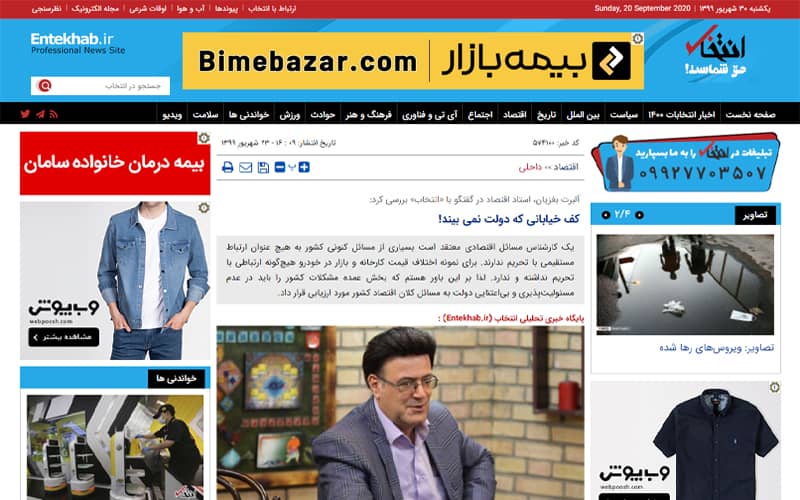
The latest example of the use of this keyword is by an economic expert and professor at the University of Tehran.
Albert Baghzian, who spoke in an interview with Entekhab daily on September 13, emphasized the prospect of an uprising in Iranian cities.
Describing the country’s economic situation, he told Entekhab daily: “Inflation and rising prices have become a great pain and suffering for the Iranian people. For example, the rising of butter prices in the market has caused great controversy at the macro-level of society. In general, from the stock market as the largest capital market to a minor commodity such as butter, the situation is unfortunately not favorable. This issue has now led to widespread mistrust in society, which of course will not be easily reversed.”
The Present Situation in the Country Has Nothing to Do with the Sanctions
Pointing to the country’s sanctions, he added: “Many of the current issues in the country have nothing to do with sanctions. For example, the difference between the factory price and the market price of a car has nothing to do with sanctions. Most of the country’s problems should be assessed in the government’s irresponsibility and disregard for the country’s macroeconomic issues.”
Attacking the government’s wrong economic policies, he added: “The wrong policies of the economy, which led to an abnormal decline in the Iranian stock market, have had a profound effect on reducing citizens’ trust.”
Baghzian also pointed to another contradiction within the government. “Reducing of the unemployment rate” and the government’s claims about it: “Is it possible to talk about reducing the unemployment rate without any documents? Such positions will definitely lower people’s trust more than ever.”
In the end, part of the reality of the whole clerical system is heard from Baghzian as he said: “The other government is completely disappointed with the reform of things.”
Finally, all these parameters force Baghzian to express the discussed expression as he said: “‘On the tarmac’ means not seeing any government.”
Entekhab daily wrote, On the tarmac which means not seeing any government
This shows that the people who were ‘on the tarmac’ do not recognize any government and do not differentiate between the reformists and the conservatives. The situation is clear enough. Not the government, but the entire system is responsible for the current miserable situation, after more than four decades of rule in Iran. And finally, everything will be dictated to the clerical system ‘on the tarmac’.
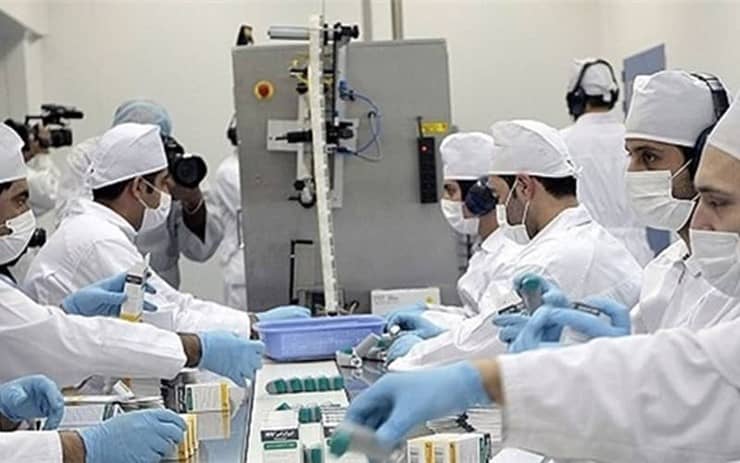
Iranian pharmacists meet the government’s inattention to their living and working conditions and are accused of hoarding while they are the victims of the IRGC’s profiteering policies
By Pooya Stone
On Monday, September 14, Iranian media outlets reported that ten pharmacists have lost their lives to the novel coronavirus. Furthermore, in recent weeks many doctors, nurses, and healthcare workers fell victim to this ominous disease. However, these selfless people also suffer from authorities’ inattention to their working and living conditions.
In this context, the government has yet to provide sufficient health equipment and essential protective items for medical staff. Instead, officials generously donate Iran’s national resources to build advanced hospitals in other countries and providing ventilators, face masks, and gloves for their infantry in Lebanon, Iraq, Syria, and other war-torn countries.
In a press conference with the managing board of Pharmacists’ Union of Western Azarbaijan province, Hojjatollah Yazdan-Shanas, the chief of the Iranian Pharmacists Assembly, explained parts of his colleagues’ sufferings and problems.
He mentioned that, along with medical staff, these hard-working people rushed to help needy citizens since the first days of the health crisis. However, they received no attention. Yazdan-Shenas implicitly pointed out to systematic corruption and the role of government-linked gangs in this sector. His remarks reveal how the state-backed mafia, i.e. the Revolutionary Guard (IRGC), has taken hostage the lives and health of millions of citizens in the past seven months.
Shortage of Pharmacy and Pharmacists
“There is only one pharmacy per 4,500 people across the country,” Yazdan-Shenas said. However, he did not explain that many poor and needy citizens in impoverished areas lack clean water, let alone pharmacies, and this rationing belongs to the rich and middle-class districts in metropolitan areas. Moreover, nearly 60 million Iranians live below the poverty line and this population is growing every month based on official statistics.
The chief of the Pharmacists Assembly also highlighted the shortage of human resources. “Given the growth of population, merely 600 persons have added to the country’s pharmacists annually. This is a very insignificant number for an 83-million population,” he added.
Yazdan-Shenas also spoke about the impact of the coronavirus outbreak on pharmacists’ living and working conditions. “In Western Azarbaijan, 12 pharmacists were infected with the Covid-19. Fortunately, there were no fatalities in this province. However, regrettably, ten pharmacists have passed away in the fight against the ominous coronavirus across the country so far. This is a major loss for the pharmacist community of Iran,” he said.
The IRGC’s Role in Hoarding Necessary Hygienic Items
According to credible evidence, the IRGC immediately monopolized all health-product factories simultaneously with the start of the coronavirus crisis in the country. The supreme leader Ali Khamenei and his office completely supported the IRGC in this effort. Meanwhile, the IRGC formed a “base” to counter the pandemic based on Khamenei’s order. They also exercised military parades in the streets and patrolled to “fight the Covid-19!”
Many citizens believed and openly said that authorities intend to counter the people’s rage against their mismanagement rather than containing the disease. In this respect, many netizens mocked the ridiculous steps by IRGC forces in Tehran and other major cities.
However, the IRGC used its authority and managed to control the market of health and hygienic equipment. On the other hand, factories were forced to deliver their products to IRGC-controlled institutions. Following this issue, citizens face the lack of essential sanitizing and health items, pushing them to provide their needs through the black market.
In this respect, Yazdan-Shenas blamed authorities for banning pharmacies from selling alcohol. He also expressed his fury against the state-run propaganda that frequently provided reports about sealing pharmacies for hoarding health items. “Just show me one violator pharmacy that has hoarded something,” he said.
In reality, in a profiteering trade, the Iranian government and IRGC tried to use the coronavirus as an opportunity to line their pockets with the money of millions of desperate people. However, they are now meeting growing fury and rage among their agents, let alone the ordinary people.
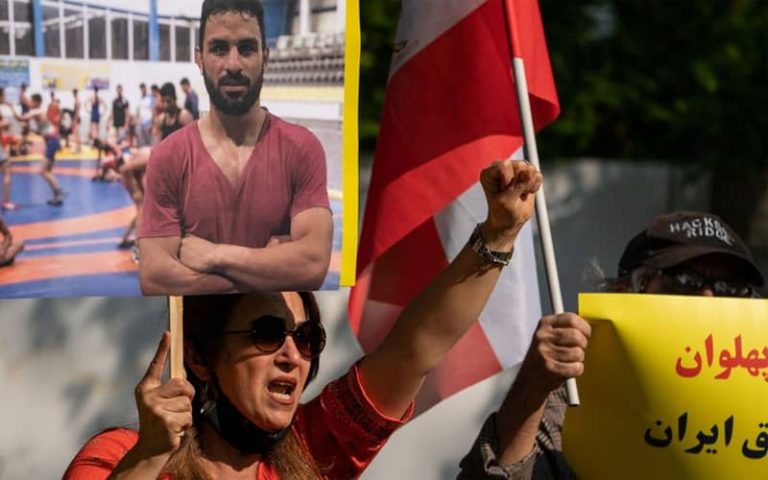
The execution of Iranian wrestling champion Navid Afkari prompted many athletes across the globe to demand imposing sanctions and banning the Islamic Republic from international sports bodies
By Pooya Stone
Last Saturday, the Iranian judiciary carried out the execution of Navid Afkari, the celebrated champion wrestler who had become the subject of numerous domestic and international appeals after the news broke that his dual death sentences had been upheld despite evidence that his murder conviction was based on a false confession elicited under torture. In the days following his hanging, international appeals have continued but have begun to shift focus toward international sports authorities and other entities that are in a position to impose sanctions on the government for this defiance of basic human rights standards.
On Tuesday, a German sports organization known as Athleten Deutschland issued a statement calling for Iran to be formally banned from the Olympic Games that are scheduled to take place next summer. That statement echoes a number of appeals that had been issued while Afkari’s execution was still pending, in hopes that the International Olympic Committee would unequivocally commit to this outcome and pressure Tehran to not move forward with the death sentence.
On one hand, the IOC officials did contribute to the advance appeals to spare Afkari’s life. But on the other hand, they stopped short of a firm commitment, then specifically indicated in the wake of the execution that Iran would not face serious consequences at their hands. The IOC has taken the official position that Iran’s exclusion would unfairly punish individual athletes who compete under the Iranian flag, effectively holding them accountable for their residence in a theocratic dictatorship that they may very well oppose.
But Athleten Deutschland and other advocates for Navid Afkari have dismissed these excuses, noting that those athletes could still be given the opportunity to compete under a neutral flag, or as part of other national teams. Over the years, a number of Iranian competitors have left their national team on their own accord, in the midst of disputes related to a number of issues that violate international sports authorities’ bylaws and principles. Yet these decisions have rarely been made in response to disciplinary action from those authorities themselves.
A number of commentators have now pointed to patterns of inaction as likely contributing factors in the international community’s inability to influence Iran’s decisions in the Afkari case. Christopher Becker, a sports reporter for the Frankfurter Allgemeine Zeitung, said that organizations like FIFA and the IOC should have “enforced their rules long ago,” and that if they had, “there would have been a chance to use influence” in subsequent disputes related to Iran’s mistreatment of its own athletes.
As it stands, the lack of enforcement is apparently so prevalent that Iranian authorities fell comfortable challenging rare instances of exclusion from international competition, even in the midst of a highly visible backlash against actions that could have resulted in more of the same. On Wednesday, Deutsche Wellereported that the Switzerland-based Court of Arbitration for Sport had begun hearing an appeal from the Iran Judo Federation over a ban imposed by the International Judo Federation in October 2019.
That ban relates to the frequent trend of Iranian athletes being pressured by their own governments to intentionally lose matches or withdraw from competition under false pretenses in order to comply with a longstanding but unwritten rule against Iranian athletes engaging in friendly competition with Israeli opponents. Last year’s inciting incident involved a judo practitioner named Saeed Mollaei, who succumbed to pressure by deliberately losing a semi-final match, but then fled from his team and relocated to Germany in hopes of competing under circumstances of freedom.
Wednesday’s report named Mollaei as one of three Iranian competitors who were slated to testify at the CAS, alongside several other witnesses. Collectively, they appear to offer clear-cut evidence for the legitimacy of the ban, making the IJF’s reinstatement extremely uncertain unless international organizers decide for some reason to adopt a softer approach to enforcing their rules. This is perhaps made less likely by the international furor over Afkari’s execution, although that conclusion is also called into question by the apparent aversion to serious action by organizations like the IOC.
That question is further amplified by the long history of what one former international soccer player, Craig Foster, criticized as a “well-worn path of soft diplomacy and behind-closed-doors conversations” regarding Iranian violations of rules for international competition. FIFA, the world’s soccer authority, has repeatedly come under fire for issuing warnings and deadlines to the Islamic Republic regarding its ban on female attendance in stadiums, only to allow those deadlines to lapse without consequence.
Many rights activists both inside Iran and throughout the world have insisted that Iran’s national soccer and volleyball teams should be immediately subjected to similar bans as its judo federation. And now, with Afkari’s high-profile execution, those demands are sure to proliferate with respect to these and all other sports in which Iran competes internationally. Yet even in spite of an incident that is widely regarded as a transparent violation of human rights principles, there is reason to believe that those appeals will continue to face resistance from the powers that be.
Online conference by the NCRI – September 18, 2020
By Jubin Katiraie
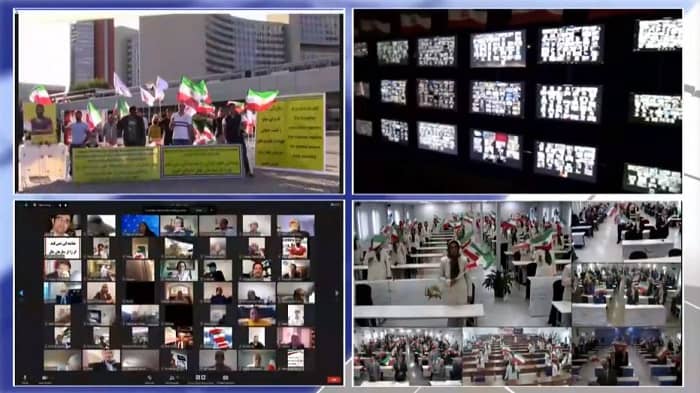
On the eve of the UN General Assembly summit, on 18 September 2020, the Iranian opposition (NCRI) and its supporters in the USA and other countries around the world hold a conference about the latest situation in Iran and the ruling regime. The key points of the conference were the necessity of the sanctions on Iran, as the continuing of the arms embargo of the regime to protect the people of Iran as well as the people of other countries in the Middle East, auditing the regime for its global terrorism and human rights violations, especially to preventing the regime to be able to execute more people, with a high priority the execution of arrested people and youths in the last protests in 2017, 2018, and 2019.
Prominent political figures and members of parliament from various countries (the United States and Europe) spoke at the conference.
Rudy Giuliani, former Mayor of New York at the conference said: “The regime is showing every indication that they’re on their last legs. Everyone knows they are a regime of terror. From the late 1970s until now, every year has been terror and slaughter. They have the worst record in killing their own people. But they continue to receive support from countries that should know better.
“For too long, the United States was sympathetic to Iran. It seemed to be a priority to keep a dangerous nuclear agreement. Why? There is no reason for it. Nor is there any reason for European governments to not support sanctions against the regime.
“The regime is killing people. They are a regime that is desperate, and the best indication is that they are striking out hard. The situation is getting worse in Iran. They recently executed wrestling champion Navid Afkari for protesting. He was protesting the barbarity of the regime. Mostafa Salehi was executed for the same charge.”
David Jones, British MP and former Secretary of State of Wales about the situation in Iran said: “Iran is at a pivotal moment in its history. The people of Iran demand genuine democracy and regime change. The regime responds with repression, execution, and torture. The regime resorts to terrorism against the Iranian opposition. They continue to defy international opinion, including the global outcry to stop the execution of wrestling champion Navid Afkari.”
US General James Jones about the regime’s terrorism said: “There’s no question that Iran is the number one supporter of terrorism in many parts of the world. There is no question their ultimate goal is to develop nuclear weapons. This regime has identified itself as the enemy of the people.”
Pandeli Majko former Prime Minister of Albania: “Iran has turned the Middle East into a battlefield. The aggravated economic situation in Iran could have consequences. In this situation, we should be cautious and prepared. It is clear that any vacuum left by the West will be filled by Iran. This could elevate the status of Iran in the Middle East.”
U.S. Senator Ted Cruz, about the regime’s human rights violations said: “It is an absolute necessity that we hold the regime’s officials to account for their crimes against humanity. There is no outrage the regime will not commit. They tortured a confession out of Navid Afkari and they executed him. We must hold them to account for this crime.”
And about the regime’s terrorism, he added: “Iran’s regime continues to finance terror and endangers the security of us and our allies. The snapback denies the regime resources and slows the nuclear program. Iran has consistently been in violation of nuclear restrictions before, during, and after the negotiation of the deal.”
U.S. Senator Jeanne Shaheen: “The government in Tehran continues to commit gross human rights violations in Iran and in the region. It has destabilized countries and prevented peace across the Middle East. At home, peaceful activists and human rights activists are arrested and tortured.”
Joseph Lieberman, former U.S. Senator: “We have tried everything to change the behavior of the regime of Iran. It’s time for a conclusion. The regime will not change. We must change the regime in Iran. That is what we mean when we say freedom for the people in Iran. Sanctions must be extended. We must convince our allies in Europe to join us.”
Newt Gingrich, former speaker of the US House of Representatives: “The dictatorship is getting more and more desperate and the public is getting more and more unhappy. The fact that the killing of Soleimani did not result in an explosion of terrorist action is indicative of the mullah’s power waning. But we still have a distance to go until we reach a free and peaceful Iran.”
Ambassador Robert Joseph: “The Resistance Units are the true beacons of freedom. You have endured suffering at the hands of the regime for standing up for democracy and a secular republic. Your sacrifices and your success will inspire the next generation in Iran.”
Sheila Jackson Lee, member of the U.S. House of Representatives: “I rise to be able to support the fighters in Iran for human rights, and to stand with those like Madam Rajavi, who want human rights and the fights against the abuses, the horrible abuses that people are facing in Iran who just simply want justice, equality, and human rights.”
Fatmir Mediu, leader of the Republican Party: “The people want life and freedom, they don’t want nuclear bombs. The regime is massacring the people. We should think about what we can do about that. Iranian people are against terrorism. It’s important that everyone knows what the Iranian regime is doing in Albania, in the Middle East, and around the world. It’s time to stand for the right thing.”
British MP Bob Blackman:
“In the coming days, world leaders will gather for the UNGA. There should be three pressing issues regarding Iran:
– Extending the UN arms embargo on Iran
– Reimposing international sanctions on the regime. Allowing the regime to legally buy sophisticated weapons will not bring about peace in our lifetimes. Appeasing the theocratic leaders in Tehran will not bring about moderation or reforms.
-Time to hold Iran’s regime accountable. The international community must establish an independent inquiry into the 1988 massacre of political prisoners.”
Brad Schneider, member of the U.S. House of Representatives: “Your activism and engagement on this issue are critical as our democracies hold the Iranian government accountable for its egregious human rights record.
In recent protests against the government over the past 18 months, as many as 1,500 protesters have reportedly been killed for their activism. The Iranian people deserve our support in recognizing the 1988 massacre and other tragedies of the past and their voices deserve to be heard today, as the Iranian people continue to voice their opposition to the Iranian regime.”
Read More: