The Unforgivable 1988 Massacre in Iran

0
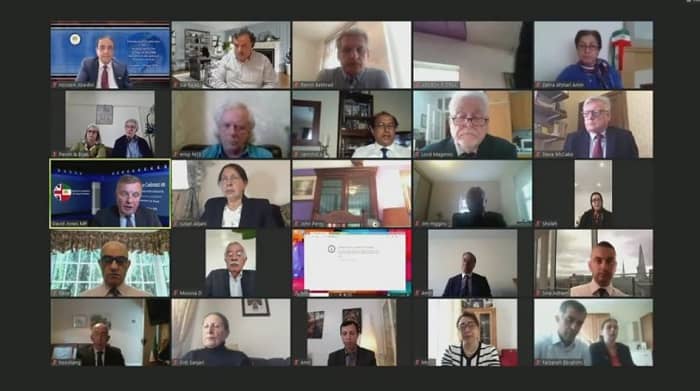
Online conference panel about the 1988 Massacre in Iran
Online conference panel about the 1988 Massacre in Iran and the UK government’s responsibility about human rights violations inside Iran
By Jubin Katiraie Iran’s Supreme Leader Ayatollah Ruhollah Khomeini issued a fatwa in July 1988 ordering the execution of imprisoned opponents, including those who had already been tried and were serving their prison terms. This was the beginning of what turned out to be the biggest massacre of political prisoners since World War II. Following the decree, some 30,000 political prisoners were extra-judicially executed within several months. Khomeini’s decree called for the execution of all political prisoners affiliated to the main opposition group People’s Mojahedin Organization of Iran (PMOI or MEK) who remained loyal to the organization. Now for many years the people of Iran and the families of the 1988 victims are seeking justice. According to this demand in a British Parliamentary online conference discussed this issue to find a way to bring the Iranian regime to justice and force the international community to make the regime accountable. MP David Jones started the session as he said: “The 1988 massacre is often referred to as the worst crime since the Second World War. The alarming human rights situation in Iran is a serious matter for the international community. For too long, the regime has escaped accountability. “Allowing a repressive theocratic regime to buy weapons from the market will end in disaster. The issue of accountability is an important process of stopping Tehran’s malign activities and its pursuit of nuclear weapons.” MP Steve McCabe: “The Iranian regime is planning another trumped-up charge against Nazanin Zaghari-Ratcliffe. From Nazanin’s life to nuclear weapons, we cannot negotiate with this regime. We cannot trust them. The lifting of sanctions encouraged the mullahs to think we do not care where they buy weapons from. They incite more violence through their network of proxies. “We have already failed the Iranian people by ignoring the 1988 massacre, by giving the regime billions of pounds as a result of the failed nuclear deal, by not recognizing the opposition and NCRI President-elect Maryam Rajavi. The people we are dealing with, like Ebrahim Raisi, are responsible for the 1988 massacre. They continue to slaughter people, including 1,500 people in the November 2019 protests.” Mrs. Maryam Rajavi President-elect of the NCRI in a message to the conference demand: “To put an end to the crimes of this regime, and to counter its warmongering actions in the region, the following steps are necessary:
  1. An international fact-finding mission must be set up to seek justice for victims of the 1988 massacre, and hold the perpetrators of this grave crime against humanity accountable.
  2. The UN Security Council must address the terrible situation of human rights in Iran. The UN Security Council must send to Iran an international delegation accompanied by representatives of the Iranian Resistance. They must visit the regime’s medieval prisons, visit the prisoners and particularly, meet those arrested during the November 2019 uprising.
  3. As the Iranian Resistance called for, just a few hours after signing of the JCPOA, the six UN resolutions must be re-imposed and all sanctions on weapons sales to Iran must be re-imposed. Supporting the Iranian people’s desire to overthrow the regime ruling Iran is necessary for peace and stability in the region.”
MP Bob Blackman said about the EU’s wrong policies toward Iran which makes this regime more aggressive against the people: “Sadly, we are aligning ourself with the failed policy of appeasement pursued by the European Union, which for the last four decades, has provided the regime in Iran with immunity for its egregious human rights violations including the 1988 massacre of 30,000 political prisoners, and on its terrorism to preserve diplomatic dialogue, prioritize trade and, in recent years, keeping alive a disastrous and flawed nuclear deal that will allow Iran to advance its nuclear and missile program.” Kirsty Brimelow QC said: “The evidence reported has not been denied by Iran. I have heard accounts of family members and survivors of the 1988 massacre, including a father who was told to pay for the bullets used to kill his daughter. One woman said she believed her son might still be alive. She said she still sleeps near the door, so she does not miss the news of the return of her son.” Michelle Mulherin, former Irish Senator: “When a government turns on its own people, it is the obligation of the international community to take action. There are families who very much want to achieve justice. I support the call and the efforts, and it is an issue that I have taken up with our Minister of Foreign Affairs and I will continue to do so.” Irish Senator Ivana Bacik said: “As Amnesty International documented, Iranian authorities have treated the killings as state secrets. No official has been brought to justice. “I support your call for the establishment of an investigation into this crime. Along with my colleagues, I will be proactive to bring attention to this cause. There should be an investigation in the extra-judicial killings. The responsibility lies with us to not let this issue be swept under the carpet. The regime should know that the world is watching.” Tahar Boumedra, legal expert and former head of the UNAMI: “The UN has been informed. The successive special rapporteurs on the situation of human rights in Iran have consistently called on Iran to investigate this crime. The special rapporteur has been banned from visiting Iran. It is clear Iran is unwilling to investigate. The UN has proven to be reluctant to impose such an investigation. What is next? The reality is the UN General Assembly resolution should focus on setting up an independent investigation into this crime instead of calling on Iran to investigate on its own. We have to be realistic and take action. And that action is setting up an independent commission and investigation.” Read More:

Iran: Human Rights Situation for August 2020

Iranian People’s Shrinking Food Basket, Another Side of the Regime’s Plundering

0
The food basket of the people of Iran is shrinking more and more
By Pooya Stone Rising exchange rates and inflation in Iran have a significant impact on the prices of living for people and reducing their purchasing power. This is at a time when the majority of them are at risk of poverty and the class gap has peaked and the Gini coefficient confirms this gap. Due to the wrong policies of the government, the people’s food baskets are getting smaller every year compared to the previous year. Some government experts estimate that ‘between 2005 and 2019, the Iranian food basket is reduced by about 30 percent’ (Setareh Sobh daily, September 7). Ali Akbar Sayari, the regime’s deputy health minister, admitted: “Currently, 30% of the people in the country are hungry and do not have food, which is also confirmed by the Ministry of Welfare.” (Aftab website, 20 August 2016) At the time that this official said that 30 percent of the population have nothing to eat, the majority were below the poverty line, and at the same time many tables were empty of essential food items and people were malnourished. Now, four years have passed since then, and in a situation where the country’s economy is shrinking year by year, it is clear how empty the people’s food baskets are. One of the signs that people’s tables are becoming more and more empty of basic foods is the increase of the army of the unemployed, garbage collectors, labor children, and beggars who knock on every door to get just a piece of bread. In 2018, when the price of the dollar was about 16,000 tomans and did not reach the current price of 23,000 to 26,000 tomans, the purchasing power of the people decreased by 80%. It is clear that in the current situation, people’s purchasing power is much less, and their tables are getting smaller and smaller than before. In this regard, Etemad daily on 6 September, in an article entitled, “Rising food prices increase the risk of malnutrition” wrote: “In recent years, the weakening of household purchasing power has intensified to the point that occasional declines in inflation have not been able to positively affect the household table and the shrinking their shopping basket, especially for food items, and field observations show that households buy less food than in the recent past. “But the latest statistics which belong to the last winter show that, “Per capita meat consumption in the country’s households has decreased from 6.8 kg in 2016 to 5.4 kg in 2018. However, some unofficial reports indicate the elimination of more or fewer protein products such as meat and poultry for vulnerable households in the country, because during this period, according to official reports, red meat with a 171 percent increase in price from 35,000 tomans per kilo in April 2016, increased to 95 thousand tomans in March 2018. “On the other hand, the head of the Institute of Nutrition and Food Industry Research of the country also spoke about a 134 kg difference in the consumption of dairy and milk products in Iran compared to developed countries. “According to the latest report of the Statistics Center of protein products such as red and white meat and poultry meat in August 2019, compared to the same period in 2018, it had an increase of 2.77 to 4.77 percent.” According to the calculation of the author of Etemad’s article, “the cost of a month’s meal for a family of four varies from 600,000 tomans to 2.5 million tomans. Considering that the minimum salary approved for this year, which is 2.8 million Tomans for a family, only 300,000 Tomans will remain for other costs such as rent, treatment, education, and entertainment.” Regarding the high price of fruit and its effects on the families table that state-run website Khabar Fori on 12 August wrote: “We removed meat and poultry from the table and now it’s time for fruits and vegetables. You cannot live with water! The body needs protein and vitamins. There is a lot to talk about, but no one is listening.” And referring to interviews with the people on Fruit and vegetable market, this website added: “This increase is so large that only the high-income strata can afford it, and the rest of the society, who are in the middle or weak levels, cannot afford it. How can the working class with a salary of fewer than 2 million tomans and the living costs afford? Recently, the fruit has become an item that the poor can only watch from a distance, and consuming it has become a dream for them!” And about the workers table the Resalat daily on 5 August wrote: “The labor salary does not reach even the end of the month. You have to close your eyes and do not think about many things so that the wheels of the life can rotate. In a word, you should be obsessive about the income-expenditure atmosphere and manage the costs and incomes in a masterful way, so that the children do not feel the destitution. “Believe me, there are people who make their day with only one loaf of bread. Clothing, food, and entertainment are strange words for some of the workers.” The skyrocketing prices and the people’s empty tables are in a situation when the regime’s President Hassan Rouhani in a nonsensical way claimed that, “Fortunately, the dear people of our country have witnessed that we have had the least difficulty in providing the items they need.” Read More:

Iran – Prices Are Not Predictable Even for the Next Hour

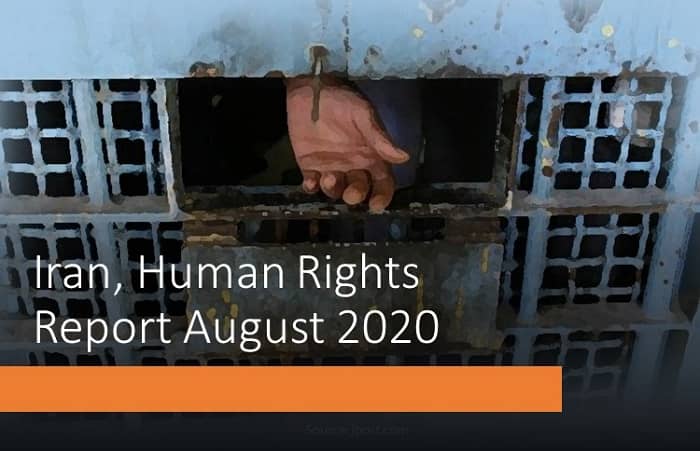
Iran: Human Rights Situation for August 2020

The human rights situation in Iran continues to arouse concern from the world's leading watchdog groups
The human rights situation in Iran continues to arouse concern from the world’s leading watchdog groups
By Jubin Katiraie The human rights situation in Iran continues to concern international human rights organizations. During the month of August, there has been additional pressure put on political prisoners. Many have been given extremely harsh sentences, and many have been flogged. The Iranian regime has been under increasing domestic and international pressure in the past few years and it is trying to regain some of the control that it has lost by trying to silence the people who are speaking out more and more about the regime. There are at least 20 political prisoners that have been sentenced to death, with half of them being protesters during the past three major uprisings. Furthermore, the conditions in prisons remain very worrying, especially because of the Coronavirus health crisis. With every day that passes, more and more prisoners are contracting the virus. And worse, they are not being given the medical treatment that they need. The prisoners are extremely vulnerable because they are not provided with hygiene products and social distancing is impossible in such overcrowded places. Executions are still being carried out with great frequency and it is thought that at least 28 prisoners were executed during the month of August. Four of them were on drug-related charges, two were female and one was a prisoner that was a minor at the time of the alleged crime. Political prisoner Mostafa Salehi was executed at the beginning of the month. His crime was to participate in a major protest. Approximately 140 female prisoners in the Central Prison of Urmia initiated a hunger strike because of the prison’s failure to appropriately respond to cases of COVID-19. Several contagious prisoners were not isolated, leaving the other prisoners at risk. Their concerns have been ignored. During the month of August, there were numerous protests and strikes across the country. The regime’s response has once again been one of violence. It does not want people to rally in the streets because it is aware that the number of participants can grow quickly. For this reason, the regime has been handing out harsh prison sentences to deter dissent. The families of imprisoned protesters are also put under incredible pressure and have been threatened by security forces. Religious minorities continue to be suppressed. Religious freedom is non-existent in the country and the regime’s persecution has been criticized by religious leaders across the world. Four Christians from Rasht were sentenced to 13 years imprisonment last month and their crime was to participate in peaceful religious activities, attending church gatherings, and promoting their religion. The regime considers this as acting against national security. The Baha’i community is also continually persecuted by the Iranian regime and during the course of last month, many members have been subjected to harsh and unfair treatment because of their faith. Several were given prison sentences for “insulting the sanctities of Islam” and others were arrested and sent to jail after having their homes raided and personal items confiscated. And these are just some examples of a human rights situation that continues to degrade. Read More:

Amnesty International: Iran Uses Torture as Punishment


Iran: A Society That ‘Will Undergo Major Changes’

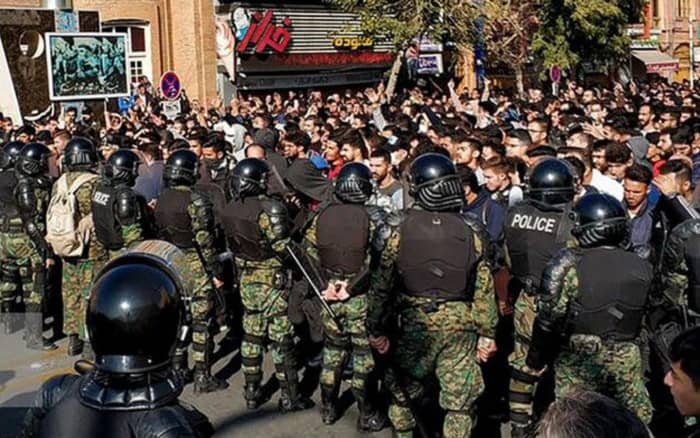
Anti-government protest in Iran
By Pooya Stone Iran regime’s state-run dailies, which examine and criticize every political, economic, and social issue, ultimately cannot hide their fear of any upcoming uprisings and acknowledge in various terms the danger that lurks on the way of the regime. One of the topics being discussed these days is the reopening of schools and the dangers posed to children, adolescents, and their families by the increasing prevalence of the coronavirus. Earlier, experts and even officials at the governmental Coronavirus Taskforce and medical officials and many other officials warned President Hassan Rouhani of the danger of reopening schools, but despite these warnings, the Rouhani government decided to reopen the schools. After the reopening, the issue that raised the concerns of the regime’s officials is that the consequences of this decision of Rouhani’s government may face the regime with popular dissatisfaction and even in the form of widespread popular protests, in a situation where the risk of an uprising is very high due to political, social and economic crisis. While criticizing Rouhani and the relevant institutions for this action, they also warned Rouhani that the negative reaction of the people to the reopening of schools may be similar to their reaction to the increase in the price of gasoline, which is very dangerous. On this subject, the state-run daily Resalat on 6 September with the title, “Signaling right, but turning left” wrote: “While the Ministry of Education wants to definitely bring students to schools, leaving aside how coronavirus is dangerous for a 22-year-old student but not dangerous for an 11-year-old student, the more serious question is why they announce such a decision three days before the schools reopen? “If a decision is to be changed, the reasons must be told to the people and the society must be informed and persuaded about the issue. The opposite of this view is that the chief executive, on Friday morning, at the same time as the public, be informed of the beginning of the gasoline price plan, and it is natural for the society to resist such a decision. And as a result of internal shortcomings and external abuses, those bitter events arise that everyone knows the description of.” The ‘bitter events’ it is referring to are events such as the widespread public uprisings in recent years, including the November 2019 uprising, which the author of this state-run daily implicitly referred to as the petrol price-raising incident. And the Vatan-e-Emrooz daily is also concerned that the government’s coronavirus management plan, including the reopening of schools, will ‘reduce public confidence in critical situations’ and ‘make public reactions to this decision (the decision to reopen schools) a new challenge.’ They are aware of the fact that the regime is involved in many crises, and the pervasive crises that have engulfed it may turn into a social uprising such as the uprisings of recent years, especially the November 2019 uprising, of which the Rasalat daily explicitly warns. Because now the ‘challenge of distrust’ is more than ever ‘obvious’ and ‘is a challenge’ that ‘will cause the decline of the collective matter and the originality of individual decisions of society in the face of external crises will find its way.’ Vatan-e-Emrooz further warned the regime about such decisions. Referring to the increase in the gasoline price as an example, it wrote: “The increase in gasoline prices, which was denied even a few weeks before its implementation by the Minister of Oil, led to fiery protests that even many government officials and governors warned about.” It emphasized that: “The negative reaction of the society to the plan to reopen schools and the disobedience of a large number of families in the face of this plan can also be considered as a serious warning at the beginning of the ‘state of statelessness’.” (Vatan-e-Emrooz, 6 September) Ebtekar daily also called the reopening of schools a ‘nail in the coffin of public trust.’ The author of the article accuses Rouhani and the decision-makers in his government and wrote: “They either do not realize or ignore the unfortunate consequences of these behaviors. It is not bad for those around the President who are mostly intelligence involved people, to review all the strange things that have happened to the society from November 2019 until yesterday. “It seems that this trend is going to completely change the coordinates of social reactions in Iran. Naturally, this situation cannot be considered a stable situation and it is obvious that this situation will undergo major changes in the not too far future.” (Ebtekar, 6 September) The author explicitly acknowledged that the current situation of the regime is not ‘stable and lasting’ but shaky and that is why they are concerned about the changing situation.   Read More:

Iran’s Officials Fear People’s Fury

Iran: Workers Continue to Hold Strikes and Protests in Cities Across the Country

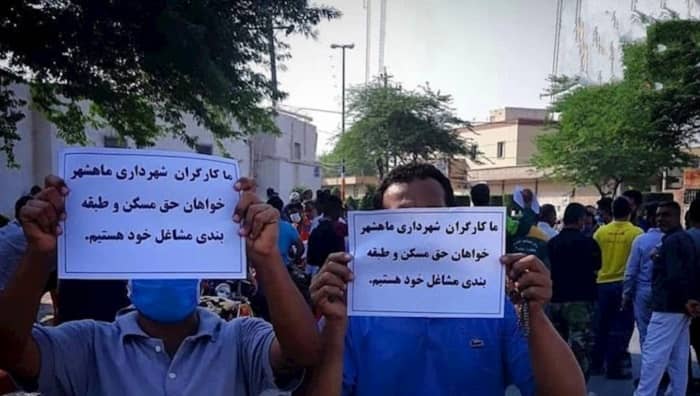
The second day of the protest of the Mahshahr Municipality workers
By Jubin Katiraie For some time now, various groups of workers and employees have been holding strikes and protests. At the beginning of the week, employees of the Rural Telecommunications Company from a number of different sites across the country gathered in front of the parliament building. They expressed their anger at officials for failing to acknowledge and address their numerous issues. Some of their grievances are related to their salaries and bonuses that have been withheld, and the major discrimination with regards to paying. The protesters have called for talks to be held between officials of the Rural Telecommunication Company and workers, but in the presence of members of parliament. They have also called for an end to the discrimination in wages that is noted between workers in urban and rural areas. Many workers in the company have also been put on temporary contracts, denying them the job security that permanent employees have. There are calls for this to change. The workers have also called for the payment of all overdue wages and insurance premiums. Some payment issues go back to 2009 and in some cases even before this. Many of the employees have worked for the company for decades, yet are still working for very small salaries. They, like many people across the country, are very badly affected by the economic crisis that has caused prices and costs to skyrocket. Other protests have been taking place across the country too. Employees from the Haft Tappeh Sugarcane Company in the city of Shush have been protesting for 85 days. They have been gathering outside the governorate building in Shush and have vowed to continue until their demands have been addressed in their entirety. They are continuing to reiterate their demands, which include the immediate arrest of a corrupt official that has caused mayhem. The workers want to see the CEO of the Haft Tappeh Sugarcane Agro-Industrial Complex, Omid Assadbeigi, arrested and sent to jail for life on corruption charges. And they have also called for all corrupt employees to be fired. Many workers of the factory have seen their wealth embezzled and one of the demands is to see these funds returned. And once again, like many workers across the country, they want their delayed salaries to be paid and their insurance brought up-to-date. Also protesting delayed wages were municipals workers in Sarbandar city in the province of Khuzestan. Some are requesting more than six months’ worth of unpaid wages and outstanding bonuses and insurance premiums. Because of the regime’s widespread corruption and its terrible mismanagement of the country’s resources the people are finding themselves up against increasing financial hardship. Furthermore, job conditions are appalling and safety is often compromised. Only a few days ago, four people died after a mining accident in the province of Kerman. The workers were not provided with the necessary protective equipment and very few safety protocols were put in place. This type of accident occurs far too frequently in the country. Read More:

Iran: Systematic Corruption May Ignite New Wave of Protests


Why Iran Reopens Schools Despite the Coronavirus Risk?

0
By Pooya Stone On September 5, schools were officially reopened across Iran. In his broadcasted remarks, President Hassan Rouhani congratulated the new academic year. However, this hasty decision has become an acute social dilemma and further to a social-political crisis in Iran. “Schools in Iran reopened to 15 million students on Saturday after a seven-month closure despite concerns over the increased spread of the novel coronavirus in the country,” Reuters reported on the same day. Earlier, many health experts had warned about the irresponsible reopening of schools putting the health and lives of millions of students, teachers, and their families at risk. “Several medical professionals have voiced concerns over the reopening of schools and universities in Iran, one of the countries worst-hit by the coronavirus pandemic in the Middle East,” Reuters added.
Iran Health Ministry Downplaying Coronavirus 
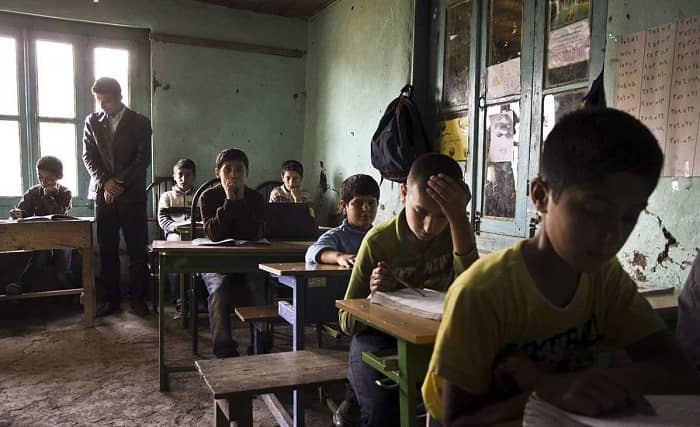
Both at the inauguration ceremony and the National Covid-19 Task Force meeting, Rouhani insisted on reopening of schools and education centers while the government still refrains from providing free or even low-price face masks for teachers and students. Instead, he criticized foreign media outlets for highlighting the state’s mismanagement and horrible decisions. “Enemies do not want the country’s tasks to be done routinely. At all levels, they create an excuse and fiction every day,” Rouhani said. He also claimed that the enemies “want us to escape from the virus and shut down all functions.” Rouhani says we should not escape from the virus while he refused to deliver an in-person speech on the occasion of the schools’ inauguration. Previously, he did not attend the August 13 Majlis (Parliament) meeting despite all health protocols and preemptive measures. Many officials, including several members of the Majlis (Parliament), announced their opposition to the reopening of schools and education centers. They also implicitly declared that they are concerned about the social-security consequences of this decision. “Today, they reopened schools without notifying many of the teachers and principals. In many regions, the schools have not even been disinfected. We can’t allow the people’s health to be compromised like this,” the official news agency of the Majlis ICANA quoted Mohammad Hassan Asafari, chairman of the Majlis Security and Foreign Affairs Commission, as saying on September 6. “The president considers himself an expert in every field and makes decisions that many of us oppose. One of these decisions is the reopening of schools, which we oppose,” said Hosseinali Shahryari, chairman of the Majlis Healthcare Commission, in an interview with Resalat daily on the same day. Furthermore, former education minister Morteza Haji questioned Rouhani’s remarks in portraying a normal situation. “If threats do not exist for kids… Why did the president have to announce the school year’s start online while students have to stand in lines and attend classes? Logically, he should have gone to a school and shown that they have provided a safe environment and there is no problem for the students to attend school,” ILNA news agency quoted him as saying. Also, Anush Barzigar, head of Gilan province Medical Apparatus, blamed the government and those who insisted on reopening of schools. “In our viewpoint, those who reopened schools will be responsible for the death of even one student or teacher, and this is an unforgivable mistake,” he said on September 5. Earlier, Javan daily, affiliated to the Revolutionary Guard (IRGC), highlighted officials’ confusion in its September 4 edition. “The Education Ministry had no specific plan for reopening of schools until Thursday, September 3. These trails and errors will lead to the downfall of education,” Javan wrote. On September 3, in a televised interview, the education minister Mohsen Haji-Mirzaei justified the dangerous decision to reopen schools and education centers. “The population of 62 percent of our classrooms is almost below 100 persons, 35 percent is 35 students, and 43 percent is below 50 pupils. Therefore, they can naturally observe distances protocols,” he claimed. However, Ahmad Naderi, a member of the Majlis Education Commission, rejected the education minister’s explanations. “There are 600 students in several schools. These schools have only one or two washrooms, and classrooms are so tight that there is no guarantee to contain the spread of coronavirus,” he said. In its September 5 edition, Resalat daily revealed dire hygienic conditions in public classrooms. “The reopening of schools and participating in a large number of students in code-red areas is a disaster. The situation of public classrooms is like the 1980s. Three students sit at each bench in classrooms with 35 to 45 pupils,” Resalat wrote. On September 4, Abbas Aghazadeh, head of Medical Apparatus Organization, wrote an open letter to the National Covid-19 Task Force, criticizing the decision of reopening schools. “The Education Minister has said ‘All schools must reopen on Saturday, September 5, with students present in person.’ This ‘order’ does not fit the conditions of the Covid-19 pandemic and the ‘red’ status of most areas of the country… Endangering millions of students and teachers, and their families, and meddling in the experts’ work on addressing the virus by officials not involved in health affairs, can in the least possible of time become a humane catastrophe,” Mehr News Agency affiliated to the Ministry of Intelligence and Security quoted him as saying on the same day.

Why Iranian Officials Insist on Holding In-Person Classrooms?

“The reason for reopening in-person schools is relevant to the pressures implied by managers of non-profit schools for receiving stellar tuition fees,” Javan daily implicitly pointed out to the mafia’s role non-profit schools on September 4. However, officials are concerned about socio-political concerns in addition to the economic interests of the mafia of non-profit schools. In this respect, Rouhani and the education minister revealed the government’s real worry. “We have kept children inside homes for seven months. Holding children inside homes itself is a torment, is depression, is a mental problem,” Rouhani said at the National Covid-19 Task Force meeting. “Interruption in education has both mental and psychological consequences for students and has short- and long-term consequences for society,” Haji-Mirzaei said. In fact, officials are concerned about the protesting potential of millions of students, particularly high-school students, who played a crucial role in toppling the monarchic regime in 1979. During recent protests, including December 2017-January 2018, August 2018, November 2019, and January 2020, the young generation burdened lion share in anti-establishment moves.

Facts About the Economic Crisis in Iran

Economic crisis in Iran
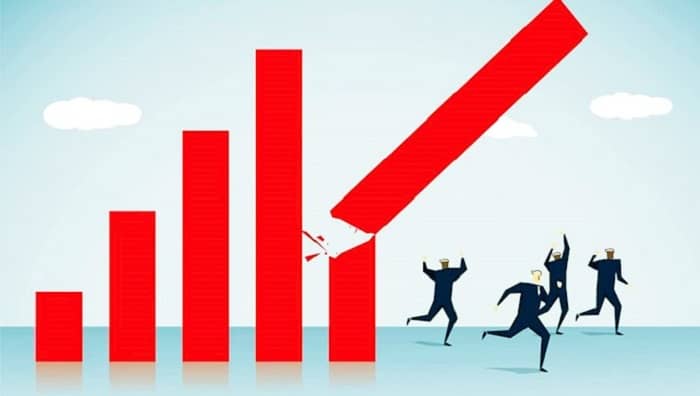
By Jubin Katiraie Iran’s disorganized economy, without any bright future and positive change, has for years lacked the capacity for change. Now even the state-run media have lost their patience and cannot embellish it anymore. The state-run Mashreq daily on Friday, September 4, acknowledged that Iran’s President Hassan Rouhani and its government have hit all the negative records in the economy. It wrote: “The longest negative economic growth of the last three decades was in the Rouhani government. In the twelfth government, the country’s economy has experienced negative growth for eight consecutive seasons. The report of the Statistics Center shows that in the twelfth government, the country’s economy has faced negative growth for eight consecutive seasons, which is the first time in the last three decades that such a long period of negative economic growth has occurred in our country. “Also, according to the Statistics Center, since the beginning of the ninetieth until now, our country has been accompanied by negative economic growth in 30 seasons, 12 of which occurred in the Rouhani government (four seasons in the 11th government and eight seasons in the 12th government). “With this catastrophic performance, it is recommended that the officials of the Twelfth Government be more careful in their comments to the critics. At the same time, with this negative record, Mr. Rouhani’s advice to compare the performance of his government with the previous government will definitely be to his detriment.” Mansour Gholami, the Minister of Science and Technology of Rouhani’s government, while pointing to the decrease in the presence of students in the country, referring to the widespread unemployment of graduates, acknowledged: “Statistics show that since 2017, more than 60% of university graduates have been employed at the undergraduate level, and the number of employees at the postgraduate level has been more than 70% and at the doctoral level 90%. “We are concerned about 40% of undergraduates, 30% of postgraduates, and 10% of unemployed PhDs who are currently unemployed, while most of the unemployed undergraduates in the country are women.” Referring to the decrease in student enrollment in the country, he said: “In previous years, the number of students in the country was more than 4.5 million, but with a declining trend, now the number of students in the country has reached 3.5 million.” Mohammad Reza Poorebrahimi, head of the Economic Commission of the parliament, revealed during the infightings that the Edalat shares of 20 million people who were eligible to receive these shares had been looted. “The information we got from the situation of the people involved led us to data that is very disturbing. About 1.2 million people under the auspices of the Relief Committee have no Edalat share! About 2.1 million are not covered by the welfare organization have no Edalat share! This can also be continued. The 20 million people in the six deciles of the society I cited as an example have the right, but they have not the Edalat share.” (State TV Channel 5, September 5) About the value fall of the national currency, Heidar Mostakhtemin, the former Deputy Governor of the Central Bank of Iran, said: “From the beginning of 1979 onwards, the closer we get to the present, the more the value of the national currency has fallen, so that its number in the last 10 years is not comparable to the whole time of the previous period, also, this decrease in the last five years is not at all comparable to the whole years of the last half-century. “In the last half-century, until 2019, the value of the national currency has decreased by seven thousand times. According to statistics, the devaluation of the national currency was 3,500 times until 2018, but last year it increased to 7,000 times, which indicates a very terrible figure, which is a very bad thing for the country’s economy.” (Radar Eghtesad website, 5 September) Read More:

Rouhani and Iran’s Economic Opening

The Sound of Iran Regime’s Demise Can Be Heard

0
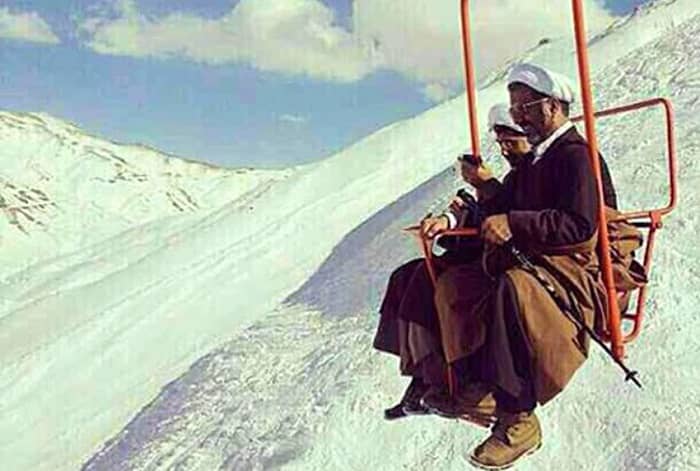
Two of Iran’s clerics take a ski-lift after a mountain walk
By Pooya Stone One of the pillars of the Iranian regime’s reign is its seminaries, which have acted over the past 41 years as propagators of the regime’s ideology. In these places, the regime’s clerics established the regime’s fundamentalist rules. Like dark and dreadful places in stories in which bad people plan conspirations, these clerics by forging Islamic rules ensure the role of the regime’s supreme leaders’ inevitable power. But now it seems that everything is changing, and the sound of the regime’s demise can be heard in these places. Jafar Montazeri, one the regime’s clerics and the regime’s Attorney General in 2018, about the situation on these places said: “In the city of Qom, some pseud-clerics in the form of organizations are holding meetings, and the subject of the meeting of these gentlemen is how to remove the issue of Velayat-e-Faqih from the constitution and the system.’ On 26 August Kazem Sedighi the prayer’s leader of Tehran, in the presence of the regime’s supreme leader Ali Khamenei said: “The atheism virus, the political disbelief virus is far more dangerous than the coronavirus.” (State TV, 26 August) The cleric Naser Rafi’i in the presence of Khamenei on 27 August said: “Some people in our clothes and the clothes of the clergy are saying bad things, sometimes like the same from overseas, and some of them are cleric students and some clerics. But friends who sometimes on the cyberspace in lectures and sometimes in our own clothes, disappoint people all the time, you are responsible to God.” And on of the regime’s IRGC commanders, Mohammad Safar Harandi in an interview said: “Some in the war thought they have been cheated, others in the same period that we were fighting, were closing their burdens, and said, so let’s go and look for our own life. Some were hesitant about the legitimacy of those speeches.” (State-TV Channel 4, 28 August) In an increasing fear of losing their influence another one of the regime’s main clerics Mohammad Ali Ale-Hashem said: “We must strengthen hope and vitality in Islamic Iranian society. Young people, in particular, should be hopeful about their future and their final task.” (State TV Sahand Channel, 28 August) On this, Naser Rafi’I said: “Some people find their wages to create frustration, and this is very dangerous, they constantly point out our weaknesses. In Albania, some being paid to say these things, to lie and to disappoint the people.” He was pointing to the regime’s main opposition group PMOI/MEK which is now based in Albania. Fearing the influence of the regime’s opposition group MEK the state-run website in an article warning the regime’s officials wrote: “Riots such as November and December 2019, which were commanded by the most hostile enemies of the holy system of the Islamic Republic. The same riots that, according to the wise leader of the revolution, those evildoers, in a small but evil and really ugly country (Albania) in Europe, gathered together against the Islamic Republic, they planned.” He added: “In the society, a lot of words and hadiths with the theme of Rajavi’s sinister claims are transmitted mouth to mouth, but also within the structure of the system, some people willingly or unwillingly, consciously or unconsciously, but just like Rajavi’s claims are repeated and opposed to holding mourning ceremonies! “And along with this warning, we hear that already pdf documents of Massoud Rajavi’s ‘World view’ (Tabiin Jahan) books circulate in theological seminaries and universities of the country and are shared by students.” (Nasim Kermanshah website, 21 August) Fearing this situation, cleric Ahmad Alamolhoda on the key clerics and the prayer leader of Mashhad metropole, in a meeting with the ideological and political head of the police force, on 16 August said: “Muharram and Safar in these circumstances became the bases so that anti-Islam and counter-revolutionaries can make more conspirations and seditions. Imam (regime’s founder Khomeini) said that the armed forces should not interfere in the political currents, not be indifferent to the currents that harm the revolution and should have the motivation and opinion to defend the revolution.”   Read More:

Iran: Systematic Corruption May Ignite New Wave of Protests

Iran Desperately Plays Its Latest Atomic Cards

The Iranian government conducted a maneuver to counter the United States activation of the trigger mechanism (snapback), allowing access to two suspected sites, then convening a joint meeting of the JCPOA Commission to counter the US, but these maneuvers failed when credible international media on Friday, September 4, reported that the IAEA revealed that the Iranian government was still violating the JCPOA agreement. While the Iranian government is under the pressure of the United States over its nuclear case, it has agreed to allow International Atomic Energy Agency (IAEA) inspectors to visit two suspected nuclear sites. But the evidence shows that the government is still in gross violation of the JCPOA and is on the verge of acquiring a nuclear weapon. After the resolution on the extension of the Iranian government’s arms embargo submitted by the US to the UN Security Council was blocked by other countries, the US announced that it would activate the trigger mechanism (snapback) at the end of September due to the Iranian government’s gross violation of the JCPOA and reiterates all the Security Council’s sanctions included in the six previous resolutions before the JCPOA imposed on this government. Following this explicit determination on the part of the US, the regime, which sought to shift the balance in favor of itself and the of appeasement advocates such as China, Russia, and the European troika, cooperated with the IAEA in a formal agreement to investigate the two suspected sites, which it has so far opposed the access to IAEA inspectors. The agreement was announced in a joint statement on Wednesday, August 26. On 26 August, the New York Times quoted the State Department as saying, “Access is only the first step,” the department said in a statement. “Iran must provide nothing short of full cooperation, and the I.A.E.A. needs answers to its questions about potential undeclared nuclear material and activities in Iran.” After Iran’s government give permission to inspect the two suspected sites, the Iranian government registered another maneuver. The regime convened members of the Joint Commission of the JCPOA in a meeting in Vienna on Tuesday, September 1 to emphasize its full maintenance and implementation of the JCPOA and to urge other members of the JCPOA to line up and assist in their confrontation with the United States. But these maneuvers did not open the door for this regime. Within a few days, reports of a gross and major breach of the JCPOA by the Iranian government were reported by the IAEA, and thereinafter international media covered it widely. The IAEA reported:
  • Iran’s low enriched uranium (LEU) stock now exceeds by ten-fold the limit set in the JCPOA. As of Aug 25, 2020, Iran has a stockpile of about 3114.5 kilograms (kg) of LEU (hexafluoride mass), all enriched below 5 percent, or the equivalent of 2105.4 kg (uranium mass).
  • Of the 2105.4 kg LEU (U mass), 638.8 kg are enriched to up to 2 percent. 215.1 kg LEU enriched up to 3.67 percent are in a stock enriched before July 8, 2019. The remainder is 1890 kg of LEU enriched to more than 2 percent but less than 4.5 percent.
  • Overall monthly LEU production has decreased slightly, from 181.5 kg per month in the previous reporting period (Feb 2020 – May 2020) to 165.1 kg per month during this reporting period (May 2020 – August 2020). This decrease only affected the below 2 percent uranium production. The monthly average production of 2 to 4.5 percent LEU increased slightly.
  • Iran’s estimated breakout time as of late September 2020 is as short as 3.5 months. A new development is that Iran may have enough low enriched uranium to produce enough weapons-grade uranium for a second nuclear weapon, where the second one could be produced more quickly than the first, requiring in total as little as 5.5 months to produce enough weapons-grade uranium for two nuclear weapons.
Now the world waits to see which direction the compass needle will show at the end of September. Will the trigger be pulled? A trigger that, if pulled, would also lead to the collapse of the Iranian regime. Read More:

Iran MP Calls for Leaving the NPT


New Report by Javaid Rehman: Iran’s IRGC, Basij, and Police Opened Deadly Fire on Protesters

0
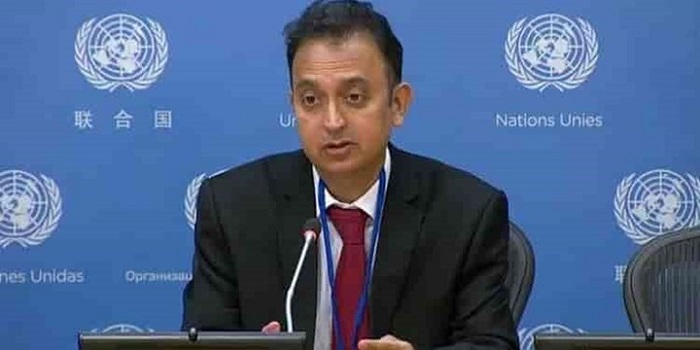
Javaid Rahman, Special Rapporteur on the situation of human rights in Iran
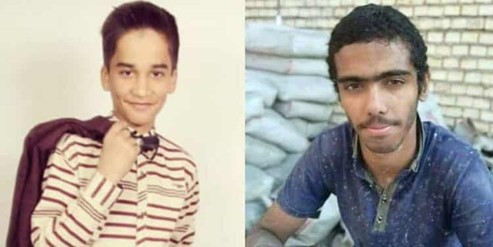
By Pooya Stone A new report by Javaid Rahman, the United Nations Special Rapporteur on the situation of human rights in Iran, reveals other dimensions of the crimes of the Iranian security forces. In a new report, the Special Rapporteur revealed that the Iranian government dealt violently with protesters over the high price of gasoline in November 2019, killing hundreds, detaining thousands, torturing them, and imposing harsh sentences. Execution sentences were also handed down by unjust courts. “The Special Rapporteur is alarmed by the unprecedented violent crackdown against protesters across the Islamic Republic of Iran in November 2019. Excessive force by State security forces has led to hundreds of deaths and injuries and thousands of arrests. “Detained protesters have faced torture and ill-treatment, with some receiving harsh sentences, including the death penalty, after unfair trials. While the Government has created a victim compensation scheme and ordered investigations, those processes lack transparency and independence and are failing to hold perpetrators of human rights violations to account. Victims’ families have also reportedly faced harassment by authorities for speaking out. “The violent response to the January 2020 protests concerning the shooting down of Ukraine International Airlines Flight 752 demonstrated that the Government continues to use excessive force to suppress freedom of expression and peaceful assembly. In the new report to the 75th General Assembly of the United Nations, Rehman stressed that he was “shocked” by the “unprecedented use of excessive and lethal force” against the protesters by the police, the IRGC, and the Basij during the November 2019 protests. “The Special Rapporteur expresses his shock at the unprecedented use of excessive and lethal force by State security forces during the November 2019 protests, including by the police, the Islamic Revolutionary Guard Corps and its Basij militia. According to credible sources, at least 304 people, including 23 children and 10 women, were killed between 15 to 19 November 2019 in 37 cities across the Islamic Republic of Iran, although the death toll is believed to be much higher. Most of the deaths were reported in Tehran (130) and Alborz (33) provinces, as well as the majority ethnic minority provinces of Khuzestan (57) and Kermanshah (30). “The Special Rapporteur expresses his particular alarm at the reported arbitrary use by security forces of firearms that killed at least 22 boys and 1 girl. On 16 November, 15-year-old Mohammad Dastankhah was shot dead, while returning from school in Sadra, by Basij forces shooting from their building rooftop. A 17-year-old boy, Mohsen Mohammadpour, also died after suffering head injuries during protests in Khorramshahr.
Mohammad Dastankhah and Mohsen Mohammadpour
“Analysis of nearly half the victims’ corpses reveals they were shot in the head or neck in at least 66 cases and in the chest or heart in at least 46 cases. The pattern of shooting at vital organs, established by eyewitness accounts, video footage, and the documented causes of deaths, demonstrates that security forces were “shooting to kill” or with reckless disregard as to whether their actions caused death.” While criticizing the regime’s common yet irresponsible behavior, he said: “The Government denied responsibility for protesters’ deaths, stating that firearms had been used by “rioters” and “agents of foreign enemies” and not State security forces, or, contradictorily, that security forces had used lethal force but that it had been justified as armed protesters had posed a threat to life or property. In its comments, the Government reasserted that law enforcement had exercised “maximum restraint”. “Information received disputes those assertions. First, video footage and eyewitness testimonies confirm that police, Basij, and Islamic Revolutionary Guard Corps security forces had been the entities to use firearms on unarmed and peaceful protesters who posed no imminent threat to life. Evidence supporting that finding included accounts that those shooting at protesters had worn security force uniforms, shot from government buildings, and used weapons and equipment associated with security forces. While the Government claimed a “large number” had been killed by non-government-issued weapons, no corroborating evidence was provided.” The report was submitted to the Secretary-General on 21 July 2020 for submission to the General Assembly. The UN General Assembly begins on September 15 with the participation of the Heads of State. Two days ago, Amnesty International issued a detailed report on the November protests, alleging “rape, enforced disappearances, torture, and other ill-treatment” of protesters over the price of gasoline. During the November protests, Iran’s internet was cut off in an unprecedented way, and the means of communication and transmission of news were very limited. Summary of Javaid Rehman’s report on the November 2019 protests Most of the deaths are related to the two neighboring provinces of Tehran with 130 people and Alborz with 33 people killed. Also, in the two minority provinces of Khuzestan with 57 dead and Kermanshah with 30 people, most casualties have been recorded. An examination of nearly half of the bodies showed that 66 people had been shot in the head or neck, and 46 had been shot in the heart and chest. This shows that the security forces fired with the intention of killing or that the lives and deaths of the people were insignificant to them. The families of the victims have been threatened to keep silent. Read More:

Iran Executes Three Prisoners in Two Days