Home Blog Page 314

Iran’s November Protests Are Not Over

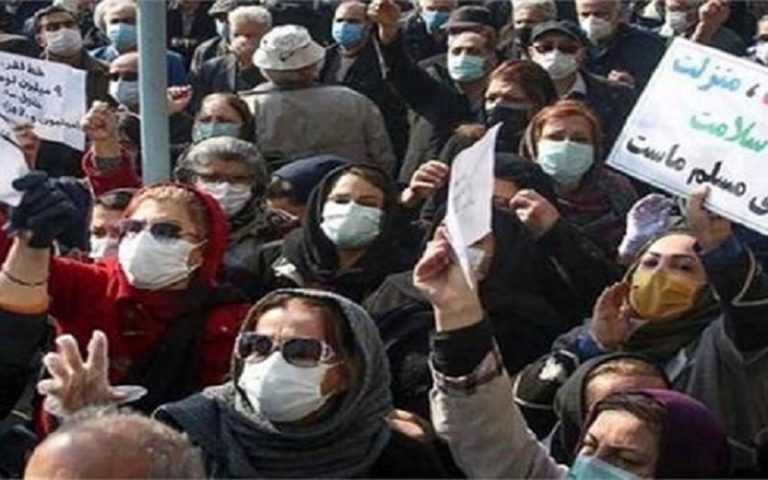
In November 2019, Iran saw the largest anti-establishment protests since the 1979 revolution, sparked by the tripling of fuel prices on November 15 and quickly becoming an admonishment of the regime as a whole, spreading to around 200 towns and cities.

The ruling system was terrified by this level of protest, something they’d not expected even though their previous biggest protest had begun less than two years earlier and related protests had plagued the country in the period in between.

A Look Back at Last Year’s Protests in Iran

Supreme Leader Ali Khamenei ordered his security forces to do “whatever it takes” to stop the protests, which led to 1,500 peaceful protesters being shot in the streets in just a few days—figures obtained by the Mojahedin-e Khalq (MEK/PMOI) and independently verified by Reuters.

The protests were led mostly by women and young people, which is not surprising given that Iranian women are the biggest victims of Iran’s ruling system and that the youth are more likely to support progressive change in Iran, even if they were born under the ayatollahs’ rule.

“A special mission was defined for women. They played a key role in both attacking the female Basij bases and in motivating the youth. No casualties were reported among them, yet their style of employing women was like the MEK women’s tactics,” wrote Javan daily affiliated to the Revolutionary Guard Corps (IRGC).

Most media outlets and officials admitted that the protests were well organized, with then-Security Commission spokesperson Seyed Hossein Naghavi Hosseini even saying that the MEK trained people for this in the prior two years. While one MP said that the unrest reached over 500 cities.

Had the authorities not instituted their violent crackdown, the protests would have no doubt continued. The attempts to crush the protesters were described by some Iranian militiamen as similar to a major ground attack in the 1980s Iran-Iraq war, while IRGC Basij commander Salar Abnoush described it as a “full-scale world war”.

But this brutal suppression did not have the effect the ayatollahs hoped for. In January, there was another protest over the downing of a passenger plane and it is likely that there would have been more over the following months had the coronavirus pandemic not hit.

All the signs indicate that the Iranian government is in its final phase because the ayatollahs are incapable of solving the Iranian people’s problems, so the Iranian people are not questioning what the authorities will do, but are preparing for the next opportunity to actualize fundamental changes.

Iranian People Prepare for Anti-Establishment Protests

Iranians Expect the World to Stand with Them, Not Against Their Desire

0

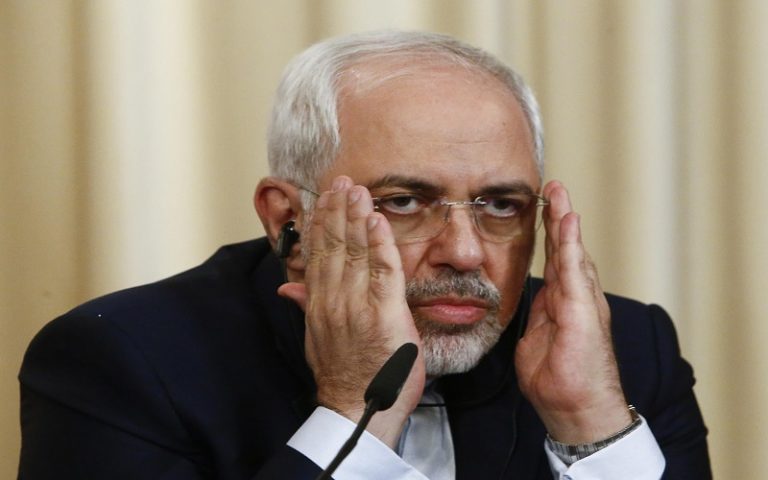
These days, Iranian officials, including Foreign Minister Mohammad Javad Zarif, express their joy over the U.S. political development. They obviously raise their expectations about the U.S. future administration while the recent U.S. Presidential elections’ fate is still unclear.

“And the world is watching whether the new leaders will abandon disastrous lawless bullying of [the] outgoing regime—and accept multilateralism, cooperation, and respect for [the] law,” Zarif tweeted. However, he immediately added that “Deeds matter most,” showing his concerns over the future.

All the while, Iranian authorities like the Supreme Leader Ali Khamenei and President Hassan Rouhani have tried to show themselves as indifferent to the U.S. developments.

“Regardless of the outcome, one thing is absolutely clear, the definite political, civil, and moral decline of the U.S. regime,” Khamenei reacted to the U.S. elections on Twitter.

However, Rouhani implicitly showed his eagerness to renegotiate with the “Great Satan,” the term Iranian officials use to address the U.S.

“We hope those who sanctioned have grasped that their path was wrong, and mistake and they will not obtain their goals. We hope that the three-year experience would be a lesson to them that will make the next U.S. administration to succumb to the law and regulation, and return to all its commitments,” Rouhani said.

Notably, Tehran time and again announced that it would not obey the terms of the 2015 nuclear deal, formally known as the Joint Comprehensive Plan of Action (JCPOA), and flagrantly put restrictions aside and resume provocative uranium enrichment.

Furthermore, in his January 22 interview with state television’s Channel Four, the head of Iran’s Atomic Energy Organization Ali-Akbar Salehi revealed that his government did deceive foreign nuclear negotiators and watchdog over Arak heavy water facility.

Back in 2011, in his book titled “National Security and Nuclear Diplomacy,” Rouhani exposed that Tehran was exploiting nuclear negotiations to reach a point of no return in its nuclear program.

“While we were talking with the Europeans in Tehran, we were installing equipment in parts of the facility in Isfahan. In fact, by creating a calm environment, we were able to complete the work in Isfahan,” Rouhani wrote.

In other words, Iranian officials openly admitted that they do not recognize any principle and breach all norms to obtain their goals. On the other hand, they have proven that no one can trust them, and they merely understand the language of firmness and power.

In this respect, Khamenei is right that there is no matter who will take the U.S. office. Because, under the ayatollahs’ rule, Tehran will continue its attempts for achieving nuclear weapons, destabilizing the Middle East, and blackmailing the world by terrorism, whether Republicans govern the U.S. or Democrats.

Therefore, it is very important that the world keep pressures on the Iranian government to end its foreign adventurism and domestic suppression, Iranian dissidents argue. In April 2011, former U.S. President Barak Obama highlighted that the dictators are the most unstable rulers. “The power of the masses can topple autocrats,” he said.

In this context, as the Iranian government sees more domestic protests and public fury, betting on the ayatollahs’ collapsing economy is the latest option in front of foreign companies and investors.

Trusting the fraudulent and corrupt leaders of Iran would just lead the Middle East to more destabilization. Dissidents point out that the people of Iran expect the international community to respect their desire for a democratic government, which respects people’s lives.

“Neda [Agha-Soltan] died with open eyes. Shame on us who live with closed eyes,” said the late U.S. Senator John McCain in June 2009. Iranians hope that foreign officials would not be more disgrace about their approaches toward Iranian protests.

Iran’s Dictatorship Is Concerned Over Growing the Society’s Political Knowledge

“Iranian society’s sensitivity to the U.S. election could be the result of a profound subversive transformation that may lead to any unpleasant action. These conditions can ultimately warn it against any logical action in crises,” wrote Ebtekar daily on November 4. 

In passing through virtual web pages and social networks and reviewing the Iranian media abroad as well as the state media, most of the content of Iranians inside and outside the country shows attention to political and trade union issues about the ayatollahs’ rule and the critical situation in Iran under the dominance of this dictatorship. 

Iranian officials and some government-linked media outlets have repeatedly expressed their fear of the reaction of social networks to the establishment’s political and economic crimes in recent months. 

Iranian Media Warns Over Uprising 

What is the reality of this assessment of the remarkable feature of Iran’s society and the hysterical reactions of the government to it? 

Before addressing the various aspects of such coordinates about Iran’s society and its relation with this government, it should be noted that in the societies under the dominance of a dictatorship, the political rule is struggling to intervene and prevent the people from becoming politicized, and it is using any apparatus like psychological or religious propaganda. 

In societies where people react to newspapers and news about the performance of governments, there are two possible reactions from governments: 

One is to pay the price for democracy and accept the criticism of the people, and the other is to exercise absolute political and religious tyranny. 

In the meantime, the characteristic of the Islamic Republic from the very beginning of domination has been to establish the absolute rule of the supreme leader, or as it is called by the government, the Guardianship of Islamic Jourist [Velayat-e-Faghih]. Political and religious absolutism with two complementary characteristics: 

  1. Everyone should submit to this Velayat-e-Faghih and say yes and must be in pact with him. 
  2. No voice, activity, or presence opposed to this absolutism is tolerated and is considered as rebellion and opposition to the representative of God and Islam. 

In the last 41 years, these two qualities have been complementary to each other, which have transcended the clerical system beyond the definitions of well-known dictatorships and made it the perpetrator of the most unbridled crimes. 

Therefore, this government, with its military arms and so-called ideological arms, has gone to the most private thoughts, actions, and words of the Iranian people, and its policy has always been to dominate different sections of Iranian society to its absolute rule, from experts, scientists, artists to athletes and writers. 

This feature, which the state media refers to as the ‘politicization of Iranian society,’ is the result of these two complementary traits in this system. 

But this is not the whole story. It remains to be seen how the invasion of privacy and human rights, with the most unbridled crimes committed by the ayatollahs’ rule, will lead to a political and social approach in Iran. 

Iran Arrests Thousands Arbitrarily Fearing an Protest

This reaction is a clear feature of the public outcry and politicization of Iranian society against the system of Velayat-e-Faqih.

With the politicization of Iranian society, the clerical government is now suffering from punishment. The effects of all encroachments on the affairs of personal life, as well as the violation of the limits of individual and social freedoms, have accumulated in the public memory and have turned into public hatred against the Velayat-e-Faqih system. 

Now this politicized society, in the process of uniting with the necessity of freedom, has demanded the overthrow of the clerical rule. In domestic and international political developments, such a society sees the national and historical interests of Iran in the complete rejection of the clerical system. Hence, it monitors the international equations or the balance of power in terms of its distance and proximity to the country’s national interests. 

These are the obvious realities in Iranian society that the state-run daily Ebtekar has expressed concern about in its November 4 edition. 

Iran Is Represented by a Grateful Nation – Iranian Youth Mark November 2019 Uprising

0

Our flag does not fly because the wind moves it. It flies with the last breath of each man and woman who died protecting it. We do not know one promise these young men and women, one pledge they gave, one word they spoke; but we do know they summed up and perfected, by one supreme act, the highest virtues of men and citizens. For the love of country, they accepted death, and thus resolved all doubts, and made.

Marking the first anniversary of Iran’s nationwide November 2019 protests, that raced in more than 190 cities in the entire country, Iranian youth in exile held an online conference on Tuesday, November 10, vowing to continue the struggle of those who fall in that days.

In the days of these great nationwide events, in fear of been overthrew the Iranian supreme leader Ali Khamenei ordered a hostile command to terminate the protests. After this command, Iran’s dictatorship killed more than 1500 brave men and women. Over 4,000 were wounded and at least 12,000 were arrested.

Starting this event Mrs. Maryam Rajavi the President-elect of the National Council Resistance of Iran (NCRI) said:

“The uprising in November 2019 was neither indiscriminate nor spontaneous… It had no ties with any of the regime’s factions and no connections to any world power or government. On the contrary, the November uprising emanated from the Iranian people’s independent and liberating resolve.

“It was a genuine example of a revolt and a struggle to overthrow the regime. Its driving force was deprived but aware of youths inspired by Resistance Units. It was an example that implemented the strategy of the PMOI/MEK, the strategy of Resistance Units, and Rebellious Cities, she added.”

About the regime’s killings she added: “In November 2019, the regime began killing protesters from the onset. The slaughter took on a much greater scale on November 17, upon Khamenei’s order. He told his suppressive agencies to ‘fulfill their duties’ with regard to the protesters. This was an order for a ruthless massacre.”

Mrs. Rajavi also emphasized that the ruling corrupt government’s economic policies have resulted in mass poverty, skyrocketing prices, and unemployment.

“But all the poverty and hunger and so much oppression and injustice will not remain unanswered. Wherever we look, we can see a widespread and powerful desire for the overthrow of Khamenei’s regime as discontent and protests are simmering in Iranian society.”

About the regime’s crimes Mrs. Ingrid Betancourt, former Colombian senator, and presidential candidate said: “It is our duty to point our fingers at the criminals who murdered protesters in Iran. World leaders must take action now. What happens in Iran has consequences in our daily lives. The religious terrorism that strikes our streets has been financed by Iran. This has been shown in numerous trials, including the one being held this month in Antwerp, Belgium.

“The social classes who are thought to be the legitimizing backbone of the regime were the ones who were chanting slogans against the Khamenei and Rouhani in the streets and were shot to death by security forces.”

Swedish MP Magnus Oscasrsson said: “We need to work for democracy in Iran. We need change, a standard democracy. In different cities, people are rising up and saying it’s enough. It’s time for Sweden to support Iranian democracy. My friends, don’t give up, we stand with you in this struggle for freedom and fundamental rights.”

About the international’s duty about this regime, British MP Theresa Villiers said: “The international community must now intervene to stop the culture of impunity in Iran in order to prevent another massacre of dissidents in regime’s prisons. Silence is not an option and the international community and Western democracies must stand with the Iranian people and the organized Resistance movement as they continue to challenge the regime to establish a free and democratic Iran.”

Behrouz Maghsoudi, representative of the Iranian Youths Association in Norway said: “The November 2019 uprising was clearly a rebellion against the religious fascism in our country. The protesters knew that they will neither have the freedom nor decent livelihoods as long as the regime is in power.

“The November 2019 protester wanted the overthrow of the regime in its entirety and the establishment of a democratic republic, chanting: ‘Down with Khamenei,’ ‘We don’t want the mullahs’ regime,’ and ‘Death to the tyrant, be it the Shah or the Supreme Leader.’”

Dr. Ramesh Sepehrad, Adjunct Faculty at George Mason University about the November 2019 protests said: “The message of the uprising was that the regime must go, and it is on the verge of collapse.

“The regime’s tactics of terrorism and repression to scare the people are no longer effective. Generation after generation, the people of Iran have stood and supported the MEK. The resistance has its roots in Iranian society.”

Mitchell Reiss, Director of Policy Planning at the Department of State (2003-2005) said: “These protests took place because the Iranian people only wish what people all over the world wish for – the basic human right to live in freedom, to raise your family without fear, to elect honest officials who will represent your best interests and not steal from you, and to live a life of dignity.

“You and your colleagues all over Iran have made it clear that you want a change from this illegitimate regime. Your courage and bravery in the face of the regime’s violence and repression is inspiring.”

Princess Zamaswazi Dlamini-Mandela, human rights activist and granddaughter of the late South African President Nelson Mandela: “The Iranian people are in need of peace, justice, and political prosperity. The people of Iran reject tyranny and demand freedom.

The people of Iran have turned to the international community to boycott the regime. The NCRI led by Maryam Rajavi is the Iranian people’s opposition to the current regime.”

Theresa Payton, White House Chief Information Officer for President George W. Bush said: “Iran’s goal is to drive positive news about its current regime and manipulate its own people to ensure undying support for its political interests. The regime bans social media, but its officials have access to them.

“The Iranian regime is engaged in creating fake accounts on Twitter and other social media outlets to spread misinformation against the Iranian opposition, namely the MEK. Iran’s regime hides behind cyber operatives and fake personas.”

Belgian Senator Else Ampe said: “The Iranian government’s violence is condemned by the UN and Amnesty International. I demand the immediate release of all protesters detained in justified protests. The people of Iran can’t even speak their minds.”

Norwegian MP Geir Sigbjorn Toskedal, Member of the Foreign Affairs Committee: “I want to emphasize that the Iranian population is among the youngest populations in the world with more than 40% born after the 1979 revolution. They were born and raised under the current dictatorship but on every occasion, they have shown their desire for freedom and democratic values that we cherish in the West.”

Neda Amani, a women’s football team coach in Switzerland: “We Iranian youth despise appeasement and appeasers who stand with the Iranian regime and don’t recognize our people’s rights.

“We will stand against the appeasement policy and will not allow any government to support the tyrannical goals of the regime. We will overthrow this regime.

“Whether the regime and its appeasers like it or not, the voice of our people is echoed by Iranian Resistance Units.”

Amir Seifi from the Iranian community of Ireland said: “The regime tried to dissolve us into its system through repression and brainwashing. But many of us chose resistance and rebellion. And every day, our ranks are growing.

“In 2017, Iran’s students targeted by the regime’s reformism propaganda chanted, “Reformists, principalists, the game is over. In recent years, the brave Resistance Units have been growing. These are the new liberation army of the people of Iran.”

Italian Senator Roberto Rampi: “We in the West have the obligation to support the call of Maryam Rajavi to send a delegation to investigate the situation in Iran’s prisons. We know that this regime is a terrorist regime. Assadi’s case is just one instance that shows Iran is a government that finances terrorism. We can’t tolerate this regime.”

San Marino MP Marica Montemaggi said: “The Iranian people want to get rid of the theocratic regime and want true democracy. The government keeps investing in projects that have nothing to do with the health and safety of the people despite the pandemic.

“Iran has thousands of people who have been imprisoned and are suffering torture. We can’t remain silent on this. We must support the NCRI, which is working for peace and peaceful coexistence with the international community.”

Hasti Hesami, Medical Dosimetrist representing the Iranian American Community of North Texas said: “There is a will to stand up in Iran. This is the kind of will we see in Ashraf, where the regime tried to bring an end to the MEK through brutal attacks. But the MEK members resisted Ashraf and defeated the regime. We see the same kind of spirit in the youth of Iran, who are resisting the regime.

“This shows how much the regime fears the power of the youth. They are the ones who are constituting the Resistance Units.”

Hoda Imad, central board member of AUF deputy leader and education policy spokesperson in Viken AP: “The Iranian people demand basic human rights to express themselves without fear of persecution. That should not be too much to ask for. Iran’s youth should not be in jail and not know if they will survive the next day.

“It’s time for all of us to raise our voice in solidarity with the people of Iran. No one is free until everyone is free. The demands and dreams for freedom and justice of the people of Iran will win. We share your dreams and stand with you in your fight for democracy.”

Pegah Jahanmiri of the Iranian youths in Germany said: “We will never forget those who laid their lives for freedom. We support the protesters and the Resistance Units. The regime knows that while there are brave youths in Shiraz and other cities in Iran, it has no future. We will not stop calling for freedom. Resistance Units are symbols of freedom and the MEK’s fight for freedom. I am proud to say I am a supporter of the MEK.”

Arezu Eshraghi, Director of the Iranian Women Association in the UK said: “I was in Iran during the 1999 student uprising of Iran. Former Iranian regime president Mohammad Khatami, supposedly a moderate president, repressed the protests. Mohammad Bagher Ghalibaf, the current speaker of the regime’s Majlis (parliament), was proud of taking part in the crackdown of the protests.”

Aidin Saidian, from the Iranian Youths Association in the United States, said: “The key message of the November 2019 uprising was that the Iranian regime is on the verge of being overthrown. It is a backward regime. The regime spends millions of dollars to whitewash their crimes and to push the narrative that they are the only option. But the uprising showed how much the people reject the regime. The slogans of the November 2019 protests also showed that the people don’t want any despots, whether it is the mullahs or the shah.”

Iran: The Government Loots Farmers

In recent months, Iranian farmers’ crops have deteriorated, and their one-year production destroyed. The government’s lack of support for farmers has forced them to sell their produce at low prices and at a loss.

Regarding the unhealthy situation of farmers and the bad consequences for the people, Mojtaba Yousefi, a member of Iran’s parliament, said:

“For example, today we have reached a level of self-sufficiency in the discussion of agricultural products, but due to mismanagement that is happening and lack of support for infrastructure that is not happening in this area, we are worried next year that farmers will not be able to produce next year,” ILNA news agency quoted him as saying on November 4.

In a video clip posted on social media, farmers say about the lack of support from the government and the loss of their crops:

“Now the market is not in a good condition, now we have so many tomatoes, we do not have good sales at all. Unfortunately, we are not supported at all, I ask the organs and officials to think a little about the farmers.”

Tomato growers are still worried that their products will become animal feed, or they will be forced to sell it to brokers and government agencies at very low prices.

Regarding the situation of tomato growers in the south of Kerman, a Kermani farmer says: “We are picking or drying these good tomatoes or burning them and giving them to the sheep. We worked so hard; I did not get anything. Here, four hectares are under tomato cultivation, which, as you can see, we are removing this part due to lack of economic efficiency.”

Iranian Pistachio Farmers’ Livelihood in Danger

At the beginning of the year, the lack of government support for agricultural products caused a sharp drop in prices. So many farmers left their crops behind to feed the cattle, then the government mafias started their work, and they bought the farmers’ produce for free and sent it to the government or Revolutionary Guards (IRGC) cold stores.

The situation of onion farmers is not better than the situation of tomato farmers. The onion growers are also shouting about the injustice of the government and its lack of support.

In a video posted on social media, they say that they have wasted their time and that the product is left in their hands and they have to sell it at a low price: “Our onion stayed in the ground Our tomatoes stayed in the ground.”

Government institutions and brokers buy and store farmers‘ products at low prices, but with the onset of the season, they supply these products to the domestic market at exorbitant prices, exporting large quantities abroad and seizing windfall profits.

“Tomatoes, whose price has risen to 150,000 rials [$0.55] per kilogram in shops these days, were bought from farmers in July of this year, just four months ago, for less than one-twentieth of this price (!), I.e. 4,000 rials [$0.01] per kilogram, and this caused a large number of Tomato growers should give up their production and do not care about its harvest. This story, of course, is true of other agricultural products, such as onions, which are also breaking record prices these days.” Keyhan daily wrote on November 2.

Regarding the high price of fruit, this paper added: “Despite the production of various fruits in the country, the three factors of high production cost, abundant brokerage and intermediation in the agricultural sector and lack of market supervision are the main reasons for the high price of fruit, which cannot be reduced until they are corrected.

“Fruit prices in the market are still rising, despite officials’ promises to regulate the market and reduce prices, and the access of the average person to such products has become more difficult.

“The ceiling and floor price of each kilogram of rose apple is between eight thousand and 100,000 rials [$0.37] and the price of the excellent sample is 120,000 rials [$0.44].

“Also, the minimum and maximum of the rates of premium ‘peach varieties’ have been announced at 50,000, 70,000, and 100,000 rials [$0.18, $0.25 and $0.37], respectively. The same prices for Asgari grapes are 60,000, 80,000, and 90,000 rials [$0.22, $0.29, and $0.33]. As it turns out, these wholesale prices in the central square of Tehran to reach the shops and eventually the consumer will be more than these figures.

Iran Facing Water Shortage

“Despite the fact that Assadollah Kargar, the head of the fruit sellers’ union, had said: ‘With the supply of autumn fruits, prices will fall sharply,’ the latest prices of fruits in the central square of Tehran Fruit and Vegetable Market indicate that prices have not decreased even despite the supply of autumn fruits.

“Just a month ago, the government increased the price of fertilizer inputs five to ten times. For one unit of chemical fertilizer consumption, nine units of product increase.

“These are the prices for wholesale, and when these fruits reach the shops, according to the law, the price increases by 30 percent and in practice by more than 100 percent.” (Keyhan, October 18)

Acknowledging the shortage of agricultural products in the market, Keyhan daily admits to exporting these products and wrote:

“Although autumn is not the time to harvest tomatoes, and of course the domestic market needs it a lot, we suddenly hear in the news that 14,000 tons of this product have been exported and this trend is still going to continue.” (Keyhan, November 2)

It is not only agricultural products that are exported by government looters, but also many of the items needed by the people, including eggs. This is at a time when egg prices are currently skyrocketing.

Regarding the export of eggs abroad, the head of the Hamedan Poultry and Fish Union said: “Hamedan eggs are exported to three countries: Iraq, Afghanistan and the UAE. Egg exports have led to higher prices in the market. Currently, the price of each egg comb in the market is 25,000-30,000 rials [$0.92-1.11] for the consumer.” (Javan news agency, June 21)

Iran’s Wheat Mafia

Iraq Protests Challenge Iran’s Strategic Depth

0

Major protests against Iran’s interference in Iraq and its government at the beginning of this week are a real threat to Iran’s so-called “strategic depth” and threaten Tehran’s ability to create a Shi’ite crescent across the Middle East.

This is nothing new. Last October, the Iraqi people began their “October Revolution” with the same anti-establishment sentiment. In the southern Shiite-majority provinces, people came to the streets chanting slogans against the ayatollahs and calling for their proxy groups to be dismantled.

Iranian government reacted by sending their proxy terrorist groups to assassinate Iraqi activists to try and stop the protests, which is also what they do with domestic protests because their rule is based on domestic oppression and the export of terrorism. But the protests continued because, just like in Iran, the people of Iraq are less scared of dying than living under the thumb of the ayatollahs.

Iraqis Return to al-Tahrir Square—New Flash Protests 

The Keyhan daily, known as the mouthpiece of Supreme Leader, Ali Khamenei, expressed fear on October 25 of losing control in Iraq.

“Last year, the first protests were against corruption, unemployment, and the government’s failure to provide public services. The protests overthrew several governments and overshadowed the entire Iraqi political situation,” they wrote.

How did the ayatollahs ruling Iran achieve this influence in Iraq? Well, following the power vacuum left by the second Gulf War, the ayatollahs were able to expand its influence, even paying off high-ranking politicians, like Minister of Labor Hadi-al Ameri. They’ve spent 17 years trying to occupy Iraq.

But why do this? Iranian government sees Iraq, Syria, and Lebanon, as the perfect place to expand their control over the Middle East, which is one of the reasons they prolonged the Iran-Iraq war for six years after Iraq sued for peace.

The trouble is that the Iranian government’s malign activities have resulted in increased international pressure and further isolation, so in a bid to keep power, Tehran increased its terrorist activities. Thankfully, the West was able to do one thing this year to slow the terrorism down, which was conducting a drone strike on the Revolutionary Guards (IRGC) Quds Force commander Qassem Soleimani in Iraq.

“Now, after having its puppet governments toppled one after another in Iraq, Iranian authorities fear losing control if the [terrorist proxies] or corrupt politicians are ousted. Yet, the Iraqi people have shown they will continue their protests until achieving the goal of ending the [Iranian] regime’s presence in Iraq. Thus, for the crisis-riddled regime of Iran, that faces a restive society and growing international isolation, there will be more regional pressure,” the Iranian opposition National Council of Resistance of Iran (NCRI) wrote.

Europe Must Take Iran Terror Threat Seriously

0

An official from the Foreign Affairs Committee of the National Council of Resistance of Iran (NCRI) has written an op-ed on Townhall regarding Iranian diplomat terrorist Assadollah Assadi and Tehran’s terrorism strategy in dozens of countries that still have an Iranian embassy.

Dr. Ali Safavi wrote that, after 41 years, an Iranian diplomat will finally stand trial for his terrorist actions in Europe, which is an important first step to convincing foreign governments to close the embassies and expel the ambassadors in order to protect their country and others from Iranian attacks. After all, he said, these embassies cannot escape that they are run by terrorists for the purpose of committing terror.

“Who can oppose [the harmonious vision of diplomatic values represented by the Vienna Convention]? Well, the rogue regime of Iran, of course. Ironically, it was in Vienna that the regime decided to express its deep-seated contempt for the Vienna Convention by stationing there one of its most notorious terrorist masterminds, Assadollah Assadi,” he added.

Iran Terrorist on Trial in Belgium

Assadi used his “diplomatic pouch” to deliver 500 grams of TATP explosives from Tehran’s airport to Austria in June 2018, before setting off on a journey across the continent to hand-deliver the bomb to a sleeper cell in Belgium, who would detonate it at the Free Iran rally in Paris, endangering the over 100,000 people in attendance.

“The regime knew the consequences: thousands dead and injured, including many high-profile former U.S. and European officials who spoke at the “Free Iran” gathering as well as innocent men, women, and children participating in the rally. In fact, it had threatened the organizers, supporters of the main opposition Mojahedin-e Khalq (MEK/PMOI), months earlier,” Safavi explained.

The Iranian government made these threats following the December 2017 uprising in Iran, with supreme leader Ali Khamenei saying the MEK would face consequences for their organizing of the protests.

The plot was foiled by German, Belgian, and French law enforcement agencies, with Assadi’s hired terrorists being arrested shortly after the drop-off and Assadi being arrested in Germany the following day.

Assadi will go on trial for terrorism on November 27, but this is far from the first time that an Iranian diplomat has been involved in terrorism in Europe. Safavi cites:

  • a car bomb plot in Albania in March 2018
  • the murder of Kurdish opponents in Vienna in 1989
  • the assassination of diplomat Dr. Kazem Rajavi near Geneva in 1990
  • the bombing at the Mykonos Restaurant in Berlin in 1992
  • the murder of NCRI representative Mohammad Hossein Naghdi in Rome in 1993

EU Must Adopt a Firm Policy Against Tehran’s Terror Attacks

“Since the Iran nuclear deal was signed in 2015, the mullahs have clearly escalated their terrorist plots in Europe, forcing even the feckless Europeans to expel at least seven ‘diplomats’…Tehran’s embassies have become nerve centers for its terrorism,” Safavi wrote.

“Many have argued for these embassies’ closure and the expulsion of Iranian agents to prevent more European deaths. Europe, whose citizens have been most affected, should lead the charge and forge a united front with the U.S. to enact a firmer policy that addresses Tehran’s terrorism. The sooner it realizes this the more lives it can save,” he concluded.

Iran Worsening Repression Under the Pretext of COVID

0

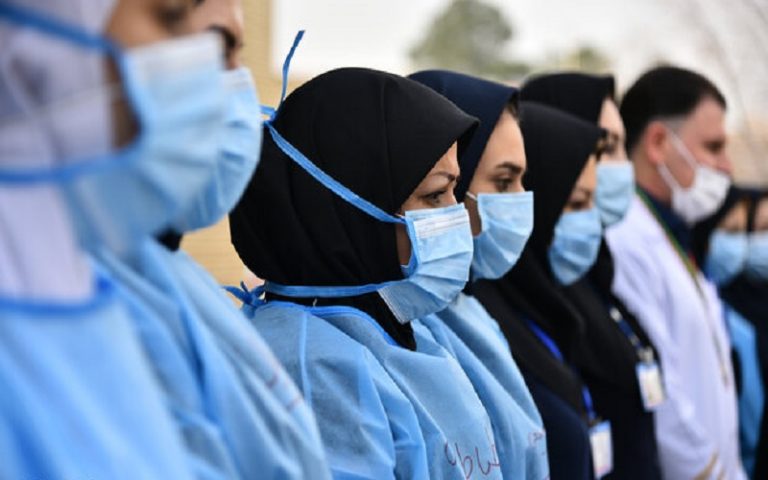
The Iranian government has amplified its repression in line with the worsening coronavirus crisis because the ayatollahs are scared that their mismanagement will lead to increased deaths and, eventually, a new protest.

On October 31, Khabar-Online website reported that Revolutionary Guards (IRGC) commander Gen. Hossain Salami ordered his troops to raid people’s homes under the pretext of combating the coronavirus.

“We will use 54,000 Basij [paramilitary forces] bases as protectors of health. We will search for sick people from house to house, and we will perform the process of separating ill people from others and referring them to treatment centers,” the website wrote.

The IRGC and its Basij subsidiary are the groups responsible for the assassination of 1,500 protesters during the nationwide November 2019 protests so it’s understandably terrifying to have them go into houses and take people away.

Also, the IRGC controls the vast majority of the country’s economy, so they could have done something to control the pandemic months ago, by releasing money so that non-essential workers could stay home and the spread would slow.

Iran -Coronavirus-Infected Workers Increase by the Day

However, that didn’t happen, and not only were people forced back to work, fearing starvation, but the government also held mass gatherings and encouraged people to attend.

In fact, when coronavirus was first found in Iran, the ayatollahs tried to hide it, insisting on holding the elections with in-person voting, in order to legitimize their sham rule. The Iranian people largely boycotted these elections but the few state supporters started spreading the virus.

Even after that, the ayatollahs downplayed the threat of the virus, instituted a lockdown that was too short and too late, and even the state-run media admitted that the government was using the pandemic as a punishment for the people who cried “Death to the dictator” in November. Even a member of the COVID-19 Task Force has called the lack of a second lockdown “political, not scientific.”

The ayatollahs fear another uprising with the virus so out of control, with Etemad daily writing that officials “should” fear that, “because when it comes, it penetrates all protections and burns roots [of the ayatollahs’ ruling system] and hopes. There will be no time to regret [years of] oblivion.”

So they’ve increased oppressive measures and set up a new headquarters to “promote public security and fight against insecurity” in Tehran’s Public and Revolutionary Courts. The Mizan news agency quoted Judiciary Chief Ebrahim Raisi as saying that this would deal with “norm-breakers”, “miscreants, and those harming the security of society and neighborhoods in Tehran.”

Bahrain Sentences Iran-Backed Militias to Prison

0

The Bahraini government sentenced 51 offenders linked to Iran’s Revolutionary Guards (IRGC) for terror activities, most of them in absentia, according to the government statement issued on November 3.

Earlier, on September 20, Bahraini authorities foiled an Iran-plotted terrorist attack in early 2020. However, this was neither the ayatollahs’ first nor their last attempt to disrupt regional peace and security.

For many years, Iranian authorities continue their atrocities across the Middle East and the world. For instance, on September 28, Saudi Arabian authorities disbanded a terrorist unit in their territory.

“Special authorities dissolved a terrorist cell, whose elements received military and field training inside IRGC’s camps in Iran,” the spokesperson of Saudi Arabia’s security forces stated.

Tehran Aims to Subvert Regional States

Tehran’s Terror Activities on European Soil

Furthermore, nowadays, a senior Iranian diplomat awaits trial in Belgium. On June 30, 2018, German law enforcement detained Assadollah Assadi, the third secretary of the Iranian embassy in Austria, due to his involvement in a terror plot against the Iranian opposition.

A few days earlier, Assadi had delivered 500g of TATP explosive material and a detonation device to a young couple to bomb the annual gathering of the National Council of Resistance of Iran (NCRI) in Villepinte, a suburb of Paris. Assadi had abused his diplomatic coverage to transfer explosives on a commercial flight from Tehran to Vienna.

In December 2018, the Albanian government expelled the Iranian ambassador Gholam-Hossein Mohammad-Nia and his first aide Mostafa Roudaki. Based on undeniable evidence, Tehran’s embassy in Tirana, the Albanian capital, had masterminded a terror attack against members of the Iranian opposition Mojahedin-e Khalq (MEK/PMOI) in March 2018.

Mohammad-Nia, Roudaki, and several other “diplomats” were identified as individuals who disrupted Albania’s national security. Albanian authorities also sealed a so-called cultural centerSaid, for recruiting local citizens to carry out espionage activities and terror attacks against the MEK members.

All instances mentioned above underline the imperative of adopting a firm and effective approach against the ayatollahs’ malign activities in the region and across the globe. For decades, Iranian authorities are employing terrorism, hostage-taking, and radical entities to blackmail the international community.

EU Must Adopt a Firm Policy Against Tehran’s Terror Attacks

International Community’s Obligation to Stop Ayatollahs’ Atrocities

The ayatollahs and IRGC’s hands are stained with the blood of hundreds of thousands of innocent people in Syria, Iraq, Lebanon, Kuwait, Argentina, and France. However, the Iranian people are the foremost victims of the world’s leading state-sponsor of terrorism.

In such circumstances, the international community must stand alongside the Iranian people’s protests against the government’s meddling in other countries. Iranian citizens demand their wealth to be spent on improving their welfare, health system, and eradicating poverty and illiteracy.

However, authorities insist on their atrocities, responding to any peaceful protests by cruel means. The ayatollahs clearly announced that they would never change their horrible policies. And when they are not ready to change themselves, someone else—the people—should. Iranians have well grasped this truth.

Iranian People Prepare for Anti-Establishment Protests

Seventy Percent of Iran’s Construction Workers Are Unemployed

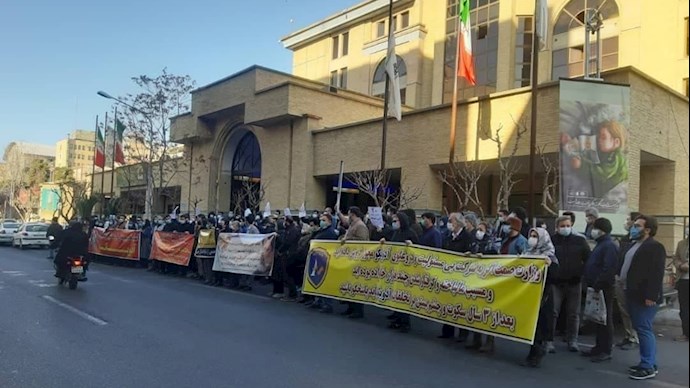
According to the vice-president of the Association of Construction Workers’ Unions Hadi Sadati, only 30 percent of construction workers in Iran are currently employed. The coronavirus has caused many Iranian construction workers to suffer from work and livelihood problems.

Hadi Sadati says that unfortunately, the coronavirus has caused that only 30 percent of construction workers go to work in the current situation and the rest of the construction workers are now unemployed and unable to make the minimum living.

Because they hoped to paint the building or repair the pipes and fixtures of the houses, they were offered less work due to the coronavirus and reduced demand. Due to this, their employment and livelihood are endangered.

“Currently, construction workers who are waiting for insurance have been identified. And if Social Security is going to carry out [Supreme Leader Ali] Khamenei‘s order, in addition to the required facilities and tools, it has the information of the insured persons,” he said.

“For those who are not insured, their statistics and information can be collected by construction workers’ associations across the country. And whenever social security wants, we provide it to the organization through the center.”

According to Sadati, construction workers’ unions are active in 450 cities and counties. This can assist in transmitting statistics and information about insured and uninsured construction workers to Social Security.

Construction Workers Are Worried

These days construction workers can pay their premiums with great difficulty. Government officials are now pursuing unilateral reforms instead of facilitating the situation for them. They are just looking to increase the income of the Social Security Administration.

The draft amendment to “Article 5 of the Construction Workers’ Insurance Law”, which was apparently signed by 30 members of Parliament (Majlis) but was actually drafted with the concurrence and participation of the Social Security Organization and is on the parliament’s agenda, has exacerbated the concerns of construction workers and their unions.

Will the “construction workers’ insurance” and the social protection of these workers be more endangered and difficult in these critical conditions of the coronavirus outbreak?

The deputy chairman of the Iranian Majlis Economic Commission acknowledged the extreme poverty of the people. Describing people’s living conditions as critical, and sharply criticizing the government’s plans he said, “many people have nothing to eat but bread and cheese.”

The Government Is Just Watching the Death and Poverty of the People

In all countries of the world, at the same time with the start of the coronavirus outbreak, the government has started providing aid packages to the people, especially the unemployed. In many countries, governments have spent billions of dollars doing this.

But in Iran, the people are starving, and the government has not provided the least help to the people. All the plans that have been announced with propaganda so far have remained just hollow words. The result of this situation is the unemployment of workers and the suicide of young people and adolescents.

Iranian Workers Are Victims of Capital Focus in the Hands of Khamenei and the IRGC