Home Blog Page 318

COVID-19 in Iran: 337 Is Not a Number, It Is a Heartbreaking Story of Human Loss

The COVID-19 pandemic in Iran is out of control. While until now the Iranian government was trying to prevent the spread of the truth, now the truth forced it to show just a little of what is happening in Iran. 

In an interview, Minoo Mohraz, a member of Iran’s National COVID-19 Taskforce, referred to the crisis of the coronavirus and said: “The situation is very deplorable. It is too late for quarantine because the coronavirus is in a terrible state all over the country. Tehran in particular is in a more dire situation. In no period during these few months have we had this number of hospitalizations and this number of patients and deaths. 

“I also wonder why the National COVID-19 Taskforce does not impose a shutdown or take restraint seriously. According to medical science, there should be shut down. I am not involved in political issues to find out why they do not establish holidays. The non-closures are politically motivated, not medically based.” 

COVID-19 Turns Iran into Red Status: Health Official

Referring to the high costs of hospitalized patients in the ICU, she said: “One night in an ICU costs several million (Tomans). There are currently 4,700 people hospitalized in the ICU. Calculate how much that is and calculate how much the government will pay for it.” 

Minoo Mehrz, referring to the complicated conditions of the medical staff and their exhaustion, added: “The treatment staff has been working hard for several months. They still work with love and compassion, but physically they are in a different state. The work of the doctors always has shifts and night work. But not so much. I had not seen so many critically ill patients and deaths in all my 45 years of medical practice. Watching this level of mortality also tires the medical staff. These are issues to consider.” 

Even Iran’s President Hassan Rouhani was forced to confess about the dire situation as he said: “All over the country in different provinces today we are facing a wider wave of this virus and we have to deal with it. Now, how long we are involved, we must be pessimistic and sayfor example, that this problem will advance us for another year. That is, we must all believe that the conditions of 2020 and probably 2021 are different from those of previous years.  

25 Million Iranians Have Contracted Coronavirus, 30–35 Million Others Are Exposed to Virus: Rouhani

“Today, the number of our patients has increased from 4,000 to 8,000. This is not a problem, this is not important, but on the other hand, it is important that if our death toll were 200, it became 250, if it was 250, it became 300. This means a siren of danger for all of us.” (State television news channel, 19 October) 

The official news agency IRNAabout the false statistics by the spokesman of the Ministry of Health, on 19 October wrote: “Black Coronavirus Monday – 337 is not a number. It is the heartbreaking story of people’s deaths. If we do not break the chain of infection, these horrible numbers will reach 600 in late October and 900 in early December. 

Infighting by Iranian Officials Due to Massive Pressure

In recent days Iranian officials and other key elements have been quarreling with one other because of the massive pressure and their corrupted behaviors which is leading the country to a total collapse. Such arguments were visible in the country’s latest parliament session.

Mohammad Bagher Ghalibaf, the parliament speaker, in fear of the people’s reaction and because of the disastrous country’s situation attacked Iran’s president.

“What makes this pressure harder to bear is the mismanagement, carelessness, and tangible inattention that make people feel helpless. The least that an official can do today is to be with the people. Today, everyone should know that political disputes will do not become any bread and water for the people,” he said.

“Our main problem is that decision-makers do not focus on the day-to-day issues of people, mismanagement in making the right decisions, and ultimately do not have the real and effective will to solve problems.

“The official in charge of solving the people’s problems should not give the wrong address and cause discord within the society and increase the enemy’s greed to impose more sanctions on [Iran],” Ghalibaf added. (ICANA news agency affiliated to Parliament (Majlis), October 18, 2020)

Cleric Javad Nik-Been in the parliament session attacked President Hassan Rouhani and request his interpellation. “Where is the authority of the parliament? We, the deputies, cannot at least ask the president that he once said behind the same tribune of the parliament that if I want, I will return the dollar in the amount of 5000 tomans and 7000 tomans within two weeks. Today, the dollar has crossed the 30,000 toman mark. No one cares. People are being crushed under economic pressure,” he said. (ICANA, October 18, 2020)

Iran’s President Rouhani is anything but a moderate

The Majlis’ Presidium Attacks the President

Javad Hosseini-Kia, Member of the presidium, slammed Rouhani for the national currency’s devaluation and economic troubles. “Dear Mr. Rouhani, the recklessness of this government has ‘plunged the people into black soil’; USD rate is above 300,000 rials, inaccessible housing, increase in prisoners and dowry enforcement cases, decrease in marriage statistics and increase in divorce statistics, the shrinking people’s baskets and the fading of meat, chicken and dairy products from people’s table are the results of this negligence,” he said.

“Mr. President; I wish you trusted the youth of the country instead of trusting the United States and guaranteeing a ‘Kerry’ signature, you are still looking abroad and distorting history. Today, in the context of the coronavirus, our families are unable to provide phone and tablet for their children, who either drop out of school or suffer from academic failure,” Hosseini-Kia added. (ICANA, October 18, 2020)

Alireza Pak Fetrat, another member of the presidium, attributed all problems to the Rouhani administration. “Today, it is very important to invite the president to the parliament, and the president must respond in the way he has mentioned that he is the guardian of the Islamic Republic. The parliament should spend a month on economic stability and conclude with the government that if the government really cannot solve the problem, they should be treated according to the constitution,” he said.

Mahmoud Ahmadi Begash, member of the presidium: “There is no expectation from the government, this government, especially the president is not really aligned with these people, as we and as our colleagues said, we are ashamed to have a president who has been in quarantine for 8 months and no one has seen him closely. We are surprised that he says that he was the deputy commander of the war in the holy defense, where is he now?”

Iran’s Regime: “We Have Nothing Called Quarantine”

Ahmad Hossein Fallahi, member of the presidium: “The president did not take part in the most important issue, which was the decision-making process of the three branches. According to reports, even the ministers are not able to communicate directly with the president. And in connection with the market debate, which friends pointed out, the market situation is chaotic. Every day, a price puts a lot of pressure on people.

“There is no good news on the way. This shortcoming in fulfilling responsibility puts pressure on the people, and on the other hand, the media at the disposal of the government and some cyberspace blame all the problems on the system and the Supreme Leader. In the coronavirus section, one person dies every 6 minutes in the country. We have news that our casualties have multiplied compared to the first coronavirus days.”

Mohammad Salehi Darani, member of the presidium: “The deplorable and unrestrained situation of the market has peeled off the skin of the people and aggravated the situation, and no one owes an ear. The executive officials of the country have quarantined themselves due to the coronavirus.”

Iranian MPs Blame Rouhani for the Country’s Failures

Ali Akbar Bastami, MP from Ilam province, said: “Today, the country’s economy is sick, but its disease is not incurable, domestic viruses have made it feverish and tense more than ever. Today, whenever we look at the economic sector of the country, we see chaos and mismanagement, and abandonment. An overview of the automotive, housing, gold, dollar, and the stock market and inflation, poverty and livelihoods, and rampant inflation prove this claim.”

Valiollah Farzaneh, MP from Mazandaran province, said: “Today, one of the reasons for the high prices that are bothering people and becomes unbridled and undermining public confidence is the currency shocks caused by the oil economy. We have to acknowledge the fact that we have not been able to bring people together in this economic war like the imposed war (Iran-Iraq war), and this recklessness has reduced public confidence.”

Sodeif Badri, MP from Ardabil province, said: “The staggering prices, that we have an increase on an hourly basis the people must buy their essential items at many times at higher prices as much as yesterday.”

Mess in Iran’s Government

Iran Remains Publicly Confident over Embargo Expiration as US Opposition Grows

0

Sunday marks the formal expiration of a UN arms embargo on the Islamic Republic of Iran, but it still remains to be seen whether the relevant restrictions will actually be lifted in practice.

The United States had vigorously campaigned for an extension of the embargo, albeit with limited success. A Security Council vote in September garnered support for the U.S. proposal from only one of the council’s rotating members: the Dominican Republic. And even if other U.S. allies had joined in voting for the extension, they would have certainly been vetoed by Russia and China, two of the body’s five permanent members and two of the nations most likely to participate in an emerging Iranian arms trade.

Tehran’s Illusions over Lifting Arms Embargo

The prospect of exchanges with these eastern powers was eagerly highlighted by the Iranian government in advance of Sunday’s deadline. In a weekly press briefing on Monday, Foreign Ministry spokesman Saeed Khatibzadeh declared that October 18 would be “the day of U.S. defeat.” And in a subsequent interview with Newsweek, the spokesperson for the Iranian mission to the UN argued that the ostensible failure of U.S. efforts was a sign of growing American isolation in the face of a strategy that was meant to isolate Iran.

“It is abundantly clear that the UN – and the overwhelming majority of its member states – reject the U.S.’s so-called maximum pressure policy on Iran,” said Alireza Miryousefi. But be that as it may, there is little expectation that those same countries will actively stand against American efforts to maintain such pressure via measures that include the arms embargo.

After the failure of its proposal to the Security Council, the White House quickly put a back-up plan into action, invoking the “snapback” provision of the 2015 Iran nuclear deal in order to declare the re-imposition of all UN sanctions that had been suspended under that deal.

Extension of Iran Arms Embargo Is an Imperative Act

This plan was similarly rejected by fellow signatories of the agreement formally known as the Joint Comprehensive Plan of Action. In their view, the U.S. waived its right to invoke the provision when President Donald Trump pulled out of the agreement in May 2018. But even though this can be expected to prevent the embargo and related sanctions from going back onto the books, it may ultimately be sufficient for the U.S. to simply act as if they have done so.

The Ayatollahs Count on Europeans as Their Savior

French, and German, and to a lesser extent British opposition to the American strategy is a matter of public record. But their formal rejection of the embargo extension does not presuppose that they will actually take steps to prevent the U.S. from trying to enforce it. In fact, there is a clear precedent for them to not do so. And this extends to much of the international community.

As the U.S. re-imposed and then expanded its unilateral sanctions following its JCPOA withdrawal, it was regularly reported that countries with trade ties to both the U.S. and Iran were reducing or entirely severing their ties to the latter, rather than risking U.S. enforcement actions or loss of access to much more valuable American markets.

The same pattern may very well repeat in the context of the arms embargo and other UN sanctions, with various governments formally denying those sanctions’ legitimacy but effectively upholding them anyway.

Tehran’s Desperate Reaction to the Reimposition of UN Sanctions

Nonetheless, the Iranian government continued to present a confident and even boastful tone in the final days before the embargo’s technical expiration date. Toward that end, officials hinted that some prospective weapons vendors would be eager to take advantage of that expiration either because they intend to expressly defy U.S. enforcement or because they believe themselves capable of engaging in trade with the Islamic Republic without putting other forms of global commerce at risk.

“Iran has many friends and trading partners,” said Miryousefi in his further remarks to Newsweek. And according to him, at least some of those partners are eager to contribute to Iran’s “robust domestic arms industry” and “ensure its defense requirements against foreign aggression.”

This claim was arguably lent some additional credence earlier in the month when the Russian ambassador to Iran publicly mulled over the notion of selling an advanced S-400 surface-to-air missile system to the Islamic Republic.

This, Levan Jagarian determined, would be “no problem” for Moscow. And those remarks recall attention to the fact that Russian authorities had previously demonstrated their eagerness to participate in an Iranian arms trade by selling the marginally less advanced S-300 missile system.

Controversy over that sale erupted even before nuclear negotiations concluded with the signing of the JCPOA in 2015. The mere promise of that deal was initially viewed by Russia as reason enough to move forward with the sale, which had been arranged years earlier but then put on pause by the multilateral sanctions targeting Tehran’s nuclear program.

However, it also bears mentioning that when fellow participants in the nuclear negotiations protested, the sale remained delayed for several more months, with installation of the new missile defense system concluding only in 2017. This all goes to show that Russia certainly takes a favorable view of engaging in arms sales with the Islamic Republic but is not insensitive to Western pressures aimed at mitigating or halting those sales.

Some expert commentary on the present situation even suggests that Moscow’s sensitivity has increased since 2017, as the country has grown more cash-strapped while also concluding outstanding deals with Iran which had been put on pause during times when UN sanctions were still in full effect. Under those circumstances, Russia may be less open to the sort of barter agreements that are often used in sanctions-evasion schemes to avoid interaction with the American financial system.

And even if U.S. sanctions enforcement were not a concern, serious questions would remain about Iran’s ability to pay for Russian arms, considering that a longstanding Iranian financial crisis has been made exponentially worse by the Trump administration’s maximum pressure campaign.

On the other hand, Iran has variously sought to downplay the effectiveness of that campaign, by portraying itself as finding new sources of revenue that are independent of American markets.

Tehran Looks for Iraqis’ Aids

In one recent example, the head of Iran’s Central Bank declared that a pending agreement would unlock Iranian funds from Iraqi banks, where they had been frozen at the behest of Washington. Abdolnasser Hemmati also stated that this agreement had been accompanied by “extensive talks on trade relations between Iran and Iraq, implying not only resistance to U.S. sanctions but also growing Iranian influence in a sphere where the U.S. is also present.

Iran’s Main Oil Company Owes $34-billion to the Banking System

This is significant in part because it hints at some of the ways in which Iran’s access to advanced weaponry might be put to use if the US fails to keep the UN embargo in place. One of the Trump administration’s key arguments in favor of an extension was that if Iran’s arsenal grew, some of the weapons would inevitably end up in the hands of regional terrorist groups. That claim is arguably strengthened by the fact that there have been approximately 90 rocket attacks against U.S. assets by Iraqi militant groups, just since January.

Those largely Iran-backed groups recently announced their willingness to adopt a ceasefire, but only on the condition that the United States outlines a timetable for its full withdrawal from Iraq.

Currently, there is approximately 5,200 American personnel in the country, but plans are already in place for this number to go down to 3,000. What’s more, the White House responded to the recent spate of rocket attacks by threatening to close down the US embassy in Baghdad – a move that critics say would effectively cede Iraq to Iranian influence.

On Wednesday, one of the militias’ representatives in the Iraqi government, Ahmed al-Assadi, reiterated their demands and emphasized that any ceasefire arrangement would only be short-term. “In my estimation, at its earliest, it could end around the U.S. elections, or it could last until the end of the year,” he said. “A truce lasting longer than the end of the year doesn’t make much sense. We’re only giving the government more time to negotiate the withdrawal.”

Such commentary seems to imply similar expectations – or at least similar public positions – by the Iranian government and its militant proxies. The seemingly confident insistence upon American withdrawal reflects the same hardline rhetoric as Iran’s Foreign Ministry displayed in predicting that the expiration of the UN arms embargo would mark “the day of U.S. defeat” in the Middle East.

Iran’s Asymmetric Warfare 

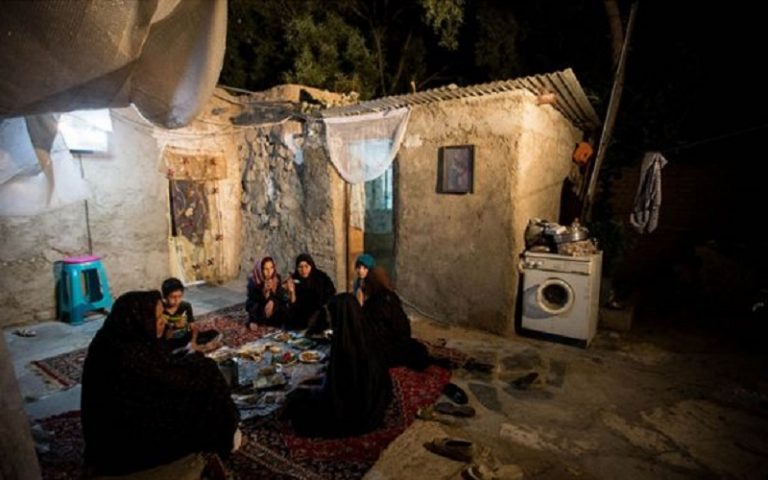
Iran: Rural Women Are the Most Marginalized People

October 15 is the International Day of Rural Women, designed to draw attention to the plight of these marginalized women and help them get sustainable access to food to fight poverty, so we’re looking at rural women in Iran.

Here are some of the challenges faced by Iranian women, which are exacerbated in the case of rural women:

  • early marriage
  • education exclusion
  • domestic violence
  • limited access to sanitation, hygiene, and water
  • little knowledge about their legal and social rights

Not only does the clerical system in Iran promote a culture of male-domination, but the villages reinforce this, with the warped idea that a “good” woman should tolerate all hardships, work herself to the bone, serve everyone in the family before herself, and protect her family even if it causes her physical and psychological decline.

Female Border Porters: A Look at Their Vile Treatment

This sexist culture, mixed with poverty and all of the other problems that the Iranian people face, means that rural women are one of the most marginalized groups in Iran.

Iranian Rural Women’s Education

Most rural girls drop out of school before their 10th birthday, having just five years of education in rundown facilities. There are many reasons for this, including having a hard time physically getting to the school from their remote house, facing possible attacks from wild animals and harassment from strangers on the way. Another reason would be poverty and a lack of access to essential equipment.

The Education Ministry’s advisor in women’s affairs, Farahnaz Mina’ipour, said it was impossible to have a high school in rural areas because so many teachers are needed, but this is a lie. It would be possible. Many other countries make it possible. They just don’t care and even try to blame families for not wanting their young daughters to travel long distances alone when they could be in danger.

Iranian Rural Women Face Early Marriage and Pregnancies

Many girls – some as young as 10 – are forced to drop out of school to marry men much older than them, which leads to early and repeated childbirth. This process is psychically, emotionally, and mentally damaging to young girls, leading to an early death.

Lack of Employment Opportunities for Iranian Rural Women

Because they were forced to drop out of education and have kids young, rural women have few job prospects and are essentially forced to work as slaves, doing various jobs in the village, alongside housework and childcare, without getting paid.

The Women’s Committee of the National Council of Resistance of Iran (NCRI) wrote: “Under the rule of a misogynous regime where women are considered second rate citizens, one could conceive what happens to these most deprived women who do not have any considerable access to the press or social media. So, speaking of women’s rights, human rights, human development, environmental protection, etc. are just a meaningless luxury without moving to isolate and remove the clerical regime dominating Iran.”

Iranian Women Have the Highest Suicide Rate in the Middle East

Reconstruction of Auschwitz in Greater Tehran Prison

The reconstruction of Auschwitz in the Greater Tehran Prison is not a mere phrase. It is a bitter reality that is happening.

The Auschwitz camp was the largest and best-equipped Nazi concentration camp during the occupation of Poland by the Nazis. A total of nearly four million people were killed by the Nazi Germany SS forces during World War II from 1939 to 1945 under the command of Colonel Rudolf Höss and his colleagues in this camp.

Starving the Prisoners

One of the tools of the Auschwitz camp was to exhaust the victim with starvation along with forced labor. Now the same procedure is used by Iranian officials at the Greater Tehran Prison. The officials of the Greater Tehran Prison torture the inmates and put double pressure on the prisoners by starving them.

According to the news received from this prison on Tuesday, October 13, prisoners in the Greater Tehran Prison brigades are suffering from food shortages.

Iran’s Political Prisoners Under Maximum Pressure

Little and Smelly Food

Eggs have been removed from prisoners’ diets for some time. When food is distributed, each prisoner receives only about 10-12 spoons of rice, which is very poor quality and stinks. Every prisoner has to make up for the lack of food at his own cost in order to be satisfied. But what percentage of prisoners can afford it?

A report from the prison emphasizes that these pressures are being carried out under the full supervision of the Ministry of Intelligence and Security (MOIS) and the Chief of the Judiciary Ebrahim Raisi.

But this is not the entire problem. Because the water in this prison is supplied from contaminated wells, the prisoners do not have potable water and have to buy each bottle of water for 30,000 rials.

Comprehensive Corruption of Prison Officials in Greater Tehran

This is while the prisoners have no source of income. Most of them were heads of households before their arrests. But now, in addition to leaving their families homeless and hungry, they also need the help of their families to earn a living. This situation has put additional pressure on the prisoners as well as their families.

Another report from the Greater Tehran Prison states that in this prison, prisoners are awakened every morning at 6:30 am. They are forcibly sent to the fresh air from 7 am to 8 am in the morning for the census.

Crime Against Humanity: Iranian Regime Kills Political Prisoners With the Coronavirus

Rape and Looting in Prison

Earlier, political prisoner Soheil Arabi had given out in several documented reports, information on the deteriorating health situation, horrific class divisions, distribution of drugs by prison guards, neglect of the patient’s situation, and the health status of prisoners in different brigades of prisons in Greater Tehran. It is as if it was because of these documentary reports that this prisoner had been transferred from this prison a month ago and disappeared. An issue that has raised many concerns.

Contrary to their own repressive laws, in Greater Tehran, instead of solitary confinement, there are 20-bed suites, sometimes holding 60 to 70 people as punishment. In the corner of each suite, there is a bathroom and a toilet separated by a curtain from the hall. With this structure, the constantly annoying stench seems natural throughout the hall.

The doors are always closed in the punishment suites. Prisoners have no access to ventilation, sunlight, cigarettes, or shops. They hold the prisoners so long in that situation so that he gives up. According to the guards, this will continue as long as the prisoner repent. They are then returned to the public ward with a commitment. In general, the public space of the Greater Tehran Prison is designed to make all prisoners bow and honor the guards.

The jailer provided wildlife where drugs can be easily found. Rape has become natural. Extortionist gangs and thieves openly extort and rape newcomers. All this is done in coordination with the prison cell heads and, of course, the prison guards and wardens.

Rough Inspections

Monthly inspections are harsh and inhumane. Prison officials allow soldiers to use violence against prisoners. In a way, they even break their dishes and flasks to find drugs. They destroy all their belongings. The smallest protest by the prisoner is answered with batons and beating. Prisoners have even been told that they do not have the right to look at and recognize soldiers’ faces during inspections. In case of raising the head, they face the most severe reaction of the guards and special forces.

Iran Systematically Creating Drug Addicts Out of Protesters

Iranian Children Dying from Poverty Increases

Earlier this week, we heard about the case of an 11-year-old boy who died from suicide because he was unable to attend his school’s online learning due to not having an internet-enabled device.

Mohammad Mousavizadeh’s death is tragic and has deeply affected all who knew him in Bushehr, southwest Iran.

His mother, who works cleaning houses and cannot afford more than the basics, said: “We had a problem for two or three months. My son did not have a proper phone. The mobile phone he had was faulty. We did not have a good life. We were living in a rental home with an ailing husband. I have a few other children. Mohammad needed a mobile phone because the one we had did not work properly. He could not send audio or take photos with it. He did not say anything. His teacher asked him to send an audio file or send an image. We told his teacher what was going on. His teacher told him to go and tell (your problem to) your father, not me. This is our story.”

This is not the only sad case of a young person dying because they couldn’t access education.

A 14-year-old boy from Kermanshah, known only as Mani, died after falling down a mountain as he tried to escape security guards. He’d been working as a border porter, carrying heavy loads across treacherous mountain paths, to earn money to buy a smartphone so that he could continue his education. Porters are often pursued by the border agents.

Being unable to continue education during the pandemic because of a lack of appropriate resources is frankly commonplace and worst of all completely avoidable. Not only could the government have controlled the spread by instituting a proper lockdown from the start and paid non-essential workers to stay home, but they could also provide smartphones or laptops for every student forced to learn online and without the family, budget to buy one themselves.

The government even claimed that they would provide smartphones and internet for free to students, but they haven’t done so in the past seven months and the reality is that 36% of boys will probably have to drop out of school because of poverty.

60 Million Iranians Below the Poverty Line

As poverty is so widespread in Iran, tragically deaths from suicide in children are becoming increasingly common. Earlier this year, we heard the story of Armin, 12, whose family could not afford the hospital bills after his mother lost her fight with cancer, even with him working as a garbage sorter.

This poverty is not caused because of any fault of the people, but rather the system, with people barely able to make ends meet working three jobs. All while Iran wastes money on terrorism and warmongering.

Iranian Opposition Reveals New Details About Military Aspects of Tehran’s Nuclear Program

0

According to new information revealed by the National Council of Resistance of Iran (NCRI), the Iranian regime has continued to pursue the development of nuclear weapons while lying to the world that it has stopped all nuclear activities. In a press conference held in Washington, D.C., on Friday, the deputy director of NCRI-U.S. Representative Office Alireza Jafarzadeh presented documents that show the Iranian government has recently constructed a center to continue its work on nuclear weapons. “Organization of Defensive Innovation and Research (Sazman-e Pazhouheshhaye Novin-e Defa’i), known by its Persian acronym SPND, is the institution within the Ministry of Defense pursuing this project.  The Ministry of Defense is heavily controlled by the Islamic Revolutionary Guard Corps (IRGC),” he said.

Jafarzadeh also revealed that the SPND continued its activities following the JCPOA and even expanded its facilities. Brig. Gen. Mohsen Fakhrizadeh Mahabadi continues to remain the head of this organ as well as other personnel.

Based on details provided by the Mojahedin-e Khalq (MEK), the new facility is located in the Sorkheh Hesar region, a suburb of the capital Tehran. This site is north of Khujir complex, where the IRGC manufacture and assemble ballistic missiles. This center is also south of the command headquarters of the Aerospace Organization of the Ministry of Defense and the Mechanical Industries of the Aerospace Organization (known as Mahallati Industries).

For many years, Iranian authorities have continued to intensify their provocative nuclear projects. They claim that these controversial activities are peaceful and scientific. However, they did not explain why they covered them until the NCRI exposed their facilities in 2001.

Since the time, the NCRI representatives in the U.S., France, and the UK revealed more details over military aspects of nuclear activities. Furthermore, the ayatollahs did not suspend their nuclear ambitions even when the country fell into severe economic troubles.

They continued these activities while the country is struggling with the worst coronavirus outbreak in the Middle East, with the number of fatalities soaring in recent months. Regarding the ayatollahs’ destructive role in the region and across the globe, it is much hard to believe that Iranian authorities’ claims are sincere.

Instead, their collaboration with North Korea and their tireless efforts to advance ballistic missile technology raise questions about the real purposes of Iran’s nuclear programs.

In this context, the NCRI, which sounded alarms about the military aspects of Tehran’s nuclear projects, believes that the ayatollahs aim to achieve nuclear weapons. The opposition reckons that the authoritarian regime sees an atomic bomb as a deterrent to ensure its ruling system.

Iran Desperately Plays Its Latest Atomic Cards

Moreover, nuclear weapons enable the ayatollahs to blackmail the international community based on the policy carried out during the whole Islamic Republic’s history.

The world was optimistic about ceasing the Iranian government’s nuclear threats through the Iran 2015 nuclear deal, formally Joint Comprehensive Plan of Action (JCPOA). However, the latest revelation of the NCRI showed that the JCPOA not only did not stop Tehran’s nuclear ambitions but also gave unreasonable reliefs to improve its controversial programs.

The recent revelation underlines the imperative of a firm policy against the Iranian government’s suspicious efforts. The international community must inspect all secret dimensions of Tehran’s nuclear projects. In such circumstances, the world must push the ayatollahs to spend the country’s national resources on improving health facilities, not atomic ambitions.

Tehran’s Terror Activities Must Be Stopped

Once upon a time, nuclear weapons were the main threat to global peace and security. In fear of starting another world war, the international community adopted many resolutions and instructions, deterring nuclear weapons production and proliferation.

Today, many states—other than a handful of authoritarian regimes such as North Korea and Iran—have been convinced that nuclear weapons are not the path to progress. Furthermore, the Soviet Union’s collapse despite its massive nuclear arsenal showed that military power would not necessarily bring public trust.

Nowadays, global peace and stability are threatened by authoritarians who cling to any means to achieve their goals. Their goal is to remain in power indefinitely and curb any opposition.

Iran’s ayatollahs are considered a good instance in this context. In the past few years alone, they suppressed any movement and cry to “stabilize” their rule. They responded to the people’s economic grievances with excessive violence.

Since late 2017, Iran witness several nationwide protests and strikes, which immediately engulfed many cities across the country. Authorities quickly grasped that this continuation and speedy expansion will go to destroy their harrowing suppression very soon. On the other hand, these elements showed an organized movement is behind the protests.

In this regard, they intended to quell any protest and objection with harsh means. Moreover, they pursued to terrify society from further upheavals and revolts. In this respect, in January 2018, interrogators tortured protesters to death. Statistics indicate that the ayatollahs murdered 50 protesters, 25 of whom died under torture.

In November 2019, state security forces (SSF) and the Islamic Revolutionary Guard Corps (IRGC) killed at least 1,500 peaceful protesters who raised their voice against gasoline price hikes. They targeted defenseless demonstrators with heavy machineguns, snipers, armored vehicles, and even helicopters.

Furthermore, oppressive forces detained over 12,000 protesters and exposed them to torture and other ill-treatment to confess to what they had not committed. Afterward, judicial authorities sentenced many protesters to long-term prison and even the death penalty based on torture-tainted confessions.

However, this was not the entire story. The ayatollahs resorted to terrorism to remove the opposition, nipping any protest in the bud. In this respect, they launched several terror plots against dissidents on European soil.

The Mojahedin-e Khalq (MEK/PMOI), as the most crucial opposition group, was the main target for Tehran. Iranian authorities activated their sleeper cells to attack the MEK members and supporters. These cells, however, were under the direction of Iran’s embassies and senior diplomats.

In March 2018, Iranian ambassador to Albania Gholamhossein Mohammad Nia and his deputy Mostafa Rudaki were personally involved in a terror plot against the MEK celebration marking the new Persian year, Nowruz. Albanian authorities detained and expelled the hired terrorists.

Later, in December 2018, Albania expelled Mohammad Nia and Rudaki for disturbing the country’s national security. Authorities also expelled several other terrorists who disguised themselves as diplomats from Albania.

Assadollah Assadi, the third secretary of the Iranian embassy in Austria, was one of these masterminds. He was the chief of Tehran’s intelligence station in Europe. He has recruited three persons to bomb the annual gathering of the Iranian coalition opposition National Council of Resistance of Iran (NCRI) in June 2018.

Beginning the Trial of the Iranian Diplomat Terrorist Assadollah Assadi

According to European authorities, Assadi used diplomatic coverage to transfer and deliver explosive material and a detonation device to operators in Luxemburg. In a joint operation, law enforcement detained Assadi nearly to Germany-Austria borders.

Assadi was later extradited to Belgium to be tried along with his squad. Recently, the Iranian jailed diplomat threatened Belgian police about the unknown groups’ reactions if the Belgian court identifies him as guilty. “Armed groups in Iraq, Lebanon, Yemen, Syria, and Iran, were interested in the outcome of his case and would be ‘watching from the sidelines to see if Belgium would support them or not,’” according to the minutes of interrogation.

These facts flagrantly reveal the necessity of adopting a firm approach against the Iranian government’s terrorism. They show that Western states can no longer turn a blind eye to the destructive role of the IRGC and the Iranian Ministry of Intelligence and Security (MOIS).

For many years, the NCRI and MEK have called on democratic states to shut down Tehran’s embassies and condition their relations to stop executions and terror activities. European leaders’ negligence and their eagerness for economic privileges put their citizens’ lives at risk while today, an Iranian diplomat dares to threaten the police in jail.

These provocative remarks prompted UK lawmakers from the House of Commons and House of Lords, as well as Irish politicians, to urge European leaders to list the IRGC and MOIS as terror entities. In an online conference hosted by the NCRI-UK Representative Office, they also highlighted the imperative of support for the Iranian people and their organized resistance movement against Iran’s cruel rule.

“Iranian regime foreign minister Mohammad Javad Zarif was responsible for a bombing attempt against the Free Iran rally of the NCRI. The conspirators, including Assadollah Assadi, a regime diplomat, is now on trial in Belgium. It is the first time that a regime diplomat is directly involved in a terrorist attempt,” said former Scottish MEP Struan Stevenson.

“These are not the only terror plots that bear the fingerprint of Zarif. Another regime terrorist was caught in Denmark; two others were expelled from the Netherlands. They have operated in Switzerland, Germany, Italy, Austria, and Turkey,” he added.

“We should close all of Iran’s embassies and expel all their diplomats. Regime leaders should be indicted for crimes against humanity and brought to trial by criminal courts. The EU and UN must stop its appeasement of the mullahs’ regime,” Stevenson concluded.

Additionally, the NCRI President-elect Maryam Rajavi called on UK lawmakers and Irish politicians to pressure their governments to designate the IRGC and MOIS as terrorist groups, shut down Tehran’s embassies, and expel their agents from European soil.

At the event, many lawmakers expressed their concerns over the Iranian government’s terror activities in Europe and demanded the UK government to respond forcefully.

“There is a clear case to designate the IRGC as a terrorist entity and the UK must do so,” said Theresa Villiers MP.

Toby Perkins MP also described the “designation of IRGC and MOIS as terrorist entities” as a necessary step. “The UK must abandon the policy of appeasement and back the opposition,” Perkins added.

“We must proscribe the IRGC in its entirety as a terrorist organization. The regime’s terrorism has reached Europe and the time to act is now. I urge our government to proscribe the IRGC, implement a pressure policy, and encourage our European allies to do so as well,” Bob Blackman MP joined his colleagues as saying.

Sir Alan Meale announced his regret over Europe turning “a blind eye to the regime’s terrorism and acquiesced to the regime.”

“Relations with Iran must be contingent to the end of executions and the release of political prisoners. Iranian diplomats who facilitate terrorism must be expelled,” Former Conservative MEP Anthea McIntyre told the event.

“[Iranian authorities] will interpret any appeasement from Western governments as a sign of weakness. The only approach is to exclude the regime from the world community,” said Steve McCabe MP.

“It’s high time for the regime to be held to account for its terrorism. Under no circumstances must European authorities accept the regime to intervene in the procedures of the court,” Lord Alton of Liverpool added.

Extension of Iran Arms Embargo Is an Imperative Act

0

On Wednesday morning, Iranian President Hassan Rouhani announced that this coming Sunday, October 18, the “cruel arms embargo would be removed,” adding they will be able to “sell weapons to everyone we wish” and “buy weapons from anyone we wish.”

Rouhani’s remarks prompted severe concerns among those familiar with the Iranian government’s malign behavior in the Middle East region and across the globe.

As the world’s leading state-sponsor of terrorism, Tehran is behind many terror activities against foreign citizens in Iraq, Lebanon, Syria, Bahrain, Kuwait, Saudi Arabia, and Yemen.

“It’s hard to find a conflict or terror group in the Middle East that does not have Iran’s fingerprints all over it,” said the U.S. ambassador to the then-United Nations Nikki Haley back in December 2017.

Recently, Bahraini and Saudi authorities managed to disband Iran-backed terror squads and discover warehouses filled with huge amounts of ammunition and weapons.

Since the ayatollahs took power in Iran, they built up their foreign policy based on expansionism. They reckoned that they must “export the revolution,” preserving it from decaying.

Based on the Islamic Revolutionary Guard Corps (IRGC) statute, one of its “divine mission” is protecting the Islamic Republic and Revolution’s “ideological frontiers.” In this context, they have relentlessly trained, armed, and dispatched extremist forces in other countries.

For instance, Iranian soldiers put their feet on the ground in Bosnia and Herzegovina just six months after the Balkan war. Intelligence reports say that the number of IRGC fighters in Bosnia and Herzegovina reached 3000-4000 men.

Furthermore, Tehran spent $200 million to fund Bosnian Islamic groups. However, the IRGC was pursuing another goal.

“Iranian forces participated in the war in Bosnia and Herzegovina just for the sake of establishing a European copy of the Hezbollah in Lebanon,” said IRGC defector Saeed Kazemi.

In Iraq, Iranian authorities also stored significant amounts of weapons and ammunition in different cities. Between 2003 to 2009, the U.S.-led coalition troops in Iraq frequently discovered and impounded Iranian weapons stockpiled in safe houses and workplaces.

“I can tell you there is no question that they were doing this. I firmly believe that Iran bears responsibility because their training and equipping of the Iraqi militia groups was the major factor in sustaining the sectarian violence that swept Iraq in 2006 and 2007. And to me that makes Iran directly responsible for the death of hundreds of coalition forces and thousands of Iraqis,” said Gen. George Casey, former Commander of Coalition in Iraq, on June 30, 2018.

The facts above, along with many other evidence and documents, underscore the imperative of the extension of the UN arms embargo and other sanctions on the Iranian government. In this respect, several American experts attended a webinar hosted by the National Council of Resistance of Iran (NCRI)- U.S. representative office on October 14.

Panelists, including former Undersecretary of Defense for Policy Amb. Eric Edelman, director of the Douglas and Sarah Allison Center for Foreign Policy Studies Dr. James Jay Carafano, the JINSA Director of Foreign Policy Jonathan Ruhe, and former US Arms Control chief Amb. Robert Joseph highlighted the sanctions and economic pressures as a practical path to deteriorate Tehran’s atrocities.

However, they mentioned the importance of supporting the Iranian people’s desire for fundamental changes. “Sanctions are a clearly important element of a successful policy toward Iran. But sanctions alone are not going to be enough to get the right outcome… We must help the opposition to the regime,” said Amb. Edelman.

“U.S. officials recognize it’s not punishing the people. There are humanitarian exemptions… Most Iranian citizens understand that ‘They’re not being punished by the United States and the international community—they’re being punished by the regime,’” said Dr. Carafano.

“The JINSA’s ultimate goal is what we call “regime collapse.” This is primarily between the regime and the people,’” said Director Ruhe.

“We must support the democratic opposition inside and outside Iran. Regime change must and will come from within. While apologists try to spin that the current regime is the only alternative to chaos, the ten-point plan of the NCRI provides a pathway to democracy and stability,” said Amb. Joseph.

Iran Systematically Creating Drug Addicts Out of Protesters

The Iranian authorities are using an experienced drug-trafficking mafia to turn young imprisoned protesters into drug addicts, in a systematic plan to discredit protesters and scare others away from fighting for Iran’s freedom, according to Iran Human Rights Monitor.

In their recent article on the subject, Iran HRM uses the case of a 30-year-old athlete and protester Jamil Ghahremani.

He was arrested on December 1, 2019, for involvement in the November 2019 protests and eventually sentenced to five years in prison for “acting against national security”. In prison, he confronted guards who were mistreating detained protesters, but then they beat him and took him out of the ward.

Iran’s Government Faces Protests ‘On the Tarmac’

A few days later he was returned to the ward, but inmates said he was unable to talk, while his family reported that when they visited him, he was mostly wanting to sleep and that his speech did not make sense. When he recovered sometime later, he said he’d been injected with an unknown substance and that prison staff gave him addictive pills instead of tranquilizers.

Apparently, the Great Tehran Penitentiary warden has hired a number of people to make young prisoners, especially protesters, addicted. There are now 40 protesters from the November protests that are addicted to narcotic drugs as a result of prison staff, all from hotbeds of protest, including Islamshahr, Shahriar, Roudehen, and Andisheh.

The same thing happened to protesters arrested during 2017 and 2018, who are detained on GTP’s Ward 1. These inmates will find it hard to find a book or a newspaper to read, but drugs are freely available.

An inmate detained on drugs charges, Vahid Safari, has been hired by the GTP warden as a guard, in charge of monitoring the inmates and giving them drugs. Released prisoners have said that he targets inmates under heavy pressure and tells them that the drugs will make it easier to live under these dire conditions.

Iran HRM urged the United Nations to dispatch a fact-finding mission to Iran’s prisons to meet with political prisoners and detained protesters so that the Iranian Judiciary is held accountable for these crimes.

In March, GTP political prisoner Soheil Arabi wrote that coronavirus and drugs pose a grave threat to those arrested during the November 2019 protests and detained in the GTP.

November Protesters’ Lives in Danger in Iran Prison 

He wrote: “Criticism and protest must not be responded by bullets and jail sentences. Do not erase the question. Instead of building prisons, create jobs, and solve the problems of young people. The lives of dozens of young men in jail are in danger. The coronavirus and drug salesmen are waiting in the wings for those arrested in November 2019. Do not forget those arrested in November 2019!”