Interesting Video Addressing Iran’s Khamenei: ‘You Must Cry Tears of Blood!’

These days after the latest U.S. sanctions over the Iranian government’s banking system, authorities try to blame the sanctions for all the country’s and of course the people’s misery. But the people themselves are saying something else. Despite the danger which they are facing, an Iranian citizen recorded a video message criticizing Supreme Leader Ali Khamenei for all the misery, which is clearly showing that Iran’s government bears all the responsibility.
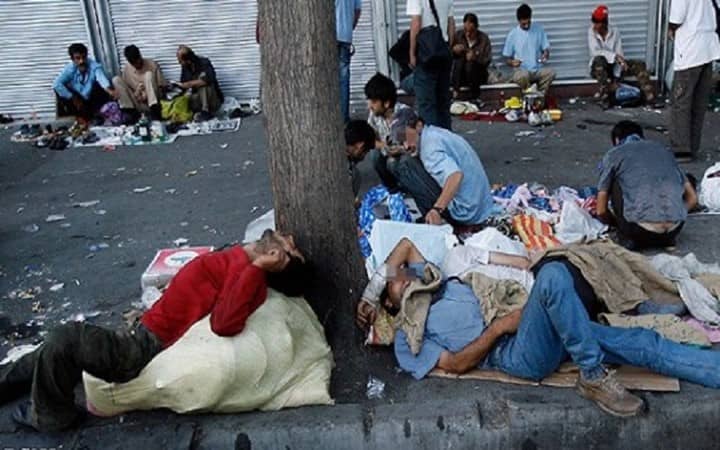
Tsunami of Poverty and Misery in Iran Caused by Sanctions or Officials’ Looting?
An interesting video of an Iranian citizen from Mashhad which is addressing and criticizing Khamenei about the miserable people’s conditions in Iran. An Iranian citizen from Mashhad, who is fed up with the extent of the destruction of the country, recorded a video addressed to Khamenei. After seeing the crowded situation of the judiciary and the deteriorating situation of the people, this man turned to Khamenei, the Supreme Leader, and said: ‘You consider yourself the leader of the Islamic Republic. What are you doing?’ Addressing Khamenei’s past speeches, while he said that if a country is in cultural and economic poverty, its officials should be blamed he asked him, “Now, who should we blame?!” “Greetings to all my compatriots and my dear friends. In this video clip, I’m speaking with you Mr. Khamenei, which you know yourself as the leader of the Islamic Republic – Republic has thousands of meanings, as you know and I cannot announce them in this clip – because of delivering my message. “Mr. Khamenei today I was in the justice in Mashhad, it was so crowded, woman addict, they have handcuffed women together, all the people are caught in pain, they have spread the dust of poverty, misery, and death like something very accurate over the people. “I thought for a moment, Khamenei what are you doing, didn’t they inform you about all of that, you are the leader you must “crying tears of blood”, that your people are living like that. Then you are sitting at the peak, I do not know that the advisers around you made the biggest betrayal against you, while they did not inform you in the right way. “The Iranian people are all homeless Mr. Khamenei. In 1988 behind the podium you are very strongly saying, that if a country is underdeveloped in terms of economic poverty, financial poverty, and cultural poverty, the country officials must be blamed. “Today, who should we blame? Everyone who criticized you, at night they tear him to pieces in front of his home, throw him into the dungeon, they tie him up in the basement. Which one of the Quran’s verses has instructed such action? In which of your beliefs is this written? You do not follow this law that you have written yourself. You collect us to say, ‘death to America’, and now it is important to you which one of these idiots become the president of America, that is in your benefits. “Was this the Islamic Republic? Mr. Khamenei, your people are homeless, your people are becoming prostitutes, your people are becoming addict, the youth are depressed, the girls have psychological damages, what are you doing up there?
Statistics of Mental Disorders in Iran
“You are sitting just in between of a few, who with a hard fist, but brainless, are saying ‘I give my life to you’. OK, imagine that their lives are given to you. OK, now imagine that all of Germany which has the biggest gold reserve belongs to you, the U.S. Treasury Department belongs to you, at least they put a just a few bricks over our graves.”

Iran: Shocking Poverty and Its Class Divide

In recent days, the poverty line in Iran for each family of four has reached 100 million rials [$333.3], and with the increase of the poverty line, class differences have intensified more and more. On October 5, Arman daily wrote in a bitter satire about the social crises. “The gratifying thing is that other social classes and the separation of the strata of society have lost their former meaning, and thanks to the officials, for most of the country, we are all gathered together under the ground floor.” The result of this ‘grace’ is that the salaries and incomes of nearly 28 million rials [$93.3] give those who have a salary and income, reaches a maximum of fewer than 10 days of their costs, and those who are unemployed and poor their situation is clear. Additionally, Gholamreza Mesbahi Moghadam, a member of the Expediency Discernment Council, highlighted the huge class differences. “Today, some have amassed great wealth while a significant portion of society has fallen below the poverty line. This incident has reduced the people’s hope for the government and indicates inefficiency. Continuation of this approach will cause a blow to the system,” Mesbahi told Arman daily.
60 Million Iranians Below the Poverty Line
“The deciles of society have changed. Now we have seven deciles that are in need. Previously, we had three upper deciles, three lower deciles. These statistics do not exist at all, and something about four middle deciles, now almost no middle decile exists,” a government-linked expert Mohsen Ghadimi said in an interview with TV Channel Two on October 5, regarding the downward trend and the tendency of the middle classes towards poverty and deprivation. According to Mahmoud Jam Saz, “The ninth decile is declining and moving towards poverty, and the middle class no longer exists.” (Etemad daily, September 27) According to the Etemad daily, “In Iran, none of the responsible institutions provide accurate and reliable numbers for the poverty line. In 2011, the poverty line was announced at a little over 5 million rials [$35 based on 2011 U.S. dollar exchange rate], and in May 2020, according to the Parliamentary Research Center, this figure reached 90 million rials [$562.5 based on May 2020 U.S. dollar exchange rate]. And of course, the center stated that ‘30 to 40 percent of Iranians have incomes below this figure’.” These conditions have caused “a small number of people to have skyrocketing wealth while the rest of society is disappearing,” Etemad added. In describing the current economic and social conditions, the Mardomsalari daily on September 17, wrote: “In these bad economic conditions, it can be said that the country’s economy is to a large extent in a state of half-life. We have to think about the plight of those who have no source of income in this coronavirus crisis and have to work hard to make and income through daily and false jobs. We must think about the poor living conditions of the poor and, as the saying goes, the underprivileged. Economically, they no longer have the power, and they are being destroyed. This is while our economic cycle operates with the efforts of this lower class of society.” Highlighting the people’s situation, the state-run daily Mostaghel on October 5, wrote: “Does Iranian society deserve all this disorder? Who is responsible for wasting the life and soul of the people? The middle class is dying, and the newcomers [new rich people] are becoming more cohesive.”
Iran – All This Poverty and Misery, a Storm Is Brewing

Iran Releases Narges Mohammadi, Dozens of Political Prisoners Are Still Behind Bars

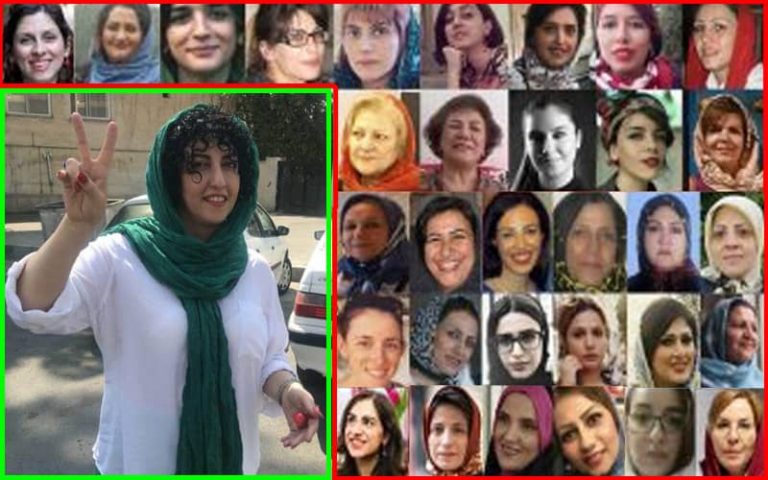
On October 8, Iranian authorities finally succumbed to international pleas and released human rights defender Narges Mohammadi. Since 2015, Mohammadi was unjustly detained for bogus charges such as disturbing national security, spreading propaganda against the establishment, and insulting the supreme leader Ali Khamenei. Amnesty International welcomed the release of Mohammadi and described it as great news and appreciated those helped her release. “Iranian human rights defender Narges Mohammadi has been released from prison! She should never have been unjustly jailed for over five years for her peaceful human rights activism,” Amnesty tweeted.
Amnesty International: Iran Uses Torture as Punishment
  Mrs. Mohammadi was not the last Iranian female prisoner who was unjustly held behind bars. In recent years, Iranian authorities arrested many citizens for their activities for humanitarian affairs, abolishing the death penalty, political beliefs, and creeds, as well as members of ethnic and religious minorities. On October 5 and 6, the Revolutionary Guards (IRGC) Intelligence Department raided four female labor and social media activists’ homes and arrested them in the Iranian capital Tehran and Ilam provinces, western the country. Khadijeh Mehdipour, 23, was detained in Ilam. Shabnam Ashouri, 23, Neda Pir-Khezranian, and Andisheh Sadri were also arrested in Tehran province. There is no information about the whereabouts of the two latest. Furthermore, female inmates, particularly political prisoners, are in vile conditions. In April, the judiciary bragged about giving emergency furlough to hundreds of thousands of prisoners due to the coronavirus outbreak. However, no political prisoner, prisoner of conscience, and detained protester benefit from the furlough. Of course, in tandem with the second wave of the disease, authorities ordered all prisoners to return to contaminated jails and pushed them in contaminated wards without testing or passing the quarantine period. The judiciary’s move placed many prisoners at the coronavirus risk. Activists argue that the government intends to get rid of political prisoners through the deadly virus. In this respect, there are enormous reports over prisoners’ infection with the Covid-19 in different prisons across the country. Female political prisoner Massoumeh Senobari, 32, was detained in her hometown Tabriz city, northwestern Iran, on March 6, 2019. She was subjected to torture and ill-treatment during her interrogating procedure. IRGC Intelligence agents raided her home and destroyed and looted her personal belongings. The Revolutionary Courts sentenced her Senobari to collectively eight years in prison for “propaganda against the state,” “membership in the Iranian opposition Mojahedin-e Khalq (MEK),” and “insulting the supreme leader.” Recent reports obtained by the MEK indicate Senobari has contracted the coronavirus in the women’s ward of the Central Prison of Tabriz. “Massoumeh Senobari has bad coughs. She suffers from high fever, sore throat, dry mouth, pain in the lungs and all over her body,” a source reported. Also, on September 24, authorities transferred Mina Rad, a young poetess and writer, to the notorious Qarchak Prison in Varamin city, suburb of Tehran. In the past two years, agents of the Ministry of Intelligence and Security (MOIS) frequently summoned and interrogated her for participating in the late 2017-early 2018 protests.
Political Prisoners Attacked in Iran’s Qarchak Prison
Additionally, on September 28, judicial authorities extended the detention of Faranak Jamshidi, an environmental activist, for the third time. Since June 28, she is held in the central prison of Sanandaj, the capital of Kurdistan province. In recent years, Iranian authorities have detained hundreds of women in protests or due to contacting their relatives affiliated to the opposition, particularly the MEK. Moreover, the MOIS and IRGC intelligence department has arrested and disappeared several mothers and sisters who looked for the fate of their loved ones. Many family members of political prisoners, who were mass killed in the summer of 1988, are behind bars for questioning and searching for their loved ones’ graves. Of course, the facts mentioned above are the tip of the iceberg. In recent years, Iranian authorities have detained hundreds of women and girls in protests or due to making relations with their relatives affiliated to the opposition, particularly the MEK. Moreover, the MOIS and IRGC intelligence department have arrested and disappeared several mothers and sisters who looked for their loved ones’ fate. Many family members of political prisoners, who were mass killed in the summer of 1988, are behind bars for questioning and searching for their loved ones’ graves. In this context, as rights groups and activists express their joyful for releasing Narges Mohammadi, they should keep the pressure on the Iranian government to release the rest of the female political prisoners, dissidents say. Otherwise, the ayatollahs would exploit the international community’s negligence and exert more pressure on other prisoners.

Iran: Ayatollahs Increasing Hijab Enforcement

As the rest of the world is continuing its fight against the coronavirus, the Iranian government is concentrating on increasing the activities of its security forces; preferring to arm militias with guns, rather than medical staff with personal protective equipment. Why? Because authorities want to quell any opposition and further upcoming protests. This can be seen in the actions that they have taken over the past month, including:
  • Putting Revolutionary Guard Corps (IRGC) “hit squads” in every neighborhood to stop protests in the planning stage
  • Creating a central headquarters to arrest protesters
  • Sentencing protesters to death and executing those on death row
  • Increasing control on social media by arresting and summoning users
  • Launching Hijab campaigns (Nazer) to enforce the mandatory veil and suppress women
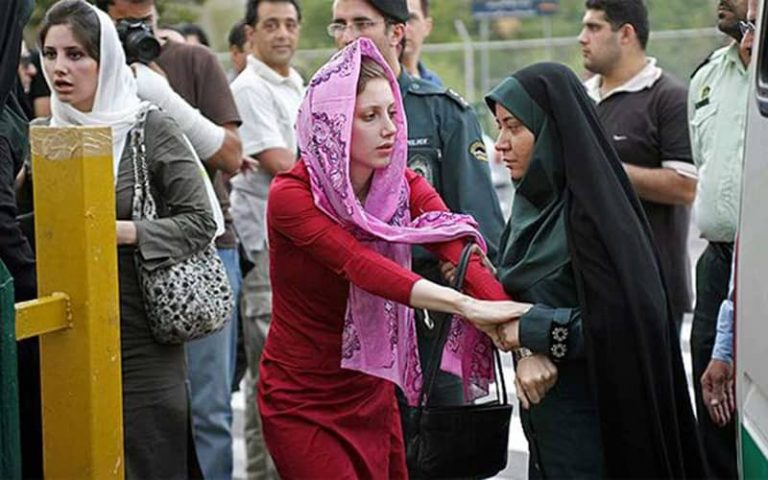
This aims to suppress freedoms and frighten society to prevent protests, largely led by women. With that in mind, let’s look more closely at the mandatory hijab, which is opposed by a massive 70 percent of the country. The punishment for a woman appearing publically without her hair completely covered can include long-term prison sentences and 74 lashes under the ridiculous charge of “spread of corruption and prostitution”. Activist Saba Kord Afshari was given 24 years in prison for opposing mandatory Hijab.
Iran’s Regime Oppresses Women to Stunt Their Progress
But these measures aren’t working and there’s a 5 percent decrease every year in the number of people who support mandatory Hijab, with even religious areas widely opposing it. In fact, there are 110 laws, directives, and ratified documents on Hijab that the clerical rule just can’t enforce. So, officials are trying to make it less safe for women who oppose mandatory Hijab by urging for the State Security Force (SSF) to have greater powers to deal with offenders. Now, the “Nazer” Hijab Campaigns have sent thousands of armed militants out into the streets to harass, attack, and arrest women and girls who are not observing the Hijab, but the true objective is to scare women out of anti-establishment activities because they see women as the power players in the Resistance. Women must now observe the Hijab in their cars (or when passengers in a car), in shops, recreation areas, and even in photos online, summoning users who might post a photo of themselves in their own house not wearing the Hijab. Even female students must submit a photo of themselves wearing the Hijab for their online profile or they face being banned from class. The Women’s Committee of the National Council of Resistance of Iran (NCRI) wrote: “In the present volatile state of Iranian society, the government seeks to ramp up repression through suppression of women. They send their repressive forces to the streets to crack down on women during their Hijab Campaigns. These suppressive measures, however, will only act as a catalyst expediting the eruption of anti-regime protests. They will lead to uprisings which will eventually overthrow the mullahs’ tyrannical regime.”
Iran: Human Rights Situation in September 2020

Tehran Playing Russian Roulette with COVID Response

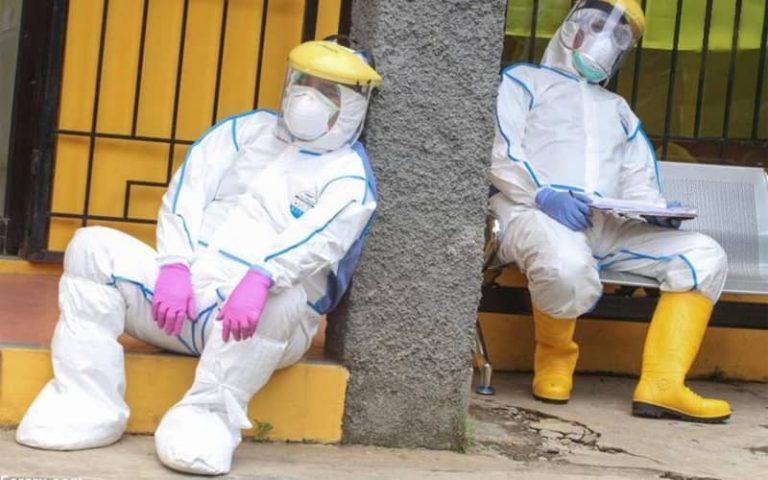
Iran has one of the highest coronavirus infection and death rates in the world, but the ayatollahs are failing to provide medical equipment or even pay the minimum salaries for the medical staff risking their lives to save others. Not only that but rather than encouraging people to stay home and keep safe, Minoo Mohraz, a member of the National Coronavirus Combat Task Force, has accused the government and the Education Ministry of actually encouraging people back out.
Why Iran Reopens Schools Despite the Coronavirus Risk?
Officials are using the pandemic to ensure it keeps their shaky grasp on power because it is so dangerous for angry citizens to meet in the kind of crowds that signified the November 2019 protests, which links back to why they are not providing even the most basic of equipment or medicines to hospitals. Essentially, the most high-ranking officials are directly responsible for the marked increase in infections and deaths over the past couple of months. Mohraz said: “We can no longer talk about a first or third wave. Unfortunately, the country is constantly on the Coronavirus wave… The Coronavirus is like a time bomb that can explode at any moment and destroy all infrastructure.” Nearly 120,000 people have now died from the coronavirus pandemic, including many medical staff, although the government has not provided statistics. Not only has the authorities failed to provide extra support to these everyday heroes, but they’ve failed to even pay their basic salaries. Many have not been paid in months, which has resulted in dire living conditions across the board for healthcare workers. Even though the supreme leader Ali Khamenei controls an estimated $1 trillion in various charitable institutions that are supposed to help the poor, they have not provided any money for the things seriously needed by the people. Not even one-third of the €1 Billion promised to the Ministry of Health by the government in March has been distributed, so how can they pay for medicine, equipment, facilities, and salaries? The crisis is so dire that officials are being forced to acknowledge the dire state of the healthcare system, with the governor of Alborz saying that the endurance of the system is under threat, while Mohraz advises that there are no empty beds and that patients are being treated in hallways and outdoors. Deputy Health Minister Iraj Haririchi said: “We are ashamed that our health personnel have not been paid their salaries or overtime wages for three or four months. Any staff who have been paid have received less than the minimum wage set by the Ministry of Labor.”

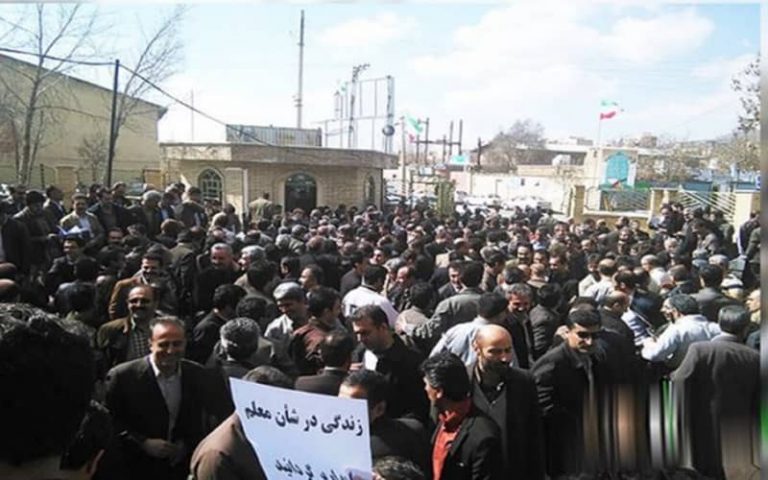
Iran: 358 Protests in September

There were 358 recorded protests across Iran in September, according to Iranian Resistance, which is an average of 12 protests a day. The protests, which took place in 87 cities, show an 8% increase in the number of protests compared with the 331 that took place in August. Most of the September protests were over economic grievances, featuring workers and pensioners demanding their missed payments, with some holding protests for several consecutive days and some traveling to Tehran to take their protest to the parliament. September protest breakdown:
  • Workers: 217 protests in 58 cities
  • Pensioners: 26 protests in 18 cities
  • Teachers: 14 protests in three cities
  • Students: 11 protests in seven cities
  • Farmers: six protests in four cities
  • Prisoners: six protests and five hunger strikes in five cities
  • Defrauded creditors: four protests in three cities
  • Truck drivers: one protest
  • Other sectors: 78 protests in 37 cities
Even regime officials and state-run media are beginning to acknowledge that major protests are imminent, with Head of the Security and Law Enforcement Department Hossein Zolfaghar saying that calls for protests have increased three-fold in the past year and the state-run daily Ebtekar saying that the public doesn’t trust the regime. The paper wrote: “It seems that for various reasons, Hassan Rouhani is distancing himself from the people and society. But he and his advisors do not mention that this could be the end of people’s trust toward the state. They do not realize what consequences this behavior could have… The president’s advisors who are well-experienced intelligence men” should take note of “what has happened since November 2019 until today.”
Iran’s 2020 Budget, in Support of Suppression and Corruption
This was at the beginning of the month. By late September, the state-run media were warning that the people’s widespread mistrust of the mullahs would lead to nationwide protests because the regime was ignoring their demands. Iranian political strategist Saeed Hajjarian even admitted that the people had a right not to trust the mullahs, pointing out that hatred of the clerics was a unifying factor for most Iranians. While regime-affiliated university professor Bijan Abdolkarimi said that the divide between the people and the mullahs was being exacerbated by officials who refuse to pay attention to public demands and that this would lead to regime overthrow. He said: “We will definitely see more of [the November 2019 style] protests… I think the political power in the country has not been able to meet the people’s demands.”

Long Steps Towards the Greekization of Iran’s Economy

Iran under the Hassan Rouhani administration hit all records and placed as the first administration in the economic crises term throughout the whole Islamic Republic history. He has raised huge and astronomical debts more than any previous administration, and in the field of rising inflation and liquidity, none of them can match his record. The negative economic growth of the 2000s, much of which was in the hands of the government which rose from the “reformist faction,” has been a disgrace. The completely wrong and irresponsible management in the face of coronavirus has also left thousands of dead and poor people in the country. One of the most important tasks that Rouhani has mentioned in his record is the issuance of bonds for administration financing. The total number of financial bonds approved in the budget bill and bonds that have been published with the agreement of the Supreme Economic Coordination Council reaches 2.3 quadrillion rials [$7.66 billion]. The issuance of this volume of securities means that the administration must allocate higher amounts at the time of the annual maturity to pay the principal and interest on the securities.
Why Is the Iranian Economy Failing?
Rouhani’s administration has resorted to high taxes to cover deficits and its expenditures, transferring administration property at low prices, and most recently, selling shares of state-owned companies in the stock market, which play the role of a piggy bank for the administration’s spending and financing bankrupt companies. However, perhaps the most destructive economic actions of the Twelfth Administration have been to sell more debts and turning to a ‘Ponzi Game’. Selling bonds to repay previous debts, selling even more of these bonds to pay off new debts, and the growing interest of these bonds, which are a serious threat to the Greekization of the Iranian economy.

Selling the Future of the Next Generations by the ‘Ponzi Game’

“According to the laws contained in this year’s budget bill, the administration can issue 800 trillion rials [$2.66 billion]of financial securities. Due to the special economic situation, the Supreme Economic Coordination Council issued a permit to issue 1.5 quadrillion rials [$5 billion] of surplus securities to increase the total marketable securities of the administration to 2.3 quadrillion rials [$7.66 billion]. Many deny the importance of financing from here and believe that this approach has no result other than selling the future,” according to Jahan-e Sanat daily on October 7. With the extreme use of the sale of bonds, the administration enters the cycle of the Ponzi game and in order to repay the principal and interest of these bonds at maturity, it is forced to issue new bonds, which naturally have a higher interest rate. In this way, over time, the debt burden will only increase, and we will see an administration debt crisis in the coming years. Government-linked experts believe that the path taken by the Rouhani administration is the same as that taken by the Greeks two decades ago which led to bankruptcy. They owed so much that they had no choice but to surrender to the creditors. One of the important indicators in this field is the ratio of debts to Gross Domestic Product (GDP), which according to the estimates of the Parliamentary Research Center is projected to be between 60 and 74 percent in the coming years. According to official statistics on the debt of the administration and state-owned companies last year, this figure has reached over 10 trillion rials [$33.3 million]. “Administration debt reached 5 quadrillion rials [$16.6 billion] by the end of September 2019. Also, the debt of state-owned companies has increased to 5.25 quadrillion rials [$17.5 billion]. In total, the debt of the administration and state-owned companies reaches 10.25 quadrillion rials [$36.165 billion],” according to Eghtesad Online website on June 23. An economic expert from the rival faction to Rouhani said to him: “We warn the system of fundamental decisions that this path, that is relying on foreign currency and rial debts, puts us on the path of the swamp. This process of advancing in the swamp will create a dangerous path for us,” ILNA news agency wrote on January 6.
Iran’s ‘Economic Collapse’ Has Not Happened So Far!

How State-owned Companies Are Devouring Iranian Economy

Over the past four decades, state-owned companies have devoured 70 percent of Iran’s total budget. Nonetheless, despite their ability to cover the entire budget deficit, the profits are absorbed by corrupt government institutes and officials. In Iran, state-owned companies are a huge source of the government’s assets. While these companies receive more than two-thirds of the total budget, rulers deliberately overlook the profits of these valuable sources that are able to resolve part of the country’s economic problems. For many years, the status of state-owned corporations’ annual returns and profits are vague, which has dampened the public’s attention and MPs from this major source of income in the country’s public budget.

State-Owned Companies Alone Can Compensate All Budget Deficit

Government-linked economic experts estimate the government can compensate all the country’s budget deficit by using profits of state-owned corporations. This would make it possible to save all revenue of selling crude oil and natural-gas condensate in the country’s National Development Fund. In addition, the government can spend all the income of taxes for national civil affairs. However, all these figures and stats are abstract due to the hidden corruption in the public’s budget and other avenues that influential sides use to line their pockets.
Iran’s Budget Is Still in the Air
Notably, Iran’s annual budget is divided into parts; first, the public budget assigned to the current expenditure of the country like operations of development or transportation, and second, the budget allocated to companies, government-linked banks, and other institutions affiliated to the government.

70 Percent of Budget Bill Hasn’t been Scrutinized for Decades

Corporate budgeting has consistently accounted for 70 percent of the country’s total budget over the past 40 years. However, a few members of the parliament have thoroughly scrutinized companies’ budgets before being approved. In this regard, the Iranian parliament initially examines the public budget for a long period, but when it comes to the state-run companies’ budget, they pass the bill in minutes and with very little scrutiny. Long negligence over the government-corporate assets resulted in wasting a huge amount of the country’s wealth. Of course, officials and their relatives never neglected this uncountable property.
Corruption in Iran Exposed Again 

The Budget of the State-Owned Companies Equals to the Value of Tehran’s Stock Exchange

The value of Tehran’s Stock Exchange is estimated at little more than 15 billion rials [almost $1,153 billion]. Significantly, the annual budget of the hundreds of government-run companies that are active in all economic fields is approximately the same value. Undoubtedly, a normal state can certainly provide all the budget expenditure by using the profits of these corporations. Furthermore, it would be able to annually pay parts of these profits to the people. Despite the Iranian government owning huge properties in the form of firms, companies, banks, and institutes; but it always suffers from massive budget deficits. The people also witness officials attempting to tie the country’s fate to exporting oil or to offset their economic mismanagement by rising taxes and at the expense of poor people. On the other hand, the government pursues to cure dire economic conditions by reducing the value of the national currency or selling the administration’s properties, which results in the creation of public debts. However, Iran’s budget planning needs to fundamentally change and, of course, this is the result of 40-year mismanagement by different sides of the governing system.

Budget Planning in Accordance with Corruption and Nepotism

Turbulence in balance sheets of the Central Bank and other Iranian banks is one of many economic problems that the country faces. This problem is a direct result of the terrible designing of the budget by the country’s planning and budget organization for decades. According to experts’ remarks, it is possible that state-run companies provide the public budget by using their huge profits. However, this matter is available on conditions including transparency and ending vast inadequacies made by corruption and nepotism.
Endless Corruption in Iran
Now, while the Iranian government experiences the impact of maximum economic pressures, it should make tough decisions. However, it is a genuine dilemma before officials about opting for the continuation of the current corrupt system that spells more pressure on poor people who struggle hard to make ends meet; or acquiesce to calls for being transparent with the people and the international financing system. It is previously evident that Iranian authorities have no potential to counter the vast corruption and nepotism that have grown by themselves and under their supervision during all these years. In addition, they cannot explore the amount of mind-blowing expenditure they spend on funding ethnic conflicts and supporting terrorist entities in the region. Insofar as the leader of Lebanese Hezbollah Hassan Nasrallah admitted that all needs of this “party” are provided by the Islamic Republic. The government also cannot be transparent over the costs of oppressive apparatus as well as the nuclear bomb-making programs that left the country under the toughest sanctions.

Iran’s Mysterious State-Owned Companies

Contrary to the term “state-owned,” these companies are absolutely unaccountable, and no oversight employs them. In fact, these corporations are suffering from rivalry among the powerful parts of the political elite. Their hierarchy is set based on nepotism and then rulers’ vows, as well as these firms, are truly a field for economic competition among different political sides. In such circumstances, no one knows what practically happens inside these mysterious companies. And if someone sheds light on the matter, they will discover untold stories of ongoing infighting in the governing system, including the manner of appointing managers, the amount of power hidden players wield, and ultimately whether these companies are serving the country or parts of the government against national interests?

Was FATF Able to End the Opaque Economic Situation in Iran?

In late 2019, Iranian President Hassan Rouhani tried to tie the fate of Iran’s economy to joining the Financial Action Task Force (FATF). In this context, FATF in parallel with discussion over the 2020-21 budget bill constituted the core of power competition in the country among officials and during parliament sessions. Regardless of the Iranian government sponsoring terrorism in the region and across the globe, the ayatollahs showed they cannot join the inter-governmental body because of vast corruption and non-transparency engulfing the country’s companies and facilities.
With or Without FATF Approval, Iran’s Economic Crisis Won’t Be Resolved
Therefore, opposite to claims raised by Rouhani’s allies describing joining the FATF as an extraordinary opportunity to rescue the country from collapse, the reality is that more than disruption in banking communications with the global banking system, the country is suffering from a corrupt system and mismanagement. However, Iran’s theocracy could not refrain from “exporting the revolution” that sank the country in intense problems. Just as they cannot renounce their nuclear bomb-making projects that led the international community to impose restrictions on Iran, in addition to reimposing the U.S. sanctions. In conclusion, as the Iranian government bears economic pressures, of course, at the expense of the people, but the main problem is not foreign sanctions or restrictions. In fact, this corrupt system that relies on nepotism and wide mismanagement that is institutionalized among the ayatollahs and their relatives is cancer that places the country’s economy on the brink of absolute collapse. Notably, the Iranian people emphasized they are suffering from embezzlements, fraud, and plundering directed by the shareholders of political power. In this regard, people’s slogans are very meaningful. “One less embezzlement can resolve our [economic] problem,” or “The people are poor but the Ayatollah [referring to the supreme leader Ali Khamenei] lives like the Lord,” citizens chant frequently.


Iran: Khamenei’s Lieutenants Order Their Thugs to Carry Out Acid Attacks

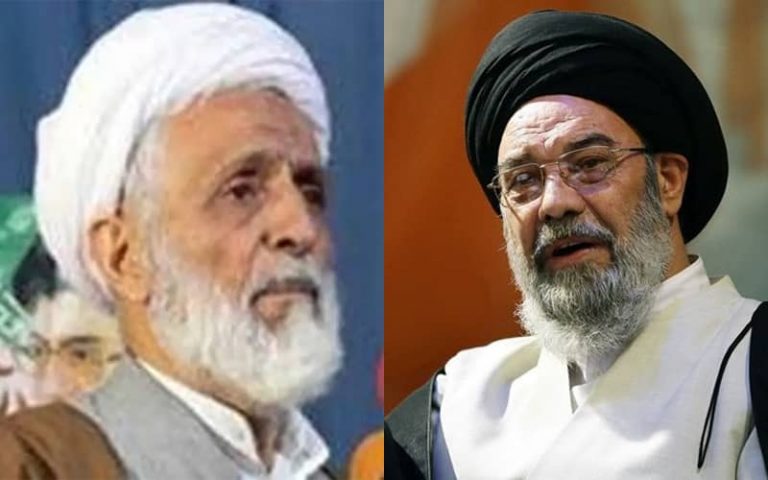
Looking at the faces of the victims of acid attacks in Iran under the clerical rule is a diagram of the oppression of Iranian women. Imagine for a second the amount of oppression on every Iranian, when it reaches women, it multiplies. On the one hand, the Iranian woman as a citizen is tolerating the oppression that is inflicted on every Iranian under the rule of the mullahs, on the other hand, she bears the burden of double oppression for being a woman and bears it on her psyche. Women in Iran do not have security in schools, offices, taxis, subways, buses, streets, and even at home, and constantly breathe in an atmosphere of threats, discrimination, crime, and stress. This is what Iranian women face every day. Talking about the extent and dimensions of the double oppression of Iranian women is beyond the scope of this article and requires an open discussion, but what temporarily worries the society as an urgent issue and stirs the souls of the people is the criminal fatwa of the Supreme Leader Ali Khamenei’s representatives, as the ring leaders of the regime’s Friday shows in the cities of Isfahan and Bojnourd. On October 2, on of the regime’s clerics, Yousef Tabatabai met with the Deputy Chief of Intelligence and Security of the General Staff of the Armed Forces of the regime and the Commander of the Police Force of Isfahan Province, referring to the women whom he called ‘norm-breakers’. He said: “The atmosphere of the society should be made insecure for these people, who are also few in number, and they should not be allowed to break the norms easily in the streets and parks … The police should be given more authority to confronting breaking the norms and breaking the law. We should not be afraid that if we deal with violators, they will take hostile action against us.” It is interesting that on the same date, Abolghasem Yaghoubi, the Friday prayer leader and representative of Khamenei in North Khorasan, also said: “The law enforcement forces must make the lives of the rioters who have evil intentions in their minds insecure. The phenomenon of bad hijab and lack of hijab in society is like a virus among the people and it must be confronted. In addition to the police and the judiciary, to deal with the lack of hijab, people should also get involved in this matter and be moral polices. Therefore, we must be sensitive to non-coronaviruses.”
Iran’s Government Fails to Tackle the Coronavirus
Yousef Tabatabai had made similar statements in 2011: “The issue of hijab is beyond just a mention and in order to deal with bad hijab, one should raise club and use force.” He also said: “If someone does something in public, it must be stopped, because unrestrained it causes harm to others. Some believe that coercion is not necessary for society and should be introduced through culture, but you cannot do anything with advice alone.” His statement caused a wave of acid attacks on the women in Isfahan, and this issue caused the city of Isfahan and consequently the whole of Iran to be in shock and astonishment. The coincidence of the criminal fatwas of the two representatives of the Supreme Leader and the use of the common code of ‘making insecure’ shows that there is a clear policy of repression of the regime. But in fear of the consequences of such fatwas by the regime’s clerics, the state-run daily Hamdeli on 6 October wrote: “Two days after the sixth anniversary of the acid attack on the girls of Isfahan, and while the perpetrators of this crime have not yet been arrested, the Friday prayer leader of Isfahan, in controversial statements, called for the make the society insecure for the women he considers as unveiled (having a bad hijab).” But the truth is that this time Iran’s supreme leader and his representatives are miscalculating. From 2011 until now, there have been dramatic changes in Iran. The state of society is now explosive. When it comes to explosives, everyone knows that the regime’s first mistake can be its last.
Iran’s Islamists terrorise young women with acid

Iranian Rights Groups Reveal the Names of November Victims

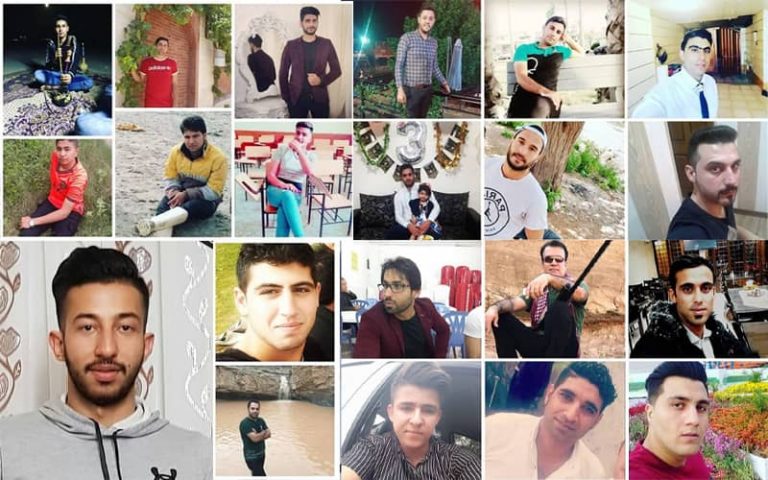
Nearly a year after the nationwide November uprising, Iran Human Rights Monitor has managed to confirm the identities of 20 protesters killed as they fled in Mahshahr marshland by security forces. Using eyewitness testimonies and other credible sources, Iran HRM has identified:
  • Ahmad Rouhanifar
  • Abbas Ansarian
  • Ali Jelveh
  • Alireza Ghanavati
  • Asghar Rajaei
  • Amir Boushehri
  • Ehsan Sadeghi
  • Hassan Veisi
  • Homayoun Dashti
  • Hayawi Sharifat
  • Jaber Saberi
  • Jafar Panahi
  • Jamshid Malahan
  • Javad Payabi
  • Javad Nezarat
  • Kamran Davari
  • Kourosh Ahwazi
  • Mojtaba Rezaei
  • Mohsen Sarafraz
  • Mershad Dehi
There were almost 100 people killed in the marsh on November 18, 2019, as the Revolutionary Guards Corps (IRGC) members shot blindly into the area with heavy machine guns.
New Report by Javaid Rehman: Iran’s IRGC, Basij, and Police Opened Deadly Fire on Protesters
The majority of those killed were unarmed young men, but some were women and children. They had been holding a peaceful protest when the IRGC stormed Chamran township and blocked the roads to the rest of Mahshahr, so they ran for the marsh with the hope of hiding. Overall, the state security forces shot dead at least 1,500 peaceful protesters in the crackdown on nationwide protests, while thousands more were wounded and yet more were arrested. Some were even arrested in the hospital and taken directly to prison without treatment. Some of those arrested were tortured to death, executed, forcibly disappeared, or are still being held without trial or charge. Relatives are being kept in the dark about the fate of many missing protesters. This is a clear example of a crime against humanity committed by the government against its own people, for which the mullahs must be held to account. On September 2, Amnesty International exposed parts of tortures and ill-treatment that interrogators and judicial officials practiced against detainees. Several arrested protesters were compelled to confess what they had not committed, which filed and used against them in Revolutionary Courts.
Amnesty International: Iran Uses Torture as Punishment
Iran HRM wrote: “The UN Security Council, world governments and the international community [must] take urgent action to immediately halt the murder and suppression of the protesters. We urge the United Nations to quickly dispatch fact-finding missions to Iran. Iranian leaders must face justice for perpetrating crimes against humanity and the Iran protests massacre. Silence and inaction are both a violation of international conventions, laws, and standards, and embolden the government to continue its crimes.” Over the past 11 months, the National Council of Resistance of Iran (NCRI) has managed to identify 811 martyrs of the uprising, naming a further 56 last month. NCRI President Maryam Rajavi urged the international community to do something now to save political prisoners’ lives. She advised establishing an international commission to investigate the massacre, visit prisons, and meet prisoners.