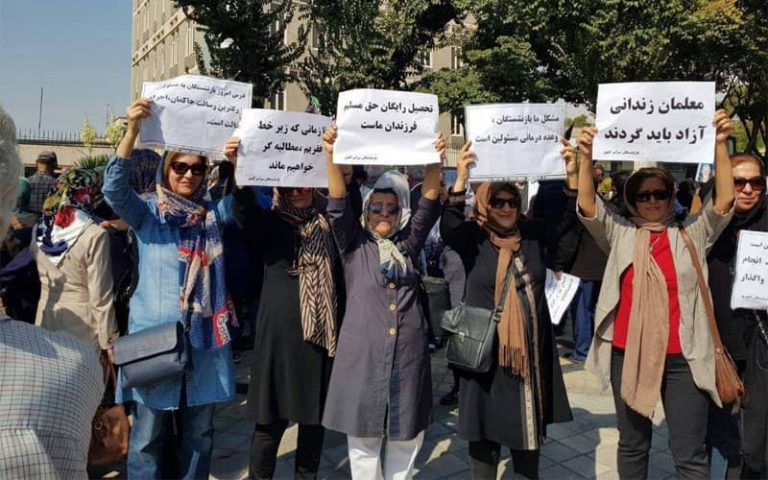
To mark World Teachers’ Day, which was on Monday, we will examine the status of Iranian teachers. It will not surprise you to learn that teachers in Iran are undervalued and underpaid by the government, especially when you consider that compared to other professions there is a high number of women employed, but some of these other facts are shocking.
Job Contracts and Classifications
The only teachers considered officially employed are those who were hired by the Education Ministry, which most are not. Instead, they are hired by privateintermediary businesses on temporary contracts, which are exploited by officials, so that these teachers receive below the minimum wage, do not get any benefits, including insurance, do not get bonuses, and are prevented from getting overtime pay. Unlike official teachers, they have short contracts and can be dismissed easily, but they also will not get paid over the holidays or during unexpected closures.This is despite the fact that the public school system could not run without them.
On that note, let’s talk about the money that teachers get. As mentioned, contract teachers are hired by private companies who are paid by the Education Ministry and then give the teachers a small stipend. Their wages cannot meet their basic needs, with many working for less than one dollar per day, even those with years of experience. Because of this, teachers must get second or third jobs, especially because the government doesn’t take the high inflation rate into account when determining salaries.One teacher said: “Outsourcing teachers have been cooperating with the Education Ministry since 2009. They have B.S., M.S., and even doctorate degrees but teach in public high schools. Their salaries are the lowest. They receive about 30,000-80,000 rials [$0.1-0.25] for every hour. This means that they earn between 240,000-300,000 rials [$0.8-1] for 8 hours of teaching in one day.”The outsourced teachers in some provinces have not even been paid for two years and in others earn less than the janitor, even though most teachers are the heads of the household. But they cannot complain, or they will not be hired for the next year.Education Ministry official Alireza Kamarei said that by not paying the salaries of the teachers, officials have saved 1.62 trillion rials [$4.2 million], in much the same way that you can save money on your grocery shop by just walking out without paying.The problems of teachers have been exacerbated by the coronavirus as now they have to pay for their own internet to work from home.
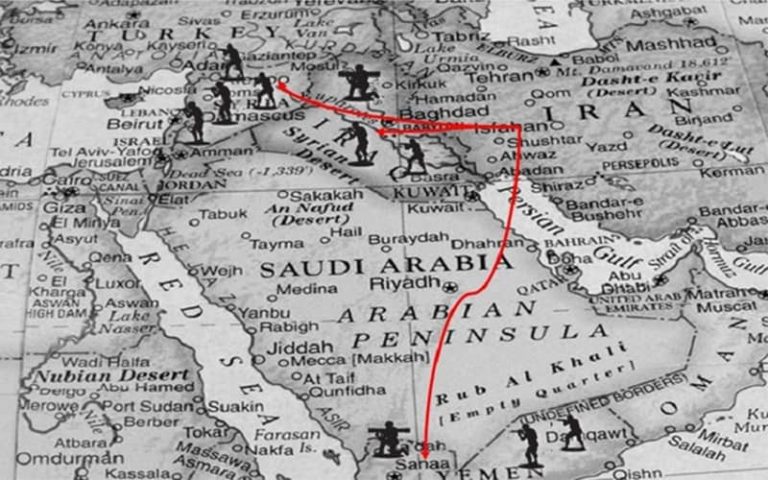
Upon his arrival in Iran and appointed in 1979, Iranian first supreme leader and the Islamic Republic founder Ruhollah Khomeini brought with war and enmity for the Iranian people and Iran’s neighbors and other countries of the region. He frequently described the war as a ‘divine blessing’ and affirmed the continuation of the war, saying, ‘war until removing sedition around the world.’
So far, hundreds of thousands of young people in this country have become the victims of the state’s wars. In addition, thousands of citizens of Iran’s neighbors have been burned in the fires of wars waged by proxy groups of the Velayat-e Faqih (supreme religious) rule.
Iraq, Lebanon, Syria, and Yemen are still burning in the fire of sedition that Iran’s mullahs and their Revolutionary Guards (IRGC) have ignited in these countries. Today, after all these fruitless wars that have wasted only human resources and blood, the voices of those who inevitably come to their senses because they are smelling the end of the theocracy and now they have come to their sense.
The Negative Impact of Proxy Wars on the Economic Situation of the Iranian People
In the July 21 edition of Diplomacy Irani daily, Qasim Mohebba-Ali, former Director-General for the Middle East at the Iranian Foreign Ministry criticized Tehran’s forty-year-old foreign policy with a focus on increasing tensions with neighbors. He also affirmed that the people have paid a heavy price for it.
“At present, the cost of this type of foreign policy in Tehran is borne by the people with the focus on increasing tensions with neighbors. If you look at the situation of the foreign exchange, coin, housing, car, rent, and even consumer goods markets in the country, you will see that part of these challenges is due to our severely wrong view of foreign policy in the region and the world,” he added.
Mohebba-Ali also enumerated the harmful economic consequences for the Iranian people and warned the leaders over the anger of the people and their protests at any moment.
“Now the heavy price of this kind of forty years of wrong politics and diplomacy in the region and the world is being paid by the people with all their flesh and blood, and their entire existence. Therefore, with the increase of economic and livelihood problems inside, pursuing our wrong diplomacy will definitely not be as safe and riskless as in the past. Because at any moment, it is possible to see a massive protest inside the country by breaking the threshold of people’s tolerance for economic problems,” Mohebba-Ali concluded.
On May 20, Heshmatollah Falahatpisheh, former chair of the Parliament (Majlis) National Security and Foreign Affairs Commission, revealed parts of Iran’s heavy expenditure in Syria. He complained about the management of the wars and the interventions of the government in the region, pointing to a part of the costs of these unbridled development demands and said:
“We gave maybe $20-30 billion to Syria and we have to get it back from Syria. The money of this nation has been spent there.”
Ali Fadavi, the deputy commander of the Revolutionary Guards, said on the TV program ’14th Century’ on September 27, that according to the official report of the Iran Program and Budget Organization prepared at the end of the Iran-Iraq war, Iran has spent ‘$19.6 billion’ on this war.
It should be noted that Rahim Safavi, Khamenei’s military adviser in 2017, had said that in the eight-year war, Iran ‘spent a maximum of 12 percent of its Gross Domestic Product (GDP) on the war.’
This share of GDP amounts to more than $21 billion annually and reaches $173 billion during the total war years, which is several times more than Fadavi’s claims. Former President Ali Akbar Hashemi Rafsanjani repeatedly claimed that the damage from the war with Iraq is estimated at more than $1,000 billion. But if we take into account the calculations of the Secretary-General of the United Nations, which was prepared in 1991, we again reach the figure of $97 billion of war damages for the Iranian people.
Another area of wasting the wealth of the Iranian people is in terror acts. Like the latest decision by a U.S. judge, who has ordered Iran to pay $1.45 billion to the family of former FBI agent Robert Levinson, who is presumed to have died in the custody of this government.
Or the order of the federal judge in Washington on September 10, 2018, which ordered Iran to pay $104.7 million to victims of a June 1996 truck bombing in Saudi Arabia that killed 19 U.S. military personnel, as Reuters reported at that time. Examples of such decisions to compensate for the damages because of the ayatollahs’ terror acts are many.
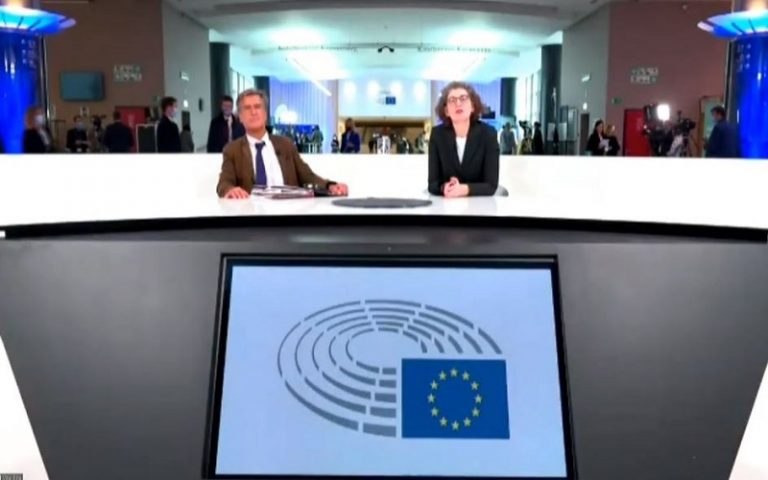
An online conference at the EU parliament hosted by the Iranian opposition NCRI calls on the EU to condemn the Human rights violation in Iran. In this event, dozens of MEPs joined to give their solutions to condemn the Human rights violation in Iran. This is while Iran’s government is benefiting from the silence about its Human rights violations such a torture, rape, killing of political prisoners, beatings, and killings of dissidents and other civilians, discrimination of women and the minorities, execution of offenders under 18 years of age, choking the freedom of speech and repressing the press. The list of the regime’s human rights violation is as long as its 40 years of rule.
Now the EU should put its appeasement policy aside and stand alongside the Iranian people for a free and democratic Iran. Below is a summary of the MEPs’ speeches on this event.
Juan Fernando López Aguilar, MEP from Spain, “Iranian women face discrimination. Iranian law denies freedom of religion. We have a political and legal duty to stand up for human rights in Iran.”
Rasa Juknevičienė, MEP from Lithuania, “Iran’s people don’t want this regime and are vehemently opposed to it. On the other hand, a powerful alternative exists, meaning that change in Iran is imminent. What should our policy be in Europe vis-à-vis Iran’s regime? We must stand by the Iranian people as doing so is defending our democratic principles. must stand firm against the regime.”
Jan Zahradil, MEP from the Czech Republic, “We’re at a crucial point in history. The region is unstable. We must push the EU and Borrell to change their policy. EU must not just watch. It must act. We can also take measures at the national level.”
Gianna Gancia, MEP from Italy, “It is so vital to put pressure on Iran’s regime to open the gates of its dungeons to an international fact-finding mission. Therefore, I insist that this is an obligation of the EU.”
Veronika Vrecionová, MEP from the Czech Republic, “As we speak about Iran, we witnessed the execution of Navid Afkari. Iran’s regime is spreading hatred & terrorism in the world. I support Iran’s people who want freedom and justice in their country.”
Marco Zanni, MEP from Italy, “Iran’s regime has a horrible record of human rights abuses. The execution of Navid Afkari is the latest manifestation of the Iran regime’s cruelty. The regime has total disregard for humanitarian standards.”
Milan Zver, MEP from Slovenia, “The operations of Iran’s security forces on EU soil are also of great concern & needed to be stopped. I strongly condemn any acts of violence committed by Iran’s regime. It’s our duty to stand by the people of Iran.”
Ivan Štefanec, MEP from Slovakia, “Our European democratic principles demand that the EU takes the lead in defending the Iranian people’s human rights and protesting against Iran’s regime for its atrocities.”
Derk Jan Eppink, MEP from the Netherlands, “I was shocked by the execution of Navid Afkari for his participation in Iran protests. Unfortunately, we are witnessing the EU appeasement policy with Iran. The result is an ever-more aggressive regime.”
Benoît Biteau, MEP from France, “Iran is the first state in terms of executions per capita. We cannot close our eyes to the events in Iran. Imprisoned protesters in Iran must be freed. I will continue to denounce executions in Iran.”
Patrizia Toia, MEP from Italy, “We demand an international inquiry to visit Iranian prisoners. We must make sure human rights are number one where other countries are concerned. We must give priority to human rights rather than economic interests.”
Alessandra Moretti, MEP from Italy, “Women can’t travel alone, can’t go to stadiums, can’t choose who to marry. One hundred women have been executed during [regime President Hassan] Rouhani’s tenure. There is no respect for individual rights. Our fight to abolish the death penalty is not just to save lives.”
Stanislav Polčák, MEP from the Czech Republic, “In our view, if the European Union is not at the forefront of this issue, it has trampled upon European democratic principles. We have been criticizing and protesting against the policy of the EU in this parliament for more than a decade, and now, as we approach an imminent social explosion in Iran, we want this disagreement to reach closure. Nothing justifies wanting to tolerate and appease the regime. Today, appeasement with this brutal regime is a disgrace to the EU and against the security of Europe, and we warn that the EU must seriously reconsider its policy towards this regime. The EU is at a crossroads.”
Hermann Tertsch, MEP from Spain: “We don’t want any appeasement which is so dear to some forces here in this parliament. We want no appeasement with this dictatorship, with this tyrannical regime in Teheran. We want a very resolute search for an end of this regime and for a peaceful and democratic Iran in the future. That’s the right of Iranians and that is a right which we have the pride and that we are obliged to fight for it here in Europe and all over the Democratic West.”
Lars Patrick Berg, MEP from Germany, “It is time for action by the world’s democratic governments. Words of condemnation are not enough; We need concrete actions. We in Europe must show to the Iranian people that we support their fight for freedom and democracy and continue to urge the international community to bring pressure on the unrepresentative regime of the mullahs.”
As with every month, Iran Human Rights Monitor has created a detailed report on Iran’s human rights abuses and we will summarise it. The issues discussed involve the coronavirus pandemic, the overreach of the Revolutionary Guards (IRGC), terrorizing the public, executions, torture, persecution of religious minorities, and suppression of the Iranian people.
Given that anti-regime protests have sprung up across the country in spite of the pandemic, the mullahs are trying every method possible to keep people off the streets, from installing IRGC Bassij hit squads in almost all neighborhoods to frightening people by executing or torturing political prisoners to seemingly deliberately mismanaging the coronavirus.
In September alone, at least 21 people were executed, including:
protester and wrestler Navid Afkari, who was the subject of an international campaign to save his life when he was suddenly executed, prompting suggestions that he died under torture
juvenile offender Mo’ayyed Savari, who was arrested and charged at age 17
Mo’in Salavarzi Zadeh, 55, whose sentence has not been upheld for the past 29 years before suddenly the Supreme Court ruled on September 7, without the presence of Salavarzi Zadeh or his lawyer
The regime also ordered the barbaric sentence of finger amputation for four men – Hadi Rostami, Mehdi Sharfian, Mehdi Shahivand, and Kasra Karami – who had been forced to confess under torture. In protest to the initial sentence in June, Rostami cut his wrists.
The persecution of religious minorities continued, with at least three cases of Sunni citizens and clerics being arrested and interrogated merely for practicing their faith, as well as 35 Baha’is, and six Christian converts.
In related news, the regime took two-year-old Lydia away from her adoptive parents, Maryam Falahi and Sam Khosravi, who she has been with since she was three months old because they are Christians and her biological parents were Muslim. This is despite the fact that Lydia has heath problems that mean she is unlikely to be adopted again.
In other criminal acts, the regime is also seeking to terrify the people into submission by parading dissidents through the streets. They’ve also ordered that evacuation of six border villages in Kurdistan province with no plan to help the people avoid homelessness, opened fire on citizens in Likak after they objected to the beating of a driver, and summoned 15 Bu-Ali university students over protests held last year.
The regime should know that people are much less scared than the regime’s forces because people have nothing to lose.
Hossein Zolfaqari, the Interior Ministry’s deputy for security and order, said that calls for the protest had increased three-fold on the previous year.
He said: “There were 519 calls for protest in the first five months of the previous year, while in the same period this year, there have been 1,702 calls which is a 227 percent increase.”
Iran’s state-run media are violating the censorship policy on a daily basis in order to acknowledge that the political and economic situation is critical and that the Iranian people’s (legitimate) anger may soon spill over into an uprising that overthrows the establishment.
The Hamdeli daily wrote on Sunday that the government is making no effort to address the demands of the people and in fact “deliberately blocking the way of answering these demands”. The article explained that the 2018 and 2019 protests sprung up because the majority of the people didn’t trust any faction of the ruling system, but that authorities have done nothing to increase trust.
They wrote: “This level of mistrust is a dangerous indicator.”
While the Jahan-e Sanat daily predicted further protests and said that the economic crisis was the result of the state’s dire policies, advising that the people no longer trust the Islamic Republic because of “biased and political” decisions.
On Saturday, the Mostaghel daily wrote that the state’s ongoing oppression, which caused the death by suicide of a detained protester’s father, is causing anger.
It wrote: “Learning from other countries’ experience could be helpful. [In those countries] they recognize their opponents’ right to life and then freedom of expression. Perhaps, the rulers may think that rejecting any voice of dissent is not a threat to them in power.”
While the Hamdeli daily wrote that the government should have listened to health officials over the coronavirus in order to avoid the type of mismanagement that causes 116,000 deaths by reopening the country before it is ready.
President Hassan Rouhani’s claims that Iran’s economy has done better than Germany was also torn apart by the state-run media.
The Aftab-e Yazd daily wrote that there is a “galactic distance in economic matters” between the two countries and in no way is Iran’s economy better, saying that even children laugh at Rouhani’s claim. While the Hamdeli daily compared Iran’s economic situation to the Iran-Iraq war, dismissing the idea that the problems are caused by sanctions rather than incorrect policies.
The Setar-e Sobh daily continued with this argument, writing: “Some people have always benefited from the country’s economic crisis and do not want to solve problems. The country’s current poor economic situation is not the result of the actions of one government and one person, but 40 years of wrong policies and ill-considered decisions have put the country in an economic crisis.”
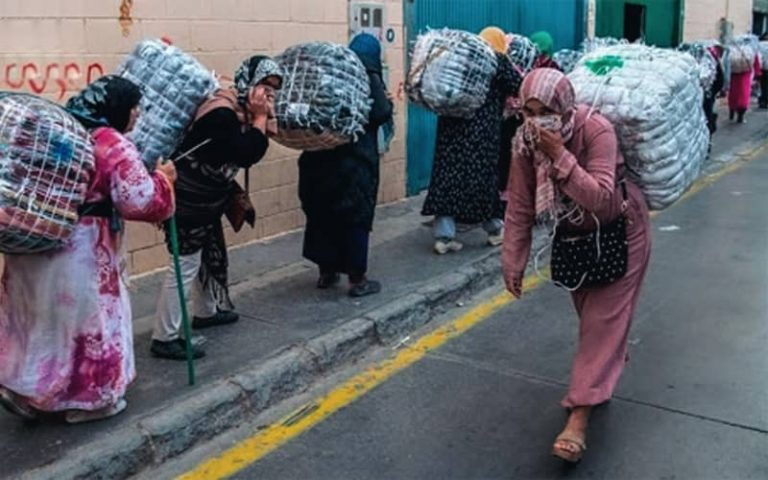
A common job in the impoverished region of western Iran is a porter or someone who carries heavy loads on their backs through treacherous mountain paths, but the job, which is difficult enough for strong, young men, is commonly being taken on by women and children because poverty levels are so high.
Up to 5,000 households in the Uramanat region of Kurdistan are making ends meet through the underpaid and undervalued profession and we are going to look at what it is like for female porters, who are most often widows or the heads of their families.
All porters must walk 8-10 hours carrying heavy loads and then walk all the way back, but despite doing the exact same job, women are paid much less. Even when they went on strike, their wages were only raised to about 45 percent of a man’s. And ever since a female porter died from hypothermia last winter, employers have refused to hire women during the winter. (Men are still being hired despite accidental deaths.)
In addition to the discrimination, female porters must also work at night to avoid being shot by border patrols, which makes it more likely that they will face accidental deaths.
Ronak Rostamzadeh, a 38-year-old mother of two, lives in Shamshir village and works as a porter alongside her 14-year-old son Mani.
Mani needed to buy a phone to access his schoolwork during the coronavirus pandemic, but on September 16, he fell down the mountain trying to escape patrol guards who wanted to shoot him. He broke his nose and eye socket, suffering other deep wounds, but Ronak had to carry him to a medical center on her own as the guards ran off.
Sabri carries 30-kilogram loads for five hours over the mountains, stressing that she doesn’t know how much longer she can continue because of excruciating back pain, saying that it is not even easy to be hired as a porter.
Sherafat, 60, says that despite injured legs and diabetes she must work to provide for her five children because she has no pension or insurance. She said that once she had to throw away a 40-kilogram load to avoid being shot by border patrols, before going back the next day to find and deliver it so she would not be fined.
In Iran, each and every day the media, senior officials, and government-linked figures write or talk about systematic corruption that has infested the Iranian economy like termites, according to Vice-President Ishaq Jahangiri. Of course, Jahangiri brandishes corruption as a dilemma that the government is confronting.
However, this phenomenon had been institutionalized in the Islamic Republic’s structure and is influencing the entire ruling system. Under the ayatollahs’ rule, no specific institute is accountable for the country’s economy and the economy has been synonymous with rent and corruption.
Islamic Republic founder Ruhollah Khomeini had a famous motto about the economy. “The economy belongs to the donkey,” he once said. It seems his successors gained damning privileges from “donkeys.”
Iran’s financial system is controlled by a group of thefts and looters whose mere concern is how to line their enlarged pockets with the people’s meager money. In other words, the constitution has paved the path for the government’s profiteering projects and economic policies only benefit the ayatollahs and Revolutionary Guards (IRGC) commanders.
“What happened in the past 40 years—despite seven different administrations—I saw all of them in line with the intensification of looting. Privatization was only the amplification of plundering and transmission rents from the administration’s resources to state-linked classes due to the path that it has crossed in Iran,” Saeed Leylaz, a government-linked economist, told Navad-eEghtesadi website on April 16.
These remarks indicate that all the government’s sectors, including ministries, security and military bodies and even city councils, are involved in corruption. Recently, the judiciary detained a large number of city council members on corruption charges.
“Twenty years after establishing city councils, they not only did not improve urban affairs but also people consider these institutions as brokering centers. This thought is not false. During this period, 200 mayors and members of city councils have been detained for rent-seeking and corrupt cases,” wrote the Javan daily, an outlet affiliated to the IRGC. “Several city councils dissolved due to the high number of arrests. There are few provinces that their city council members or mayors have not been arrested for rent-seeking or corruption-related charges,” the October 3 article adds.
“The cities of Lavasan, Rudehen, Shahryar, Bushehr, Bandar-Abbas, Ahvaz, Masjed Soleiman, Veis, Sari, Salmanshahr, Rudsar, Tabriz, Mahabad, and Iranshahr saw their mayors or city council members detained due to rent-seeking and financial corruption. The collective amount that has been stolen by these officials has not yet been announced. However, a ballpark figure shows these corrupt managers have plundered tens of trillions of rials [equal to billions of dollars],” the Javan piece adds.
“Economic corruption has been chronic in the country, sucking the economy’s blood like a leach due to the lack of transparent infrastructure and smart supervision. The government still runs with costly and expensive expenditures, and the country’s bureaucracy faces two challenges, being squanders and expenditures,” Ebtekar daily wrote on the same day.
On the other hand, the government tries to portray a nice view of the economy while it has been crippled with enormous dilemmas mostly originated from domestic reasons. “No Sir, we must understand the problem. When we take a precise look, we realize that not only our shoes’ heel or knees are contaminated with corruption, but also we have sunk into corruption to our neck. It has influenced everything we even think about,” said economy expert Ali Saberi Toulaei in an interview with the Channel Four TV on November 13, 2019.
“Everything we even think about” is an implicit reference to the supreme leader Ali Khamenei’s office. Given the flawed power structure, all the country’s economic lifelines are in the grips of Khamenei-affiliated institutions. Relying on infinite power focused on Khamenei himself and his staff, these companies benefit limitless exemption and impunity to plunder national resources and the people’s properties.
Recently, Iranian media outlets shed light on corrupt cases of Khamenei’s preacher Ali Reza Panahian. In response to criticisms of his multi-billion-rial home, he claimed that it is a “gift” from friends. “He attributes his wealthy properties to friends who sit in the country’s highest-ranking positions to normalize the issue. These friends offer gifts to influential figures… They offer most reliefs, discounts, and gifts to those who are decision-makers,” Hamdeli daily wrote on October 3.
Of course, corruption is not an unknown phenomenon among Iranian authorities. “Corruption is like a dragon with seven heads. Once you cut one head, it keeps moving with six others and destroying it is not easy. Dealing with those who benefit corruption is a difficult issue,” Channel Six TV aired Khamenei’s remarks on February 8, 2018.
On August 13, 2018, he once again called the country’s corruption phenomenon a “seven-head dragon” and stressed on countercorruption measures, according to IRGC-affiliated Fars news agency. Khamenei did not clearly mention the corruption’s heads; however, he provided a perfect view of this issue in Iran.
Hamdeli daily attributed Iran’s corruption crisis to the power structure built up on “personal, family, and friendly relations.” This is beyond regular nepotism that many countries across the world deal with. In such a structure, officials benefit due to loyalty to the supreme leader and his staff, paving the path for the emerging mafia in different sectors.
The rulers sacrifice unimportant figures to save the reputation of high-ranking officials. Akbar Tabari, the former executive deputy of the judiciary, is a good example of this system’s implementation. However, given advances in the internet and people’s access to firsthand factsheets and testimonies, senior Iranian officials cannot brush the country’s systematic corruption under the carpet any longer.
The Iranian people have made it crystal clear that they consider Khamenei as the main figure behind Iran’s corruption. “Khamenei lives like the Lord, while people beg for some bread,” is a popular slogan frequently chanted by outraged protesters recently. They clearly announced that they would not be duped by Khamenei’s remarks and cynical countercorruption stunts and do not trust the corrupt government any longer.
The Governor of Central Bank of Iran (CBI) Abdolnaser Hemmati wrote on his online page that: “He has not allowed the perpetrators of the sanctions to achieve their main goal in the last two years, which was the collapse of the country’s economy.” (Bazar News website, October 2, 2020)
He has promised to explain the reasons for the rise in the exchange rate in recent weeks in a timely manner. But for the time being, he acknowledged that these days, after the trigger mechanism is proposed, there are rumors about the complete disconnection of the Iranian financial system from the world. He admitted that regardless of its operational capability and the extent of its practical impact, its psychological impact on the foreign exchange has unfortunately overshadowed the market.
With these words by the head of the CBI, it seems that the Iranian governing body considers economic collapse possible. But so far, they have not allowed this to happen.
Although Hemmati, the head of the CBI, did not provide a precise definition of ‘economic collapse’ and its consequences in the country, the remarkable point is that these words are expressed by one of the most important economic officials of the government.
Let us see what the current economic situation in Iran is. Haidar Hosseini, a government economic expert, says: “What is the name of this non-collapse of the economy when the dollar reaches 300,000 rials, the coin reaches 150 million rials [$500], and the family livelihood is kept to a minimum, and some do not have the same livelihood? What else must happen to say that there has been an economic collapse?” (Arman Meli daily, October 3)
Economists generally acknowledge that ‘psychological impact’ is effective in a healthy economy. An economy that has many challenges and the regime’s top experts enumerate its different types and varieties. From the water and environmental crisis to the budget deficit and unemployment and the bankruptcy of banks and social security funds. It is not clear what is left for Iran and the country’s economy that the ‘psychological impact’ should impact it?
Iran’s President Hassan Rouhani has raised impudence to the highest level. Speaking about the country’s economic situation, he said: “Statistics from Germany show that their economy has shrunk by a negative 5.2 percent, that our economy is in better shape, and that economic growth without oil will be positive by the end of the year.” (Mashregh daily, October 3)
Judging by Rouhani’s claim, when Europe’s largest economy does not catch up with Iran in terms of economy, in addition to Germany’s Chancellor Angela Merkel, the experts of the International Monetary Fund (IMF) should be brought to Iran for a training course in economic science and to admit in a TV interview that Iran’s economy will not shrink by 6 percent in 2020, that Iran’s economic growth was not -7.6 percent last year and -5.4 percent in 2018, and economic growth will not be negative for the third year in a row. And these are all rumors by the global enemies.
Valiollah Seif, the former head of the CBI, referring to the 400 percent increase in the exchange rate since the beginning of 2018 and the reasons for this rapid growth, ‘advised the CBI to take control of tomorrow’s transactions in order to control the exchange rate.’ (Mehr news agency, October 2)
However, he says that he is witnessing the intensity of inflammation in the foreign exchange market, and this has caused concern among officials, economic activists, and individuals. He also compared the current situation with his presidency, and in order to console Hemmati, he said:
“This phenomenon is not new and has a history in the past, but it can be said that it is unprecedented in terms of intensity and amplitude of fluctuations as well as the length of the time period, compared to the past. Since the beginning of 2018, the exchange rate has risen by more than 400 percent, and in addition, we have witnessed sharp fluctuations that have severely affected economic activity and seem to continue to do so.” (Bourse Press website, October 3)
Earning 330 trillion rials [$1.1 billion] of income from people’s money in the stock market: “Farhad Dejpsand, Minister of Economy, after months of silence and exploitation of capital market financial instruments, is now referring to some predictions about the possibility of non-realization of government revenues in the first half of the year and forcing the government to borrow from the CBI and the concerns of the private sector and the people about the resulting inflation, have acknowledged the government’s use of it, and he happily said, I would like to give the good news that fortunately, as a result of the measures devised by the government, in the last six months, we have been able to compensate for the deficit of our resources from the sale of securities and the transfer of shares of state-owned companies. (Aftab-e-Yazd daily, October 3)
Without mentioning the negative consequences of this action in disrupting the capital market and harming thousands of shareholders, he adds: “In the first half of this year, we had a very brilliant performance in terms of transferring government shares in state-owned companies, and we managed to earn about 330 trillion rials [$1.1 billion], which is a significant figure.”
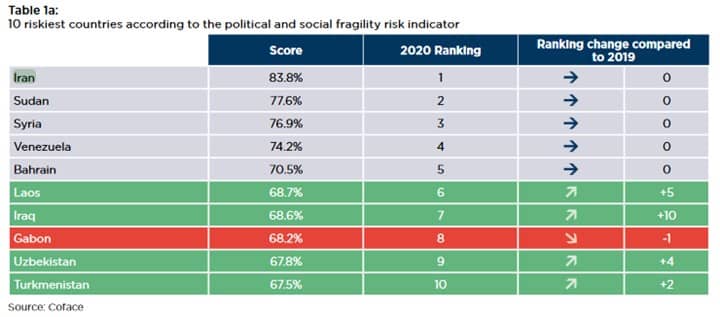
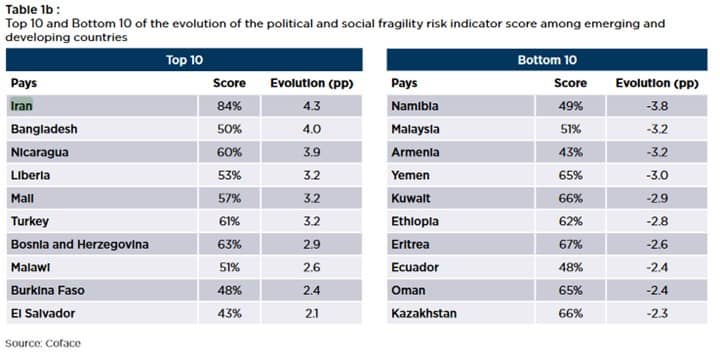
At the end of the discussion on the ongoing economic collapse of Iran, it is appropriate to look at the latest research report of the French company ‘COFACE‘, which is one of the most reputable global companies in the field of credit insurance and ‘risk forecasting’. The report notes the fragility of Iran’s economy and that it is one of the most dangerous countries for trade.
“The annual update of Coface’s Political Risk Index, published in this barometer, highlights a dual trend: on the one hand, a decrease in the risk of conflict at a global level, but on the other, an increase in the risk of political and social fragility. Iran and Turkey are among the countries whose level of social risk increased the most. Given the unique context this year, we have constructed an exposure indicator to the COVID-19 crisis, in order to identify the most affected populations who are more likely to turn against their governments.
“The social and political fragility indicator, which is relevant to analyze the increased risks of social unrest, shows a slight deterioration in its score at the global level, obscuring the different trajectories from one country to another (Table 1). While the five riskiest countries based on this indicator remain unchanged, other developments are noteworthy. Iran reinforced its position at the top of this indicator.10 riskiest countries according to the political and social fragility risk indicatorsTop 10 and bottom 10 of the evolution of the political and social fragility risk indicators score among emerging and developing countries
One economist interviewed by Radio France International (RFI) has warned that the happiness by the head of the CBI that there has been no ‘economic collapse’ so far has come too soon:
“Assessment of the current situation shows that the state of the country’s economy is completely critical and on the verge of collapse. People’s purchasing power has dropped dramatically. Unbridled inflation, poverty and unemployment, economic instability, lack of economic security combined with the reluctance of domestic investors to spend in the manufacturing sector, lack of constructive interaction with the outside world, are among the factors that have made the country’s economy helpless in the current situation.”
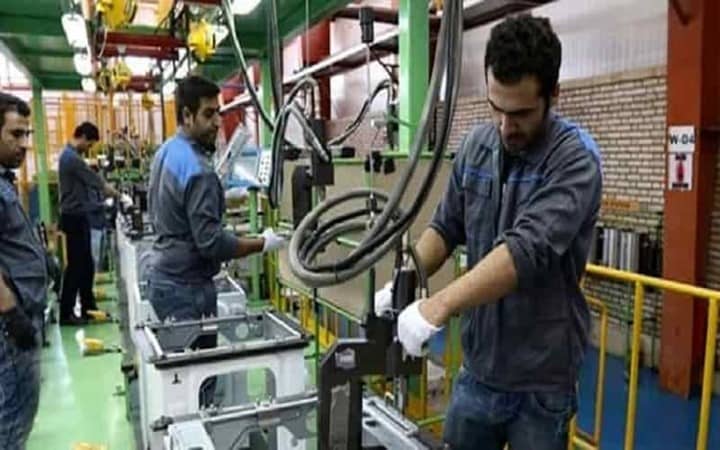
The following report is from a worker of a home appliances company in Iran. He narrates hardships and economic dilemmas he faces as an example of the dire situation of the workers in Iran.
The worker started his words with these sentences:
“The employer of this company deducts from the workers’ salaries 3-4 million rials [$10-13.3] for throwing away the adhesives tape used for packaging. These adhesives are used for copper pipes or sewage outlets of refrigerators and other things. This action of the company is very strange, and it is not clear what it had to do with the salary of the workers, that the employer is deducting the costs of the wasting adhesives from their salaries.”
They take $16 from us for food
The worker said: “The company deducts 400,000 rials [$1.3] a month from the workers’ salaries for food, which is 4.8 million rials [$16] a year. While food vouchers are given twice a year, which costs 2.5-3 million rials [$8.3-10] each time. That means, they give the worker less than the money they took from him. You see, from one side they give the worker and from the other side they take it back, and so they are playing with the workers.”
He added then that his friend works for a steel company in the Dezful industrial town and is dissatisfied with his work situation.
I say, what happened to our overtime? They say if you do not like it you can go
He says, “that if we have 250 hours, 180 hours, or 200 hours of overtime, we see that they register just 30 to 35 hours per month of overtime. Then we go and object, to this situation. And say that we had 200 hours of overtime. What happened to our overtime (money)? They say that is what it is if you want, work! You do not want, settle accounts, and go! And in front of the door, there are so many unemployed workers queuing and begging to be hired, and it is in their interest to fire an experienced worker and hire a new one. Ten people leave every day, and 10 people return.”
I work for 15 hours!
“A worker in a home appliances company receives 31-32 million [$103-106] rials per month. With that, he must support himself and his family, while this amount of salary is deep below the poverty line and the workers are living in hardship. This worker pays 2.1 million rials [$7] per month only for the company bus transportation to reach his home.”
The interviewed worker said about the conditions of his colleagues:” Out of 32 million rials [$106], only 30 million rials [$100] are left for him. He is married and has two children. I say I get 35-40 million rials [$116-133], and I say it is not enough. I am single. How do you live your life with 30 million rials [$100], he shakes his head and keeps silent?”
A worker said, “Our working day started from home to the company, we must be present at 7 o’clock in the morning, and are working until 8 pm, which is 15 hours, and we are working just for 30 million rials [$100] a month.”
Resting just 4 minutes
He added: “15 minutes in the morning for breakfast, half an hour for lunch, 10 minutes in the evening for a tea. The place where the tea is served is 6 minutes away from the place of work. That means you only get 4 minutes of rest. All the worker’s rest is less than one hour a day.
“For breakfast, the company gives only one Barbari bread [Iranian flatbread] or half a loaf of bread with just a cup of tea and says that the rest of the breakfast ingredients should be brought by the worker himself.
“I am ready to be unemployed, to do nothing, and do not have such conditions, I cannot tolerate the owner of the company violates my rights.
“I am paying 300,000-500,000 rials [$1-1.6] a week for calling and internet packages. These things do not matter to me and I can pass up from all of them, but I do not accept that the employer violates my rights.
“I shopped on the way I came; my purchases were 180,000 rials [$0.6]. Now let us say 200,000 rials [$0.66], 200,000 rials a day, that is, 6 million rials [$20] a month. I only pay for dinner. I bought a half kilo tomato paste tube for 100,000 rials [$0.33]. I pay 7.5 million rials [$25] per month for breakfast.
Sometimes we do not get the traffic service, we have to rent a car, which is 2.5 million rials [$8.3] for a month, if you reduce this amount from 32 million rials [$106], just 30 million rials [$100] left. Now you calculate how a married person should live. I am trying to set aside at least 1 million rials [$3.3], but I did not succeed. This is the situation of workers in Iran in its best situation.”
The Iranian government’s six-month record in the fight against the coronavirus outbreak shows a perfect view of the ayatollahs’ function in the past 41 years. In practice, the current situation in Iran’s different sectors, including socioeconomic, political, cultural, environmental, and health areas, is the natural outcome of 41 years of systematic corruption and ruthless suppression.
In this context, authorities ceaselessly try to downplay their horrible performance in the past months to contain the “next social consequences.” However, the statistics obtained by the opposition Mojahedin-e Khalq (MEK/PMOI) reveal the truth.
While the government neither can nor wants to provide the actual number of fatalities fur to its inadequate infrastructure and public distrust, the MEK provides daily reports of death count and the status of different provinces. The organization tallies firsthand reports through its expansive domestic networks, the “Resistance Units,” who are active across all of Iran’s 31 provinces.
“Over 115,100 people have died of the novel coronavirus in 450 cities,” the MEK reported on Friday, October 3. However, the official death toll declared by the Health Ministry Spokesperson Sima Sadat Lari stood at 26,746—around a fourth of the actual figure.
To discover the real magnitude of the Covid-19 crisis, it is just enough to review some reports published in official and semi-official websites and news agencies about the dire condition in the capital, Tehran.
On September 27, the government was compelled to re-close schools. Back on September 5, President Hassan Rouhani and Education Minister Morteza Haji Mirzaei pushed millions of students and teachers to contaminated schools across the country. The government’s irresponsible decision led to the infection of 10,000 students with the novel coronavirus and the death of 100-200, according to Deputy Health Minister Iraj Harirchi’s remarks published by Entekhab news agency on September 27.
“The number of deaths in some provinces is unprecedented and far more than previous numbers. Our main concern is Tehran province. If provincial officials deem necessary, the one-week closure of schools and universities will be extended,” Mehr News Agency quoted Harirchi as saying on the same day.
Meanwhile, Ali Reza Zali, head of Tehran Covid-19 Task Force, sounded the alarm about a human catastrophe in the Iranian capital. “Tehran is in a state of complete crisis and it is very dangerous,” he had said on September 26. Zali also acknowledged the ministers of Health and Interior had requested that restrictions and preemptive measures to be reimposed in Tehran.
Nader Tavakoli, Zali’s deputy, also expressed concerns about the rise in coronavirus victims. “The number of people hospitalized is at times even more than the numbers we saw back in February,” he told the official IRNA news agency on September 26.
On the other hand, professionals estimate the death toll will increase due to Covid-19 coinciding with seasonal flu in the fall and winter. “If we continue with this trend, we may be witnessing 600 deaths each day in November. Another estimate shows 900 deaths in December,” said Payam Tabarsi, head of the Epidemiology Section in Tehran’s Masih Daneshvari Hospital.
Also, the spokesperson of the Parliament (Majlis) Health Commission Zahra Sheikhi highlighted the government’s inability to contain the health crisis. “If conditions continue as we speak, we will not be able to control the coronavirus crisis,” she said in an interview with the semi-official ISNA news agency on September 29.
“Tehran, our index in the fight against Covid-19, is the worst-hit area. Various ministries and officials usually veto decisions. This has resulted in an increasing spread of the virus and further pressure on our medical professionals,” Sheikhi added and stressed on the destructive interference of politicians in health affairs.
Furthermore, health officials frequently warned about the medical staff’s living and working conditions. At least 150 doctors, nurses, and healthcare workers have died of coronavirus since the beginning of the crisis. In Tehran, at least “6,000 doctors and nurses have contracted the virus,” Zali said.
On October 2, Hossein Kermanpour, the head of the Emergency Section of Tehran’s Sina Hospital, criticized officials for inattention to the family of doctors and nurses who had lost their lives to the coronavirus. “Several families have lost their breadwinners due to the coronavirus. The families of some ‘health martyrs’ [referring to medical staff who have died of the Covid-19] are in severe need of minimum goods. No measure has been adopted for the health martyrs’ families. These people need care,” Etemad Online website wrote.
Iranian authorities are crippled to contain the health crisis in spite of their deceptive mottos. The coronavirus pandemic and its economic consequences dramatically shrunk people’s revenue. On the other hand, not a day goes by without new increases in the price of essential goods and foodstuffs.
Such circumstances spur the people on thinking beyond the current ruling system, which is the icon of failure, corruption, and suppression. In this context, not only officials and state-run media outlets but also economists and sociologists constantly warn about society’s volatile conditions and upcoming protests.