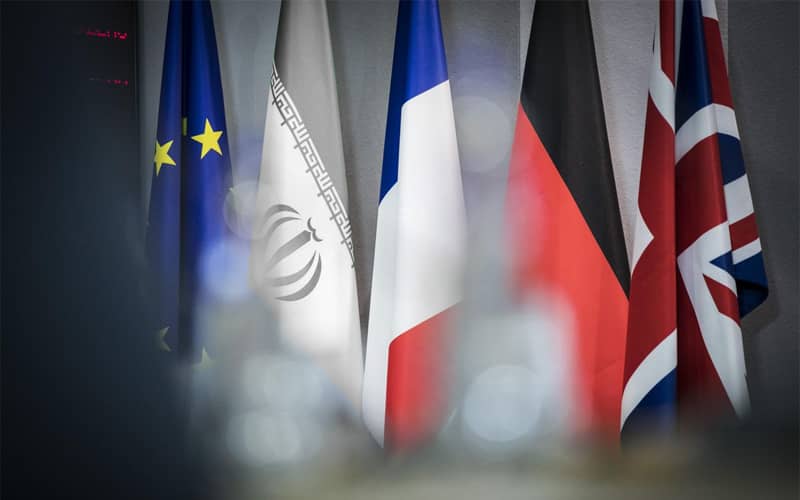
While Iranian authorities have intensified suppression and restrictions on citizens, Iranian media outlets sound alarms about upcoming protests
By Jubin Katiraie
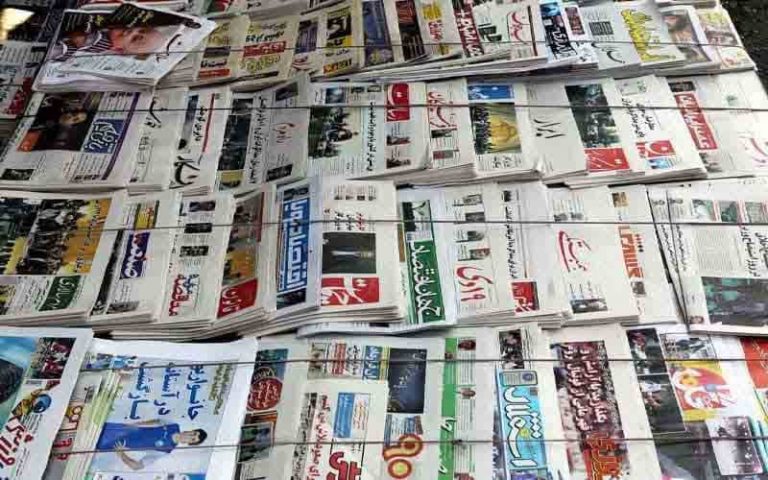
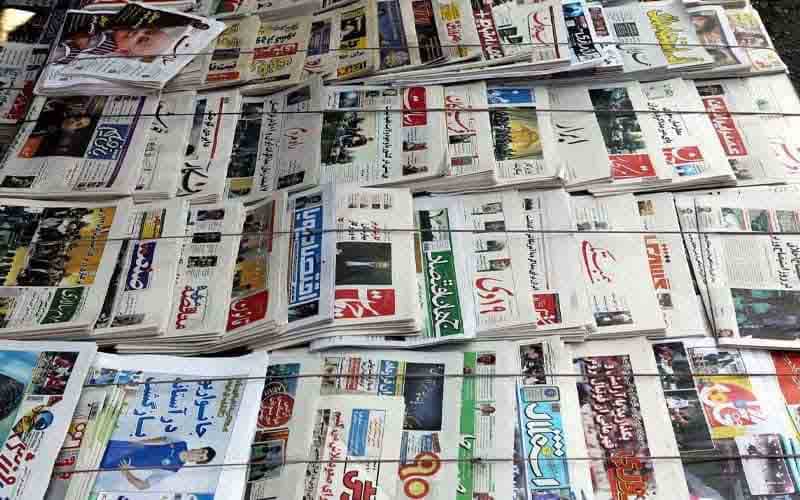
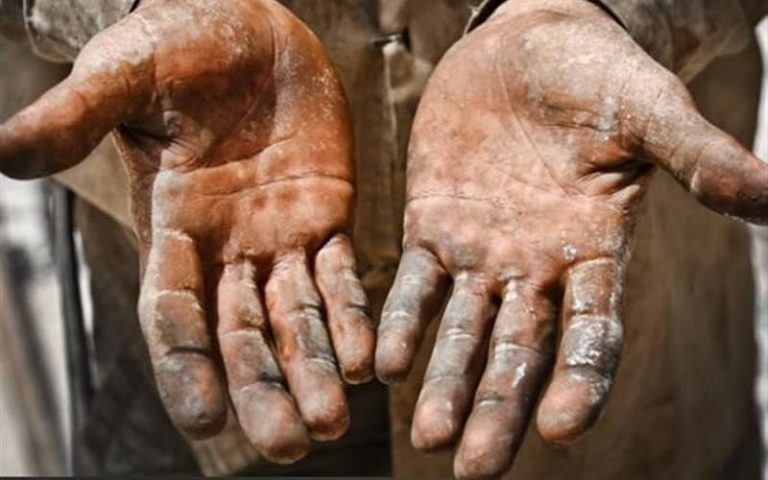
Iranian state-run media spent Sunday warning officials of looming protests by people in poverty, all while the mullahs’ are trapped in an international deadlock.The state-run Arman daily wrote: “A glance at what we witnessed in forms of protests in recent years shows that these protests started in areas where people are suffering from poverty and have difficulties earning their living wages. The economic pressure that lower social classes endure is unbearable. We should be careful that they do not lose their tolerance because this could have social and security consequences [for the state].”
Of course, the Iranian theocracy has long failed to help the poor people there; instead plundering what insignificant money they do have in order to fund terrorism and warmongering abroad, which the paper acknowledged had destroyed society and would be tough to repair.Meanwhile, the Ebtekar daily wrote: “The social and national challenges have become so diverse and massive that any justification or trick can no longer conceal them. There is an inefficiency (lack of ambiguous plans and goals) of macro-management, which is the bedrock of all kinds of social and national challenges without prospects. Thus, we could safely say that a ‘fundamental national issue or concern’ in no way matters for politicians, officials, clergymen, and those seeking power.”The paper noted that officials were prioritizing their shaky hold on power rather than fixing people’s problems, which was actually making it more likely that people would rebel against the entire ruling system and would soon make things more difficult for the rulers to maintain power.The Siasat-e Rouz spoke about the new European-led joint-statement on the Iranian government’s human rights violations, which was signed by 47 countries, saying that effectively symbolizes the EU giving the US the “green light” to process in its sanctions and other actions against the regime, citing that previous EU statements on Iran’s human rights, missile capability, and regional role, had already shown the direction they would be taking.
They wrote: “The EU’s biased statement on human rights against Iran has been issued while political observers believe that this statement is a continuation of preparing the ground for further agreements like JCPOA [the 2015 Joint Comprehensive Plan of Action.] And bringing missile case and Tehran’s regional role to the negotiating table.”Maryam Rajavi, the Iranian opposition president, recently tweeted: “So long as the clerical regime in Iran has not been overthrown, it will not let up on executions and torture. Nor will it let up on misogyny, religious discrimination, terrorism, and warmongering.”
So long as the clerical regime in #Iran has not been overthrown, it will not let up on executions and torture. Nor will it let up on misogyny, religious discrimination, terrorism and warmongering #FreeIran2020#NoImpunity4Mullahspic.twitter.com/WnxpRemRec
Iranian families face empty food baskets while authorities give skyrocketing loans to their relatives to dine shark fin soup and import expensive fruits
By Pooya Stone
These days, the people of Iran bear intolerable economic pressures and many families cannot provide sufficient foodstuffs. Long ago, many citizens have fallen below the poverty line and now, they are scrambling to stay above the misery line. In other words, they struggle to remain alive.
In such circumstances, the minimum price of essential supplies rises every day while paychecks are fixed. Furthermore, many citizens have been bankrupted due to the government’s economic mismanagement and inattention to small businesses. In this context, unemployment numbers are skyrocketing.
On September 24, Arman daily pointed out a rampant increase in prices, severely affecting people’s living conditions. In its piece titled, “Families’ empty food baskets,” Arman reckoned that the current high-prices originated from the rise of the foreign exchange rate—dropping the national currency rial against the U.S. dollar.
“These days, a surplus pressure has been applied to working-class families. This pressure would be increased as much as these families have no longer capability due to empty food baskets and small product baskets. The poverty, the decrease in purchasing power, and the increase in social rift have reached a level that cannot be ignored easily,” Arman wrote.
“Currently, the food basket of a labor family of three has reached 76 million rials [$275] in Alborz province and 90 million rials [$325] in metropolitans. These numbers do not have any harmony with workers’ 26-million-rial [$95] paychecks. Laborers suffer from a 50-million-rial [$180] gap between their salaries and expenditures. In this respect, workers’ paychecks do not cover the costs of even ten days,” said Mohammad Sayyah, a member of the Labor Supreme Assembly managing board in Alborz province.
In the past, people—even the poor— were able to purchase bread, dairy, and eggs. However, given the high prices, these people have lost their purchasing power to provide even these basic goods. Removing these foodstuffs has placed the society on the horizon of emerging malnutrition among different classes.
“Each person must receive a daily use of 320g bread, 100g rice, 20g pasta, 26g beans, 70g potatoes, 280g vegetables, 48g red meat, 50g white meat, 24g eggs, 225-240g milk or dairy, 35-40g of oil, 40-50g carbohydrates and sugar,” a professor of food science explained about the calories an adult person needs based on a healthy food basket, according to Aftab News website on September 1.
Notably, a single person would need more than 10 million rials [$40] to provide such a food basket. This is while Iranian families are not at all capable of paying these costs. Moreover, the prices of these goods are continuously rising.
On September 24, Mardom Salari daily highlighted the economic weakness of working-class families in a piece titled, “Monthly salary of a worker is spent in less than ten days.”
“According to the Statistics Center, Iranian families’ expenditures have increased by 34 percent in the past 30 days. This increase imposes more costs on families in the non-official market and on the ground. With the current paychecks based on workers’ minimum wage, a labor family cannot provide for even ten days of a month,” the daily wrote.
After months of arguments, officials finally admitted to raising the workers' monthly wages from $114 to $146. The ayatollahs refuse to raise Iranian workers' payment while they pay at least $1,500 to each foreign combatant who fights Syrian protesters to hold al-Assad in power. pic.twitter.com/4NsHogxBOi
On the other hand, while many citizens face troubles in purchasing cheese, butter, and eggs as essential foodstuffs, talking about the consumption of red meat, chicken, and fish is likely a joke. For instance, up to June, the price of cheese was 400,000 rials [$16] per kilo. Now, Iranian families pay 800,000 rials for the same amount of cheese.
Remarkably, these are only a portion of the problems that families of employees and workers deal with. However, hundreds of thousands of people have recently been unemployed. Also, there are contract, temporary or seasonal workers whose salaries do not reach 10 million rials [$40] per month.
Hadi Abavi, secretary-general of the Higher Association of Labor Unions, in an interview with Mashreq daily acknowledged that just “bread and boiled potato” constitutes the “workers’ food basket.”
“If workers received their minimum paychecks, in the best conditions they could cover only one-third of their expenditures. When a worker cannot feed his family and fills his family’s food basket with bread and boiled potatoes, how can they purchase sanitizers and hygiene necessities, or benefit from proper nutrition?” he questioned.
“Also, many workers must attend workplaces due to their in-person careers. They produce sanitizing goods, foodstuffs, and other cargo that cannot be shut down. Is it possible to shut down bakeries or groceries? They are exposed to the novel coronavirus risk. And in such circumstances we are also witness rising unemployment and decrease in revenues,” Mashreq quoted Abavi as saying.
Furthermore, many people, including particularly young couples, must pay skyrocketing housing rents and this issue adds insult to their injuries. All the while, state-linked individuals and entities have shaped a housing mafia with millions of empty houses across the country. However, the majority of Iran’s population is in poverty, facing high-prices, unemployment, and displacement, while officials say the number of people who spend their nights on roofs, cars, graves, and caves is increasing in alarming fashion.
It is worth noting that these dire conditions are not summarized in working-class families. In the 2017 Presidential debate, the current Speaker of the Parliament (Majlis) Mohammad Bagher Ghalibaf implicitly declared that only four percent of the society benefit from proper economic conditions.
In other words, in 2017, 96 percent of Iran’s population faced economic dilemmas based on Ghalibaf’s remarks. Given official stats, this population has tolerated severe pressures during the past three years due to the rial’s devaluation, dropping oil prices in international markets, and the government squandering billions of national resources on terrorism, warmongering advancing ballistic missiles, and expanding nuclear projects.
In such circumstances, high-ranking officials and their relatives are ordering shark fin soup in Tehran’s luxury restaurants. The government gives them multi-billion-rial loans to import exotic fruits with special refrigerators. Chief of the Orchardists Union mocked the government’s counter-smuggling and contradictory policies says, “Certainly, expensive fruits are not imported by Kolbars [poor porters in Kurdistan province],” according to Channel Six TV on October 5, 2019.
This is while state security forces annually target hundreds of Kolbars, killing or injuring them mercilessly. Some of them are educated people who have been forced to make ends meet through excruciating jobs due to the government’s imprudence in recruiting their talents and capacity.
A significant number of citizens are also selling their body organs and even their newborn babies to pay their backbreaking expenditures. On the other hand, families face a growing rate of skyrocketing prices for essential necessities. These enormous financial pressures, along with systematic corruption and discrimination, have created severe distrust among the people.
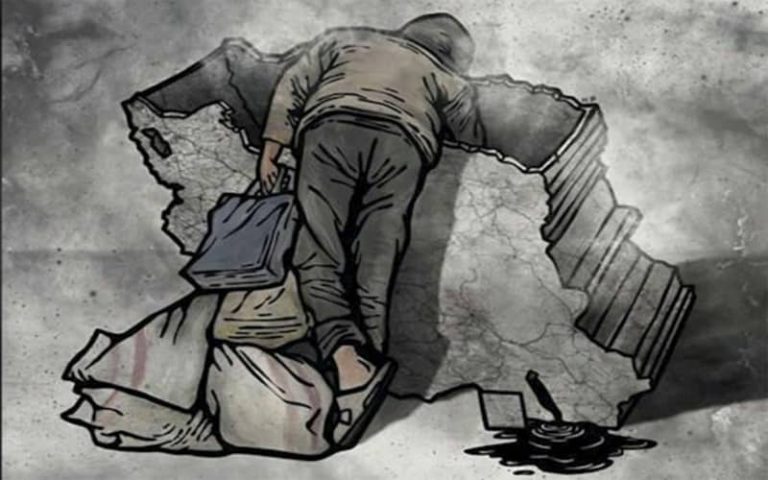
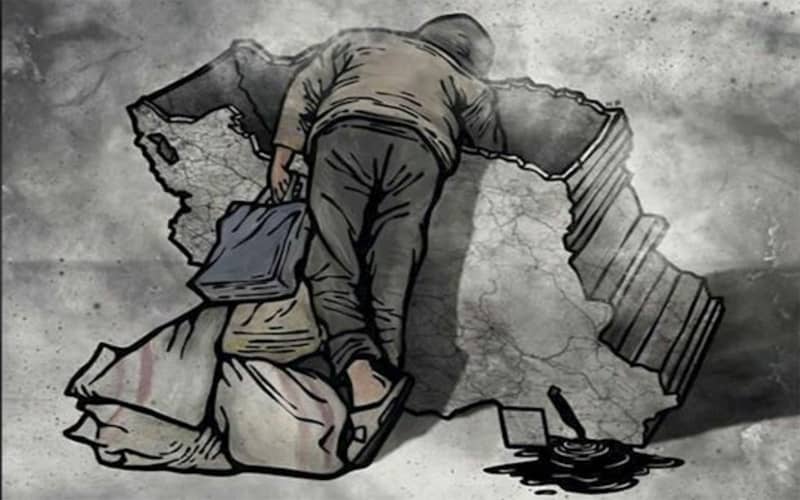
“Let off Syria, think about us,” was frequently chanted by fed-up people in the latest round of nationwide protests. Now, Iranians seem to grasp that the government, neither “reformists” not “principalists,” are actually thinking about them. Therefore, they continuously launch rallies protesting the government and state-backed CEOs who merely line their pockets with the impoverished people’s meager savings. However, these protests will not remain small forever and the Iranian people’s “Nitrate of Disappointment depot” will explode soon.
Iranian officials brag about remote and semi-remote education while many citizens, particularly working-class people, cannot afford online-classes’ expenditures
By Pooya Stone
An Iranian government official has admitted that many workers can’t afford to keep their children in education.
The most substantial problem right now is that workers cannot afford things like mobile phones or laptops, which would allow their children to access online learning made essential because of the coronavirus pandemic, but that’s far from the only barrier between Iranian children and education.
Hamidreza Imam Gholi Tabar, Inspector of the Supreme Assembly of Workers’ Representatives, told the state-run Tasnim news agency on Friday: “In recent years, the people, especially the workers, have been affected by the most severe economic pressures such as rampant inflation, declining incomes, and declining purchasing power, increasing poverty, and recently, coronavirus, an uninvited guest has been added to this list. These problems have overshadowed the management and normal life of the workers and have led them to a dead-end in covering their daily expenses.”
Indeed, the cost of tuition fees, registration fees, uniforms, accessories, and stationery, all adds up, even in normal times, and the people can barely afford to pay for food and bills, let alone schooling when 80% of the population live below the poverty line.
Imam Gholi Tabar said: “If no practical solution is found to solve the above challenge, workers will certainly prevent their children from continuing their education due to lack of sufficient income. Because in the shadow of discrimination and the lack of any support for the working class and the vulnerable sectors of the society, survival will be their first priority and the education of their children will be at a much lower priority.”
This will no doubt lead to a whole generation of children forced to work as working children and lacking the needed education for many careers, thus limiting whatever social progression there may have been so far.
On Wednesday, parliament discussed the people’s living conditions, with Hossein Khosravi asking “Do not you hear the cries of different classes of workers and employees, such as preschool teachers, contract teachers, the disabled, the workers of telecommunication company, and the children of the martyrs, many of people who are drowning in problems, outside the parliament?”
On Tuesday in Parliament, MP Shiva Ghassemipour said: “The way things are going, in the next few months, the bread will disappear from the people’s tables, as has happened with meat and eggs… Our officials don’t do anything to help the impoverished segments of society, whose numbers are increasing every day. When did we promise to create havens for the rich, give shelter to the corrupt, and deprive the poor of the power to buy eggs?”
Given the Iranian prisons’ dire conditions, around 20 prisoners committed suicide in the past two weeks
By Jubin Katiraie
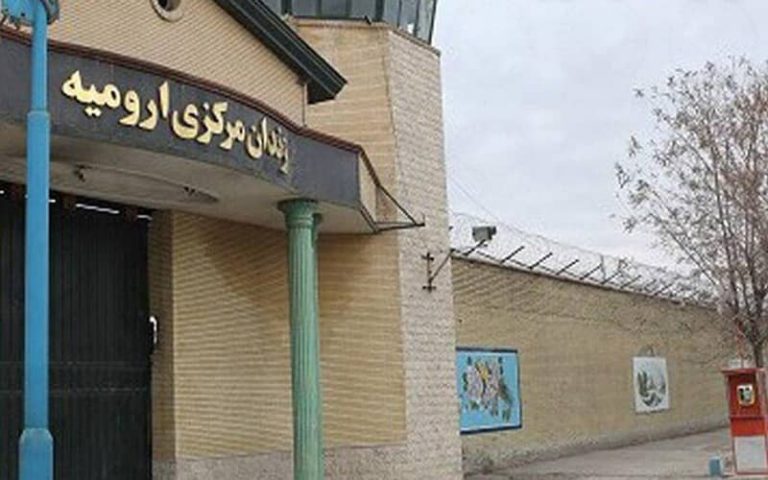
Some 20 inmates at Urmia Central Prison, northwestern Iran, have attempted suicide in just two weeks due to the horrific conditions they are subjected to in prison.
An informed source said: “[Inmates] cannot tolerate prison conditions. In response to the prisoners’ protests, prison authorities give out psychedelic pills. After a few days of using these pills, the inmates lose mental control and try to commit suicide. The latest case was a prisoner from the minors’ section who broke a window and tried to eat the shattered glass to kill himself. He is in critical condition.”
They said that most of the inmates who are in an unstable mental state are in Section 14 and the “Consultation” section.
Prior to this recent spate of attempted suicides, Farzin Nouri and Hadi Rostami attempted suicide with poison on June 30, and in May, Mohammad Ghaderi attempted suicide to escape torture by the Intelligence agents.
The conditions are awful, unhygienic, and with no separation of prisoners based on crime.
In related news, an increased number of inmates and a severe lack of hygienic conditions at Sheiban prison of Ahvaz, southwest Iran, had led to a jump in the number of prisoners contracting the coronavirus over recent months.
After riots at Sheiban and fellow Ahvaz prison, Sepidar, in March over the lack of response by prison authorities to the coronavirus, which should have seen lower prisoner numbers and increased hygiene, the regime transferred most of the inmates at Sepidar – including all political prisoners, death row inmates, and those sentenced to less than five years – to Sheiban prison.
One source said that the number of political prisoners on ward 5 tripled from 100 to 300 in just one month with the numbers rising daily, even though the ward has just 100 beds, which means that the majority of prisoners are forced to sleep on the dirty floor, in corridors, and in front of toilets and showers.
Additionally, due to limited space, over 60 people are forced to sleep in a 25-square-meter room, which the source said means that the people are forced to sleep in cramped conditions, unable to move until the morning.
All this means that a large number of prisoners are already infected with coronavirus and prison officials are preventing reports from leaking to the outside world.
In July, Amnesty International reported that Iran’s prisons are “catastrophically unequipped for outbreaks” and that the regime has ignored repeated requests from prison officials about resources that are aimed at stopping the spread of the disease or treating prisoners who are sick. This included things like bleach, personal protective equipment, soap, and medical devices, but the regime never even responded to the letters, let alone provided any of the needed equipment.
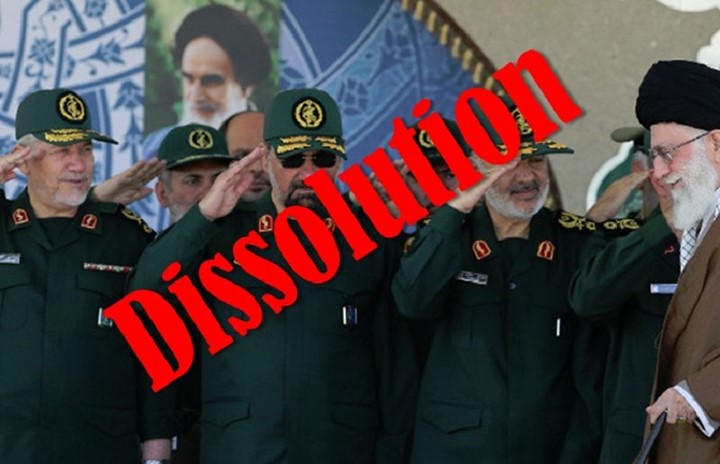
The Iranian supreme leader Ali Khamenei oversees a parade of IRGC senior commanders
By Pooya Stone
Questions asked in Iran’s state-run television Channel 5 from Abolfazl Shekarchi, Spokesman and Deputy Chief of Staff of the Armed Forces, about the role of the Revolutionary Guards (IRGC) and Iran’s meddling in the Middle East is just one of the examples of the regime’s miserable situation. His defensive stance in this interview was remarkable. These questions raised skeptics in the regime after the call by Iranian opposition leader Massoud Rajavi for the “Dissolution of the IRGC” and to allocate its budget to counter the coronavirus and support the Iranian people.
Moderator: “The suspicion that every country should have a single armed force, you say that this is true in our ideological debate, now what about the protection of borders?”
Shekarchi: “Protecting the ideological borders of the holy system of the Islamic Republic and the Islamic Revolution, in addition to being with all institutions and devices and even the army, is its inherent mission with the Islamic Revolutionary Guard Corps.”
Moderator: “And do their works not interfere which each other?”
Shekarchi: “No, they are perfectly compatible with each other. This is the difference between our armed forces and the of the other countries in the world.” (State-run TV Channel 5, 21 September)
The Iranian people do not need the Revolutionary Guards. This force was created from the first day with the aim of preserving Velayat-e-Faqih (supreme clerical rule), carrying out assassinations outside of the borders of Iran, as well as suppressing the people and the opposition forces. Its logo does not show any sign of Iran and Iranian nationality.
Organizing a series of failed operations in the eight-year war, after Iraq’s withdrawal from Iran, is another crime committed by the IRGC. Operation Wal-Fajr to occupy Iraqi territory with the tactic of human waves on the northern fronts in Iraqi Kurdistan to the southern fronts in Faw inflicted heavy casualties on the Iranian population.
In Operation Karbala 4, operational plans had already been leaked, but despite this, the regime carried out the operation and thousands of young Iranian men died.
Sending students as ‘disposable soldiers’ is another aspect of the Revolutionary Guards’ crimes. According to former President Akbar Hashemi Rafsanjani, nearly 36,000 school children lost their lives on the battlefields. (31 October 1997)
The terrorist IRGC Quds Force, led by the eliminated general Qassem Soleimani, has played a key role in igniting proxy wars in Iraq, Lebanon, Syria, and Yemen. The purpose of this force was to export terrorism to neighboring countries and to create strategic depth for the Velayat-e-Faqih system.
The IRGC commander called this, “the Protection of the ideological borders of the Islamic Republic” and added: “Religious sovereignty does not really to any land, practically include all nations and all people. We see today that we are defending the oppressed people of Yemen, with the same thinking, we are defending the oppressed people of Palestine, and now with the same thinking we are protecting Non-Muslim nations, from the Black people in the US who are now dying under the boots of the oppression, we are defending them.” (State-run TV Channel 5, 21 September)
The functions of the Revolutionary Guards for the supreme leader Ali Khamenei, in addition to exporting terrorism, are to play a role in domestic repression. The establishment of the large ‘Sarollah’ base to suppress the uprising in Tehran is another aspect of this role. This is what Shekarchi calls ‘internal security’ in his televised interview.
Questioner: “You said that the IRGC is an ideological border. Where is our ideological border? You mean the ideological border is once Palestine, and once Yemen, does it not interfere with defending our geographical border?”
Shekarchi: “You see, it is not that the IRGC has no mission inside the country, it certainly has a mission. But we must prevent the infiltration of foreigners, deal with the hypocrites [the regime’s derogatory label for the opposition Mojahedin-e Khalq (MEK/PMOI)], ensure the internal security of the country. These are all missions of the IRGC.” (State-run TV Channel 5, 21 September)
Shekarchi’s remarks only reaffirmed the contention that the IRGC is an unnecessary force with malign activities and is wasting the people’s resources.
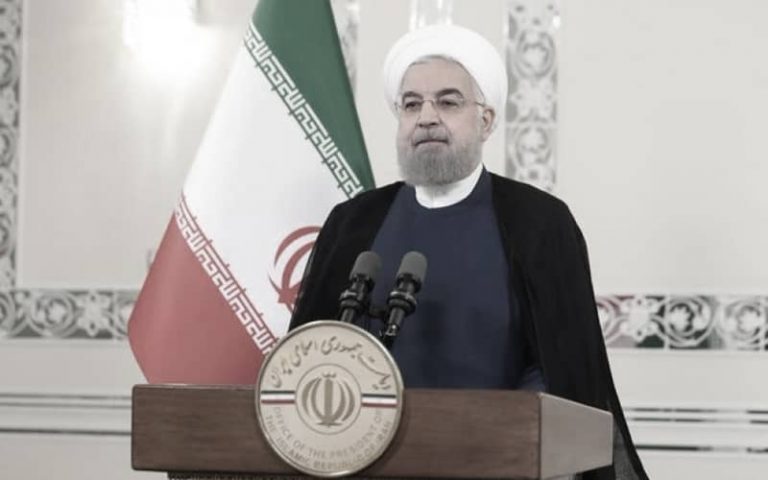
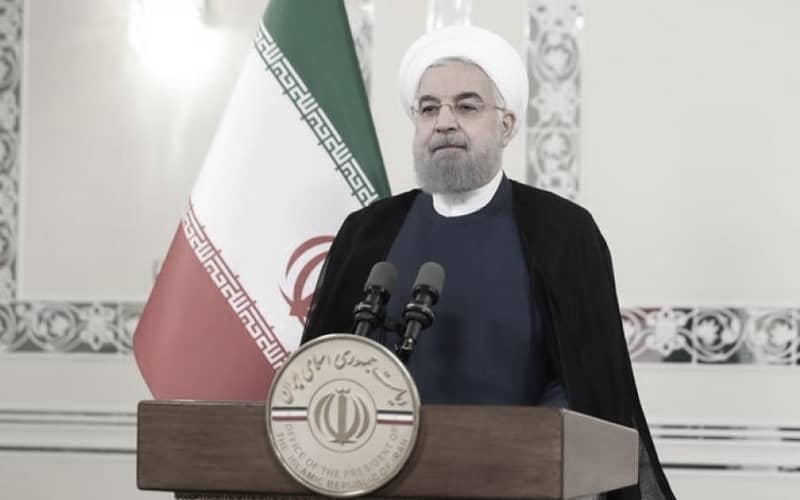
Iranian President Hassan Rouhani surprised the world with his ironic comments about freedoms and human rights
By Jubin Katiraie
Iranian President Hassan Rouhani’s speech at the United Nations General Assembly on Tuesday showed once again that he is a pathological liar as he tried desperately to reframe the government’s failures, fights, and felonies.
However, it did make it clear that Iran was failing to deal with the multitude of crises it’s facing domestically and internationally. It is clear that after four years of crimes against the Iranian people and the world, the government is at an impasse entirely of its own creation and that the only solution is regime change.
Rouhani spoke of the importance of political freedom and democracy without seeing the irony in executing political prisoner Navid Afkari just two weeks ago or Mostafa Salehi in early August for taking part in peaceful protests in 2018 and 2019 respectively. The government has also sentenced a number of other political prisoners to death, while thousands more linger in Iran’s dungeons, and at least 1,500 were shot dead in the November uprising.
He then tried to dismiss protests against Iranian interference in Iraq and Lebanon (and even the anti-establishment protesters in Iran) as “undemocratic” because the government in charge was voted in during an election. Even if the democratic election story were true, it ignores the fact that people are allowed to protest the government in a democracy and they are certainly allowed to call for a change in the government.
Rouhani then claimed that the accusations of the government’s pursuit of nuclear weapons were false, something proved to be a lie by government documents that were leaked by the Iranian Resistance.
In response to the speech, the Iranian Resistance wrote: “We don’t need to reiterate every lie Rouhani said during his UNGA speech to come to the conclusion that he was trying to hide something in plain sight. The truth is that the Iranian government is the perfect example of an authoritarian rule inching toward its end. It had already lost its legitimacy at home, but the threadbare image of democracy and reform it was showing to the world is falling apart.”
They noted that not only are Iran’s suppressive forces losing their ability to actually stop protests but that Iran’s allies are finding it harder to defend a government that kills young people for voicing opposition.
As the Iranian government flagrantly violates the Iranian people’s fundamental human rights, the world is responsible for bringing criminals to trial
By Pooya Stone
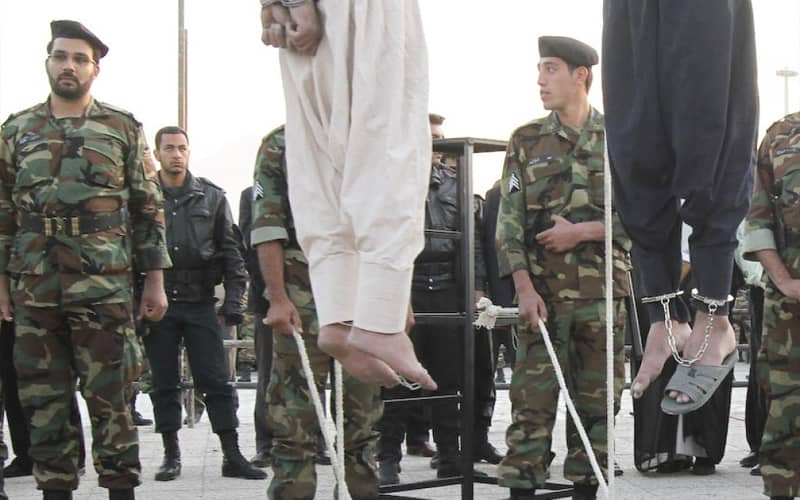
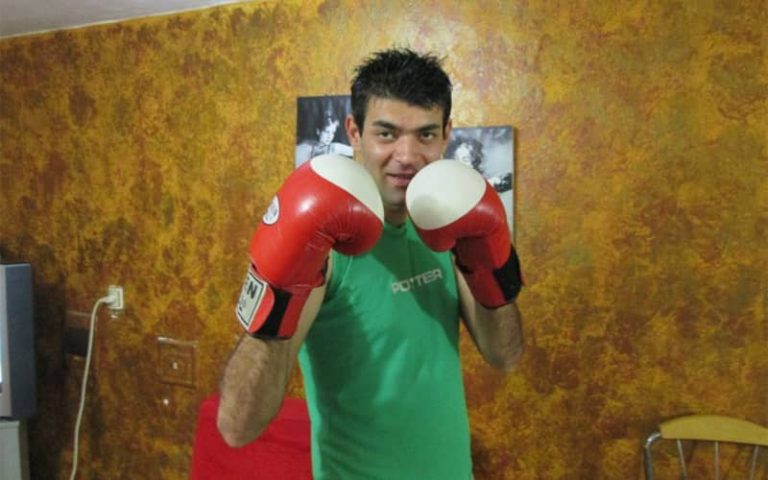
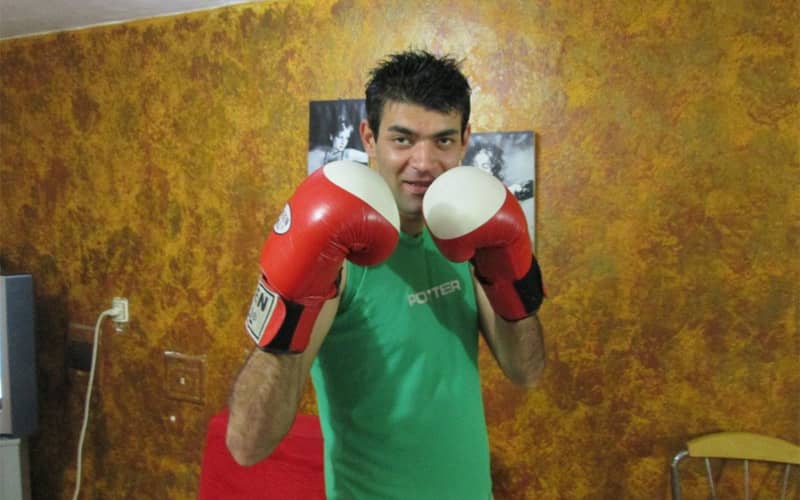
On September 12, Iran executed the 27-year-old wrestling champion Navid Afkari despite a massive solidarity campaign to spare his life. This gross violation of human rights prompted the international community to focus on the Iranian government’s record in abusing the minimum rights of its citizens.
Earlier, on September 2, Amnesty International shed light on harrowing torture and ill-treatment exercised against the citizens who were detained during the November 2019 protests.
“Widespread torture including beatings, floggings, electric shocks, stress positions, mock executions, waterboarding, sexual violence, forced administration of chemical substances, and deprivation of medical care. Hundreds subjected to grossly unfair trials on baseless national security charges. Death sentences issued based on torture-tainted ‘confessions,’” AI wrote in its revelation.
On September 5, Aida Younesi, sister of jailed elite student Ali Younesi, exposed the authorities’ attempts to compel his brother to make televised confessions. “[Ali] was told to accept allegations in televised confessions to have his death sentence commuted to life imprisonment,” Younesi tweeted.
Also, in August, Iranian authorities hanged Mostafa Salehi, who was detained during anti-establishment protests, in Isfahan Central Prison. The judge and the Supreme Court sentenced and upheld the death penalty against Salehi based on a confession extracted through torture. “I must execute you at all costs. I made an honored word to superiors to hang one person from Kahrizsang city [Salehi’s hometown],” told an interrogator him.
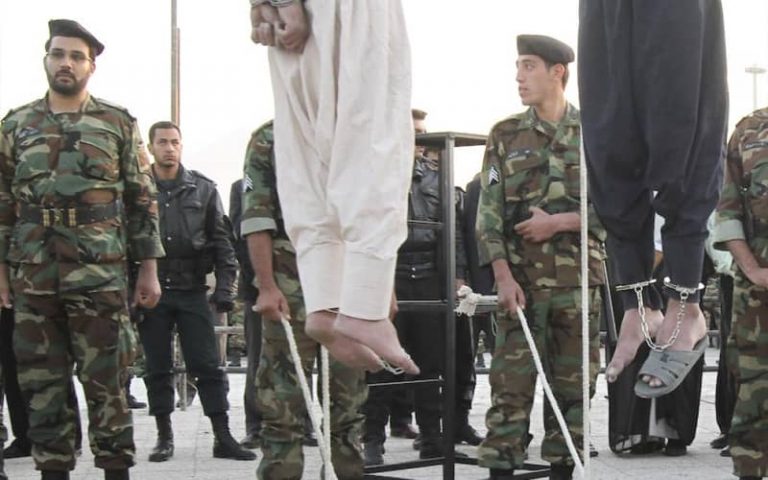
Furthermore, since the beginning of 2020, Iran’s judiciary has executed over 100 persons across the country. In August alone, authorities hanged at least 28 prisoners under different excuses. However, Iranian officials use the death penalty to terrify society and diminish the spirit of protests.
“[The Iranian] government executed a young man – after brutally torturing him – to intimidate Iranian protesters,” tweeted the U.S. Secretary of State Mike Pompeo on September 16.
On Saturday, @JZarif’s government executed a young man – after brutally torturing him – to intimidate Iranian protesters. Navid Afkari’s execution was a despicable act. Democracies around the world have a moral obligation to stand firm and reject this regime’s brutality.
In this respect, the Iranian opposition argues that it is essential that the international community hold the Iranian government accountable for its numerous crimes against its own people. Turning a blind eye to the ayatollahs’ human rights violation is considered a green light to them to intensify suppression against citizens, particularly protesters.
On September 16, former vice-president of the European Parliament Dr. Alejo Vidal Quadras described the execution of Navid Afkari as a terror act. “These executions in Iran are not a matter of the general death penalty. It’s pure terror, the regime wants to ensure its survival,” Dr. Quadras said in a webinar summit hosted by the Iranian opposition National Council of Resistance of Iran (NCRI).
In such circumstances, the civilized world, especially rights organizations and activists, bear a profoundly consequential responsibility for the Iranian people. Europeans and the U.S. government must hold the ayatollahs and the Revolutionary Guards (IRGC) accountable for their malign behavior inside Iran and abroad, opposition activists say.
The 41-year appeasement policy toward Iran merely incited the ayatollahs to further embolden their oppressive apparatuses and abuse their citizens’ rights, activists point out. Giving infinite impunity to Iranian officials has also encouraged them to cross geographic boundaries and use terrorism as a means to blackmail other nations.
In this respect, the world must recognize Iranian citizens’ struggle for freedom, justice, equality, and the rule of law. The United States’ recent sanctions against human rights abusers send a strong message to the Iranian people. It obviously addresses Iranian youths and women who seek a free and democratic Iran that you are not alone.
European states must follow the United States’ act, the opposition argues. This is the time for performing effective and practical measures against gross violations of human rights in Iran. It would bring peace and stability to the Middle East region and the world further than sparing the lives of innocent people who are on death row right now.
Following the execution of wrestling champion and political prisoner Navid Afkari, Iranian authorities killed another Iranian protester Nader Mokhtari in custody
By Jubin Katiraie
An Iranian protester, who was beaten into a coma by security forces, has died in custody.
Nader Mokhtari, 35, died on Saturday in Kahrizak detention center, Tehran. His body has not yet been handed over to his family, who are being put under pressure to remain silent about his death and the cause of death.
He fell into a coma after being beaten with batons by state security forces in the November 2019 protests in Karaj and for a month, his family didn’t know where he was until they found him comatose in a hospital in Tehran.
Mokhtari came out of the coma in March, just before the Persian new year, and, despite his critical condition and opposition from doctors and relatives, security forces moved him to Kahrizak Prison where he was held in the prison’s health center.
At least 1,500 protesters were slain in the streets by security forces in a three-day period in November, with thousands more injured or arrested or both.
In early September, Amnesty International published a report into the arrested protesters, citing torture, unfair trials, and death sentences issued based on “confessions” extracted under torture.
Iran Human Rights Monitor said: “[This] emphasizes the need for an international delegation to visit prisons and detention centers of the clerical regime and to meet with the prisoners, particularly the detained protesters.”
In related news, there is concern over the fate of four political prisoners in Sheiban Prison, Ahwaz, who has been moved to an undisclosed location, which is common before executions. Prison authorities have failed to inform their families of their whereabouts and fate, which amounts to forced disappearances and is banned by international law.
Ali Motiri, Ali Khasraji, 27, Hossein Silavi, 31, and Ali Mojadam, 39, were all moved in secret last Thursday, even though only three of them – Motiri, Khasraji, and Silavi – had their death sentences confirmed by the Supreme Court, following an unfair trial based on confessions to murder extracted under torture.
Mojadam, meanwhile, was convicted of, basically, not supporting the regime but there is no information on his case or the verdict.
All four of these political prisoners had taken part in a protest in April over the failure of prison authorities to take merchants to stop the spread of the coronavirus. They were beaten and shot by security forces and new cases were opened against them.
Tehran whistles in the dark to conceal the snapback’s impacts, but neither its forces nor economic partners can hear
By Jubin Katiraie
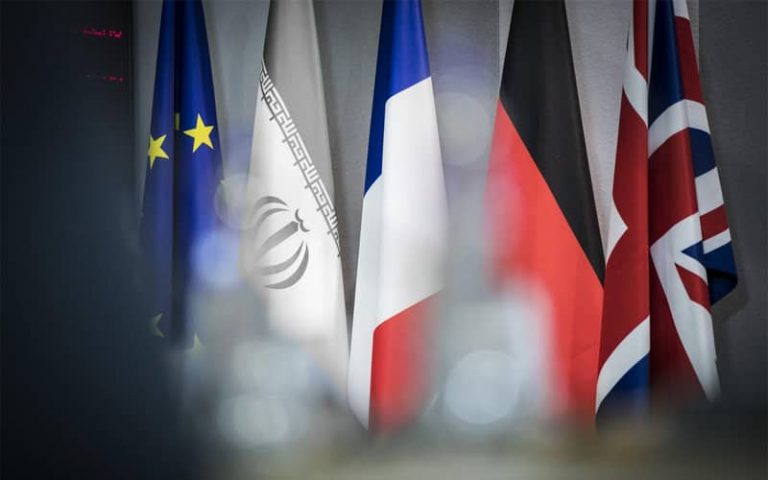
On September 21, the UN sanctions were reimposed on the Iranian government based on an appeal provided by the United States as one of the signatories of UN Security Council resolution 2231. Initially, Iranian authorities, including President Hassan Rouhani, expressed their joy about European officials’ objection to the move. However, their happiness did not last long.
On July 20, 2015, the UN Security Council adopted Resolution 2231, endorsing the Iran nuclear deal, formally known as the Joint Comprehensive Plan of Action (JCPOA). Iran benefited billions of dollars in credit and cash as economic relief in return for stopping its nuclear activities. The deal was also considered a foundation for further negotiations over controversial topics such as the Iranian government’s malign behavior in the Middle East and provocative ballistic missile program.
Iran was violating the 150 Billion Dollar (plus 1.8 Billion Dollar in CASH) Nuclear Deal with the United States, and others who paid NOTHING, long before I became President – and they have now breached their stockpile limit. Not good!
At the time, Iranian authorities claimed that they had cemented the core of the Arak heavy water facility and repurposed the Natanz uranium enrichment site to a research center. Notably, the Iranian government had denied the existence of both locations before the Iranian opposition National Council of Resistance of Iran (NCRI) exposed them and other suspect activities by Tehran toward obtaining nuclear weapons in 2002.
However, the ayatollahs deceived the international community and continued their activities despite signing the accord and receiving reliefs. In July 2019, Hassan Rouhani officially announced that his government would not obey the terms of the agreement anymore and will surpass restrictions as much as needed. Simultaneously, Iran suspended the UN Atomic Watchdog’s access to two controversial sites and accused an inspector of espionage.
Previously, on January 22, 2019, the head of Iran’s Atomic Energy Organization Ali Akbar Salehi openly admitted to breaching Iran’s obligations under the 2015 nuclear deal. “The leader [Khamenei] warned us that they were violators of agreements… There are tubes where the fuel goes. We had bought similar tubes, but I could not declare this at the time,” said Salehi in an interview with the TV Channel Four.
“When they told us to pour cement into the tubes… we said: ‘Fine. We will pour.’ But we did not tell them that we had other tubes. Otherwise, they would have told us to pour cement into those tubes as well. Now we have the same tubes,” he added.
Now, Tehran seemingly pays the price of its treacherous behavior and atomic ambitions. In this respect, triggering the dispute mechanism (snapback), which automatically restores all suspended UNSC resolutions, has placed the Iranian government in a dangerous position.
The reimposition of international sanctions on the Iranian government takes place while the country is experiencing a heavy economic crisis. In such circumstances, the oil price has dropped, the national currency has been sharply devalued, the coronavirus outbreak has deteriorated financial power, and systematic corruption, embezzlement, inflation, and high-prices have almost waned the country’s economic sector.
In this context, Iranian officials sound alarms about the dire conditions and potential risks. “Walking away from the JCPOA and NPT—if it was necessary—would seize the opportunity of using the snapback mechanism from the U.S. and Europe. Unilaterally remaining in the JCPOA gives the enemy this chance to raise the case in the UNSC based on articles 36 and 37, and paragraphs 10 and 11 of resolution 2231. With Russia and China deprived of their veto right, the snapback would all we get from the JCPOA,” said Ebrahim Karkhanei, former Chairman of the Parliament (Majlis) Nuclear Committee, in an interview with Keyhan daily on September 21.
On the other hand, Parviz Sorouri, former MP, warned about remaining in the JCPOA and reckoned that the European states and the U.S. follow a similar roadmap. “Europe and the U.S. pursue a common goal in a strategic plot against the state’s red lines. It is ‘limiting the country’s defense-regional power.’ Europeans believe that a half-dead, spent, and ineffective JCPOA is better than a dead deal,” Hemayat Online website quoted him as saying on the same day.
Also, Foad Izadi, a close analyst to the supreme leader Ali Khamenei, rejected Rouhani’s claims about the JCPOA’s achievements. “We have no extended nuclear abilities. Five years ago, we handed over ten tons of enriched uranium due to the JCPOA. We had Arak, Fordu, and Natanz [facilities], and 19,000 centrifuges. What do we want to receive with three tons of uranium?” he wrote in a piece in Resalat daily on September 21.
Resalat daily also mocked Rouhani’s claims about Europe’s objection to the U.S. reimposition of sanction: “It is impossible to fill your pocket with an insignificant objection by Europeans and the UNSC and praise it as a victory. It is right that Europeans did not trigger the dispute; however, they previously set their guns on barrage status against us.”
The snapback sanctions affected the Iranian bankrupt economy in an unprecedented way. For instance, Tehran Stock Market (STM) lost over 57,000 units in two days alone. An Iranian economic media reported that “the stock market experienced a dramatic fall” and added “stock markets have been shut down and the scale of trade has significantly dropped,” according to Tejarat [business] News website on September 21.
Iranian authorities have realized the impact of snapback despite their ridiculous remarks and congratulations. They hoped the U.S. presidential elections would rescue them from their terrible condition. However, the reimposition of sanctions has pushed Iran’s economy to the point of no return. Today, the government faces not only a sharp decline in exporting crude oil and condensate but also deals recession in all aspects of financial activities.
These parameters will create a hyper social crisis, paving the path for the fed-up people to flood into the streets once again and clearly demonstrate their rage and fury against the corrupt ruling system. In this respect, the ayatollahs do not hide their concerns and frequently warn each other over upcoming protests. They openly say that “we face a volatile society,” and the “Nitrate of Disappointment” awaits us.
Iran sanctions
By Pooya Stone
Before and after the announcement of the return of UN sanctions by US Secretary of State Mike Pompeo, colorful reactions were expressed by Iran’s leaders and figures of this regime. The essence of these reactions is: Anger, despair, fear, being hopeless about the result of the US Presidential elections, and of course hole threats and ridiculous showoffs.
Calling the IRGC chief General Hossein Salami to the scene is just one of these showoffs that we are witnessing now and of course in the upcoming days and weeks. Which of course is intended for domestic consumption only. As Salami threatened the US and said: “We will blow you away and destroy you,” and comments just like that.
The regime’s diplomatic apparatus, as well as President Hassan Rouhani to strengthen the morale of the regime’s forces, say that the United States has failed politically and legally and has not been able to reach a consensus in the Security Council. At a cabinet meeting on September 20, Rouhani, while apparently afraid the consequences of the trigger mechanism, launched a carnival of thanks to members of the UN Security Council, claiming the victory of the regime.
“I would like to thank Indonesia as the former President of the Security Council and Niger as the current President of the Security Council for their resistance to the illegal actions of the United States, as well as Russia and China as friendly countries that have stood firm against the irrationality of the United States, they stood both in the previous periods and in this period. I must also thank the other members of the Security Council, the European countries, the other countries, and all the 12 to 13 countries that have supported Iran and stood up to the United States.” (Mashregh News, 20 September)
But despite Rouhani’s irrational comments, the speaker of the parliament Mohammad Bagher Ghalibaf warned the entire regime and that they should not ignore the essence of the issue with these optimisms.
“We should not rejoice in these legal and political failures of the United States and forget that our oppressive enemy will step forward step by step in escalating sanctions if this negligence continues to reshape the sanctions system.”
Then warning about the ‘starving army’ he added: “We should not retard the country and the livelihood of the people because of the West.” (State-run daily Javan, 20 September)
Disappointment with the outcome of the US election, he added: “We must prioritize the people, and we must take advantage of the clear experiences of the Iranian people and know that America’s enmity with this nation is deep-rooted and that whether Trump becomes president or Biden, there will be no difference in the main policy of hitting the Iranian people.
“So, we need to focus on strengthening the Iranian nation and declaring real victory when our economy and people are strong and feel that tangible changes have taken place in their lives.” (State-run daily Javan, 20 September)
Despite Rouhani’s claims about the isolation and Legal Failure of the US government, the state media are showing something else and clearly said that Europe’s superficial agreement with the UN Security Council is a kind of completion of the pieces of a puzzle for a complete siege of the regime.
“In the meantime, there is a danger that should not be overlooked. The ‘scuffle of the US and the Security Council members’, about the multilateral sanctions, should not distract us from the main US-European game against our country. This joint play does not rely on the presence of Trump or Biden in the White House.” (Resalat, 20 September)
Kayhan daily, which reflects the viewpoints of Supreme Leader Ali Khamenei, on 20 September wrote: “Europe’s opposition to the US implementation of the trigger mechanism is merely a show of opposition. Because the European members of the JCPOA in the past months and before the United States have been in the forefront in starting the implementation of the trigger mechanism.”
To get out of the crisis, the hypotheses at the forefront of this regime could include the following:
Carrying out a passive policy of patience and waiting and, according to the state media, avoiding ’emotional and reactive actions.’ And staying in the status quo while still waiting for the outcome of the US election and jumping from one pillar to another in the hope of a way out.
Relying more and more on the JCPOA and to rejoice in the rift between Europe and the United States, with the support of Russia and China. The same thing that Hassan Rouhani repeated, fearing the consequences of the trigger mechanism.
Decreasing its JCPOA’s commitments and increase enrichment activities and the amount of enriched uranium to have the upper hand. This policy will not work anymore because of the return of the UN sanctions, part of which is the suspension of enrichment, reprocessing, and heavy water-related activities.
Going overboard, dismantling the IAEA cameras, ending the IAEA’s inspections, and leaving the NPT, options that some of the regime’s MPs are calling for.
Handling a terrorist adventure to get out of the crisis. In this case, it paves the way for military action within the framework of UN sanctions for its opponents.