The Sound of Iran Regime’s Demise Can Be Heard

0
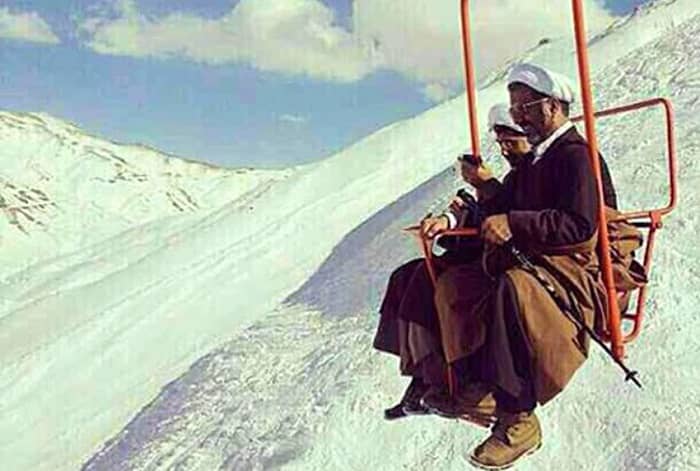
Two of Iran’s clerics take a ski-lift after a mountain walk
By Pooya Stone One of the pillars of the Iranian regime’s reign is its seminaries, which have acted over the past 41 years as propagators of the regime’s ideology. In these places, the regime’s clerics established the regime’s fundamentalist rules. Like dark and dreadful places in stories in which bad people plan conspirations, these clerics by forging Islamic rules ensure the role of the regime’s supreme leaders’ inevitable power. But now it seems that everything is changing, and the sound of the regime’s demise can be heard in these places. Jafar Montazeri, one the regime’s clerics and the regime’s Attorney General in 2018, about the situation on these places said: “In the city of Qom, some pseud-clerics in the form of organizations are holding meetings, and the subject of the meeting of these gentlemen is how to remove the issue of Velayat-e-Faqih from the constitution and the system.’ On 26 August Kazem Sedighi the prayer’s leader of Tehran, in the presence of the regime’s supreme leader Ali Khamenei said: “The atheism virus, the political disbelief virus is far more dangerous than the coronavirus.” (State TV, 26 August) The cleric Naser Rafi’i in the presence of Khamenei on 27 August said: “Some people in our clothes and the clothes of the clergy are saying bad things, sometimes like the same from overseas, and some of them are cleric students and some clerics. But friends who sometimes on the cyberspace in lectures and sometimes in our own clothes, disappoint people all the time, you are responsible to God.” And on of the regime’s IRGC commanders, Mohammad Safar Harandi in an interview said: “Some in the war thought they have been cheated, others in the same period that we were fighting, were closing their burdens, and said, so let’s go and look for our own life. Some were hesitant about the legitimacy of those speeches.” (State-TV Channel 4, 28 August) In an increasing fear of losing their influence another one of the regime’s main clerics Mohammad Ali Ale-Hashem said: “We must strengthen hope and vitality in Islamic Iranian society. Young people, in particular, should be hopeful about their future and their final task.” (State TV Sahand Channel, 28 August) On this, Naser Rafi’I said: “Some people find their wages to create frustration, and this is very dangerous, they constantly point out our weaknesses. In Albania, some being paid to say these things, to lie and to disappoint the people.” He was pointing to the regime’s main opposition group PMOI/MEK which is now based in Albania. Fearing the influence of the regime’s opposition group MEK the state-run website in an article warning the regime’s officials wrote: “Riots such as November and December 2019, which were commanded by the most hostile enemies of the holy system of the Islamic Republic. The same riots that, according to the wise leader of the revolution, those evildoers, in a small but evil and really ugly country (Albania) in Europe, gathered together against the Islamic Republic, they planned.” He added: “In the society, a lot of words and hadiths with the theme of Rajavi’s sinister claims are transmitted mouth to mouth, but also within the structure of the system, some people willingly or unwillingly, consciously or unconsciously, but just like Rajavi’s claims are repeated and opposed to holding mourning ceremonies! “And along with this warning, we hear that already pdf documents of Massoud Rajavi’s ‘World view’ (Tabiin Jahan) books circulate in theological seminaries and universities of the country and are shared by students.” (Nasim Kermanshah website, 21 August) Fearing this situation, cleric Ahmad Alamolhoda on the key clerics and the prayer leader of Mashhad metropole, in a meeting with the ideological and political head of the police force, on 16 August said: “Muharram and Safar in these circumstances became the bases so that anti-Islam and counter-revolutionaries can make more conspirations and seditions. Imam (regime’s founder Khomeini) said that the armed forces should not interfere in the political currents, not be indifferent to the currents that harm the revolution and should have the motivation and opinion to defend the revolution.”   Read More:

Iran: Systematic Corruption May Ignite New Wave of Protests

Iran Desperately Plays Its Latest Atomic Cards
The Iranian government conducted a maneuver to counter the United States activation of the trigger mechanism (snapback), allowing access to two suspected sites, then convening a joint meeting of the JCPOA Commission to counter the US, but these maneuvers failed when credible international media on Friday, September 4, reported that the IAEA revealed that the Iranian government was still violating the JCPOA agreement. While the Iranian government is under the pressure of the United States over its nuclear case, it has agreed to allow International Atomic Energy Agency (IAEA) inspectors to visit two suspected nuclear sites. But the evidence shows that the government is still in gross violation of the JCPOA and is on the verge of acquiring a nuclear weapon. After the resolution on the extension of the Iranian government’s arms embargo submitted by the US to the UN Security Council was blocked by other countries, the US announced that it would activate the trigger mechanism (snapback) at the end of September due to the Iranian government’s gross violation of the JCPOA and reiterates all the Security Council’s sanctions included in the six previous resolutions before the JCPOA imposed on this government. Following this explicit determination on the part of the US, the regime, which sought to shift the balance in favor of itself and the of appeasement advocates such as China, Russia, and the European troika, cooperated with the IAEA in a formal agreement to investigate the two suspected sites, which it has so far opposed the access to IAEA inspectors. The agreement was announced in a joint statement on Wednesday, August 26. On 26 August, the New York Times quoted the State Department as saying, “Access is only the first step,” the department said in a statement. “Iran must provide nothing short of full cooperation, and the I.A.E.A. needs answers to its questions about potential undeclared nuclear material and activities in Iran.” After Iran’s government give permission to inspect the two suspected sites, the Iranian government registered another maneuver. The regime convened members of the Joint Commission of the JCPOA in a meeting in Vienna on Tuesday, September 1 to emphasize its full maintenance and implementation of the JCPOA and to urge other members of the JCPOA to line up and assist in their confrontation with the United States. But these maneuvers did not open the door for this regime. Within a few days, reports of a gross and major breach of the JCPOA by the Iranian government were reported by the IAEA, and thereinafter international media covered it widely. The IAEA reported:
  • Iran’s low enriched uranium (LEU) stock now exceeds by ten-fold the limit set in the JCPOA. As of Aug 25, 2020, Iran has a stockpile of about 3114.5 kilograms (kg) of LEU (hexafluoride mass), all enriched below 5 percent, or the equivalent of 2105.4 kg (uranium mass).
  • Of the 2105.4 kg LEU (U mass), 638.8 kg are enriched to up to 2 percent. 215.1 kg LEU enriched up to 3.67 percent are in a stock enriched before July 8, 2019. The remainder is 1890 kg of LEU enriched to more than 2 percent but less than 4.5 percent.
  • Overall monthly LEU production has decreased slightly, from 181.5 kg per month in the previous reporting period (Feb 2020 – May 2020) to 165.1 kg per month during this reporting period (May 2020 – August 2020). This decrease only affected the below 2 percent uranium production. The monthly average production of 2 to 4.5 percent LEU increased slightly.
  • Iran’s estimated breakout time as of late September 2020 is as short as 3.5 months. A new development is that Iran may have enough low enriched uranium to produce enough weapons-grade uranium for a second nuclear weapon, where the second one could be produced more quickly than the first, requiring in total as little as 5.5 months to produce enough weapons-grade uranium for two nuclear weapons.
Now the world waits to see which direction the compass needle will show at the end of September. Will the trigger be pulled? A trigger that, if pulled, would also lead to the collapse of the Iranian regime. Read More:

Iran MP Calls for Leaving the NPT


New Report by Javaid Rehman: Iran’s IRGC, Basij, and Police Opened Deadly Fire on Protesters
0
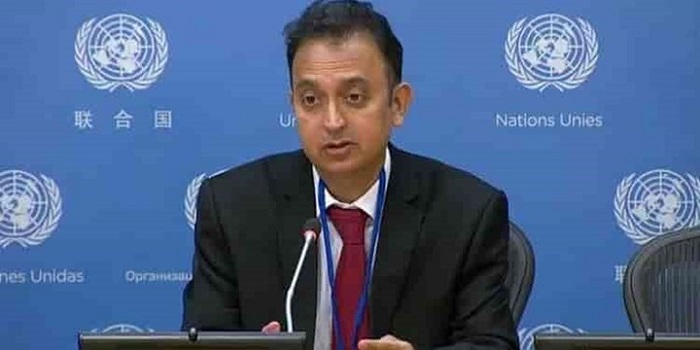
Javaid Rahman, Special Rapporteur on the situation of human rights in Iran
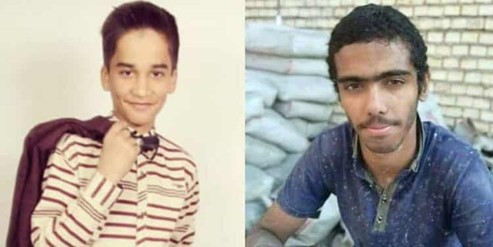
By Pooya Stone A new report by Javaid Rahman, the United Nations Special Rapporteur on the situation of human rights in Iran, reveals other dimensions of the crimes of the Iranian security forces. In a new report, the Special Rapporteur revealed that the Iranian government dealt violently with protesters over the high price of gasoline in November 2019, killing hundreds, detaining thousands, torturing them, and imposing harsh sentences. Execution sentences were also handed down by unjust courts. “The Special Rapporteur is alarmed by the unprecedented violent crackdown against protesters across the Islamic Republic of Iran in November 2019. Excessive force by State security forces has led to hundreds of deaths and injuries and thousands of arrests. “Detained protesters have faced torture and ill-treatment, with some receiving harsh sentences, including the death penalty, after unfair trials. While the Government has created a victim compensation scheme and ordered investigations, those processes lack transparency and independence and are failing to hold perpetrators of human rights violations to account. Victims’ families have also reportedly faced harassment by authorities for speaking out. “The violent response to the January 2020 protests concerning the shooting down of Ukraine International Airlines Flight 752 demonstrated that the Government continues to use excessive force to suppress freedom of expression and peaceful assembly. In the new report to the 75th General Assembly of the United Nations, Rehman stressed that he was “shocked” by the “unprecedented use of excessive and lethal force” against the protesters by the police, the IRGC, and the Basij during the November 2019 protests. “The Special Rapporteur expresses his shock at the unprecedented use of excessive and lethal force by State security forces during the November 2019 protests, including by the police, the Islamic Revolutionary Guard Corps and its Basij militia. According to credible sources, at least 304 people, including 23 children and 10 women, were killed between 15 to 19 November 2019 in 37 cities across the Islamic Republic of Iran, although the death toll is believed to be much higher. Most of the deaths were reported in Tehran (130) and Alborz (33) provinces, as well as the majority ethnic minority provinces of Khuzestan (57) and Kermanshah (30). “The Special Rapporteur expresses his particular alarm at the reported arbitrary use by security forces of firearms that killed at least 22 boys and 1 girl. On 16 November, 15-year-old Mohammad Dastankhah was shot dead, while returning from school in Sadra, by Basij forces shooting from their building rooftop. A 17-year-old boy, Mohsen Mohammadpour, also died after suffering head injuries during protests in Khorramshahr.
Mohammad Dastankhah and Mohsen Mohammadpour
“Analysis of nearly half the victims’ corpses reveals they were shot in the head or neck in at least 66 cases and in the chest or heart in at least 46 cases. The pattern of shooting at vital organs, established by eyewitness accounts, video footage, and the documented causes of deaths, demonstrates that security forces were “shooting to kill” or with reckless disregard as to whether their actions caused death.” While criticizing the regime’s common yet irresponsible behavior, he said: “The Government denied responsibility for protesters’ deaths, stating that firearms had been used by “rioters” and “agents of foreign enemies” and not State security forces, or, contradictorily, that security forces had used lethal force but that it had been justified as armed protesters had posed a threat to life or property. In its comments, the Government reasserted that law enforcement had exercised “maximum restraint”. “Information received disputes those assertions. First, video footage and eyewitness testimonies confirm that police, Basij, and Islamic Revolutionary Guard Corps security forces had been the entities to use firearms on unarmed and peaceful protesters who posed no imminent threat to life. Evidence supporting that finding included accounts that those shooting at protesters had worn security force uniforms, shot from government buildings, and used weapons and equipment associated with security forces. While the Government claimed a “large number” had been killed by non-government-issued weapons, no corroborating evidence was provided.” The report was submitted to the Secretary-General on 21 July 2020 for submission to the General Assembly. The UN General Assembly begins on September 15 with the participation of the Heads of State. Two days ago, Amnesty International issued a detailed report on the November protests, alleging “rape, enforced disappearances, torture, and other ill-treatment” of protesters over the price of gasoline. During the November protests, Iran’s internet was cut off in an unprecedented way, and the means of communication and transmission of news were very limited. Summary of Javaid Rehman’s report on the November 2019 protests Most of the deaths are related to the two neighboring provinces of Tehran with 130 people and Alborz with 33 people killed. Also, in the two minority provinces of Khuzestan with 57 dead and Kermanshah with 30 people, most casualties have been recorded. An examination of nearly half of the bodies showed that 66 people had been shot in the head or neck, and 46 had been shot in the heart and chest. This shows that the security forces fired with the intention of killing or that the lives and deaths of the people were insignificant to them. The families of the victims have been threatened to keep silent. Read More:

Iran Executes Three Prisoners in Two Days

State-Backed Mafia Removes Red Meat From Iranians’ Food Basket
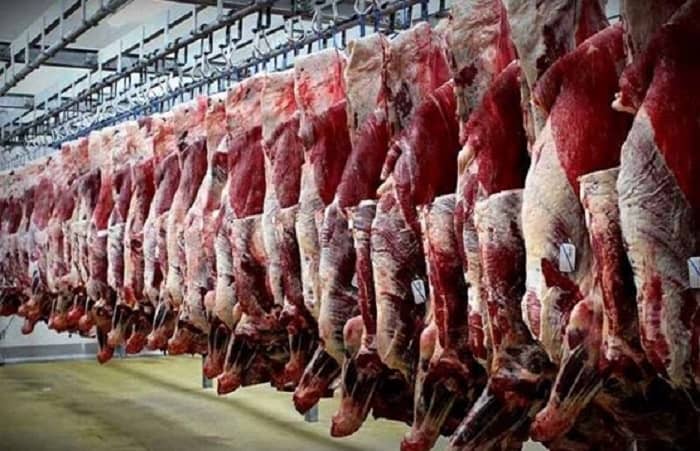
As Iranian families are compelled to cut their food basket and remove meat from their menu, the authorities insist on costly foreign policies
By Jubin Katiraie In the last month, the news of Iran’s red meat market only shows turmoil. In this context, red meat has been removed from many Iranian families’ product basket due to a 100-percent increase in prices. Furthermore, there was news over the livestock smuggling and… Now, comments by the director-manager of the country livestock farmers’ union Saeed Soltani shed light on the new scope of this turmoil. He has recently said that brokers obtain 40 percent profit from each kilogram of red meat. Soltani attributed high prices of red meat to brokers and intermediaries. “Market Regulation Headquarters has declared beef’s price is 700,000 rials [$2.80] per kilogram. However, this price has no economic benefit for livestock farmers because the ultimate price is 320,000 rials [$1.30] per each kilogram of live weight for farmers,” he said. “It was decided to offer beef in 745,000-rial [$3.10] packages to consumers in places where the price of meat is high, which would equalize the prices. If this decision is implemented, that means livestock farmers sell their product at $3.10 and consumers buy by at the same price, leaving both producers and customers satisfied,” Soltani said. However, he did not say who must purchase, roll in packages, and offer them to markets? Instead, Soltani highlighted the role of non-producer parties in the market. “No one except brokers and intermediaries controls the country’s red meat market,” he revealed. “Last year, surplus meat was imported. When the meat is imported and offered to the consumer market, in practice, domestic producers cannot offer their meat to the consumer market at the prices they have incurred,” Soltani said. On the other hand, Ali Asghar Maleki, president of the Mutton Union, says that the reason for the high price of red meat is fluctuation in the foreign currency exchange rate and the livestock farmers’ temptation to export cattle abroad. This issue, of course, was rejected by Soltani. “We have repeatedly stated that the farmers do not determine the price of meat in the market, and despite the great efforts of production, the minimum profit reaches the farmer,” he affirmed. Head of the Livestock Farmers’ Union criticized brokers’ reign on the red meat supply and demand affairs. He affirmed that slaughterhouses do not directly purchase meat from livestock farmers. “Intermediary and broker rings are amplifying the high prices and dramatic difference in prices from livestock farms to slaughterhouses,” Soltani said. Furthermore, in Iran, many livestock has yet to verify, which paves the path for smuggling. “The smuggling of livestock will continue until the verification process is completed. All these parameters contributed to raising the red meat prices for consumers,” Soltani added. The president of the Cattlemen’s Guild Association Seyed Ahmad Moqaddasi also criticized the expensive prices of red meat. He introduced brokers and intermediary elements as the main reason for the current difference between producers’ prices and paid by customers. “It is expected that officials exercise a series of measures to decrease prices because there is a possibility of self-sufficiency in red-meat area,” Moqaddasi said. All the while, according to a survey about Iranian families’ product basket performed by a group of students, over two million Iranian households did not consume red meat at all in the past year. “In recent months, every now and then one of the food items overtakes other products in a dramatic increase in prices. One day its eggs, another day its cheese and dairy, and now meat,” wrote ShahrAra website. The survey indicates that the percentage of families who consume meat—for a few days per month—has decreased from 43.4 percent last year to 32.8 percent this year. Additionally, the number of families who removed the meat from their food basket has grown from 4.7 percent in 2019 to 8.2 percent in 2020. Notably, this June, the price of red and chicken meat increased by 13 percent, fish by 5.4 percent, and milk, cheese, and eggs by 11.4 percent. In other words, most food items have witnessed 3.7-percent inflation in June. According to global statistics, meat consumption per capita is 43 kilograms annually. However, this number is about 27 kilograms per year—of course for those who can actually afford it. In this respect, the Faraz website previously acknowledged that meat consumption and the Iranian families’ food baskets are directly dependent on the minimum payments of workers and low-income segments of the society, which have not changed despite the rising inflation. All the mentioned factors prove that people’s living conditions are deteriorating on a daily basis and Iranian households have no option other than decreasing their food consumption due to economic pressures. On the other hand, there is no passing day without the revelation of a new financial scandal, corrupt case, and embezzlement among top officials, adding insult to society’s injuries. And parallel to raising essential goods’ prices, confiscating and destroying impoverished people’s sheds, and brutally suppressing any opposition voice, the ayatollahs are spending billions of dollars on funding their allies and proxies t the Middle East and across the globe. These issues, along with systematic corruption and the government’s mismanagement in different sectors such as the economy, health, housing, civil and human rights have exhausted the people’s tolerance and tempted the society to release their ire against the entire ruling system in the upcoming months. “Given the internal imprudence, our people do not care about political factions and are not satisfied this status quo… unexpected political-social events are possible prior to mid-December,” wrote Entekhab website on August 30. Read More:

Iran Government’s Economic Misery Through the Lens of State Media

Rouhani and Iran’s Economic Opening
0
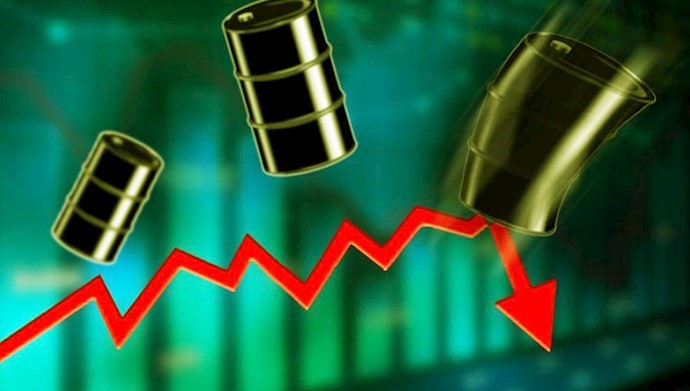
Iran government’s dream of economic development
By Pooya Stone The issue of the economic reopening of which Iran’s President Hassan Rouhani constantly speaks and which is criticized by Iranian state media reflects a huge crisis that has gripped the integrity of this regime, without any hope to find a way out. The Jahan Sanat daily wrote: “Opening takes place where economics is a policy priority. Accordingly, it is necessary for Iran’s goals to be transformed from ideological issues to coherent and achievable goals, i.e. the growth of GDP at any price and the increase in the per capita income of every Iranian at any price. “Only when the economy becomes a policy priority, is it possible to move towards establishing relations with the international community, otherwise there will be no opening of Iran’s economy.” Eghtesad Saramad wrote: “According to published statistics on the growth rate of liquidity in Iran from 2000 to 2019, the average growth of liquidity in Iran over the past two decades is a figure equal to 27.6 percent; At the same time, in 2000, the growth of Iran’s liquidity reached 29.3% and at the end of 2019, it reached 31.3%.” Referring to the high cost, Tasnim news agency wrote: “While the price of dairy products officially increased by 22 to 28 percent on 24 June of this year, according to the approval of the Market Regulation Working Group, we are again witnessing an illegal increase in the price of these products. “For example, each one-liter bottle of low-fat milk, which costs 5,600 tomans, is priced at 5,900 tomans by one brand, and 6,800 tomans, or even 7,500 tomans, by another brand, or one-liter semi-fat milk, which costs 5,900 tomans, is priced 5,780 tomans.” Etemad daily pointed to the empty table of the people and wrote: “The results of a recent national study on the elimination of healthy foods from the budget of middle- and low-income households are a worrying warning of the widespread prevalence of malnutrition in the near future. “The results of this study, conducted by the National Institute of Nutrition and Food Industry Research, show that many households have completely eliminated or significantly reduced their consumption of animal protein sources – eggs, red meat, white meat, and dairy products. “The results of this study showed us that the consumption of animal protein sources, including red and white meat, is very limited due to its high cost, and even many households have completely eliminated these protein sources from their food basket and expenses. “A large number of households stated that the reason for the complete removal of animal protein sources from the household food basket was a decrease in family income, and a large number stated that the reason for job loss and a significant reduction in income was due to closures related to the coronavirus outbreak. “They have been forced to eliminate protein sources from their household food basket altogether, and some have stated that despite the steady income, the increase in the price of protein sources is not commensurate with their monthly intake, and therefore they have decided to remove protein sources from the household food basket. “High costs and declining incomes are pushing households to eliminate or reduce their main sources of nutrients (meats, eggs, milk, and fruits) and to replace other sources of calories that are generally poorer in nutrients (compared to protein sources, fruits, or vegetables). An adult in Iran has to spend about one million tomans to provide a healthy 30-day ‘single person’ food basket.” “Inflation rates over the past two years, according to the Central Bank, the inflation rate in the 12 months leading to February 2018 was 31.2 percent and in 2019 it was 41.2 percent, and the latest report on inflation in June 2020 recorded 26.4 percent. If we accept the working class as the most populous and vulnerable economic decile and look that the increase of the minimum wage of 14 million formal and informal workers in the same period; In 2018, despite 31.2% inflation, the minimum wage for formal workers increased by 19.5%, in 2019, despite inflation of 41.2%, the minimum wage for formal workers increased by 36.5%, and in 2020, despite point-to-point inflation of 26.4%, the increase in the minimum wage for official workers has been 26 percent. “Why do we emphasize the word ‘formal’? Because the labor law in our country recognizes only formal workers, and out of these 14 million workers in the country, more than 3.5 million are informal workers, and if they had any chance, they are forced to fight to keep the job they have at any price. Promoting benefits and matching rights and other benefits is just a hole dream.” “Even those ‘formal’ people have not any hope in the laws, an objective example are the official workers of Haft Tappeh, Azarab, Hepco, and dozens of industrial units registered in the Ministry of Cooperatives’ job list, whose repeated screams of waiting for timely payment of salaries and benefits can be heard all over the country.”   Read More:

Why Is the Iranian Economy Failing?

Workers Strikes Continue in Iran

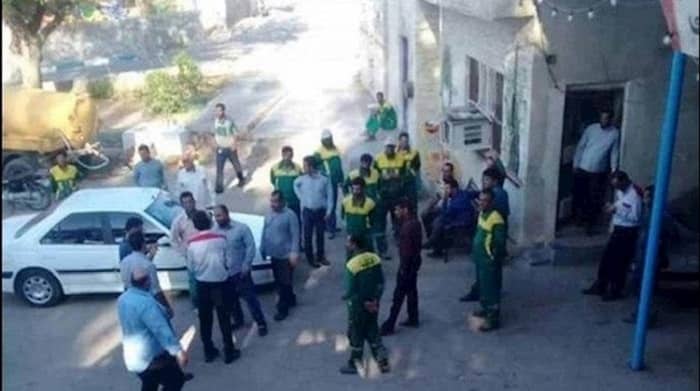
Iran: Protest rally of municipal workers - Image archive
Iran: Protest rally of municipal workers – Image archive
By Jubin Katiraie Municipality workers in Aghajari, southwest Iran, protested for the third day in a row on Wednesday over city officials’ refusal to pay them for two months, as well as unpaid wages from the previous contractor dating back to 2018. The striking workers had not received any response as of Tuesday and reports indicate that the city’s waste containers are full and some have spilled over into the streets. On Tuesday, silo workers in Kangavar, western Iran, gathered outside the governor’s office to protest the city’s silo transfer to the private sector. The silo, priced between $6 and $6.5 million in 2018, was sold to the private sector this year for less than 10% of that, with the buyer only putting down 15% of the already heavily discounted property. The workers are concerned because they are to be made unemployed when their current contract ends, with non-locals taking their jobs. Also on Tuesday, Damash mineral water factory workers in Rudbar, northern Iran, protested outside the regime governor’s office to demand the immediate payment of their long-delayed salaries and insurance premium payments. While on Monday, contract workers in Neyshabur, western Iran, stopped working in protest to temporary employment contracts and delayed wages from August. They want their wages paid immediately and to be placed on permanent contracts. They’ve also been holding rallies in front of various government buildings over the past week to demand that their problems be addressed, despite the coronavirus (Covid-19) pandemic, which is widespread in the city because the regime has failed to fight it properly on a national level. Also on Monday, students at the Kerman University of Medical Sciences protested against authorities holding the basic science exams during the coronavirus pandemic, something that was also protested against by students at Mashhad University of Medical Sciences and Boroujerd University. Throughout all of this, the workers at Iran’s oil, gas, and petrochemical industries have been continuing their strikes over unpaid wages. The Australian Council of Trade Unions of New South Wales, a parent organization of 48 unions comprising off over 600,000 workers, issued a statement on August 30 in support of these workers. It read: “We express our deep concern about the situation of the striking workers in Iran, especially refinery workers. We demand the payment of all delayed paychecks, an immediate end to the dismissal and threats of the workers, and the unconditional release of all imprisoned workers in Iran.”   Read More:

Iran Protests Continue Across the Country

Urgent Action Needed to Save the Lives of Political Prisoners
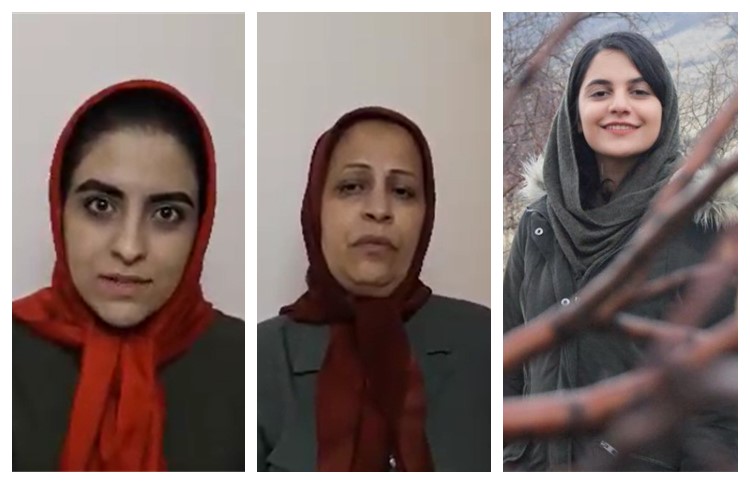
L-R: Parastoo Mo'ini, Zahra Safaei and Forough Taghipour
L-R: Parastoo Mo’ini, Zahra Safaei and Forough Taghipour
By Jubin Katiraie The Women’s Committee of the National Council of Resistance of Iran (NCRI) has called for urgent action to save the lives of three female political prisoners in Qarchak Prison, following a reliable report that they will be killed soon. The August 31 report says that Qarchak Prison Warden Mehdi Mohammadi and his deputy Mrs. Mirzaii have paid prisoners convicted of dangerous crimes to attack and murder Zahra Safaei, her daughter Parastoo Mo’ini, and Forough Taghipour, under the guise of a fight, which will throw off the suspicion of deliberate murder. The report quoted a Qarchak Prison inmate, who said: “The prison’s chief has hired us to beat these prisoners and get into fights with them. But we do not know why we must do so? These three women are very nice and calm, and they have not hurt anyone.” The report explained that Safaei, Mo’ini, and Taghipour were told by Mohammadi not to talk to the other inmates for fear that they would convert people into supporting the People’s Mojahedin Organization of Iran (PMOI/MEK) and that the trio often has to go to the workshop to avoid threats and attacks from those hired by Mohammadi. Safaei told Qarchak Prison authorities: “We do not have any security here. We do not feel secure at nights in the room and not even when we intend to go to the bathrooms complex.” The trio was arrested on February 24 and taken to Ward 209 of Evin Prison, otherwise known as the Ministry of Intelligence Detention Centre, before being banished to Qarchak Prison in April. Safaei was previously a political prisoner from 1981 to 1989 and was arrested again in 2006 before being banished to Qazvin Prison in 2009. Her father was executed in 1982 for supporting the MEK. On June 3, Safaei was threatened with violence and death by several inmates hired by the Intelligence Ministry. She was then attacked on August 27 by two dangerous criminals, who were sent into her room and struck her on the head and face, before other inmates stopped them. The women who attacked her were Zeinab Ghanbarnejad, 44, and Narges Amir Ali, 42, who are both from Tehran and are convicted of theft and drug use. It is clear that Safaei, Mo’ini, and Taghipour are in danger. The regime is infamous for using dangerous criminals to murder political prisoners, which is what happened to protester Alireza Shir Mohammad Ali, 21, on June 10, 2019. Read More:

Iran Human Rights Report: July 2020

Amnesty International: Iran Uses Torture as Punishment
0
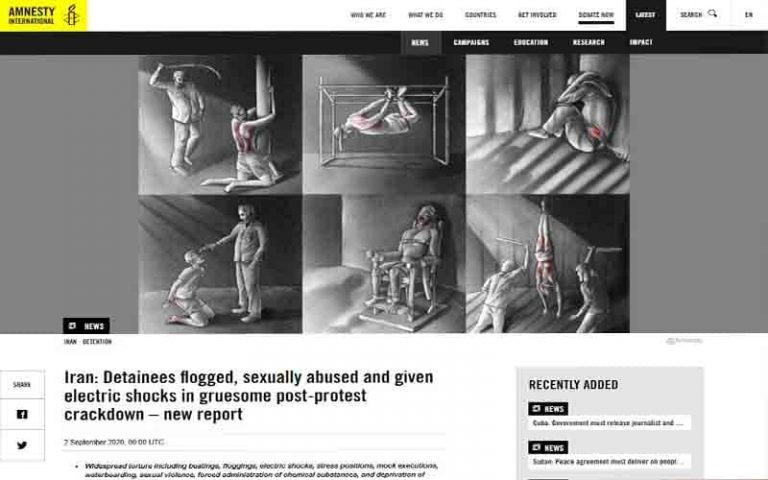
Amnesty International; Iran Uses Torture as Punishment
In its latest report about human rights violations in Iran, Amnesty International revealed the new scope of exercising torture and ill-treatment against detainees of the November 2019 protests
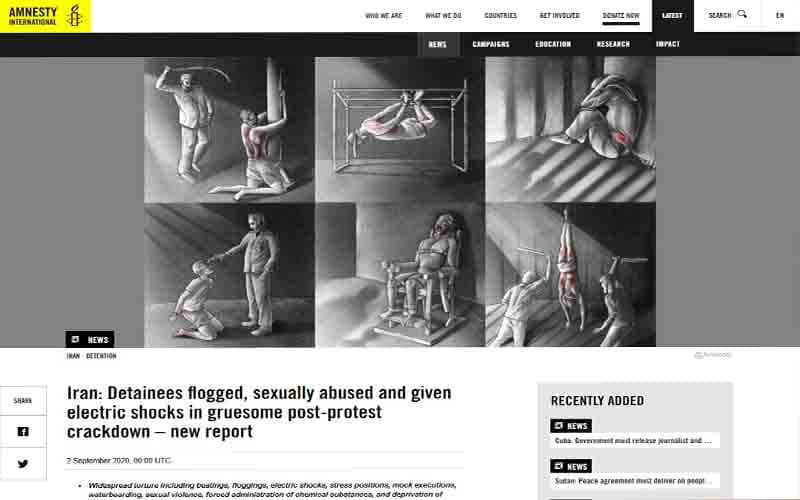
By Pooya Stone On September 2, Amnesty International (AI) revealed the new scope of harrowing torture and other ill-treatment against detainees of the November 2019 protests in Iran. In mid-November 2019, the Iranian government hiked the gasoline prices by 200 percent. In response, many citizens flooded the streets of over 190 cities across all of Iran’s 31 provinces, demanding the authorities suspend the plan. However, the rulers violently cracked down on peaceful protesters with live ammunition, heavy machineguns, snipers, armored vehicles, and helicopters. The state security forces, Revolutionary Guard (IRGC), the Ministry of Intelligence and Security (MOIS), and plainclothes agents murdered at least 1,500 demonstrators in public. They also left over 8,000 injured and captured around 12,000 others for participating in protests. Top officials, including the supreme leader Ali Khamenei and President Hassan Rouhani, praised security forces’ performance against barehanded citizens. They called protesters “rioters and hooligans” who should have been suppressed. High-ranking officials gave a badge of “honor” to ruthless police officers, IRGC members, and judicial officials for saving the state from collapse. Notably, at dawn on November 17, in his first public position about the protests, Khamenei rejected any kind of concession before public demands. “No wise person who loves his country, who loves his suitable life, would help these [protesters]. These are ‘hooligans’!” He also admitted, “Some people are worried or angry over this decision [gasoline prices hike], or it’s to a detriment, or they think it is, and they are unhappy,” the state-run TV Channel wired Khamenei’s remarks on the day. Later, on December 23, Reuters revealed that Khamenei had ordered IRGC commanders to suppress the protests at all costs. “Special Report: Iran’s leader ordered a crackdown on unrest – ‘Do whatever it takes to end it,’” Reuters titled. Of course, what happened on the streets and in public is not the entire story. Despite quelling the protests, the interrogators and judicial officials continued the crime against thousands of detainees. Officials have yet to announce the real number of victims and inmates, which allows them to exercise any torture and ill-treatment against prisoners and add to the number of fatalities. In its report, Amnesty International noted that Iranian authorities use torture as a punishment, intimidation, and humiliation. They are practically torture captives to hear what they want. Afterward, they file enforced confessions as evidence and issue severe sentences like death sentence against offenders in a collaboration with judicial officials. The organization listed several crimes committed by Iranian security forces, prosecutors, and interrogators follow as:
  • Widespread torture including beatings, floggings, electric shocks, stress positions, mock executions, waterboarding, sexual violence, forced administration of chemical substances, and deprivation of medical care
  • Hundreds subjected to grossly unfair trials on baseless national security charges
  • Death sentences issued based on torture-tainted “confessions”
“Instead of investigating allegations of enforced disappearance, torture, and other ill-treatment and other crimes against detainees, Iranian prosecutors became complicit in the campaign of repression by bringing national security charges against hundreds of people solely for exercising their rights to freedom of expression, association, and peaceful assembly, while judges doled out guilty verdicts on the basis of torture-tainted ‘confessions,’” said Diana Eltahawy, Amnesty International’s Deputy Regional Director for the Middle East and North Africa. The report also added that the detainees include children as young as ten and injured protesters and bystanders arrested from hospitals while seeking medical care for gunshot wounds. “Hundreds have since been sentenced to prison terms and flogging and several to the death penalty following grossly unfair trials which were presided over by biased judges behind closed doors, frequently lasted less than an hour, and systematically relied on torture-tainted ‘confessions,’” the report indicated. However, this is not the first time that Iranian authorities show such cruelty against inmates. In July and August 1988, the same authorities and judicial officials like the judiciary chief Ebrahim Raisi, the current Justice Minister Alireza Avaei, former Justice Minister Mostafa Pourmohammadi, and many others were involved in the massacre of 30,000 political prisoners, mostly member and supporters of the Iranian opposition Mojahedin-e Khalq (MEK). “The execution of imprisoned opponents, including those who had already been tried and were serving their prison terms, was the biggest massacre of political prisoners since World War II,” Baroness Boothroyd, Former Speaker of the House of Commons pointed out at the call for justice summit on July 19. In fact, the international community’s indifference versus the Iranian government’s horrible crime in 1988 has emboldened the ayatollahs to continue their crimes and intensify their oppressive measures against the society, in particular dissidents and protesters. “The 1988 massacre not only lays bare the international community’s inexplicable failure to uphold and defend international law enacted to prevent genocides and massacres but also highlights a worrying culture of impunity for serious human rights‘ abusers in Iran,” said David Jones, British MP, former Secretary of State for Wales, at the videoconference in commemoration of the 1988 massacre’s victims on August 22. In this context, it is imperative that human rights organizations, including the United Nations and its affiliated bodies, exert pressure on the Iranian government to release all protesters immediately. They must also dispatch a fact-finding delegation in Iran to inspect human rights violations facts. On August 31, Mrs. Maryam Rajavi, the president-elect of the National Council of Resistance of Iran (NCRI), urged the international community to intervene immediately to stop execution in Iran. “I urge the international community, especially the United Nations Secretary-General and other human rights organizations to intervene immediately to stop the executions, secure the release of the prisoners, and prevent a major humanitarian catastrophe in prisons Iran,” Rajavi tweeted.

Protests Increase Three-Fold in Iran

Iran teacher's protests
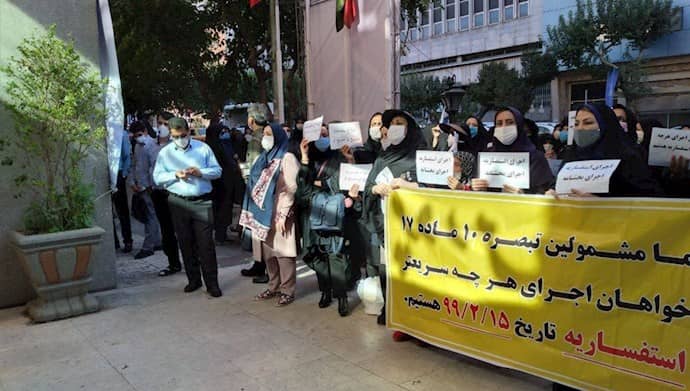
Iran: Teachers protest in front of the Ministry of Education
By Jubin Katiraie The calls for protests in Iran are three times more than they were last year, according to the Head of the Security and Law Enforcement Department at Iran’s Ministry of Interior. Hossein Zolfaghari said Tuesday that that was 1,702 calls for protests since the beginning of the Persian year in March, compared with 519 calls in the same period last year, which is a 227% increase. He quoted intelligence reports and claimed the calls for protests were coming from “abroad”, along with the “roots of some issues”, but admitted that it was possible for Iranians inside Iran to “re-post” the calls. Zolfaghari, a former Deputy Commander of the Law Enforcement Force, said that foreign media outlets who wrote about protests and strikes were “trying to turn Iran into another Syria” and that the Ministry had sent “610 strategic reports” to officials to stop any further protests. He further said that the Security Council predicted the November 2019 uprising following the overnight tripling of fuel prices, which almost anyone could have foreseen, and that officials who claimed not to know about the increase in advance had lied, presenting documents to prove it. Zolfaghari said: “There were no problems during the early hours of the plan, but from Friday noon, some officials inside the country tweeted and came on the internet and said some things and a group from abroad carried out some actions and some people protested, and then other incidents occurred… Those who said that they did not know about the plan until Friday, there are documents that show at what time, what day, and who told them about the gas increase.” In the November 2019 protests, angry Iranians chanted against Supreme Leader Ali Khamenei and the regime as a whole. These included:
  • “Death to Khamenei”
  • “Death to the dictator”
  • “Mullahs must get lost”
The protests spread to 160 cities with protesters setting fire to bases belonging to the Islamic Revolutionary Guards Corps (IRGC) and the Bassij, police kiosks, police stations, security force cars and motorcycles, governor’s offices, offices of the heads of Friday prayers, seminaries, IRGC owned chain stores, banks, ATM’s, and gas stations. The regime responded with a violent crackdown, shooting at least 1,500 protesters dead and shutting off the internet to prevent news from getting out. The Iranian officials are scared of more protests because this could overthrow the mullahs. Politician Hossein Biadi, said, “there was a possibility of unexpected socio-political events by late December”. Read More:

Report on Protests in Iran Last Week

Iran in Fear of the Trigger Mechanism
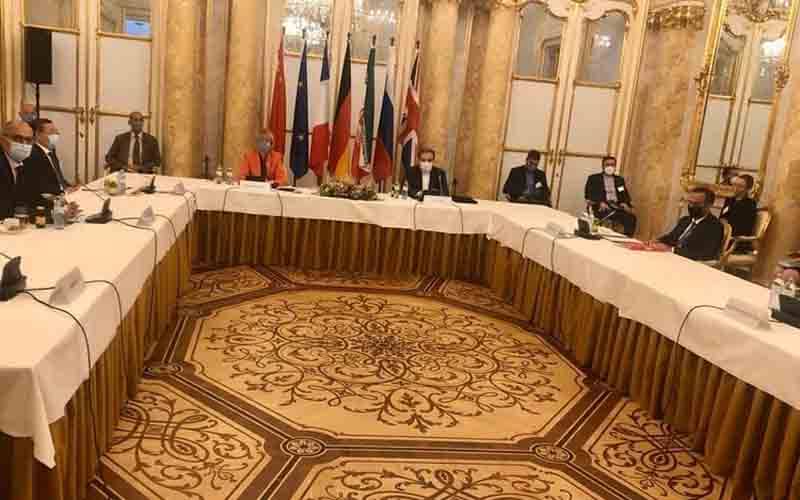
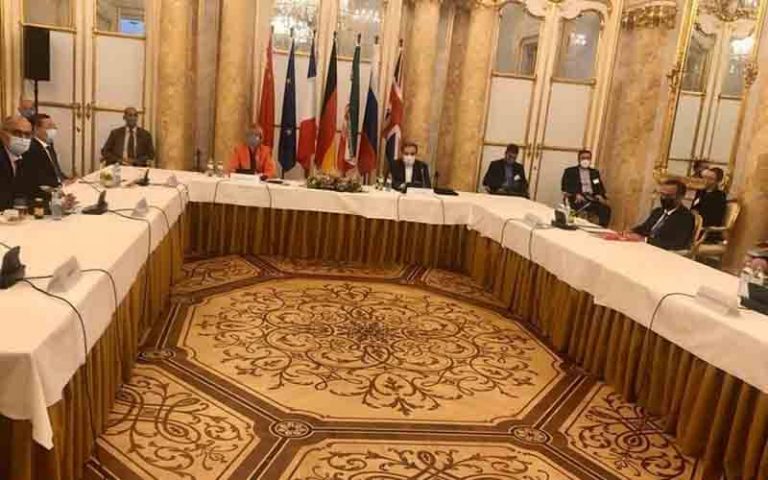
JCPOA negotiations in Vienna
Iran met remaining parties to the JCPOA in Vienna, hoping to rescue the agreement
By Jubin Katiraie These days the ‘snapback’ or as Iran’s state media calls it, the ‘Trigger Mechanism’, which will bring back all the UN sanctions imposed on the Iranian regime before the Iran nuclear agreement known as the JCPOA is a major subject. In fear of its consequences the Iranian media under the titles like, “cheating in the 90th minute”, “Why should we not trust the agency?” and “This empty place should not be filled!” are showing their frustration on the US decision to activate the trigger mechanism. State-run daily Vatan Emrooz wrote: “Are European countries looking to persuade Iran to stay in the nuclear deal if sanctions return? The Austrian capital Vienna will host a meeting of the Joint Commission of the JCPOA on Tuesday with the participation of Iran and the P5 + 1 (Germany, France, Russia, China, and the United Kingdom). It seems that the US action in activating the trigger mechanism against Iran is one of the agendas of this meeting.” It added: “The meeting is being held under the influence of US action to launch a trigger mechanism against Iran. One of the topics of today’s meeting will be Iran’s possible action in the event of the return of Security Council sanctions against Iran. “U.S. officials have stressed that, regardless of what other Security Council member states have in mind, referring to Article 12 of Security Council Resolution 2231, sanctions automatically return 30 days after the trigger mechanism is activated.” The daily noted the useless suggestion of the European countries, not paying attention to the return of sanctions, and wrote: “The return of Security Council sanctions against Iran, even if European countries and other countries claim that they will be ignored, marks the official end of the JCPOA. The end of JCPOA for Iran means the beginning of the process of 20% enrichment and the abolition of the Agency’s unprecedented regulatory regime, which has been applied as a result of JCPOA’s agreement against Iran. “Iran’s failure to react decisively to this US action will seriously damage the interests and reputation of the Islamic Republic. Iran has the experience of not reacting decisively to the other side’s bad covenant, and the unresponsively smoke of the Rouhani government has gone into the eyes of Iran’s national interests. “At today’s meeting, Iran should explicitly state that if the trigger mechanism is activated, it will not only withdraw from the IAEA Board and no longer value the IAEA Board’s restrictions but will reconsider its obligations to allow the IAEA to inspect requested sites, in addition to perhaps leaving the NPT and terminating its cooperation with the Agency.” Resalat daily wrote: “Although Rafael Grossi, Director-General of the International Atomic Energy Agency (IAEA), during his recent visit to Tehran has pledged not to make any request other than access to two locations considered by the IAEA (for the verification of Iran’s nuclear activities), the nature of the IAEA’s previous structure and operation does not leave much room for optimism in this regard for our country. “On the other hand, ‘unlimited inspections of Iranian military sites’ is one of the common demands of Trump and European actors, and even the Democrats intend to pursue this unattainable and ominous demand through Grossi and other IAEA leaders if they win the election.” The state-run newspaper evaluated Grossi’s visit to Tehran in line with US goals and wrote: “We have to accept that Rafael Grossi plays the role of a ‘catalyst’ or accelerator on this path (in favor of American goals). Basically, Grossi’s most important commitment to Trump and Netanyahu is to strengthen the ‘strategy of maximum pressure against Iran’ through seemingly legal channels.” Vatan Emrooz, quoting Assadollah Ramezanzadeh, wrote: “Claim studies”, “Rely on forged documents”, “Illegal pressures”, “Adoption of the resolution in the Board of Governors”, “Threats to send Iran’s case to the Security Council”, this was an important empty place that we should not have filled!” “Those who have embraced this agreement today, after proving and witnessing the damage that JCPOA inflicted on the country, are well aware that due to the capacity that JCPOA has created for the other side (Iran’s enemies), sending this case from the IAEA to the Security Council would be tantamount to re-imposing multilateral sanctions on Iran.”   Read More:

Iran: “We Are Worried That the Case Will Go to the Security Council”