Home Blog Page 321

Female Border Porters: A Look at Their Vile Treatment

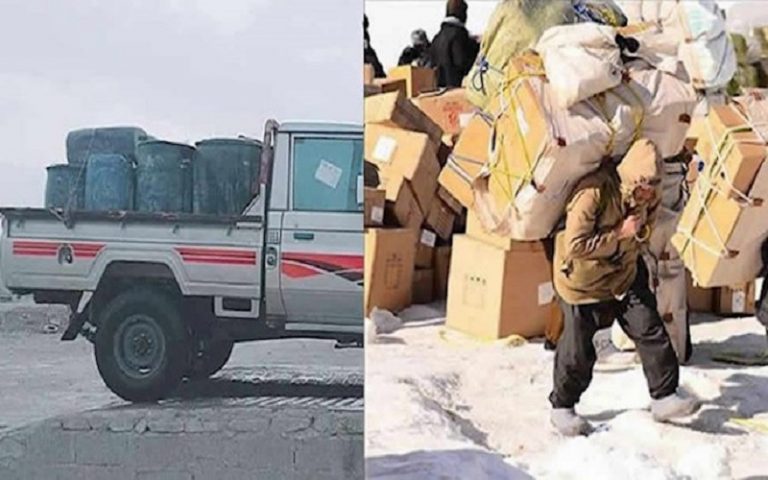
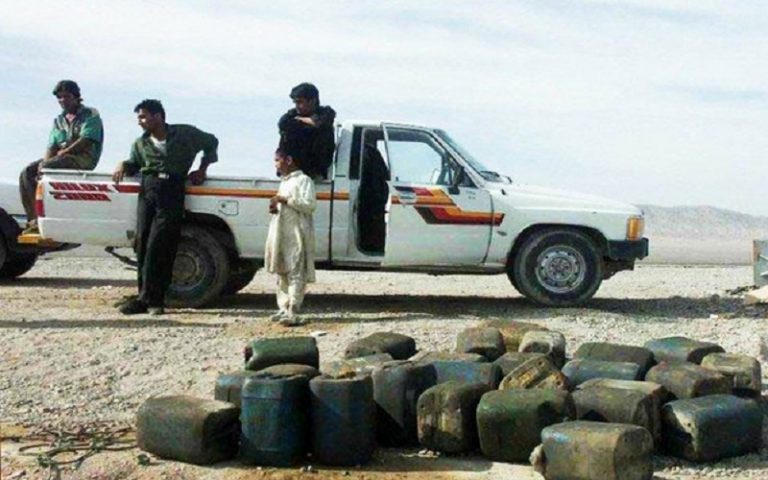
A common job in the impoverished region of western Iran is a porter or someone who carries heavy loads on their backs through treacherous mountain paths, but the job, which is difficult enough for strong, young men, is commonly being taken on by women and children because poverty levels are so high.

Up to 5,000 households in the Uramanat region of Kurdistan are making ends meet through the underpaid and undervalued profession and we are going to look at what it is like for female porters, who are most often widows or the heads of their families.

All porters must walk 8-10 hours carrying heavy loads and then walk all the way back, but despite doing the exact same job, women are paid much less. Even when they went on strike, their wages were only raised to about 45 percent of a man’s. And ever since a female porter died from hypothermia last winter, employers have refused to hire women during the winter. (Men are still being hired despite accidental deaths.)

In addition to the discrimination, female porters must also work at night to avoid being shot by border patrols, which makes it more likely that they will face accidental deaths.

21 Kolbars Killed in Iran Since March

Case Studies

Ronak Rostamzadeh, a 38-year-old mother of two, lives in Shamshir village and works as a porter alongside her 14-year-old son Mani.

Mani needed to buy a phone to access his schoolwork during the coronavirus pandemic, but on September 16, he fell down the mountain trying to escape patrol guards who wanted to shoot him. He broke his nose and eye socket, suffering other deep wounds, but Ronak had to carry him to a medical center on her own as the guards ran off.

Sabri carries 30-kilogram loads for five hours over the mountains, stressing that she doesn’t know how much longer she can continue because of excruciating back pain, saying that it is not even easy to be hired as a porter.

Sherafat, 60, says that despite injured legs and diabetes she must work to provide for her five children because she has no pension or insurance. She said that once she had to throw away a 40-kilogram load to avoid being shot by border patrols, before going back the next day to find and deliver it so she would not be fined.

Iran: Situation of Women Still Concerning

Iran’s Supreme Leader, Main Figure Behind Regime Corruption

In Iran, each and every day the media, senior officials, and government-linked figures write or talk about systematic corruption that has infested the Iranian economy like termites, according to Vice-President Ishaq Jahangiri. Of course, Jahangiri brandishes corruption as a dilemma that the government is confronting.

However, this phenomenon had been institutionalized in the Islamic Republic’s structure and is influencing the entire ruling system. Under the ayatollahs’ rule, no specific institute is accountable for the country’s economy and the economy has been synonymous with rent and corruption.

Islamic Republic founder Ruhollah Khomeini had a famous motto about the economy. “The economy belongs to the donkey,” he once said. It seems his successors gained damning privileges from “donkeys.”

Iran’s financial system is controlled by a group of thefts and looters whose mere concern is how to line their enlarged pockets with the people’s meager money. In other words, the constitution has paved the path for the government’s profiteering projects and economic policies only benefit the ayatollahs and Revolutionary Guards (IRGC) commanders.

Budget Settlement Reveals Systematic Corruption in Iran

“What happened in the past 40 years—despite seven different administrations—I saw all of them in line with the intensification of looting. Privatization was only the amplification of plundering and transmission rents from the administration’s resources to state-linked classes due to the path that it has crossed in Iran,” Saeed Leylaz, a government-linked economist, told Navad-e Eghtesadi website on April 16.

These remarks indicate that all the government’s sectors, including ministries, security and military bodies and even city councils, are involved in corruption. Recently, the judiciary detained a large number of city council members on corruption charges.

“Twenty years after establishing city councils, they not only did not improve urban affairs but also people consider these institutions as brokering centers. This thought is not false. During this period, 200 mayors and members of city councils have been detained for rent-seeking and corrupt cases,” wrote the Javan daily, an outlet affiliated to the IRGC. “Several city councils dissolved due to the high number of arrests. There are few provinces that their city council members or mayors have not been arrested for rent-seeking or corruption-related charges,” the October 3 article adds.

“The cities of Lavasan, Rudehen, Shahryar, Bushehr, Bandar-Abbas, Ahvaz, Masjed Soleiman, Veis, Sari, Salmanshahr, Rudsar, Tabriz, Mahabad, and Iranshahr saw their mayors or city council members detained due to rent-seeking and financial corruption. The collective amount that has been stolen by these officials has not yet been announced. However, a ballpark figure shows these corrupt managers have plundered tens of trillions of rials [equal to billions of dollars],” the Javan piece adds.

“Economic corruption has been chronic in the country, sucking the economy’s blood like a leach due to the lack of transparent infrastructure and smart supervision. The government still runs with costly and expensive expenditures, and the country’s bureaucracy faces two challenges, being squanders and expenditures,” Ebtekar daily wrote on the same day.

On the other hand, the government tries to portray a nice view of the economy while it has been crippled with enormous dilemmas mostly originated from domestic reasons. “No Sir, we must understand the problem. When we take a precise look, we realize that not only our shoes’ heel or knees are contaminated with corruption, but also we have sunk into corruption to our neck. It has influenced everything we even think about,” said economy expert Ali Saberi Toulaei in an interview with the Channel Four TV on November 13, 2019.

“Everything we even think about” is an implicit reference to the supreme leader Ali Khamenei’s office. Given the flawed power structure, all the country’s economic lifelines are in the grips of Khamenei-affiliated institutions. Relying on infinite power focused on Khamenei himself and his staff, these companies benefit limitless exemption and impunity to plunder national resources and the people’s properties.

Iran: A Glance at the Supreme Leader’s Mafia

Recently, Iranian media outlets shed light on corrupt cases of Khamenei’s preacher Ali Reza Panahian. In response to criticisms of his multi-billion-rial home, he claimed that it is a “gift” from friends. “He attributes his wealthy properties to friends who sit in the country’s highest-ranking positions to normalize the issue. These friends offer gifts to influential figures… They offer most reliefs, discounts, and gifts to those who are decision-makers,” Hamdeli daily wrote on October 3.

Of course, corruption is not an unknown phenomenon among Iranian authorities. “Corruption is like a dragon with seven heads. Once you cut one head, it keeps moving with six others and destroying it is not easy. Dealing with those who benefit corruption is a difficult issue,” Channel Six TV aired Khamenei’s remarks on February 8, 2018.

On August 13, 2018, he once again called the country’s corruption phenomenon a “seven-head dragon” and stressed on countercorruption measures, according to IRGC-affiliated Fars news agency. Khamenei did not clearly mention the corruption’s heads; however, he provided a perfect view of this issue in Iran.

Hamdeli daily attributed Iran’s corruption crisis to the power structure built up on “personal, family, and friendly relations.” This is beyond regular nepotism that many countries across the world deal with. In such a structure, officials benefit due to loyalty to the supreme leader and his staff, paving the path for the emerging mafia in different sectors.

The rulers sacrifice unimportant figures to save the reputation of high-ranking officials. Akbar Tabari, the former executive deputy of the judiciary, is a good example of this system’s implementation. However, given advances in the internet and people’s access to firsthand factsheets and testimonies, senior Iranian officials cannot brush the country’s systematic corruption under the carpet any longer.

The Iranian people have made it crystal clear that they consider Khamenei as the main figure behind Iran’s corruption. “Khamenei lives like the Lord, while people beg for some bread,” is a popular slogan frequently chanted by outraged protesters recently. They clearly announced that they would not be duped by Khamenei’s remarks and cynical countercorruption stunts and do not trust the corrupt government any longer.

A Part of Khamenei’s Economic Empire in Iran 

Iran’s ‘Economic Collapse’ Has Not Happened So Far!

The Governor of Central Bank of Iran (CBI) Abdolnaser Hemmati wrote on his online page that: “He has not allowed the perpetrators of the sanctions to achieve their main goal in the last two years, which was the collapse of the country’s economy.” (Bazar News website, October 2, 2020)

He has promised to explain the reasons for the rise in the exchange rate in recent weeks in a timely manner. But for the time being, he acknowledged that these days, after the trigger mechanism is proposed, there are rumors about the complete disconnection of the Iranian financial system from the world. He admitted that regardless of its operational capability and the extent of its practical impact, its psychological impact on the foreign exchange has unfortunately overshadowed the market.

With these words by the head of the CBI, it seems that the Iranian governing body considers economic collapse possible. But so far, they have not allowed this to happen.

Although Hemmati, the head of the CBI, did not provide a precise definition of ‘economic collapse’ and its consequences in the country, the remarkable point is that these words are expressed by one of the most important economic officials of the government.

Let us see what the current economic situation in Iran is. Haidar Hosseini, a government economic expert, says: “What is the name of this non-collapse of the economy when the dollar reaches 300,000 rials, the coin reaches 150 million rials [$500], and the family livelihood is kept to a minimum, and some do not have the same livelihood? What else must happen to say that there has been an economic collapse?” (Arman Meli daily,  October 3)

80% Decrease in Iranian Workers’ Purchasing Power as the Rial Continues to Spiral

Economists generally acknowledge that ‘psychological impact’ is effective in a healthy economy. An economy that has many challenges and the regime’s top experts enumerate its different types and varieties. From the water and environmental crisis to the budget deficit and unemployment and the bankruptcy of banks and social security funds. It is not clear what is left for Iran and the country’s economy that the ‘psychological impact’ should impact it?

Iran’s President Hassan Rouhani has raised impudence to the highest level. Speaking about the country’s economic situation, he said: “Statistics from Germany show that their economy has shrunk by a negative 5.2 percent, that our economy is in better shape, and that economic growth without oil will be positive by the end of the year.” (Mashregh daily, October 3)

Judging by Rouhani’s claim, when Europe’s largest economy does not catch up with Iran in terms of economy, in addition to Germany’s Chancellor Angela Merkel, the experts of the International Monetary Fund (IMF) should be brought to Iran for a training course in economic science and to admit in a TV interview that Iran’s economy will not shrink by 6 percent in 2020, that Iran’s economic growth was not -7.6 percent last year and -5.4 percent in 2018, and economic growth will not be negative for the third year in a row. And these are all rumors by the global enemies.

Valiollah Seif, the former head of the CBI, referring to the 400 percent increase in the exchange rate since the beginning of 2018 and the reasons for this rapid growth, ‘advised the CBI to take control of tomorrow’s transactions in order to control the exchange rate.’ (Mehr news agency, October 2)

However, he says that he is witnessing the intensity of inflammation in the foreign exchange market, and this has caused concern among officials, economic activists, and individuals. He also compared the current situation with his presidency, and in order to console Hemmati, he said:

“This phenomenon is not new and has a history in the past, but it can be said that it is unprecedented in terms of intensity and amplitude of fluctuations as well as the length of the time period, compared to the past. Since the beginning of 2018, the exchange rate has risen by more than 400 percent, and in addition, we have witnessed sharp fluctuations that have severely affected economic activity and seem to continue to do so.” (Bourse Press website, October 3)

Earning 330 trillion rials [$1.1 billion] of income from people’s money in the stock market: “Farhad Dejpsand, Minister of Economy, after months of silence and exploitation of capital market financial instruments, is now referring to some predictions about the possibility of non-realization of government revenues in the first half of the year and forcing the government to borrow from the CBI and the concerns of the private sector and the people about the resulting inflation, have acknowledged the government’s use of it, and he happily said, I would like to give the good news that fortunately, as a result of the measures devised by the government, in the last six months, we have been able to compensate for the deficit of our resources from the sale of securities and the transfer of shares of state-owned companies. (Aftab-e-Yazd daily, October 3)

Iran: Multi-Billion-Dollar Debts, Luxury Lives, and Millions of Hungry People

Without mentioning the negative consequences of this action in disrupting the capital market and harming thousands of shareholders, he adds: “In the first half of this year, we had a very brilliant performance in terms of transferring government shares in state-owned companies, and we managed to earn about 330 trillion rials [$1.1 billion], which is a significant figure.”

At the end of the discussion on the ongoing economic collapse of Iran, it is appropriate to look at the latest research report of the French company ‘COFACE‘, which is one of the most reputable global companies in the field of credit insurance and ‘risk forecasting’. The report notes the fragility of Iran’s economy and that it is one of the most dangerous countries for trade.

“The annual update of Coface’s Political Risk Index, published in this barometer, highlights a dual trend: on the one hand, a decrease in the risk of conflict at a global level, but on the other, an increase in the risk of political and social fragility. Iran and Turkey are among the countries whose level of social risk increased the most. Given the unique context this year, we have constructed an exposure indicator to the COVID-19 crisis, in order to identify the most affected populations who are more likely to turn against their governments.

“The social and political fragility indicator, which is relevant to analyze the increased risks of social unrest, shows a slight deterioration in its score at the global level, obscuring the different trajectories from one country to another (Table 1). While the five riskiest countries based on this indicator remain unchanged, other developments are noteworthy. Iran reinforced its position at the top of this indicator.

10 riskiest countries according to the political and social fragility risk indicators
Top 10 and bottom 10 of the evolution of the political and social fragility risk indicators score among emerging and developing countries

One economist interviewed by Radio France International (RFI) has warned that the happiness by the head of the CBI that there has been no ‘economic collapse’ so far has come too soon:

“Assessment of the current situation shows that the state of the country’s economy is completely critical and on the verge of collapse. People’s purchasing power has dropped dramatically. Unbridled inflation, poverty and unemployment, economic instability, lack of economic security combined with the reluctance of domestic investors to spend in the manufacturing sector, lack of constructive interaction with the outside world, are among the factors that have made the country’s economy helpless in the current situation.”

Iranian People’s Shrinking Food Basket, Another Side of the Regime’s Plundering

Suffering, Hunger, and Humiliation – Iranian Workers’ Situation in a Home Appliances Company

The following report is from a worker of a home appliances company in Iran. He narrates hardships and economic dilemmas he faces as an example of the dire situation of the workers in Iran.

The worker started his words with these sentences:

“The employer of this company deducts from the workers’ salaries 3-4 million rials [$10-13.3] for throwing away the adhesives tape used for packaging. These adhesives are used for copper pipes or sewage outlets of refrigerators and other things. This action of the company is very strange, and it is not clear what it had to do with the salary of the workers, that the employer is deducting the costs of the wasting adhesives from their salaries.”

They take $16 from us for food

The worker said: “The company deducts 400,000 rials [$1.3] a month from the workers’ salaries for food, which is 4.8 million rials [$16] a year. While food vouchers are given twice a year, which costs 2.5-3 million rials [$8.3-10] each time. That means, they give the worker less than the money they took from him. You see, from one side they give the worker and from the other side they take it back, and so they are playing with the workers.”

He added then that his friend works for a steel company in the Dezful industrial town and is dissatisfied with his work situation.

I say, what happened to our overtime? They say if you do not like it you can go

He says, “that if we have 250 hours, 180 hours, or 200 hours of overtime, we see that they register just 30 to 35 hours per month of overtime. Then we go and object, to this situation. And say that we had 200 hours of overtime. What happened to our overtime (money)? They say that is what it is if you want, work! You do not want, settle accounts, and go! And in front of the door, there are so many unemployed workers queuing and begging to be hired, and it is in their interest to fire an experienced worker and hire a new one. Ten people leave every day, and 10 people return.”

Iran Workers Situation in Coronavirus Era

I work for 15 hours!

“A worker in a home appliances company receives 31-32 million [$103-106] rials per month. With that, he must support himself and his family, while this amount of salary is deep below the poverty line and the workers are living in hardship. This worker pays 2.1 million rials [$7] per month only for the company bus transportation to reach his home.”

The interviewed worker said about the conditions of his colleagues:” Out of 32 million rials [$106], only 30 million rials [$100] are left for him. He is married and has two children. I say I get 35-40 million rials [$116-133], and I say it is not enough. I am single. How do you live your life with 30 million rials [$100], he shakes his head and keeps silent?”

A worker said, “Our working day started from home to the company, we must be present at 7 o’clock in the morning, and are working until 8 pm, which is 15 hours, and we are working just for 30 million rials [$100] a month.”

Resting just 4 minutes

He added: “15 minutes in the morning for breakfast, half an hour for lunch, 10 minutes in the evening for a tea. The place where the tea is served is 6 minutes away from the place of work. That means you only get 4 minutes of rest. All the worker’s rest is less than one hour a day.

“For breakfast, the company gives only one Barbari bread [Iranian flatbread] or half a loaf of bread with just a cup of tea and says that the rest of the breakfast ingredients should be brought by the worker himself.

“I am ready to be unemployed, to do nothing, and do not have such conditions, I cannot tolerate the owner of the company violates my rights.

“I am paying 300,000-500,000 rials [$1-1.6] a week for calling and internet packages. These things do not matter to me and I can pass up from all of them, but I do not accept that the employer violates my rights.

“I shopped on the way I came; my purchases were 180,000 rials [$0.6]. Now let us say 200,000 rials [$0.66], 200,000 rials a day, that is, 6 million rials [$20] a month. I only pay for dinner. I bought a half kilo tomato paste tube for 100,000 rials [$0.33]. I pay 7.5 million rials [$25] per month for breakfast.

Sometimes we do not get the traffic service, we have to rent a car, which is 2.5 million rials [$8.3] for a month, if you reduce this amount from 32 million rials [$106], just 30 million rials [$100] left. Now you calculate how a married person should live. I am trying to set aside at least 1 million rials [$3.3], but I did not succeed. This is the situation of workers in Iran in its best situation.”

Iran: Workers Continue to Hold Strikes and Protests in Cities Across the Country

Tehran Hit by Covid-19

The Iranian government’s six-month record in the fight against the coronavirus outbreak shows a perfect view of the ayatollahs’ function in the past 41 years. In practice, the current situation in Iran’s different sectors, including socioeconomic, political, cultural, environmental, and health areas, is the natural outcome of 41 years of systematic corruption and ruthless suppression.

In this context, authorities ceaselessly try to downplay their horrible performance in the past months to contain the “next social consequences.” However, the statistics obtained by the opposition Mojahedin-e Khalq (MEK/PMOI) reveal the truth.

While the government neither can nor wants to provide the actual number of fatalities fur to its inadequate infrastructure and public distrust, the MEK provides daily reports of death count and the status of different provinces. The organization tallies firsthand reports through its expansive domestic networks, the “Resistance Units,” who are active across all of Iran’s 31 provinces.

“Over 115,100 people have died of the novel coronavirus in 450 cities,” the MEK reported on Friday, October 3. However, the official death toll declared by the Health Ministry Spokesperson Sima Sadat Lari stood at 26,746—around a fourth of the actual figure.

Iran: Hospital Conditions in Different Provinces Amid Coronavirus Crisis

To discover the real magnitude of the Covid-19 crisis, it is just enough to review some reports published in official and semi-official websites and news agencies about the dire condition in the capital, Tehran.

On September 27, the government was compelled to re-close schools. Back on September 5, President Hassan Rouhani and Education Minister Morteza Haji Mirzaei pushed millions of students and teachers to contaminated schools across the country. The government’s irresponsible decision led to the infection of 10,000 students with the novel coronavirus and the death of 100-200, according to Deputy Health Minister Iraj Harirchi’s remarks published by Entekhab news agency on September 27.

Why Iran Reopens Schools Despite the Coronavirus Risk?

“The number of deaths in some provinces is unprecedented and far more than previous numbers. Our main concern is Tehran province. If provincial officials deem necessary, the one-week closure of schools and universities will be extended,” Mehr News Agency quoted Harirchi as saying on the same day.

Meanwhile, Ali Reza Zali, head of Tehran Covid-19 Task Force, sounded the alarm about a human catastrophe in the Iranian capital. “Tehran is in a state of complete crisis and it is very dangerous,” he had said on September 26. Zali also acknowledged the ministers of Health and Interior had requested that restrictions and preemptive measures to be reimposed in Tehran.

Nader Tavakoli, Zali’s deputy, also expressed concerns about the rise in coronavirus victims. “The number of people hospitalized is at times even more than the numbers we saw back in February,” he told the official IRNA news agency on September 26.

On the other hand, professionals estimate the death toll will increase due to Covid-19 coinciding with seasonal flu in the fall and winter. “If we continue with this trend, we may be witnessing 600 deaths each day in November. Another estimate shows 900 deaths in December,” said Payam Tabarsi, head of the Epidemiology Section in Tehran’s Masih Daneshvari Hospital.

Also, the spokesperson of the Parliament (Majlis) Health Commission Zahra Sheikhi highlighted the government’s inability to contain the health crisis. “If conditions continue as we speak, we will not be able to control the coronavirus crisis,” she said in an interview with the semi-official ISNA news agency on September 29.

“Tehran, our index in the fight against Covid-19, is the worst-hit area. Various ministries and officials usually veto decisions. This has resulted in an increasing spread of the virus and further pressure on our medical professionals,” Sheikhi added and stressed on the destructive interference of politicians in health affairs.

Furthermore, health officials frequently warned about the medical staff’s living and working conditions. At least 150 doctors, nurses, and healthcare workers have died of coronavirus since the beginning of the crisis. In Tehran, at least “6,000 doctors and nurses have contracted the virus,” Zali said.

On October 2, Hossein Kermanpour, the head of the Emergency Section of Tehran’s Sina Hospital, criticized officials for inattention to the family of doctors and nurses who had lost their lives to the coronavirus. “Several families have lost their breadwinners due to the coronavirus. The families of some ‘health martyrs’ [referring to medical staff who have died of the Covid-19] are in severe need of minimum goods. No measure has been adopted for the health martyrs’ families. These people need care,” Etemad Online website wrote.

Iranian authorities are crippled to contain the health crisis in spite of their deceptive mottos. The coronavirus pandemic and its economic consequences dramatically shrunk people’s revenue. On the other hand, not a day goes by without new increases in the price of essential goods and foodstuffs.

Such circumstances spur the people on thinking beyond the current ruling system, which is the icon of failure, corruption, and suppression. In this context, not only officials and state-run media outlets but also economists and sociologists constantly warn about society’s volatile conditions and upcoming protests.

Iran COVID-19 Situation: All Provinces Are Either ‘Red’ or on Alert

Mess in Iran’s Government

0

The price of each pack of eggs in Tehran has reached 350,000 rials [$1.16]; meanwhile, the government-approved rate is over 300,000 rials.

The government has no plans to distribute [eggs] at the approved rate, and poultry farmers are reluctant to sell their produce at the approved rate, the state-run Tasnim news agency wrote on 27 September.

The Minister for Agriculture of Hassan Rouhani’s government had also promised that the price of this product would be offered cheaply at the approved price from the beginning of the week, but this has not happened yet.

The situation of other goods and commodities is similar to that of eggs, And prices have not come down yet. The minister in charge of market regulation is still behind the door of the parliament to get a vote of confidence, the poverty line has reached 100 million rials [$333] and the salaries of workers have remained unstable.

60 Million Iranians Below the Poverty Line

Now Iran’s government is talking about granting food stamps to those below the poverty line, But it is not clear where the source of it comes from? In this chaos, Iran’s Revolutionary Guards (IRGC) also wants to move the capital.

The environment due to over-harvesting of freshwater aquifers, pastures, and forests, which is due to low productivity and poverty of the villagers is severely damaged. This will lead to the destruction of small villages with a population of about three million in the near future.

Informal settlements are expanding; The index (unemployment plus inflation) in 2019 or before the coronavirus in Iran was one of the highest figures in the world.

No one really knows how many immigrants from the cities and the countryside live on the outskirts of cities. There are estimated to be two million vacant homes in the cities, but tax collection has sparked a dispute between officials and the regime’s Guardian Council.

The death carriage named Pride, which was supposed to be taken off the production line due to its fatalities has now reached a price of over one hundred million rials.

An economic analyst in the regime says about the performance of governments in these decades:

“Because they despair of making history and find it easy to make geography; Because in their view, building geography is nothing but ‘masonry’.

“Masonry does not need a model of development, nor does it need a social policy, nor does it need to build institutions of democratic decentralization, nor does it need free elections and the authorization of trade unions. Like the claim of money-free management of cities, the absurdity of such a claim about the transfer of capital is clear:

“Estimates show that building a well-equipped city of 500,000 like the capital of Iran requires $300 billion, three times Iran’s total capital formation or exports (oil and non-oil) at its peak during the non-sanctions period. It is impossible for a contractor, apart from being military or private, internal, or external, to have such a reserve. (Shargh, 27 September)

Looking around, we can clearly see that various occupations and classes have been closed for more than eight months due to the high risk of the coronavirus conditions, and with the increase in coronavirus infestation, not only is there no prospect of opening them, but a number adding to the coronavirus conditions, have been shut down due to high prices.

The head of the Tehran Chamber of Trade Unions says in this regard: “Unfortunately, with the re-emergence of the disease, there is a possibility that the initial instructions will be re-enacted, and more classes will be closed.” (ILNA, 28 September)

While government factions are attacking each other about the economic situation, Tasnim in an interview with Hossein Ayvazlou, Director of the Department of Political Economy at Imam Sadegh University, wrote: “From the very beginning of the government’s work, seven years ago, and especially in the second round, we have stated in several statements, which we wrote with a group of economists that this government has no plans to solve economic problems, but it has had no effect.

“I believe that in general, in the country’s decision-making system in the theoretical field, we do not have a comprehensive plan to solve problems within the framework of the Islamic Republic of Iran. This is not for today, but it starts from the meetings four or five years ago in which they had no plans or ideas. (Tasnim, 27 September)

Khosh Chehre, one of the opponents of Rouhani’s government, attacking him, while Rouhani claimed that, “The cause of all problems is America, and Washington DC should be cursed”, while mocking the regime’s governments that this behavior is becoming a stereotype of their standard reaction. He added, “In the last year of their work, they have pointed out all the shortcomings abroad and introduced the root of the problems to the United States and its allies, and Rouhani’s remarks about the US being the cause of all the country’s problems is incorrect, immature and extravagant. (Tasnim, 27 September)

While the government made the Central Bank of Iran (CBI) accountable for the economic disaster, ILNA wrote: “The main reason for the increase in the monetary base is the increase in the net foreign assets of the Central Bank, which was also due to the fact that the Central Bank took the unusable and inaccessible currency of the National Development Fund and gave the equivalent in Rials.

“If the central bank wants to continue this accompaniment, it must also respond to inflation. Right now, the government is somehow stepping aside and blaming the central bank for the problems.

“So, this bank should not have been so supportive so that we reached such a state. It should be noted that when inflation rises, government spending increases and the budget deficit intensifies again, so it looks like next year the problems in terms of compensating for the budget deficit will double. (ILNA, 28 September)

Smuggling Gang Received $36Bn & 80 Tons of Gold by Presidential Order: Iranian MP

Iran COVID-19 Situation: All Provinces Are Either ‘Red’ or on Alert

0

By Jubin Katiraie

We Are Facing A Catastrophe in The Third Wave of the Coronavirus, But Still the Government Is Dragging People onto the Streets

“We are repeatedly warning people to avoid unnecessary traffic, but the government and the Ministry of Education are dragging people into the streets in any way,” said Minoo Mohrez, a member of the National Coronavirus Taskforce, on 27 September.

“Iran is on the wave. We can no longer say the first or third wave. Unfortunately, the country is constantly on the coronavirus wave”, she added.

The Treatment Staff Is Very Tired and Weak

“Despite all the lies of Iran’s President Hassan Rouhani so far about the adequacy of hospital beds and medical requirements, Minoo Mohrez said, “There is no empty bed in the hospital. In many hospitals, patients have to be treated with oxygen capsules in the hallway or yard. Due to the fact that the treatment staff is very tired and weak. If we follow the same procedure, the country will face a catastrophe. From the outset, the National Coronavirus Headquarters opposed the reopening of schools. On the contrary, they opened schools two weeks earlier, which is completely wrong.”

Coronavirus Is Circulating in All Provinces of the Country

“Currently, the coronavirus epidemic is circulating in almost all provinces of the country,” said Ali Akbar Haghdoost, deputy education minister and head of the Corona headquarters’ epidemiology committee.

He added: “And it can almost be said that a third wave is beginning in the country. September travels, gatherings and Muharram ceremonies are the main reasons for the resurgence of the coronavirus in the country.”

High-Risk Jobs Must Be Shut Down

The president of Qom University of Medical Sciences said: “Qom hospitals are saturated and about 800 beds are full. We are witnessing the peak and severe coronavirus spread in Qom. The virulence of the virus has increased and about 75% of the samples taken in Qom are positive. We want to impose some restrictions, including distance learning, reducing working hours and closing high-risk jobs.”

The Drip Method Resulted in the Death of A Number of Sweet Souls

Nahid Khodakarami, chairman of the Tehran City Council’s health committee, said: “The drip control of COVID-19 resulted in the deaths of about 12,000 Tehran residents and 25,000 defenseless Iranians (these are not just numbers, these are sweet souls that are lost). While the social, psychological and economic consequences of this horrific tragedy have not yet been revealed.”

Rouhani Again Blamed the People

However, Rouhani on 27 September 2020 at the Coronavirus headquarters again blamed the people for the Coronavirus outbreak, saying: “Just 48 to 53 percent of the people observed, but this is a small number. We ask the people to increase this cooperation so that we can go through these stages. Insufficient observance of the people causes problems. So, we are announcing today that we have to tighten regulations and we have to tighten controls.”

Iran Deliberately Underreporting Coronavirus Deaths

20,000 Imported Feipiravir Tablets Were Spent on Government Officials and Nothing Reached the People

On Sunday, September 27, Mahmoud Sadeghi revealed that 20,000 imported Feipiravir tablets had been consumed by government officials. Mahmoud Sadeghi, a member of the 10th parliament, admitted that 20,000 Feipiravir pills were smuggled in the latest days of the 10th parliament. He said that most of these pills have been taken by the authorities.

He said the pills were supposed to be given to hospitals for clinical work and licensed for production, but it was not clear what happened to them.

The abuse of power in the Velayat-e-Faqih (supreme religious rule) is not limited to the financial and economic sectors. These corrupt officials use rent-seeking to endanger people’s lives so that they do not harm themselves.

One Death in Every Seven Minutes

Iraj Harirchi, Deputy Minister of Health: “The number of deaths in some provinces is unprecedented and much higher than the previous quorum. According to last week’s statistics, on average one person dies because of the coronavirus in every seven minutes.”

The head of the Tehran Thousand-Bed Hospital said: “ICU sections of the hospital are completely full, and we use normal wards to hospitalize coronavirus patients.”

He added: “Our clients are about 3 to 5 times more than in previous weeks and the condition of patients is deteriorating more.”

120 Students Have Died Because of The Virus

“In the last seven months, the number of students patients infected with the coronavirus has exceeded 10,000, 120 of whom have died,” said Harirchi.

The Deputy Minister of Health confessed to the death of students, while many parents demanded that schools not be reopened. But Rouhani and his health minister ordered the reopening of schools, regardless of the dangers, and endangered the lives of students.

IRGC Rushes for Iran’s 2021 Presidential Election

0

After the faction affiliated with Iranian supreme leader Ali Khamenei took over two branches of power, the legislature, and the judiciary, now the Islamic Revolutionary Guards Corps (IRGC) is seeking to participate in the 2021 presidential election and take power over Iran’s executive branch.

Hossein Dehghan, one of the IRGC commanders who is one of the Supreme Leader’s advisors, on September 28, announced that he will participate in the election and will nominate himself. Referring to his decision he said: “I will come with power and I believe that people should be saved from this current situation.”

The Most Important Concern of the Government

There are about eight months left until the 2021 presidential election. But the country’s political circles are already preparing to participate, and this has become their main concern.

Last year, Khamenei expressed his desire for the next government, saying he wanted a “young Hezbollahi government.” But before considering the youthful character that Khamenei has named, it is a characteristic of being Hezbollahi. Khamenei, by engineering the parliamentary elections and brought in a large number of IRGC officers into the parliament as representatives, showed that he has decided to have a complete contraction in the country.

Iran’s Government Faces Protests ‘On the Tarmac’

Khamenei’s ‘House’ and the Shadow Government

Khamenei and his faction have so far been in charge of the country’s main affairs as a shadow government. As the contradictions in society become more complex, they can no longer deal with government affairs from behind. For this reason, Khamenei and his faction have decided to take over the affairs of the country and appoint a military government to rule the country by appointing an IRGC member to the presidency, Iran watchers say.

The arrival of Hossein Dehghan in the elections and the announcement of his candidacy sooner than any other candidate is a sign that the so-called conservative current affiliated has already made its decision. In fact, it is Khamenei who has made such a decision and will try to pull his candidate out of the ballot box by engineering the 2021 elections, Iran experts argue.

Dehghan and Head of the Ministry of Defense

Dehghan has a history of leading the Ministry of Defense in the tenth government. He is known among the IRGC commanders as a so-called moderate who will be able to strike a balance between the reformist and conservative forces in the governing body.

However, the upcoming U.S. elections are very important for the current rulers of Iran. Current President Hassan Rouhani and Khamenei are hoping that U.S. President Donald Trump will not be re-elected and with the arrival of Joe Biden, the wall of the sanctions will crack. But on the other side, Khamenei knows very well that even with the arrival of Biden, he will not be able to easily overcome the sanctions barrier. And unlike Barack Obama’s era, he will not be able to sign another treaty and get planes full of dollars.

Weakening Economy

The Iranian government has become so economically weak over the past two-and-a-half years under sanctions that they expect daily that the deprived and poor people, who live under the burden of poverty, hunger, and coronavirus, will rise up and ignite a nationwide and subversive protest. Khamenei has clearly realized that he will not get rid of this national uprising. So, he has tried to consolidate the government as much as possible. Experts say he has decided, if necessary, to free himself from any popular uprising by establishing a military government.

Tehran’s Desperate Reaction to the Reimposition of UN Sanctions

Iran: Covid-19 Patients Are Deprived of Treatment in Prison

By Pooya Stone

There are 45 Sunni prisoners infected with coronavirus in Rajaei Shahr Prison, Karaj, but they are being denied appropriate medical care, including medicine and oxygen capsules, or transfer to hospital.

Only one of the ill prisoners in Hall 11 of Ward 4 – Abdol Wakil Rahmani – was taken to a hospital outside prison, but even this was only because his condition deteriorated so much and other prisoners launched a protest.

Seven of those placed in solitary confinement on the “Safe Ward” in the past few days have now been returned to Hall 11.

Meanwhile, there are reports that other prisoners in the prison have also contracted the disease, including two in ward 7 and one in ward 12.

12 Inmates on One Ward Test Positive for Coronavirus

This is especially worrying because there are several political prisoners with serious illnesses held in this prison who would be in grave danger of contracting coronavirus, which combined with pre-existing conditions could mean they are more likely to die.

Those, especially at risk, include Arash Sadeghi, who has bone cancer, and Afshin Bayemani and Abolqassem Fouladvand, both of whom have heart conditions. All of whom have been denied adequate medical treatment for their existing health problems by Rajaei Shahr Prison warden Allah Karam Azizi and the supervisor for political prisoners Amin Vaziri, who are notorious for using this as a form of torture against detainees.

In 2019, Iran Human Rights Monitor wrote that human rights defender Sadeghi was at severe risk due to an untreated infection on his shoulder that developed after surgery in 2018, which developed because Sadeghi was removed from the hospital against doctors’ advice by prison authorities. He has also been prevented from monthly hospital visits to check on a tumor, which led him to lose motion in his right arm.

At the best of times, conditions in Iran’s prisons are nowhere near international standards because they are overcrowded with not enough beds, have poor ventilation, no hot water, inedible food, and insect infestations. The situation is much worse now, with Amnesty International reporting in July that the government ignored repeated requests from senior prison officials over the resources needed to control the coronavirus, including medicine, medical equipment, cleaning products, and personal protective equipment.

Amnesty wrote:  “Overcrowding, poor ventilation, lack of basic sanitation and medical equipment, and deliberate neglect of prisoners’ health problems, are making Iranian prisons a perfect breeding ground for COVID-19. The Iranian authorities must stop denying the health crisis in Iran’s prisons and take urgent steps to protect prisoners’ health and lives.”

COVID-19 Turns Iran into Red Status: Health Official

Kurdish Political Prisoner Moved Repeatedly, Catches Coronavirus

By Jubin Katiraie

A Kurdish political prisoner was moved from the Central Prison of Kerman, southern Iran, to the notorious Dieselabad Prison in Kermanshah, western Iran, on September 24.

Zeinab Jalalian spent three months in solitary confinement on Kerman’s quarantine ward following a weird and probably unnecessary trip around several prisons in April and May, which led her to contract coronavirus.

On April 28, Jalalian was moved out of the Prison of Khoy without prior notice, handcuffed and shackled, before being taken to the prisons of Urmia, Kermanshah, the Evin Courthouse, and finally Qarchak Prison, without being given the needed food or water.

How the Coronavirus Has Affected the Women’s Ward at Evin Prison

It is not known why she was moved. When her family asked, after turning up at Khoy to find out that she wasn’t there, prison officials said that a new case was being opened against her and she was being transferred to a Tehran prison for questioning.

In Qarchask, she contracted coronavirus but was not given medical care. Instead, they moved her to the quarantine ward in Karman prison, where she went on a hunger strike. Her father, Ali, said that on June 3, she was taken to the prison for severe breathing problems and tested positive for coronavirus, but prison authorities refused to transfer her to the hospital.

Jalalian has been in prison for 13 years and is currently suffering from several severe ailments and infections, none of which help when you are recovering from coronavirus. This includes, but is not limited to:

  • Pterygium
  • Oral thrush (oral candidiasis)
  • Intestinal and gastric diseases
  • Severe hypertension

This treatment of Jalalian has been going on for a long time. In June 2018, Amnesty International made a call for urgent action over her access to appropriate medical care being stopped.

Amnesty International wrote: “Zeinab Jalalian also has heart, intestinal, and kidney problems, as well as an oral thrush condition that has caused painful white bumps on her tongue and interferes with her ability to eat and swallow. She is at risk of losing her eyesight in prison as she is being denied surgery for a worsening eye condition called pterygium, which is impairing her vision and causing her severe discomfort.”

They continued:  “She has repeatedly asked the prison authorities to take her to a hospital outside the prison for specialized testing and treatment for her health problems but the authorities have either rejected outright her requests or have accepted them on the condition that she makes videotaped ‘confessions’.”